I arrived in Australia at the end of April, when the temperature was in the low 20s. I’d always wanted to visit, but with over seven million square kilometres to choose from, planning a trip to this vast country requires a fair bit of thought.
I only had ten days to spare this time, with a couple reserved for a new freelance project that had come my way. So I kept things simple, splitting my time between Sydney (New South Wales) and Melbourne (Victoria), close to where my friend – who I was visiting – now lives.
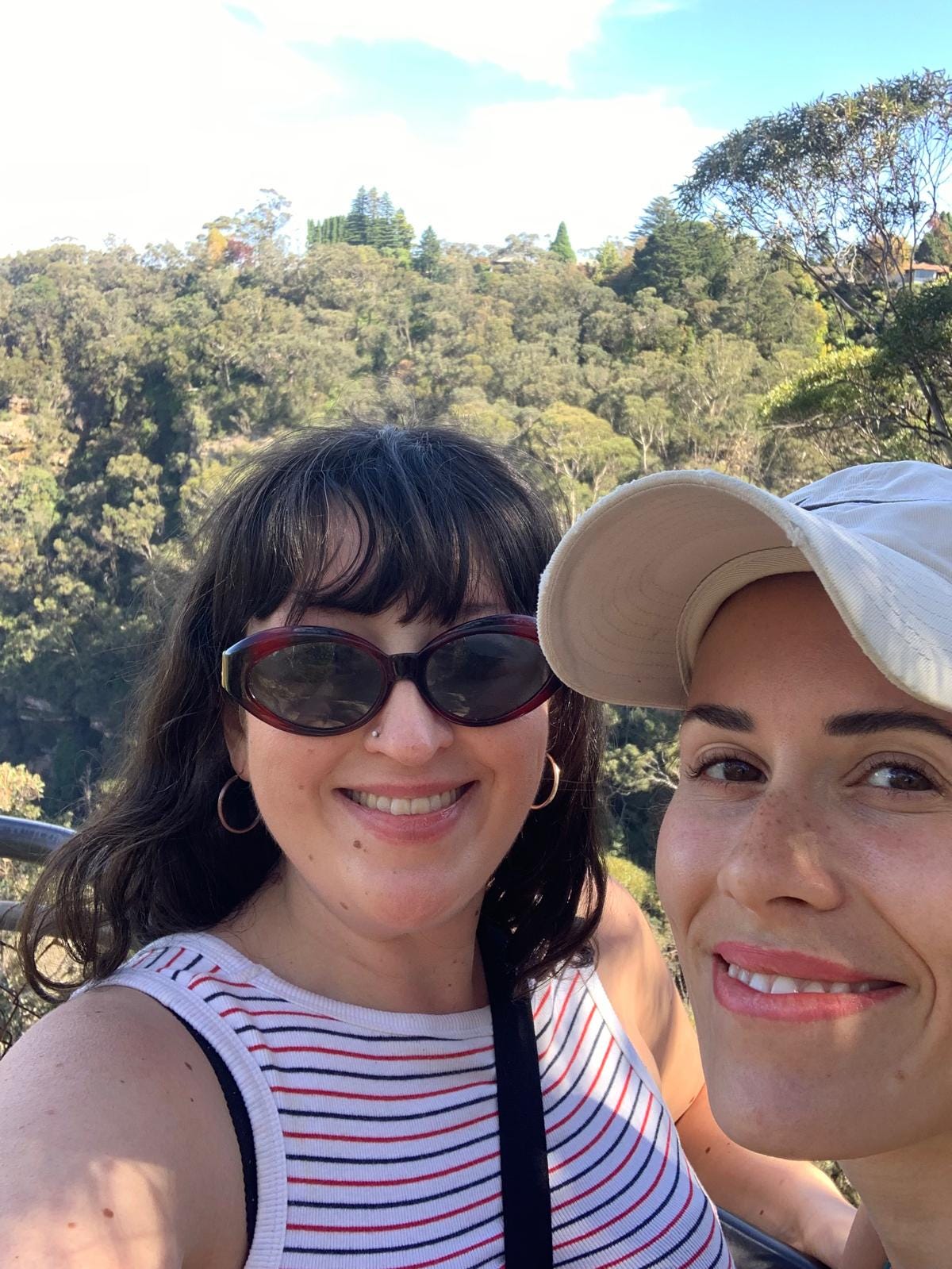
Flying into Sydney from the lush jungles of Bali, I wasn’t particularly interested in spending time in the CBD (the city centre, basically). With a bank holiday approaching, my friend suggested we visit the Blue Mountains National Park instead.
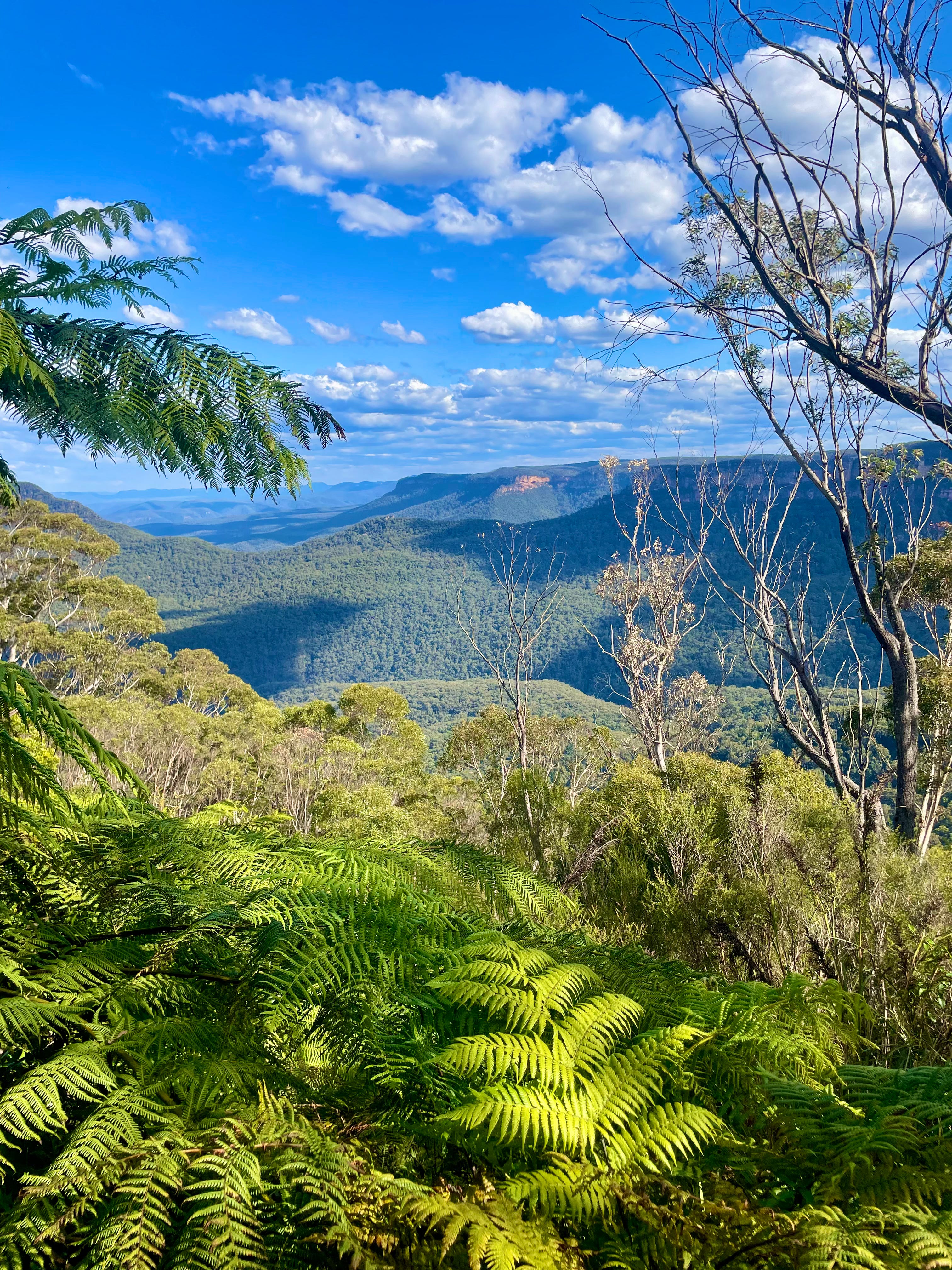
This is a dramatic sandstone landscape around 60km outside the city. Imagine a vast basin, ringed by cliffs, with deep valleys and rock formations throughout – a bit like an alien crop circle.
The Blue Mountains is a rugged, World Heritage-listed region in New South Wales, Australia, located about 50 km west of Sydney
Why is it blue, you ask? If you look closely at the distant trees, you can make out a faint blue haze caused by the eucalyptus leaves releasing oil into the air. It’s a beautiful place, and a fantastic location for hiking. Cue a 90-minute train ride from Sydney’s Central Station, and we found ourselves back in nature once again.
There are a number of towns dotted around the park, including Katoomba (what a name!). This is the main town and administrative centre of the Blue Mountains. It doesn’t feel big, but there are plenty of cafés and restaurants – we even went to the cinema – and most importantly, the national park is easily accessible by public transport.
I must have stayed in around 50 hostels since my first solo trip in 2023, and I’m a huge advocate for them.
YHA has a long heritage, and this one in particular housed a lot of families, which gave it a safe, cosy feel. There’s a large kitchen and movie room, books and games to borrow – and like most good hostels, the staff had encyclopaedic knowledge of the area.
Becca doesn’t “hostel” much, and even she enjoyed it, especially given it cost us around £130 each in total for four nights.
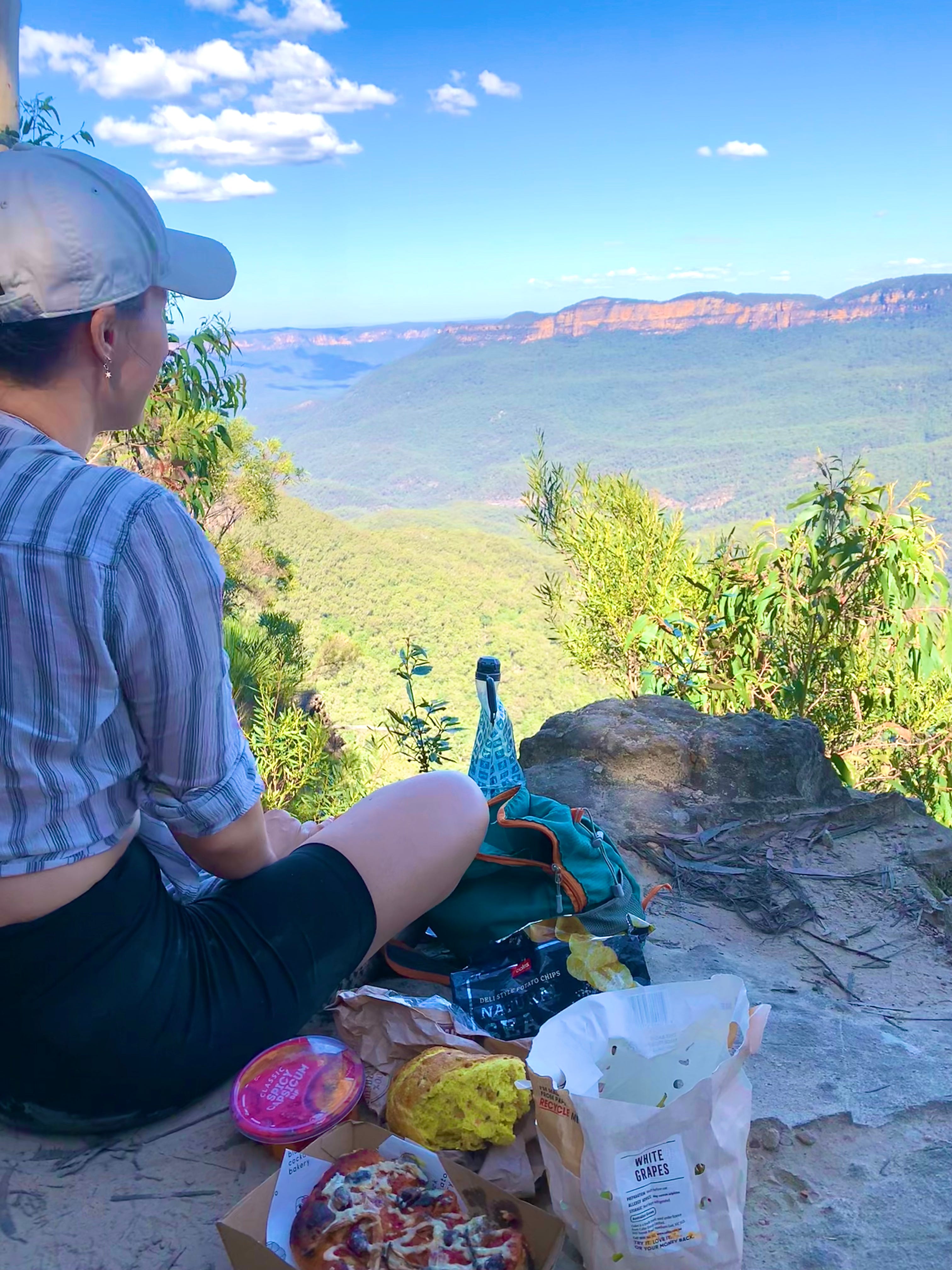
As for the mountains themselves, there’s a reason Tourism NSW uses them so heavily in its imagery. They’re unlike any mountain range I’ve seen before, with plenty of easily accessible walking routes, many of them fairly flat, offering sweeping views in all directions. More challenging hikes are available too, so pack plenty of food. Nothing beats eating your sandwiches perched on a cliff edge!
We spent a couple of days navigating different trails, and on Becca’s recommendation, saved one morning to visit Scenic World. This cable-car attraction takes you down to the forest floor and across the famous Three Sisters rock formation, with views out towards Wentworth Falls.
It’s a fun way to access parts of the landscape you don’t see from the clifftops alone. That said, locals flock here on bank holidays, so my main tip would be to book accommodation and attractions in advance, as everything was fully booked when we tried our luck on the first day.
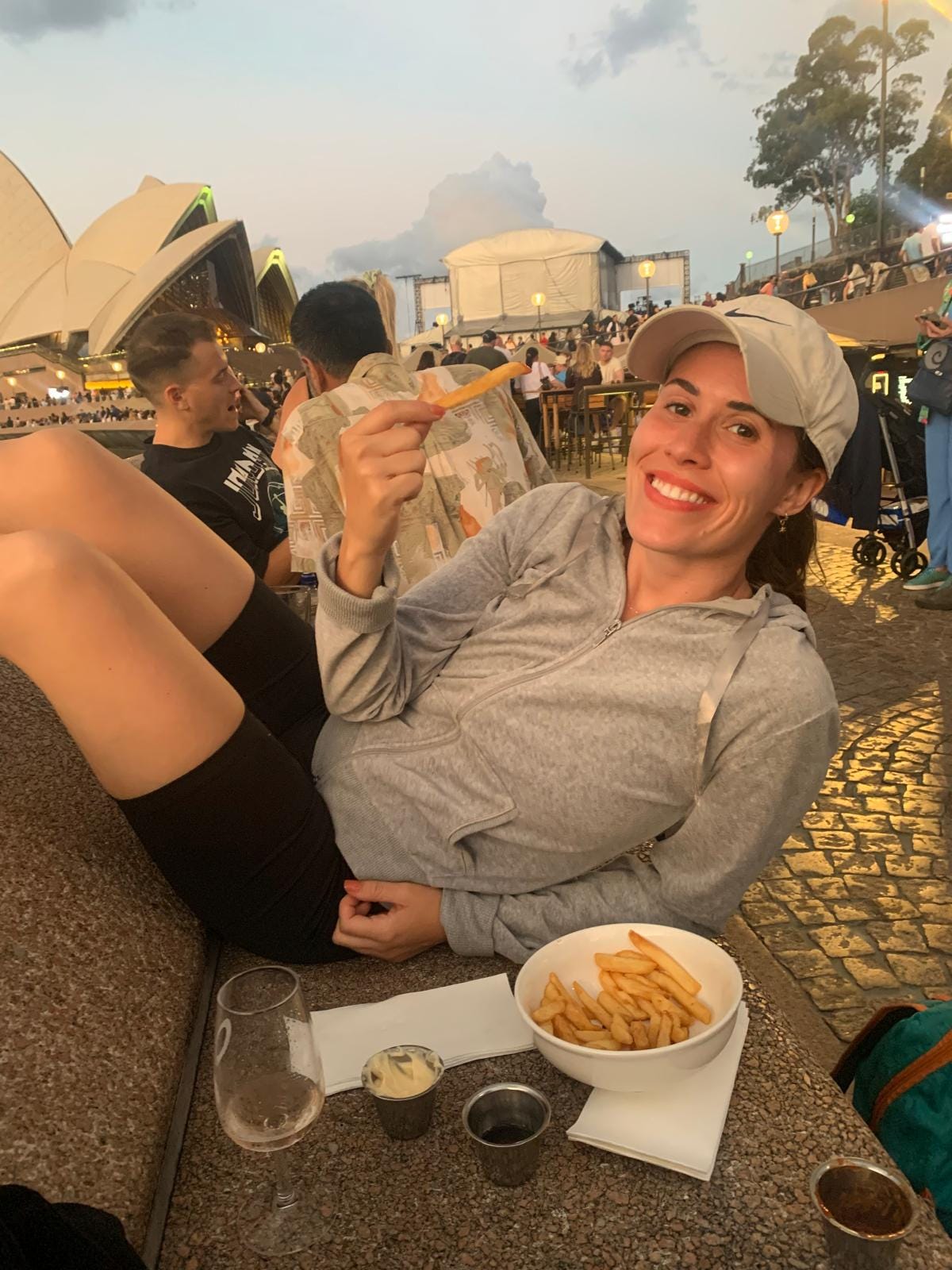
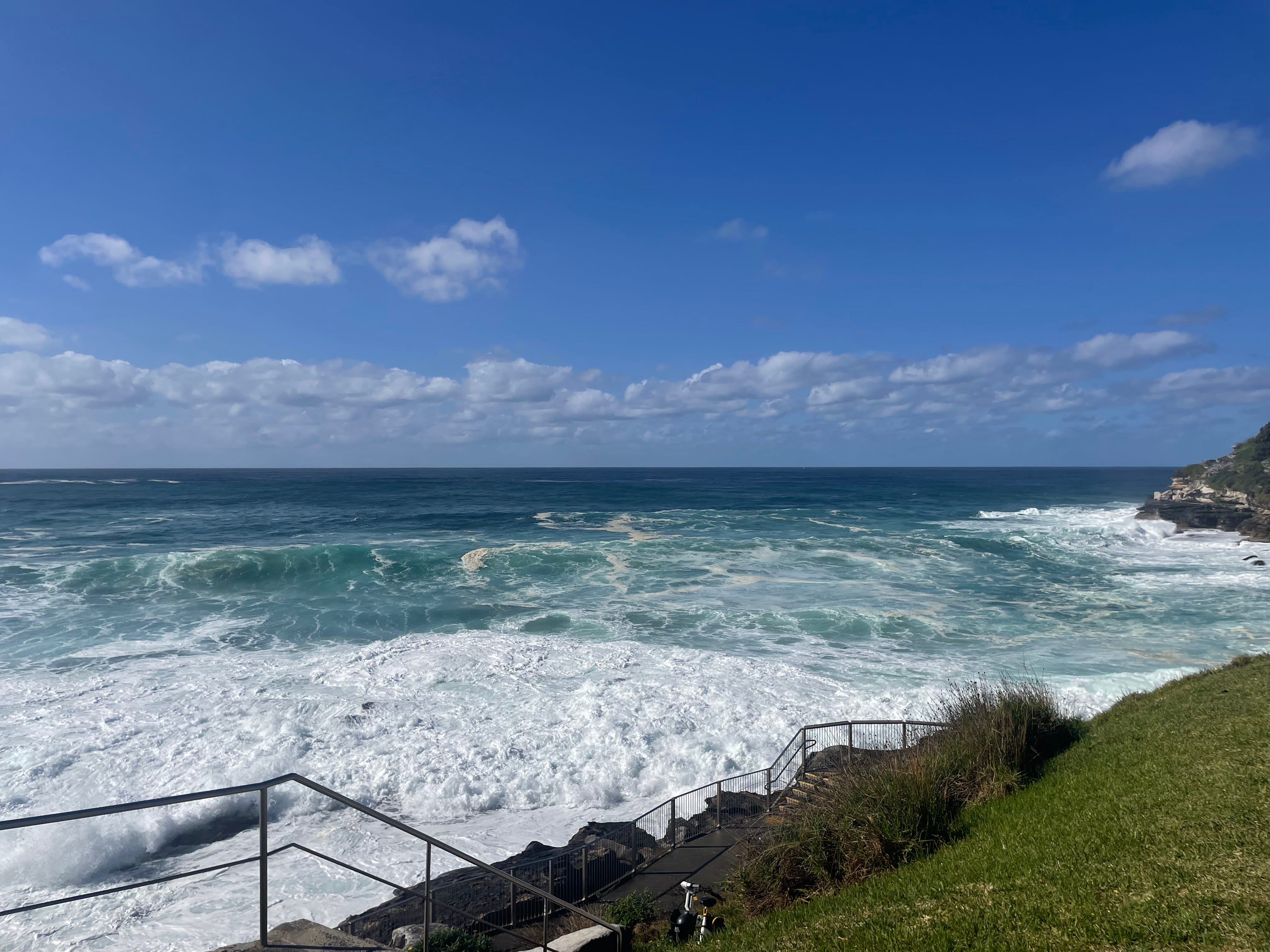
The good weather held for another day once we returned to Sydney, and after plenty of walking, we spent a glorious evening scoffing chips and watching the sun set behind the Sydney Opera House. I also made time to watch the wild waves rolling in at Bondi Beach.
Wacky waves at Bondi Beach
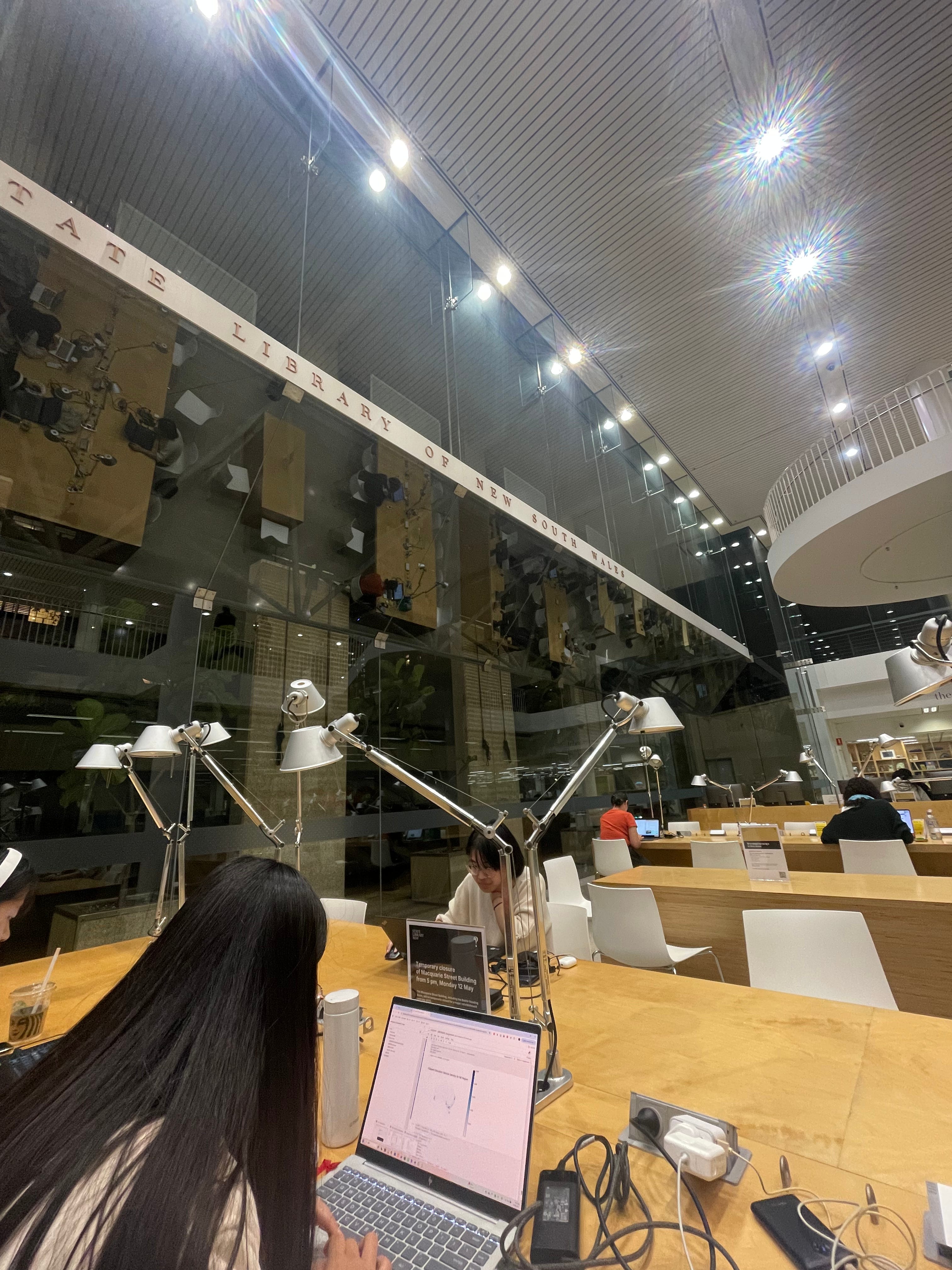
A day later, the heavens opened. I sought shelter in the State Library of New South Wales, tucked beside the Botanic Gardens (also worth a gander!) and got a solid chunk of work done for the week.
After two months in Asia, this felt like a real change of pace – and having access to a desktop computer was a small luxury I didn’t take for granted. Sydney has some beautiful libraries (check out this blog post by The Rachellist if you happen to be in need of one). If you’re a remote worker like me, I’ll always advocate for libraries, and this one is particularly lovely.
Seeking refuge from the rain at the State library of New South Wales
Working while travelling might sound dull to some, but for me, visiting Australia was a reminder of how grateful I am to work remotely. Better still, freelancing means I’m not working every day.
We’re lucky in the UK to have a decent annual leave allowance compared to some countries, but a ten-day trip to Australia would still have eaten up a third of it – and probably delayed my decision to come at all. Knowing I can (hopefully) return made the whole experience feel lighter, calmer, and far less rushed.
Cooling off in Katoomba, the main town of the Blue Mountains
This will sound conceited, but as a child, I found myself slightly bored by Spain.
I was born in the 90s, which means I’m very much a product of parents seduced by programmes like A Place in the Sun. TV at the time was obsessed with our hot neighbour, and – like a lot of people – Mum and Dad bought into the dream of becoming expats by investing in a small villa on the Costa Brava.
In reality, this meant we spent a few weeks a year visiting what was essentially a building site near Alicante. And while it was obviously a huge privilege – and I do have really fond memories of those times with my family – the trips were hardly cultural experiences. You’re not exactly getting under the skin of Spain in those expat villages, especially as every second person is English.
Fast forward a few years and I chose to study Spanish at A-level. Since then I’ve travelled a little more widely across the country and it turns out there’s a lot to love. Whilst Seville and Barcelona rank highly in my list of Spanish city breaks, in this guide, I’m making the case for its often-overlooked rival: Madrid.
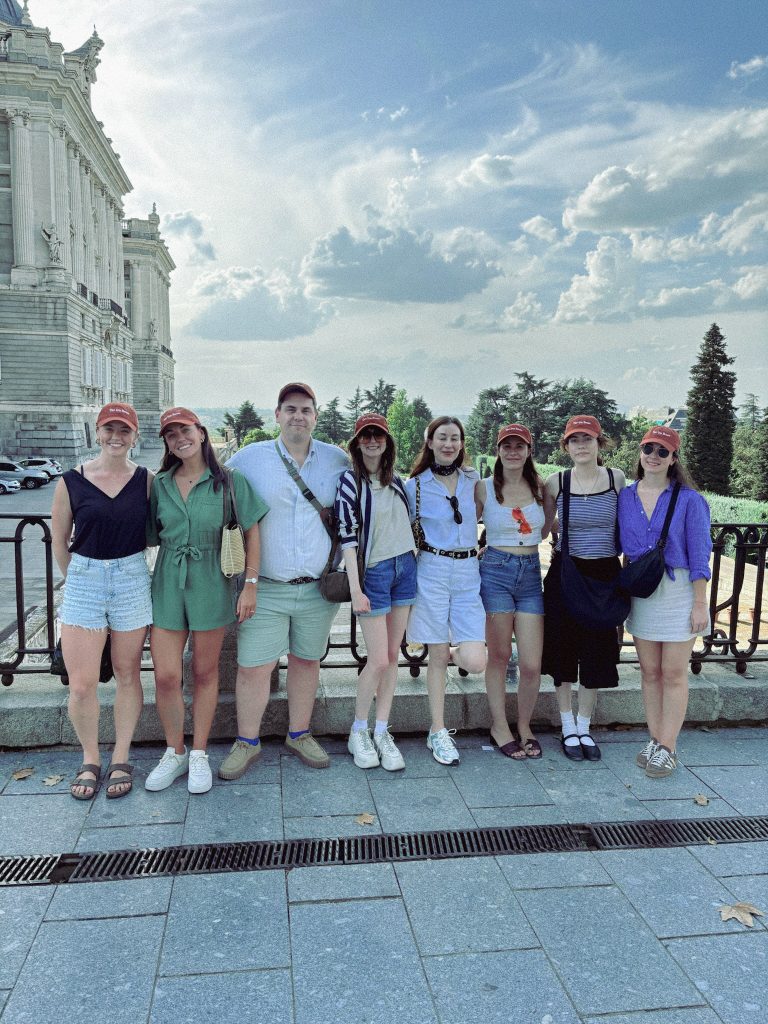
My memories of Madrid as a child mostly involve avoiding the excruciating mid-summer heat. But revisiting in September last year for my friend’s hen do made realise just how great a spot it is for a shoulder-month visit.
So as the UK weather cools, here’s my guide on how to spend the perfect short spring break in the Spanish capital.
Day 1: Tapas and tortillas with a hint of history
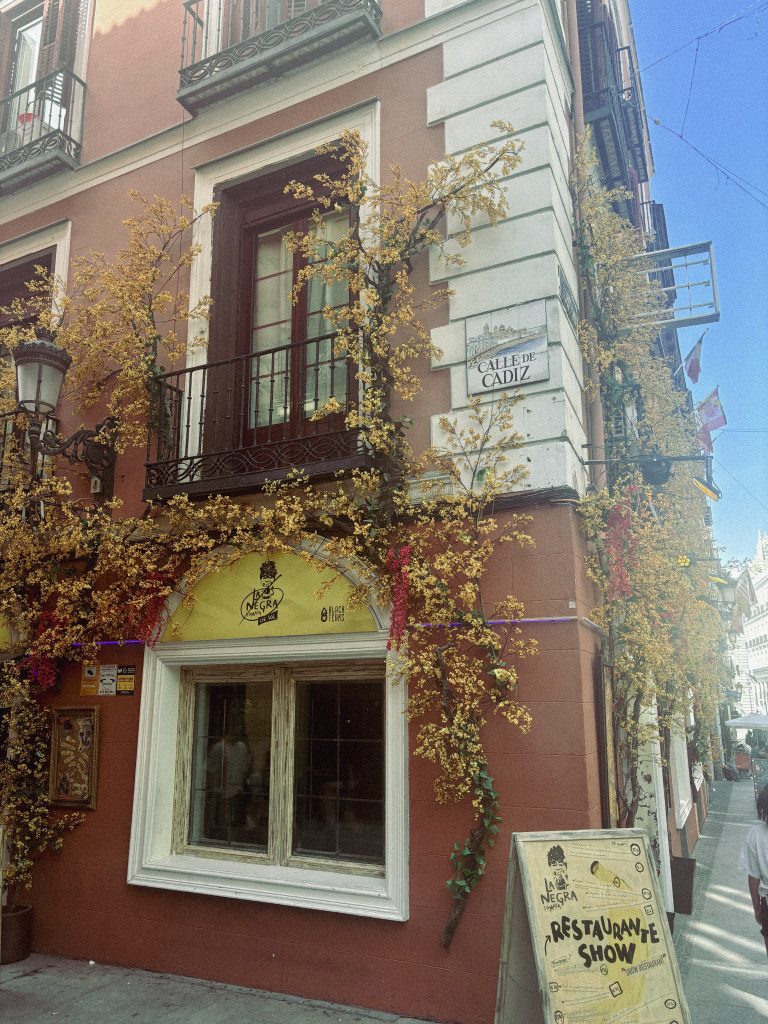
First of all, where should you stay? Well, consider that Madrid is Spain’s biggest city, and comes in at double the size of Barcelona. It’s a busy, urban spot, but if you want a neighbourhood feel, I can advocate for an area called Lavapiés.
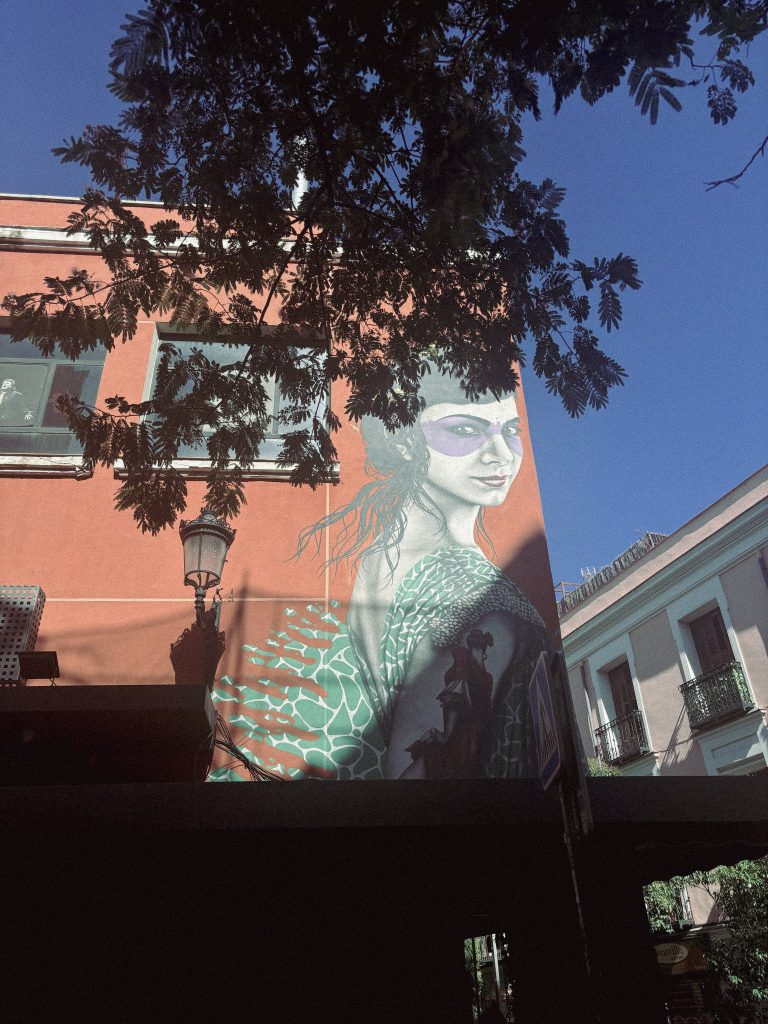
This is one of the city’s most characterful neighbourhoods; full of street art, independent cafés and, importantly, pockets of shade. I felt relatively safe there, although I would advise being vigilant at night (I usually check reddit for information about local safety!).
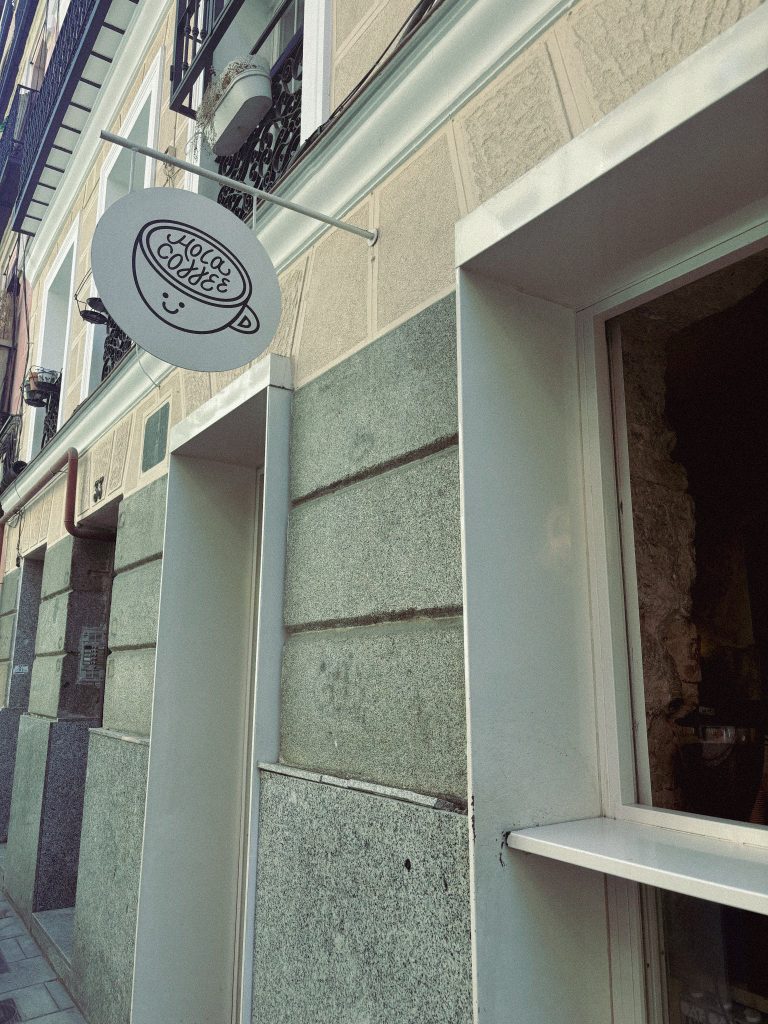
Start your trip early by grabbing coffee and pastries from one of the local favourites such as Nomade Café or Hola Coffee, and enjoy the gorgeous murals.
Then, from Lavapiés, take a 20–25 minute walk (or a short bus ride) into the historic centre.
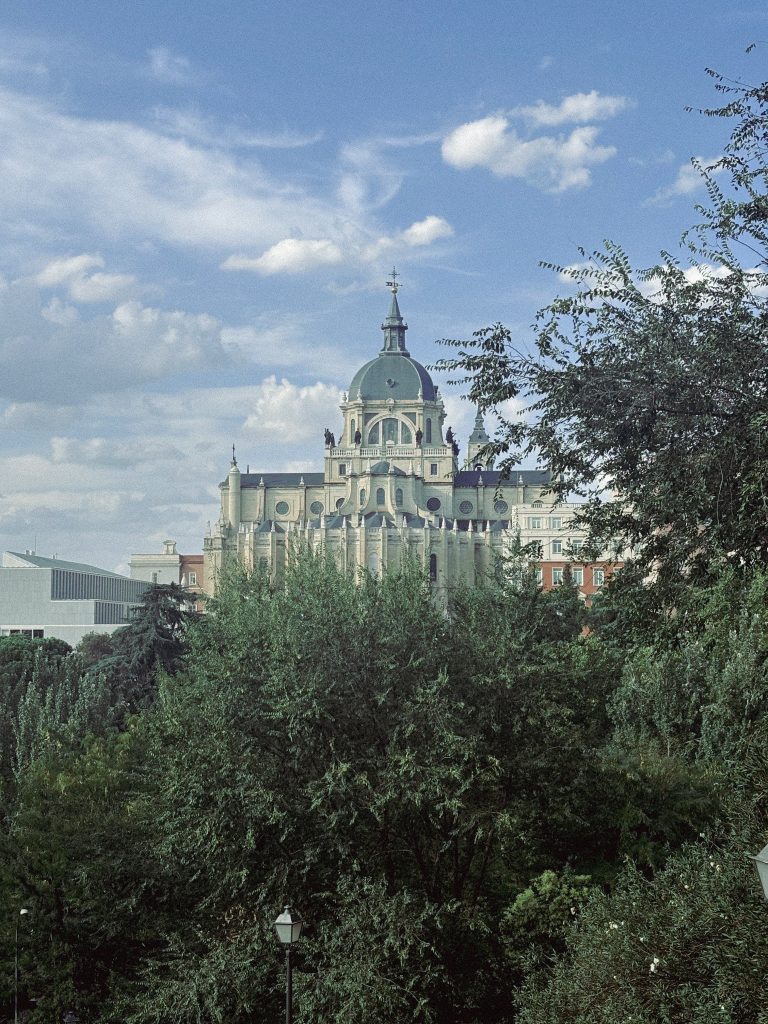
Head towards the Royal Palace of Madrid, passing through Plaza de Oriente on the way. This area feels like the “classic” Madrid you see in photos, and is nice for a little walk and photo snapping before the heat of the day sets in; I didn’t go inside the museum, but you can do so if you want (if you later join a walking tour, they’ll likely cover the history).
For lunch, escape the heat and go in search of tortillas. Not the Mexican flatbread version, but the Spanish kind: thick, eggy, and often slightly gooey in the middle. I liked La Martinuca for its different variations (best enjoyed sitting inside), or Pez Tortilla on Calle de Espoz y Mina for somewhere more chaotic and buzzy; lots of locals crowded around standing tables.
In the afternoon, ease into some culture at Museo Reina Sofía. If you time it right (after 4pm), entry is free, so head over at 3 to join the queue (perhaps with a beer in hand); this is an easy way to add something “cultural” without overcommitting your day.
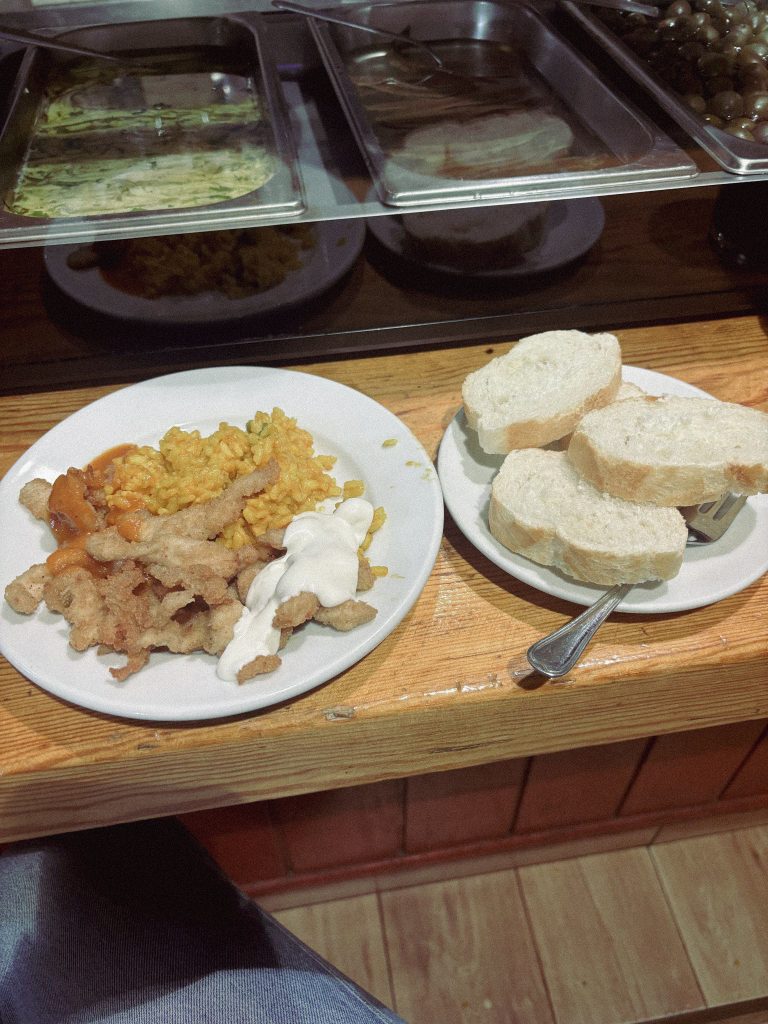
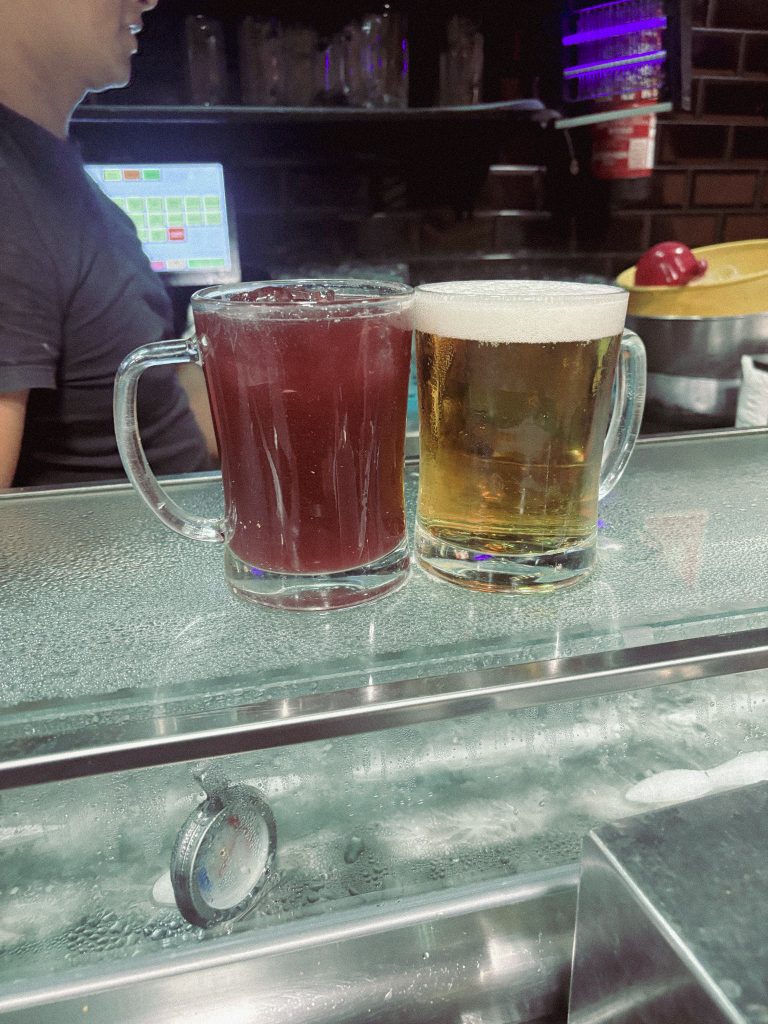
As evening sets in, lean into Madrid’s slightly chaotic energy by stopping for sangria and tapas at El Tigre or La Torre del Oro. These are traditional pubs known for generous – and borderline excessive – free food with drinks. You’ll be able to stuff your face and get a bit drunk as the heat cools.
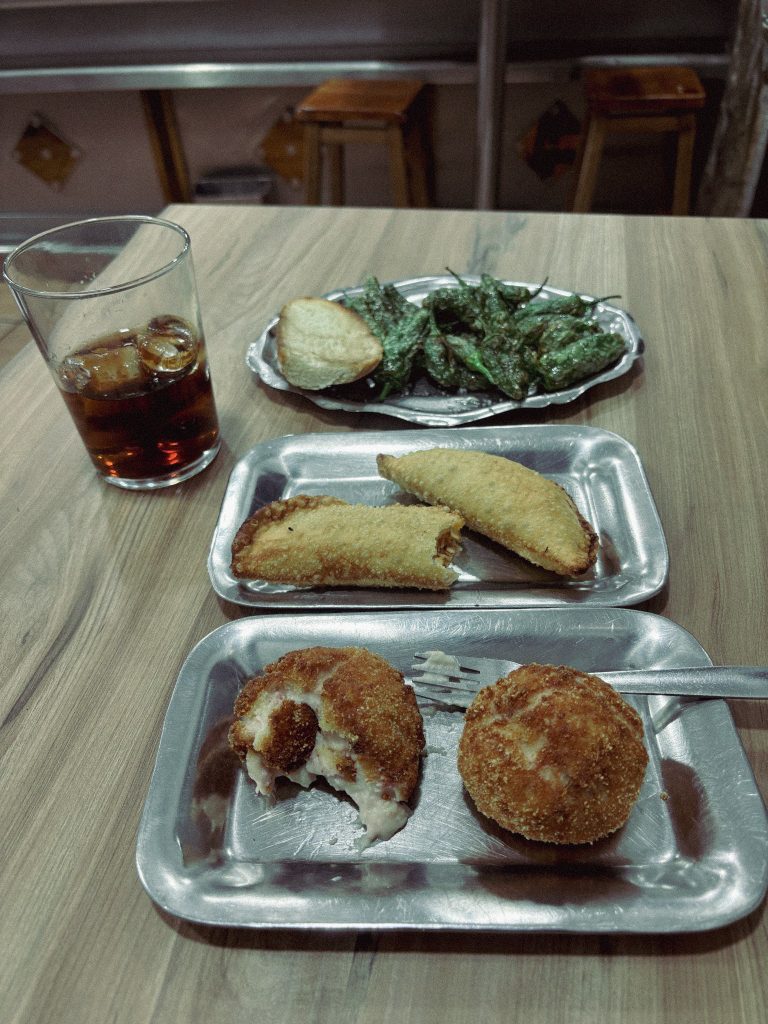
Teeter back towards Lavapiés, and reload on those calories with some more local snacks. If you’re alone or in a couple, grab a table at Bar Melos and try the croquetas.
Day 2: All the art & a gilda girl tea
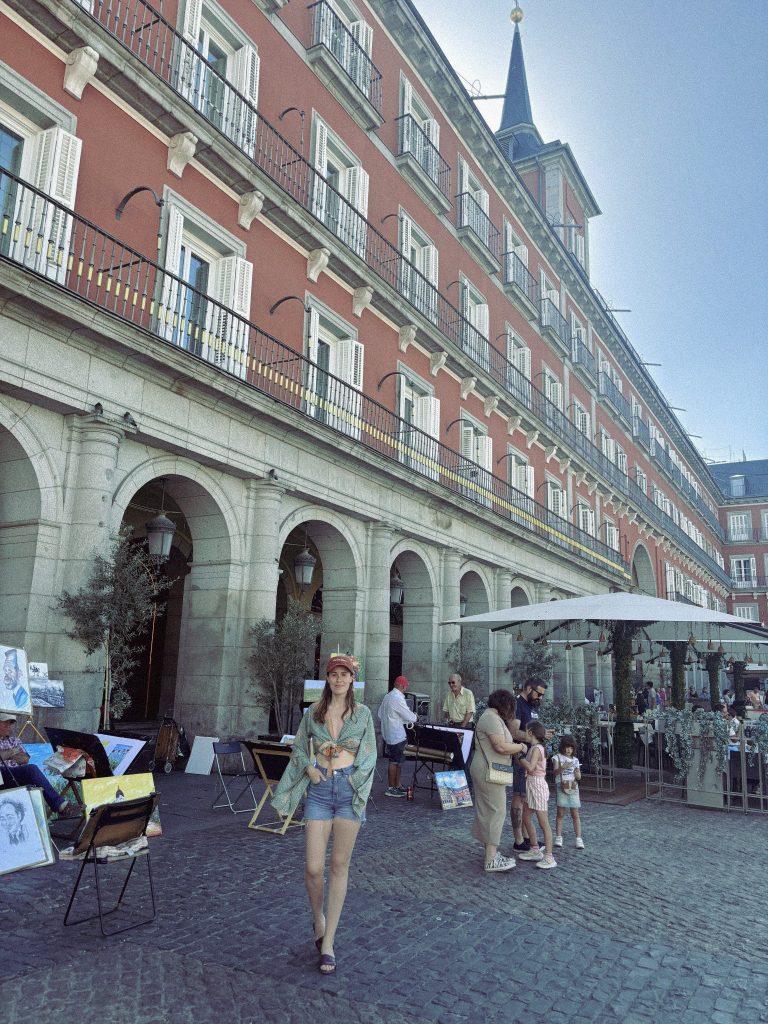
Start your second day in the heart of historic Madrid. Book yourself a walking tour from Plaza Mayor, and build in thirty minutes to enjoy the traditional square earlier in the day before it gets too crowded.
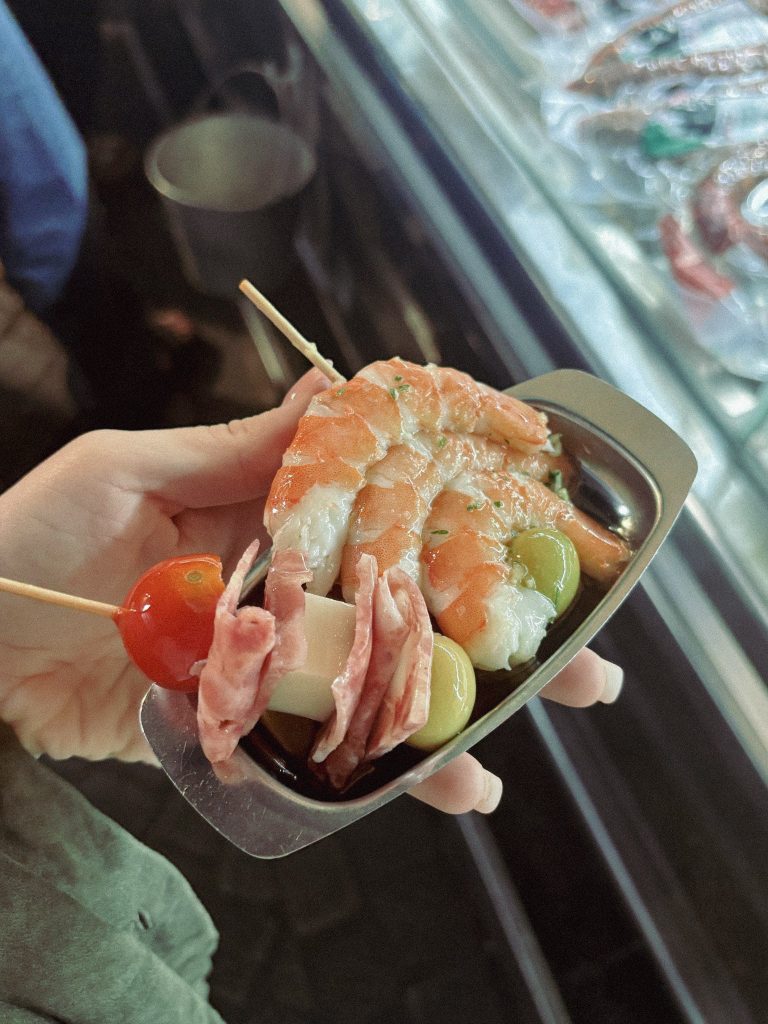
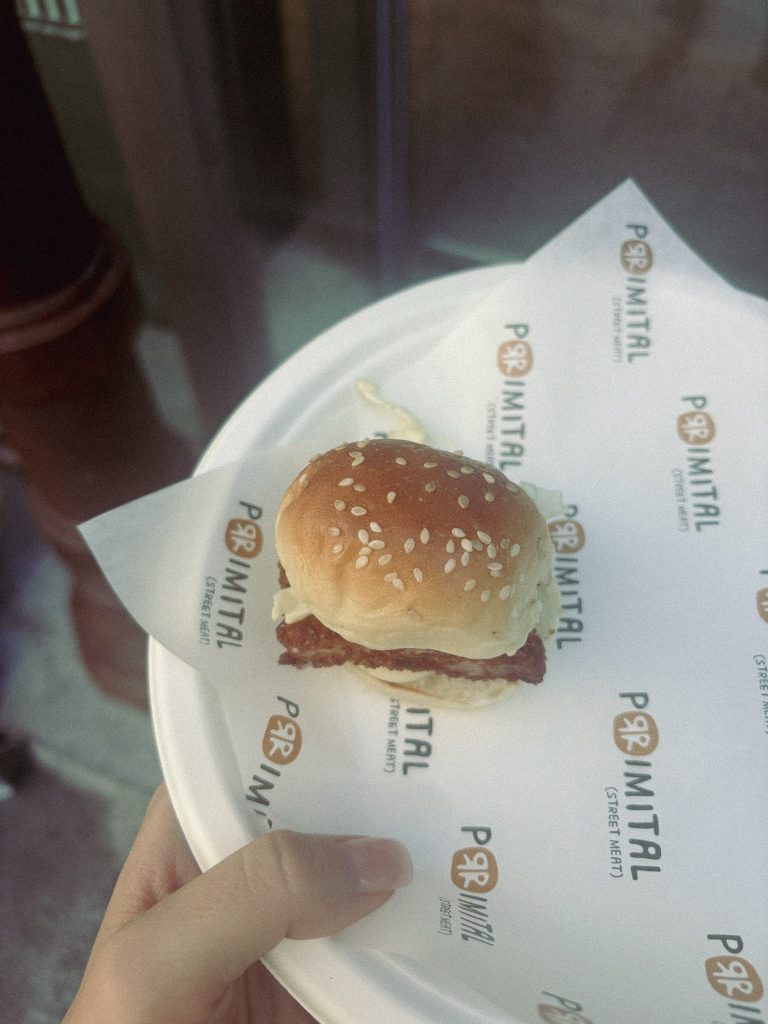
From here, take a 5-minute walk to the covered food market, Mercado de San Miguel. While this is not the cheapest spot in the city, it’s perfect for a grazing-style lunch; think gildas, croquetas, mini burgers, and a glass of something cold. My friend and I had great fun perusing the different stalls and oggling the giant fish.
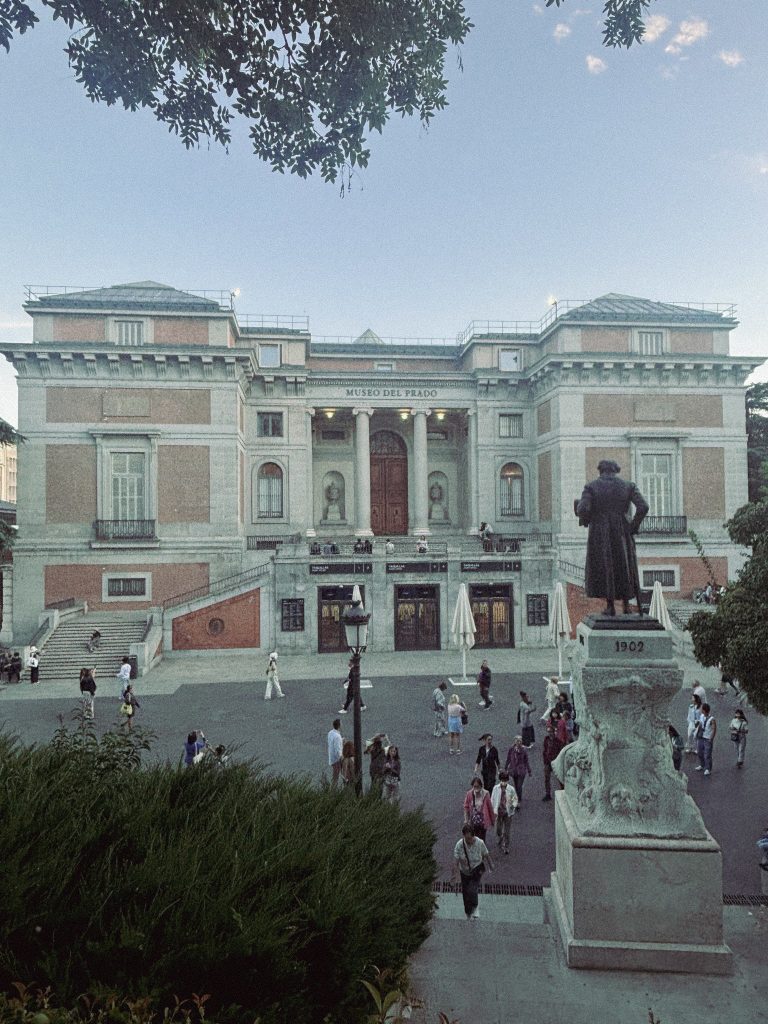
In the afternoon, head to either Museo del Prado or Reina Sofía, whichever you missed yesterday. They’re about a 20-minute walk from Plaza Mayor, or a quick metro ride if it’s hot.
Trying to do both in one day is ambitious and, honestly, unnecessary. I personally loved the Museo del Prado for its classical and religious works, from Velázquez to Goya; they really give you a sense of Spain’s artistic heritage. Reina Sofía, on the other hand, was a joy because of its surrealist highlights; Dali, Miró, and Picasso really get the mind going!
Afterwards, what else – but more booze and food! Near the museum, there’s a cute side street with food stalls, including a place called La Consentida, where I enjoyed a happy hour washing an eclectic mix of gildas down with some rosé. This is a wonderful classic tapa, composed of a pickled Guindilla pepper, a salty anchovy fillet, and a green Manzanilla olive on a stick.
On the way back, detour to La Pizzateca for a pizza slice; once in Lavapiés, finish with ice cream from Gelato Artesanal.
Practical tips: Museums are free after 4pm (Reina Sofía) and 6pm (Prado Wed-Sat), so plan accordingly; weekdays are less crowded than weekends.
Day 3: Pastries and park walks
By day three, you might feel a little full and want to slow down, especially if you have a flight to catch.
Begin, again, with coffee in Lavapiés. I advocate for pastries from Acid Café, but there’s a lot of cute places to sit down, too. If you want to stay in the area, I’d recommend reading this article for a full list of things to do.
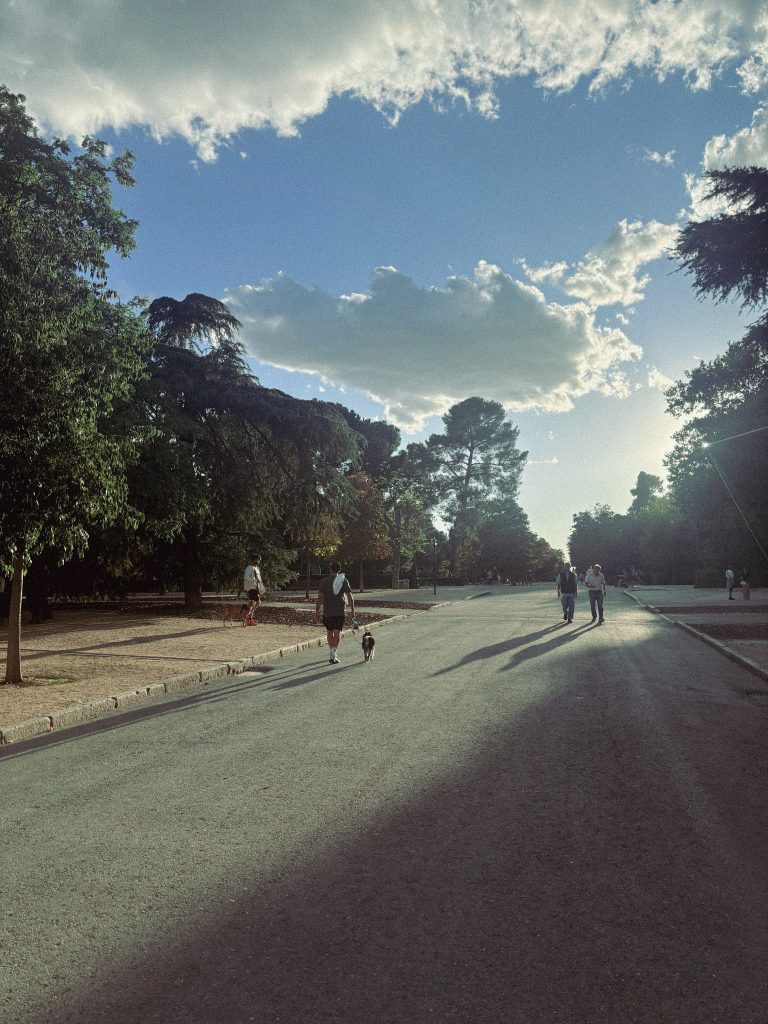
Eventually, make your way towards El Retiro Park near the Ibiza neighbourhood. Depending on where you’re starting, it’s roughly a 20–30 minute walk from the centre and worth doing on foot if you can.
Ibiza is a busy spot, but good for more local eateries. I stumbled upon Parador del Jamón, known for traditional sandwiches (less useful if you’re vegetarian, but very “Madrid”), and there are plenty of other casual spots around.
Retiro is where Madrid softens; tree-lined paths, rowboats, people reading in the shade – it’s less about sightseeing and more about just being there. Bring snacks, something to drink, and take your time. I was alone for this part of my trip, so put a podcast in, but it’s also lovely for a read in the sunshine. It’s a nice place to visit at golden hour.
Following your park walk, settle down somewhere nearby for more tapas and Sangria. If you’re back in Lavapies, grab a table outside La Inquilina for wine and some delicious gildas.
If you’re working remotely…
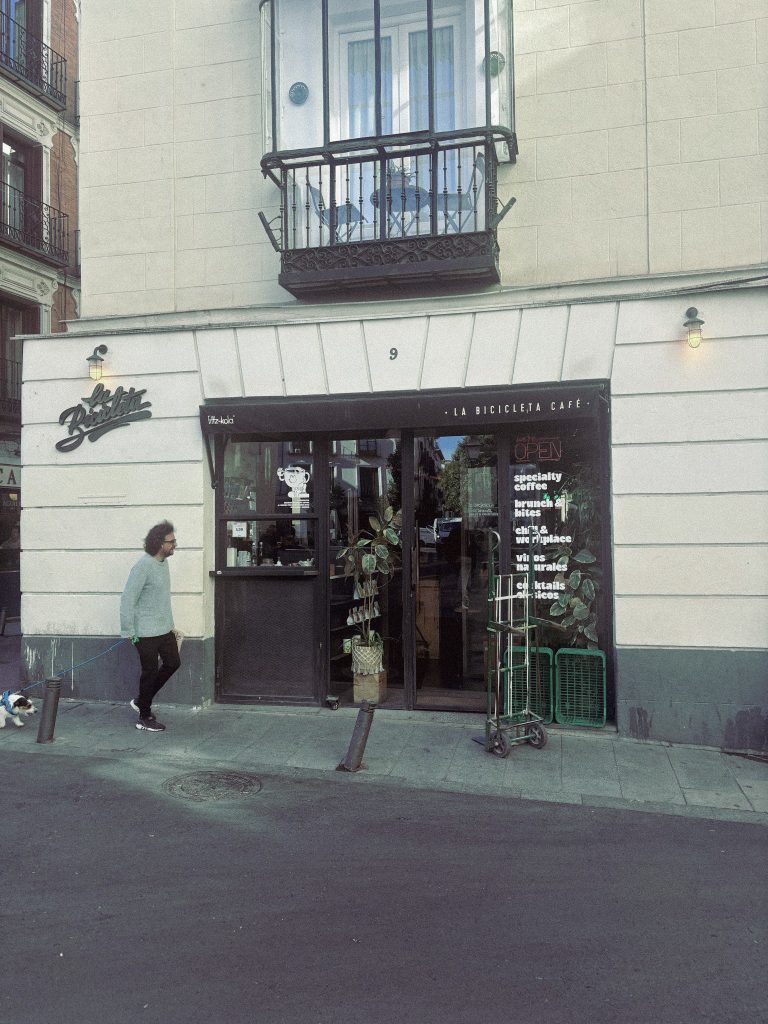
If you’re mixing travel with work (like I am), Madrid makes it easy. I liked La Bicicleta Café and Federal Café as relaxed spots to spend a few hours; good coffee, good atmosphere, and no pressure to rush. Be aware though, that lots of cafes in Lavapiés do not allow laptops.
Overall – Madrid is a feast for the mind and stomach
Madrid can even feel a little overwhelming due to its pace and scale, especially compared to smaller Spanish cities. But don’t write it off for a mini break. Give it a couple of days – wander a bit, eat well, sit in the sun – and it starts to click. And once it does, it’s very easy to see why people keep coming back.
If you’re looking for more Spring time city break ideas, why not read my piece about Copenhagen.
I recently read a BBC interview with Julie Williams, an IT consultant from Birkdale on Merseyside. She had decided to make a ball pit in her spare room, rather than rent it. Why? For fun. ‘You can never be sad in a ball pit.’
Stories like this are important because they remind you of your free will. Julie’s is especially unique because the ball pit came at the expense of financial gain.
For most people, that’s just not the default position – whether they need the cash or not.
I found myself thinking a lot about free will when I turned 30. I’ve never really clung to traditional milestones (house, baby, marriage, divorce), and count climbing out of credit card debt as the maturest moment in my adult life to date.
But the flood of birthday invites from friends – right before the hen dos – gave me pause to reflect. Was I happy? Had I challenged myself enough? Was I excited about the next decade?
Who am I?
Not to get too Lewis Carroll about it, but this last question was the catalyst for me in late 2024. In a way, I felt that I didn’t know myself anymore, or at least not all the versions of myself – just the city-shaped, university-fied version. And she was restless.
Meanwhile, semi-remote work in London had become my new normal. The days of spilling out to the pub every week with colleagues had gone. I had a lovely team in my PR job, but rotating schedules meant it took too long to get past the pleasantries.
People generally – and I include myself in this – seem to have become more protective of their time since I moved to London in 2017 (and perhaps all over the country).
I don’t think this is a bad thing. Hell, if you’re going to replace me with AI, at least give me another 30 minutes in bed / to read to my kids / paint / write / support a charity / or stare into the abyss.
Having one foot in, one foot out, however, began to wear on me amidst the rising cost of living in the capital. I still considered myself a creative and curious person, but did I really want my days to be defined by the price of flat whites and whether a Soho House membership was cost effective?
I take comfort from water cooler culture as much as everyone else, so I’m not bashing these things – they’re part of the fun.
But when I found myself googling ‘Martin Lewis wife’, something had to give.
Was it burnout? I’m not sure. But in need of a change of scene and some inspiration, I decided to give this digital nomad lark a go, beginning with three months in South East Asia in early 2025.
Who knew what would happen after that. But I’d work less, and live more, often with strangers – which would at least break me out of my comfort zone.
I’m not alone in seeing the attraction of nomadism, especially if your job allows it. According to a report by CV builder website LiveCareer UK, an estimated 165,000 UK professionals have relocated abroad to work remotely in recent years, seduced by better weather and (they hope) greater work-life balance.
Some roam around, as I did, making the most of the opportunity to see the world. Others seek stability in well-established hotspots that offer structured visa policies, tax incentives and ready-made communities.
To cut a long story short, I didn’t end up moving permanently abroad. But I did see a lot of cool things, regain a sense of direction, and create a stable freelance set up that now allows me to travel whenever and wherever I want, whilst keeping roots in the UK (which is how I like it).
Giving up a normal routine has not been without its challenges – anyone that’s become a nomad, travelled alone, or even that’s relocated will agree with that, I’m sure. But between the relentlessly positive portrayals of nomadism on social media and the often sceptical narratives found in the UK press, there is a lot of middle ground.
As a thirty-something experiencing this lifestyle for the first time, I hope this blog provides a balanced account of what it’s really like as work and life become increasingly flexible and multihyphenated.
As my trip draws to a close, my thoughts turn towards home.
“Oh my God. I want one!”
I was in Australia, arm in arm with my friend (and now expat) Becca.
Becca, like a lot of Londoners, committed the ultimate friend betrayal by moving to Australia in 2023.
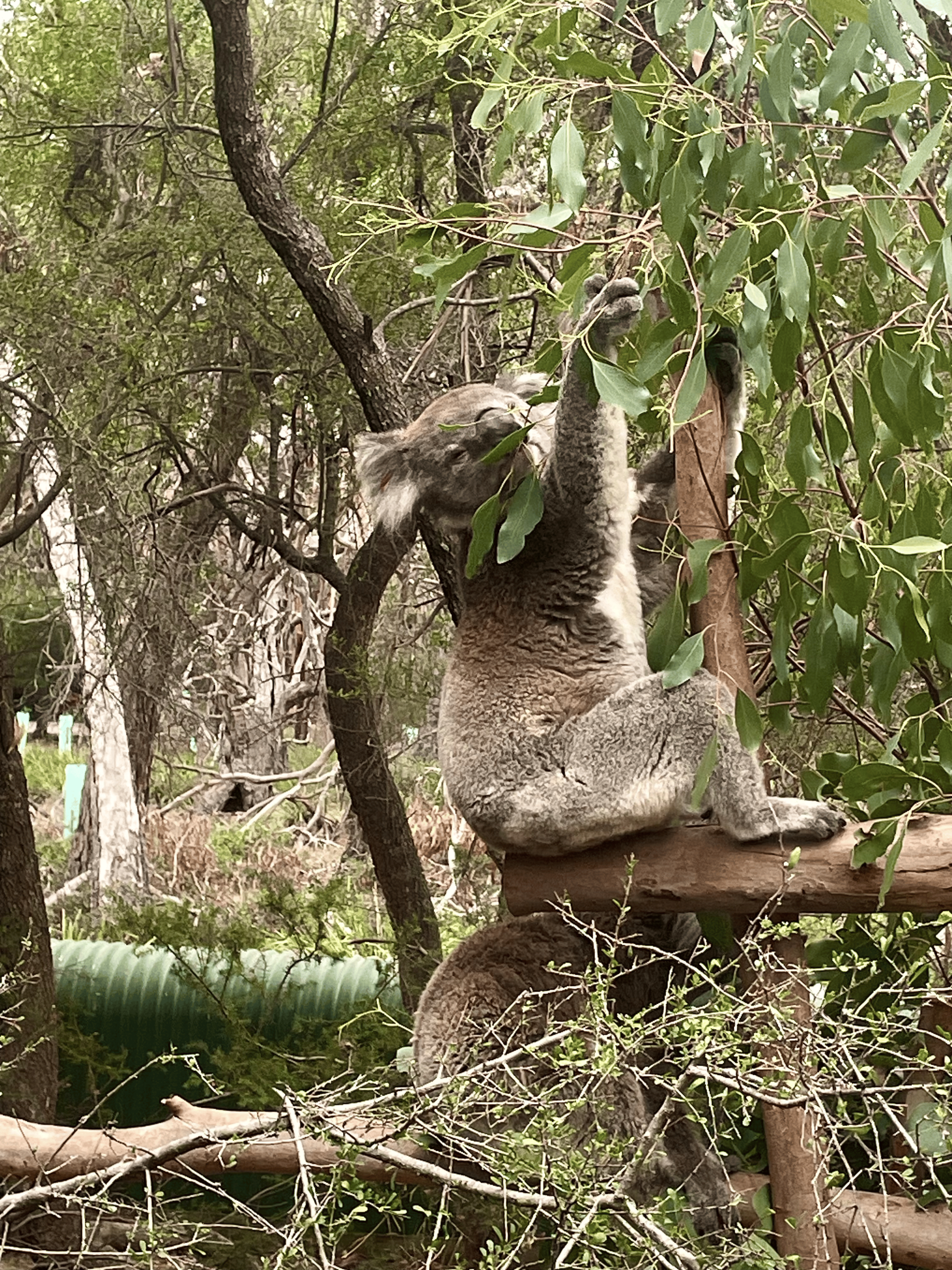
Having finally forgiven her, we now found ourselves cooing over koalas at Moonlit Sanctuary, an award-winning wildlife park located 50 minutes southeast of Melbourne’s CB, following a fun filled weekend in Sydney’s Blue Mountains.
A long awaited trip
I’d always wanted to visit Australia. Every single member of my family had either lived or travelled here, and as an 18-year-old I’d mentally planned an entire gap year on the other side of the world, that I was too scared and too broke to execute it.
Just as the desperate migrants romanticised California in The Grapes of Wrath, Australia seems to have a kind of “heaven on earth” appeal for us intrepid Europeans. And more than a decade later, it felt thrilling to be standing on Ozzy soil, ready to wrap up a three-month stint as a digital nomad in Asia.
But where were the crocs?
Perhaps I’d gone a bit feral from all those weird nights in hostels, but Sydney itself hadn’t thrilled me – and when we reunited in Melbourne after a short hiatus, I was itching to get back into nature.
Half expecting to see crocs, snakes and spiders the minute I stepped off the plane, it was a little disenchanting to be surrounded by buses and McDonald’s; so, we decided to book a day trip South to see some of the country’s most dangerous animals – koala bears, wallabies and penguins.
Moonlit Sanctuary is an award-winning wildlife park in Melbourne
After several fun, but somewhat exhausting, months on the road as a digital nomad, I was ready for a cuddle; and luckily our first stop was Moonlit Sanctuary, a wildlife conservation park in Victoria focused on endangered native species breeding, education, and immersive visitor experiences.
Sadly, these adorable teddy-like creatures are not for handling, but looking up at the canopies of the sanctuary, it felt incredibly special to see koala bears in the flesh, even if they were simply napping.
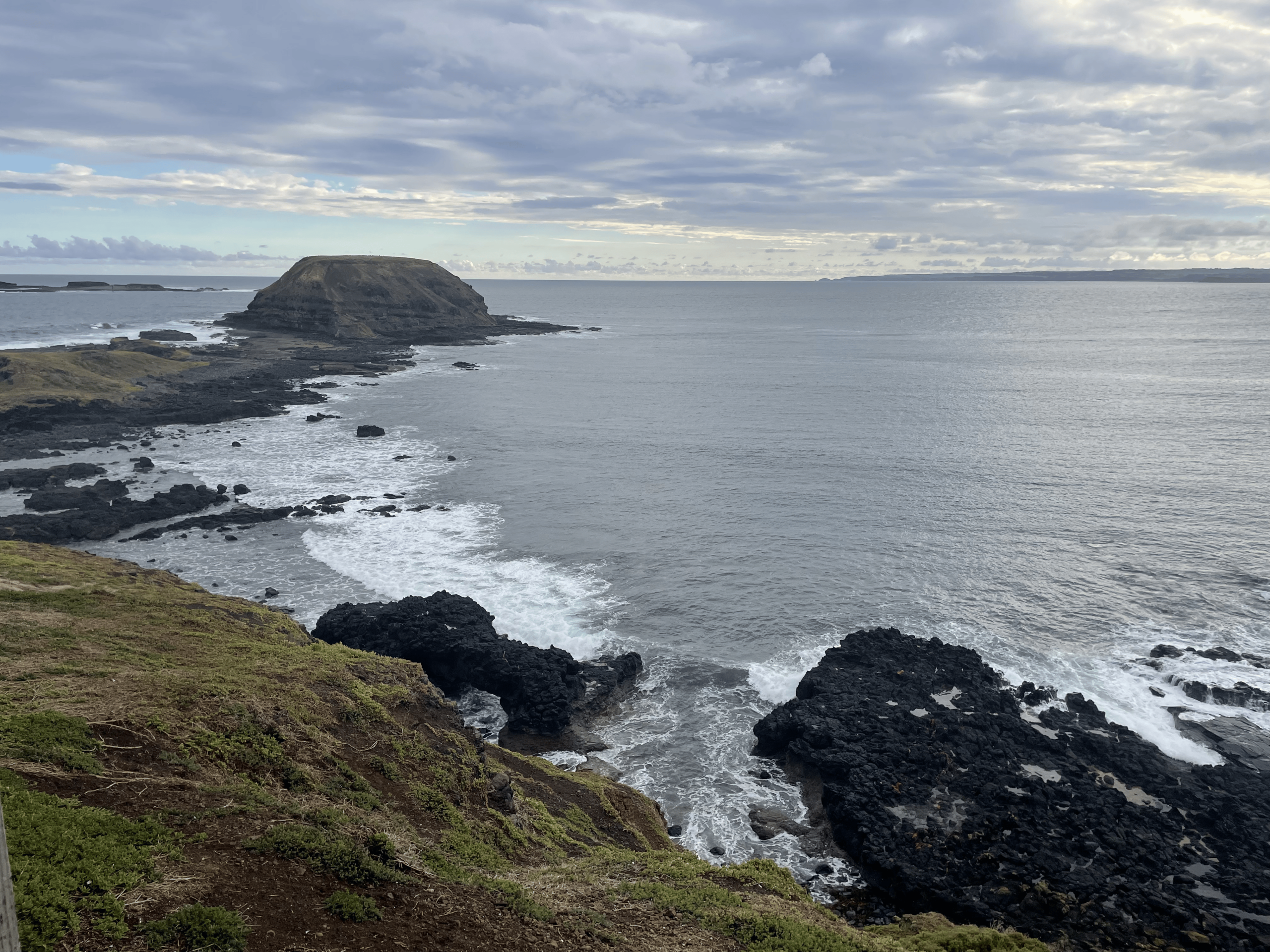
After much pst psttting, and a short interaction with a wallaby (sort of like a tiny kangaroo), we then drove further South toward “The Nobbies”.
I wasn’t sure what to expect at the other end, and was surprised to learn that this is in fact a dramatic, and very beautiful clifftop area on Phillip Island – not dissimilar to Cornwall, I might add.
Leave it to the Aussies to call an area of outstanding natural beauty “the Nobbies”
It’s a great place to catch sea life apparently, and whilst we didn’t spoke any whales or seals, we had something special waiting for us down at the beach at dusk – the Penguin Parade.
Settling down for the Penguin Parade
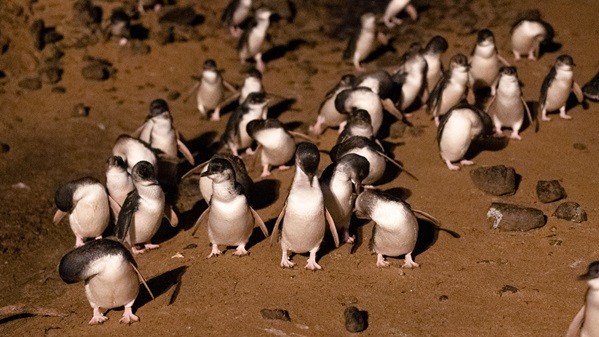
This is a precious natural phenomenon where hundreds of tiny little penguins spend the day feeding at sea before returning to shore at sunset – all at the same time.
We passed an hour or two on the beach with our hot chocolates, watching the waves and wondering when the first penguins would appear.
It was a bitter evening, and as our steaming drinks began to cool, I wondered if the penguins had lost their way back.
But lo! Just as the light faded – a couple of tiny heads popped up over the water. Then a dozen, then a hundred. The birds, it turned out, were more organised than Becca and I had ever been in our lives. They had been waiting for darkness so that they could travel in safety.
Once on shore, the tiny creatures waited for their friends to arrive – preferring to travel in big groups – before panic-waddling up the beach to their burrows. Above their head, birds of prey circulated, observing the scene and braced to pounce on stragglers.
Luckily for us, there were no fatalities and all the penguins successfully scurried over the sand, before disappearing into the dunes, safe at home for another night.
Wherever you go, there you are
It was an adorable scene – somewhat similar to seeing the lollipop lady gather the children before crossing the road. And after three months of travel, watching the little birds shuffle back to a place of safety and familiarity felt particularly moving.
I didn’t know how this nomad experiment would go, or for how long I’d be able to sustain life on the road, having never backpacked this long alone before. But I had noticed by this point that I was struggling to stay present, due to anxieties about the future.
I knew by now that I wanted to remain “nomadic” – but what that looked like in practice, I wasn’t sure. Thoughts were turning toward commitments at home; decisions about where I wanted to be and what I wanted to do could no longer be put off; and after weeks of hostels, airports and constantly being on the move, even daily decision making was difficult.
I believe this is a scenario that many people on the road find themselves in. On my route, I met lots of people who seemed to be avoiding problems they were having at home, processing something, or just generally lost and dissatisfied with life.
I don’t know if travelling is the right way to deal with those things or not. But as they say “wherever you go, there you are”. At some point you’ll have to confront internal or external challenges, or at least seek support from someone you know – whether that’s a local support network, or someone from home.
Having Becca there to take some of the weight off my shoulders reminded me that even the most independent travellers need help sometimes.
And, like the penguins making their way back to shore at dusk, I felt ready to call time on my adventure and head home too – but not before seeing Singapore.
*If you want to visit Philip Island, can either drive over yourself or take a full-day trip, which cost us around £70 including return travel from Melbourne. We also had a lovely guide who was funny, knowledgeable and genuinely passionate about the animals, which made the experience even better.*
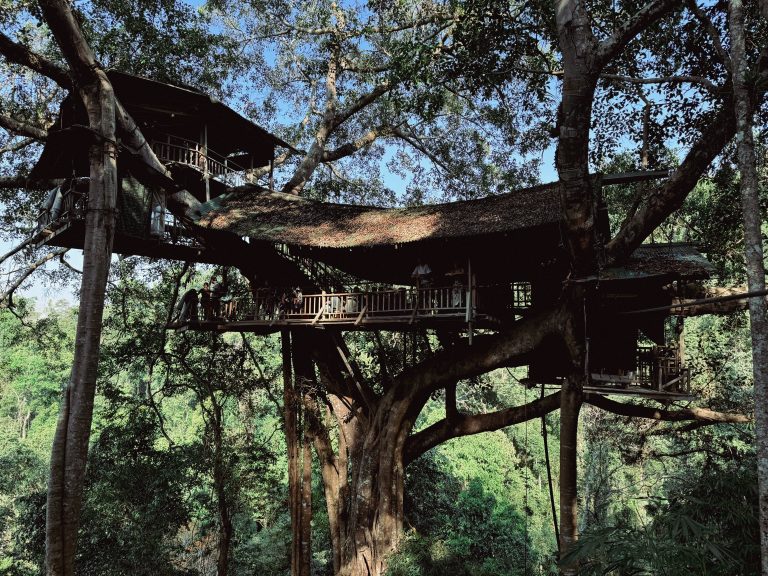
I wasn’t even planning to visit Laos during my South East Asia trip last year. Then one day in November, whilst hunched over my desk planning my route, I saw a deeply enticing picture – a wooden treehouse, surrounded by leaves, and doused in sunshine.
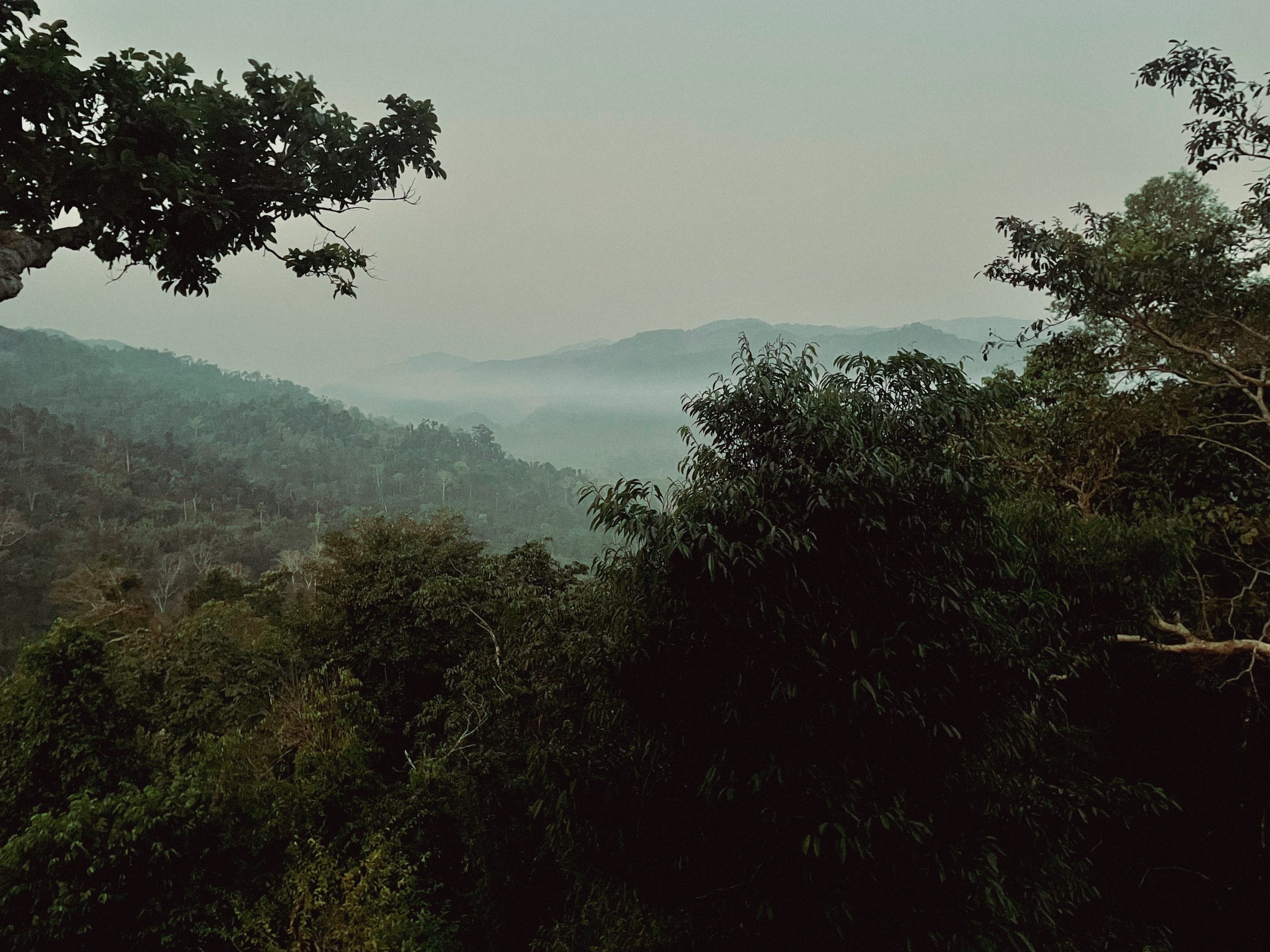
It was a snap from The Gibbon Experience – a tourism-based conservation programme that allows people to stay in tree houses and zip wire across Nam Kan national park in Northern Laos.
The organisation protects the area from logging by creating an alternative income, and gives the locals here a way of life. Guests that come here have a small chance of spotting endangered black-crested Gibbons (did we see them? Read on to find out).
After a quick scan of reddit and TripAdvisor – my go-to for travel advice – it seemed legit. And as luck would have it, there was availability during the weekend I had planned to leave Chiang Mai (but not before – so book at least three months ahead!).
Without much further thought, I booked a two night stay (the “Classic” tour) for around £300. This was the most expensive thing I bought during my time in South East Asia, where I worked for three months as a digital nomad – so I didn’t hold back. How else does one spend their weekends off in Asia?
This was my first land border crossing of the trip, so I was a little nervous, especially as I’ve mostly travelled in Europe which is pretty straightforward as a Brit.
But having my passport photos and PRINTED e-visa in hand, made the process pretty simple. If you don’t bring this with you, ensure you have $50 crisp dollar notes so that you can pay for your visa.
Laos is a developing nation, so a little preparation goes far.
Most people heading into Laos this way will stop first at the nearest small town, Huay Xai (pronounced “Hox Aye”). Once I had crossed the border, a couple of buses took us into the town, making the process fairly straightforward and easy to navigate as a solo traveller.
Luckily, you don’t need to get Lao kip (LAK) before entering the country – they accept Thai baht, and sometimes even US dollars. So do NOT use up all your Baht when leaving Thailand. You’ll need some to pay for the bus over the Friendship Bridge, and the driver in Laos (it cost us around 200 baht each).
Once your baht is gone though, you’ll need cash. The kip isn’t a strong currency, and the country is cheap as chips – a clean dorm bed will set you back around £6–8, and meals are £1–3. The max you can get out of the ATM is 2M kip (around £70), so just grab the lot, and use it up – don’t get little amounts.
Another big tip – the ATMs in Laos can’t be trusted. Take your money from the machine as soon as it comes out. I was with a girl whose cash got swallowed back in and one took my bank card later in Vang Vieng (a story for another time).
Laos feels much smaller and rural after Thailand, because it is. Memories of the first five minutes include being overtaken by children on motorbikes, and wall to wall adverts for Beerlao.
With this in mind, I had pre-booked a dorm room at “Little Hostel”. I needed a good night’s sleep, and wanted somewhere clean and comfortable.
It really delivered, and the girl running it (who spoke excellent English) even made us a wonderful porridge breakfast. There’s a number of nice options for dinner too, but bear in mind, service will be VERY slow. That’s just what it’s like in Laos!
Heading to the park, and facing my fear of heights
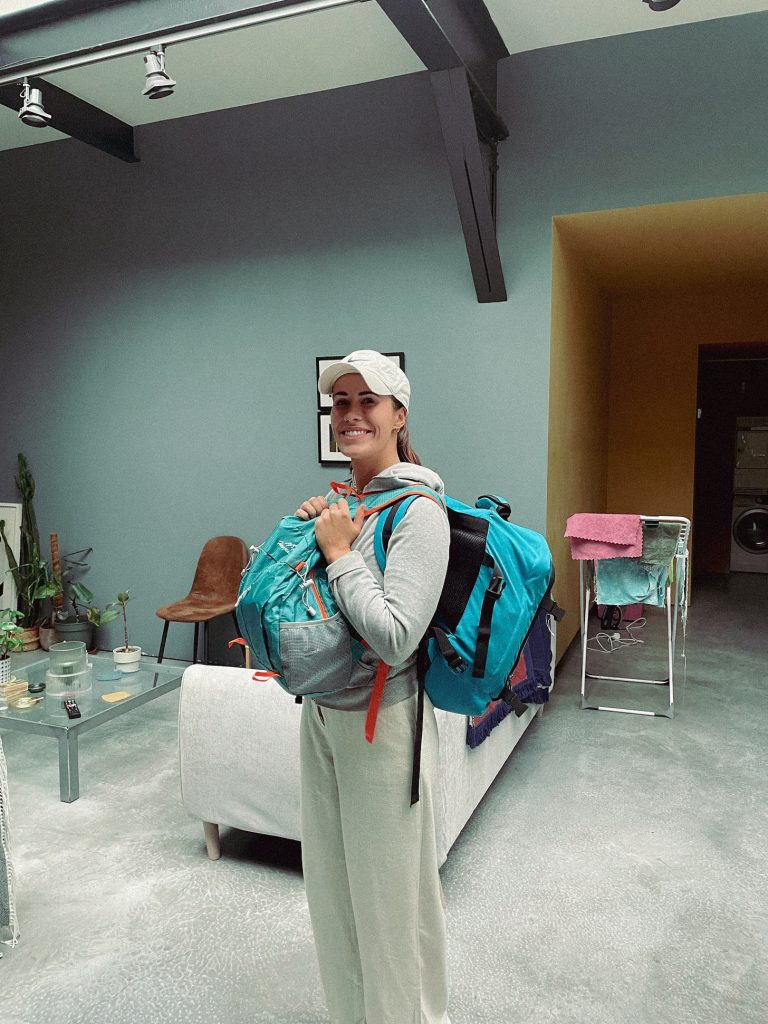
The Gibbon Experience office is easy to find, and we headed there at around 8am to swap our bigger bags for overnight packs. After a rather glitchy safety video, we put our lives in the hands of the staff and started the two hour drive up the mountains.
The next four hours was a blur that consisted of weeing in holes in the ground (common all over Laos), swapping extremely rudimentary small talk with our guides (mostly just smiling and nodding) and not looking each other in the eye until we stopped at the Gibbon Exp. Headquarters for lunch.
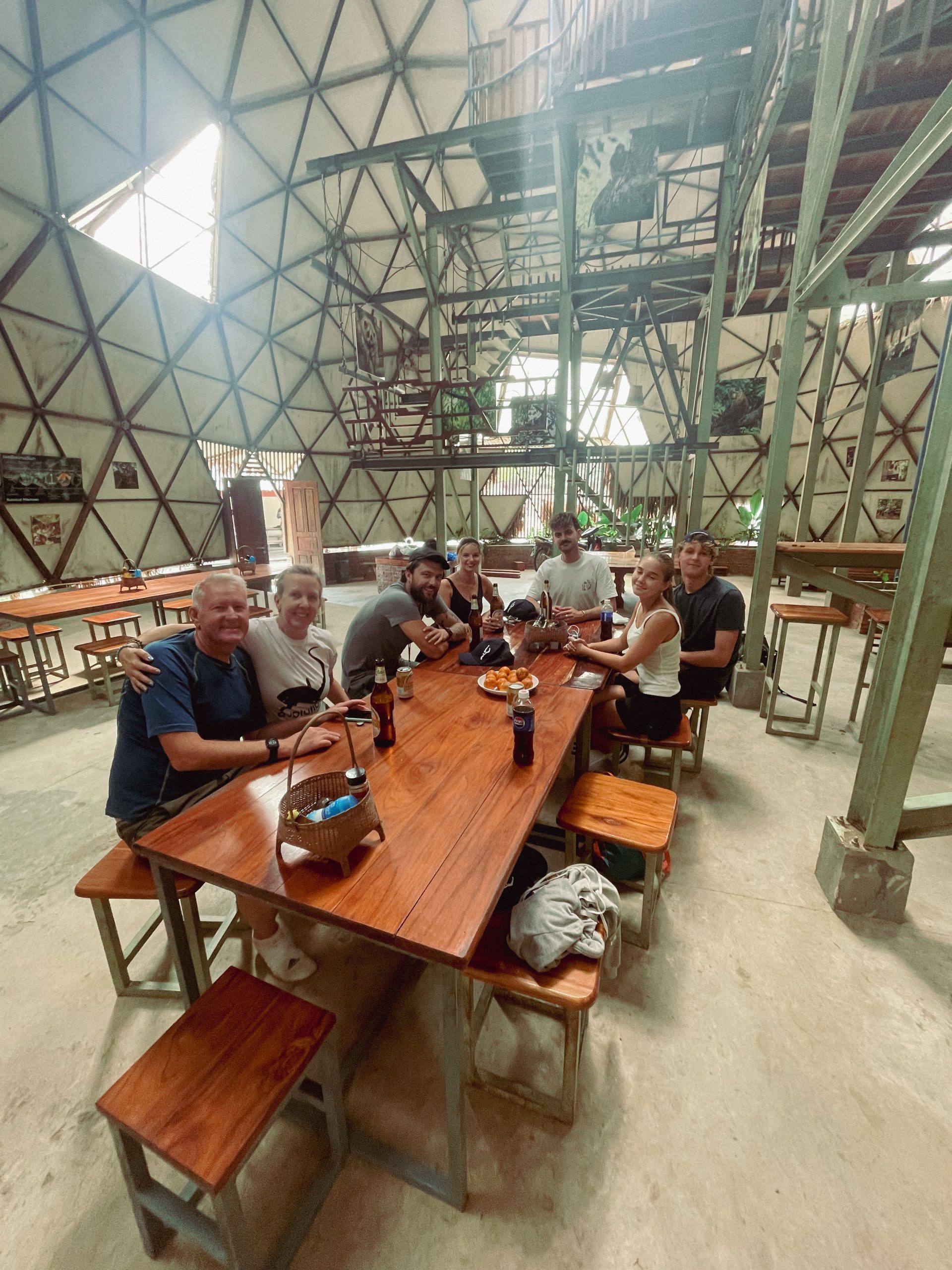
There were eight people in my group (just three couples, and two solo travellers, including me), and after a filling lunch of glass noodles, we started to wake up, and managed to exchange names and back stories (long story short, we had a wonderful time together).
Stopping for lunch at the headquarters
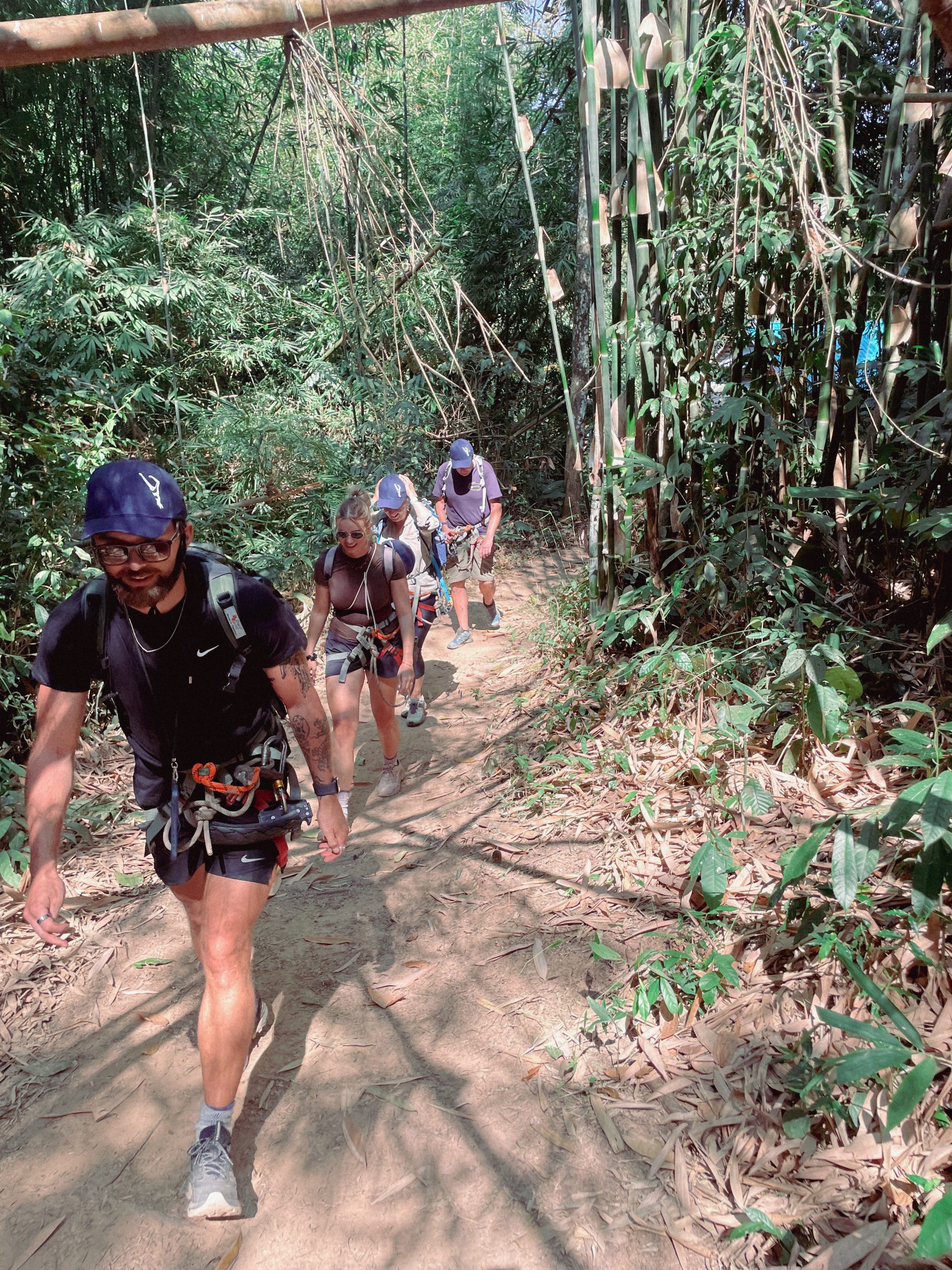
The trip requires a fair bit of hiking, so be prepared
We then took a shortish trek into the forest, where we were taught how to use the zip lines.
It was a little nerve wracking to begin with, because – if you’ve seen the footage from my instagram – you’re extremely high up. In the tree tops, no less! In addition, neither of our guides spoke good English. For full transparency, there was a death in 2017, but since then, the organisation has tightened it’s health and safety (and critically, weight limit). I knew this ahead of time and felt comfortable, but do your research and consider what feels right to you.
I’m actually slightly afraid of heights, but the minute I jumped off the ledge, I was just buzzing. Nothing can prepare you for the incredible views of the canopies, and the quiet sound of the forest around you as you’re speeding along the wire – that’s for sure.
After a couple of hours, we zip wired towards our treehouse and retired for the evening (at around 4pm).
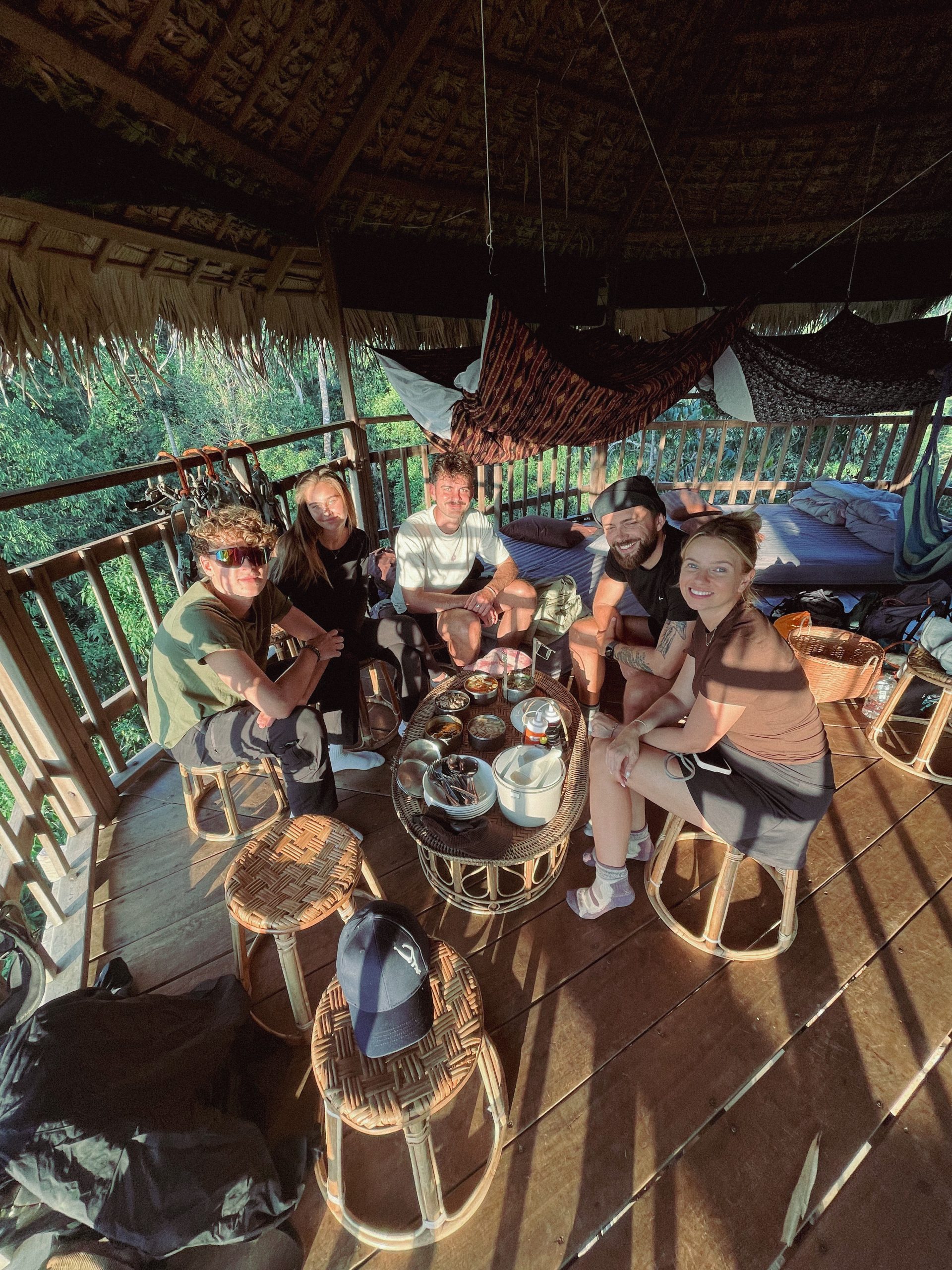
Dinner at our treehouse
As the sun started setting, it was time to explore our home for the weekend.
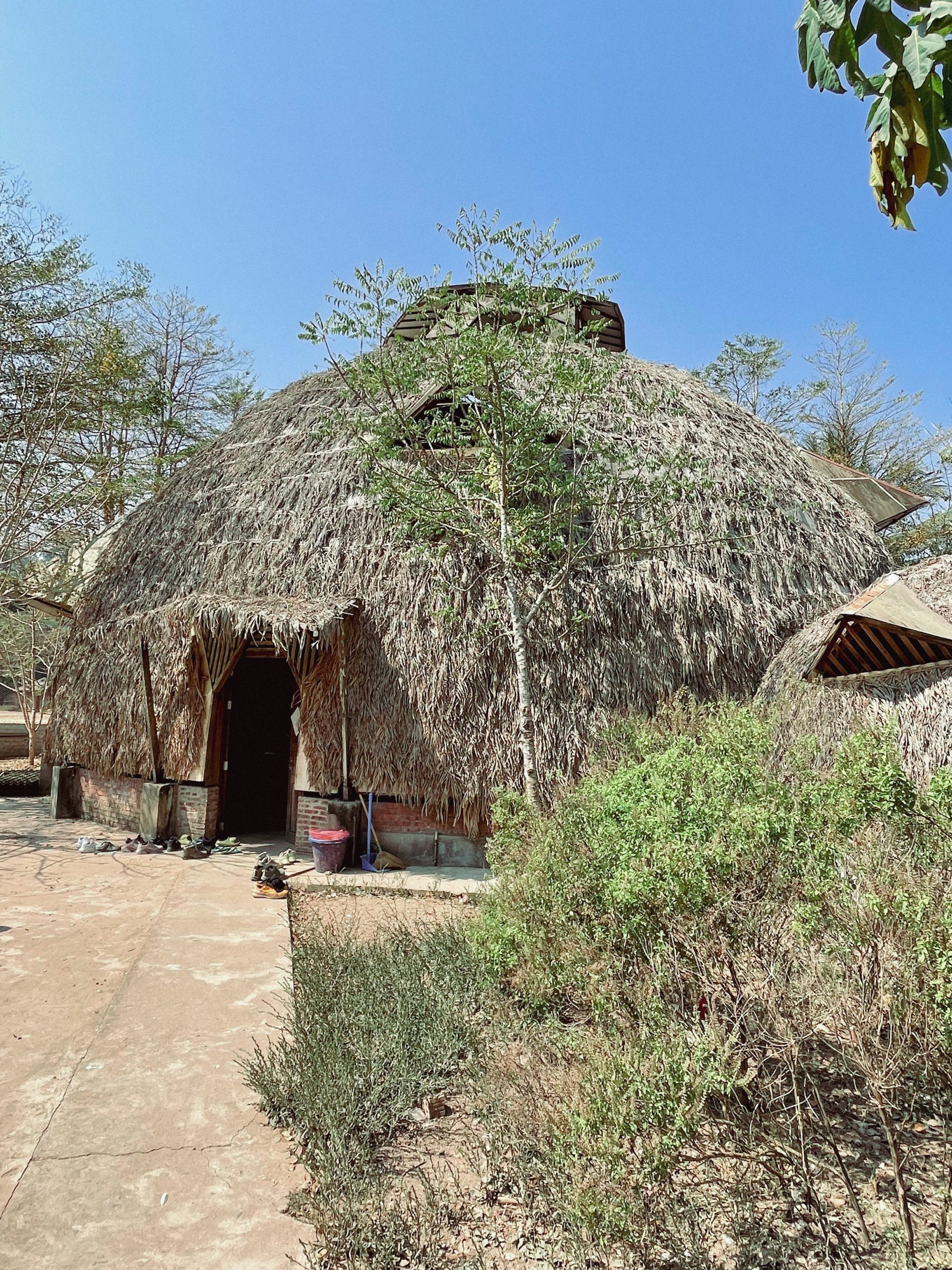
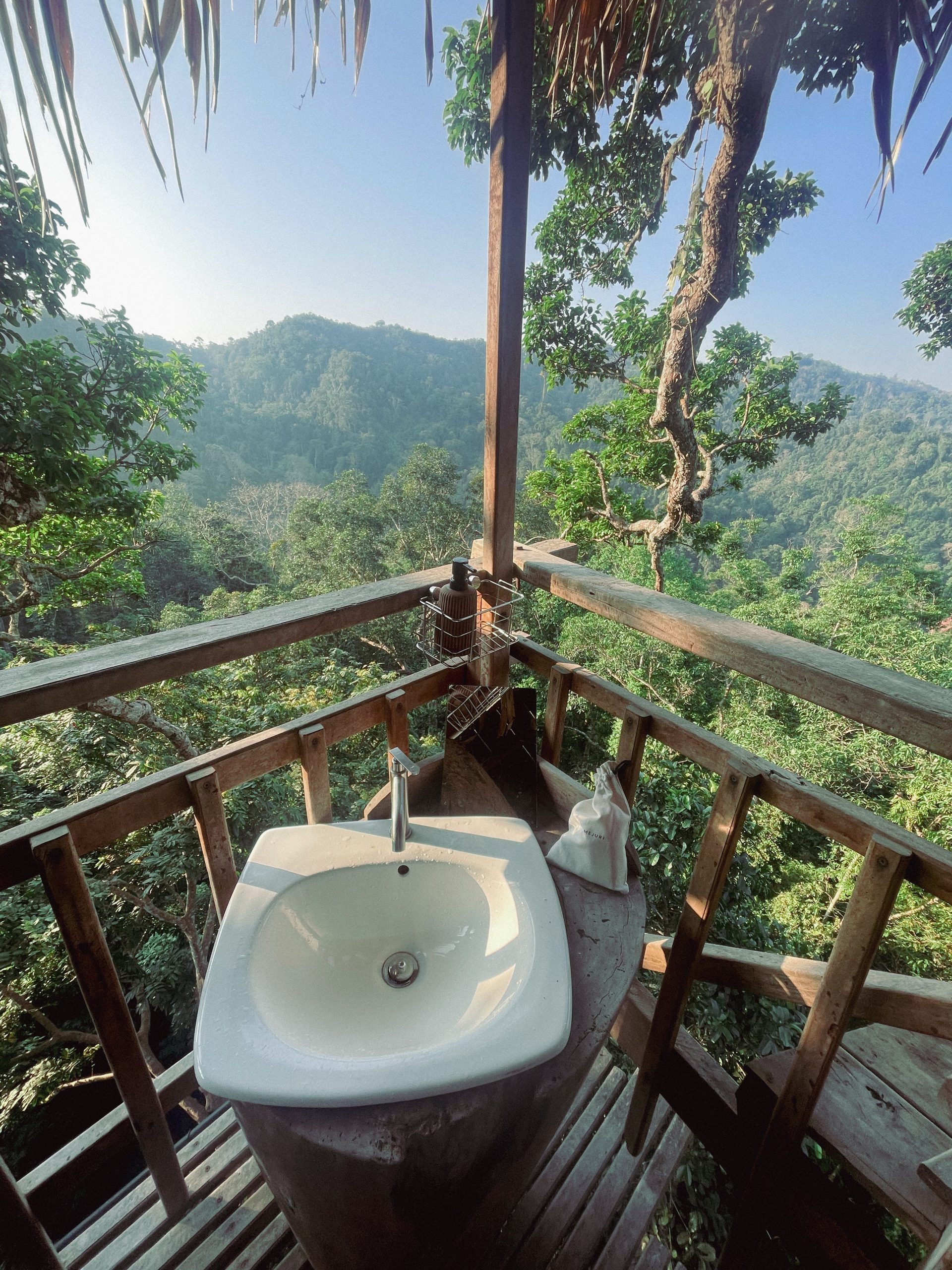
The treehouses, raised over 40 metres off the ground, are wonderful. It was just like being in Swallows and Amazons, but with modern accompaniments. I’m talking a flushing toilet, electric lights, and a waterfall shower. Yes it’s cold – but it comes with a view of the jungle, so compromises must be made!
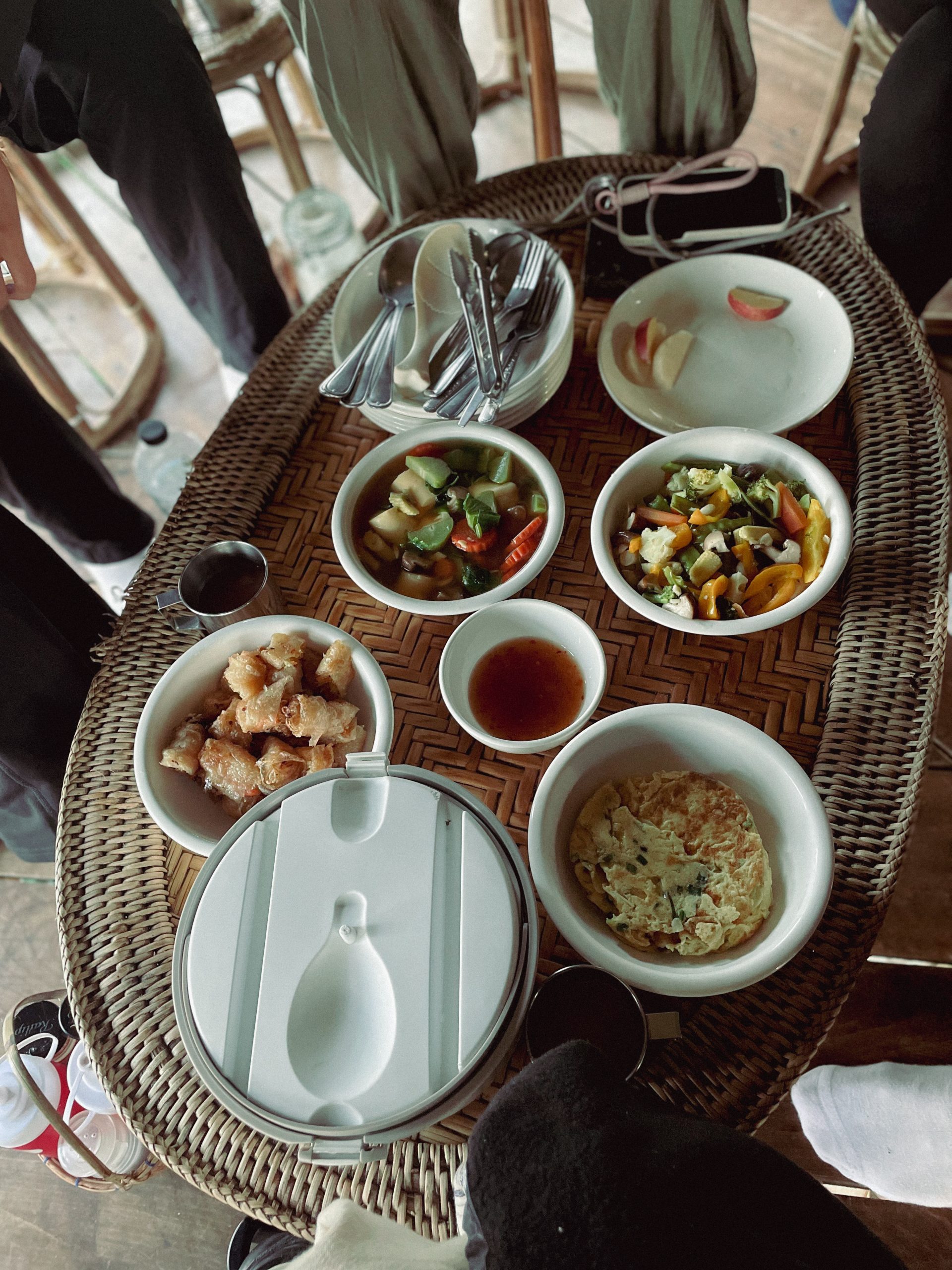
Dinner consisted of spring rolls, eggs, rice, noodles and coffee, and was wired in by the guides, who also joined us for traditional shots of rice wine.
Zip wiring for days on end is tiring, so when the guides left, after helping us with our beds, we deftly located the biscuit box and guzzled them down whilst playing card games.
When darkness truly fell, the six of us turned off the lights and listened to the sounds of the dense wildlife, before getting into our enclosed ‘bed tents’ and settling into a deeply comfortable sleep.
The forest is noisy at night, so bring ear plugs if that bothers you (I quite enjoyed it).
Bonding with the wildlife
Up at 7am for brekky, which – given it was a repeat of the last evening – was a bit of a shock to the European tummy. The food remained the same for the next 3 days, with slight variations each time, and allowances for the vegans in the group.
After coffee, we were back out on the zip lines until 11.30, with a fair bit of hiking in between. Not unmanageable, but something to keep in mind – you don’t slow down much, and even our group (20s–30s) was getting tired. Luckily we had a solid three-hour break back at treehouse five for lunch and a nap.
In the afternoon we explored the other treehouses – the 50m-high one, the big 11-person one, and the honeymoon suite where we met a lovely retired couple that had met in Cambodia. All were wonderful, but we still felt that ours had the best view.
We spent the evening looking at the giant spiders in the rafters and trying to catch a rat we saw deep-throating our ketchup bottle. There were also some bats flying through – they didn’t bother us, but definitely get your rabies jabs before coming. I will stress that the sleeping situation unnerved me before I left, but the mosquito nets around our tents were solid, and nothing was getting in. It was plenty warm, and pretty cosy!
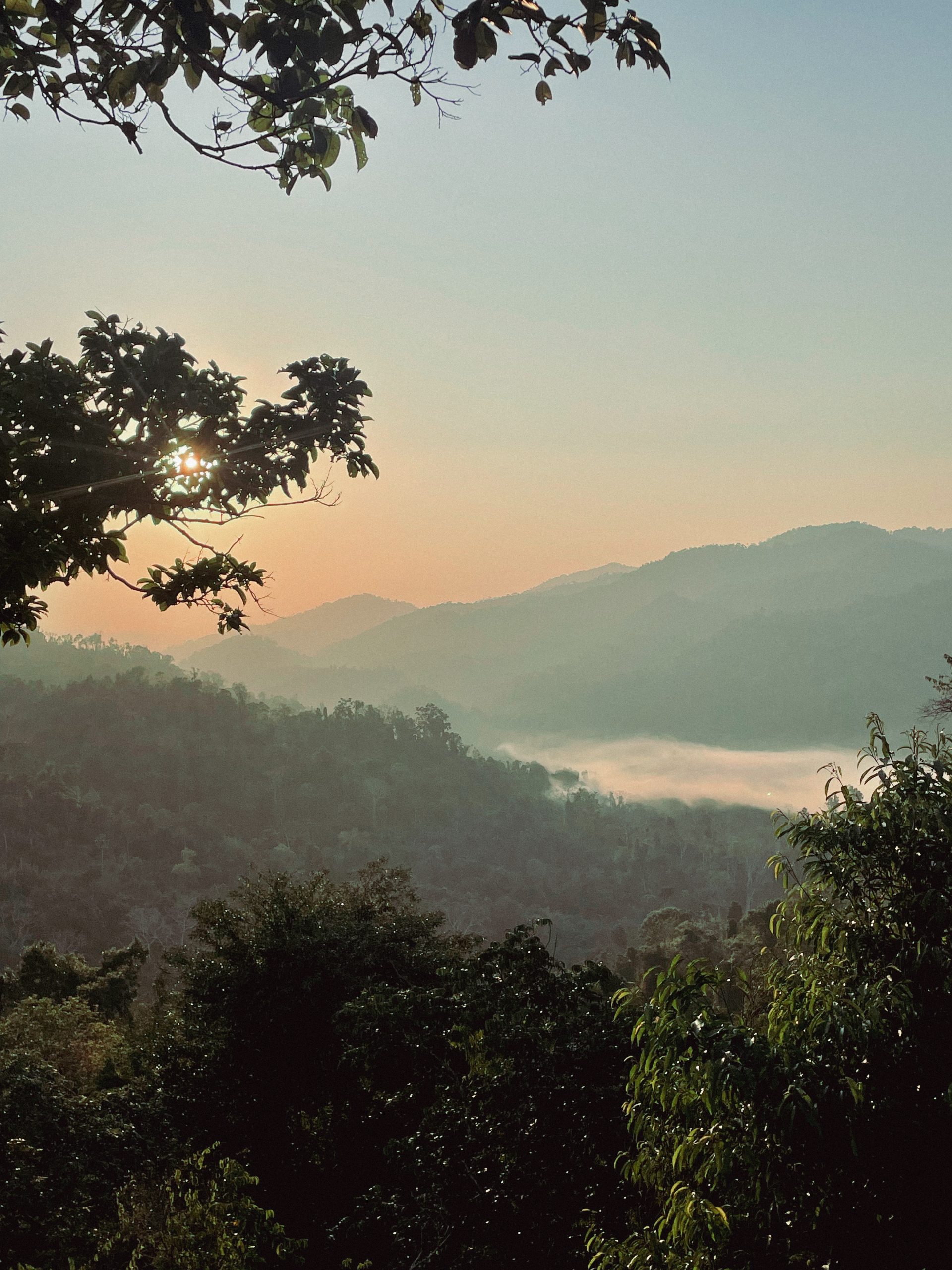
After another brilliant sunset, we were up at 5.30 the next morning for a final hike to the viewpoint. This time we headed toward a special viewpoint where the gibbons tend to feed. Unfortunately, despite lingering for some time, we did not see any – but we did hear them singing in the distance, which was a highlight.
We packed in a little more ziplining that day, and by midday, we were back at the village for lunch, photo swapping, and the journey home. We were absolutely shattered by this point, but having bonded on the trip, much laughter was had on the way home – a sea change from the way there!
It really was a wonderful and unique experience, for not that much money by UK standards. You can take a one night trip, but the “Classic” two night tour is less popular, more intimate, and only slightly more expensive, so I would suggest doing this. Just ensure that you book well ahead (at least three months in advance).
My top tips:
Bed sharing – As a solo traveller, I did have to share a bed with a guy my age. I was comfortable with this because we got on very well, but some people might not be
Wildlife – Whilst I was anxious about spiders and rats, they didn’t prove to be a problem. The beds are really secure, and as long as you put your net right around it (which we did), you’ll be fine. For the spiders, my advice is to simply not look at the rafters. We did see a rat but the experience turned out to be more amusing than scary. Don’t bring snacks though, as they will eat through your bag. There are bats flying around, so get your rabies jab!
Games – Bring card games for evening time. I advocate for Monopoly deal
Timing – I’d opt for dry season, but the trips do run in the rainy season too
Clothes – Pack as little as you can manage, but long sleeves for the evening (I went in dry season / February). Bikini for the shower (although there is a curtain)
Gibbons – Accept that you probably won’t see them, but you’ll still have fun
Length – Do the Classic / longer tour (not the Giant Loop)! It’s a more intimate group and you see a lot more
My capacity for animated exploration was pretty low at this point in my journey, and – knowing it was Asia’s financial hub – the prospect of being back in a sea of skyscrapers felt draining.
Fortunately though, the city is teeny-weeny – roughly 2.5 times smaller than Greater London.
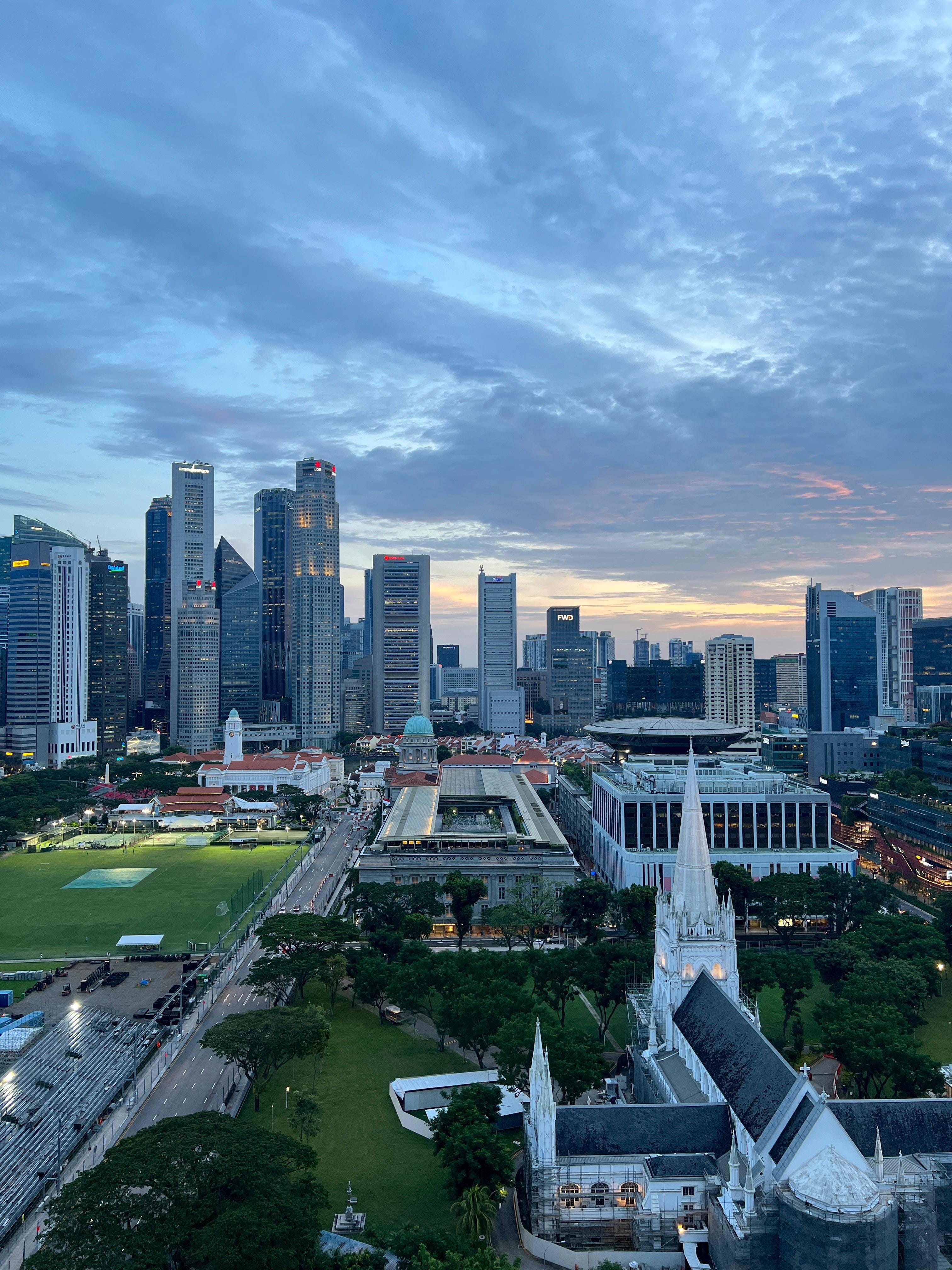
As a result, I was able to cover a lot of ground within 48 hours. And it turns out there’s quite a bit more to this tiny island than first meets the eye.
Here’s how I spent my time there.
First of all – sleep. I flew in from Sydney, so it was a relatively short flight, arriving late at night. I decided to stay in an area called Kampong Glam, Singapore’s historic Malay–Muslim quarter (more on this shortly).
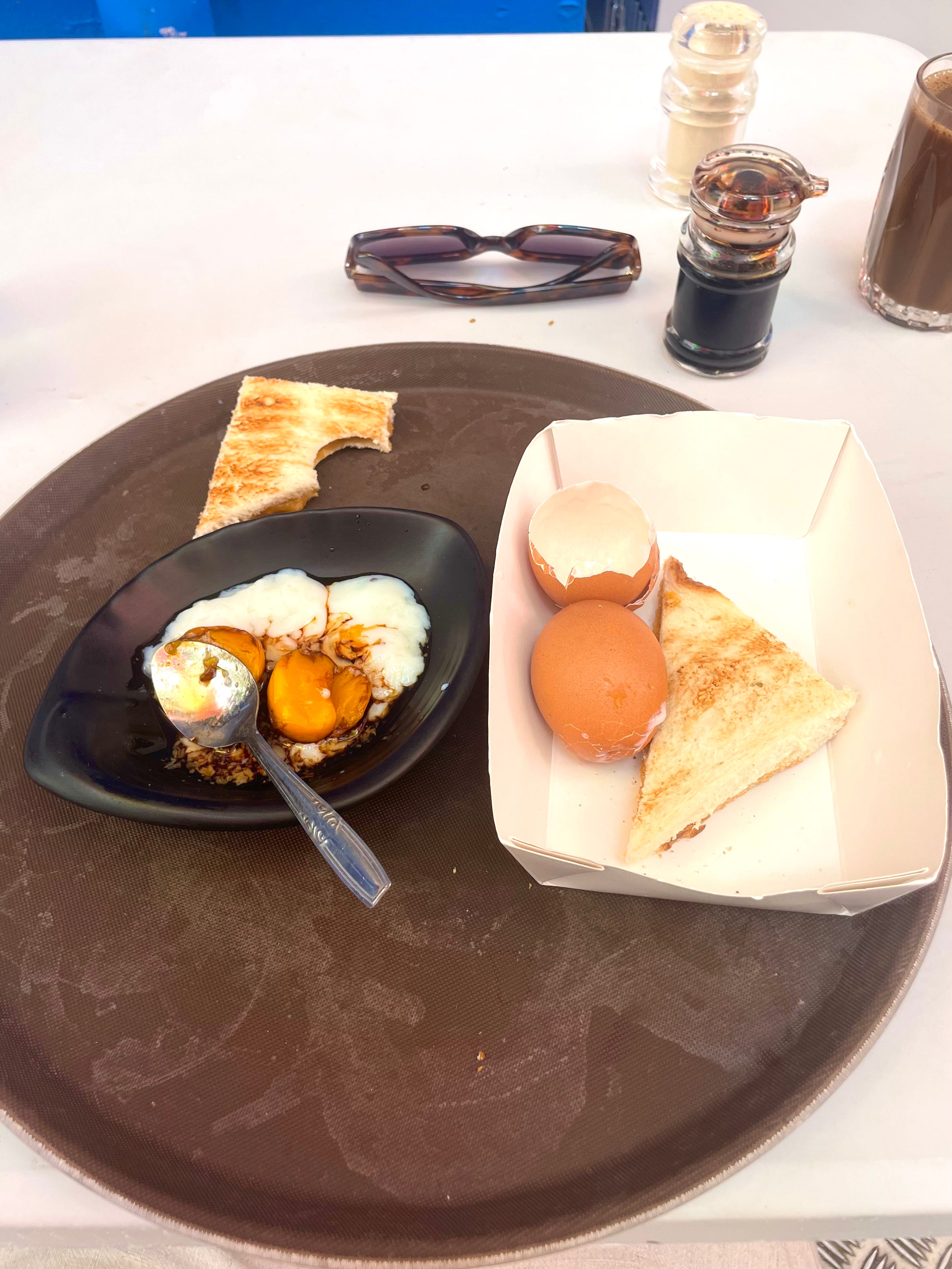
After a good night’s kip, I spotted a sign for kaya toast. This is a traditional breakfast in the country, so I went to check it out.
Kaya toast – a traditional Singaporean breakfast – is usually set alongside runny, soft-boiled eggs and local coffee (kopi)
It looks and tastes a bit like a peanut butter sandwich, but the filling is actually a sweet coconut–pandan jam (kaya). It’s served with soft-boiled eggs, soy sauce and pepper, alongside a strong coffee (kopi).
I didn’t really know what I was doing, but a kindly stranger advised that you’re meant to dip the toast into the egg and sort of lap it up.
I enjoyed it – but if you’re after more Western cuisine (which might be the case after a long trip away), there are plenty of cafés offering cooked breakfasts too. It’s a cosmopolitan city, at the end of the day.
Next, I headed to the old town, to Kampong Glam. Even before you’ve done any Googling, you can tell this is the ‘cool bit’.
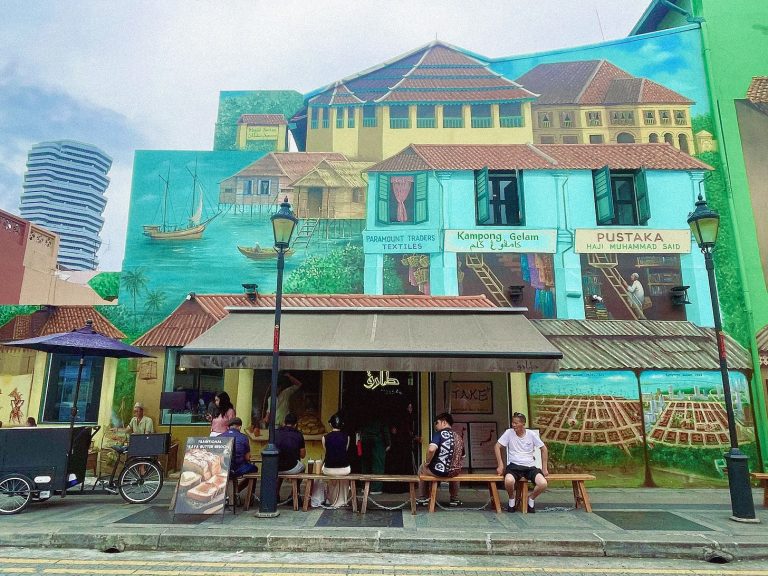
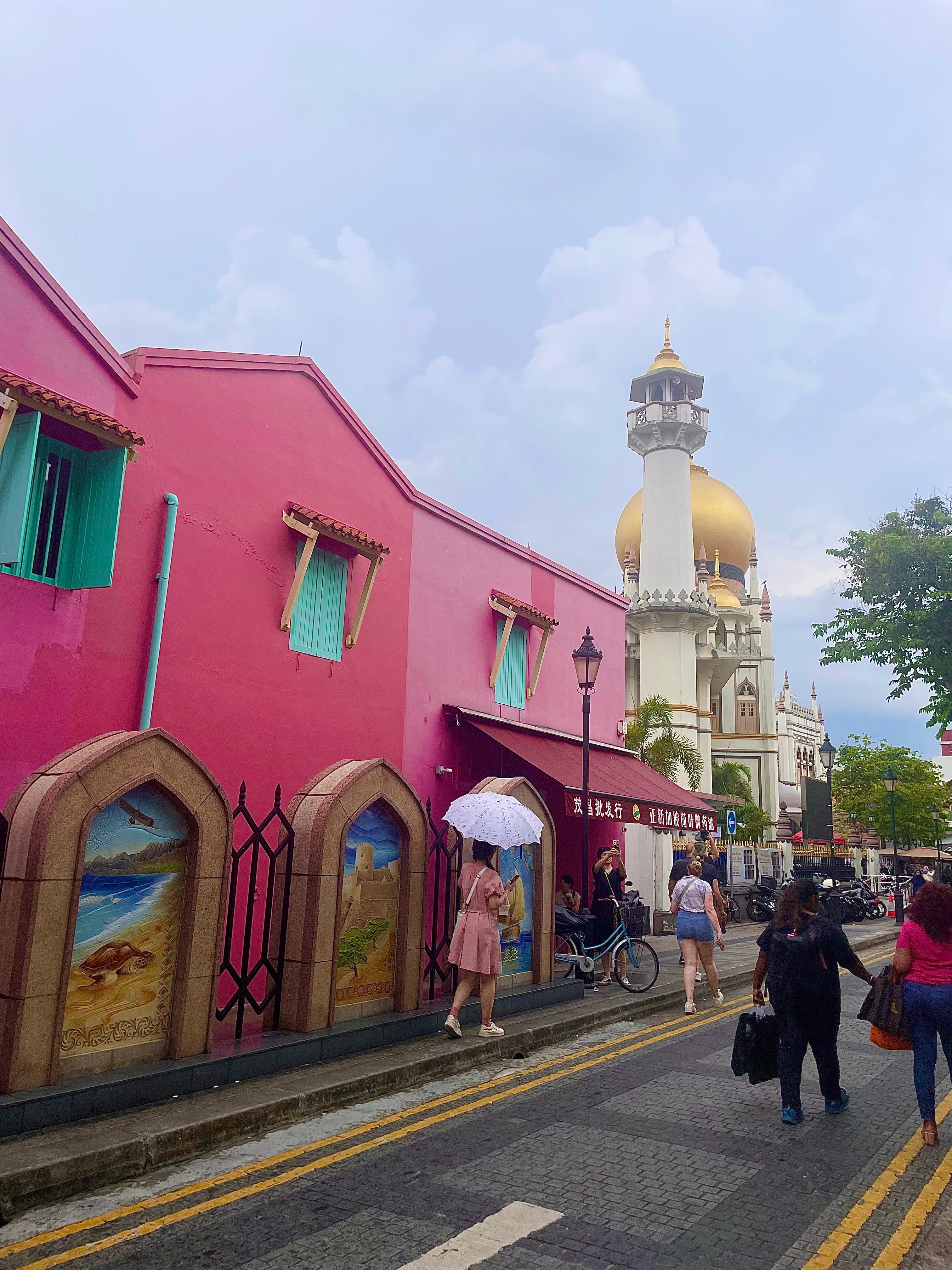
Sights from Kampong Glam, Singapore’s Muslim Quarter – now a vibrant shopping and eating area
Unlike the modern high-rises typical of the Singaporean skyline, this small cluster of streets is made up of shorter, squatter buildings packed closely together, many adorned with colourful street art.
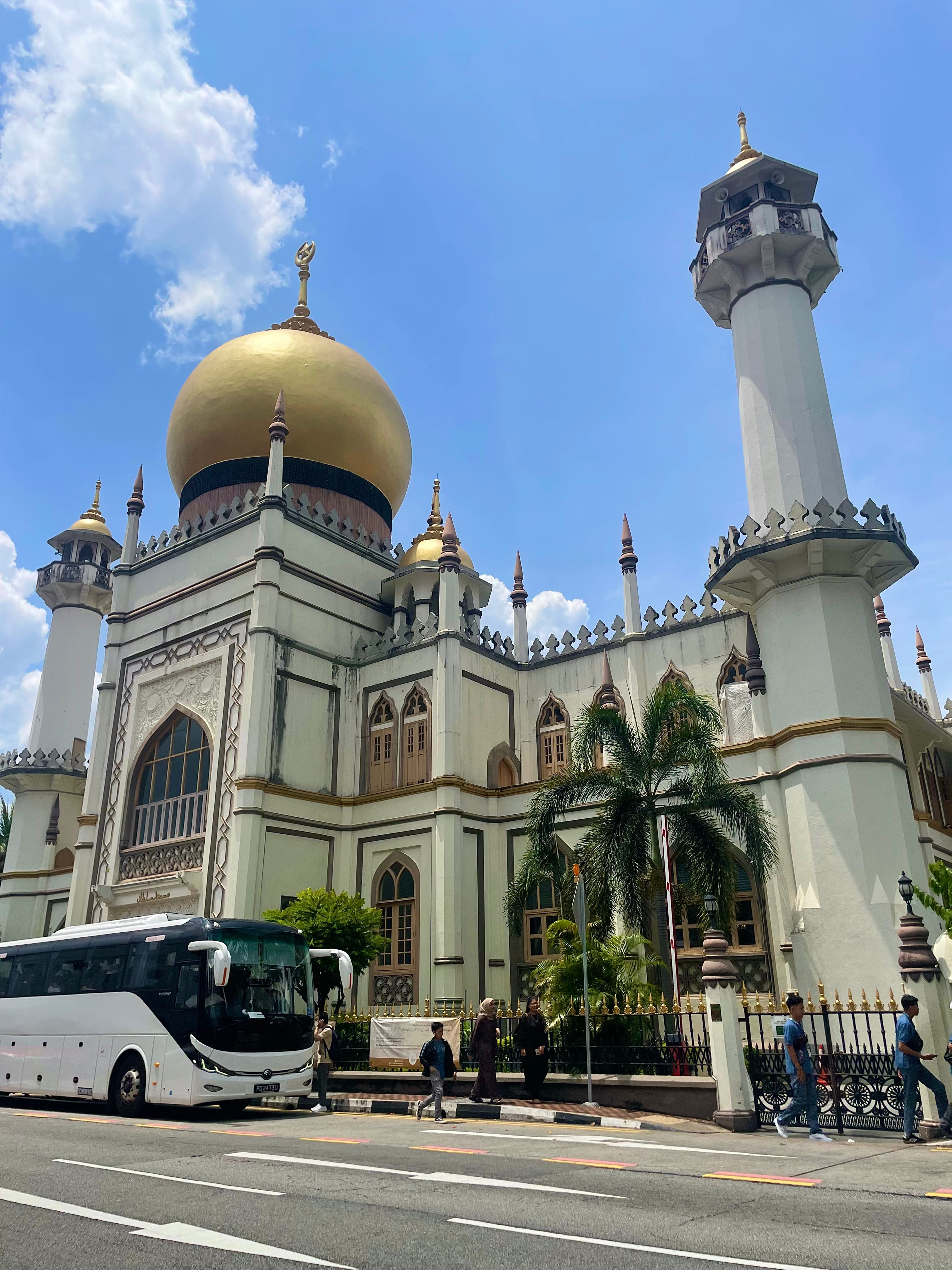
Walking around in the daytime, it was full of a mix of older and more modern cafés (including places like % Arabica, one of my favourites in Hackney), lots of cute shops, and the beautiful Sultan Mosque – the largest in Singapore.
Kampong Glam is made for Instagram, so if you’re a talented photographer (unlike me), you’ll want to kill some time here like I did exploring the artwork, buying trinkets and hopping between cafés and ice-cream shops.
By this point, it was pretty hot, and I needed some greenery.
So, after seeking shade in a market, I took the train into the centre, and headed towards the Singapore Botanic Gardens.
This park provides a welcome oasis from the chaos and closeness of the surrounding streets and buildings and – fun fact – are the first and only tropical botanic garden on UNESCO’s World Heritage List.
I was able to pass some peaceful hours here watching otters and lizards, and stopping for lunch at the café.
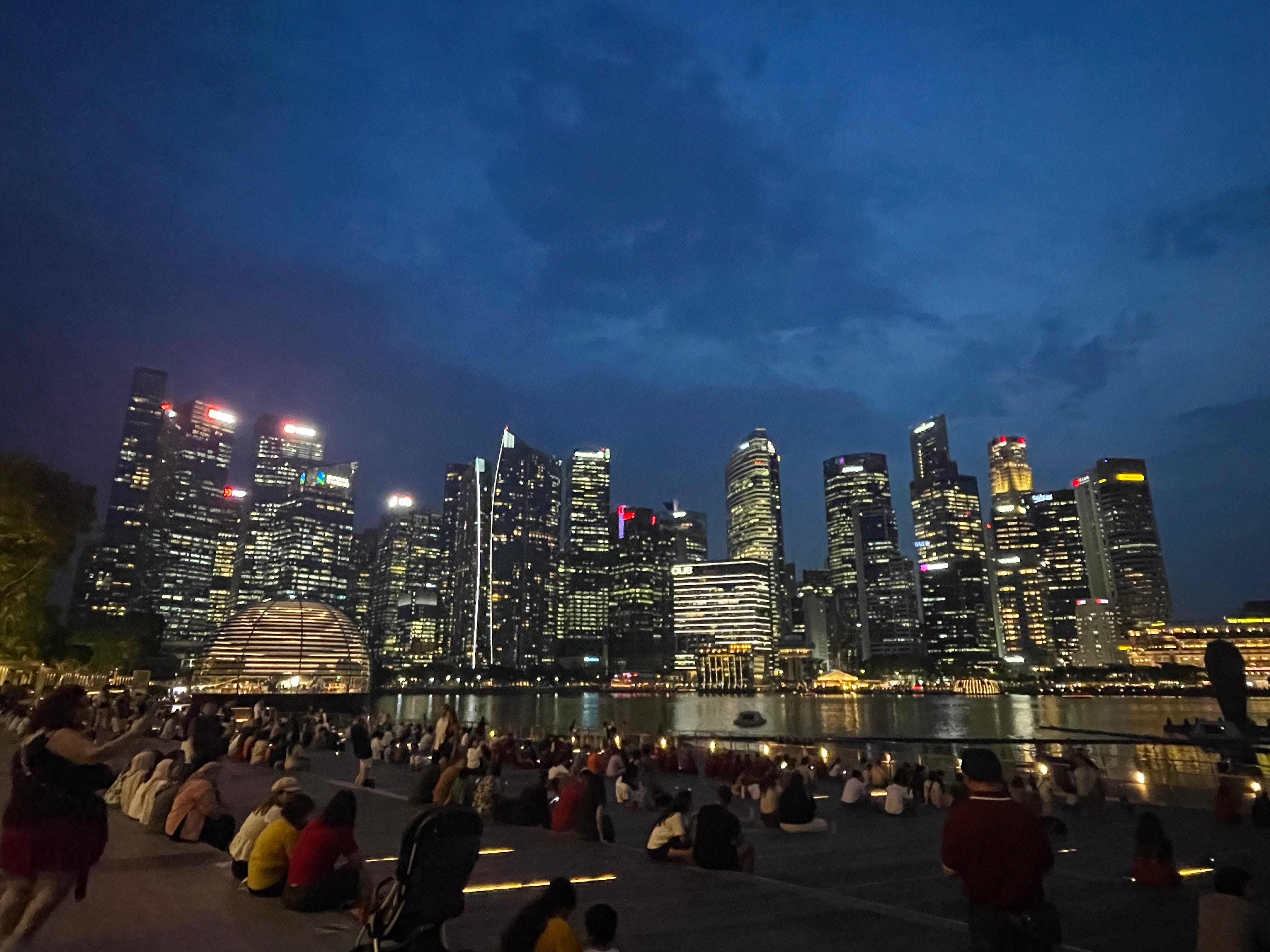
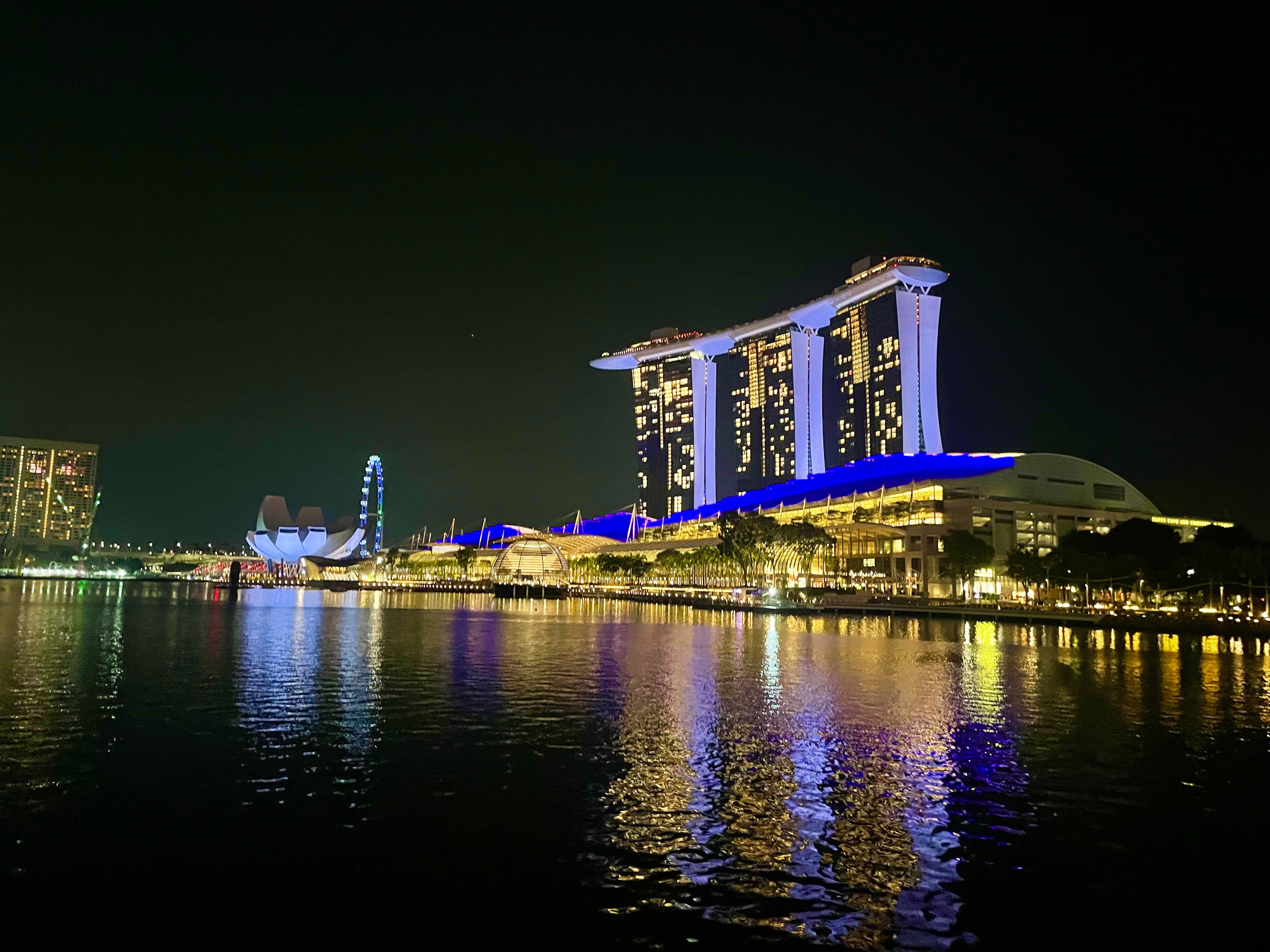
Later, I swung by Marina Bay Sands for a hot chocolate and a seat by the water to watch the evening light and water show, Spectra.
This runs at 8pm and 9pm (with later shows on weekends). It’s a fun watch, and worth sitting down to watch before wandering along the marina.
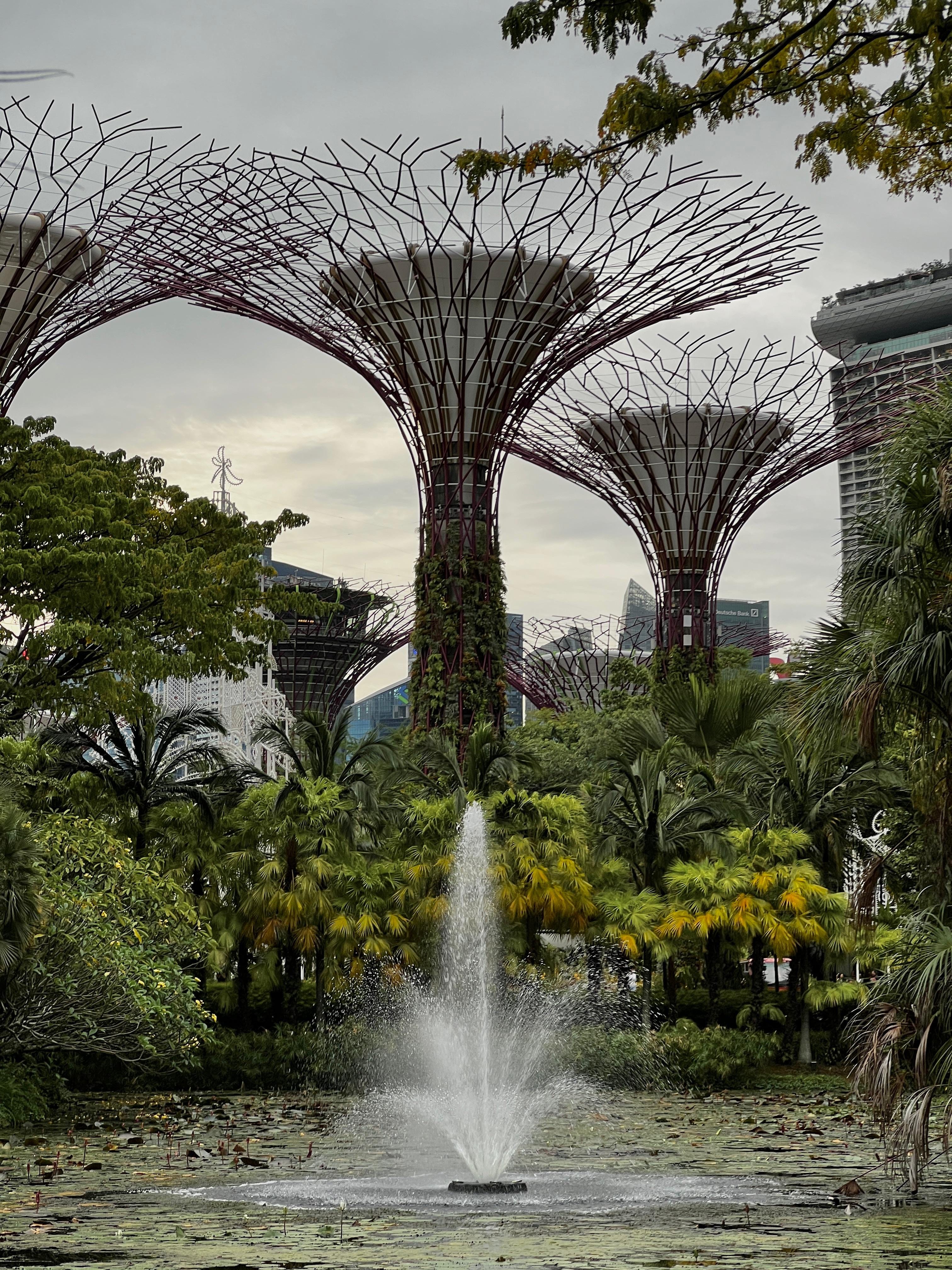
If there’s time, you can also head next door to Gardens by the Bay for the Garden Rhapsody show at the Supertree Grove. If you’ve ever seen photos of Singapore, chances are you’ll have seen images of these huge illuminated tree-like structures. I’m a fool and missed it, but I hear it’s fantastic.
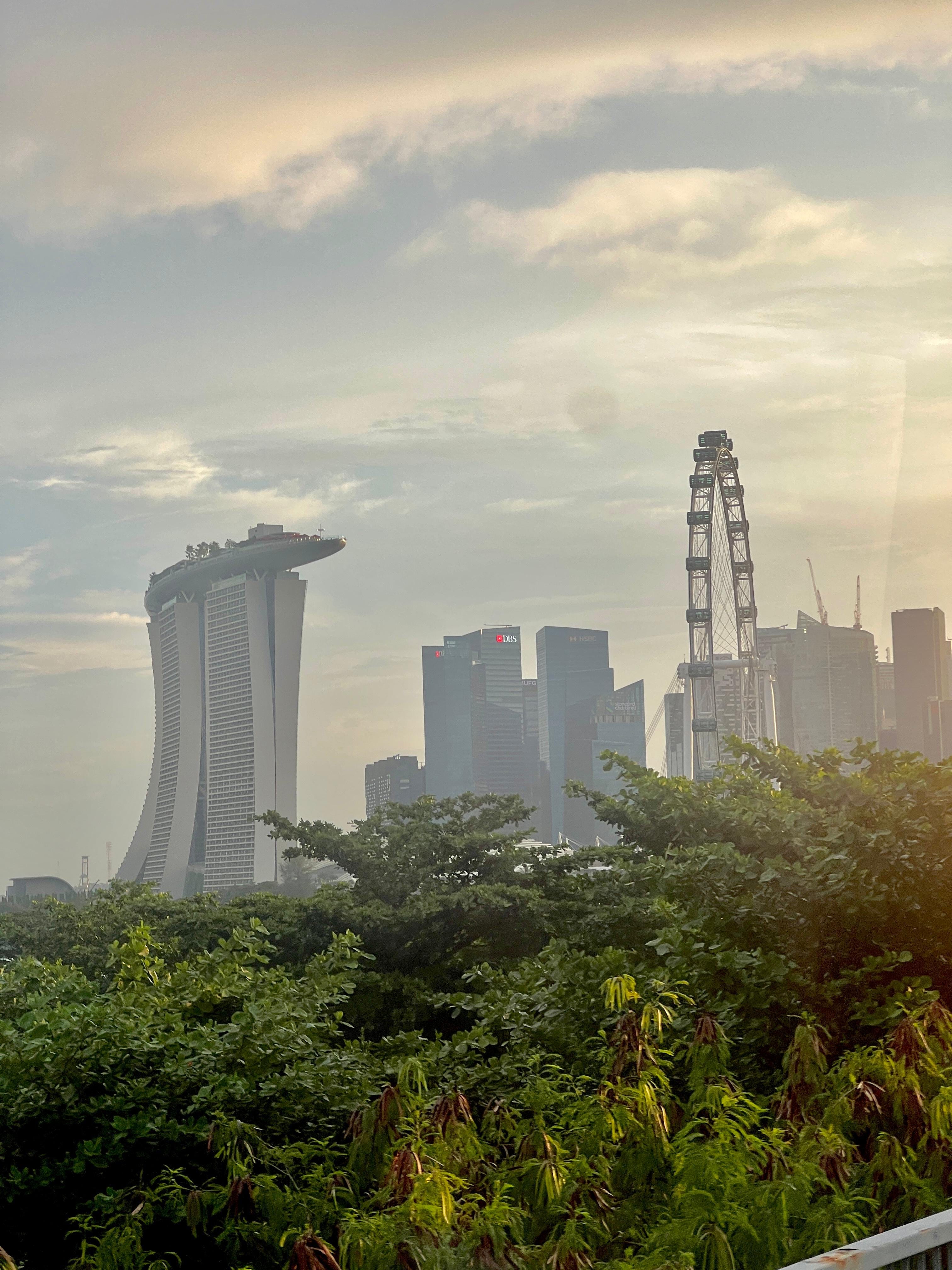
Singapore is known for its iconic hotels, including Marina Bay Sands
After the light show, I took a nice walk along the bay, and soaked up the buzz of the city, before grabbing a drink nearby and heading back to my hostel.
And the final attraction was the – umm – airport!
Somewhat unsurprisingly for a nation know for its stopover flights, Singapore airport itself is quite a spectacle.
I had a midday flight the next day, so I arrived a couple of hours earlier than necessary and went to “Jewel Changi”.
This is a kind of ‘lifestyle hub’ in the middle, that feels more like a futuristic indoor jungle than an airport.
At its centre is the Rain Vortex – the world’s tallest indoor waterfall – surrounded by layered greenery and walkways.
It’s a little over the top, but the cross between function and foliage is very characteristic of Singapore in general, and makes for a nice way to round up a visit to what was – unexpectedly for me – not just wall to wall buildings and people in suits.
It’s quite possible that if you’re reading this blog from Singapore, you’re tired, jet-lagged, and dragging a big suitcase along, too.
But try to not let jet lag stop you from heading out. There is more going on beneath the surface than it seems, and a day or two in the country is plenty.
If you have the time, split your flight; dump your bag; and spend a few days letting this busy city show you what it’s made of.
On the third day of my first-ever trip to Asia – having started a new chapter as a “digital nomad” at 32 – I awoke full of adrenalin and ready to see some other ‘must sees’ on my list.
Equipped with snacks from the 7/11 – a backpackers’ sanctuary – I headed out toward a local market, dodging traffic at every turn.
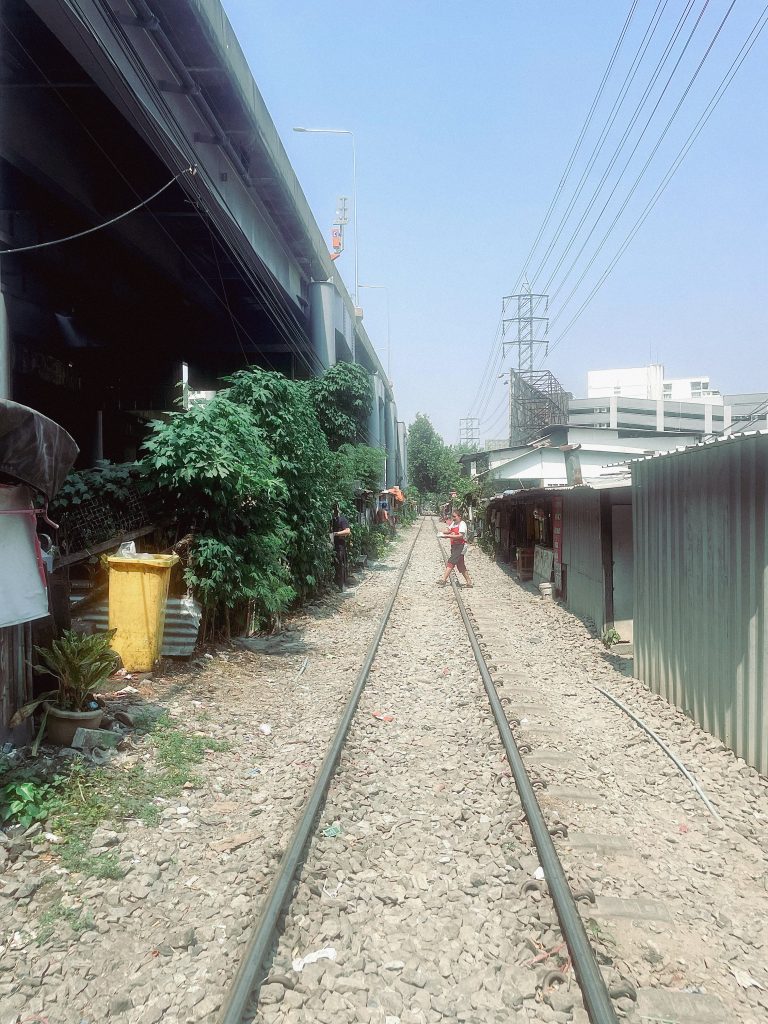
Suddenly, whilst approaching a railway track, I noticed a curious sight. Tucked along either side were small houses beneath the Expressway, and people were crossing the tracks and disappearing from view. Where are they going? I wondered.
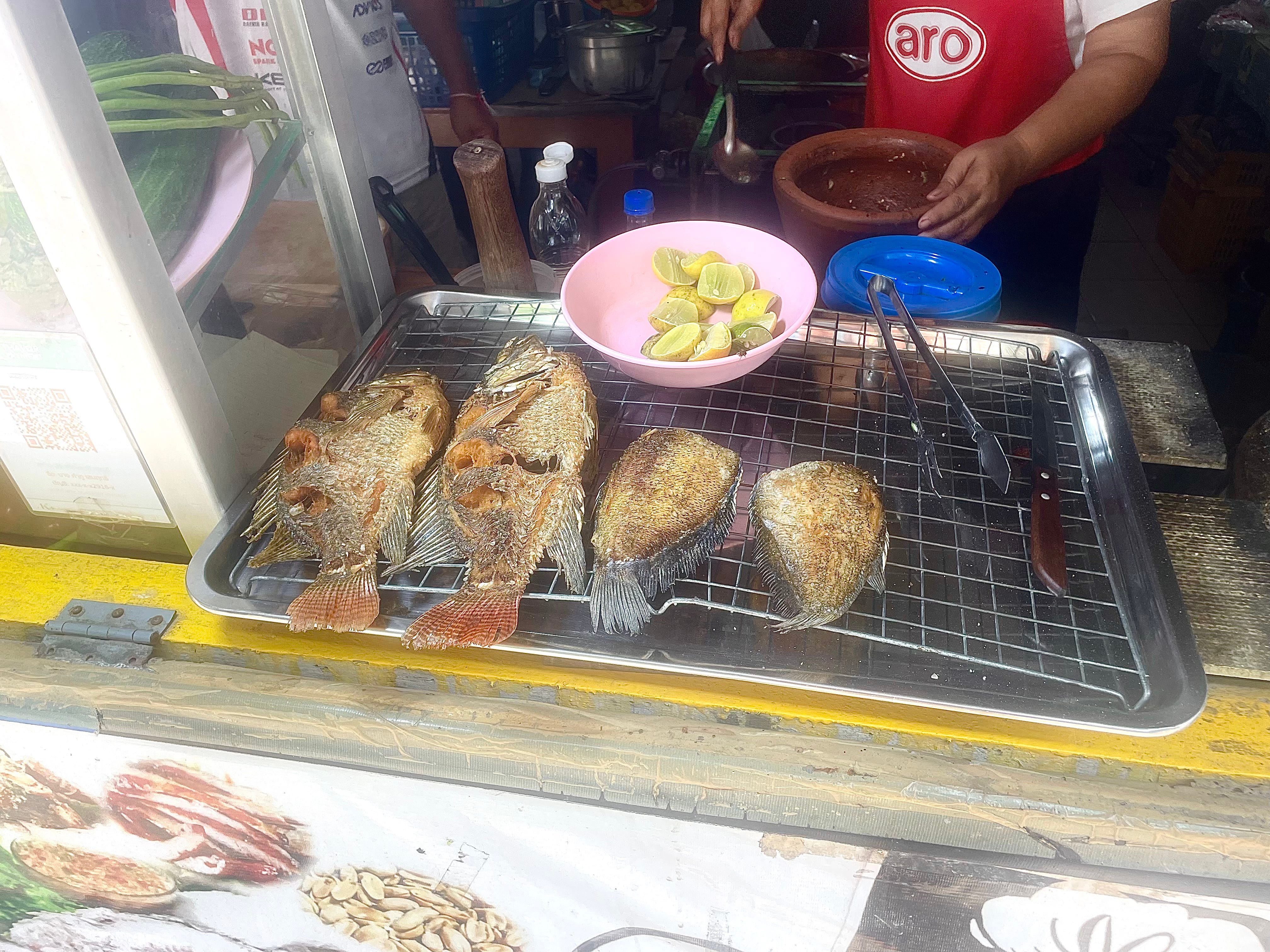
As I ventured further, it became clear that the place was quietly teeming with life. To my left, a family was sitting down for a meal; to my right, a man was gutting fish. It was a tiny community, living in a traffic sandwich.
Life must be loud for this community under the expressway
A fish restaurant alongside the railway track
Bangkok – home to 11.4m people – is not a place where wealth is equally distributed. To think they were wedged beneath the underpass like this, with cars and mopeds on all sides and trains cutting through (I presume), demonstrates how crammed with people it is.
Visiting the flower market
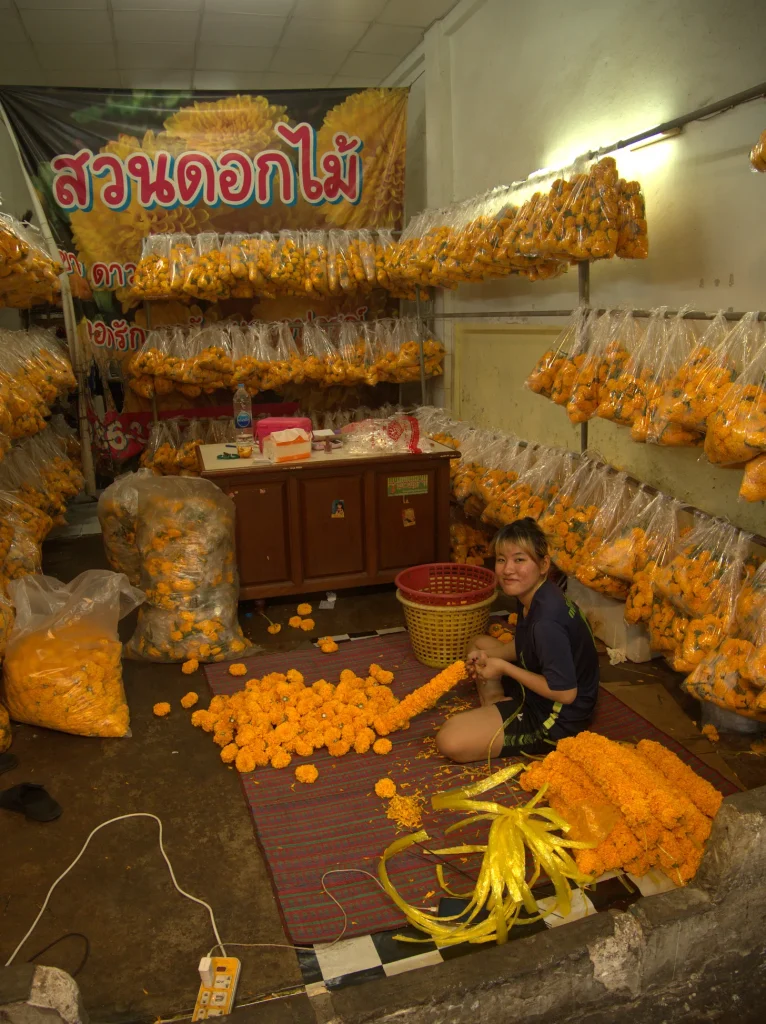
Eventually, I found myself at Pak Khlong Talat, the city’s primary flower market, tucked into the Wang Burapha Phirom subdistrict. Unlike the railway community, this one I found in Condé Nast. Because sometimes you need a little guidance!
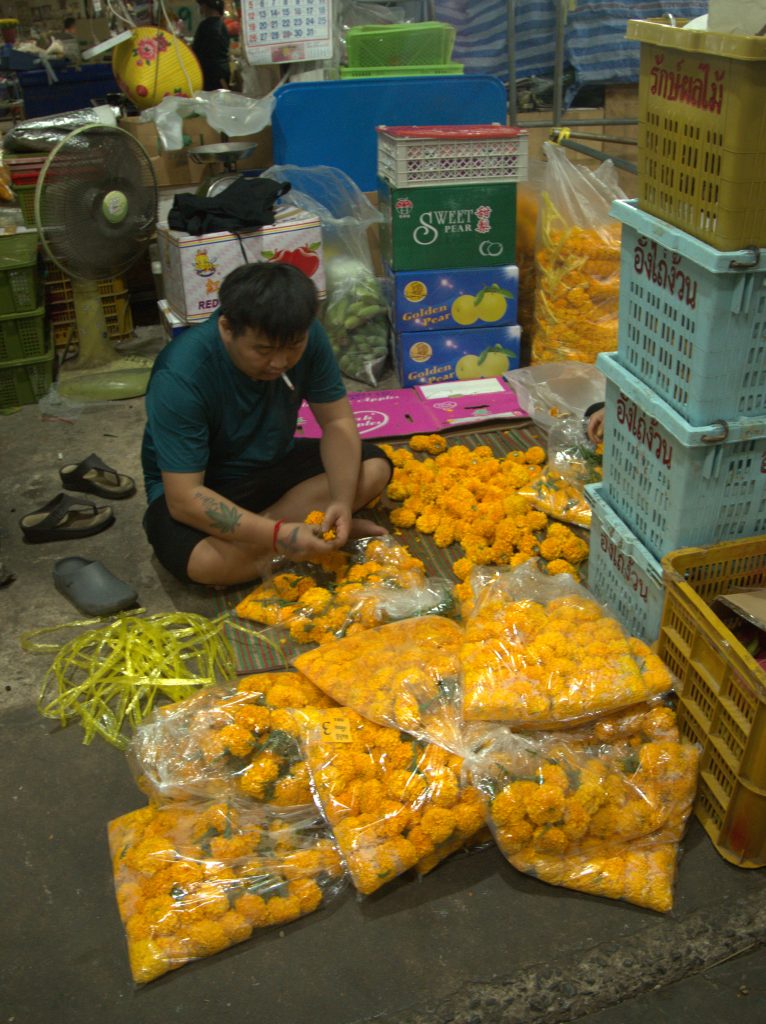
I went in the late afternoon and watched the vendors setting up while people drifted through. Spotting yellow flowers (marigolds) everywhere, a quick Google revealed that they’re closely associated with Buddhism and the late King.
You’ll find references to the monarchy all over Bangkok, and it appears central to Thai life.
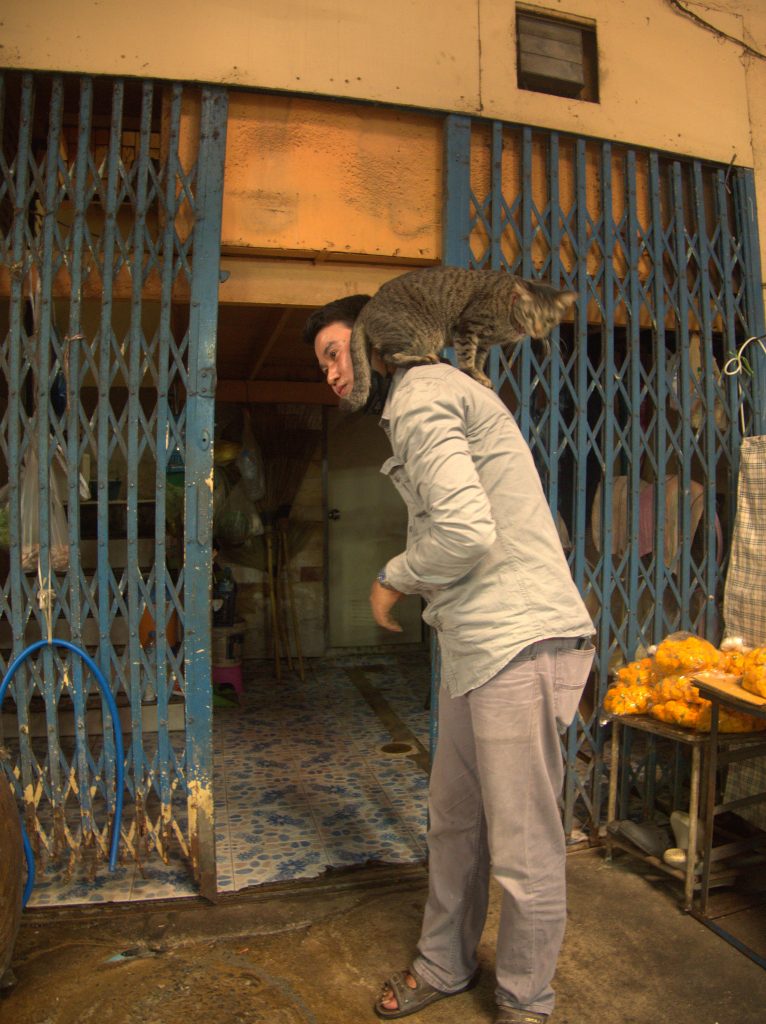
I learned how to say good morning (“sawatdee kha”) and we had a little tête-à-tête in broken English, between lots of smiling and cooing at the dogs and cats – luckily there’s only one language for cute!
Insiders say to visit the flower market at 3am
Word has it, the best time to come here is in the middle of the night, when the freshest blooms arrive. But it’s a great place to cool off during the day.
OLYMPUS DIGITAL CAMERA
China Town and Khao San Road
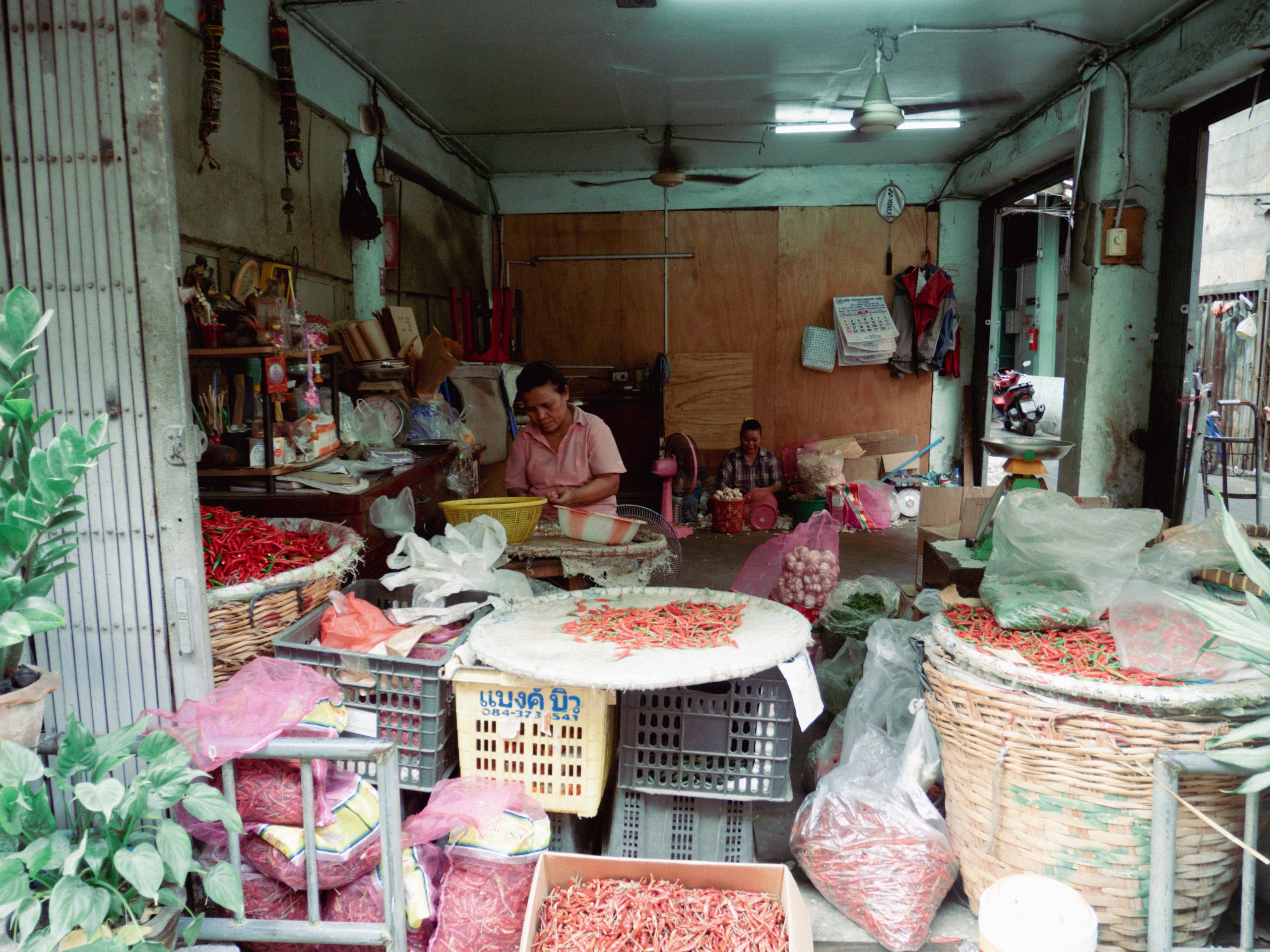
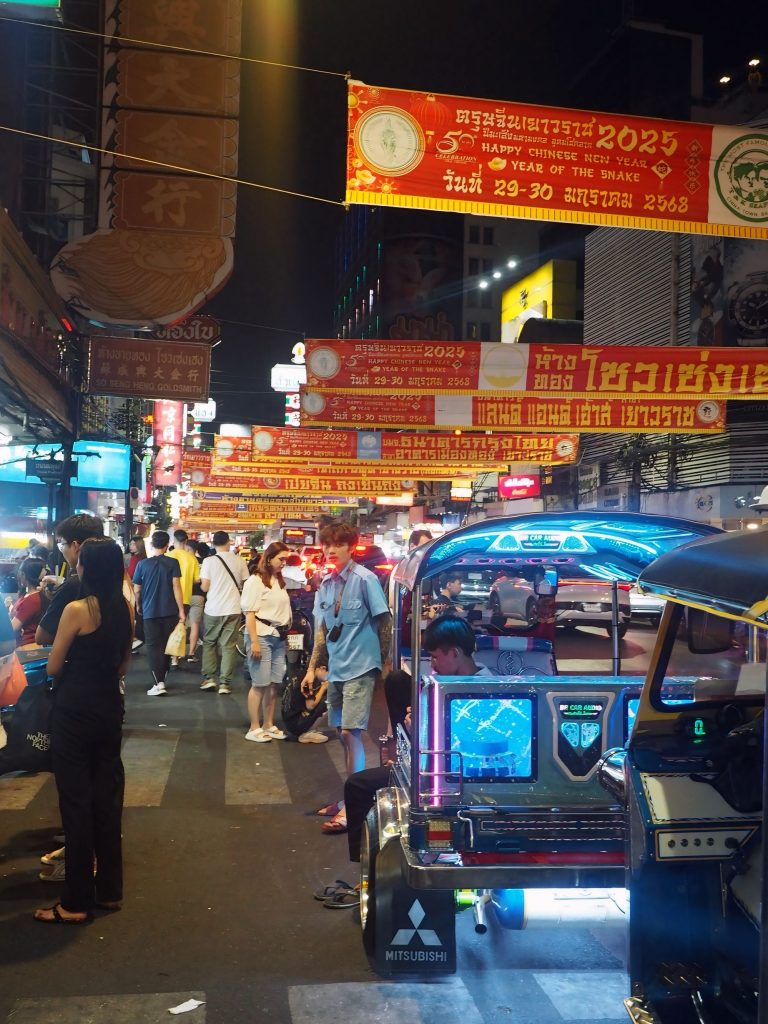
Toward nightfall, I headed to Chinatown for some chow. What did I fancy? I asked myself manoeuvring down the stalls. Scorpions? Crickets? I was (sort of) tempted to try the edible insects but didn’t want to get sick straight away.
Scorpions, anyone?
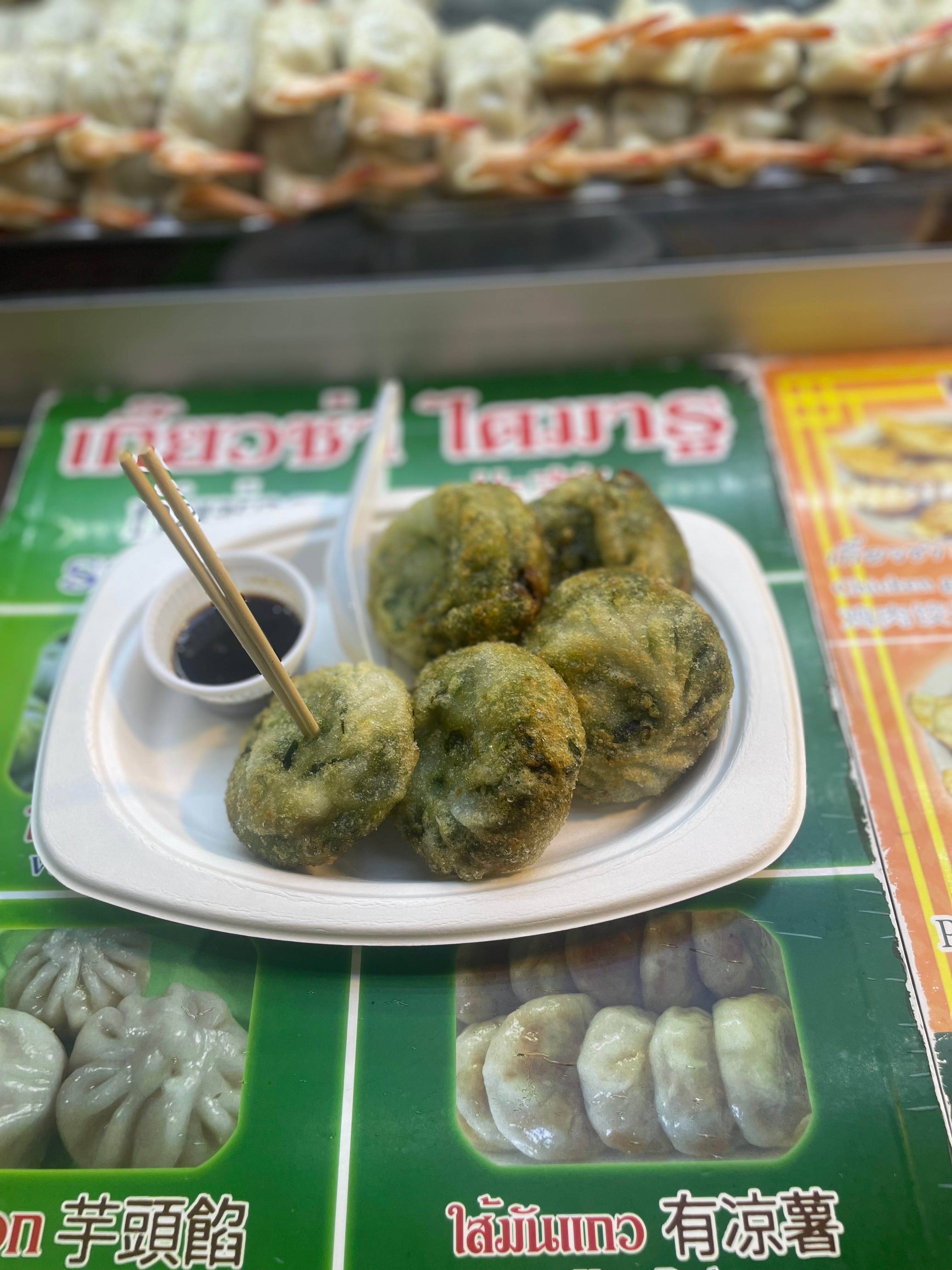
I eventually settled on some Chinese chive cakes followed by some “kanom krok” – little coconut pancakes.
Locusts aside, if you’re vegetarian, you’ll find some decent options here, even though Asia is generally a pretty meat-heavy place.
Delicious veggie dumplings in China Town
By this point, it was getting a little late. But Bangkok buzzes at all times. Do I want to go to Khao San Road? I pondered, between mouthfalls. For the uninitiated, this is a famous street in Bangkok, known for its thriving nightlife.
I truly did not, but knew I’d regret not seeing it. It wasn’t far away, so I hopped into my first colourful – and probably overpriced – TukTuk by the market, for around £7.
The ride itself was great fun. But the strip at Khao San – not for me. I’ve always preferred to watch the Inbetweeners from behind a screen, not as a lived experience, so this was a good early lesson in trusting my instincts.
The throng of drunk bodies in the heat was overwhelming, and I took nothing from it, save cooling down in the breeze from the TukTuk.
Ever impressed by the public transport in Bangkok, I spared my lungs the Grab bike this time (although I was getting hooked on them!), and caught a bus all the way home.
Bangkok might look and seem like a concrete jungle, but a third of the city is parkland, and I’d vowed to visit Lumpini Park and Bang Kachao, the so-called ‘Green Lung’ of Bangkok, for a bike ride.
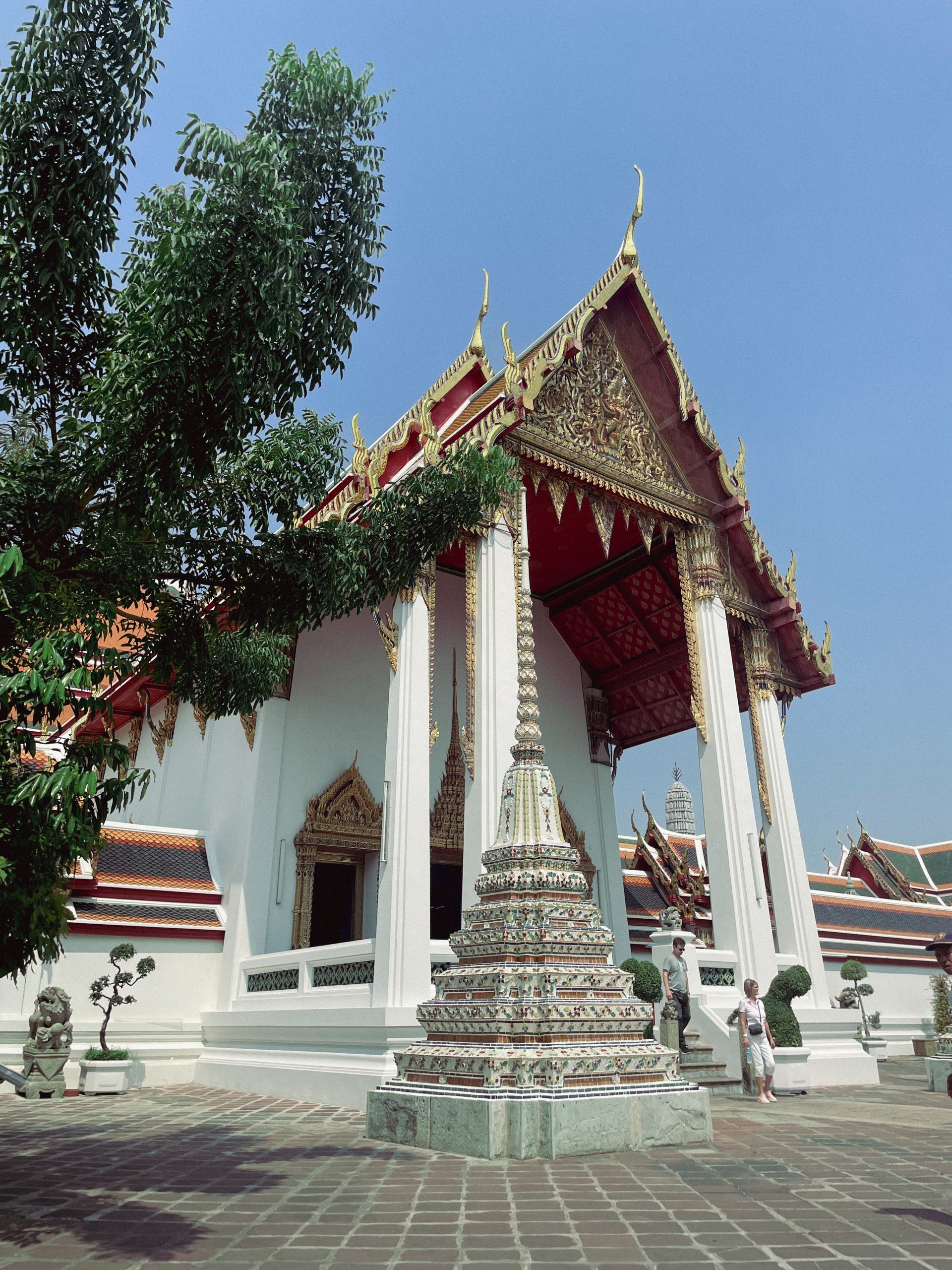
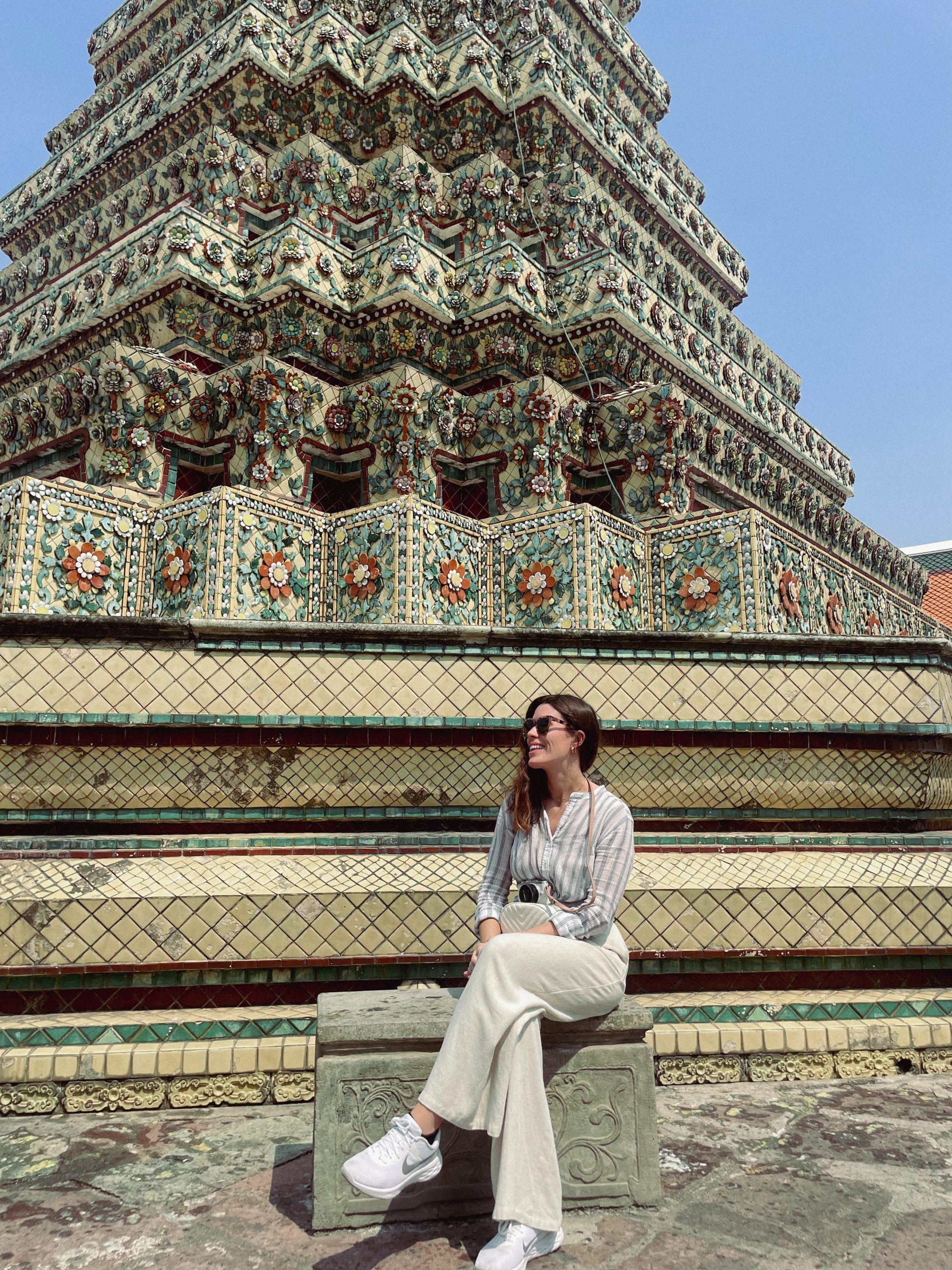
Unable to postpone my ‘flexible’ flight ticket to Chiang Mai, however, I panicked and decided to visit Bangkok’s famous temples instead: Grand Palace, Wat Pho and / or Wat Arun.
I really hate when tourist attractions are rammed down my throat, and I couldn’t shake the feeling that the Grand Palace was a bit over-hyped. But I was in South East Asia, so it felt like an attraction I couldn’t miss.
Wat did I think of them? It’s tricky. Religious Studies was my favourite subject at school, and I resonated strongly with the story and teachings of Buddhism. As a 15 year old, it was the first religion I’d encountered that didn’t seem to be predicated on power.
I respect that they are culturally important and tried my best, in the heat, to take in the majesty of it all. But after a two hours, I was a little bored.
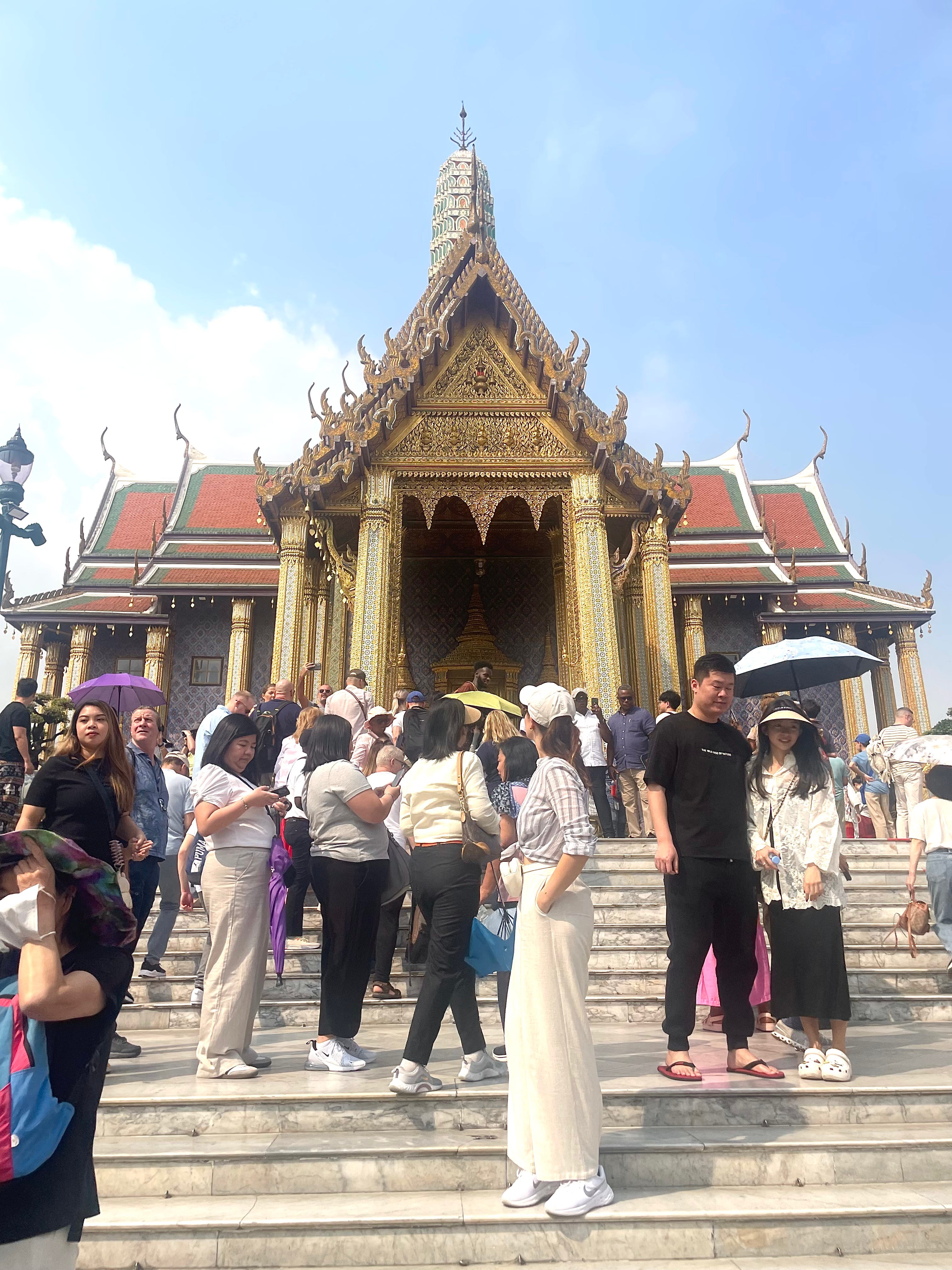
Not just that, but – quite unsurprisingly – the place is hugely overcrowded. They don’t show you that on TikTok or Pinterest do they!
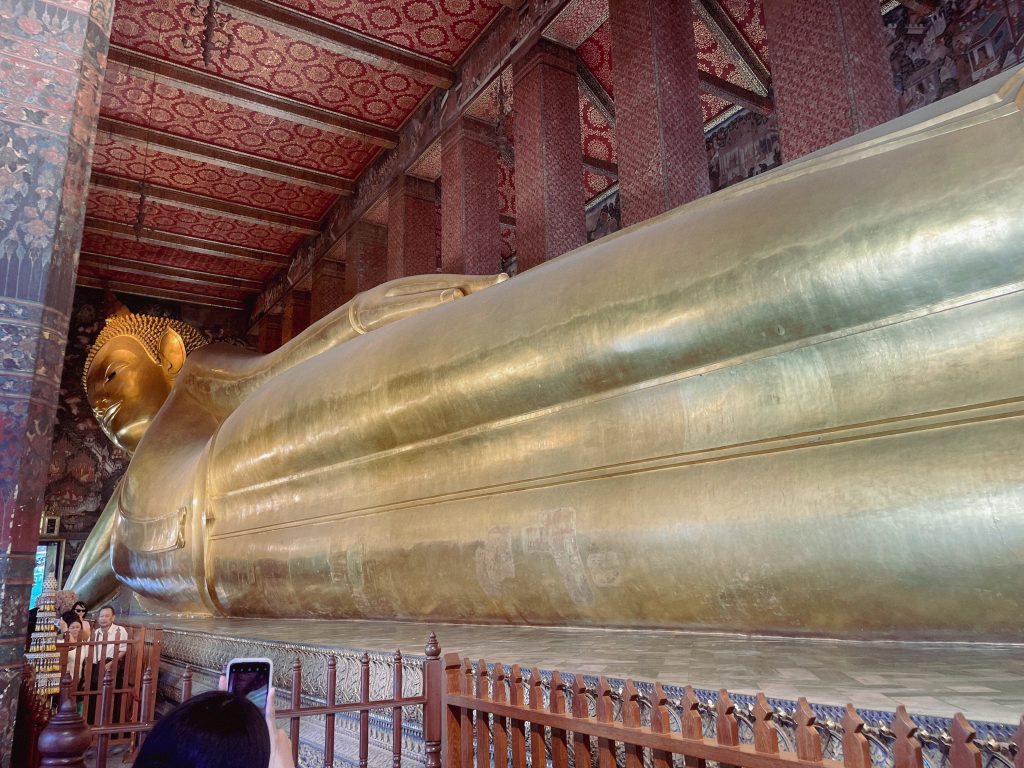
Wat Pho is famous for the immense Reclining Buddha
Reality check at the temples – they’re crowded!
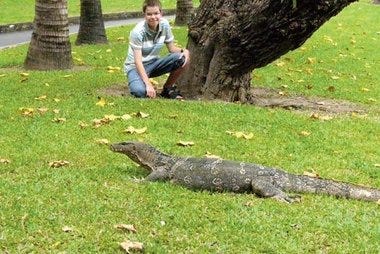
I wish I’d followed through with my first plan. Does this mean I lack depth? I thought with panic. Maybe. But who cares. Life’s short. There’s nothing wrong with chasing lizards in the park. They’re cool as hell!
Monitor lizards roam the park and canal freely
As a headache took hold, I learned my first lesson as a digital nomad: if I wanted to work and travel, I’d have to manage both my time and my energy levels properly. I was alone, in a foreign place, in a much hotter climate – that’s a lot to navigate on top of a job, and I hadn’t even got started yet.
Sitting on the flight to Chiang Mai, clutching my carry on, I wondered – had I bitten off more than I could chew?