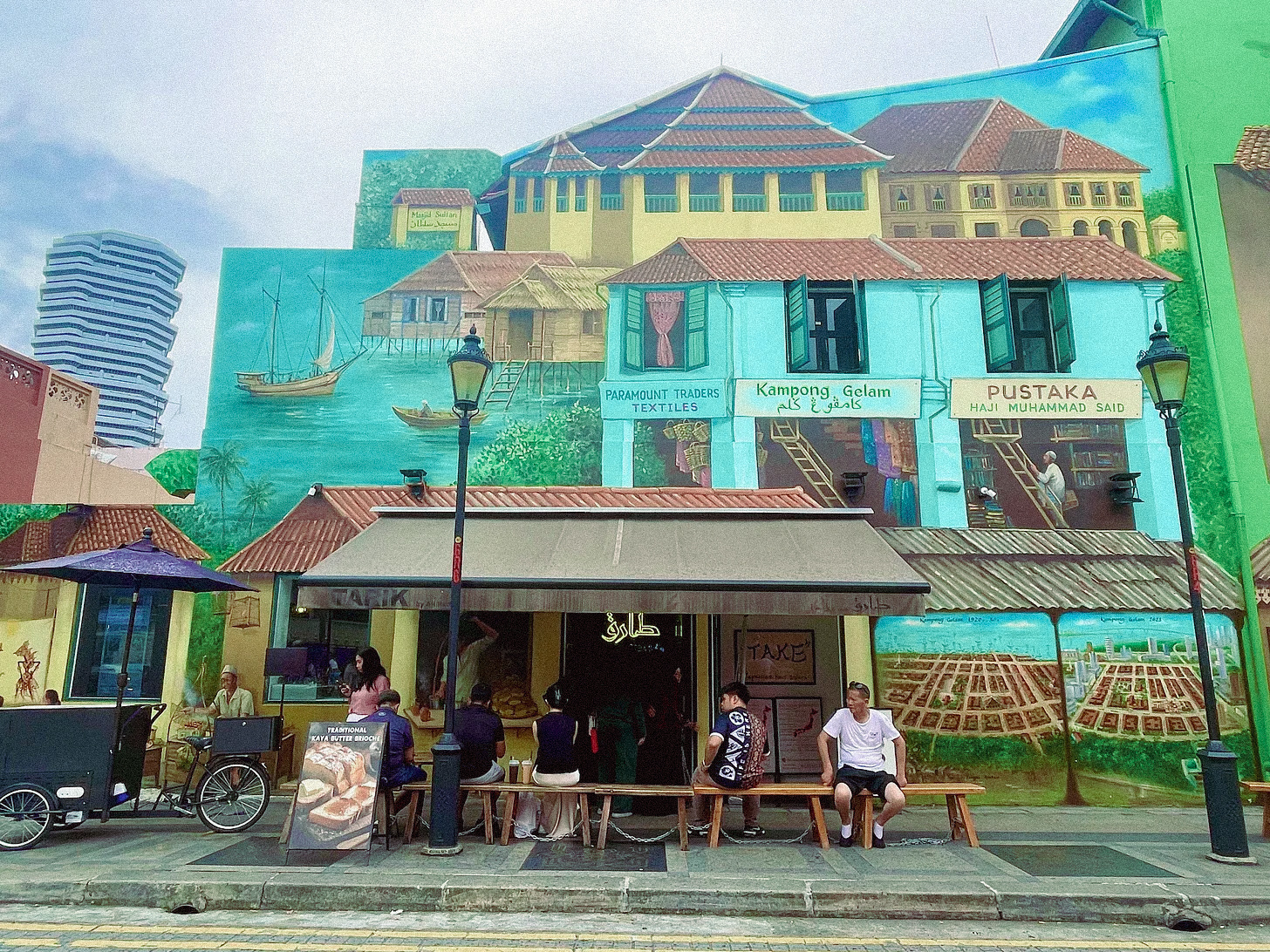
My Singapore stopover – is there more to this city than meets the eye?

Finding biophilic joy in the financial capital.

I arrived in Singapore at the end of a three-month trip from the UK to Asia. By then, my interest in forward planning was at rock bottom, but my confidence in my own tastes and intuition was sky-high.

Singapore is a small island sitting just south of Malaysia, and one of the world’s most densely populated countries. It’s been independent since the 60s and, with historic links to British colonial rule via the British East India Company, is now a global financial hub.

It’s also become known as a bit of a stopover city. Typically, you’re flying in or out for a meeting, or in order to get somewhere else – which usually means you’re tired, jet-lagged, and possibly dragging a big suitcase behind you.

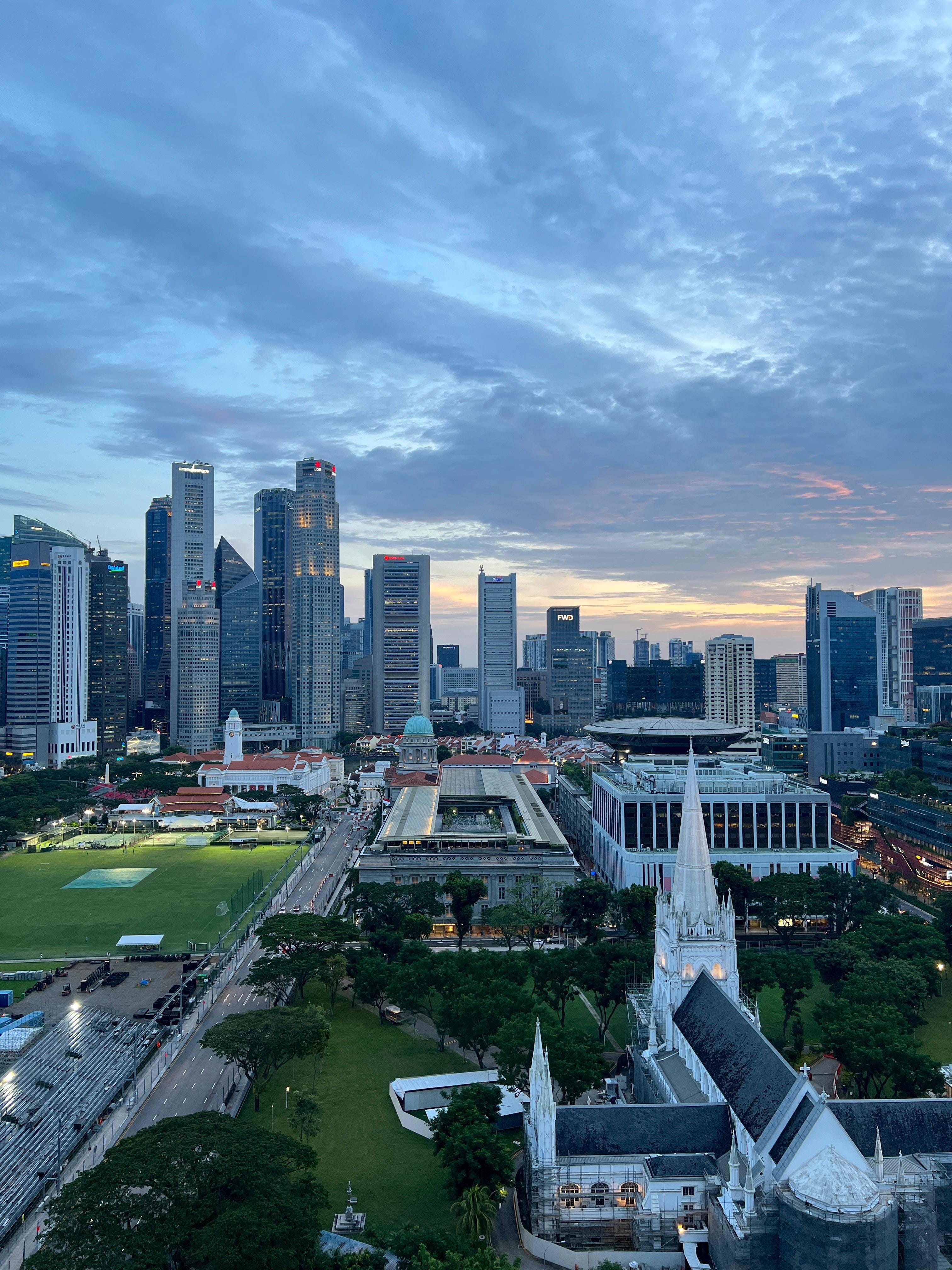
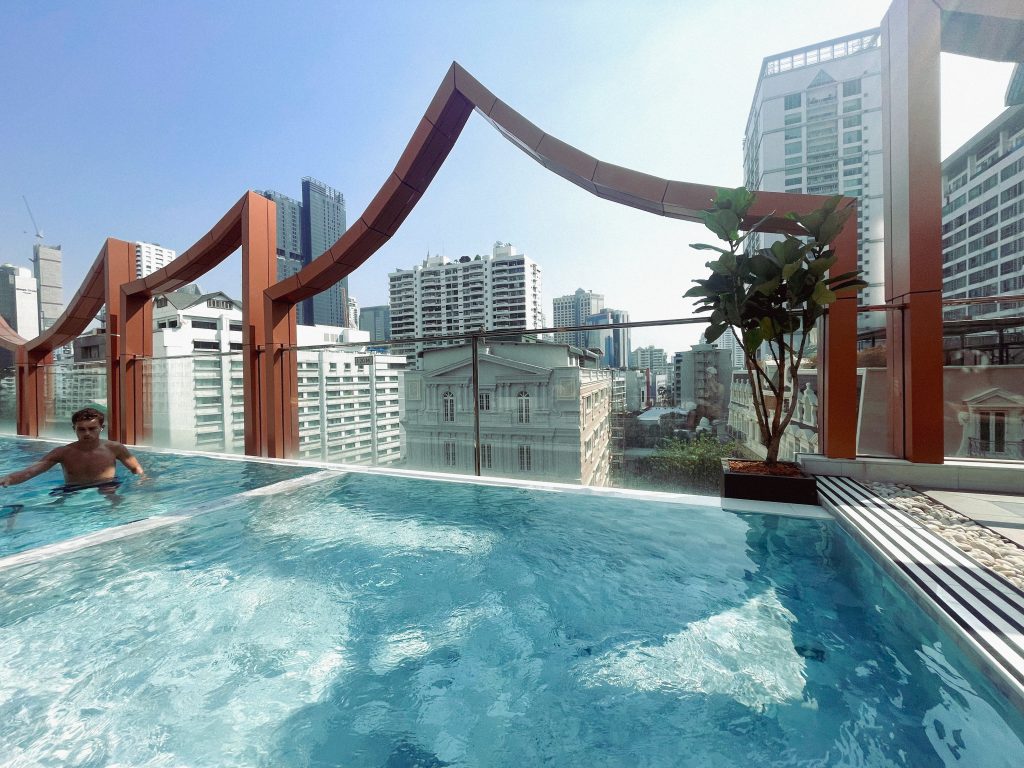
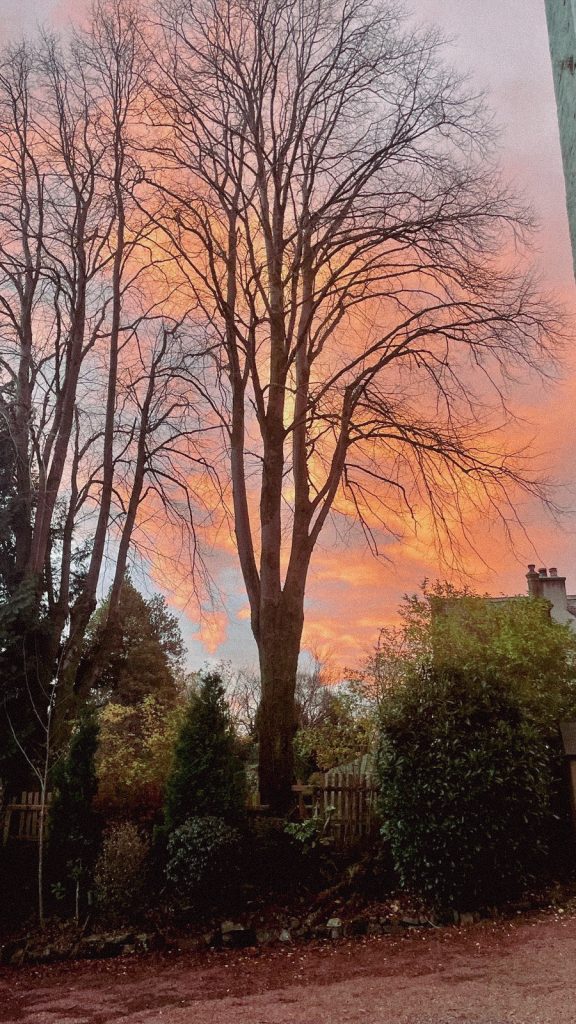
Sights from the Singapore Skyline

Luckily, it’s teeny-weeny. At around twice the size of the Isle of Wight – and roughly 2.5 times smaller than Greater London – you can enjoy what it has to offer within 24–48 hours, if you’re realistic about what’s achievable (spoiler – it’s not just skyscrapers!).

Depending on the length of your layover, bear in mind that the airport is around 30–45 minutes from the city (longer at peak times). I took a taxi, which cost around £20, or $32 Singapore dollars.

Here’s how I spent a perfect two days.

First of all – sleep. I flew in from Sydney, so it was a relatively short flight, arriving late at night. I decided to stay in an area called Kampong Glam, Singapore’s historic Malay–Muslim quarter (more on this shortly).

After a good night’s sleep, I spotted a sign for kaya toast. This is a traditional breakfast in the country, so I decided to check it out.

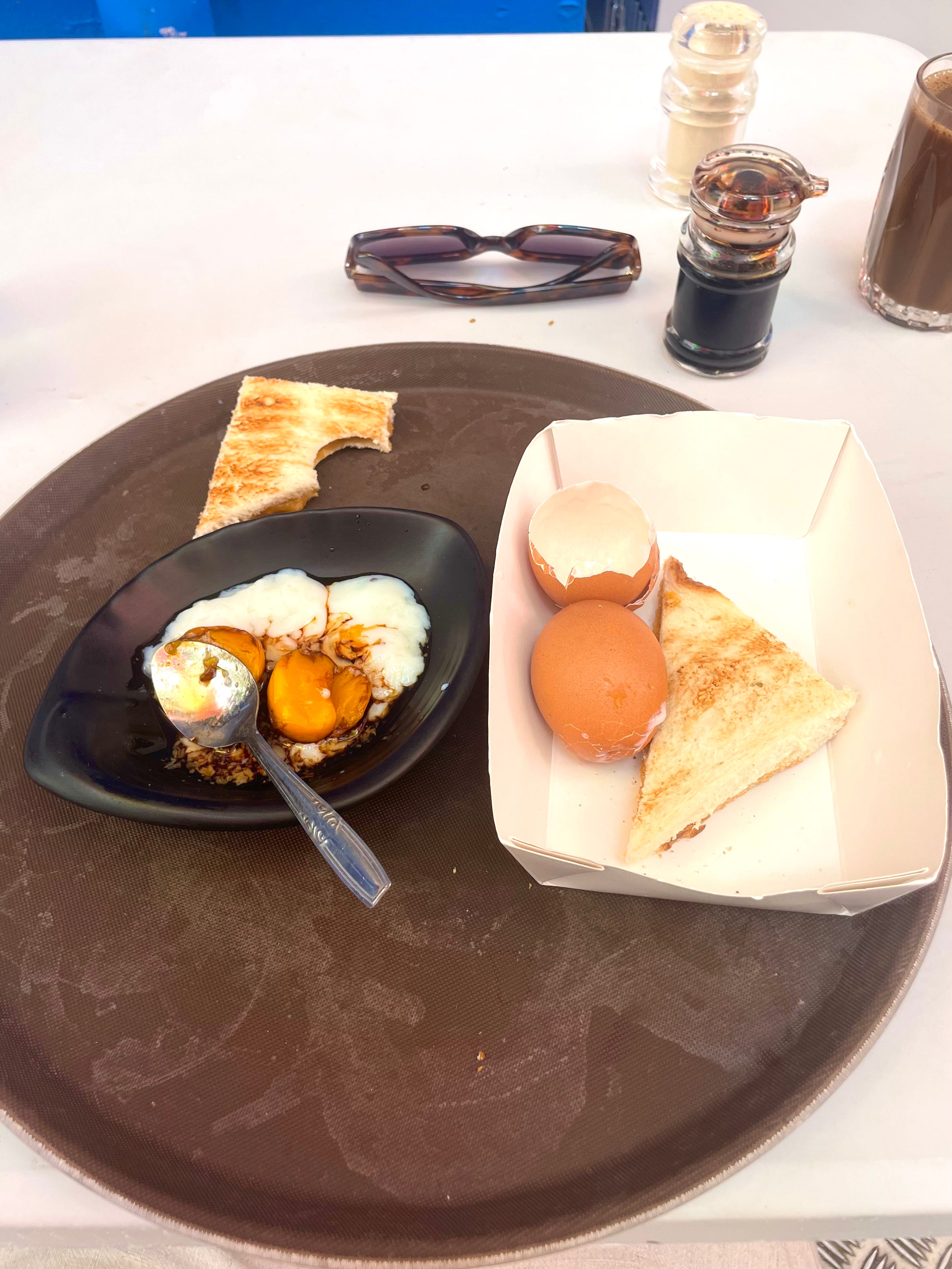
Kaya toast – a traditional Singaporean breakfast – is usually set alongside runny, soft-boiled eggs and local coffee (kopi)

It looks and tastes a bit like a peanut butter sandwich, but the filling is actually a sweet coconut–pandan jam (kaya). It’s served with soft-boiled eggs, soy sauce and pepper, alongside a strong coffee (kopi).

I didn’t really know what I was doing, but a kindly stranger advised that you’re meant to dip the toast into the egg and sort of lap it up.

I enjoyed it – but if you’re after something more Western (which might be the case after a long trip away), there are plenty of cafés offering cooked breakfasts too. It’s a cosmopolitan city, at the end of the day.

Next, spend some time exploring the old town – Kampong Glam in particular. Even before you’ve done any Googling, you can tell this is the ‘cool bit’.
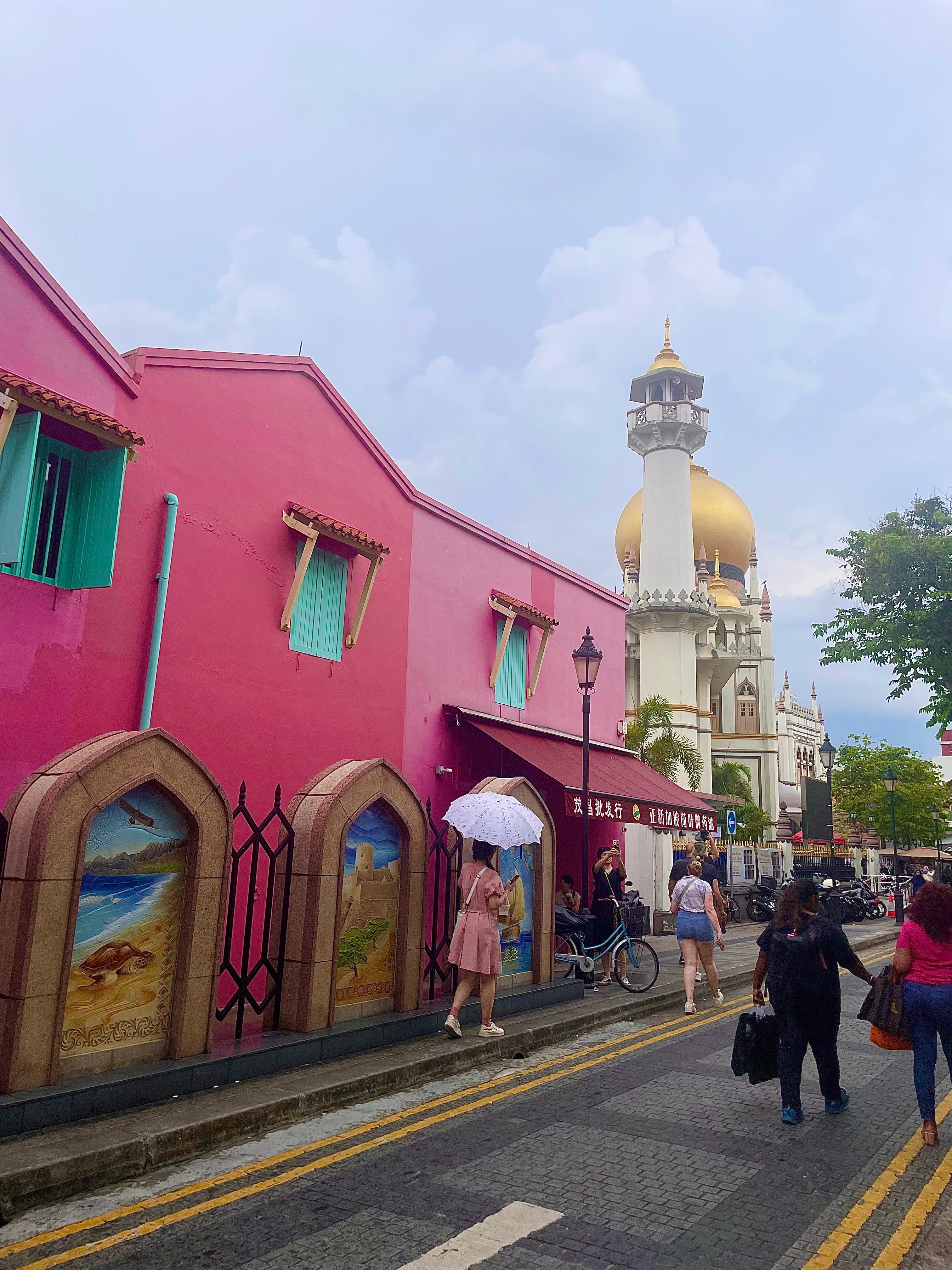
Sights from Kampong Glam, Singapore’s Muslim Quarter – now a vibrant shopping and eating area

Unlike the modern high-rises typical of the Singaporean skyline, this small cluster of streets is made up of shorter, squatter buildings packed closely together, many adorned with colourful street art.

Walking around in the daytime, it was full of a mix of older and more modern cafés (including places like % Arabica, one of my favourites in Hackney), lots of cute shops, and the beautiful Sultan Mosque – the largest in Singapore.
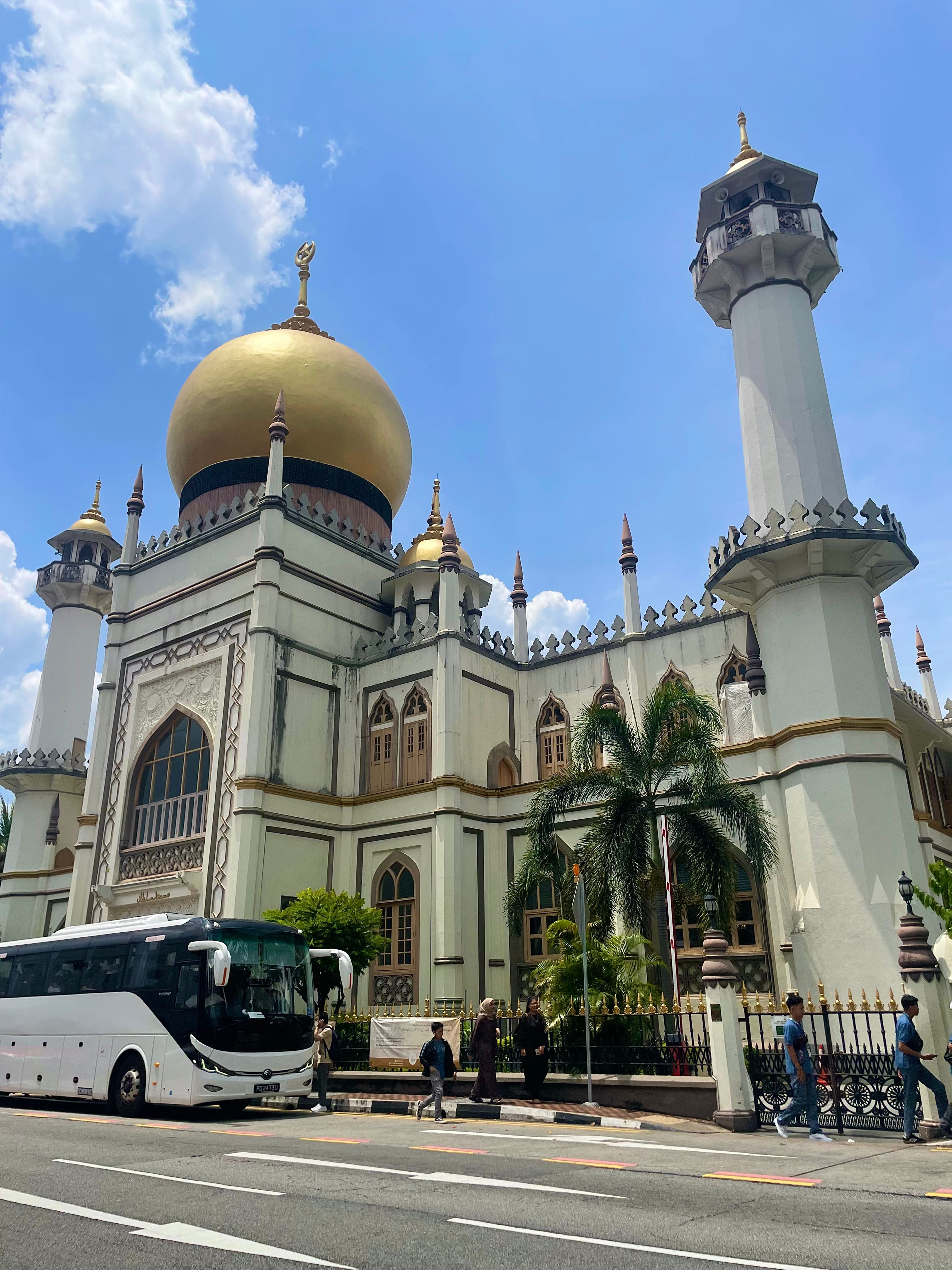
Kampong Glam is made for Instagram, so if you’re a talented photographer (unlike me), you’ll want to kill some time here like I did exploring the artwork, buying trinkets and hopping between cafés and ice-cream shops.

By this point, it’ll be pretty hot.

So, after seeking shade in a market, I took the train into the centre, heading towards the Singapore Botanic Gardens. The gardens provide welcome relief from the chaos and closeness of the surrounding streets and buildings and – fun fact – are the first and only tropical botanic garden on UNESCO’s World Heritage List. No idea why that is, but it’s blooming nice.

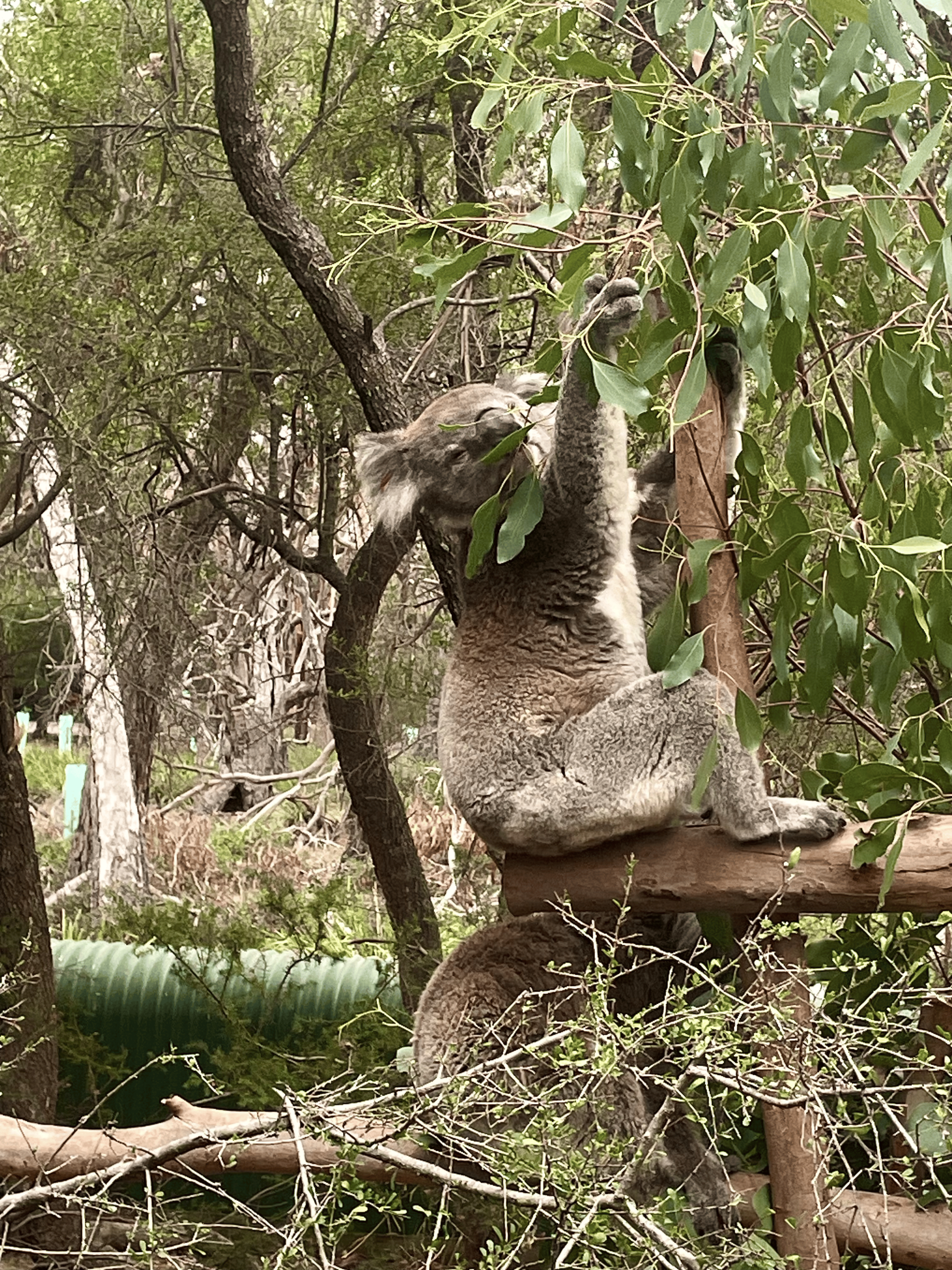
I passed a peaceful couple of hours here watching otters and lizards, and stopping for lunch at the café, before the heat finally overwhelmed me.

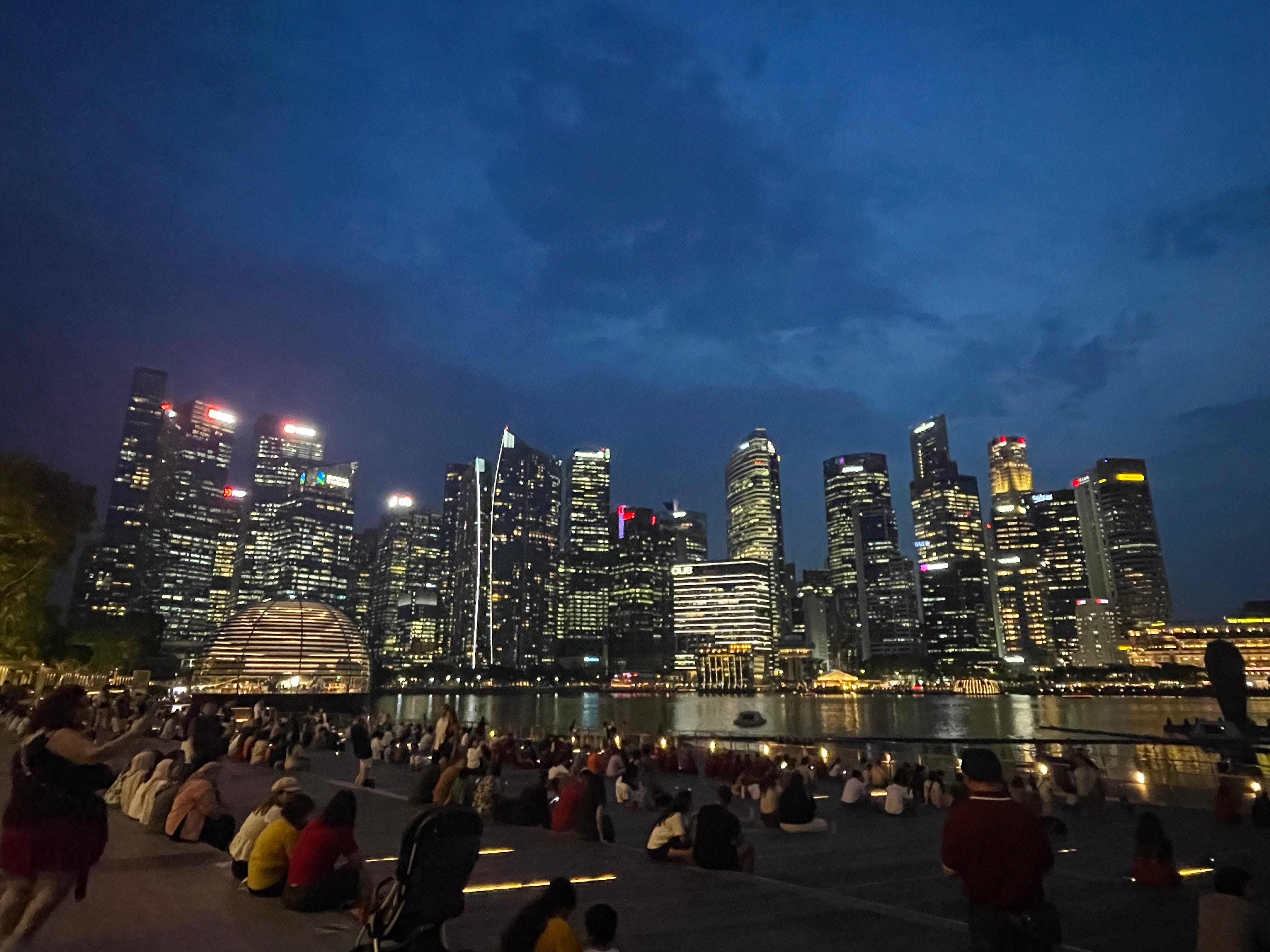
Towards evening, I swung by Marina Bay Sands for a hot chocolate and a seat by the water to watch the evening light and water show, Spectra. It runs at 8pm and 9pm (with later shows on weekends). It’s genuinely impressive, and worth sitting down to watch before wandering along the marina.

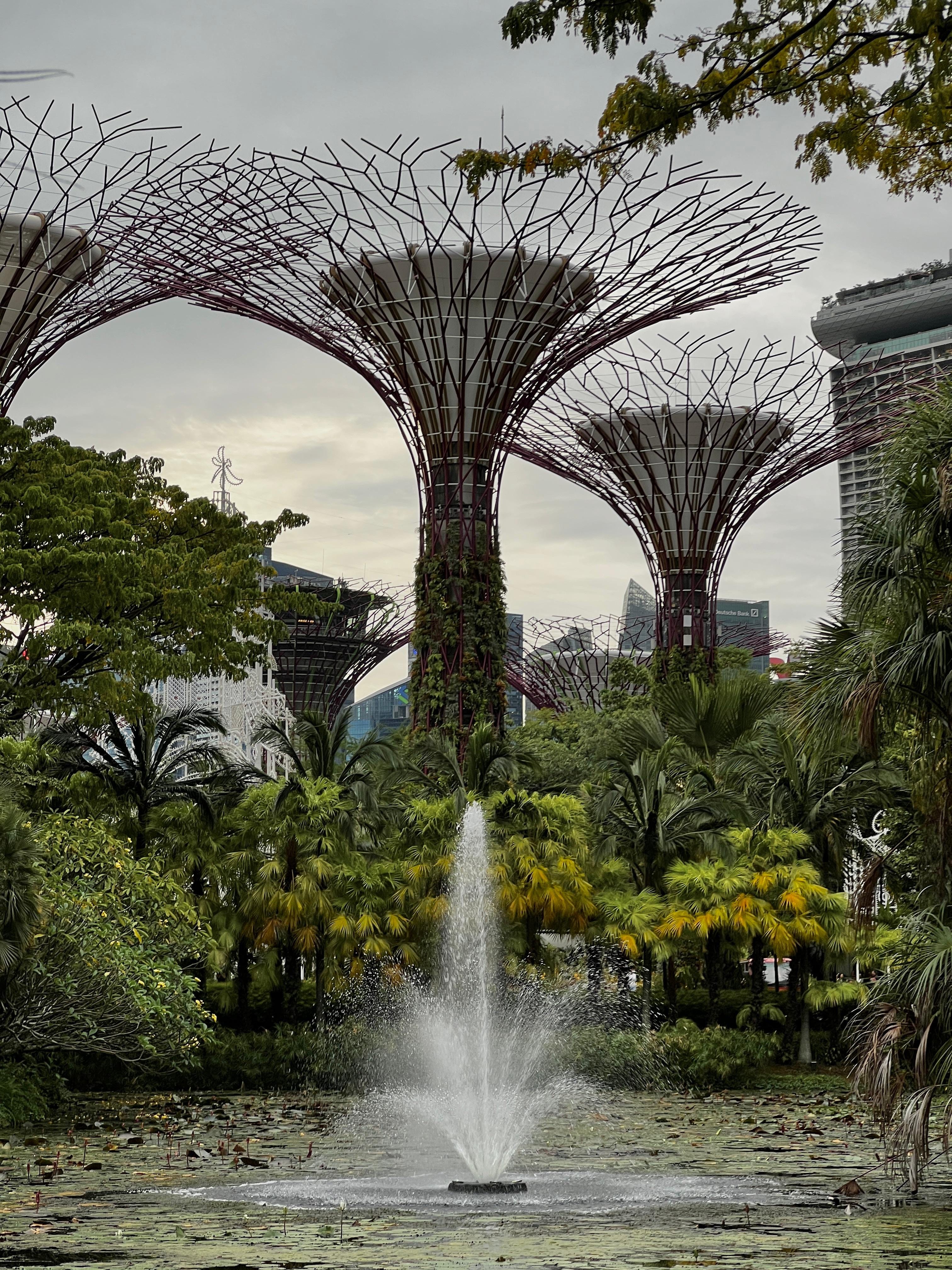
If there’s time, you can also head next door to Gardens by the Bay for the Garden Rhapsody show at the Supertree Grove. If you’ve ever seen photos of Singapore, chances are you’ll have seen images of these huge illuminated tree-like structures. I’m a dummy and missed it, but I hear it’s fantastic.
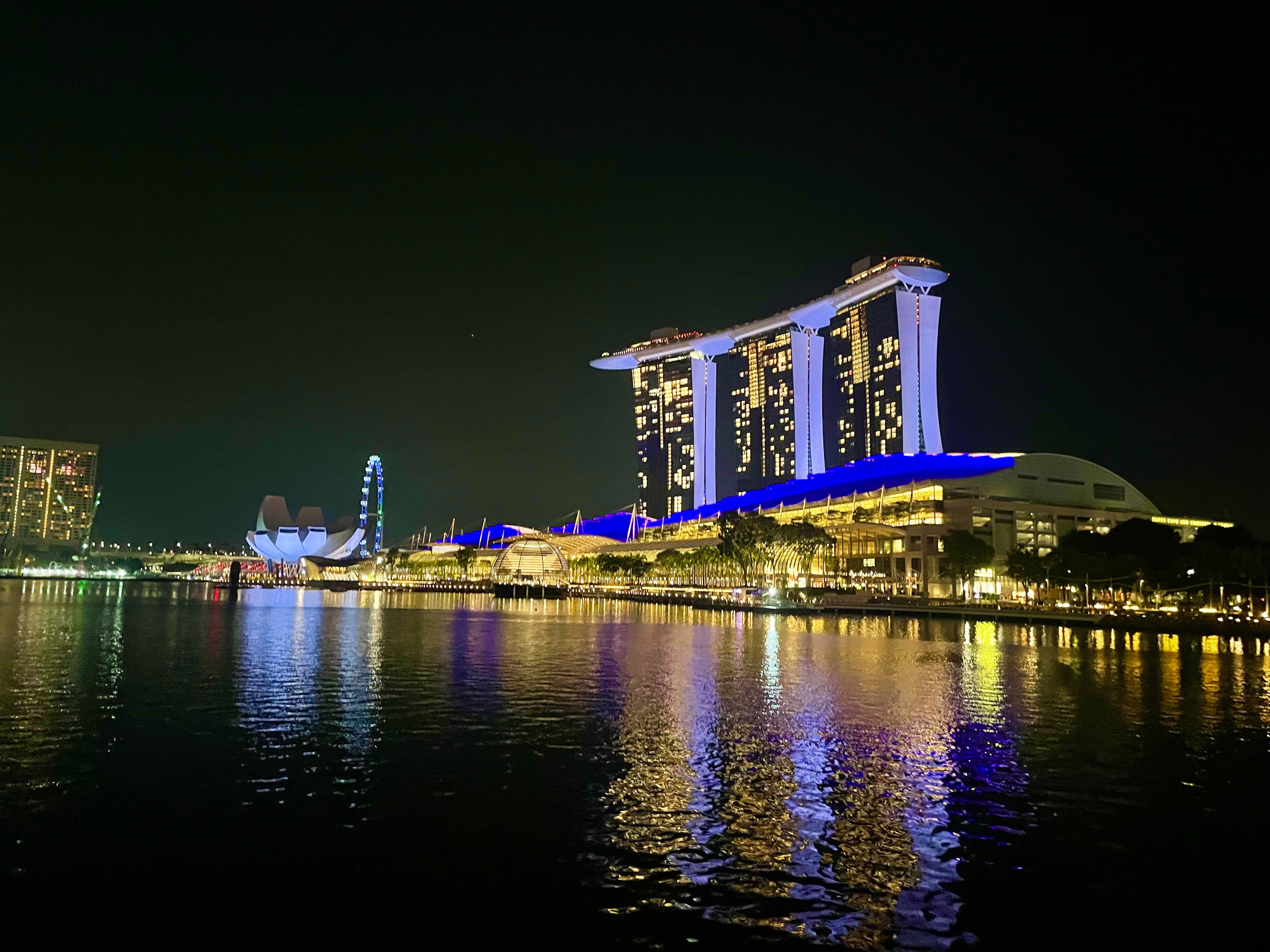
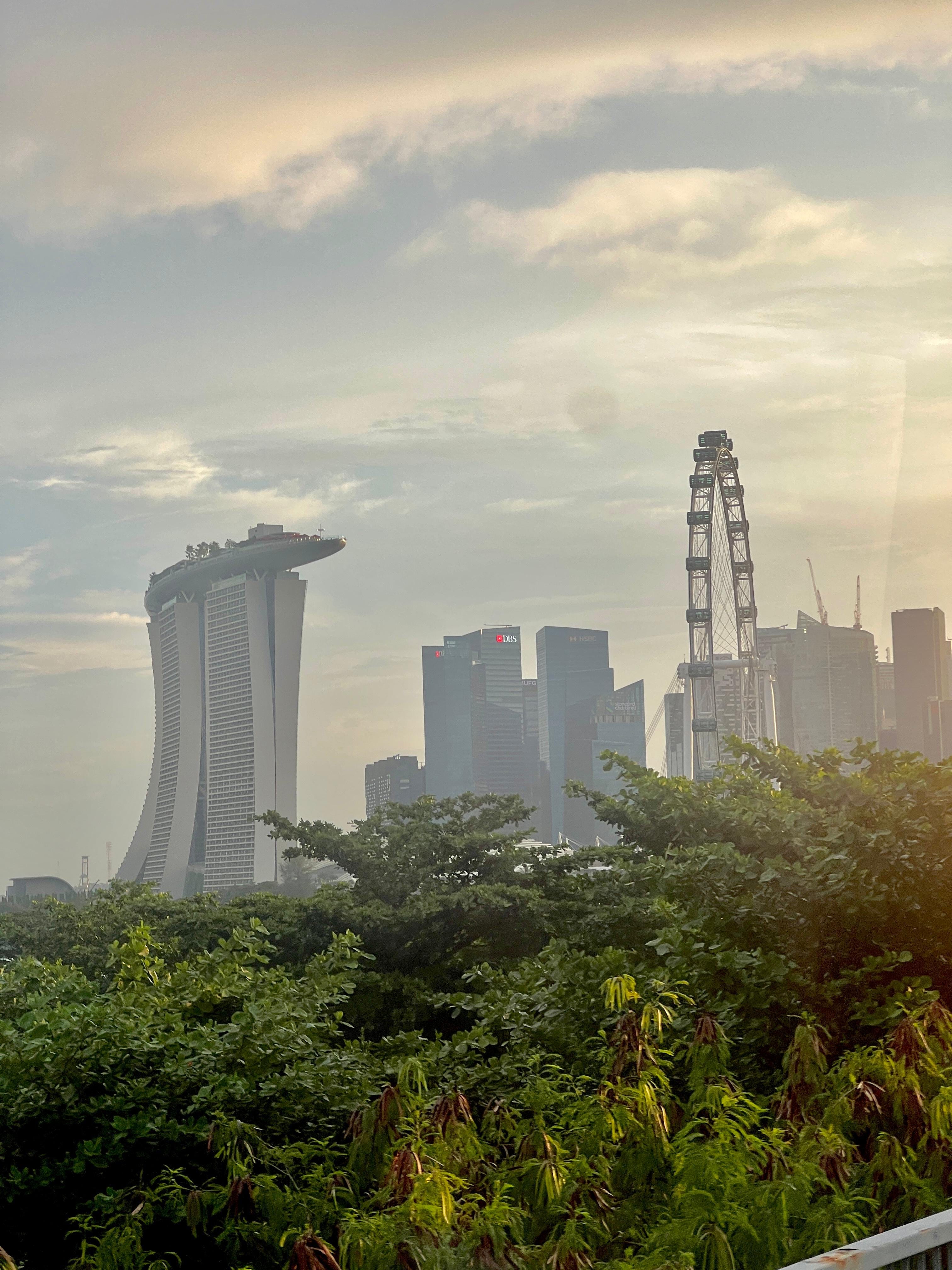
Singapore is known for its iconic hotels, including Marina Bay Sands

After the light shows, I advocate for taking a nice walk along the bay, soaking up the buzz of the city, or grabbing a drink nearby.

Finally – don’t forget the airport!

It’s a spectacle in itself. I had a midday flight the next day, so I arrived a couple of hours earlier than strictly necessary. You can head to Jewel Changi Airport, a kind of ‘lifestyle hub’ that feels more like a futuristic indoor jungle than an airport. At its centre is the Rain Vortex – the world’s tallest indoor waterfall – surrounded by layered greenery and walkways. If you’re going to make an airport, make it pretty right?

Whether or leaving or entering Asia – don’t sleep on Singapore. A day or two in the country is plenty, so if you’re around this way, split your flight, dump your bag and let the city show you what it’s good at.

Gardens by the Bay, Singapore
Similar Posts

  • I swapped London for nomad life in Asia. Was it worth it?

    In early 2025, I left London and headed to Southeast Asia to see what life was really like as a digital nomad. One year on, was it worth it?

    FEBRUARY 24, 2026 WOMEN MEETS WORLD

    In the summer of 2025, I recall reading a BBC interview with Julie Williams, an IT consultant from Birkdale on Merseyside. She had decided to make a ball pit in her spare room, rather than rent it. Why? For fun. ‘You can never be sad in a ball pit.’

    Stories like this are important because they remind you of your free will. Julie’s is especially unique because the ball pit came at the expense of financial gain.

    For most people, that’s just not the default position – whether they need the cash or not.

    I found myself thinking a lot about free will when I turned 30. I’ve never really clung to traditional milestones (house, baby, marriage, divorce), and count climbing out of credit card debt as the maturest moment in my adult life to date.

    But the flood of birthday invites from friends – right before the hen dos – gave me pause to reflect. Was I happy? Had I challenged myself enough? Was I excited about the next decade?

    Who am I?

    Not to get too Lewis Carroll about it, but this last question was the catalyst for me in late 2024. In a way, I felt that I didn’t know myself anymore, or at least not all the versions of myself – just the city-shaped, university-fied version. And she was restless.

    Meanwhile, semi-remote work in London had become my new normal. The days of spilling out to the pub every week with colleagues had gone. I had a lovely team in my PR job, but rotating schedules meant it took too long to get past the pleasantries.

    People generally – and I include myself in this – seem to have become more protective of their time since I moved to London in 2017 (and perhaps all over the country).
    I don’t think this is a bad thing. Hell, if you’re going to replace me with AI, at least give me another 30 minutes in bed / to read to my kids / paint / write / support a charity / or stare into the abyss.

    Having one foot in, one foot out, however, began to wear on me amidst the rising cost of living in the capital. I still considered myself a creative and curious person, but did I really want my days to be defined by the price of flat whites and whether a Soho House membership was cost effective?

    I take comfort from water cooler culture as much as everyone else, so I’m not bashing these things – they’re part of the fun.

    But when I found myself googling ‘Martin Lewis wife’, something had to give.

    Was it burnout? I’m not sure. But in need of a change of scene and some inspiration, I decided to give this digital nomad lark a go, beginning with three months in South East Asia in early 2025.

    Who knew what would happen after that. But I’d work less, and live more, often with strangers – which would at least break me out of my comfort zone.

    I’m not alone in seeing the attraction of nomadism, especially if your job allows it. According to a report by CV builder website LiveCareer UK, an estimated 165,000 UK professionals have relocated abroad to work remotely in recent years, seduced by better weather and (they hope) greater work-life balance.

    Some roam around, as I did, making the most of the opportunity to see the world. Others seek stability in well-established hotspots that offer structured visa policies, tax incentives and ready-made communities.

    To cut a long story short, I didn’t end up moving permanently abroad. But I did see a lot of cool things, regain a sense of direction, and create a stable freelance set up that now allows me to travel whenever and wherever I want, whilst keeping roots in the UK (which is how I like it).

    Giving up a normal routine has not been without its challenges – anyone that’s become a nomad, travelled alone, or even that’s relocated will agree with that, I’m sure. But between the relentlessly positive portrayals of nomadism on social media and the often sceptical narratives found in the UK press, there is a lot of middle ground.

    As a thirty-something experiencing this lifestyle for the first time, I hope this blog provides a balanced account of what it’s really like as work and life become increasingly flexible and multihyphenated.

    Happy reading.

  • Dodging lizards in Bangkok – My first 24 hours as a nomad in Asia

    Having swapped life in London to work remotely abroad, what did the Thai capital have in store for me?

    At the end of 2024, I quit my corporate job in London after eight years in the capital, and started life as a digital nomad in Asia.

    Thus I found myself, two flights and 15 hours later, at Suvarnabhumi airport, Bangkok – freshly spray tanned, and braced for change.

    After having successfully withdrawn baht, updated my family, filled my water bottle and downloaded my e-sim, I had a full two to three days to explore the city before moving North to the town Chiang Mai, a well known nomad hot spot.

    I was staying in Asoke, right in the centre of the bustling mecca of Bangkok. It’s seriously busy – think wide streets laden with traffic – but a good location from which to see the main sights.

    I got lost a few times, but for once there was no tube to catch, no meeting or engagement to get to. Nor was I a backpacker on a shoestring budget or timeline. Why am I rushing to my hotel? I thought with a thrill. I have time to figure it out.

    As I traipsed through the streets with my rucsack, the heat started to wear a little, however. I was grateful that I’d limited myself to hand luggage only, packing just a few clothes and my refurbished MacBook Air – about the tiniest laptop ever made.

    When I arrived at the lovely Samala hotel – which was later damaged in an earthquake – I cooled off with a little visit to the pool, a Singha (Thai Beer), and after a short nap, contemplated what to do next.

    Snacks at Ruam Sab market

    First up – food of course. The benefit of being in the business district of Bangkok is that you’re never far from a decent market.

    I’d spotted Ruam Sab market on my way to the hotel, so journeyed back with my pockets jangling.

    Having done a bit of prep for my time abroad (thank you RetiredWorking4U), I knew this food court was where the local office workers came for lunch, and that it was best to arrive early, especially as I wanted to look about and soak it all in.

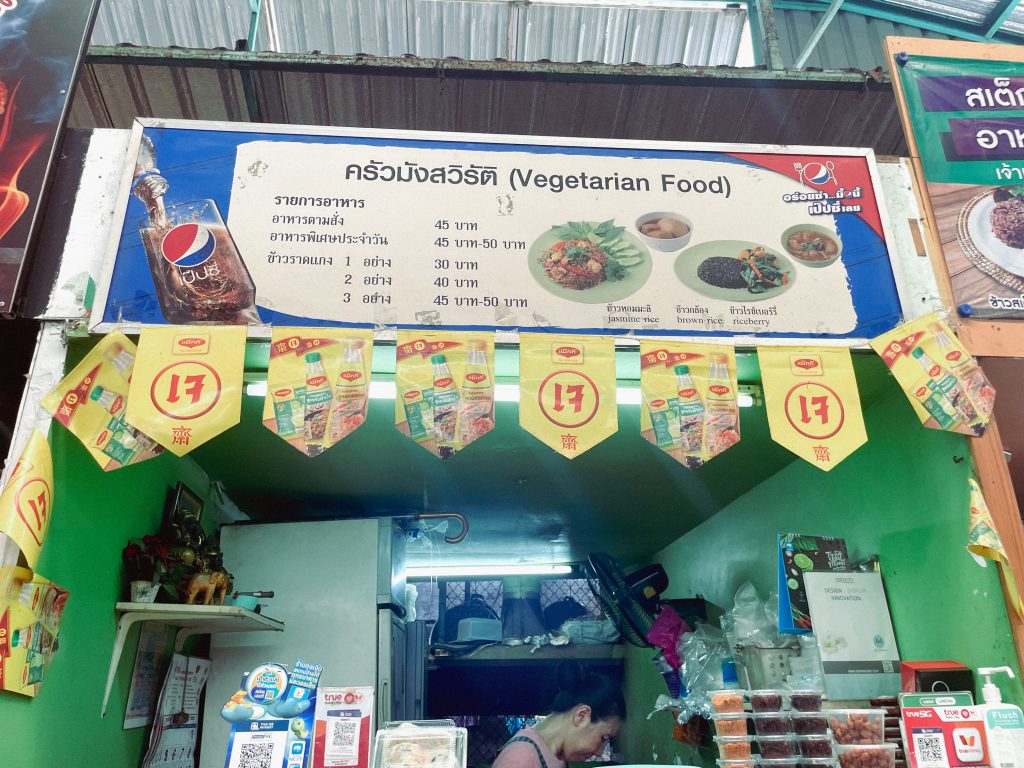
    Vegetarians – look out for the yellow Je flag!

    Whilst I was seriously tempted by the deep fried bananas, I eventually settled for some Morning Glory (water spinach) with rice, and some kind of broth, lathered with a mix of chillies, soy and fish sauce, which is typical all over Thailand. Meat is commonly eaten in the country, but veggie stalls sometimes have a yellow Je flag, which was a big help, as I don’t eat meat often.

    Stomach full, I was ready to get out and explore.

    Touring Thonburi

    Nothing beats a tour for getting your bearings, and I’d already found a business online called Hidden Bangkok Tours led by a local chap born in the area.

    He runs boat trips in Thonburi, the quieter, more traditional part of Bangkok on the western side of the Chao Phraya River – the “city behind the Pagoda”, he said in one YouTube video.

    There’s no doubt social media can kill your brain, but one of the lovely takeaways is finding unusual activities you might not typically consider, like this one.

    Desperate to see some lizards, off I popped to Thonburi. As we journeyed through the khlong (canal) in our brightly coloured tail boat – right in the shadow of the giant golden Buddha, in fact – we had what I felt to me like a more authentic insight into the city.

    Before I arrived in Bangkok, all I could picture in my head was roads, wires, and hotels – which is accurate – but I was surprised to learn that it’s also lined with waterways. In fact, it’s at huge risk of climate change due to rising sea levels from the low-lying Chao Phraya delta.

    Until the late 19th century, the rivers served as the primary means of transportation for people and goods, earning it the nickname of “the Venice of the East”. Venice – in Thailand! Every day’s a school day.

    Our guide explained how the old wooden houses lining the canal were what most local Thais lived in, with many families still working directly on the river (although some were now Airbnbs).

    We met a couple of them, including a lady who’d sold fish on the river her whole life and, if I remember correctly, had funded her children’s university education with her earnings. I’m not sure how true this is, but either way, it’s a cool story.

    Shots from Thonburi, a riverside community located on the western banks of the Chao Phraya River

    Being over a century old, many of the properties – which were built on stilts – were beginning to fall into the river. Rebuilding requires official permission, which makes it difficult for residents to maintain them, although I didn’t get to the bottom of why such permission was difficult to secure, sadly.

    We stopped for coffee at an adorable, centuries old wooden house called Baan Silapin, the “Artists’ Village”. I suspected this was where the young Thai’s hung out, and I spotted a couple on a date feeding catfish by the water – as you do.

    All the colours at Baan Silapin “Artists’ Village”

    Others – a mix of locals and tourists – were painting in the cafes, observing the local art, picking up trinkets, and generally slowing down. It wasn’t overcrowded, and felt a bit hipster – like a slower, hotter, Hackney Wick. Without the beanies (thankfully).

    After the intensity of Asoke, this was a refreshing change of pace – a chance to see a side of Bangkok that I suspect often gets missed. I would recommend a visit here if you have time and need to unwind from the city.

    No need to get a tour, but it certainly adds context and colour. Importantly, I learned how to say Bangkok in Thai – possibly the longest word ever said – check it out:

    Trying my first Khao Soi

    After my cultural baptism, what else, but more food? Bloggers advised I try Pad Krapao or Khao Soi, a noodle soup in a curry broth, topped with crispy fried noodles. I was keen to work out if I could find vegetarian versions, so later caught the bus down to the thriving Vadhana District.

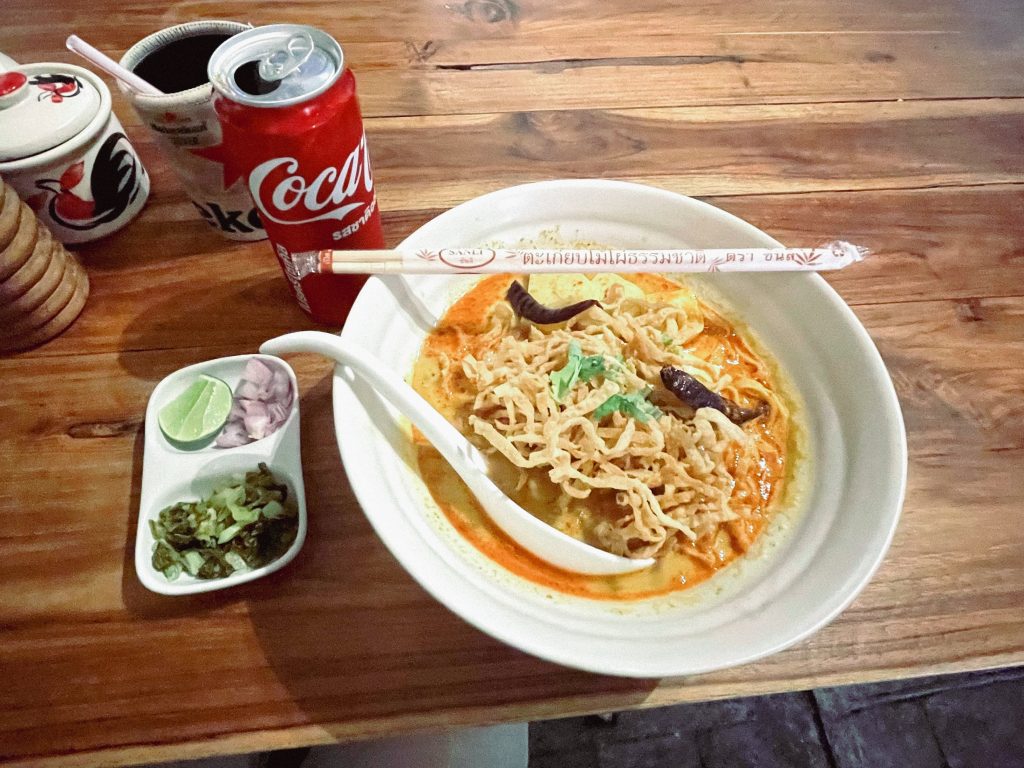
    Having been kindly directed to the right stop by a group of local ladies who’d teamed up to ensure I didn’t get lost, I found – by chance – a little place called Zong Peep, serving tofu Khao Soi. I promptly tucked into a huge bowl and a coke for the price of about £3. It was a delicious mix of salt and spice.

    Ask for Khao Soi with tofu if you want a veggie version

    Belly full once again, I was pretty shattered and ready to hit the sheets. “Do you know the way to Samala?” I asked a security guard at a nearby hotel. “My mate will take you”, he said, shouting over to a guy on a moped.

    Better not add this to my stories, I thought, knowing my Mum was watching. But no time to dwell. I pulled the helmet on and off we went, slithering down Sukhumvit in a game of real-life Mario Kart.

    Back at the hotel I dived under the covers and set my alarm for an early start. Contrary to my parents’ expectations, I hadn’t been killed, kidnapped or poisoned – so all in all, a great first day.

    My first moped ride of the trip

  • Gilda girl tea: a fun-filled guide to Madrid

    Why the Spanish capital is perfect for a spring time soiree.

    This will sound conceited, but as a child, I found myself slightly bored by Spain.

    I was born in the 90s, which means I’m very much a product of parents seduced by programmes like A Place in the Sun. TV at the time was obsessed with our hot neighbour, and – like a lot of people – Mum and Dad bought into the dream of becoming expats by investing in a small villa on the Costa Brava.

    In reality, this meant we spent a few weeks a year visiting what was essentially a building site near Alicante. And while it was obviously a huge privilege – and I do have really fond memories of those times with my family – the trips were hardly cultural experiences. You’re not exactly getting under the skin of Spain in those expat villages, especially as every second person is English.

    Fast forward a few years and I chose to study Spanish at A-level. Since then I’ve travelled a little more widely across the country and it turns out there’s a lot to love. Whilst Seville and Barcelona rank highly in my list of Spanish city breaks, in this guide, I’m making the case for its often-overlooked rival: Madrid.

    My memories of Madrid as a child mostly involve avoiding the excruciating mid-summer heat. But revisiting in September last year for my friend’s hen do made realise just how great a spot it is for a shoulder-month visit.

    So as April approaches, here’s my guide on how to spend the perfect short spring break in the Spanish capital.

    Day 1: Tapas and tortillas with a hint of history

    First of all, where should you stay? Well, consider that Madrid is Spain’s biggest city, and comes in at double the size of Barcelona. It’s a busy, urban spot, but if you want a neighbourhood feel, I can advocate for an area called Lavapiés.

    This is one of the city’s most characterful neighbourhoods; full of street art, independent cafés and, importantly, pockets of shade. I felt relatively safe there, although I would advise being vigilant at night (I usually check reddit for information about local safety!).

    Start your trip early by grabbing coffee and pastries from one of the local favourites such as Nomade Café or Hola Coffee, and enjoy the gorgeous murals.

    Then, from Lavapiés, take a 20–25 minute walk (or a short bus ride) into the historic centre.

    Head towards the Royal Palace of Madrid, passing through Plaza de Oriente on the way. This area feels like the “classic” Madrid you see in photos, and is nice for a little walk and photo snapping before the heat of the day sets in; I didn’t go inside the museum, but you can do so if you want (if you later join a walking tour, they’ll likely cover the history).

    For lunch, escape the heat and go in search of tortillas. Not the Mexican flatbread version, but the Spanish kind: thick, eggy, and often slightly gooey in the middle. I liked La Martinuca for its different variations (best enjoyed sitting inside), or Pez Tortilla on Calle de Espoz y Mina for somewhere more chaotic and buzzy; lots of locals crowded around standing tables.

    In the afternoon, ease into some culture at Museo Reina Sofía. If you time it right (after 4pm), entry is free, so head over at 3 to join the queue (perhaps with a beer in hand); this is an easy way to add something “cultural” without overcommitting your day.

    As evening sets in, lean into Madrid’s slightly chaotic energy by stopping for sangria and tapas at El Tigre or La Torre del Oro. These are traditional pubs known for generous – and borderline excessive – free food with drinks. You’ll be able to stuff your face and get a bit drunk as the heat cools.

    Teeter back towards Lavapiés, and reload on those calories with some more local snacks. If you’re alone or in a couple, grab a table at Bar Melos and try the croquetas.

    Day 2: All the art & a gilda girl tea

    Start your second day in the heart of historic Madrid. Book yourself a walking tour from Plaza Mayor, and build in thirty minutes to enjoy the traditional square earlier in the day before it gets too crowded.

    From here, take a 5-minute walk to the covered food market, Mercado de San Miguel. While this is not the cheapest spot in the city, it’s perfect for a grazing-style lunch; think gildas, croquetas, mini burgers, and a glass of something cold. My friend and I had great fun perusing the different stalls and oggling the giant fish.

    Then, stop at Chocolatería San Ginés just outside for churros and thick hot chocolate.

    In the afternoon, head to either Museo del Prado or Reina Sofía, whichever you missed yesterday. They’re about a 20-minute walk from Plaza Mayor, or a quick metro ride if it’s hot.

    Trying to do both in one day is ambitious and, honestly, unnecessary. I personally loved the Museo del Prado for its classical and religious works, from Velázquez to Goya; they really give you a sense of Spain’s artistic heritage. Reina Sofía, on the other hand, was a joy because of its surrealist highlights; Dali, Miró, and Picasso really get the mind going!

    Afterwards, what else – but more booze and food! Near the museum, there’s a cute side street with food stalls, including a place called La Consentida, where I enjoyed a happy hour washing an eclectic mix of gildas down with some rosé. This is a wonderful classic tapa, composed of a pickled Guindilla pepper, a salty anchovy fillet, and a green Manzanilla olive on a stick.

    On the way back, detour to La Pizzateca for a pizza slice; once in Lavapiés, finish with ice cream from Gelato Artesanal.

    Practical tips: Museums are free after 4pm (Reina Sofía) and 6pm (Prado Wed-Sat), so plan accordingly; weekdays are less crowded than weekends.

    Day 3: Pastries and park walks

    By day three, you might feel a little full and want to slow down, especially if you have a flight to catch.

    Begin, again, with coffee in Lavapiés. I advocate for pastries from Acid Café, but there’s a lot of cute places to sit down, too. If you want to stay in the area, I’d recommend reading this article for a full list of things to do.

    Eventually, make your way towards El Retiro Park near the Ibiza neighbourhood. Depending on where you’re starting, it’s roughly a 20–30 minute walk from the centre and worth doing on foot if you can.

    Ibiza is a busy spot, but good for more local eateries. I stumbled upon Parador del Jamón, known for traditional sandwiches (less useful if you’re vegetarian, but very “Madrid”), and there are plenty of other casual spots around.

    Retiro is where Madrid softens; tree-lined paths, rowboats, people reading in the shade – it’s less about sightseeing and more about just being there. Bring snacks, something to drink, and take your time. I was alone for this part of my trip, so put a podcast in, but it’s also lovely for a read in the sunshine. It’s a nice place to visit at golden hour.

    Following your park walk, settle down somewhere nearby for more tapas and Sangria. If you’re back in Lavapies, grab a table outside La Inquilina for wine and some delicious gildas.

    If you’re working remotely…

    If you’re mixing travel with work (like I am), Madrid makes it easy. I liked La Bicicleta Café and Federal Café as relaxed spots to spend a few hours; good coffee, good atmosphere, and no pressure to rush. Be aware though, that lots of cafes in Lavapiés do not allow laptops.

    Overall – Madrid is a feast for the mind and stomach

    Madrid can even feel a little overwhelming due to its pace and scale, especially compared to smaller Spanish cities. But don’t write it off for a mini break. Give it a couple of days – wander a bit, eat well, sit in the sun – and it starts to click. And once it does, it’s very easy to see why people keep coming back.

    If you’re looking for more Spring time city break ideas, why not read my piece about Copenhagen.

  • Had I bitten off more than I could chew? My third day as a nomad in Asia

    As a headache took hold at the Grand Palace, I wondered if I’d made a mistake moving abroad

    On the third day of my first-ever trip to Asia – having started a new chapter as a “digital nomad” at 32 – I awoke full of adrenalin and ready to see some other ‘must sees’ on my list.

    After a quick snack at the 7/11 – a backpacking pastime – I headed out toward a local market, dodging traffic at every turn.

    The upside of being on high alert in one of the busiest cities in the world is that you’re more likely to be looking around you than down at your phone – and that’s how I spotted a curious sight.

    Approaching a junction, I noticed I was at a railway track. Tucked along either side were small houses beneath the Expressway, and people were crossing the tracks and disappearing from view. Where are they going? I wondered.

    As I ventured further, it became clear that the place was quietly teeming with life. To my left, a family was sitting down for a meal; to my right, a man was gutting fish. It was a tiny community, living in a traffic sandwich.

    Life must be loud for this community under the expressway

    A fish restaurant alongside the railway track

    Bangkok – home to 11.4m people – is not a place where wealth is equally distributed. To think they were wedged beneath the underpass like this, with cars and mopeds on all sides and trains cutting through (I presume), demonstrates how crammed with people it is.

    Visiting the flower market

    Eventually, I found myself at Pak Khlong Talat, the city’s primary flower market, tucked into the Wang Burapha Phirom subdistrict. Unlike the railway community, this one I found in Condé Nast. Because sometimes you need a little guidance!

    I went in the late afternoon and watched the vendors setting up while people drifted through. Spotting yellow flowers (marigolds) everywhere, a quick Google revealed that they’re closely associated with Buddhism and the late King.

    I learned how to say good morning (“sawatdee kha”) and we had a little tête-à-tête in broken English, between lots of smiling and cooing at the dogs and cats – luckily there’s only one language for cute.

    Insiders say to visit the flower market at 3am

    Word has it, the best time to come here is in the middle of the night, when the freshest blooms arrive. But it’s a great place to cool off during the day.

    China Town and Khao San Road

    Toward nightfall, I headed to Chinatown for some chow. What did I fancy? I asked myself manoeuvring down the stalls. Scorpions? Crickets? I was (sort of) tempted to try the edible insects but didn’t want to get sick straight away.

    Scorpions, anyone?

    I eventually settled on some Chinese chive cakes followed by some “kanom krok” – little coconut pancakes. Jokes aside, if you’re vegetarian, you’ll find some decent options here, even though Asia is generally a pretty meat-heavy place.

    Delicious veggie dumplings in China Town

    By this point, it was getting a little late. But Bangkok buzzes at all times. Do I want to go to Khao San Road? I pondered, between mouthfalls. For the uninitiated, this is a famous street in Bangkok, known for its mental nightlife.

    I truly did not, but knew I’d regret not seeing it. It wasn’t far away, so I hopped into my first colourful – and probably overpriced – TukTuk by the market, for around £7.

    The ride itself was great fun. But the strip at Khao San – not for me. I’ve always preferred to watch the Inbetweeners from behind a screen, not as a lived experience, so this was a good early lesson in trusting my instincts. I got nothing from it, save from cooling down in the breeze from the TukTuk.

    Ever impressed by the public transport in Bangkok, I spared my lungs the Grab bike this time (although I was getting hooked on them!), and caught a bus all the way home.

    Visiting the Grand Palace

    By the next day, I needed some greenery. I’d vowed to visit Lumpini Park and Bang Kachao, the so-called ‘Green Lung’ of Bangkok, for a bike ride.

    But being unable to change my supposedly ‘flexible’ flight ticket to Chiang Mai, I panicked and thought I’d best visit Bangkok’s famous temples: Grand Palace, Wat Pho and / or Wat Arun.

    I really hate when tourist attractions are rammed down my throat, and I couldn’t shake the feeling that the Grand Palace was a bit over-hyped. But I was in South East Asia, so temples were a must.

    So, wat did I think of them? It’s tricky. Religious Studies was my favourite subject at school, and I resonated strongly with the story and teachings of Buddhism. As a 15 year old, it was the first religion I’d encountered that didn’t seem to be predicated on power.

    I’ve also been a yogi for years. So I recognise that temples are culturally important and tried my best, in the heat, to take in the majesty of it all. But after a two hours, I was a little bored.

    Not just that, but – quite unsurprisingly – the place is hugely overcrowded. They don’t show you that on TikTok or Pinterest do they!

    Wat Pho is famous for the immense Reclining Buddha

    Reality check at the temples – they’re crowded!

    I wish I’d followed through with my first plan. Does this mean I lack depth? I thought with panic. Maybe. But who cares. Life’s short. There’s nothing wrong with chasing lizards in the park. They’re cool as hell!

    Monitor lizards roam the park and canal freely

    As a headache took hold, I learned my first lesson as a digital nomad: if I wanted to work and travel, I’d have to manage both my time and my energy levels properly. I was alone, in a foreign place, in a much hotter climate – that’s a lot to navigate on top of a job, and I hadn’t even got started yet.

    Sitting on the flight to Chiang Mai, clutching my carry on, I wondered – had I bitten off more than I could chew?

  • Petsitting from Porto – my side hustle expands internationally

    Plus, how does Lisbon’s cool sister fair for remote workers?

    Following an inaugural three-month stint as a digital nomad in Asia in early 2025, I returned home invigorated – but a little exhausted – by my new freelance lifestyle. Curious to understand what the European scene looked like, I started exploring options closer to the UK.

    Europe is, unsurprisingly, not as cheap as Asia or South America for nomads; but some countries are waking up to the advantages of hosting foreign remote workers. Portugal is one of them.

    Home to the first so-called “digital nomad village” on Madeira island, the country has made a concerted effort to attract location-independent workers. In 2026, it even introduced a dedicated D8 visa to make living and working there easier. With around 16,000 foreign remote workers, Lisbon has become so popular that the influx is now proving controversial, with concerns around gentrification and a siloed economy growing (see my blog about Chiang Mai in Thailand, where I touch on this).

    Outside of these hotspots, though, I hadn’t heard much about Portugal’s second favourite city, Porto. Porto sits on the west coast, in the north of Portugal; around three hours away from Lisbon by train. In olden times, Portugal was one of England’s more important allies, according to my favourite podcast, The Rest Is History. Nowadays, it’s best known for its Douro wines (including Port), pastries and (love her or hate her) J.K. Rowling, who lived there in the nineties.

    Curious, and having already had some success with pet sitting in the UK, I managed to secure a sit in Porto during October (full blog on how to get into this coming soon); making for a far more affordable trip. So, off I trotted for a week of exploration in the country’s wine capital.

    Is there a nomad scene?

    Unlike Lisbon, which has flourished as a long-term base for remote workers, Porto tends to attract fewer digital nomads setting up here permanently, it seems.

    Based on my time there, my sense is that this is partly cultural; many cafés don’t encourage laptops for long stretches, and the nomad community isn’t yet large enough to sustain the same density of coworking spaces and regular meetups. Some nomads will no doubt disagree – but for now, Porto feels less geared towards full-time remote work. Of course, that may well change if Lisbon continues to feel over-saturated.

    Coming at this from the perspective of someone who isn’t working full time, I found Porto to be a pleasant and peaceful location to work from, however. There’s reliable Wi-Fi, comfortable places to dip in and out of work (that allow for at least a few hours of focused work), and I felt like I was merging with local life. For freelancers, creatives, or anyone balancing work with travel (perhaps for shorter periods like me) – rather than clocking a strict nine-to-five – it was a good setup.

    How I spent my time in Porto

    There’s plenty to do in Porto, and it felt like a truly liveable city to me. Visiting in October meant it was mild (but a little rainy!) and wasn’t overrun with tourists. Locals were incredibly friendly and keen to make conversation, which really struck me. Here are some fun activities to add to your list if you’re visiting:

    Admire the terracotta rooftops from the Dom Luis Bridge

    Personally, the first thing I look for on a city break or solo trip is a walking tour. I booked one via my hostel, which took us around the local sites, including the fanciest McDonald’s in the world (which is nothing to write home about, but fun to see) and some beautiful viewing spots, including Sé (Porto’s cathedral) and the Dom Luís bridge, which crossed the Douro River.

    The mix of ageing white and amber buildings lining the riverbank in the Ribeira district makes for a gorgeous sight and you’ll even find that the famous amber roofs sparkling in the sunlight, thanks to the sharp seagull deterrents. Magic!

    Worth noting that Porto sits on a steep slope beside the river; its narrow roads and staircases don’t make it easy to manoeuvre around – even with Ubers – so bear this in mind if you have health or mobility issues.

    Try a Francesinha

    I hadn’t put much planning at all into this trip, but luckily a pal of mine was in Porto at the same time visiting a local pal. After sharing a couple of bottles of rosé at a bar called Bosco (recommended for its views of the city!), she advised that we head out for something called a Francesinha.

    This is an indulgent Portuguese sandwich originating from Porto, featuring layers of bread, steak, ham, linguiça (sausage) and chipolata, smothered in melted cheese and a thick, savoury beer-and-tomato sauce. It tastes like eating a ham sandwich covered in spaghetti hoops. Bit weird, but sort of a must-try whilst in Porto.

    Aside from the Francesinha, I can recommend the warm pork and cheese sandwich from Bó Tá Quente on R. do Souto – another good spot for traditional cuisine.

    Sample the pastries

    People like to celebrate French pastries, but wow do the Portuguese know a thing or two about sweet, flaky snacks.

    One of the joyful things about Porto is that you don’t need to look far for a good pastry selection; although Confeitaria de Bolhão was busy, and had a big spread of goodies to choose from. Highlights have to be the pastel de nata (custard tarts with blistered pastry) and the ovos moles (a soft, sweet egg-yolk filling, traditionally wrapped in rice paper).

    Visit the Mercado de Balhao

    Described as a “recovered gem” following its restoration in 2023, this is a bustling indoor food market open every day other than Sunday. It’s a great place to grab a coffee and sample local treats, as well as do a bit of gift shopping.

    On my list for next time

    Walking the Camino

    Ah, the famous walking pilgrimage. This is on my wish list this year, although I’m still undecided on my route. The Camino Portugués from Porto offers three main, well-marked routes to Santiago de Compostela – Coastal, Central and Litoral – all starting at the Sé Cathedral. The Coastal and Litoral routes feature ocean views, while the Central goes inland through historic towns. All routes typically converge in Redondela, Spain, before reaching Santiago.

    Visit the Douro wine region

    It’s not just fortified wine made in Porto. Northern Portugal is famous for its Douro Valley, a UNESCO World Heritage site that’s easily accessible from the city. If you’re a wine fan, it’s easy to take day trips to the vineyards (which sit alongside the river) from the city.

    Pastel de nata cooking class

    Why not find out how to make the wee eggy tarts yourself? I spotted an advertisement for this in the city and it struck me as a fun thing to do. I’d be genuinely fascinated to know how they’re made but sadly ran out of time for this, myself.

Leave a Reply

Your email address will not be published. Required fields are marked *