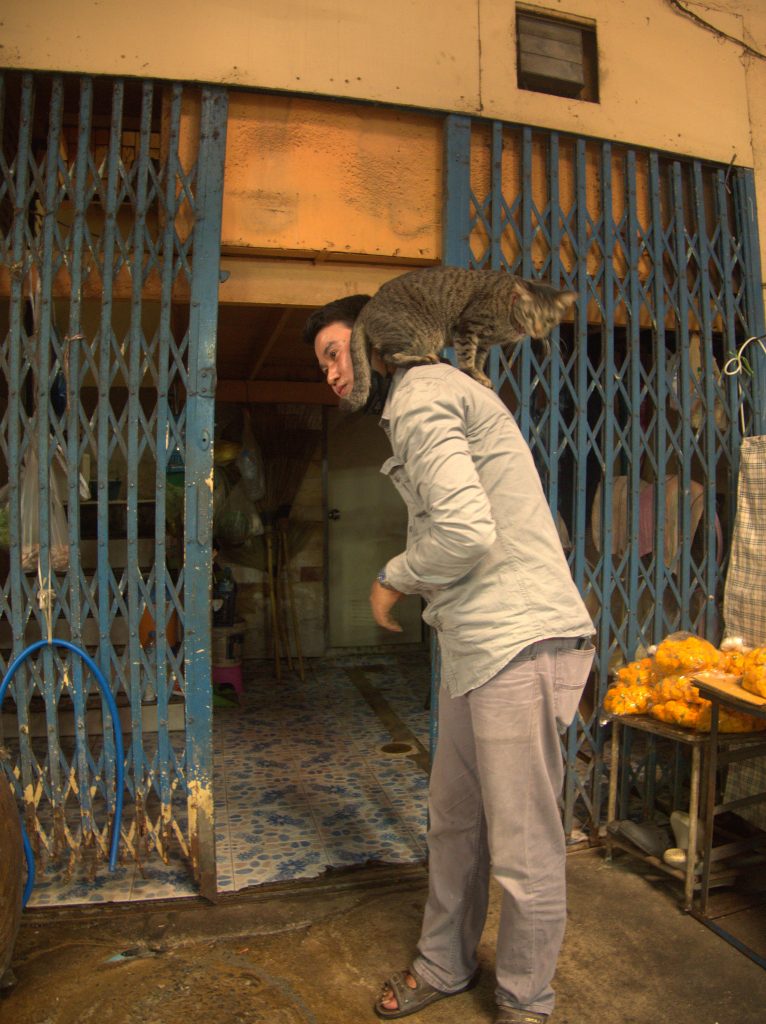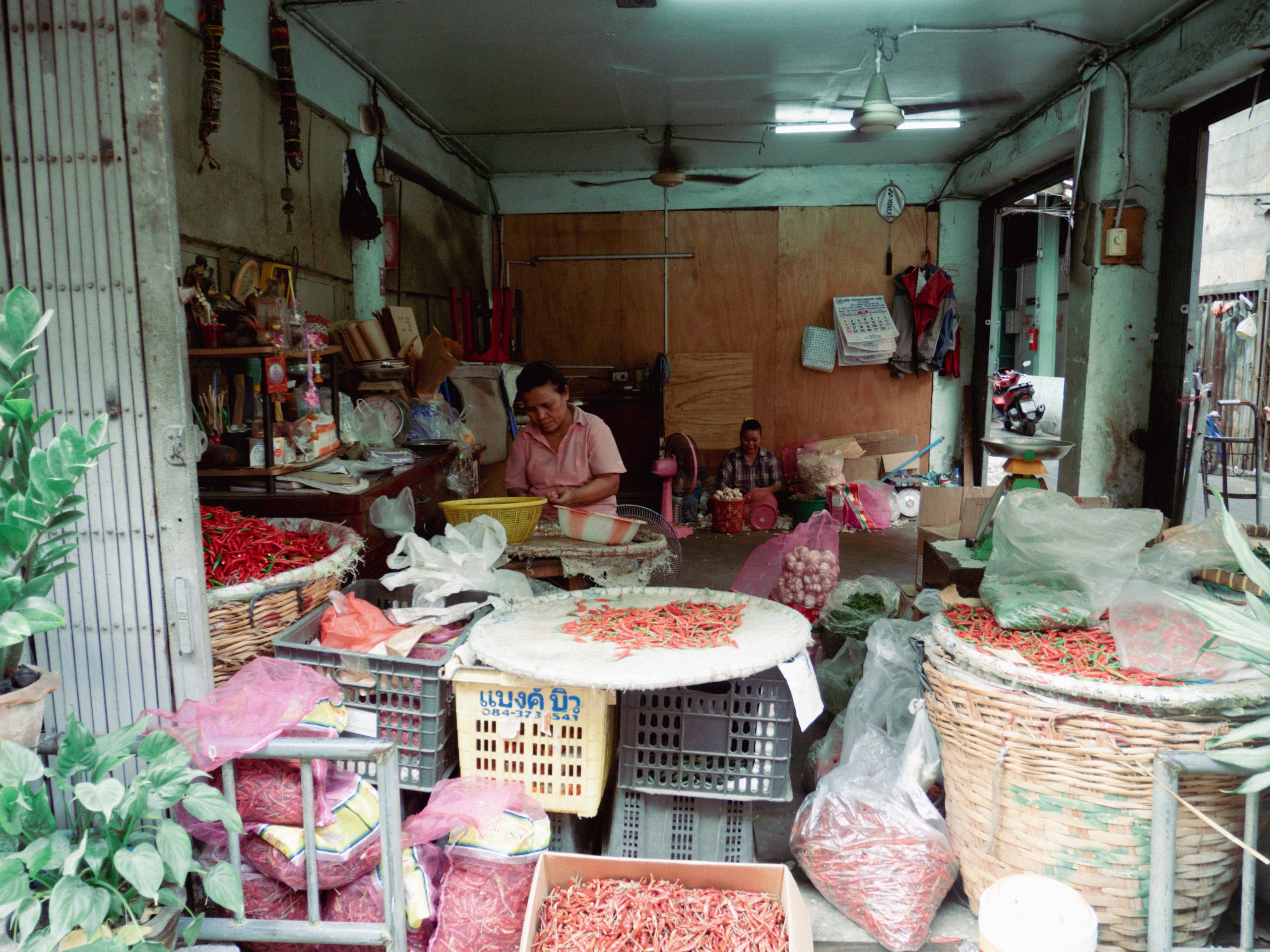
Dodging lizards in Thonburi – My first 24 hours as a nomad in Asia

Having swapped life in London to work remotely abroad, what did the Thai capital have in store for me?
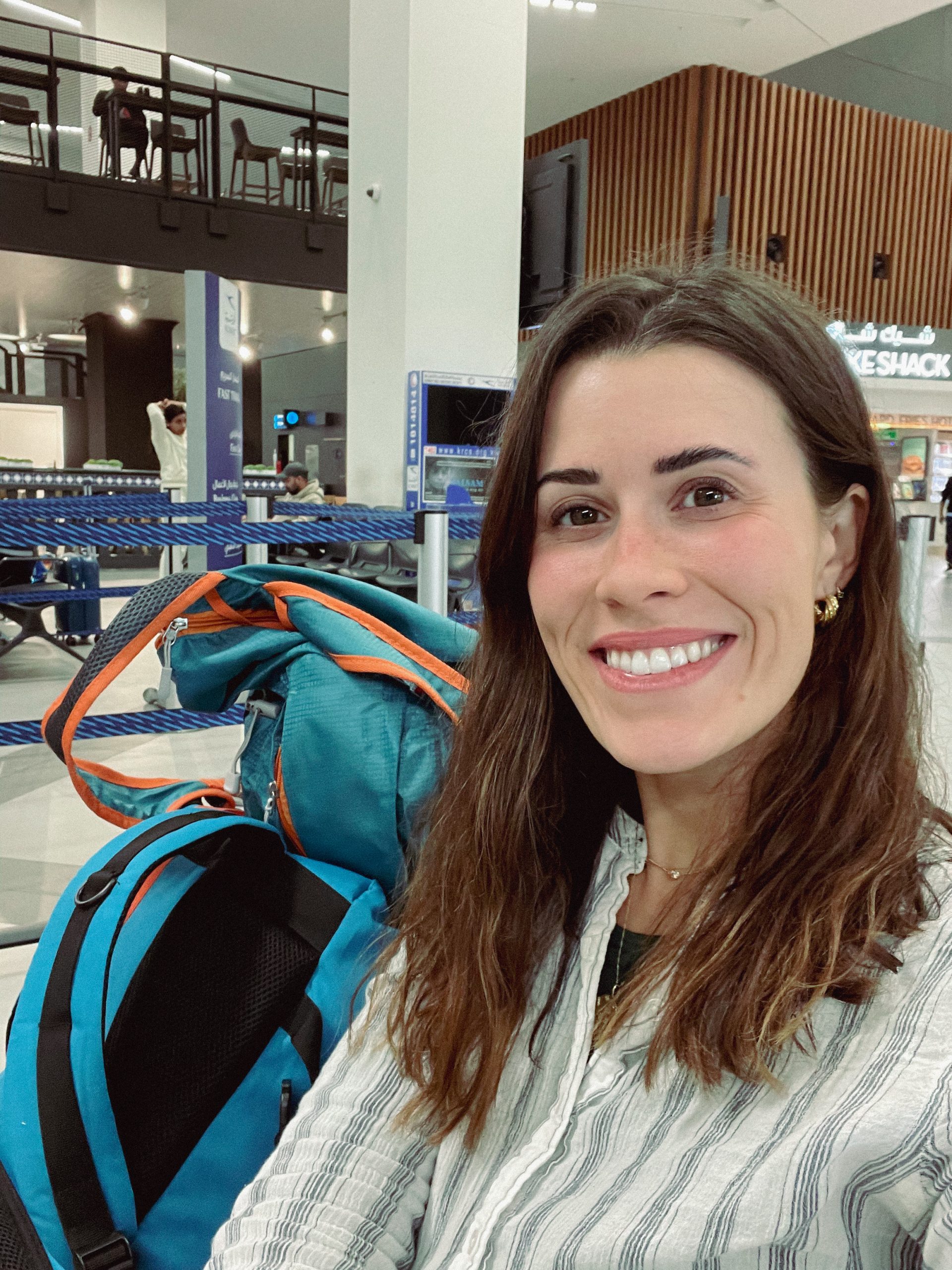
At the end of 2024, I quit my corporate job in London after eight years in the capital, and started life as a digital nomad in Asia.

It was thus that I found myself, two flights and 15 hours later, at Suvarnabhumi airport, Bangkok – freshly spray tanned, and braced for change.

After having successfully withdrawn baht, updated my family, filled my water bottle and downloaded my e-sim, I had a full two to three days to explore the city before moving North to the town Chiang Mai, a well known nomad hot spot.

I was staying in Asoke, right in the centre of the bustling mecca of Bangkok. It’s seriously busy – think wide streets laden with traffic – but a good location from which to see the main sights.

I got lost a few times, but for once there was no tube to catch, no meeting or engagement to get to. Nor was I a backpacker on a shoestring budget or timeline. Why am I rushing to my hotel? I thought with a thrill. I have time to figure it out.

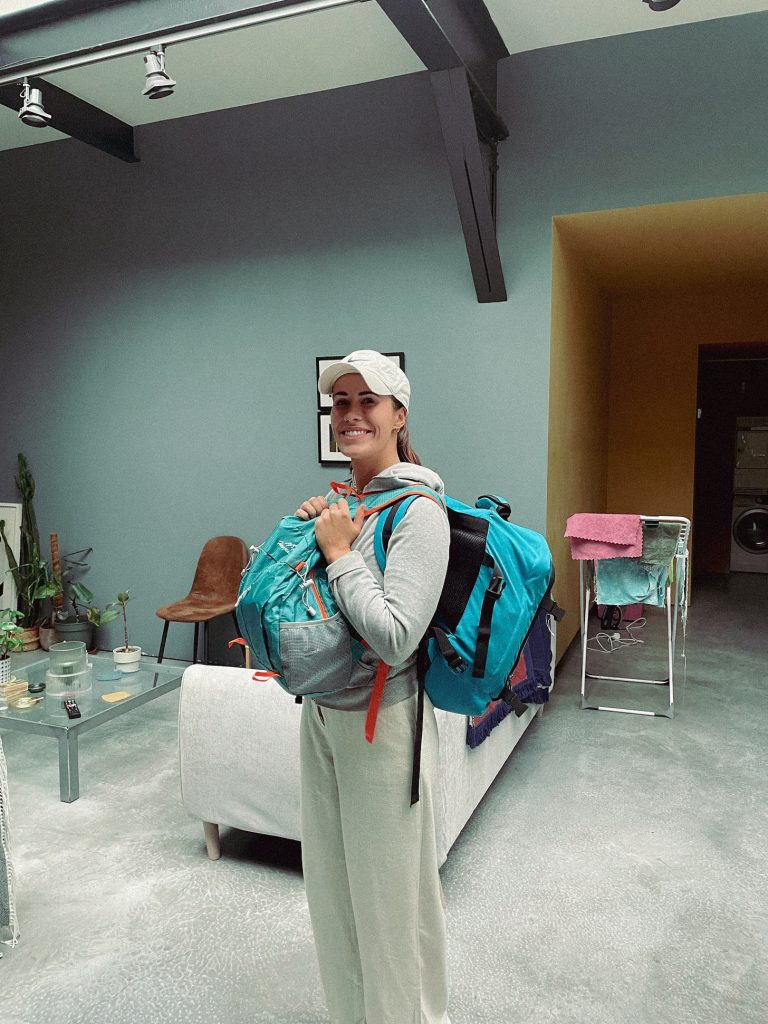
As I traipsed through the streets with my rucsack, the heat started to wear a little, however. I was grateful that I’d limited myself to hand luggage only, packing just a few clothes and my refurbished MacBook Air – about the tiniest laptop ever made.

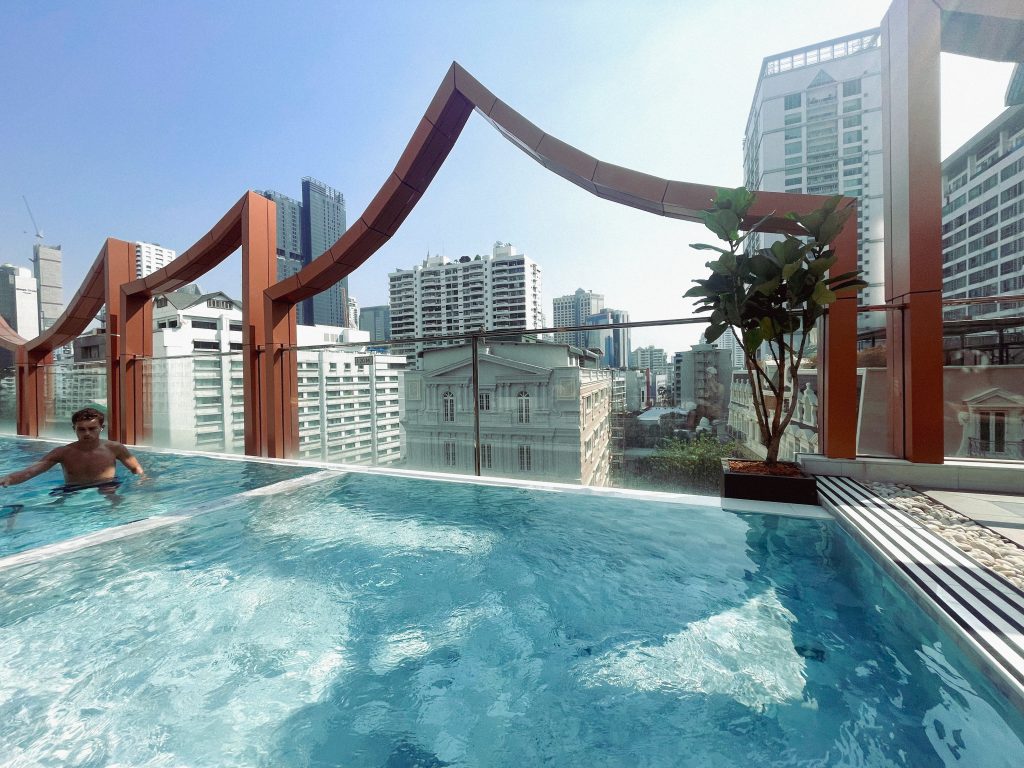
When I arrived at the lovely Samala hotel – which was later damaged in an earthquake – I cooled off with a little visit to the pool, a Singha (Thai Beer), and after a short nap, contemplated what to do next.
Snacks at Ruam Sab market

First up, food of course. The benefit of being in the business district of Bangkok is that you’re never far from a decent market.

I’d spotted Ruam Sab market on my way to the hotel, so journeyed back with my pockets jangling.

Having done a bit of prep for my time abroad (thank you RetiredWorking4U), I knew this food court was where the local office workers came for lunch. As such, it was best to arrive early – especially as I wanted to look about and soak it all in.
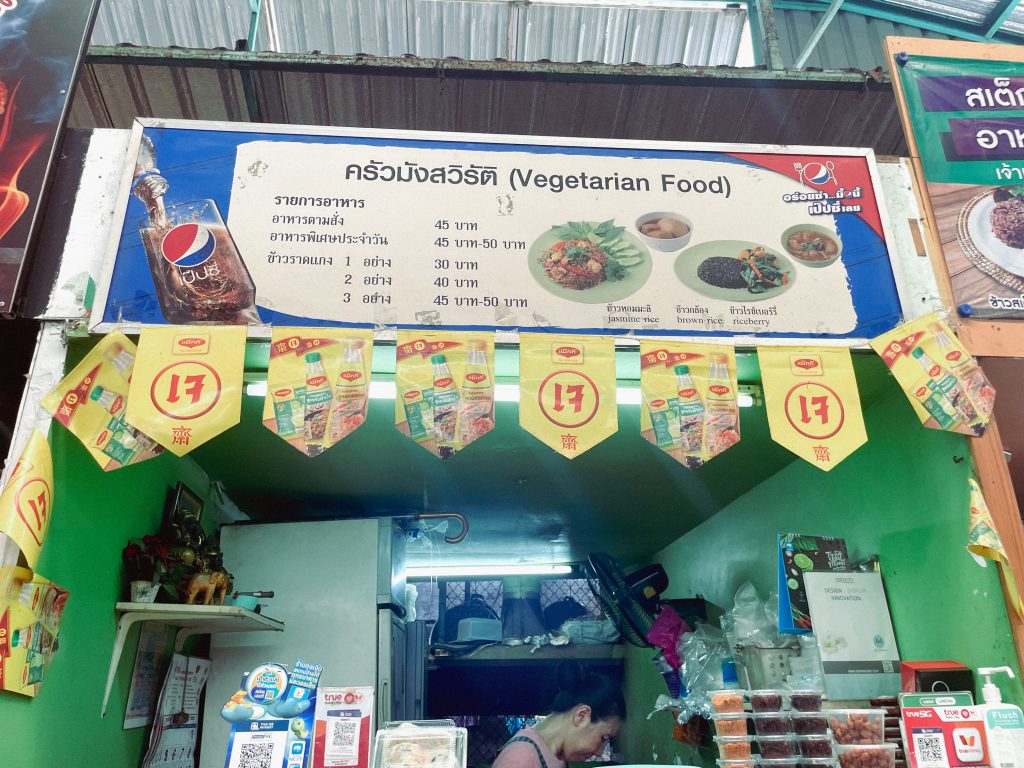
Vegetarians – look out for the yellow Je flag!

Whilst I was seriously tempted by the deep fried bananas, I eventually settled for some Morning Glory (water spinach) with rice, and some kind of broth, lathered with a mix of chillies, soy and fish sauce, which is typical all over Thailand.

Meat is eaten in the country, but veggie stalls sometimes have a yellow Je flag, which was a big help, as I don’t eat meat that often.

Stomach full, I was ready to get out and explore.

Touring Thonburi

Nothing beats a tour for getting your bearings, and I’d already found a business online called Hidden Bangkok Tours led by a local chap born in the area.

He runs boat trips in Thonburi, the quieter, more traditional part of Bangkok on the western side of the Chao Phraya River – the “city behind the Pagoda”, he said in one YouTube video.

There’s no doubt social media can kill your brain, but one of the lovely takeaways is finding unusual activities you might not typically consider, like this one.

Desperate to see some lizards, off I popped to Thonburi. As we journeyed through the khlong (canal) in our brightly coloured tail boat – right in the shadow of the giant golden Buddha, in fact – we had what I felt to me like a more authentic insight into the city.

Before I arrived in Bangkok, all I could picture in my head was roads, wires, and hotels – which is accurate – but I was surprised to learn that it’s also lined with waterways. In fact, it’s at huge risk of climate change due to rising sea levels from the low-lying Chao Phraya delta.

Until the late 19th century, the rivers served as the primary means of transportation for people and goods, earning it the nickname of “the Venice of the East”. Venice – in Thailand! Every day’s a school day.

Our guide explained how the old wooden houses lining the canal were what most local Thais lived in, with many families still working directly on the river (although some were now Airbnbs).

We met a couple of them, including a lady who’d sold fish on the river her whole life and, if I remember correctly, had funded her children’s university education with her earnings. I’m not sure how true this is, but either way, it’s a cool story.

Shots from Thonburi, a riverside community located on the western banks of the Chao Phraya River

Being over a century old, many of the properties – which were built on stilts – were beginning to fall into the river. Rebuilding requires official permission, which makes it difficult for residents to maintain them, although I didn’t get to the bottom of why such permission was difficult to secure, sadly.

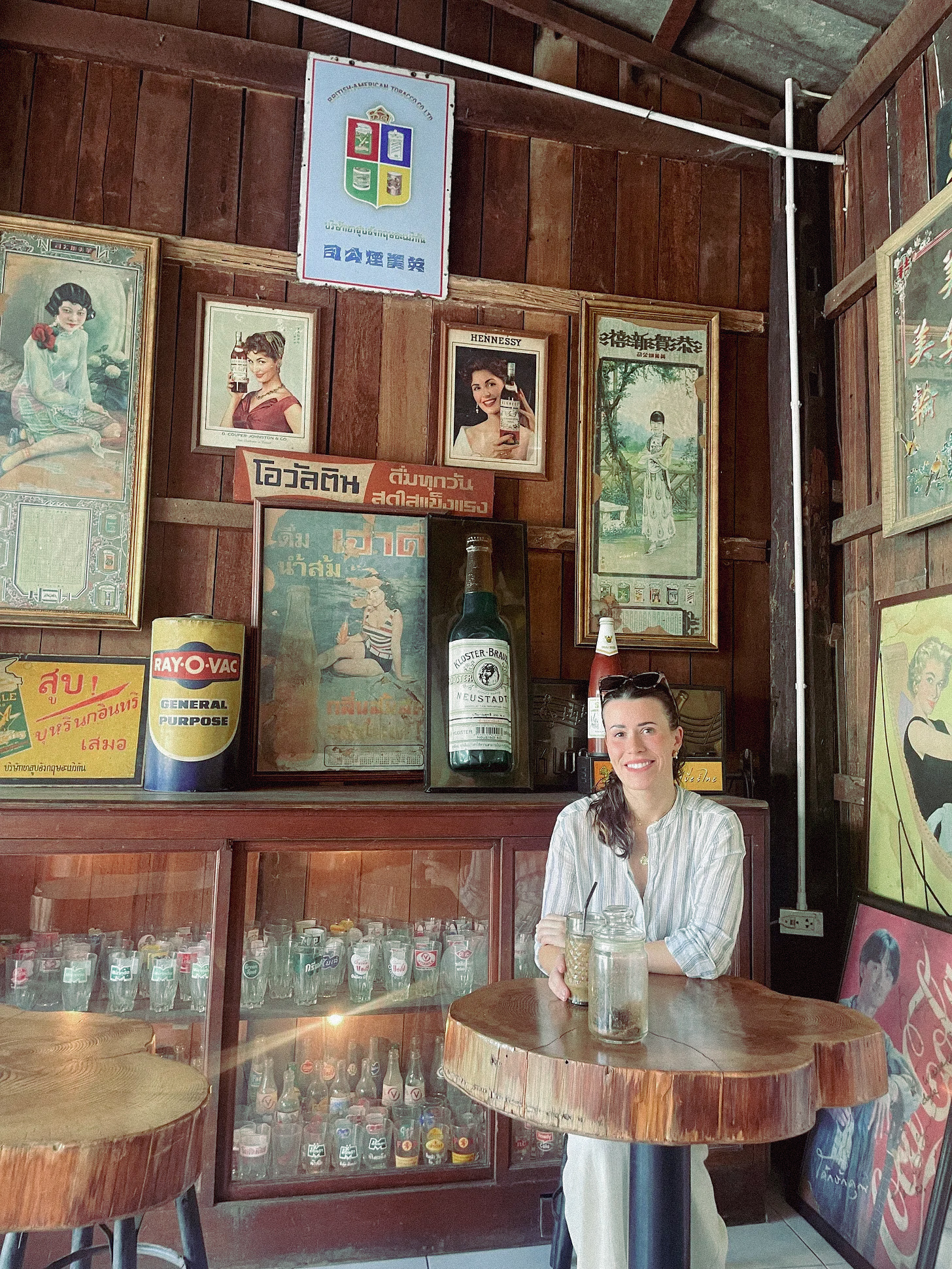
We then stopped for coffee at an adorable, centuries old wooden house called Baan Silapin, the “Artists’ Village”. It appeared that this was where the young Thai’s hung out, and I spotted a couple on a date feeding catfish by the water – as you do.
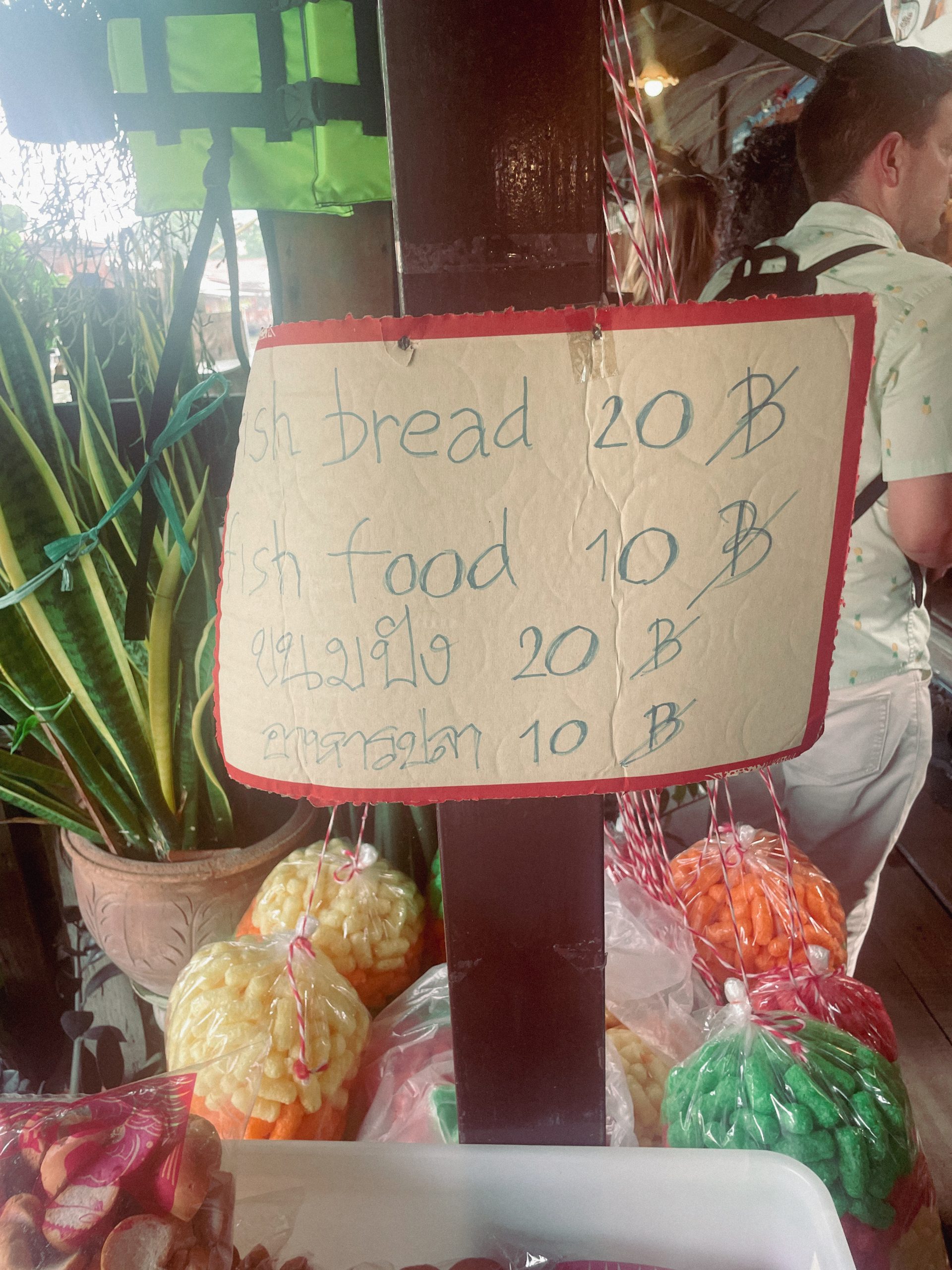
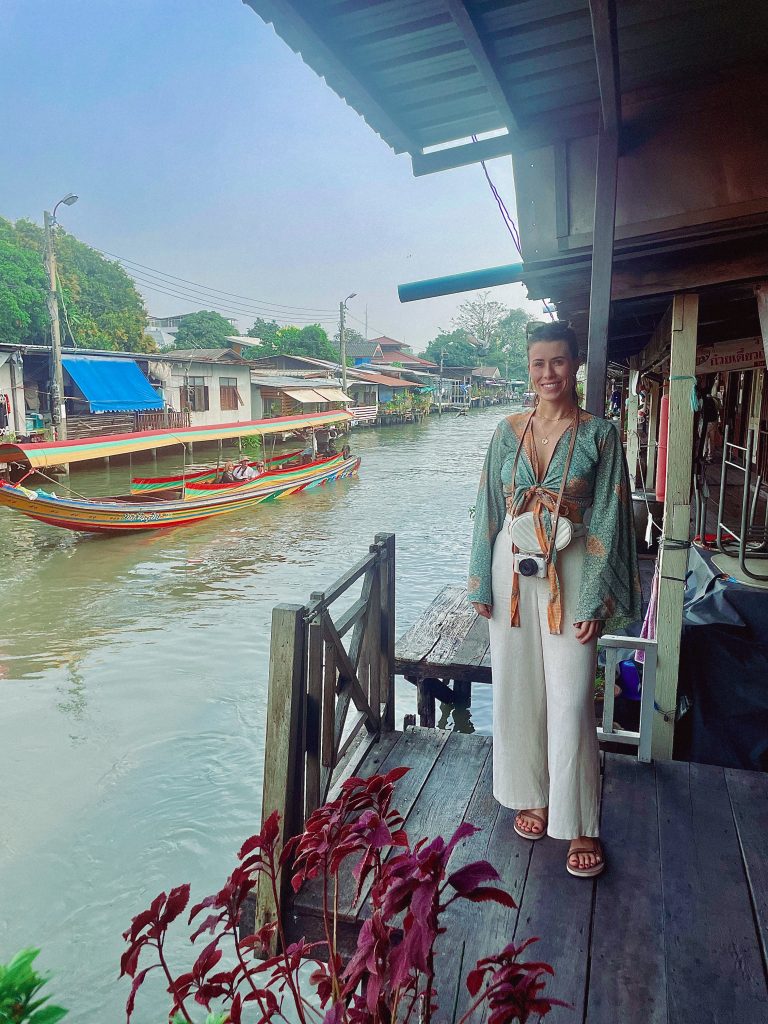
All the colours at Baan Silapin “Artists’ Village”

Others – a mix of locals and tourists – were painting in the cafes, observing the local art, picking up trinkets, and generally slowing down. It wasn’t overcrowded, and felt a bit hipster – like a slower, hotter, Hackney Wick. Without the beanies (thankfully).

After the intensity of Asoke, this was a refreshing change of pace – a chance to see a side of Bangkok that I suspect often gets missed.

Do make time for a visit here if you need to unwind from the city.

There’s no need to get a tour, but it certainly adds context and colour. Importantly, I learned how to say Bangkok in Thai – possibly the longest word ever said – check it out:

Trying my first Khao Soi

After my cultural baptism, what else, but more food? Bloggers advised I try Pad Krapao or Khao Soi, a noodle soup in a curry broth, topped with crispy fried noodles. I was keen to work out if I could find vegetarian versions, so later caught the bus down to the thriving Vadhana District in central Bangkok.

Having been kindly directed to the right stop by a group of local ladies who’d teamed up to ensure I didn’t get lost, I found – by chance – a little place called Zong Peep, serving tofu Khao Soi. I promptly tucked into a huge bowl and a coke for the price of about £3. It was a delicious mix of salt and spice.
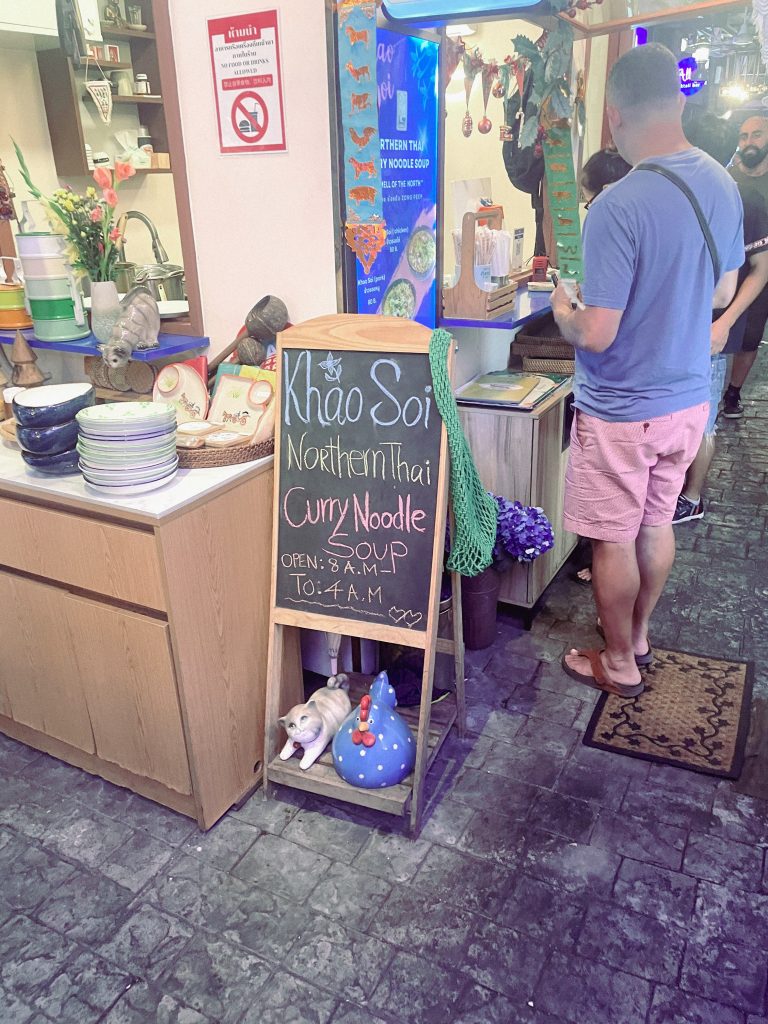
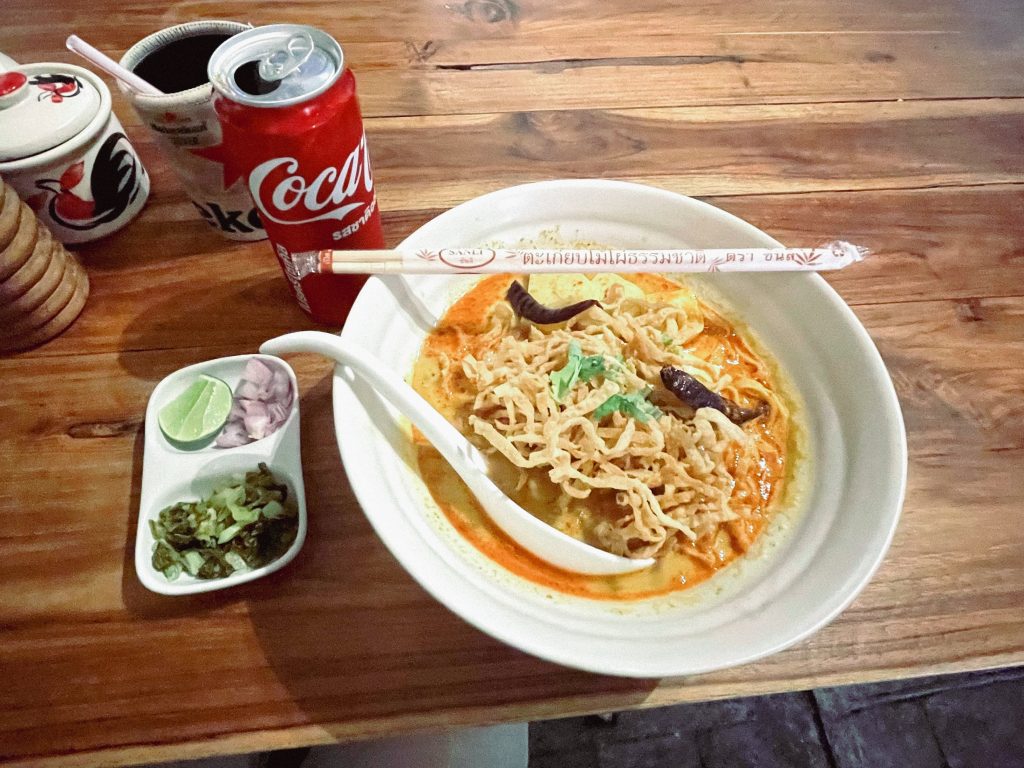
Khao Soi is one of the best loved dishes in Thailand

Belly full once again, I was pretty shattered and ready to hit the sheets. Do you know the way to Samala? I asked a security guard at a nearby hotel. My mate will take you, he said, shouting over to a guy on a moped.

Better not add this to my stories, I thought, knowing my Mum was watching. But no time to dwell. I pulled the helmet on and off we went, slithering down Sukhumvit in a game of real-life Mario Kart.

Back at the hotel I dived under the covers and set my alarm for an early start. Contrary to my parents’ expectations, I hadn’t been killed, kidnapped or poisoned – so all in all, a great first day.

My first moped ride of the trip
Similar Posts

  • Cooling off in Copenhagen

    Is this the best city break in Europe?

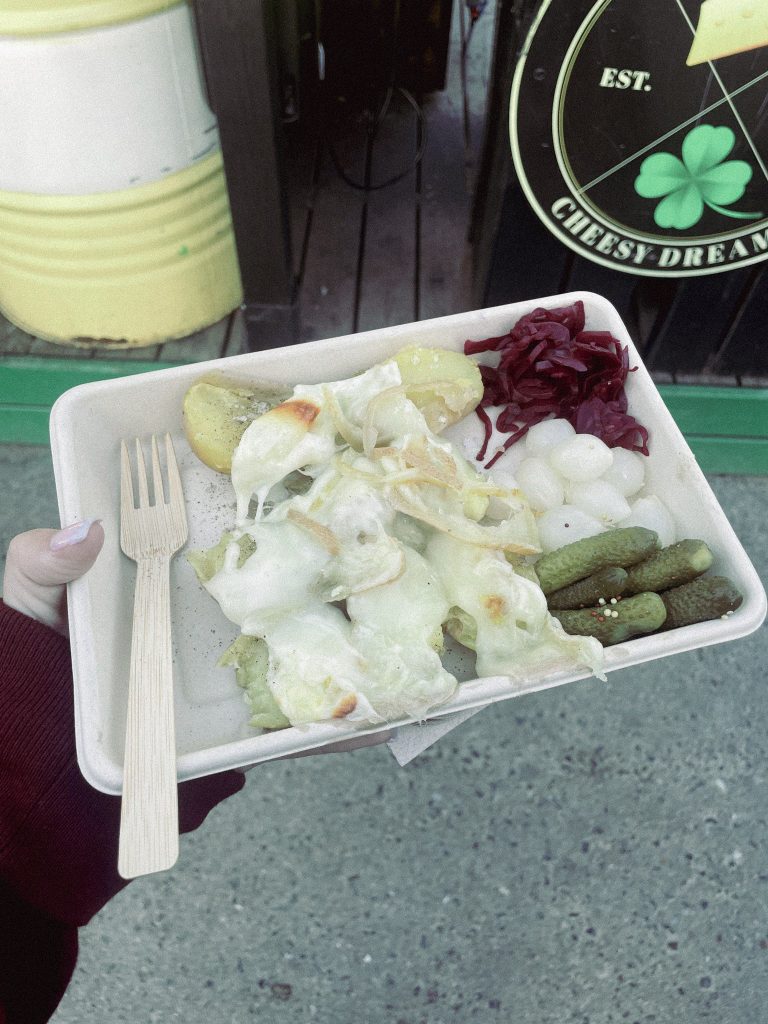
    Following three months visiting Asia, Bali and Australia in early 2025, I was craving less stimulation and more structure for my next trip from the UK. After eight years as a Londoner, there comes a point where you want to trade a backpack for a trench coat and boots, and with a friends’ wedding in Sweden approaching in May, it made sense for us to visit Copenhagen first.

    I’d been curious about the Danish capital for some time. My parents spent their honeymoon there in the 80s and nearly always have Scandi drama on the go. I also recall having nightmares from a made-for-TV version of The Little Mermaid which, true to Hans Christian Andersen’s style, is far darker than Disney would suggest. 

    Luckily this trauma was corrected during my visit, and I left thinking Copenhagen might be one of my favourite city breaks so far. Maybe that was because, after the sensory sprawl of the far east, it felt so refreshingly calm and considered, with its wide pavements, seamless cycle lanes, and reliable public transport. Like a lot of Scandinavia, everything seems designed – not in a showy way, but in a cool, collected way.

    Keep reading for food highlights, what to do, and the best day trips from the city.

    What to eat in Copenhagen

    Copenhagen is a bit of a foodie dream – which sort of surprised me – so prepare to go with an empty belly and a ready palate. Here’s a suggestion for you to spend your day eating around the city: 

    First – bakery breakfast 

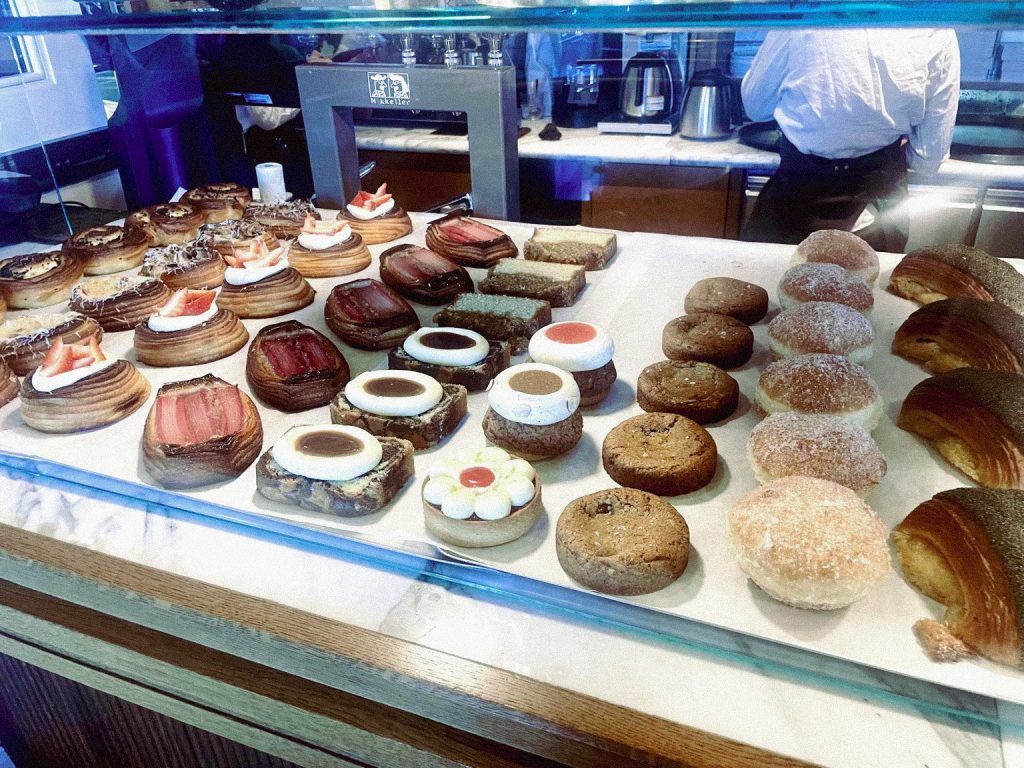
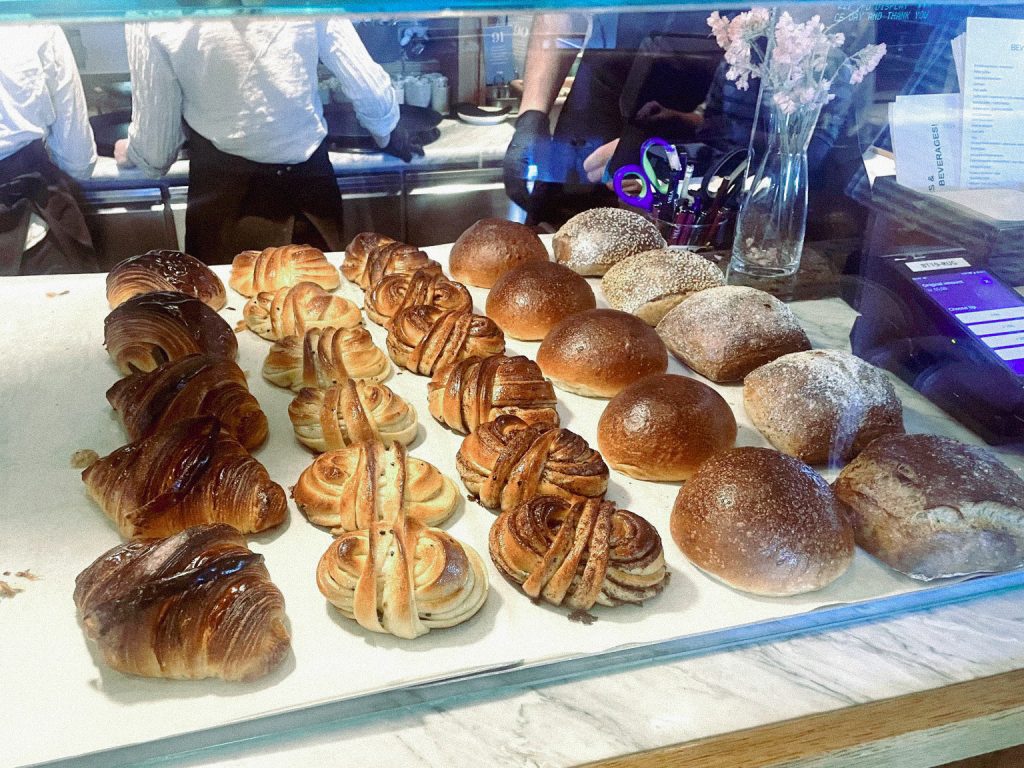
    Skip the hotel buffet and head to Rug or Hart Bakery for some beautifully curated baked goods. They’re quite upmarket places with spaces to sit down and enjoy your loot. Bring a friend so you can split a bunch of them between you (or pig out alone!) 

    Next – Smørrebrød and beers for lunch

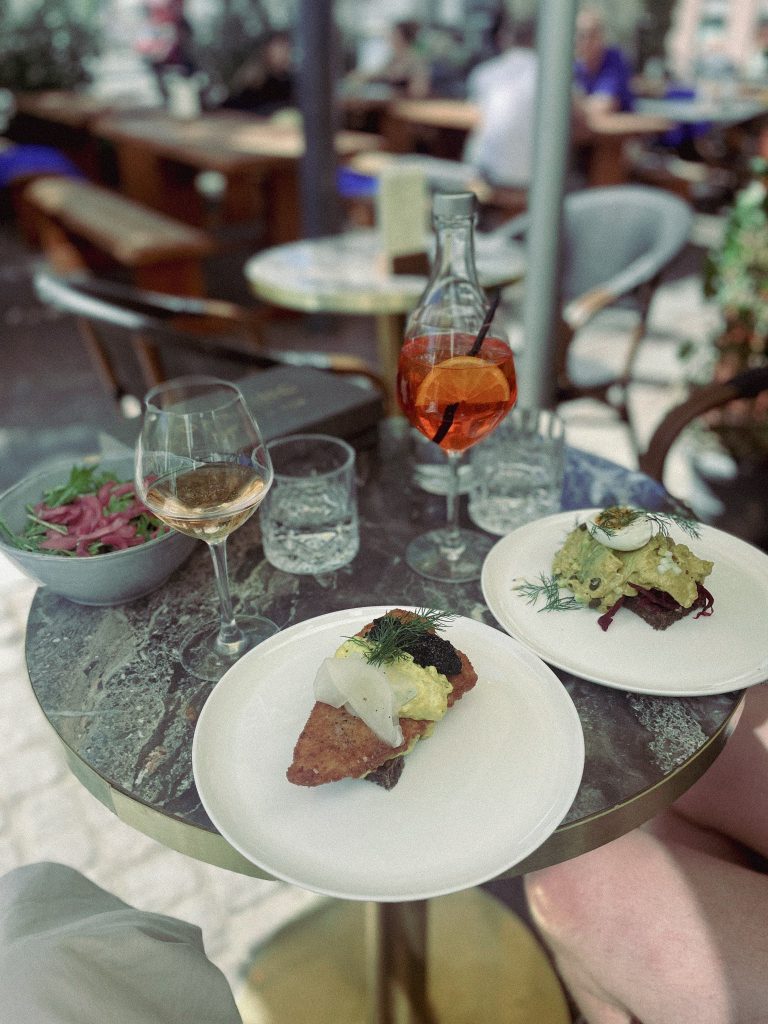
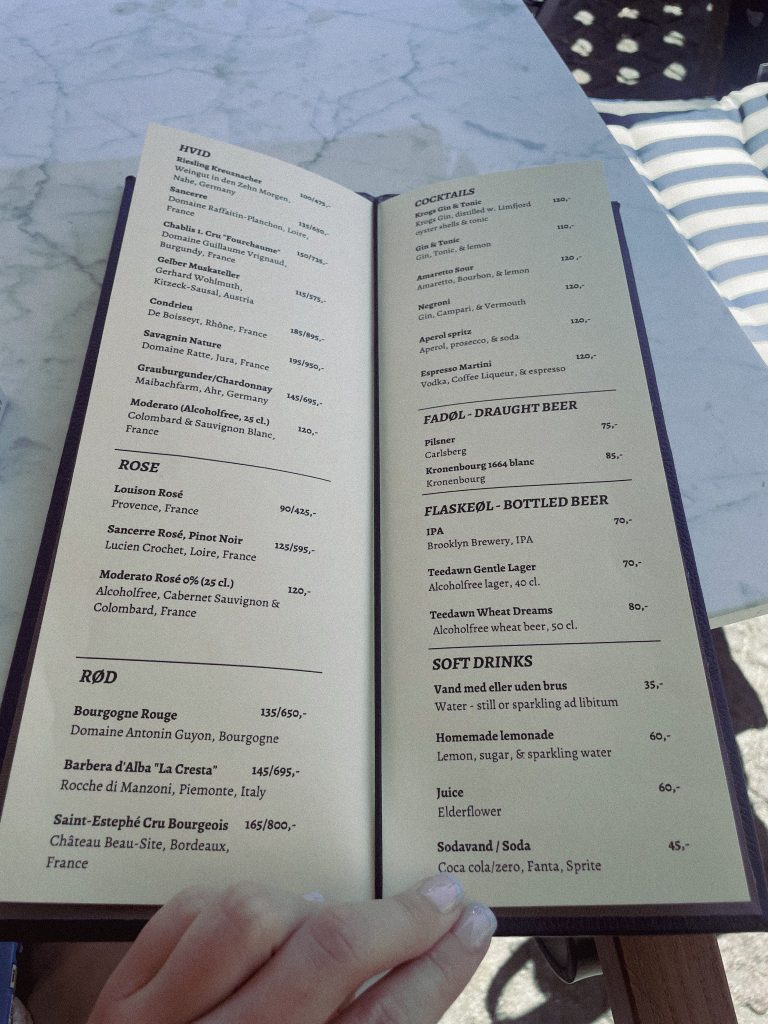
    Smørrebrød is a classic Danish open sandwich – sort of like oversized tapas. Imagine a base of tangy rye bread, topped with smoked fish and pickled veg. We stopped on Gammel Strand, but you can find them all over the city. They’re delicious but not cheap, so order a selection and split them between you. Wash down with a beer (Carlsberg or Mikkeller). I can also recommend Bird cocktail bar in the city centre for a classier beverage.

    Then – snacks at Broens Street Food

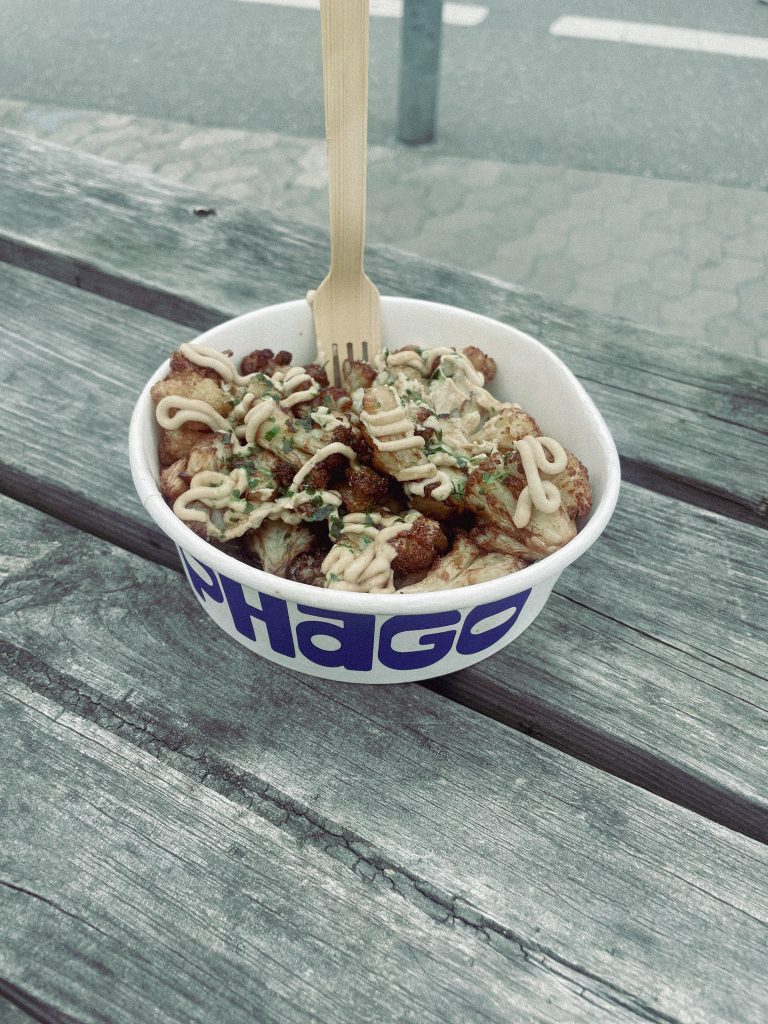
    Sitting opposite the Inderhavnsbroen bridge, this is another cool food market from whence to snack, but you could also have lunch or dinner here. It is located on the Greenlandic Trade Square where the traders from Greenland, Iceland, the Faroe Islands and Denmark used to arrive after long journeys across the oceans. It’s a lovely spot from which to look over the water. Opening back up in March, it even offers yoga, social dining and other events to enjoy.

    Finally – dinner and drinks at Reffen Street Food Market

    Proclaiming itself as the “largest street food market in Northern Europe”, this is another buzzing food market on the waterfront, hosting food stalls from around the world. For Londoners, it has a bit of a Hackney Wick vibe, complete with beautiful street art. Like Broens, it opens again in March and offers regular events that I’m always ogling on Instagram. A perfect way to see the sunset.

    What to Do in Copenhagen

    Most guides will suggest visiting Copenhagen for four days, which feels reasonable to me, although I stayed longer and felt there was plenty to see.

    Here’s fun activities I’d recommend adding to your trip itinerary.

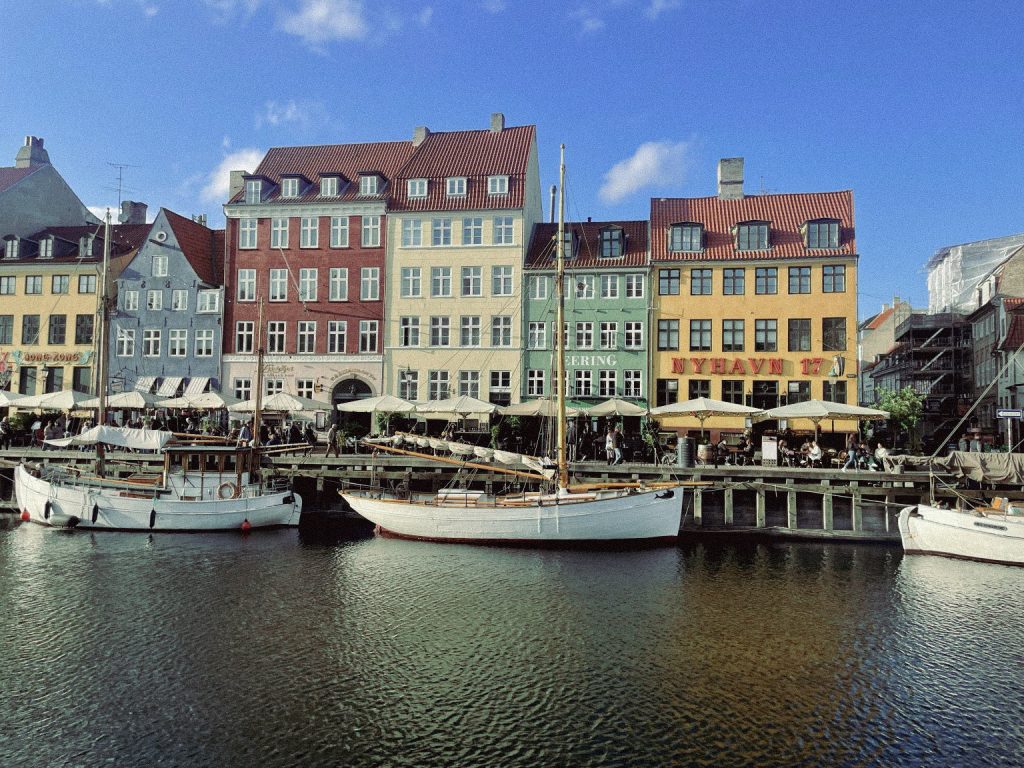
    Take photos at Nyhavn

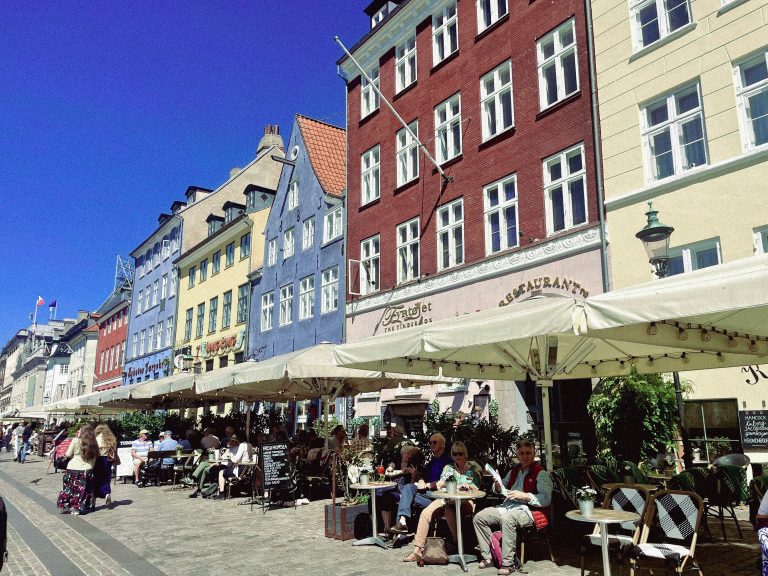
    Spend some time walking about the iconic 17th-century waterfront, canal and entertainment district. Despite being a little touristy and expensive, it’s a great spot for photos. Just look at those gorgeous buildings.

    Learn about hygge at the Happiness Museum

    The Danes are pretty well known for their commitment to hygge – but what does that actually mean? Well you can learn all about it at The Happiness Museum, curated by Denmark’s Happiness Research Institute. Lots of fascinating takeaways from this place about how different cultures measure happiness and I found myself reflecting deeply afterwards. All millennials (or anyone feeling slightly lost in life) should come here!

    Marvel at chairs at the Design Museum

    I cut my teeth doing design PR, so I couldn’t miss this and it totally delivered. Who knew so much thought went into the development of a chair? If you get satisfaction from efficiency and beautiful problem-solving, you’ll love spending a couple of hours at the Design Museum. 

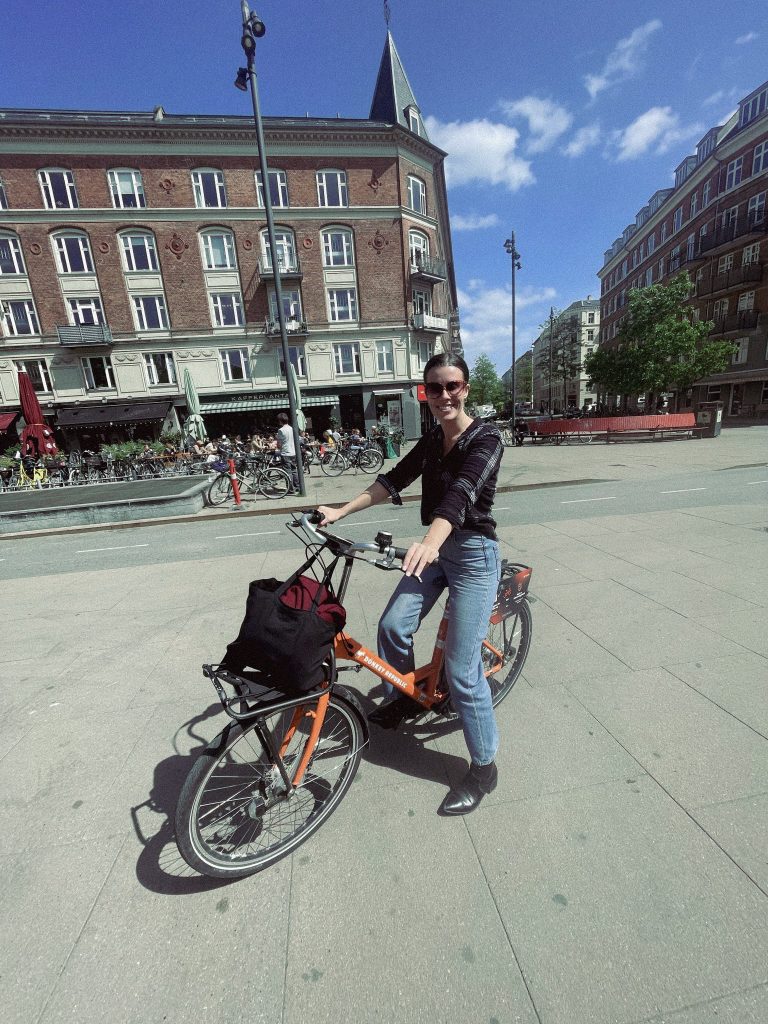
    Shake off the chill with a cycle about the city

    Probably the best way to see Copenhagen – especially between May and September. Use the app Donkey Republic to hire bikes.

    Do a walking Tour

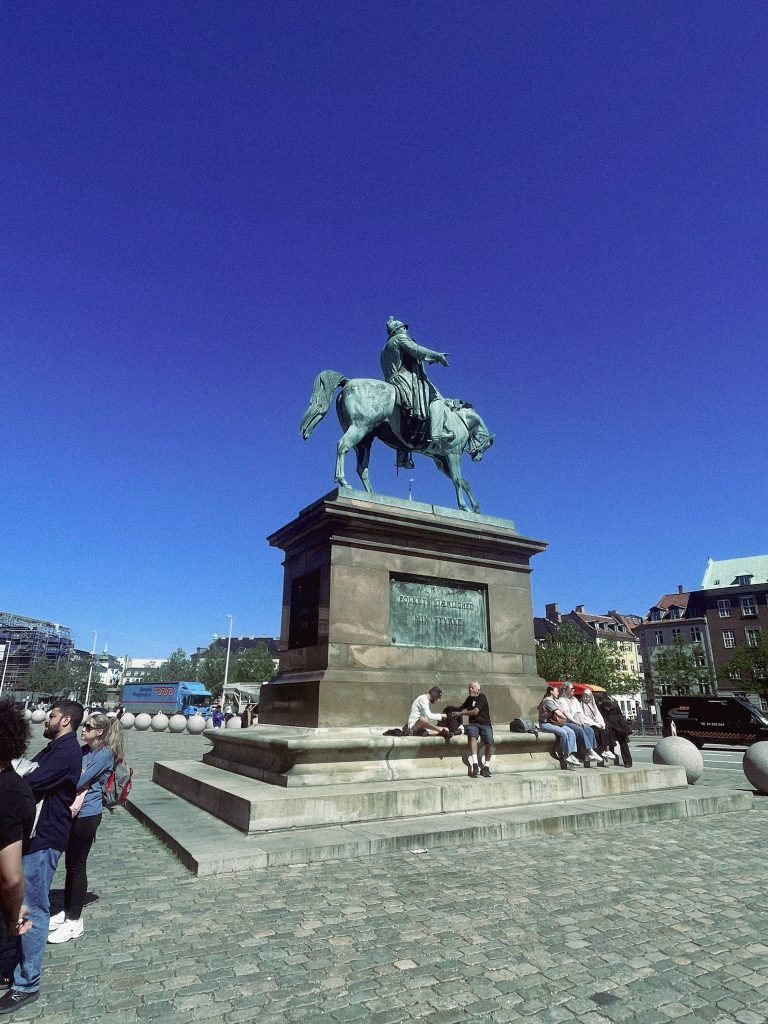
    A great way to understand the city’s history. Every tour is different, but ours covered the royal family and Denmark’s WWII experience. If you’re not booking via your hostel or hotel, try Get your Guide or Guru Walks.

    Visit the Little Mermaid statue

    Emphasis on “little”. She’s teeny but powerful – just look at her Disney empire! The statue is an ode to one of Denmark’s most famous writers, Hans Christian Anderson and sits in edge of the Langelinie promenade, making an excuse for a nice walk.

    Ride around Tivoli Gardens

    Continuing the Disney link – I recently discovered during this podcast by The Rest is History, that Tivoli gardens amusement park was Walt Disney’s original inspiration for the disney parks. Feels a bit random having a theme park bang in the centre of a city but if you fancy an adrenalin rush, it’s typically open from March.

    Art appreciation at Freetown Christiania

    Describing itself as an “intentional community”, Freetown Christiania is a separate community in Copenhagen with a history dating back to the 1970s. It has its own laws, flag and way of life. Visitors can enjoy the cafes, art, and market, and it seems there’s often live music and other arty things going on. It’s definitely worth seeing for a different side of the city.

    Cross the Bridge to Malmö or Lund

    Why not cross the bridge from The Bridge and head into Sweden?

    Copenhagen sits right on the border, and it’s just a short train ride across the Øresund Bridge into Malmö in Sweden. From there, Lund is around an hour away.

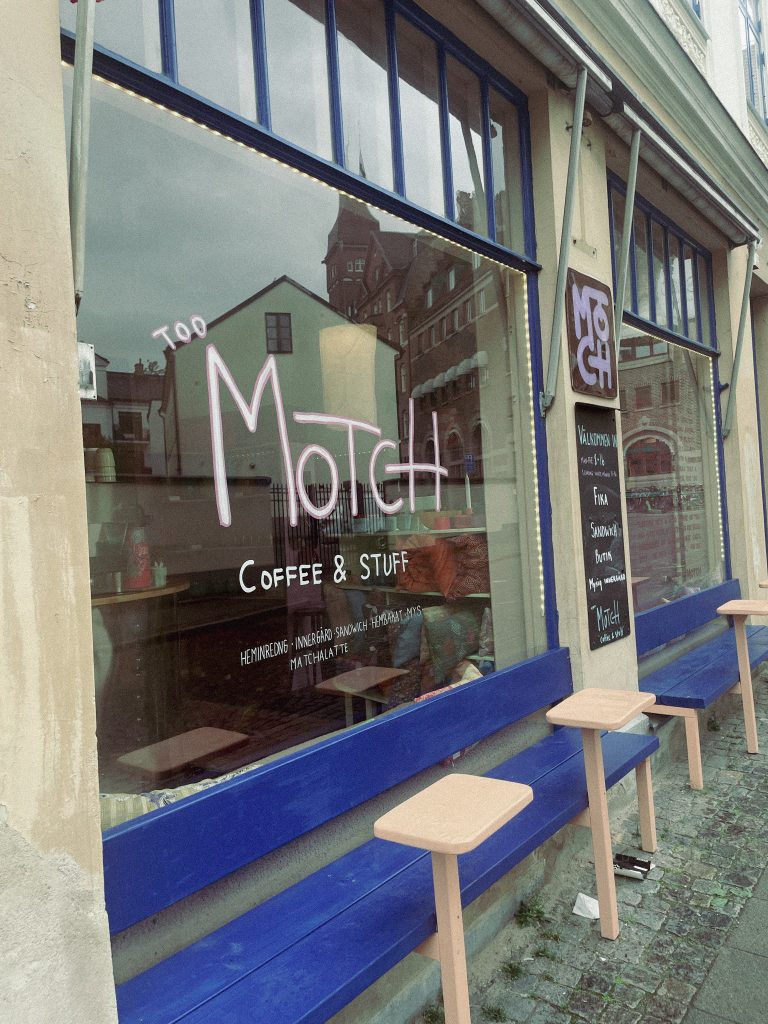
    Lund – home of the Oatly factory – is a charming university town and worth stopping in for a night or two to sample the café culture and wander around the historic university buildings. I spent a lovely two days checking out the vintage shops and cafe hopping here. Some favourites included Broder Jakobs and Too Motch.

    I didn’t particularly love Malmö, but the Disgusting Food Museum is admittedly a fun (if slightly grim) stop if you’re in the area.

    A place of quality not quantity  

    Copenhagen isn’t the cheapest city break but if you want somewhere that combines good food, thoughtful design and just enough culture to feel smug about it afterwards, the Danish capital is hard to beat. Between the pastries, museums, harbour swims and slightly intimidatingly stylish locals, it’s a city that feels both relaxed and quietly inspiring. I went with friends, but also had some days alone, and found it very well suited to solo travelling (for more solo city break inspo, read my Porto blog). If you’re into looking like you belong on a design mood board, visit between May and September when the city really comes alive. I’d be intrigued to see what it’s like in winter – maybe another time! 

  • I swapped London for nomad life in Asia. Was it worth it?

    In early 2025, I left London and headed to Southeast Asia to see what life was really like as a digital nomad. One year on, was it worth it?

    FEBRUARY 24, 2026 WOMEN MEETS WORLD

    I recently read a BBC interview with Julie Williams, an IT consultant from Birkdale on Merseyside. She had decided to make a ball pit in her spare room, rather than rent it. Why? For fun. ‘You can never be sad in a ball pit.’

    Stories like this are important because they remind you of your free will. Julie’s is especially unique because the ball pit came at the expense of financial gain.

    For most people, that’s just not the default position – whether they need the cash or not.

    I found myself thinking a lot about free will when I turned 30. I’ve never really clung to traditional milestones (house, baby, marriage, divorce), and count climbing out of credit card debt as the maturest moment in my adult life to date.

    But the flood of birthday invites from friends – right before the hen dos – gave me pause to reflect. Was I happy? Had I challenged myself enough? Was I excited about the next decade?

    Who am I?

    Not to get too Lewis Carroll about it, but this last question was the catalyst for me in late 2024. In a way, I felt that I didn’t know myself anymore, or at least not all the versions of myself – just the city-shaped, university-fied version. And she was restless.

    Meanwhile, semi-remote work in London had become my new normal. The days of spilling out to the pub every week with colleagues had gone. I had a lovely team in my PR job, but rotating schedules meant it took too long to get past the pleasantries.

    People generally – and I include myself in this – seem to have become more protective of their time since I moved to London in 2017 (and perhaps all over the country).

    I don’t think this is a bad thing. Hell, if you’re going to replace me with AI, at least give me another 30 minutes in bed / to read to my kids / paint / write / support a charity / or stare into the abyss.

    Having one foot in, one foot out, however, began to wear on me amidst the rising cost of living in the capital. I still considered myself a creative and curious person, but did I really want my days to be defined by the price of flat whites and whether a Soho House membership was cost effective?

    I take comfort from water cooler culture as much as everyone else, so I’m not bashing these things – they’re part of the fun.

    But when I found myself googling ‘Martin Lewis wife’, something had to give.

    Was it burnout? I’m not sure. But in need of a change of scene and some inspiration, I decided to give this digital nomad lark a go, beginning with three months in South East Asia in early 2025.

    Who knew what would happen after that. But I’d work less, and live more, often with strangers – which would at least break me out of my comfort zone.

    I’m not alone in seeing the attraction of nomadism, especially if your job allows it. According to a report by CV builder website LiveCareer UK, an estimated 165,000 UK professionals have relocated abroad to work remotely in recent years, seduced by better weather and (they hope) greater work-life balance.

    Some roam around, as I did, making the most of the opportunity to see the world. Others seek stability in well-established hotspots that offer structured visa policies, tax incentives and ready-made communities.

    To cut a long story short, I didn’t end up moving permanently abroad. But I did see a lot of cool things, regain a sense of direction, and create a stable freelance set up that now allows me to travel whenever and wherever I want, whilst keeping roots in the UK (which is how I like it).

    Giving up a normal routine has not been without its challenges – anyone that’s become a nomad, travelled alone, or even that’s relocated will agree with that, I’m sure. But between the relentlessly positive portrayals of nomadism on social media and the often sceptical narratives found in the UK press, there is a lot of middle ground.

    As a thirty-something experiencing this lifestyle for the first time, I hope this blog provides a balanced account of what it’s really like as work and life become increasingly flexible and multihyphenated.

    Happy reading.

    Chiang Mai, Thailand (February 2025)

    Blue Mountains, Sydney, Australia (April 2025)

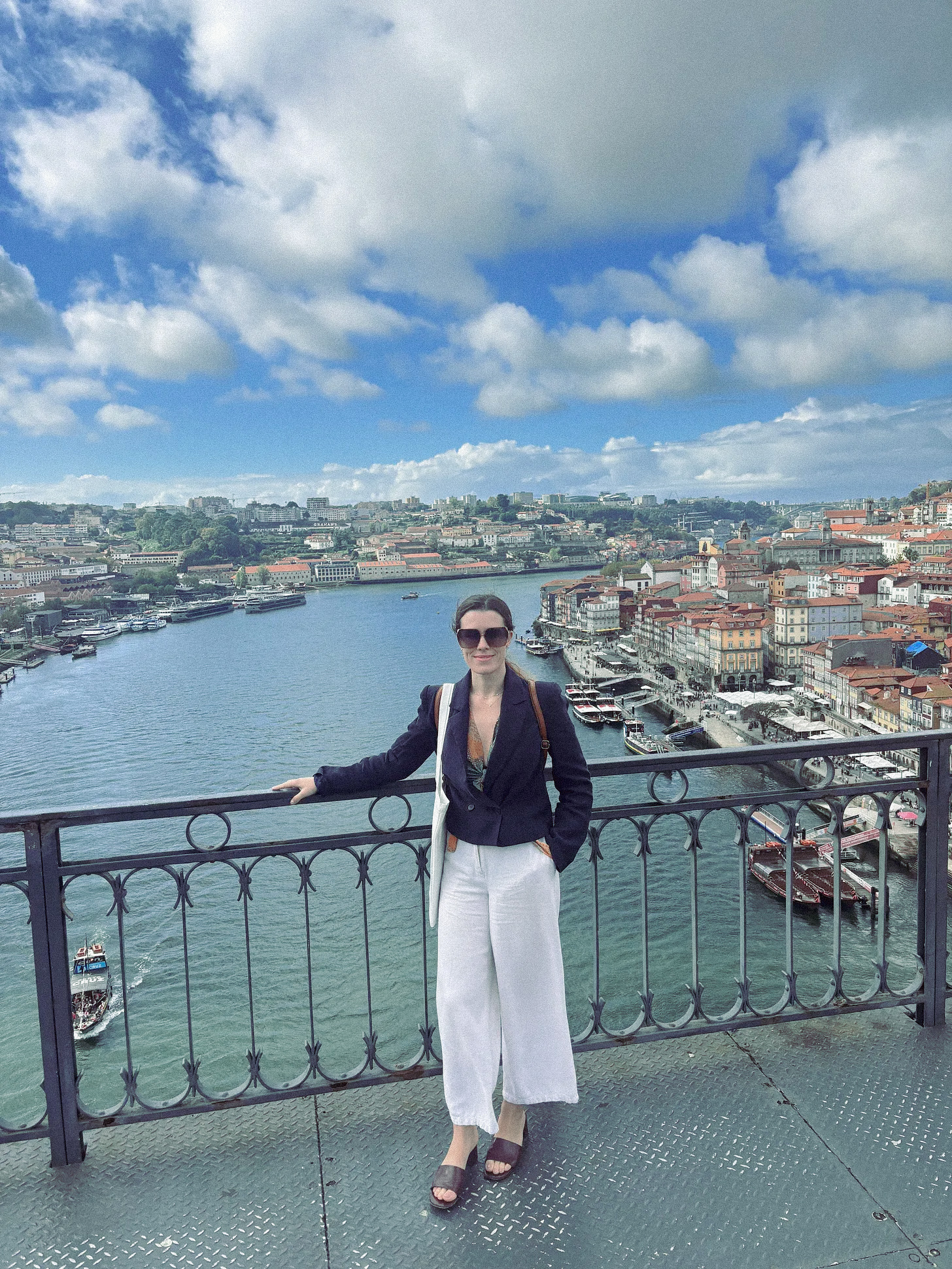
    Porto, Portugal (September 2025)

    Moffat, Scotland (December 2025)

  • Travel fatigue in Ho Chi Minh city: my sixth week as a digital nomad in Asia

    Reality bites (me) in the Vietnamese capital

    Most people go to Vietnam with intention – whether that’s to enjoy the history, the food or the landscapes. But too much planning can kill the thrill of travel, so when I arrived in April 2025, following a week of pure luxury on the golden sands of Koh Rong Sanloem in Cambodia I didn’t have much of a view as to what to expect.

    What I did know is that it would be very busy (or “cognitively demanding” as this article puts it) – and pulling into Saigon after eight days on a paradise island was certainly an assault on the senses.

    Real life Mario Kart

    In some ways, my biggest takeaway from those first few days was simply the traffic. I’d been quite cavalier about jumping on motorcycles (Grabs) through Thailand, Laos and Cambodia so didn’t change my routine initially. But if you’re going to Ho Chi Minh City, I’d actually advise taking cars wherever you can (see my instagram reel for chaos in 4K).

    The density of traffic here is some of the worst in the world, and whilst the idea of playing real-life Mario Kart sounds fun, it’s best enjoyed against friends from the sofa in my book and I wish I’d been more careful (though I clearly survived to tell the tale!). Don’t risk your life to save a couple of pounds on a Grab. I’d also think twice before riding your own bike in Ho Chi Minh (!) unless you truly understand this part of the world. 

    If you need more convincing, even my Uber driver was visibly scared picking me up during rush hour. And crossing the road? Don’t even try it. Saigon does not stop for you, and I nearly learned that the hard way.

    A long overdue history lesson

    Anyone that’s spent time in Asian cities will understand how overwhelming they can be. Rather than attempt to get to know Ho Chi Minh in much detail, I preserved my energy with visits to two of the city’s most important historic attractions – the War Remnants Museum and the Cu Chi tunnels.

    I’d been having a great time on my trip, soaking up the recent history of Laos and Cambodia. The Vietnam war – or as they’d call it, the “American war” – is something I was never really taught at school, and I felt a pull to understand it better. 

    If you like to dig into the weeds of things like I do, my biggest tip for the museum would be to go there with some background context. On the 9 hour coach trip from Sihanoukville, I had been listening to The Rest Is History series on the conflict (something I continued with whilst on the Ha Giang Loop) which gave me a helpful grounding in the events leading up to it. Otherwise, it could feel overwhelming – it did go on for twenty years, after all!

    In my naivety, I didn’t expect the museum to be so anti American. It’s obviously curated from a communist Vietnamese perspective, and being able to compare the two narratives side by side, was one of the most interesting parts of the experience. Whilst it helped me hold both viewpoints in balance, the long and short of it is that it was a painfully drawn out shit show, especially right at the end.

    Keen to deepen my knowledge, I took a tour to the Cu Chi tunnels, where the Viet Cong (communist resistance) lived underground during the war. Crawling through the tunnels, and hearing about how terrible it was for them (and also the soldiers they killed) really provides a reality check of how brutal that conflict must have been. I noticed a lot of Vietnamese people I spoke to still used the name Saigon to describe the city, which speaks to the differing political viewpoints people there still have. 

    Re-energising myself with a cooked breaky

    But aside from my history lessons – and some very good vegan bánh mì – I didn’t spend a huge amount of time exploring Ho Chi Minh, so apologies that I can’t give more of a deep dive. Simply put, ‘travel fatigue’ had set in, and it was especially acute given I’d just had a wonderful time in Cambodia.

    I’d been travelling around Asia as a digital nomad for about six weeks. I wasn’t working full-time, but moving constantly, leaving people behind, meeting new ones, and planning every next step was a lot to process, both mentally and physically. At just over a month in, it was starting to take its toll, and I simply didn’t have the same energy for new experiences as I had at the beginning.

    Rightly or wrongly, this most likely shaped my first impressions of Vietnam. For an insight into my head space – on my second morning, I got in an Uber and asked to be taken to Melbourne Café for a fry-up. My first Western meal of the trip, in Vietnam! Some might find that sacrilege, but you’ve got to have those home comforts some times. I’d never been so happy to see a baked bean, but I assure you that I went straight back to eating local food after that.

    Breakfast at the Melbourne Cafe in Ho Chi Minh

    It’s good to know your limits, and given that so much ‘nomad’ content is overly positive, I’m happy to share that perspective. After all, I want this blog to be an honest reflection of my experience. So, after two days, I headed north, arriving in the lantern-lit streets of Hoi An – where things immediately brightened up.

  • Swinging from the tree tops

    I try Laos’ famous Gibbon Experience.

    I wasn’t even planning to visit Laos during my South East Asia trip last year. Then one day in November, whilst hunched over my desk planning my route, I saw a deeply enticing picture – a wooden treehouse, surrounded by leaves, and doused in sunshine.

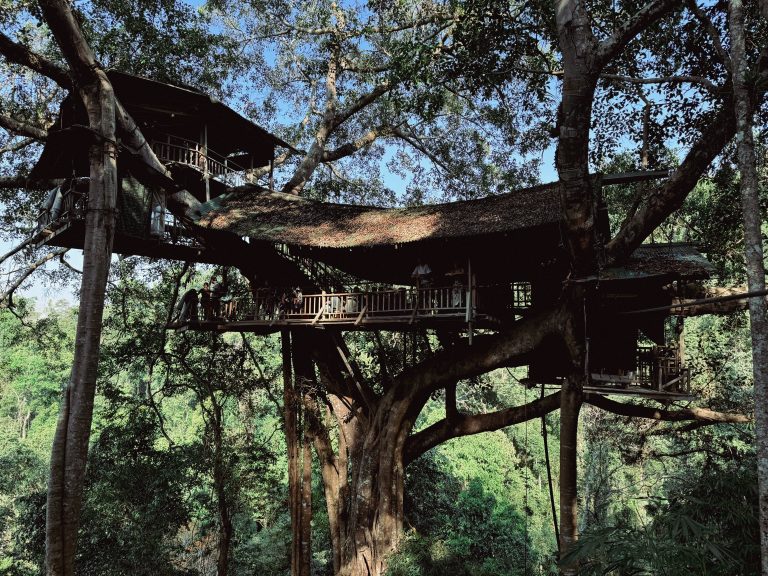
    It was a snap from The Gibbon Experience – a tourism-based conservation programme that allows people to stay in tree houses and zip wire across Nam Kan national park in Northern Laos.

    The organisation protects the area from logging by creating an alternative income, and gives the locals here a way of life. Guests that come here have a small chance of spotting endangered black-crested Gibbons (did we see them? Read on to find out).

    After a quick scan of reddit and TripAdvisor – my go-to for travel advice – it seemed legit. And as luck would have it, there was availability during the weekend I had planned to leave Chiang Mai (but not before – so book at least three months ahead!).

    Without much further thought, I booked a two night stay (the “Classic” tour) for around £300. This was the most expensive thing I bought during my time in South East Asia, where I worked for three months as a digital nomad – so I didn’t hold back. How else does one spend their weekends off in Asia?

    Entering Laos via the Thai Laos Friendship Bridge

    First of all, I had to get from Chiang Mai in Thailand – where I’d been working for the week – to Laos. That meant crossing the Thai Laos Friendship Bridge.

    This was my first land border crossing of the trip, so I was a little nervous, especially as I’ve mostly travelled in Europe which is pretty straightforward as a Brit.

    But having my passport photos and PRINTED e-visa in hand, made the process pretty simple. If you don’t bring this with you, ensure you have $50 crisp dollar notes so that you can pay for your visa.

    Laos is a developing nation, so a little preparation goes far.

    Most people heading into Laos this way will stop first at the nearest small town, Huay Xai (pronounced “Hox Aye”). Once I had crossed the border, a couple of buses took us into the town, making the process fairly straightforward and easy to navigate as a solo traveller.

    Luckily, you don’t need to get Lao kip (LAK) before entering the country – they accept Thai baht, and sometimes even US dollars. So do NOT use up all your Baht when leaving Thailand. You’ll need some to pay for the bus over the Friendship Bridge, and the driver in Laos (it cost us around 200 baht each).

    Once your baht is gone though, you’ll need cash. The kip isn’t a strong currency, and the country is cheap as chips – a clean dorm bed will set you back around £6–8, and meals are £1–3. The max you can get out of the ATM is 2M kip (around £70), so just grab the lot, and use it up – don’t get little amounts.

    Another big tip – the ATMs in Laos can’t be trusted. Take your money from the machine as soon as it comes out. I was with a girl whose cash got swallowed back in and one took my bank card later in Vang Vieng (a story for another time).

    Laos feels much smaller and rural after Thailand, because it is. Memories of the first five minutes include being overtaken by children on motorbikes, and wall to wall adverts for Beerlao.

    With this in mind, I had pre-booked a dorm room at “Little Hostel”. I needed a good night’s sleep, and wanted somewhere clean and comfortable.

    It really delivered, and the girl running it (who spoke excellent English) even made us a wonderful porridge breakfast. There’s a number of nice options for dinner too, but bear in mind, service will be VERY slow. That’s just what it’s like in Laos!

    Heading to the park, and facing my fear of heights

    The Gibbon Experience office is easy to find, and we headed there at around 8am to swap our bigger bags for overnight packs. After a rather glitchy safety video, we put our lives in the hands of the staff and started the two hour drive up the mountains.

    The next four hours was a blur that consisted of weeing in holes in the ground (common all over Laos), swapping extremely rudimentary small talk with our guides (mostly just smiling and nodding) and not looking each other in the eye until we stopped at the Gibbon Exp. Headquarters for lunch.

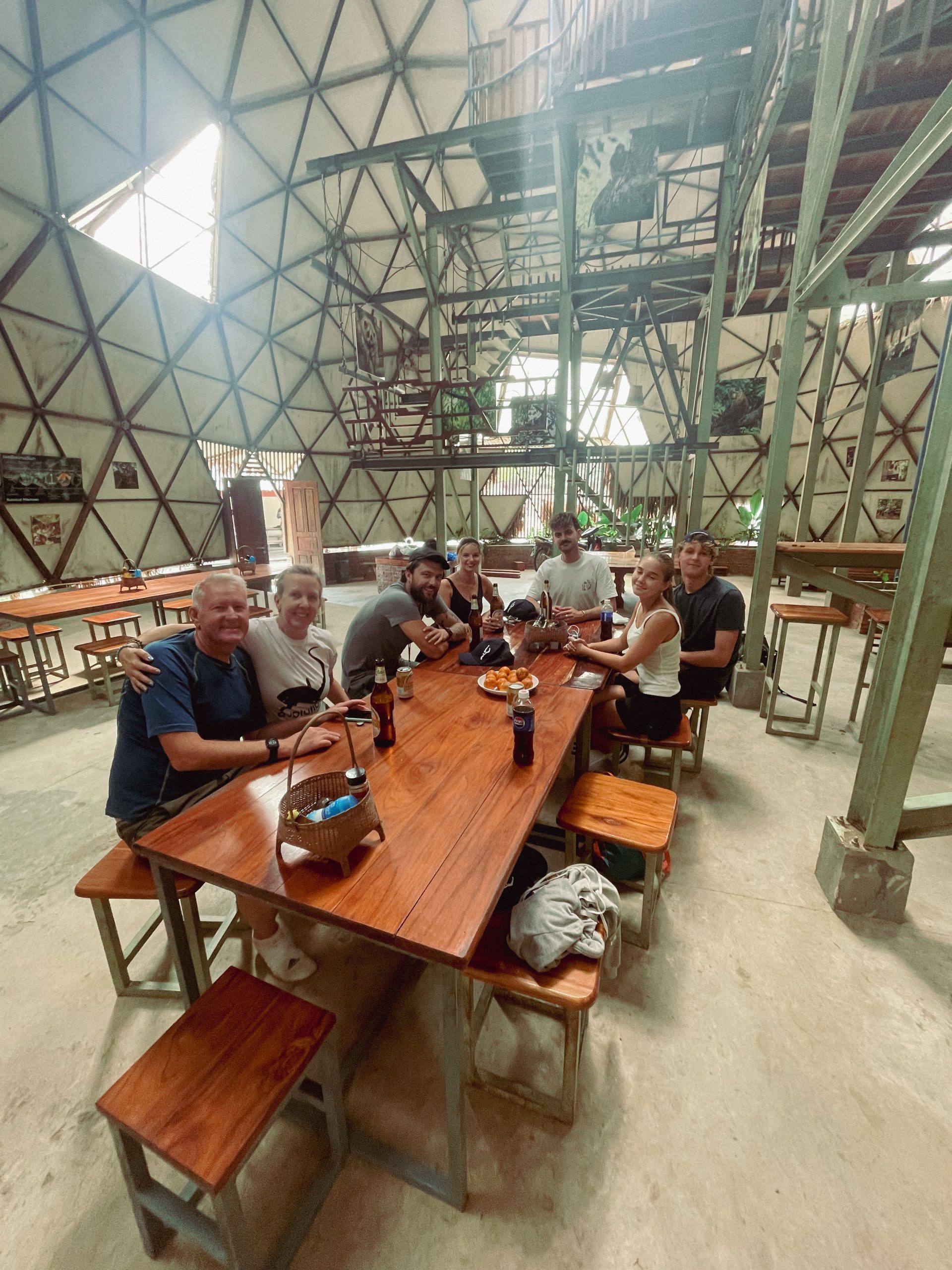
    There were eight people in my group (just three couples, and two solo travellers, including me), and after a filling lunch of glass noodles, we started to wake up, and managed to exchange names and back stories (long story short, we had a wonderful time together).

    Stopping for lunch at the headquarters

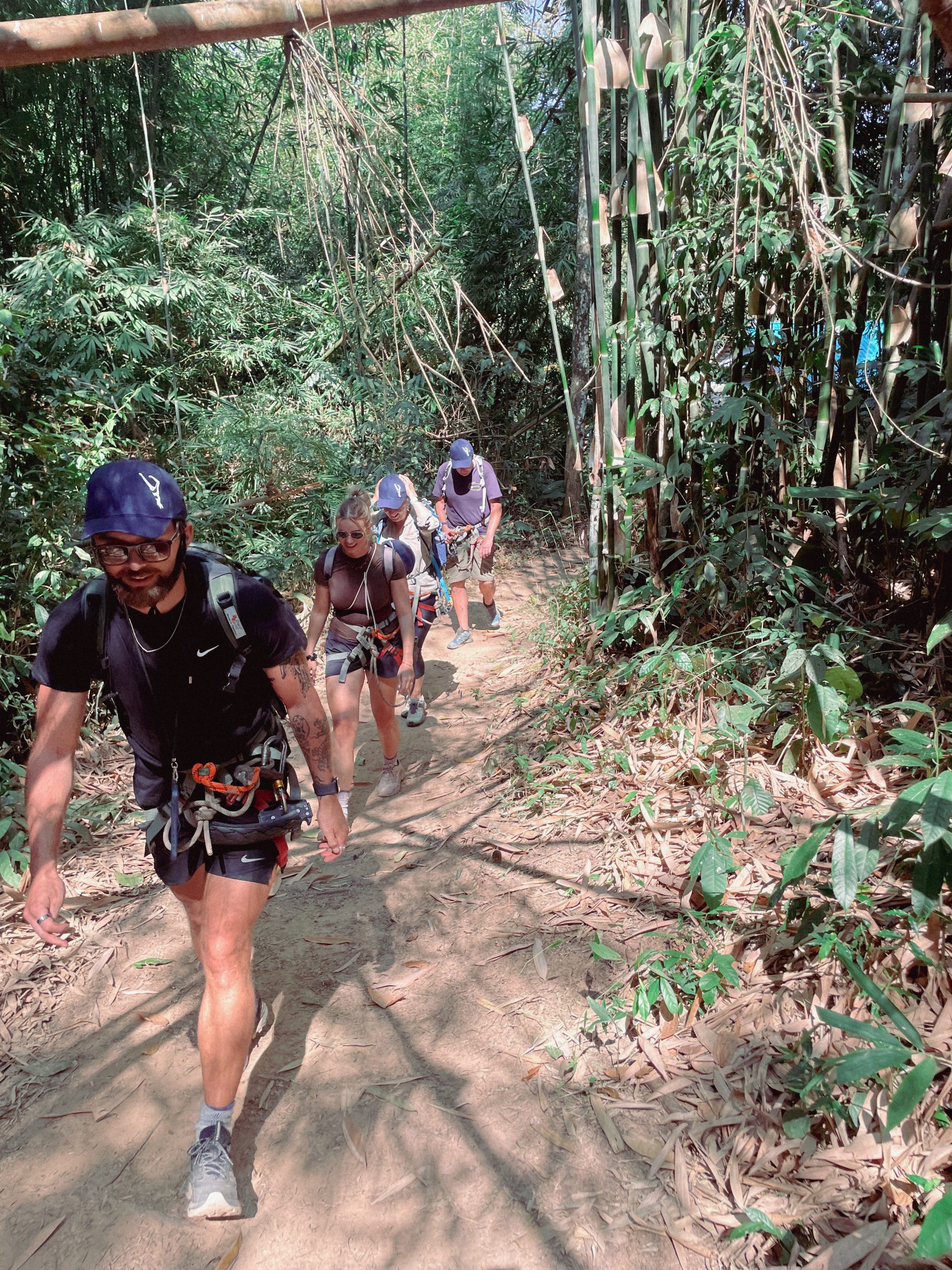
    The trip requires a fair bit of hiking, so be prepared
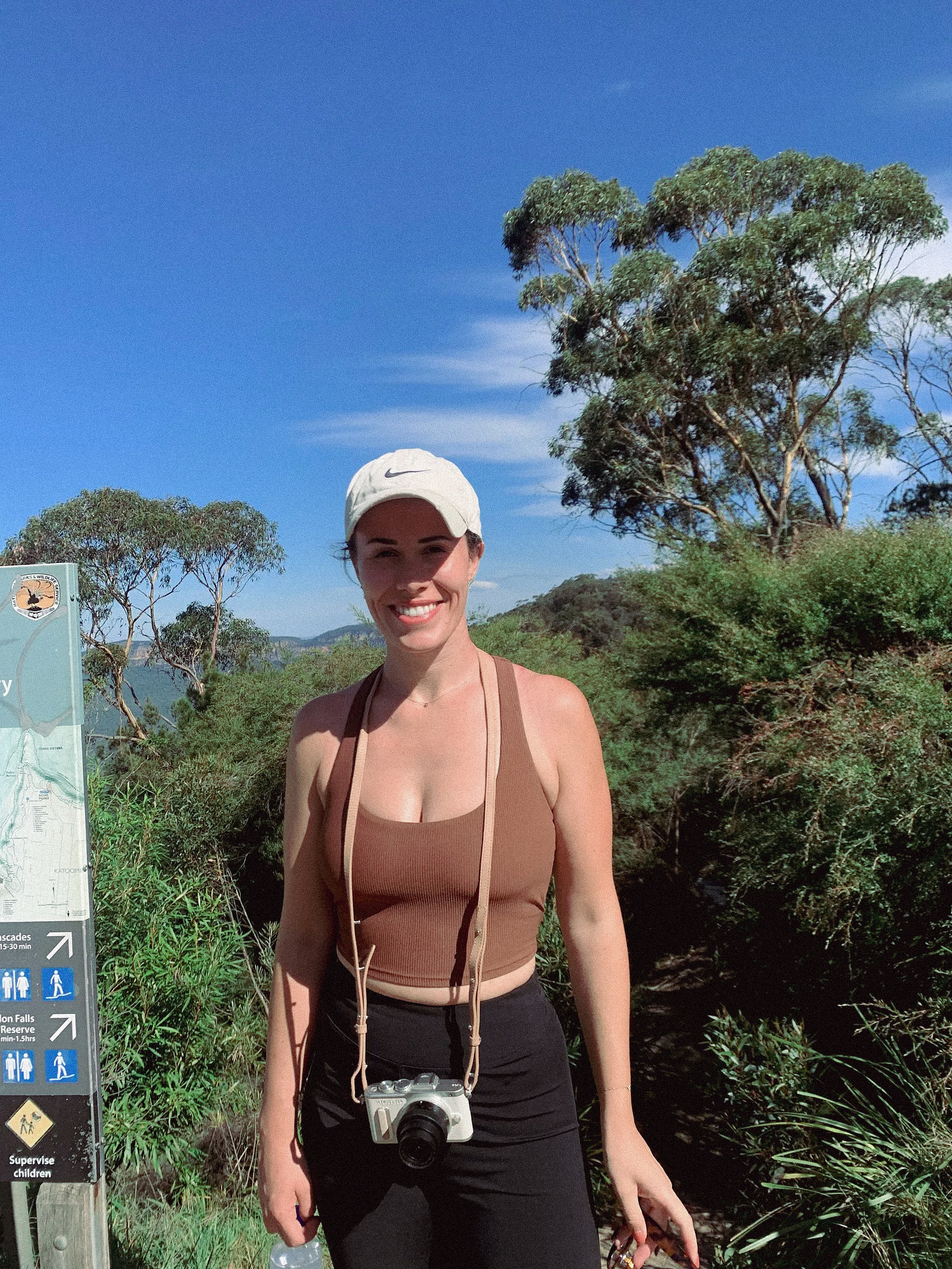
    We then took a shortish trek into the forest, where we were taught how to use the zip lines.

    It was a little nerve wracking to begin with, because – if you’ve seen the footage from my instagram – you’re extremely high up. In the tree tops, no less! In addition, neither of our guides spoke good English. For full transparency, there was a death in 2017, but since then, the organisation has tightened it’s health and safety (and critically, weight limit). I knew this ahead of time and felt comfortable, but do your research and consider what feels right to you.

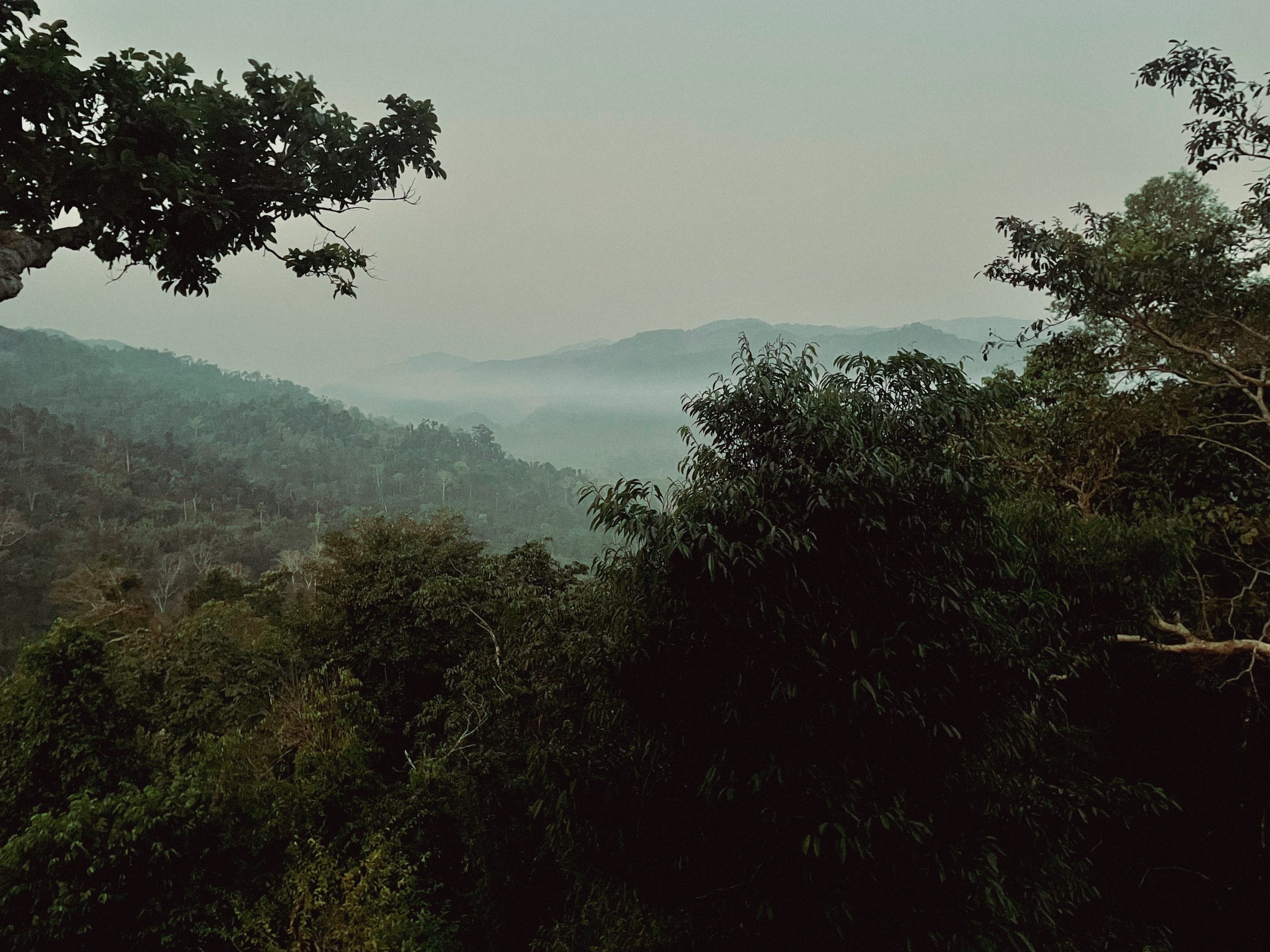
    I’m actually slightly afraid of heights, but the minute I jumped off the ledge, I was just buzzing. Nothing can prepare you for the incredible views of the canopies, and the quiet sound of the forest around you as you’re speeding along the wire – that’s for sure.

    After a couple of hours, we zip wired towards our treehouse and retired for the evening (at around 4pm).

    Dinner at our treehouse

    As the sun started setting, it was time to explore our home for the weekend.

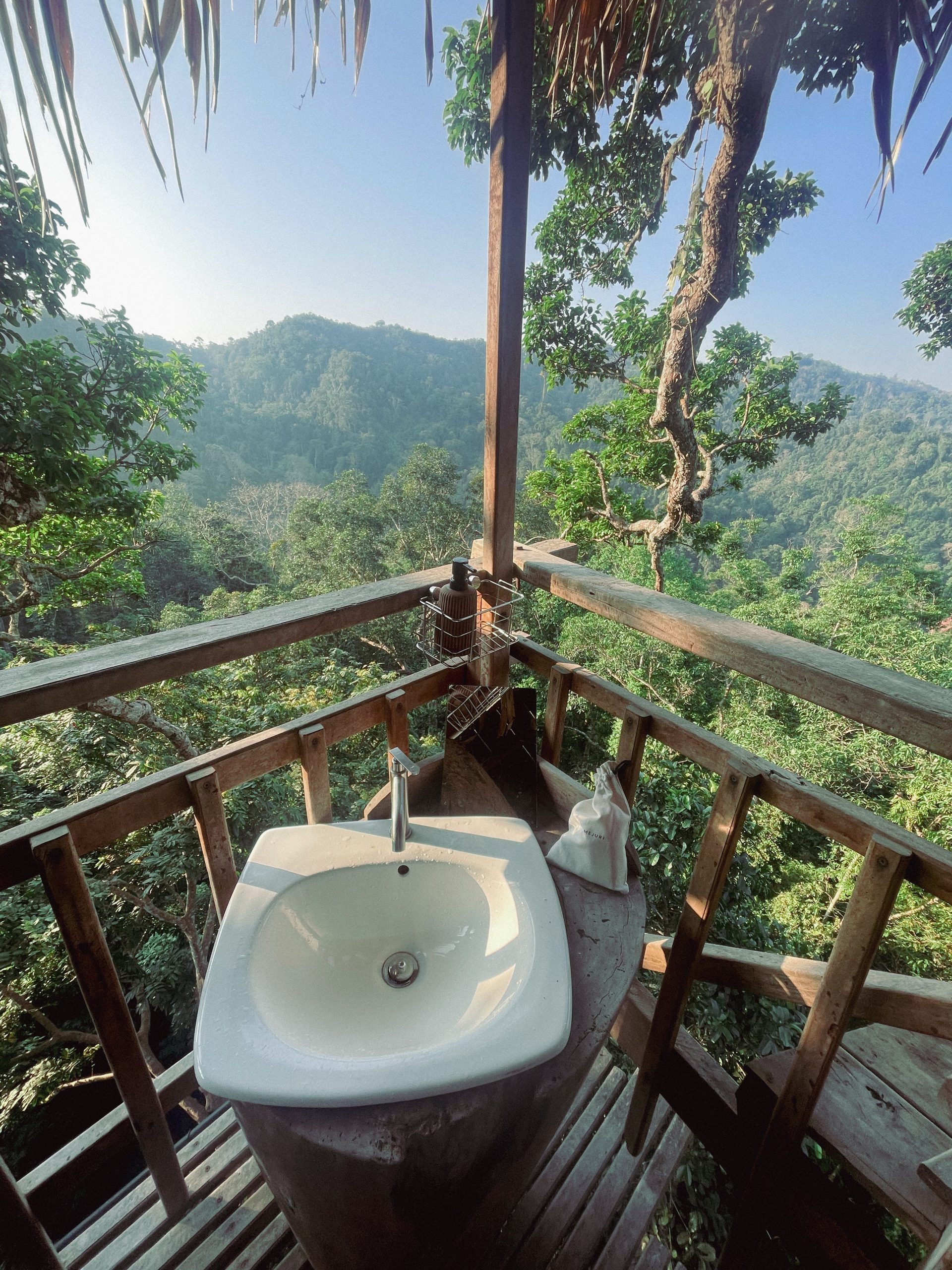
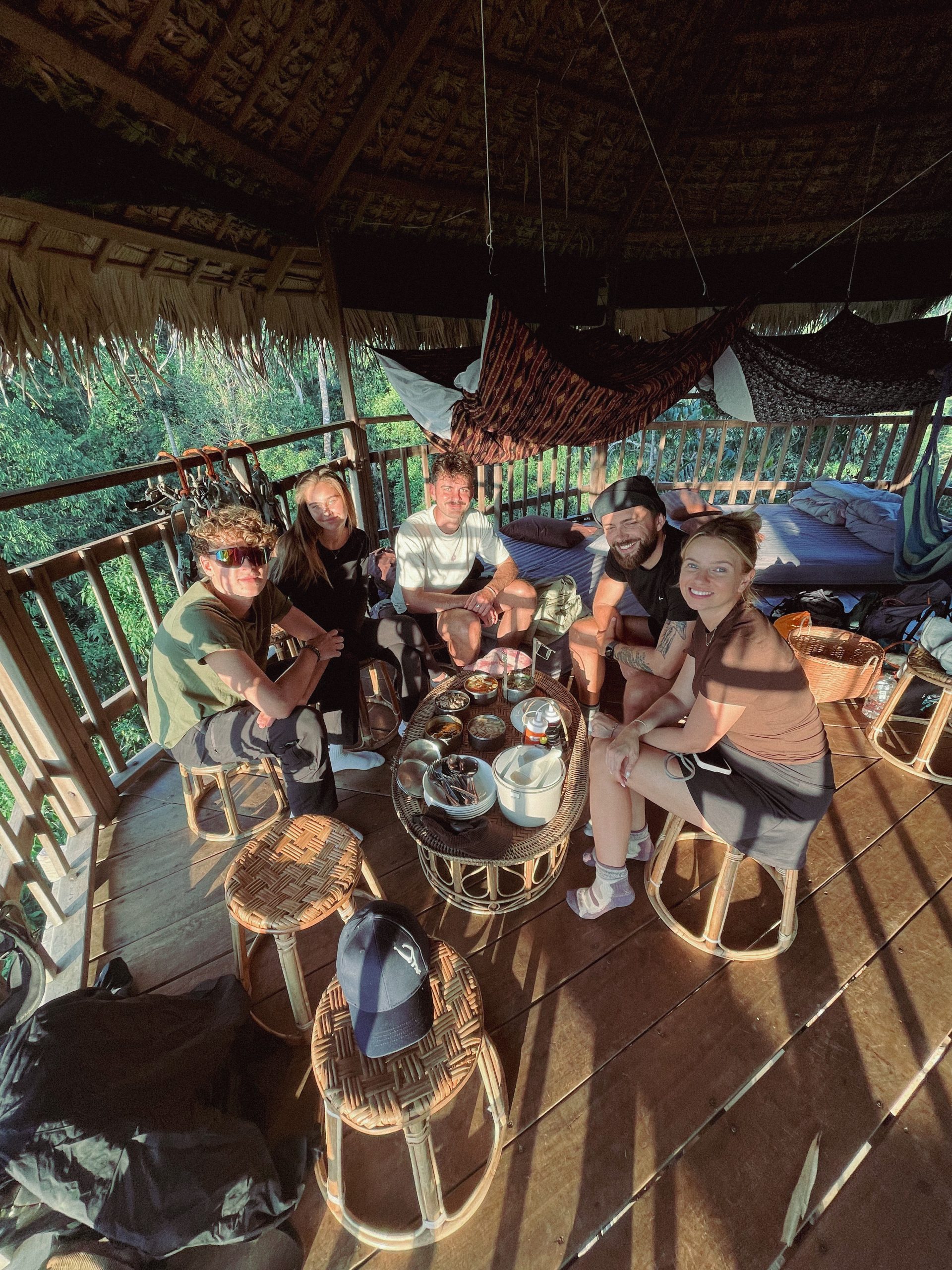
    The treehouses, raised over 40 metres off the ground, are wonderful. It was just like being in Swallows and Amazons, but with modern accompaniments. I’m talking a flushing toilet, electric lights, and a waterfall shower. Yes it’s cold – but it comes with a view of the jungle, so compromises must be made!

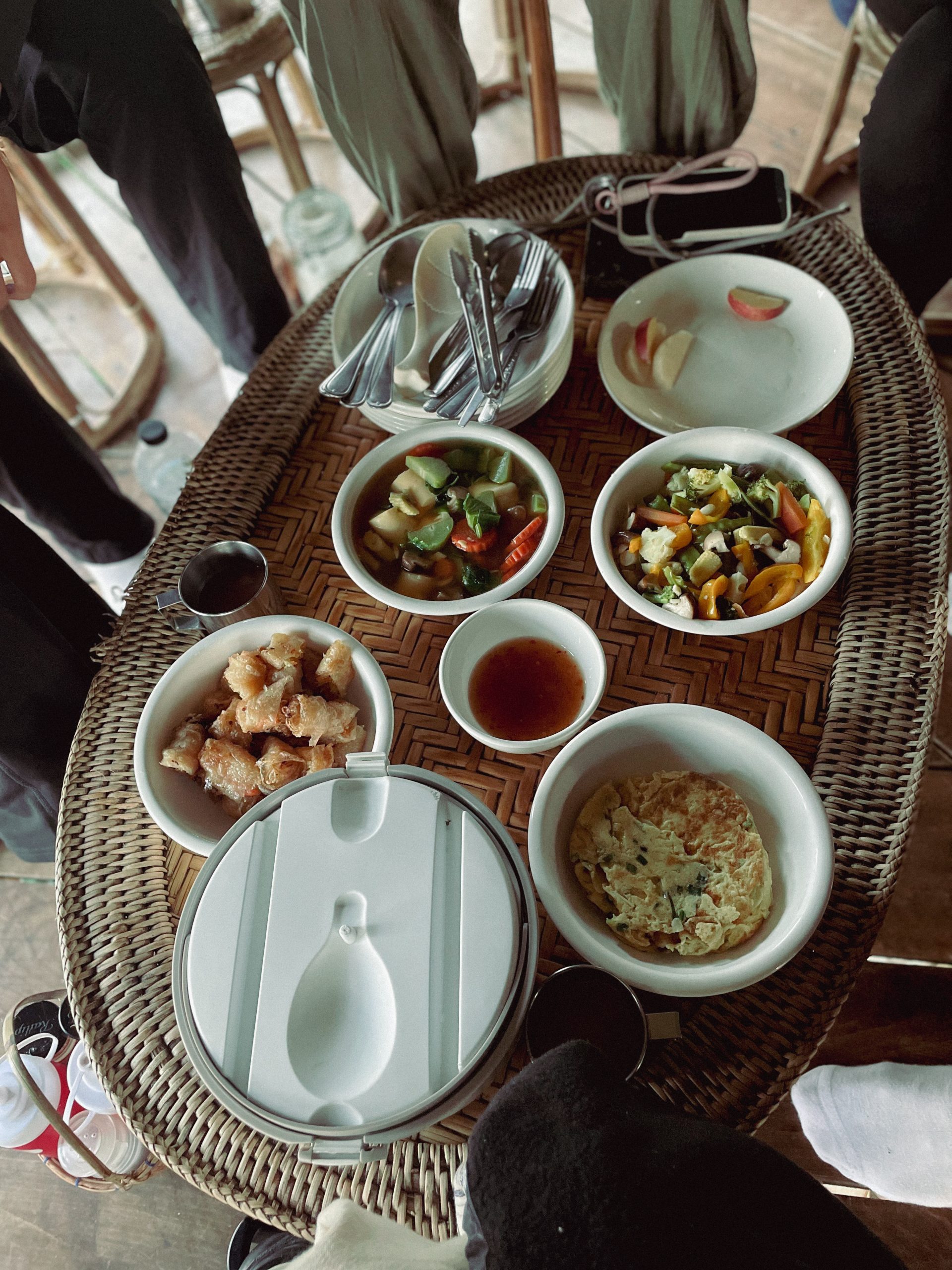
    Dinner consisted of spring rolls, eggs, rice, noodles and coffee, and was wired in by the guides, who also joined us for traditional shots of rice wine.

    Zip wiring for days on end is tiring, so when the guides left, after helping us with our beds, we deftly located the biscuit box and guzzled them down whilst playing card games.

    When darkness truly fell, the six of us turned off the lights and listened to the sounds of the dense wildlife, before getting into our enclosed ‘bed tents’ and settling into a deeply comfortable sleep.

    The forest is noisy at night, so bring ear plugs if that bothers you (I quite enjoyed it).

    Bonding with the wildlife

    Up at 7am for brekky, which – given it was a repeat of the last evening – was a bit of a shock to the European tummy. The food remained the same for the next 3 days, with slight variations each time, and allowances for the vegans in the group.

    After coffee, we were back out on the zip lines until 11.30, with a fair bit of hiking in between. Not unmanageable, but something to keep in mind – you don’t slow down much, and even our group (20s–30s) was getting tired. Luckily we had a solid three-hour break back at treehouse five for lunch and a nap.

    In the afternoon we explored the other treehouses – the 50m-high one, the big 11-person one, and the honeymoon suite where we met a lovely retired couple that had met in Cambodia. All were wonderful, but we still felt that ours had the best view.

    We spent the evening looking at the giant spiders in the rafters and trying to catch a rat we saw deep-throating our ketchup bottle. There were also some bats flying through – they didn’t bother us, but definitely get your rabies jabs before coming. I will stress that the sleeping situation unnerved me before I left, but the mosquito nets around our tents were solid, and nothing was getting in. It was plenty warm, and pretty cosy!

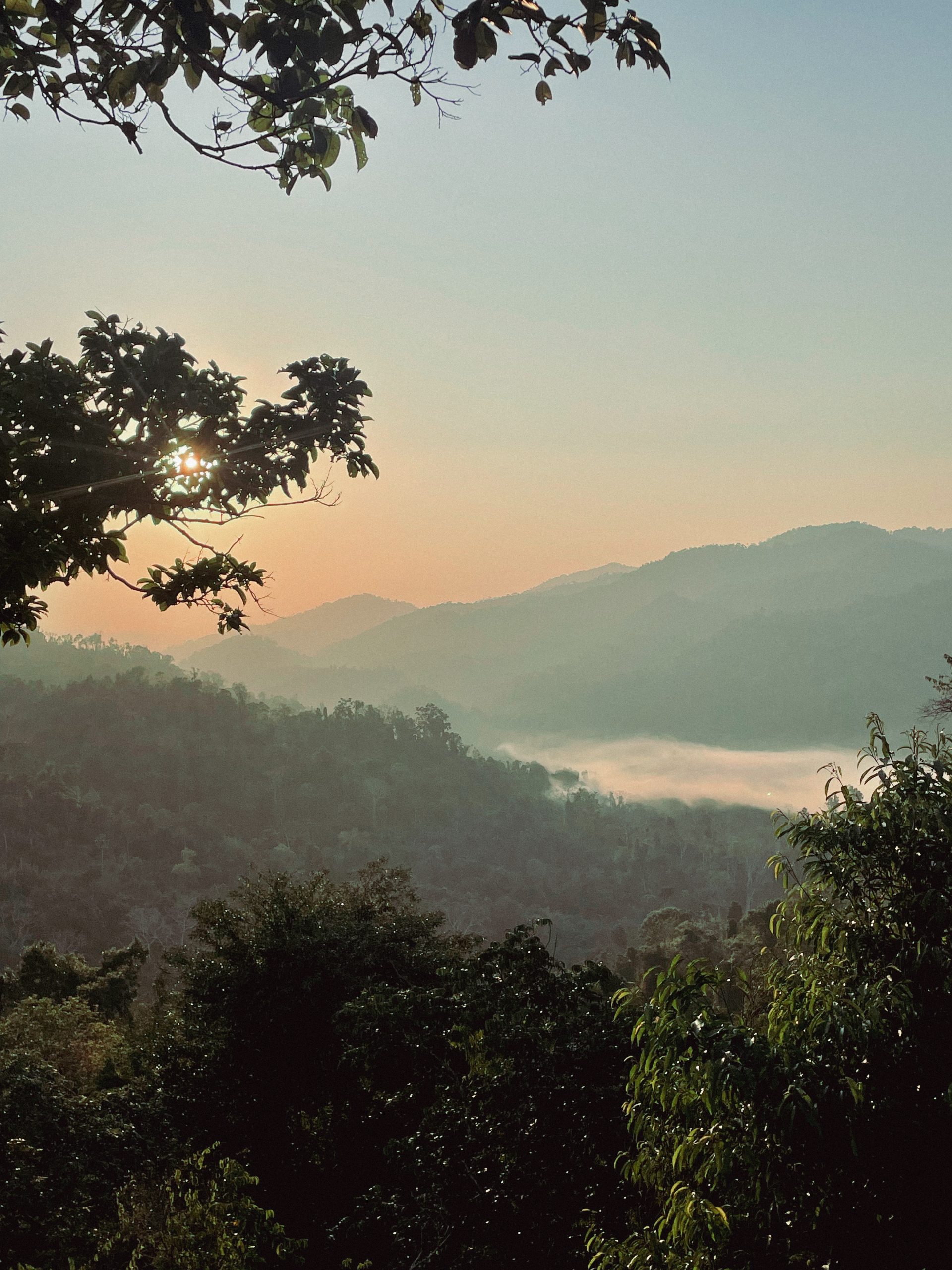
    After another brilliant sunset, we were up at 5.30 the next morning for a final hike to the viewpoint. This time we headed toward a special viewpoint where the gibbons tend to feed. Unfortunately, despite lingering for some time, we did not see any – but we did hear them singing in the distance, which was a highlight.

    We packed in a little more ziplining that day, and by midday, we were back at the village for lunch, photo swapping, and the journey home. We were absolutely shattered by this point, but having bonded on the trip, much laughter was had on the way home – a sea change from the way there!

    It really was a wonderful and unique experience, for not that much money by UK standards. You can take a one night trip, but the “Classic” two night tour is less popular, more intimate, and only slightly more expensive, so I would suggest doing this. Just ensure that you book well ahead (at least three months in advance).

    My top tips:

    • Bed sharing – As a solo traveller, I did have to share a bed with a guy my age. I was comfortable with this because we got on very well, but some people might not be
    • Wildlife – Whilst I was anxious about spiders and rats, they didn’t prove to be a problem. The beds are really secure, and as long as you put your net right around it (which we did), you’ll be fine. For the spiders, my advice is to simply not look at the rafters. We did see a rat but the experience turned out to be more amusing than scary. Don’t bring snacks though, as they will eat through your bag. There are bats flying around, so get your rabies jab!
    • Games – Bring card games for evening time. I advocate for Monopoly deal
    • Timing – I’d opt for dry season, but the trips do run in the rainy season too
    • Clothes – Pack as little as you can manage, but long sleeves for the evening (I went in dry season / February). Bikini for the shower (although there is a curtain)
    • Gibbons – Accept that you probably won’t see them, but you’ll still have fun
    • Length – Do the Classic / longer tour (not the Giant Loop)! It’s a more intimate group and you see a lot more

  • Questioning my depth at Bangkok’s Grand Palace

    Had I bitten off more than I could chew?

    On the third day of my first-ever trip to Asia – having started a new chapter as a “digital nomad” at 32 – I awoke full of adrenalin and ready to see some other ‘must sees’ on my list.
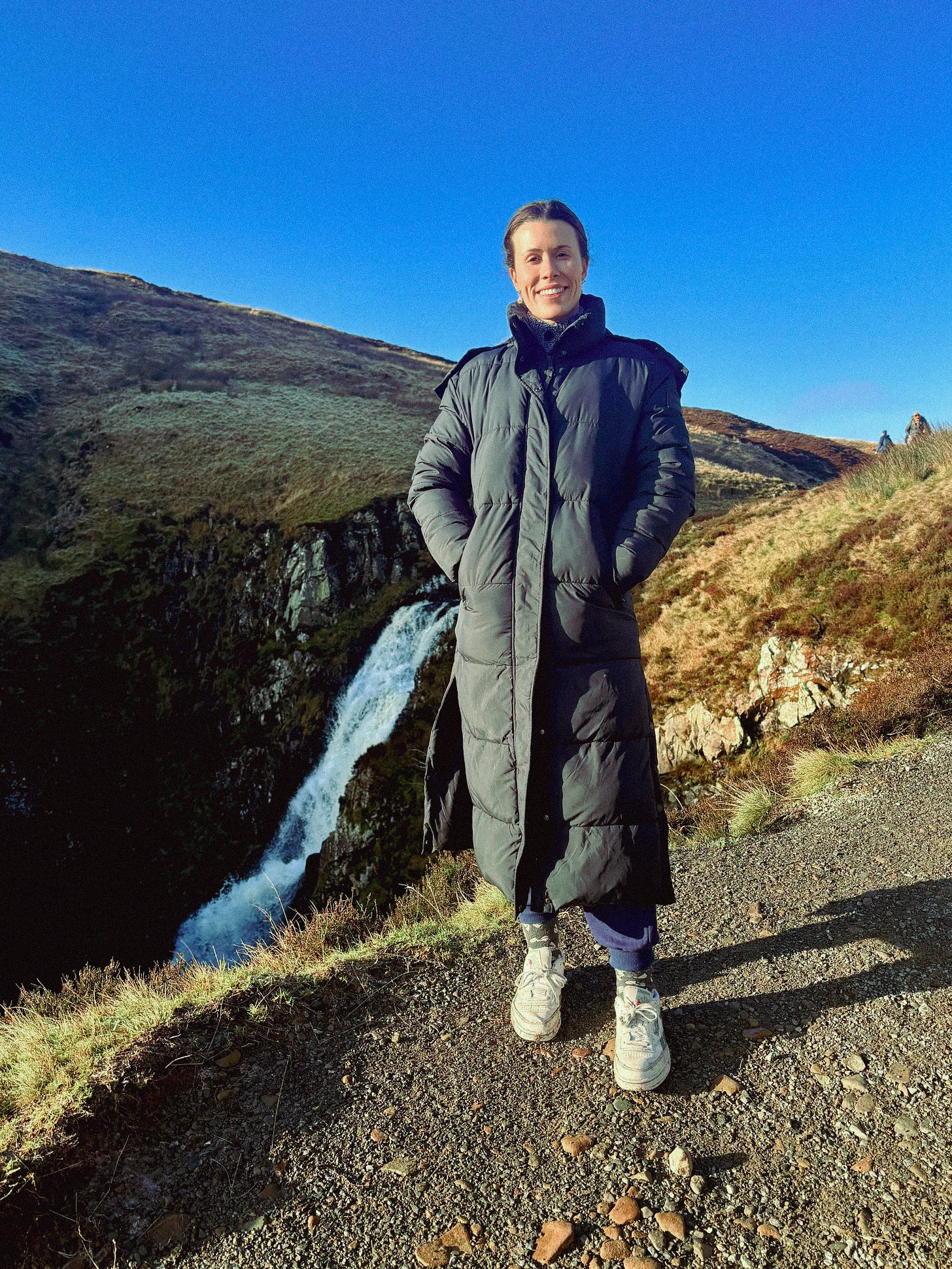
    Equipped with snacks from the 7/11 – a backpackers’ sanctuary – I headed out toward a local market, dodging traffic at every turn.

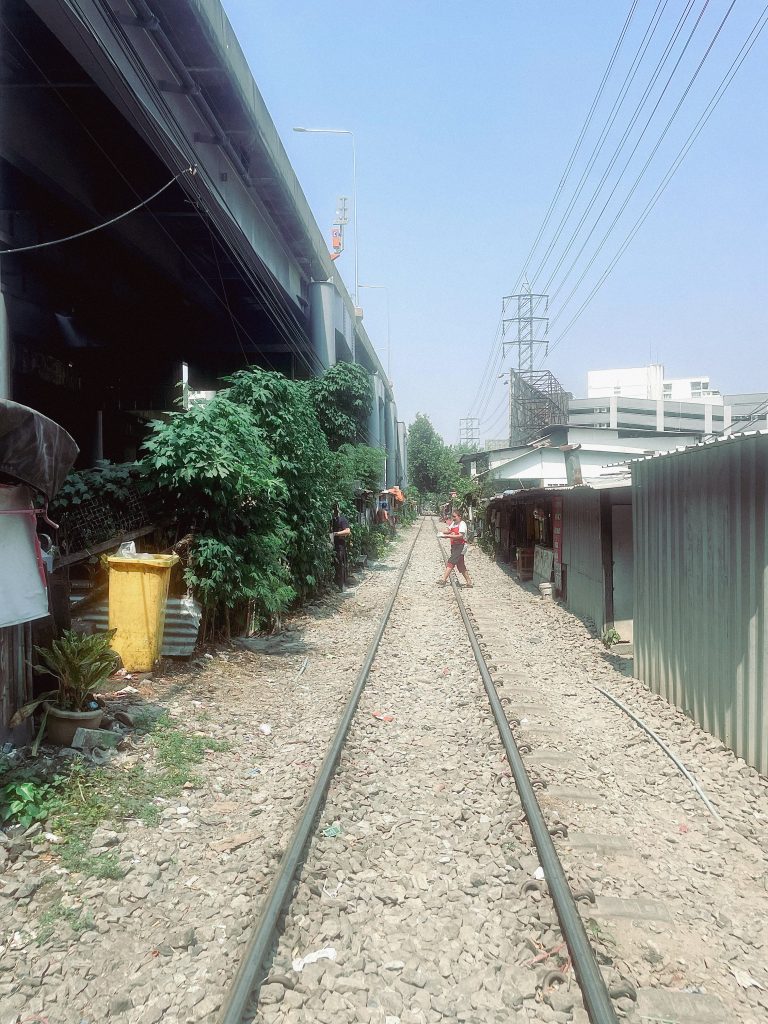
    Suddenly, whilst approaching a railway track, I noticed a curious sight. Tucked along either side were small houses beneath the Expressway, and people were crossing the tracks and disappearing from view. Where are they going? I wondered.

    As I ventured further, it became clear that the place was quietly teeming with life. To my left, a family was sitting down for a meal; to my right, a man was gutting fish. It was a tiny community, living in a traffic sandwich.

    Life must be loud for this community under the expressway

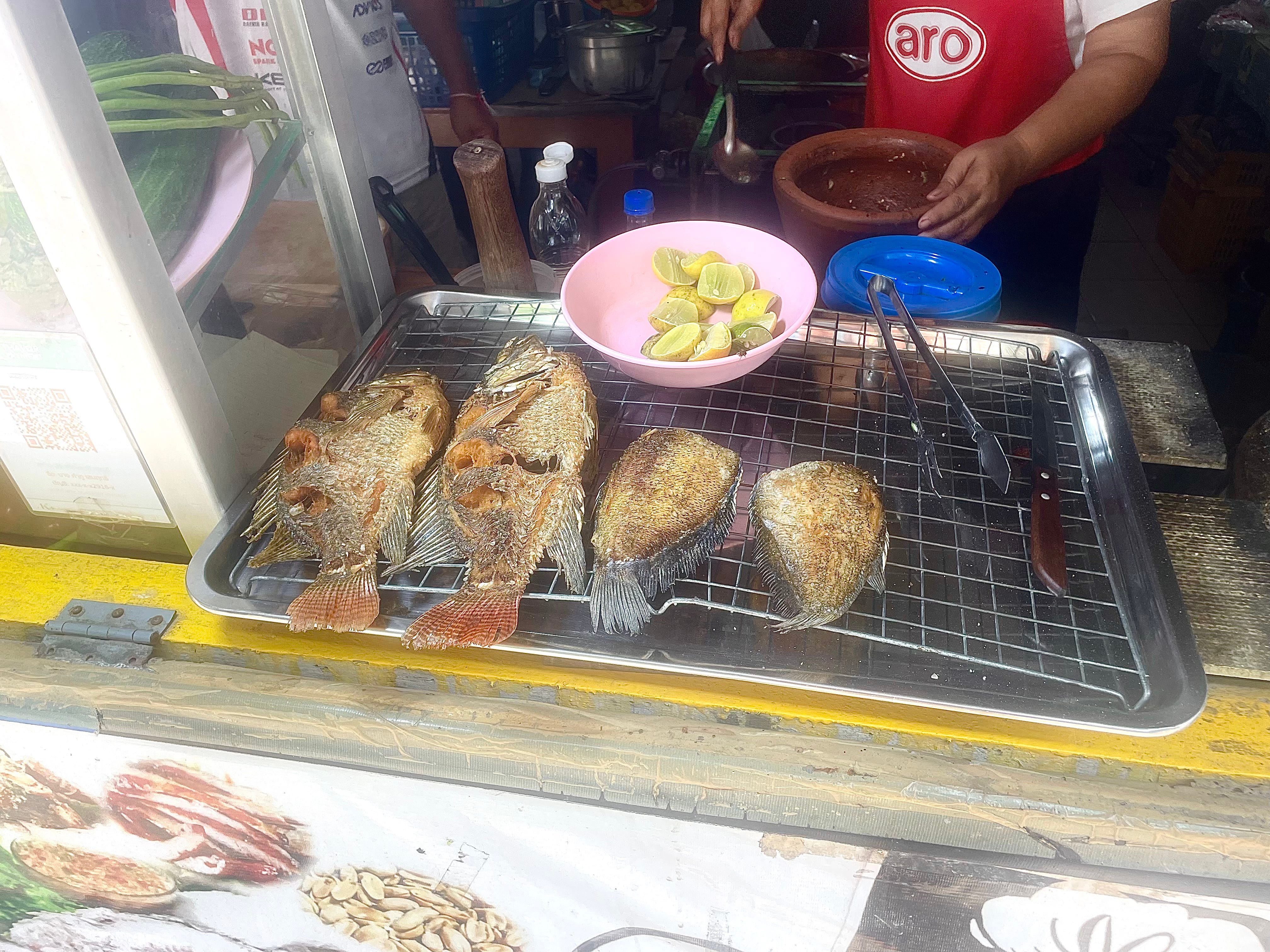
    A fish restaurant alongside the railway track

    Bangkok – home to 11.4m people – is not a place where wealth is equally distributed. To think they were wedged beneath the underpass like this, with cars and mopeds on all sides and trains cutting through (I presume), demonstrates how crammed with people it is.

    Visiting the flower market

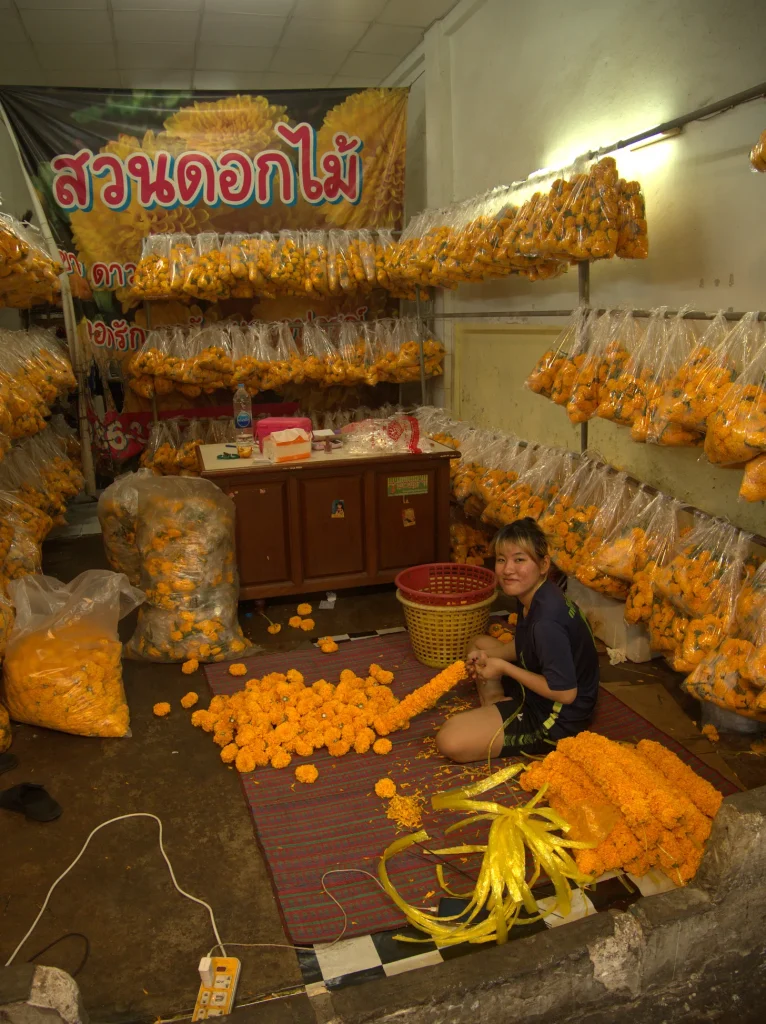
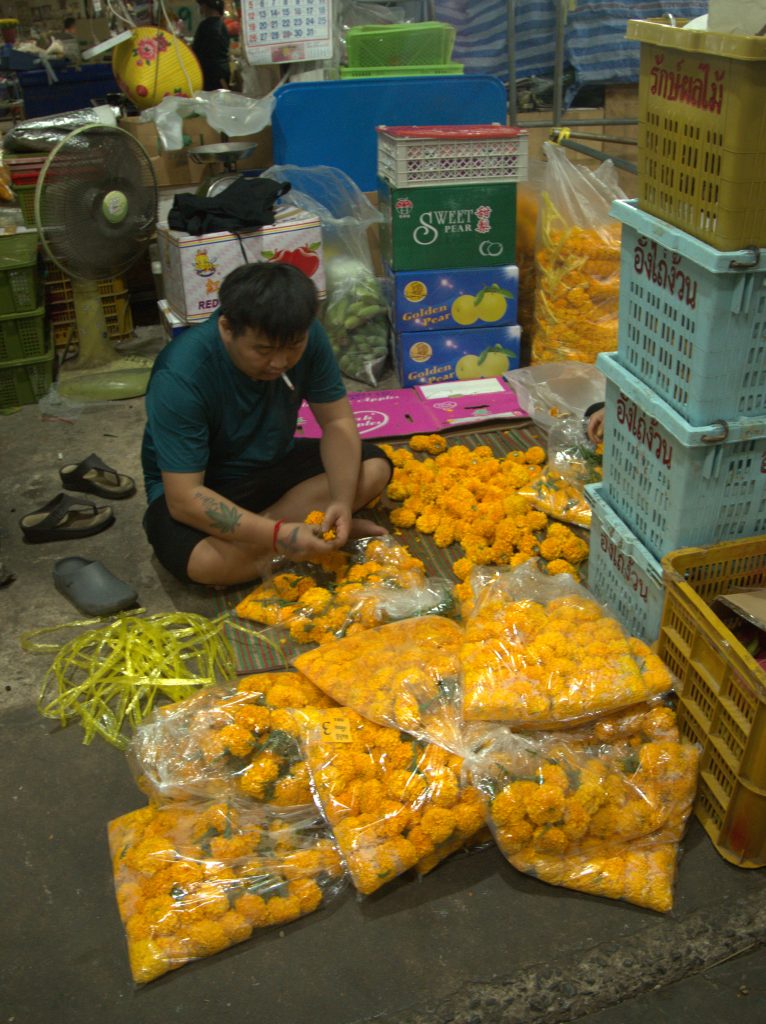
    Eventually, I found myself at Pak Khlong Talat, the city’s primary flower market, tucked into the Wang Burapha Phirom subdistrict. Unlike the railway community, this one I found in Condé Nast. Because sometimes you need a little guidance!

    I went in the late afternoon and watched the vendors setting up while people drifted through. Spotting yellow flowers (marigolds) everywhere, a quick Google revealed that they’re closely associated with Buddhism and the late King.

    You’ll find references to the monarchy all over Bangkok, and it appears central to Thai life.

    I learned how to say good morning (“sawatdee kha”) and we had a little tête-à-tête in broken English, between lots of smiling and cooing at the dogs and cats – luckily there’s only one language for cute!

    Insiders say to visit the flower market at 3am

    Word has it, the best time to come here is in the middle of the night, when the freshest blooms arrive. But it’s a great place to cool off during the day.

    OLYMPUS DIGITAL CAMERA

    China Town and Khao San Road

    Toward nightfall, I headed to Chinatown for some chow. What did I fancy? I asked myself manoeuvring down the stalls. Scorpions? Crickets? I was (sort of) tempted to try the edible insects but didn’t want to get sick straight away.

    Scorpions, anyone?

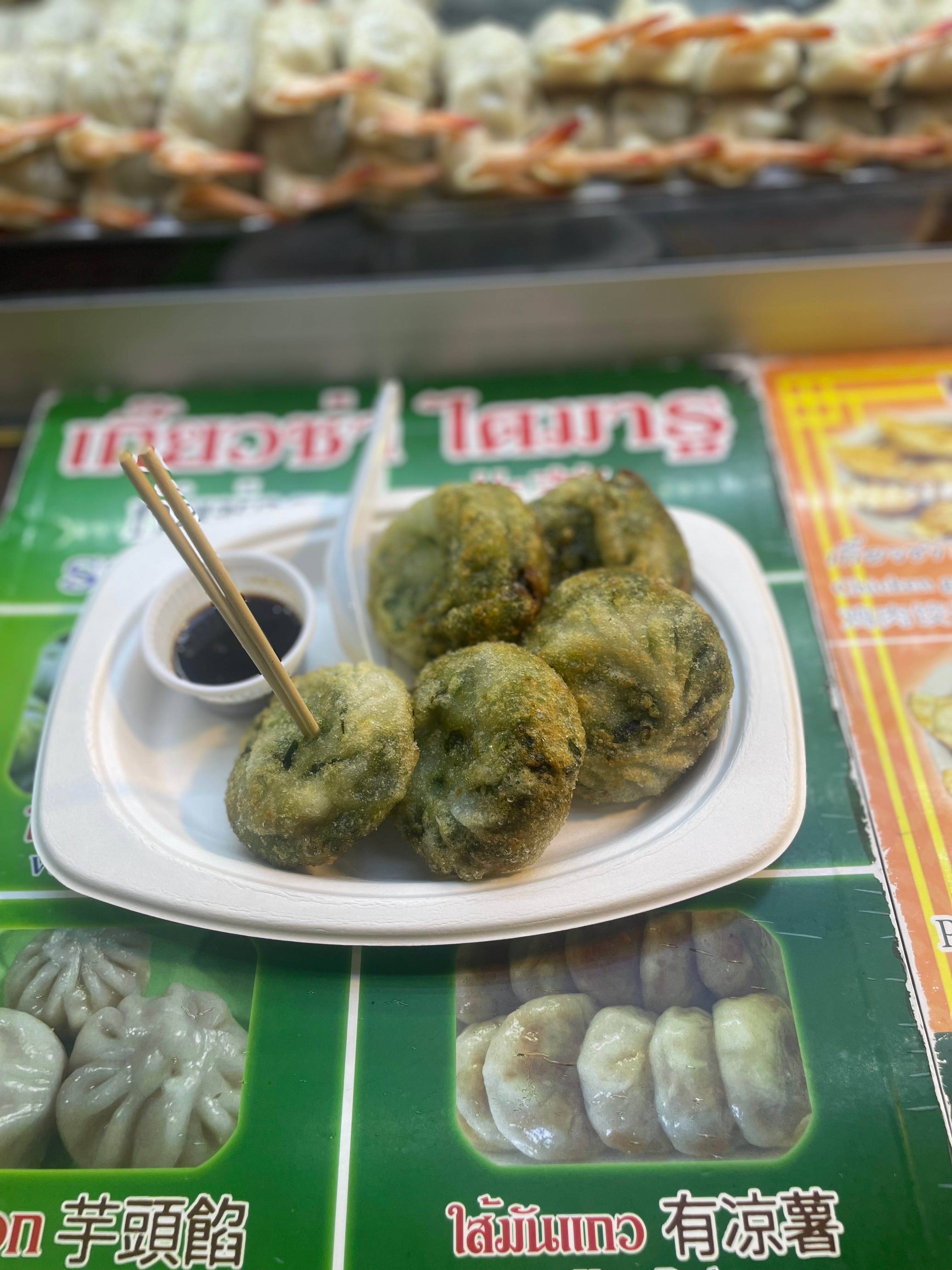
    I eventually settled on some Chinese chive cakes followed by some “kanom krok” – little coconut pancakes.

    Locusts aside, if you’re vegetarian, you’ll find some decent options here, even though Asia is generally a pretty meat-heavy place.

    Delicious veggie dumplings in China Town

    By this point, it was getting a little late. But Bangkok buzzes at all times. Do I want to go to Khao San Road? I pondered, between mouthfalls. For the uninitiated, this is a famous street in Bangkok, known for its thriving nightlife.

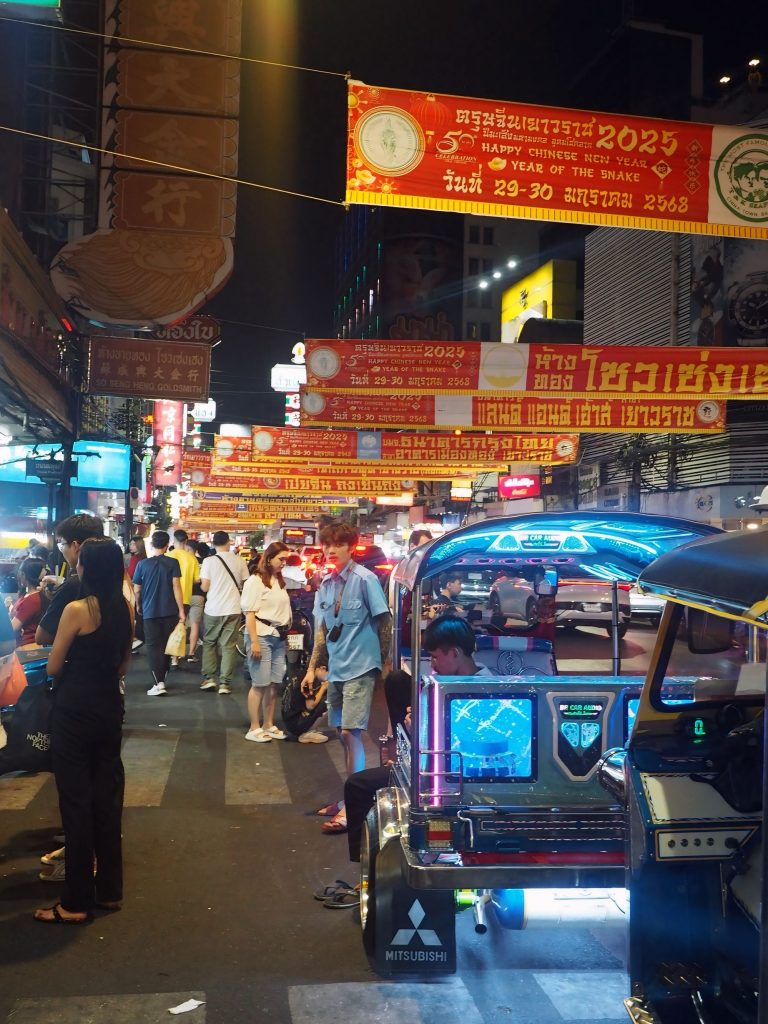
    I truly did not, but knew I’d regret not seeing it. It wasn’t far away, so I hopped into my first colourful – and probably overpriced – TukTuk by the market, for around £7.

    The ride itself was great fun. But the strip at Khao San – not for me. I’ve always preferred to watch the Inbetweeners from behind a screen, not as a lived experience, so this was a good early lesson in trusting my instincts.
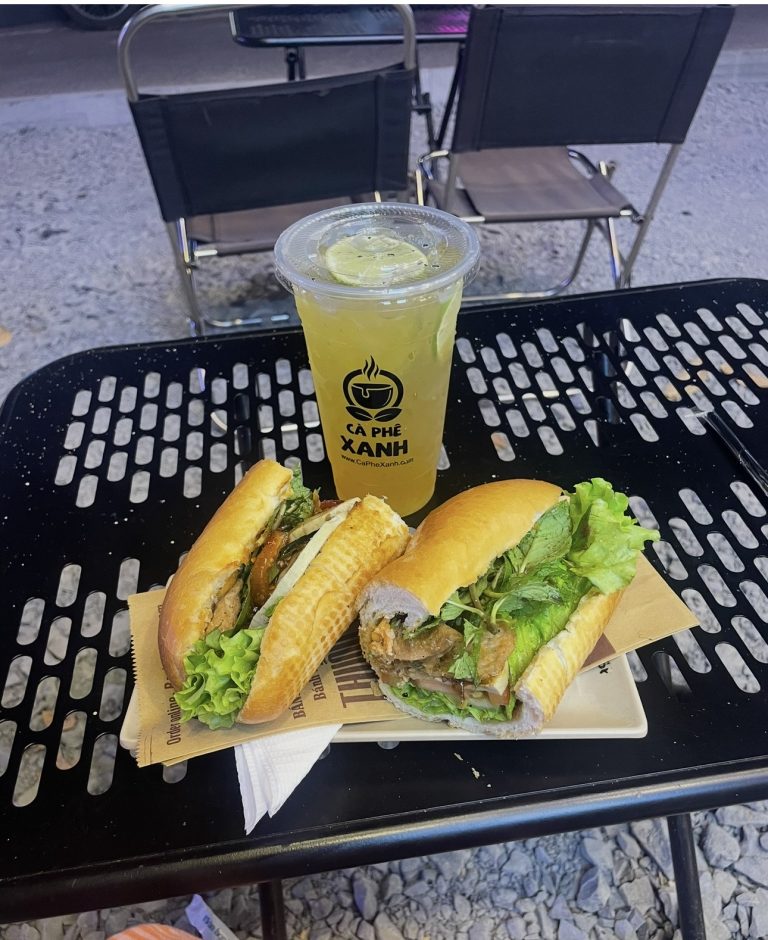
    The throng of drunk bodies in the heat was overwhelming, and I took nothing from it, save cooling down in the breeze from the TukTuk.

    Ever impressed by the public transport in Bangkok, I spared my lungs the Grab bike this time (although I was getting hooked on them!), and caught a bus all the way home.

    Visiting the Grand Palace

    By the next day, I needed some greenery.

    Bangkok might look and seem like a concrete jungle, but a third of the city is parkland, and I’d vowed to visit Lumpini Park and Bang Kachao, the so-called ‘Green Lung’ of Bangkok, for a bike ride.

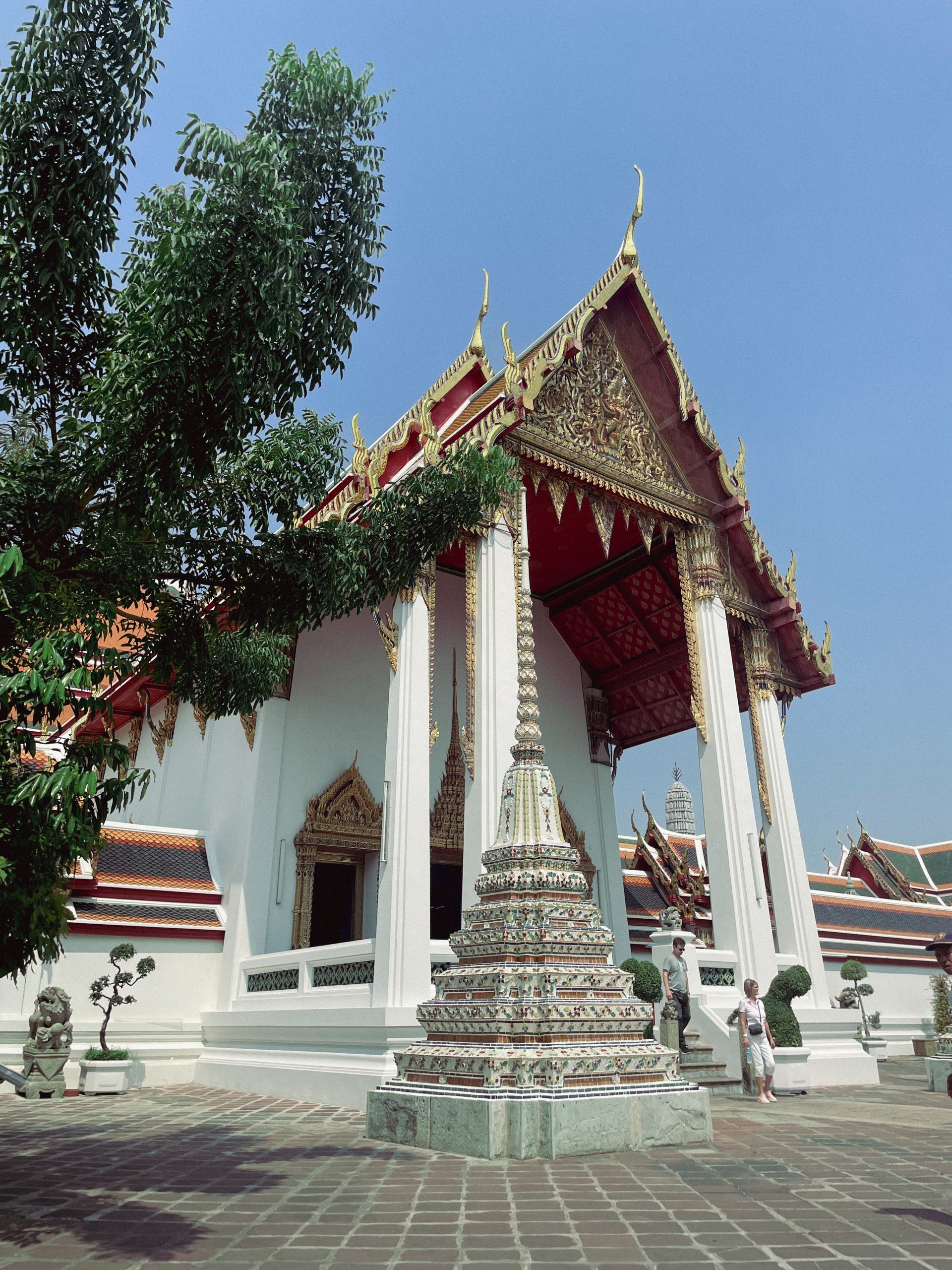
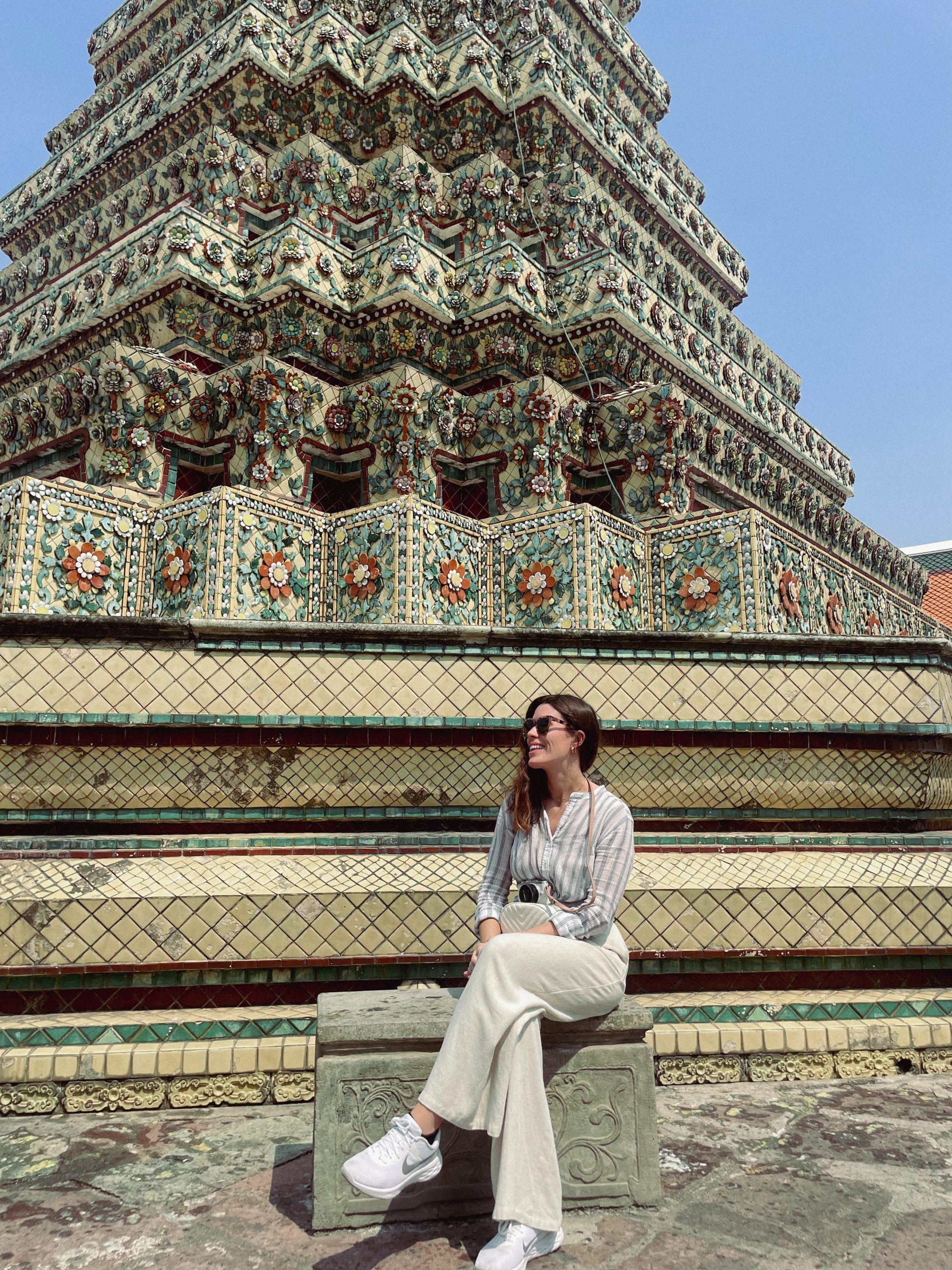
    Unable to postpone my ‘flexible’ flight ticket to Chiang Mai, however, I panicked and decided to visit Bangkok’s famous temples instead: Grand Palace, Wat Pho and / or Wat Arun.

    I really hate when tourist attractions are rammed down my throat, and I couldn’t shake the feeling that the Grand Palace was a bit over-hyped. But I was in South East Asia, so it felt like an attraction I couldn’t miss.

    Wat did I think of them? It’s tricky. Religious Studies was my favourite subject at school, and I resonated strongly with the story and teachings of Buddhism. As a 15 year old, it was the first religion I’d encountered that didn’t seem to be predicated on power.

    I respect that they are culturally important and tried my best, in the heat, to take in the majesty of it all. But after a two hours, I was a little bored.

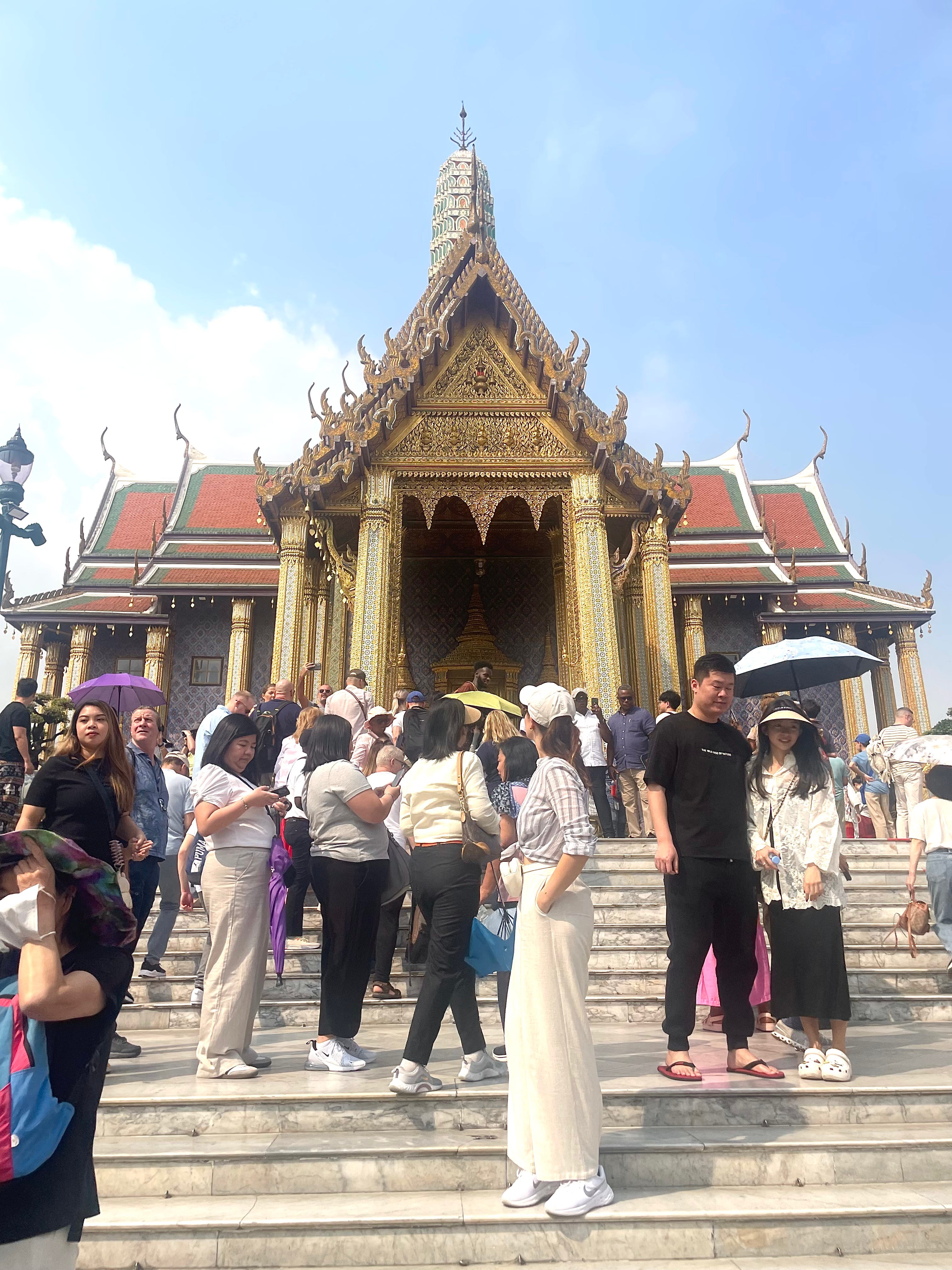
    Not just that, but – quite unsurprisingly – the place is hugely overcrowded. They don’t show you that on TikTok or Pinterest do they!

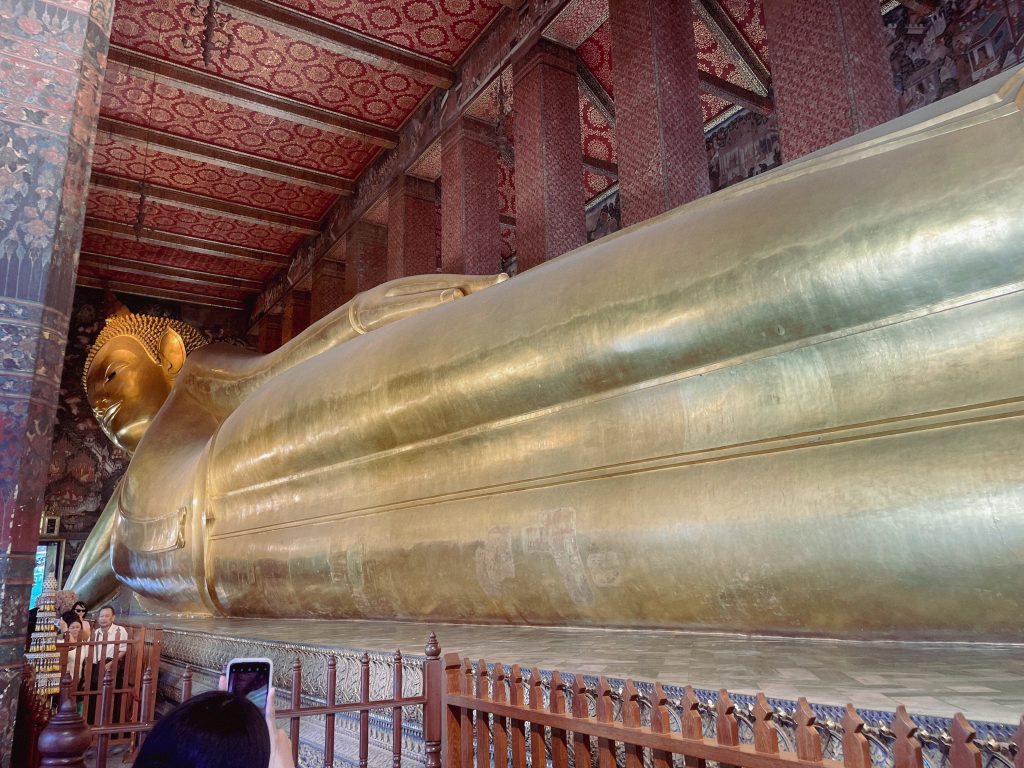
    Wat Pho is famous for the immense Reclining Buddha

    Reality check at the temples – they’re crowded!

    I wish I’d followed through with my first plan. Does this mean I lack depth? I thought with panic. Maybe. But who cares. Life’s short. There’s nothing wrong with chasing lizards in the park. They’re cool as hell!

    Monitor lizards roam the park and canal freely

    As a headache took hold, I learned my first lesson as a digital nomad: if I wanted to work and travel, I’d have to manage both my time and my energy levels properly. I was alone, in a foreign place, in a much hotter climate – that’s a lot to navigate on top of a job, and I hadn’t even got started yet.

    Sitting on the flight to Chiang Mai, clutching my carry on, I wondered – had I bitten off more than I could chew?

  • Vietnam’s Ha Giang Loop: is this dangerous route worth the journey?

    A brutally honest review of Vietnam’s best-known excursion

    Written March 2026 – updated April 2026*

    UPDATED – The text below was written in March 2026 about my experience in March 2025. Whilst I have not changed the article, I have expanded some points with footnotes and further info at the bottom. This is in response to questions I have received after the death of a Welsh teenager on the loop this April.

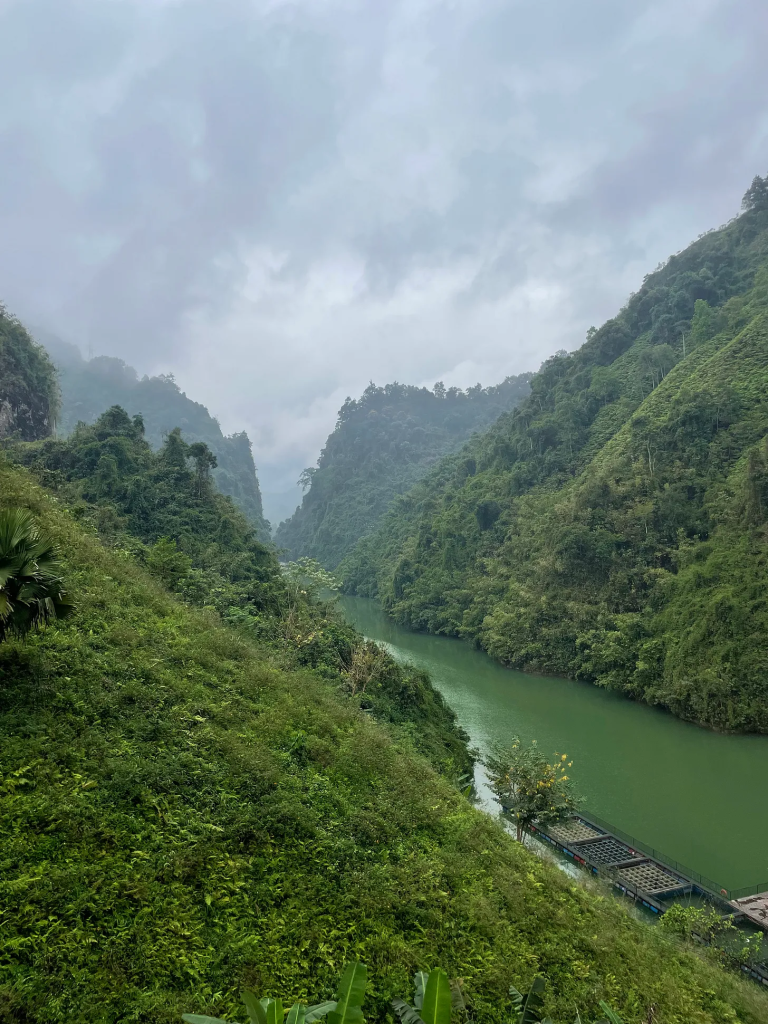
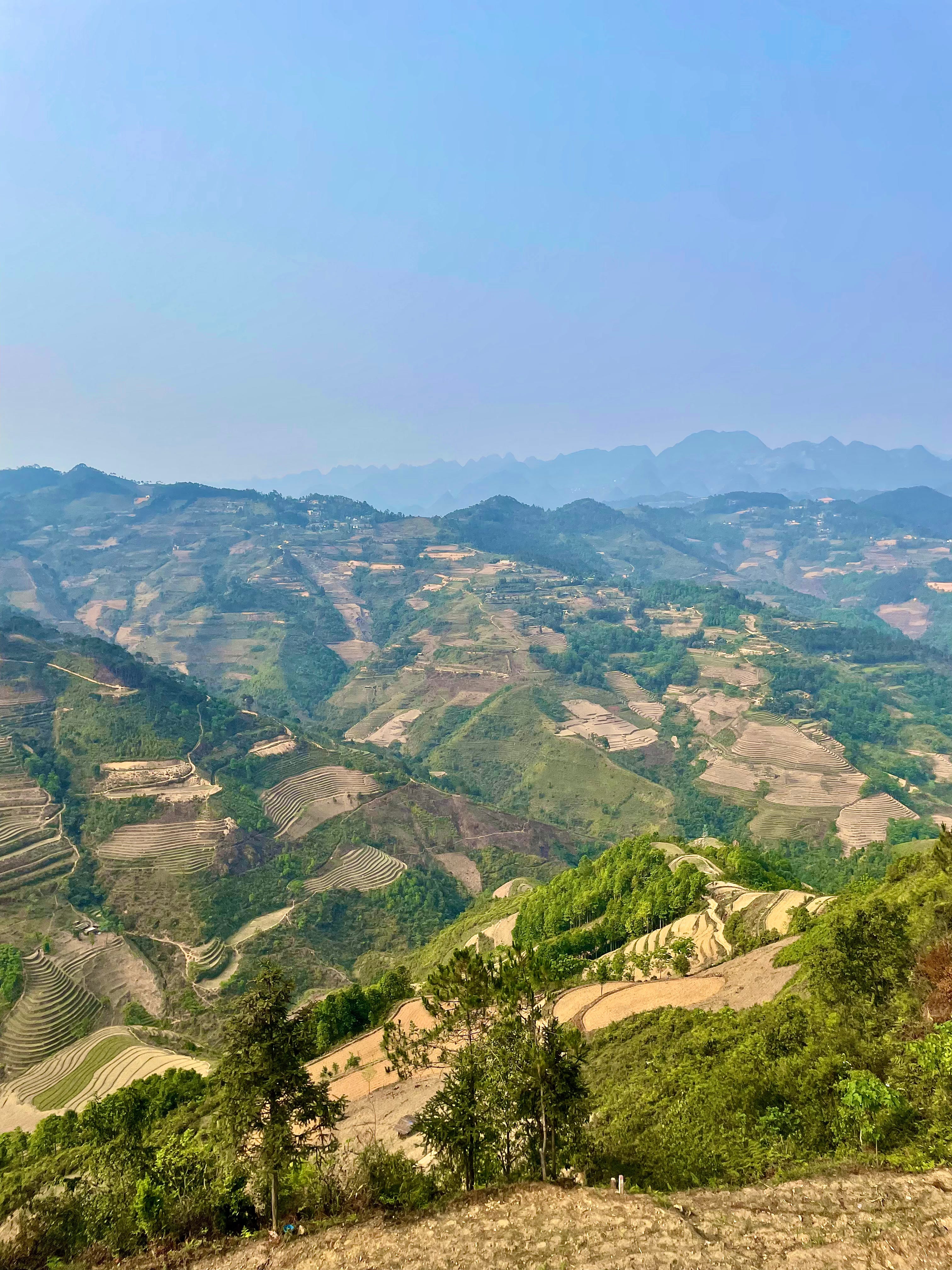
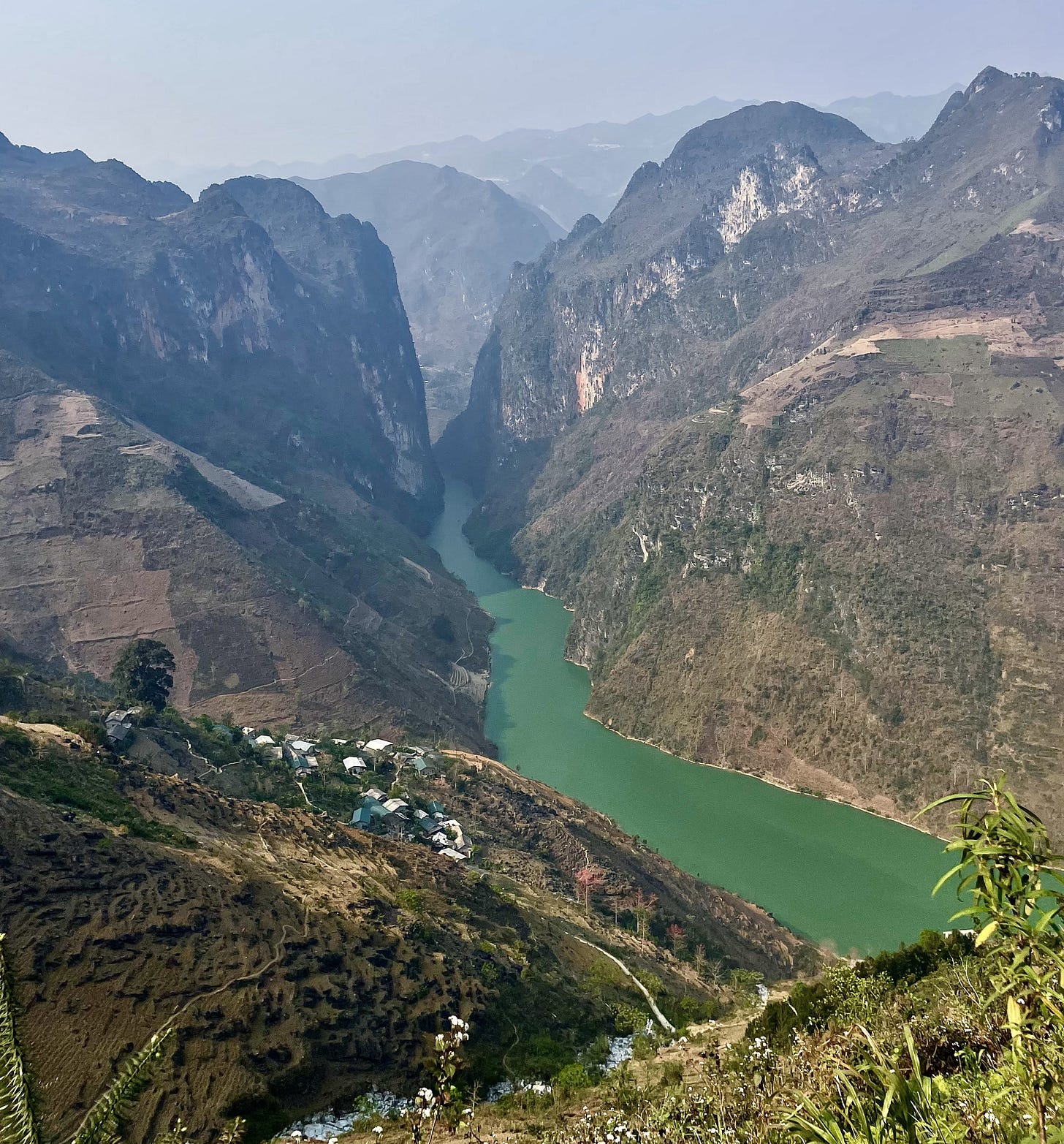
    It was a quiet day in March 2025 when I found myself in Hanoi, panic-buying warm clothes in anticipation for the Ha Giang loop. This is a stunning motorcycle pilgrimage into the northernmost mountains of Vietnam, known for its forested limestone and granite mountains, and unique Dong Van Karst Plateau.

    It had been much lauded by backpackers throughout my three weeks in Vietnam, building a sense of anticipation that I had learned not to trust too much. It could be my age – could be jealousy – but I do not trust TikTokers that never have a bad word to say about anything.

    You’ll be jaded soon enough, bitches.*1

    Curiosity bites though, and I booked an organised tour with an easy rider (a hired driver). After two months of working and travelling in Asia, my capacity for careful planning had reached its maximum, and not bothering to analyse my options in detail, I opted for Bong Hostel. As someone who likes their peace protected, I sensed this could bite me in the bum..and it sort of did.

    I rocked up in the evening with my loot of newly purchased thermals (essential even in March), hustled for a few quid, and caught the six-hour bus to Ha Giang.

    As we pulled out, a German lad next to me threw a loud and prolonged tantrum to his pals (and in fact all of us) about the lack of USB ports on the bus. Whilst he wept over his dead phone, I smugly thanked my stars for my power bank and increasingly well-developed foresight.

    There was a quick overnight stop and early breakfast before we split into groups of ten. We were then introduced to our drivers and escorted promptly into the mountains on the bikes.

    This is when my heart sank a little. Noticing a sea of matching T-shirts ahead of me, I recognised that I’d been put in a group with eight or nine people who already knew each other from another travel stop.

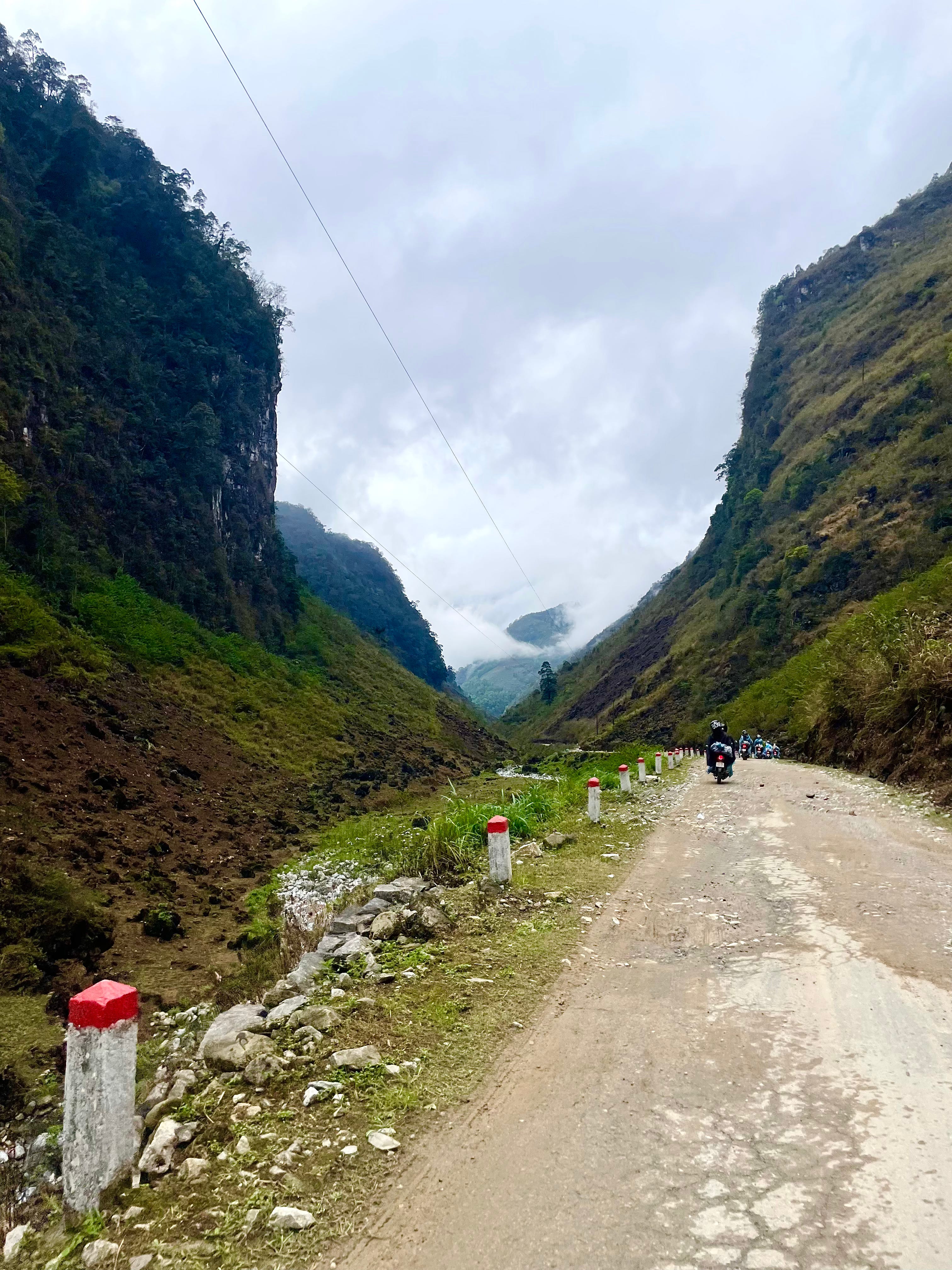
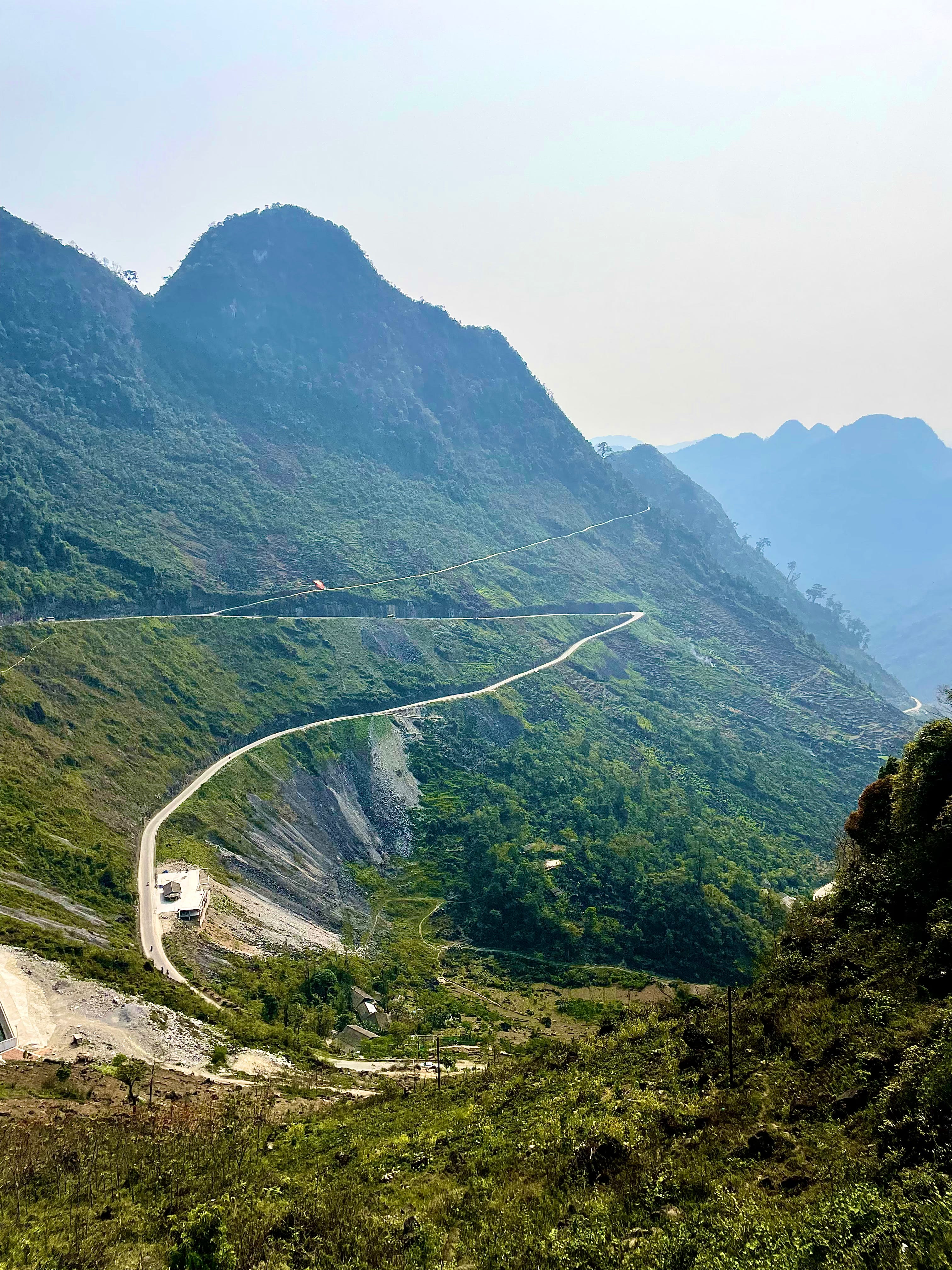
    Scenes from the Ha Giang Loop, Vietnam

    They were a nice bunch, but situations like this make for an inevitably more challenging time, especially if your social battery is low (or if you struggle with English). It’s just more effort. That’s one of the challenges with going on a trip with a bigger hostel, but it’s also something you just have to get used to with trips like this, I’ve learned.

    As we climbed the mountain, I revelled in the bliss of being able to enjoy the wonderful scenery on the back of a bike, driven by someone that knows the route inside out. With steep, winding roads, the loop is dangerous to ride, and hiring your own bike is not generally advised (although Bong does offer the chance to drive alone, with guides in tow)2.

    There is a sweet serenity to popping in your headphones and soaking up the natural world with the feel of the wind in your ha- OH wait. We’re stopping already, are we? Hold on, just let me take my helmet off (again). Staggers off bike.

    Thus began our routine. For the next four days, every thirty minutes or so, we would stop at a café for a lollypop, photo, and a game of Đá cầu (“foot badminton”), Vietnam’s national sport.

    A couple of times a day, the pitstops were welcomed. Đá cầu was a lot of fun. But after a while, the routine started to grate on me. Am I the only one? “No, we agree,” said the girls in my group. “Way too much stopping. Let’s just keep going!” I’m all for a viewpoint, particularly on a trip like this, but the continuous stopping was giving me whiplash.

    There are a ton of other groups on the loop, so it could be to do with traffic control3, but it felt a little forced. Obviously they want you to buy something at every stop, too. It’s economics.

    Some of the cafés were really sweet, and enjoying a tea or coffee over a terrific view is truly special. I reckon doing the loop yourself and taking your time with it would be perfect, if you’re confident. Other establishments were a little more interesting – think karaoke on a cliff edge at 10am type stuff. That’s the deal in Vietnam though. They live loudly, even in the mountains!

    Every evening, we would pull up at a hostel and settle in for dinner. The hostels we stayed at were very clean and comfortable, and we were extremely well fed, I must say.

    However, before each meal, our drivers sat behind our chairs and forced us to repeat the Vietnamese drinking chant whilst knocking back shots of rice wine4. This was novel the first night – less so by night two – and by night three, I was ready to smash the shot glass and swallow the pieces.

    By some twist of fate, it seems, my driver and I were spiritually aligned because he seemed as awkward and uncomfortable as me about the whole thing. “Are you an Aquarius?” I said on Google Translate. “Yes!” he said. As a rather awkward Aquarius rising myself, the immediate kinship was a comfort, especially when I saw him sneaking off to bed to avoid the singing.

    On our last day, we stopped by a lake and went for a swim in the cave. That was a lot of fun and a nice way to end the experience. Apparently this is only available if you book the four day excursion. Everyone online suggested that I book the longer tour, so I did – but to be honest, you’ll get to see as much as you need to from the shorter trip, I reckon.

    I’m a grumpy bugger at times, and had been backpacking for a while at this point, so don’t let my review put you off doing the Ha Giang Loop. I still had fun, and the scenery is wonderful – that cannot be overstated. It’s also very affordable, costing around £150, so not pricey at all for what you get to experience.

    I am also a realist though, so do want to be honest about the fact that this trip won’t be for everyone. If I had my time again, I would travel with a smaller, quieter group5. Due to the young age range with Bong, there was way too much forced partying, and they couldn’t seem to read the room that we didn’t want that experience every night, given the 7am starts. On the other hand, I felt very safe, everything was prompt, the drivers were nice and it was very well organised.

    My top tips for making the most of it as a solo traveller are:

    Check in with yourself before booking. What size group would you rather go with? You’ll likely bond more in a smaller group, but everyone’s different.

    Dress warm. This is so important. Check the weather, message people already there, ask on Reddit or Hostelworld. Find out what the temperature is like just before hand.

    Bring cash. For tips and snacks.

    Bring earplugs (I opt for Loops) to drown out the karaoke if you need an early night.

    UPDATED April 2026* – Expanding on the above, given some questions I’ve had from people following the death of a British teenager in April this year.

    I have not edited the blog post above, because it was my authentic experience. But following the death of a British teenager in April this year, I wanted to elaborate on some points of consideration for those of you considering the loop. I am not a journalist, so can only speak from my experience and opinion.

    1. HYPE – my point about travel Tiktokers in the first paragraph still stands. Please remember that they are not journalists, or critical thinkers. Most are just looking for clout. That doesn’t mean they’re lying, of course, but my advice before booking any travel experience – especially a dangerous one – would be to use a variety of travel sources, including reviews, blogs, news articles, and books. If you don’t think you will be able to relax and enjoy it, just don’t go. ↩︎
    2. SAFETY – Hundreds of people ride the loop every day, and the majority of them are fine. But there ARE accidents and deaths. I had a friend of a friend who died on the loop a few years back, which I was aware of before booking. I am not going to pretend to be a reporter, but this problem is clearly coming to light now in the press. I would encourage anyone reading to take notice of the stats if they can find them, and make a judgement call based on their research ↩︎
    3. TRAFFIC – There’s a LOT of people on the loop. I personally did not feel that this was a massive issue on my trip, but it was clearly something that the local groups tried to manage (and, I believe, a reason for the continuous stopping). I imagine it’s only getting busier as social media pushes people to visit this part of the world. All those videos of girls with long hair throwing their arms up on the back of a bike? Picture hundreds of them at once, crowding the same roads and bends. ↩︎
    4. ALCOHOL – As I said above – Bong (like many hostels) encouraged drinking in the evenings, which really bothered me. I had a really nice, sensible driver, but this cannot be said for all of them. It speaks to a party culture that just doesn’t feel appropriate on a dangerous journey. I had the sense that the Vietnamese think that this is what people want, so they push it hard. You just have to trust that the drivers know their limits, and that is scary. It’s also not just the easy riders you need to think about – consider that other drivers on the loop (fellow travellers) might have been drinking too, and may or may not be ready to go the next day. ↩︎
    5. VIBES – If any part of what I have said is a concern for you, my advice would be to find a smaller group aimed at an older age group (no matter your age). There is no shame in it. ↩︎

Leave a Reply

Your email address will not be published. Required fields are marked *