
Similar Posts
Cooling off in Copenhagen
Is this the best city break in Europe?
Following three months visiting Asia, Bali and Australia in early 2025, I was craving less stimulation and more structure for my next trip from the UK. After eight years as a Londoner, there comes a point where you want to trade a backpack for a trench coat and boots, and with a friends’ wedding in Sweden approaching in May, it made sense for us to visit Copenhagen first.
I’d been curious about the Danish capital for some time. My parents spent their honeymoon there in the 80s and nearly always have Scandi drama on the go. I also recall having nightmares from a made-for-TV version of The Little Mermaid which, true to Hans Christian Andersen’s style, is far darker than Disney would suggest.
Luckily this trauma was corrected during my visit, and I left thinking Copenhagen might be one of my favourite city breaks so far. Maybe that was because, after the sensory sprawl of the far east, it felt so refreshingly calm and considered, with its wide pavements, seamless cycle lanes, and reliable public transport. Like a lot of Scandinavia, everything seems designed – not in a showy way, but in a cool, collected way.
Keep reading for food highlights, what to do, and the best day trips from the city.
What to eat in Copenhagen
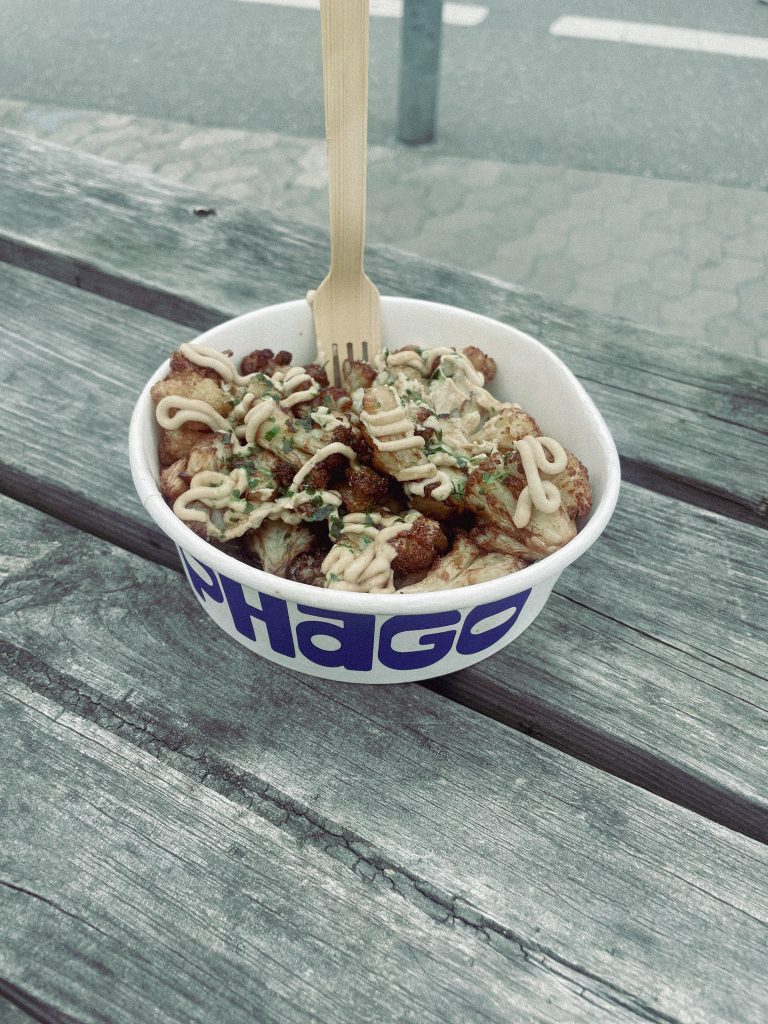
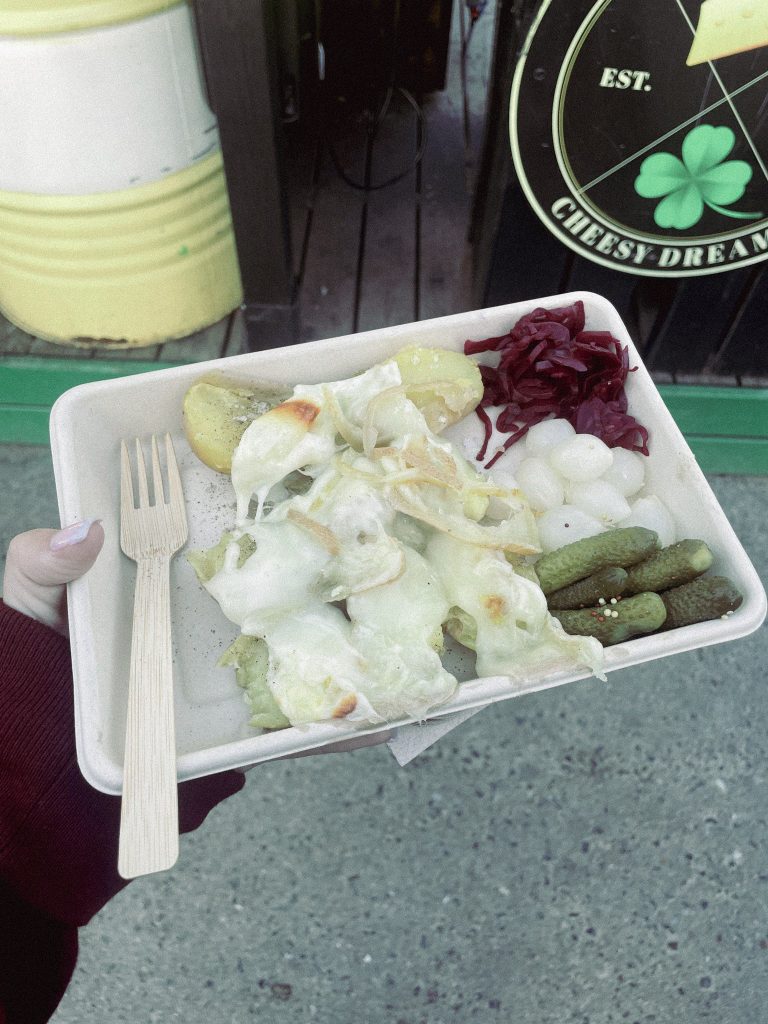
Copenhagen is a bit of a foodie dream – which sort of surprised me – so prepare to go with an empty belly and a ready palate. Here’s a suggestion for you to spend your day eating around the city:
First – bakery breakfast
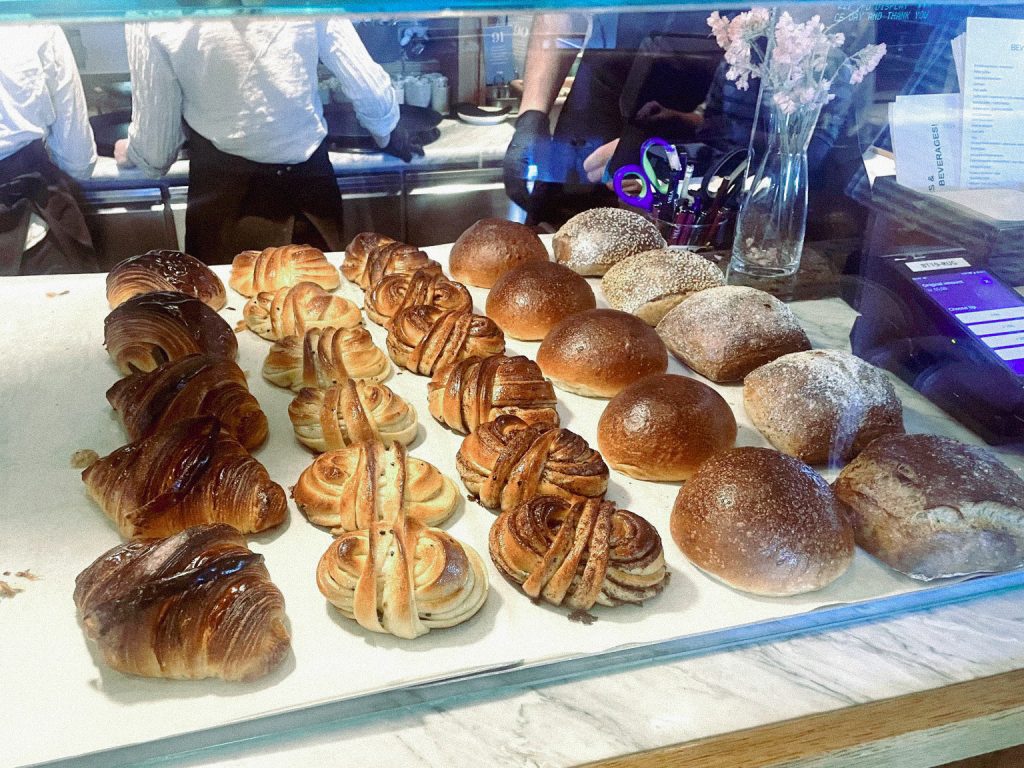
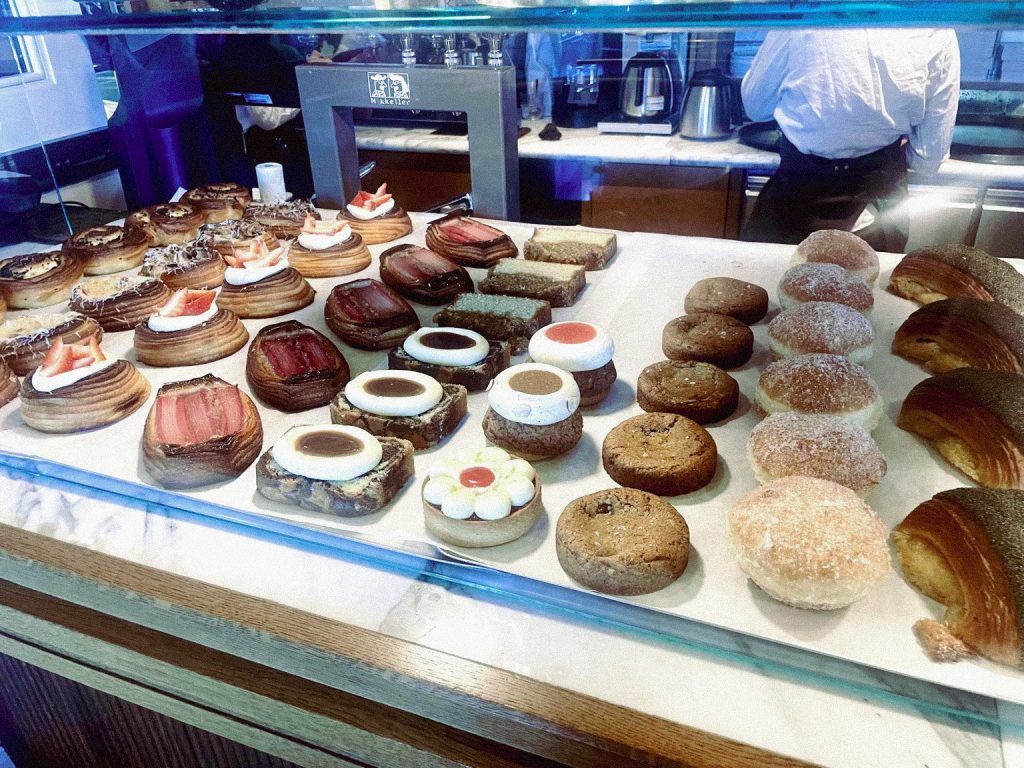
Skip the hotel buffet and head to Rug or Hart Bakery for some beautifully curated baked goods. They’re quite upmarket places with spaces to sit down and enjoy your loot. Bring a friend so you can split a bunch of them between you (or pig out alone!)
Next – Smørrebrød and beers for lunch
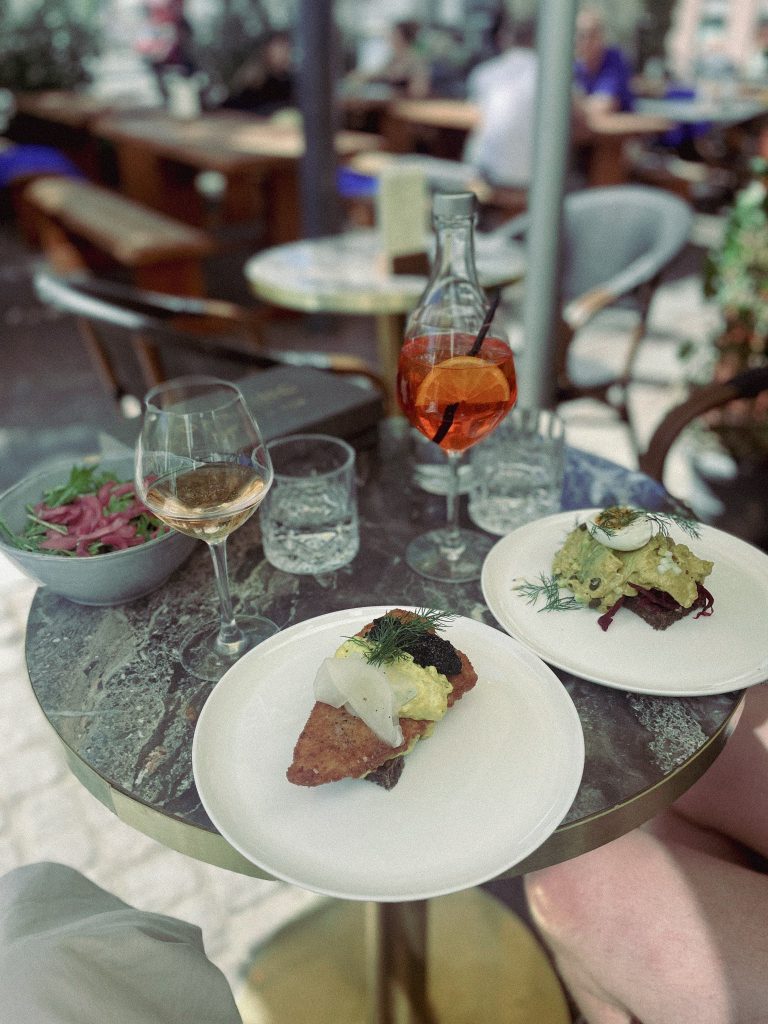
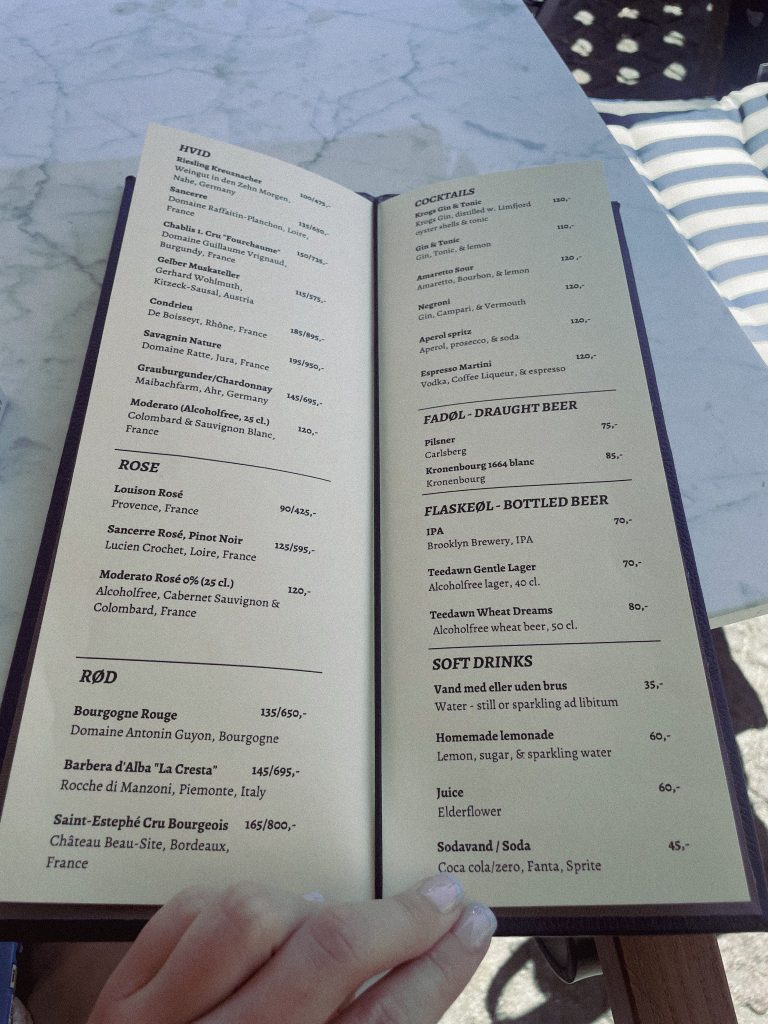
Smørrebrød is a classic Danish open sandwich – sort of like oversized tapas. Imagine a base of tangy rye bread, topped with smoked fish and pickled veg. We stopped on Gammel Strand, but you can find them all over the city. They’re delicious but not cheap, so order a selection and split them between you. Wash down with a beer (Carlsberg or Mikkeller). I can also recommend Bird cocktail bar in the city centre for a classier beverage.

Then – snacks at Broens Street Food
Sitting opposite the Inderhavnsbroen bridge, this is another cool food market from whence to snack, but you could also have lunch or dinner here. It is located on the Greenlandic Trade Square where the traders from Greenland, Iceland, the Faroe Islands and Denmark used to arrive after long journeys across the oceans. It’s a lovely spot from which to look over the water. Opening back up in March, it even offers yoga, social dining and other events to enjoy.
Finally – dinner and drinks at Reffen Street Food Market
Proclaiming itself as the “largest street food market in Northern Europe”, this is another buzzing food market on the waterfront, hosting food stalls from around the world. For Londoners, it has a bit of a Hackney Wick vibe, complete with beautiful street art. Like Broens, it opens again in March and offers regular events that I’m always ogling on Instagram. A perfect way to see the sunset.

What to Do in Copenhagen
Most guides will suggest visiting Copenhagen for four days, which feels reasonable to me, although I stayed longer and felt there was plenty to see.
Here’s fun activities I’d recommend adding to your trip itinerary.
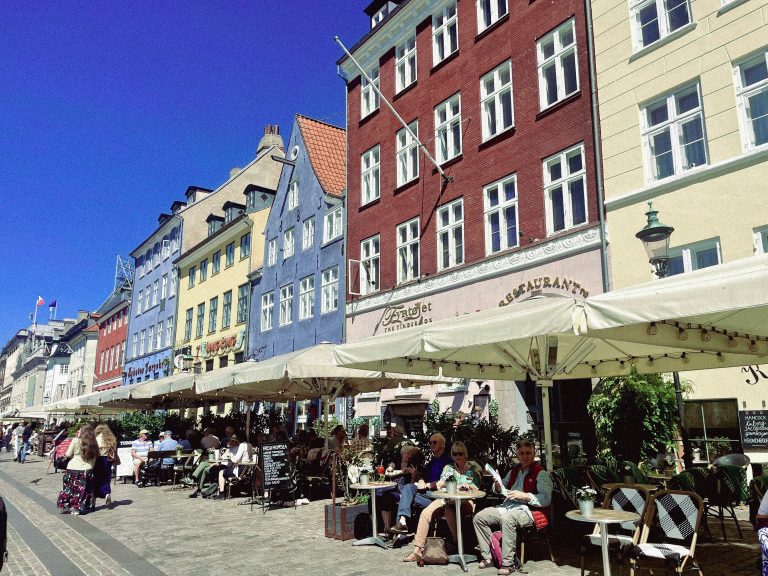
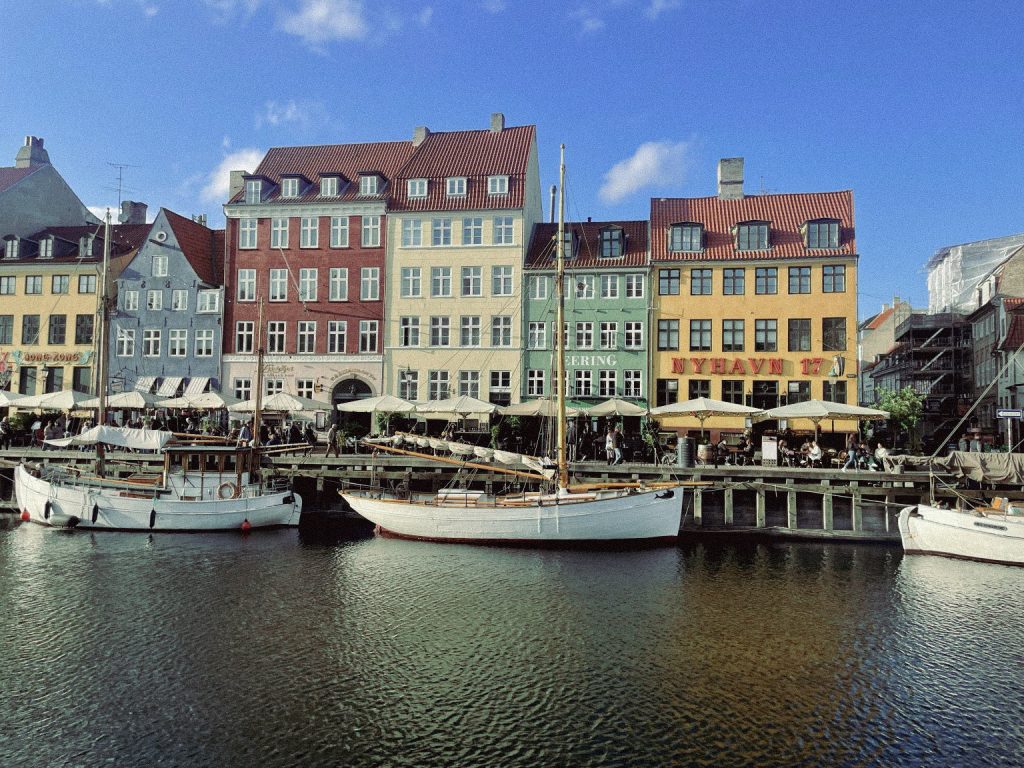
Take photos at Nyhavn
Spend some time walking about the iconic 17th-century waterfront, canal and entertainment district. Despite being a little touristy and expensive, it’s a great spot for photos. Just look at those gorgeous buildings.


Learn about hygge at the Happiness Museum
The Danes are pretty well known for their commitment to hygge – but what does that actually mean? Well you can learn all about it at The Happiness Museum, curated by Denmark’s Happiness Research Institute. Lots of fascinating takeaways from this place about how different cultures measure happiness and I found myself reflecting deeply afterwards. All millennials (or anyone feeling slightly lost in life) should come here!


Marvel at chairs at the Design Museum
I cut my teeth doing design PR, so I couldn’t miss this and it totally delivered. Who knew so much thought went into the development of a chair? If you get satisfaction from efficiency and beautiful problem-solving, you’ll love spending a couple of hours at the Design Museum.

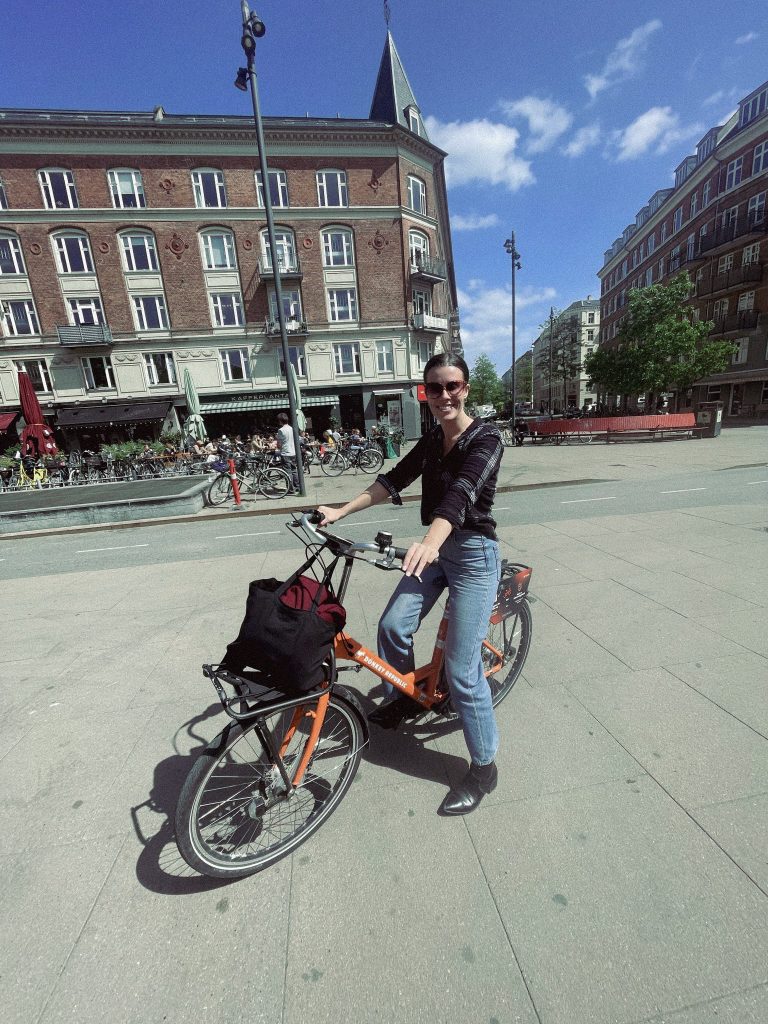
Shake off the chill with a cycle about the city
Probably the best way to see Copenhagen – especially between May and September. Use the app Donkey Republic to hire bikes.


Do a walking Tour
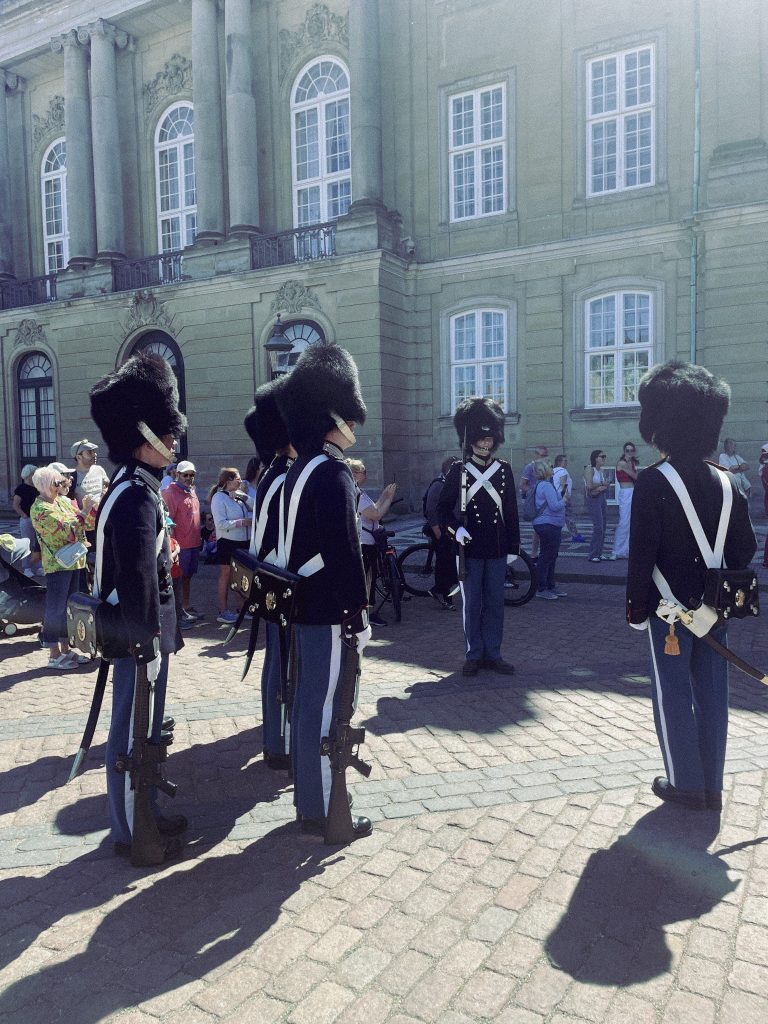
A great way to understand the city’s history. Every tour is different, but ours covered the royal family and Denmark’s WWII experience. If you’re not booking via your hostel or hotel, try Get your Guide or Guru Walks.

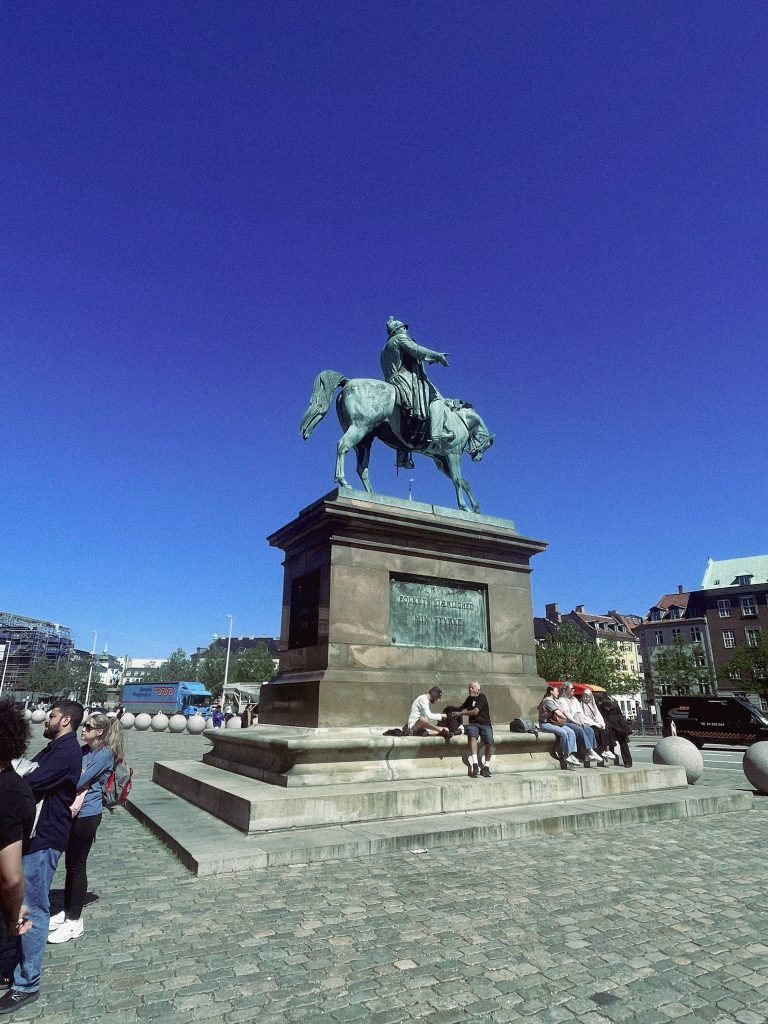
Visit the Little Mermaid statue
Emphasis on “little”. She’s teeny but powerful – just look at her Disney empire! The statue is an ode to one of Denmark’s most famous writers, Hans Christian Anderson and sits in edge of the Langelinie promenade, making an excuse for a nice walk.

Ride around Tivoli Gardens
Continuing the Disney link – I recently discovered during this podcast by The Rest is History, that Tivoli gardens amusement park was Walt Disney’s original inspiration for the disney parks. Feels a bit random having a theme park bang in the centre of a city but if you fancy an adrenalin rush, it’s typically open from March.
Art appreciation at Freetown Christiania
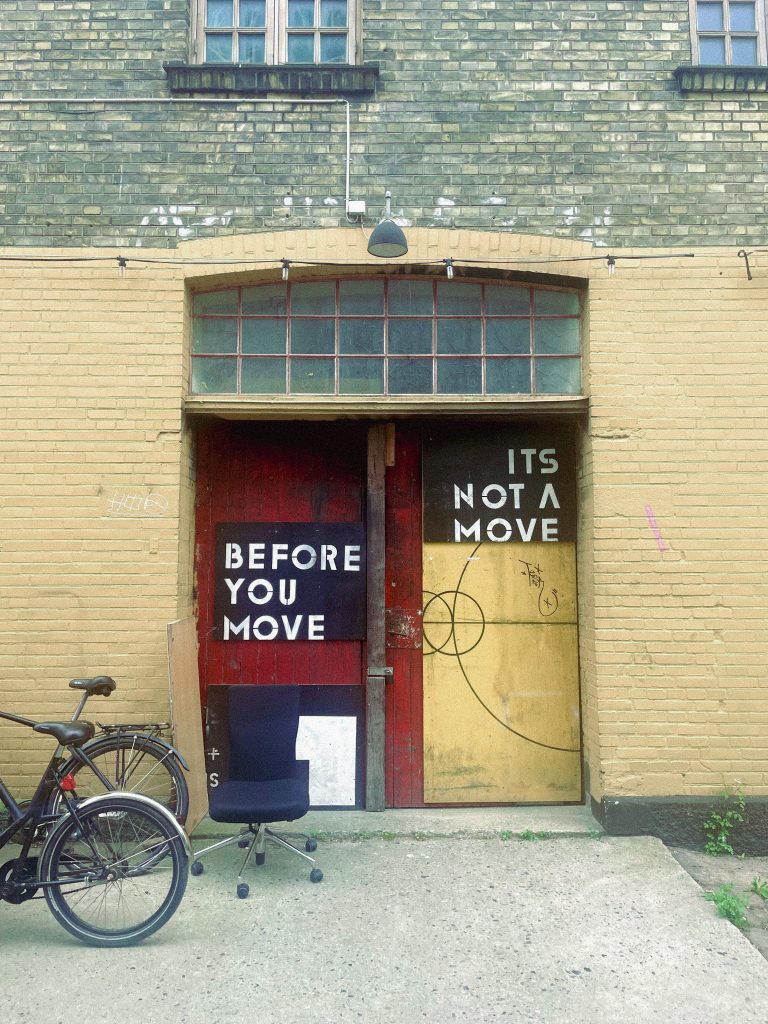
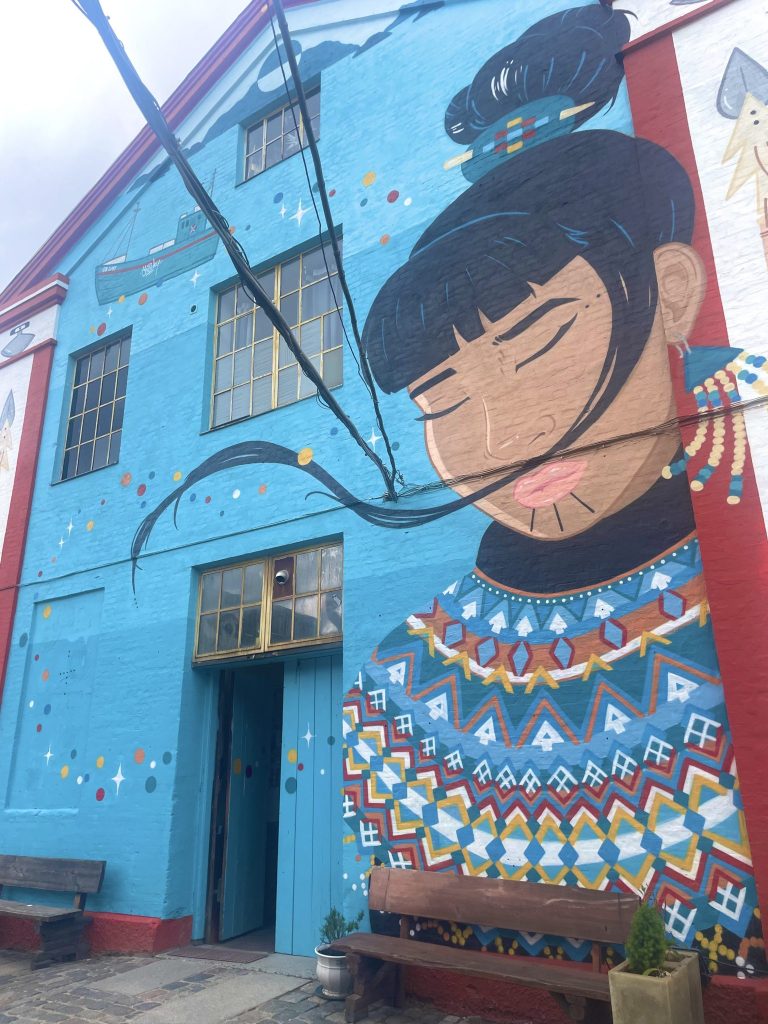
Describing itself as an “intentional community”, Freetown Christiania is a separate community in Copenhagen with a history dating back to the 1970s. It has its own laws, flag and way of life. Visitors can enjoy the cafes, art, and market, and it seems there’s often live music and other arty things going on. It’s definitely worth seeing for a different side of the city.

Cross the Bridge to Malmö or Lund
Why not cross the bridge from The Bridge and head into Sweden?
Copenhagen sits right on the border, and it’s just a short train ride across the Øresund Bridge into Malmö in Sweden. From there, Lund is around an hour away.
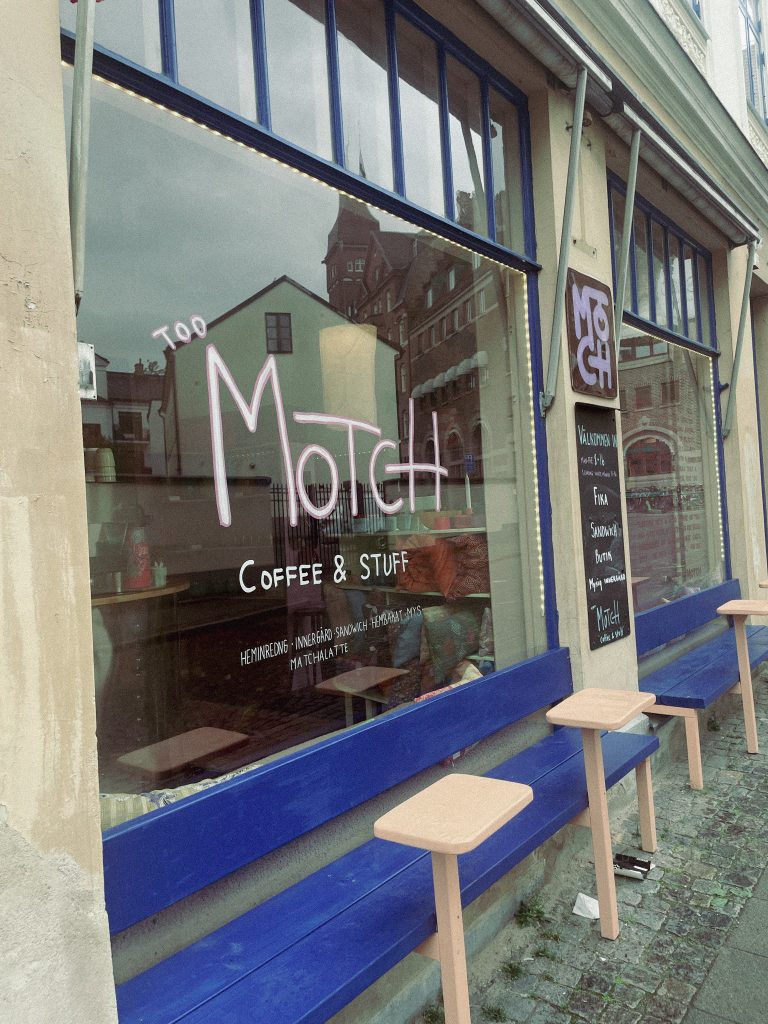
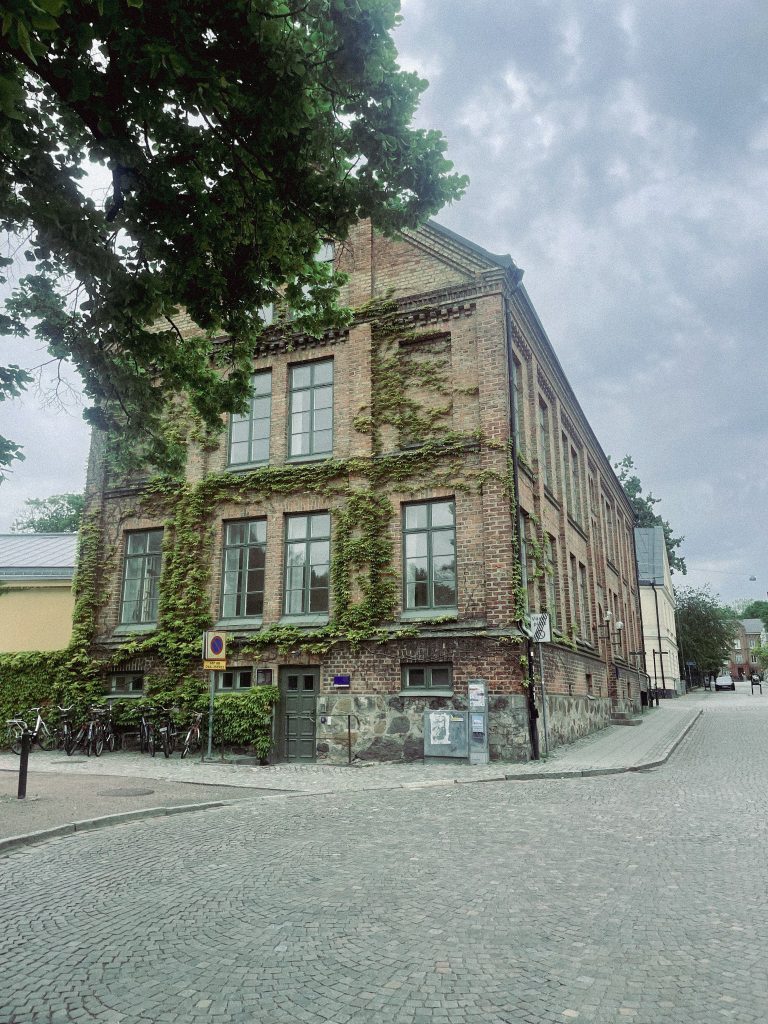
Lund – home of the Oatly factory – is a charming university town and worth stopping in for a night or two to sample the café culture and wander around the historic university buildings. I spent a lovely two days checking out the vintage shops and cafe hopping here. Some favourites included Broder Jakobs and Too Motch.
I didn’t particularly love Malmö, but the Disgusting Food Museum is admittedly a fun (if slightly grim) stop if you’re in the area.

A place of quality not quantity
Copenhagen isn’t the cheapest city break but if you want somewhere that combines good food, thoughtful design and just enough culture to feel smug about it afterwards, the Danish capital is hard to beat. Between the pastries, museums, harbour swims and slightly intimidatingly stylish locals, it’s a city that feels both relaxed and quietly inspiring. I went with friends, but also had some days alone, and found it very well suited to solo travelling (for more solo city break inspo, read my Porto blog). If you’re into looking like you belong on a design mood board, visit between May and September when the city really comes alive. I’d be intrigued to see what it’s like in winter – maybe another time!

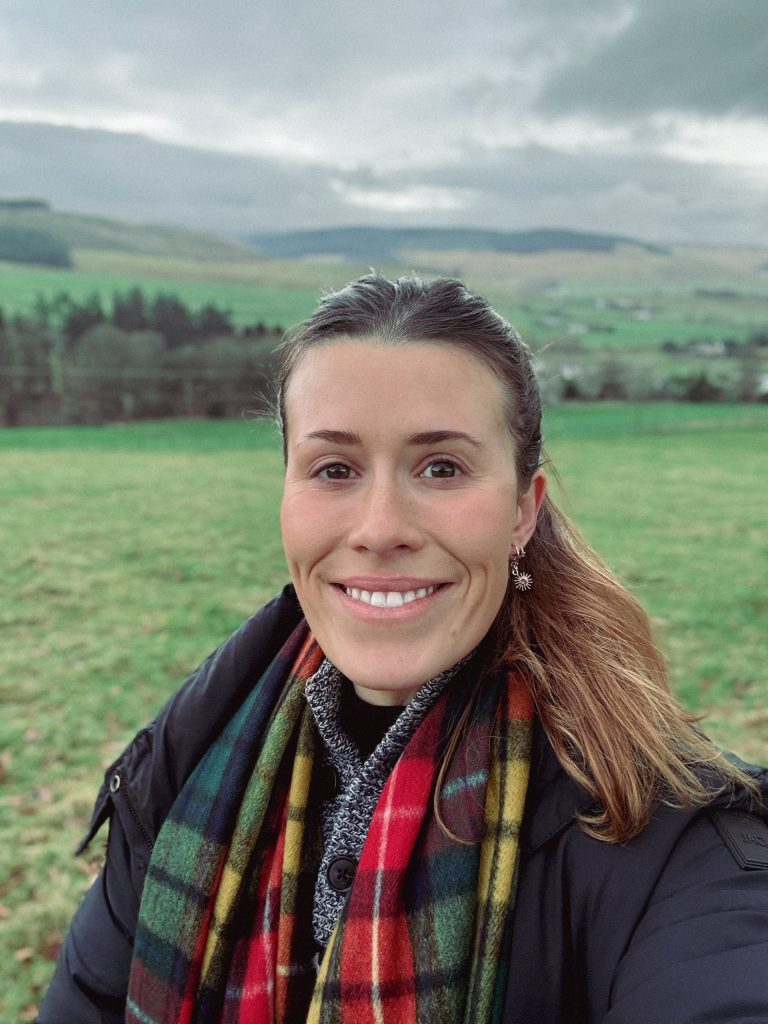
Stillness under the stars – my unexpected adventure in Scotland’s dark sky town
By the end of 2025, I’d completed ten months of flexible work and travel, following a stretch of steady living in London.
Between the bustle of Bangkok; the beaches of Cambodia; the quiet jungle of Bali; and the historic streets of Europe – there’d been much to absorb.
But while they were all meaningful experiences in their own way, I craved more purpose for my next adventure.
That’s when I spotted an email from the volunteering platform, Workaway: “Hi Georgina. We saw your profile, and wondered if you would like to help out at our English language school in Scotland this December?”
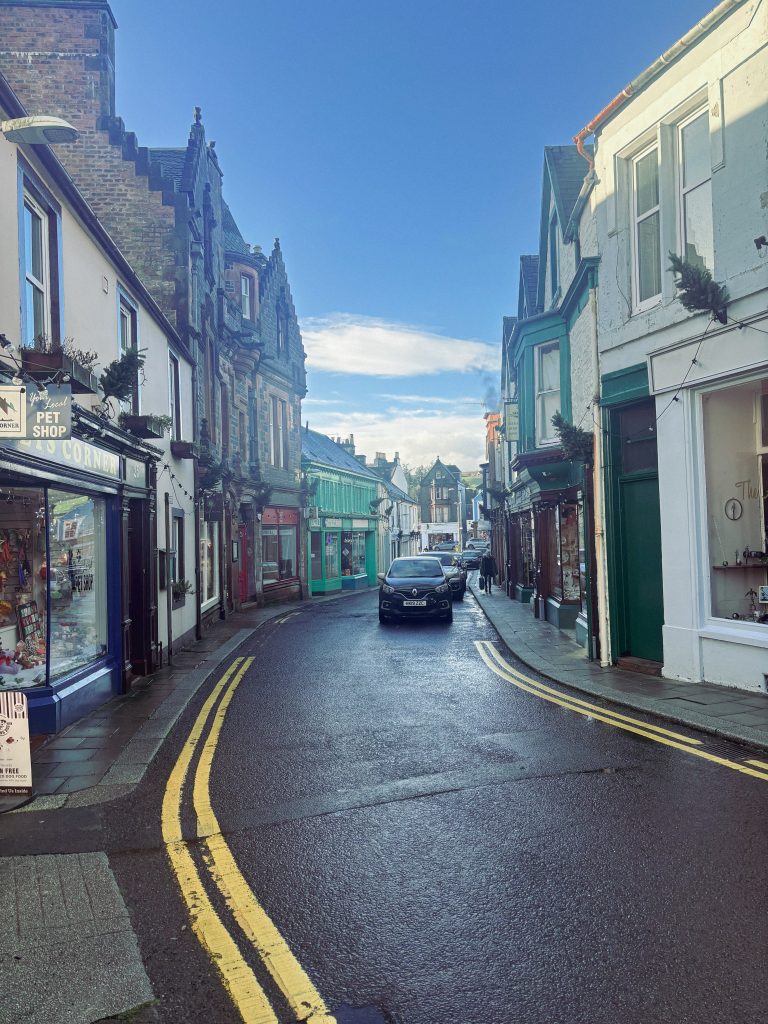
Rarely in need of a reason to visit the home of the brave, a month later, I found myself in Moffat, a small town in Dumfries & Galloway.
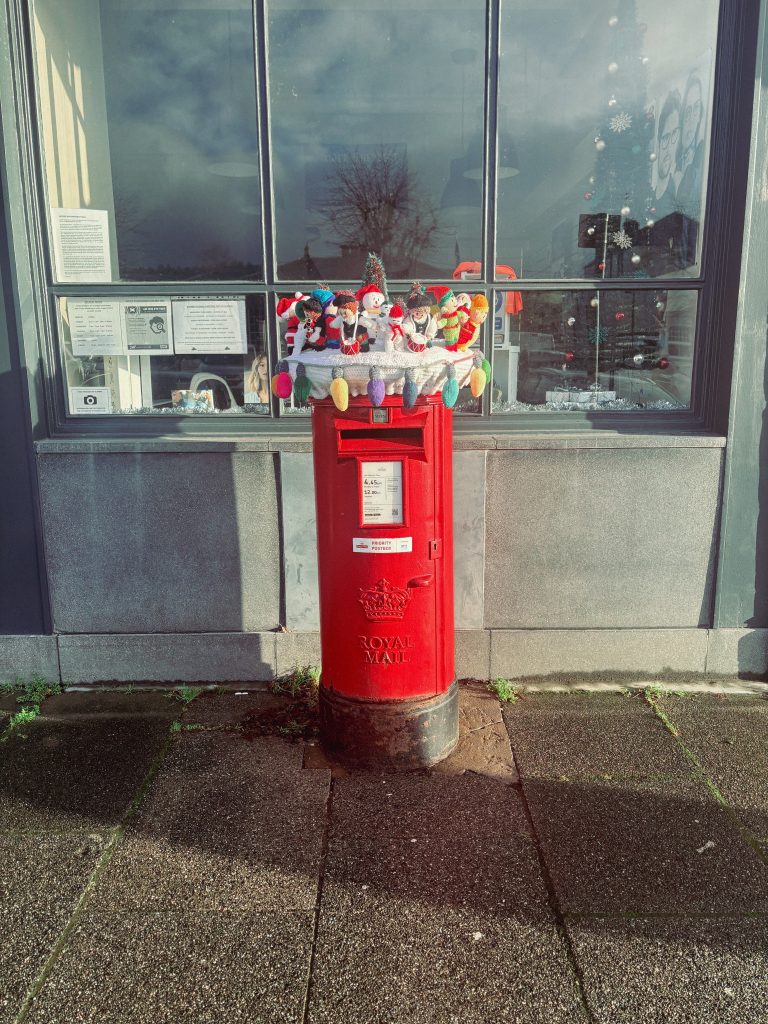
Arriving in Moffat: Europe’s first dark sky town
Whether it’s my genes calling me home; my inner introvert sighing with relief; or long-dead dreams of witches and wizards stirring once again, something about travelling from England to Scotland felt instantly calming on that mild December evening.
The undulating hills that appear like a fortress when you cross the border are – in my mind – the perfect paradox. Comforting and haunting; cosy and spooky: inviting, and at the same time, a little threatening – especially if you’re half English.
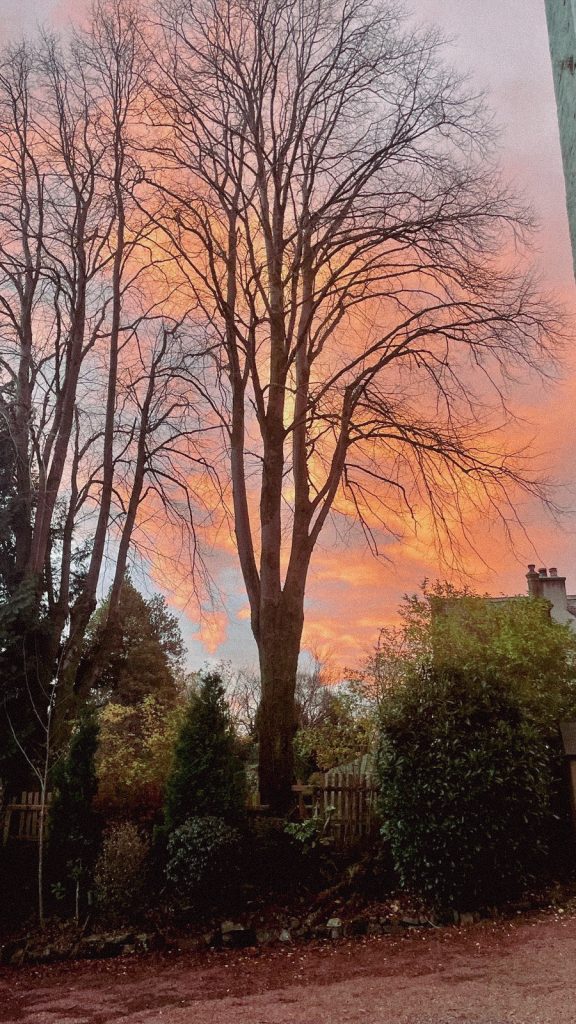
Arriving in Moffat around 4pm, I was instantly engulfed by the velvety Scottish night. It’s especially dark here, and there’s a reason for that.
Moffat is one of Europe’s first ‘dark sky’ towns. That means the community was so keen to see the stars, that they asked the council to lower the street lamps to reduce light pollution.
They also built an observatory – which is very impressive, considering some towns can’t even get their potholes filled!
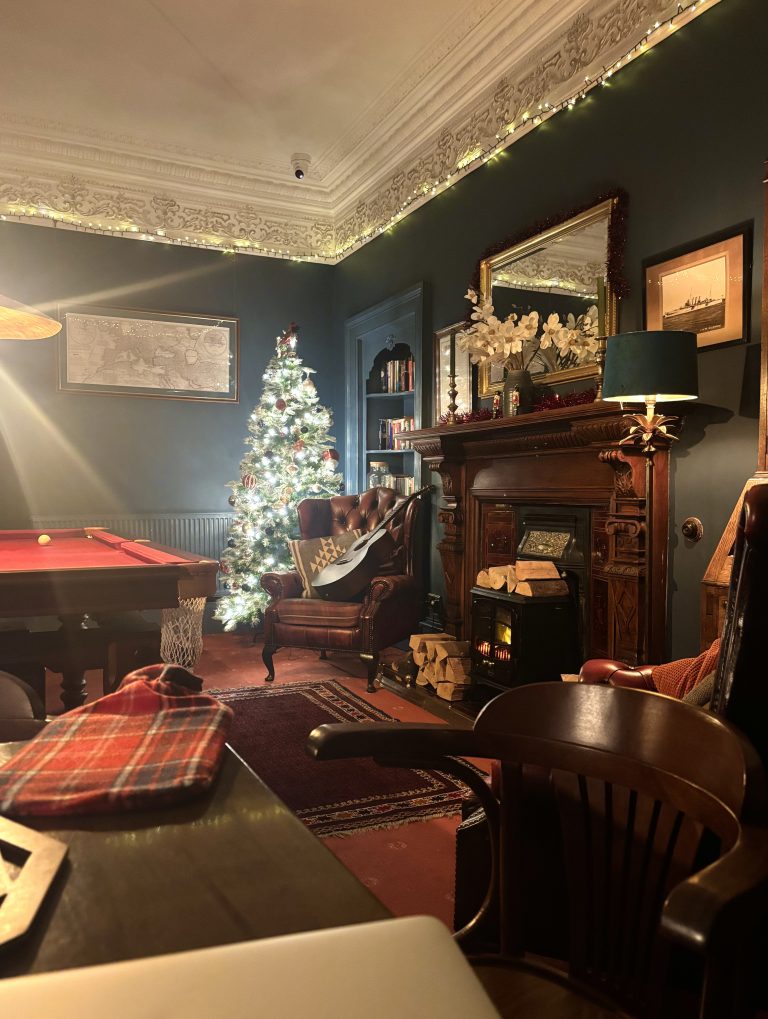
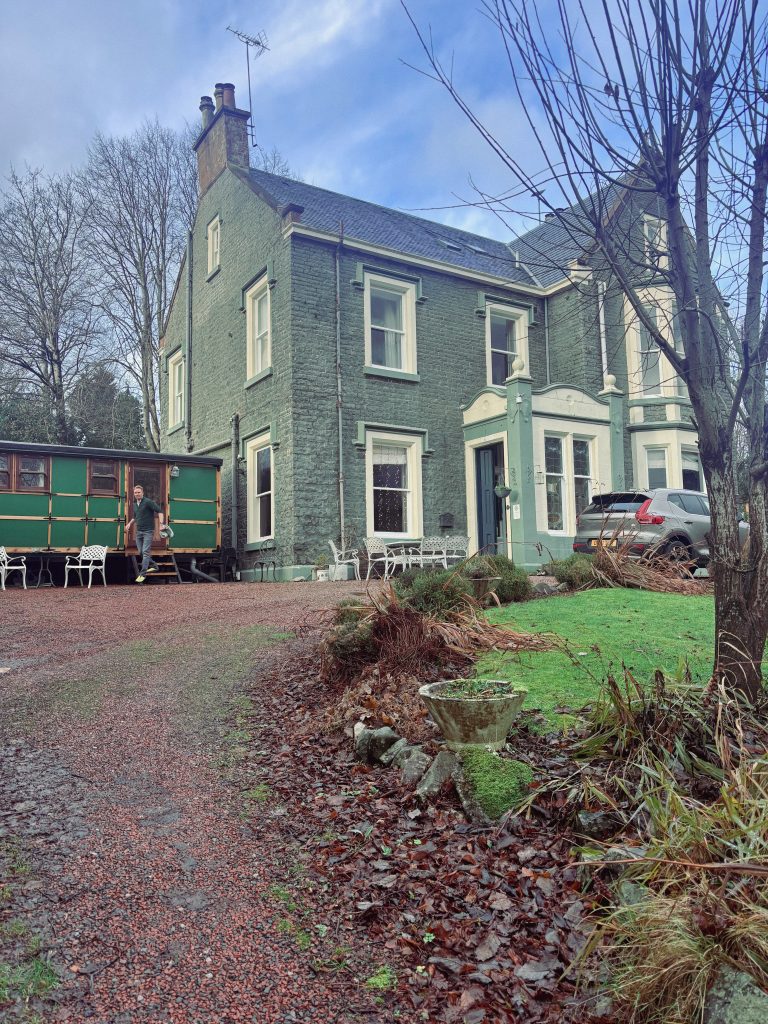
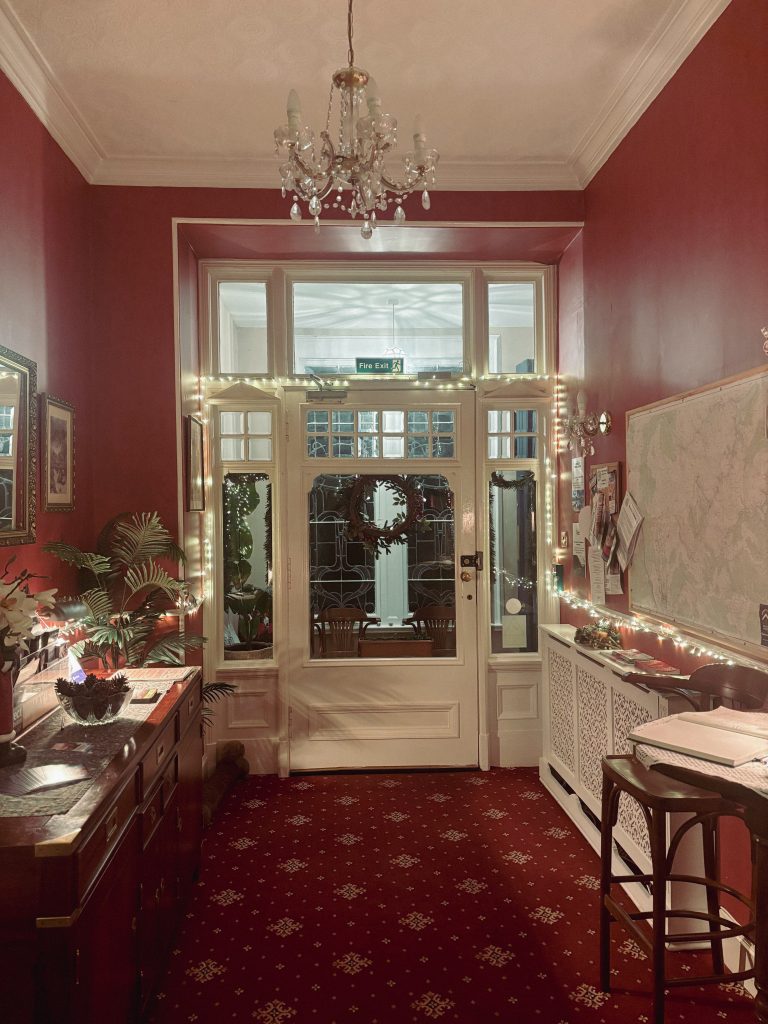
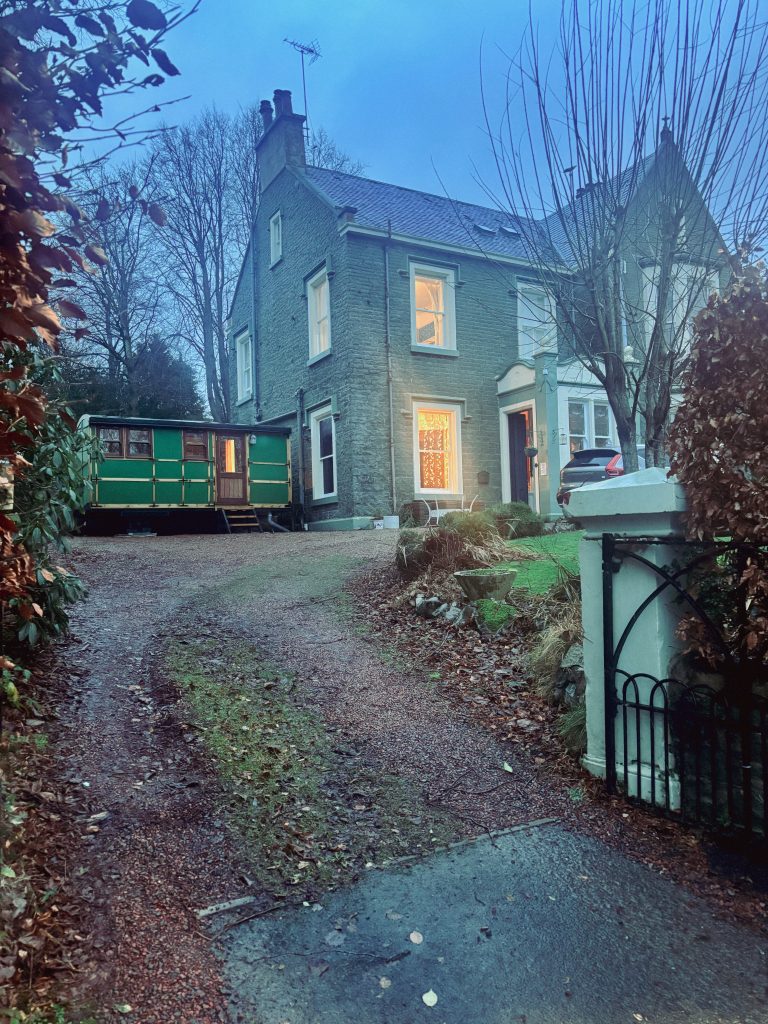
Our home for the period was Moffat Independent Hostel. Pulling up to the grey stone house, with its twinkling lights, oak panels and deep red carpets felt gorgeously festive, and immediately inspired my inner child.
Bonding by breaking bread
The organisation – English Al Fresco – hosted groups of seven to eight people at the hostel for four-day stretches, during which they got to see different parts of the local area.
On arrival, I was introduced to another volunteer, Lora, whom I shared a very comfortable room with for two weeks.
We were there to help ensure the guests had a good time and could practise their English in a safe space. Not a hard job at all really!
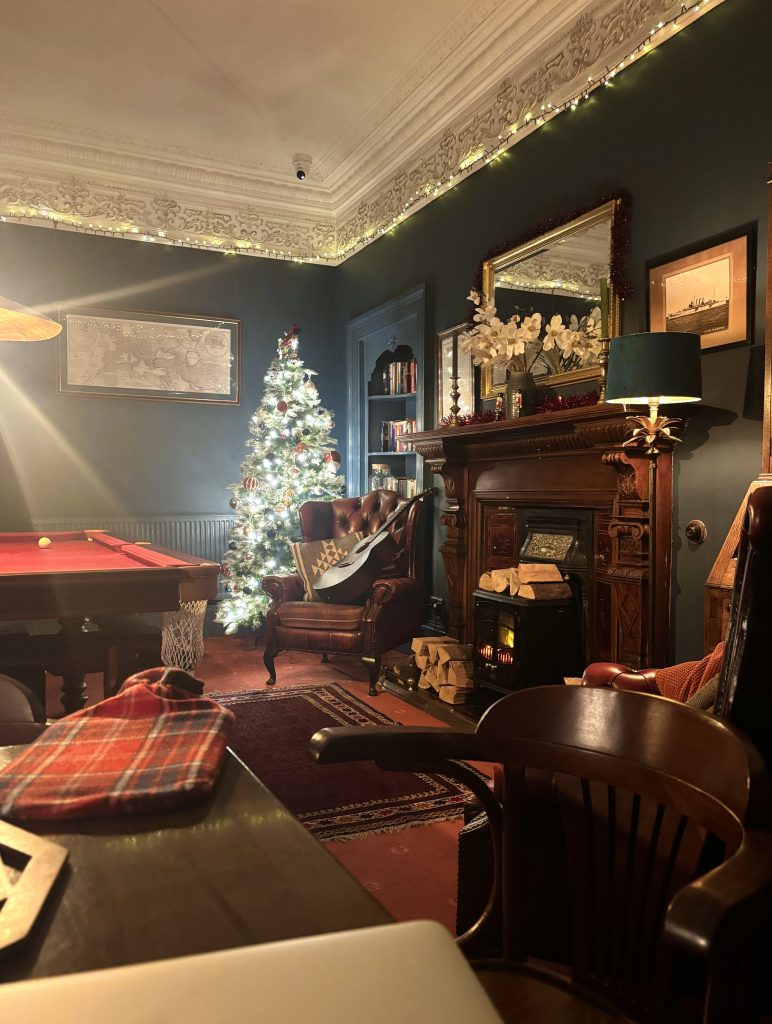
We spent a wonderful two weeks with our guests; cooing at Highland cows, clambering around castle ruins, playing pool by the fire and drinking drams at the pub.
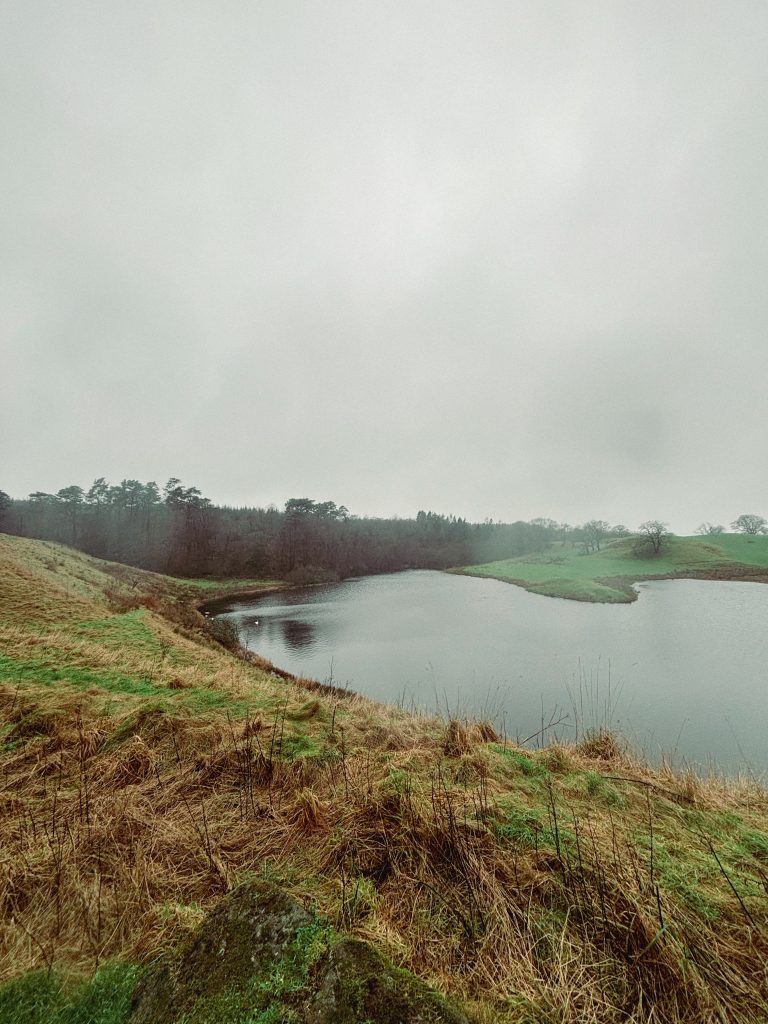
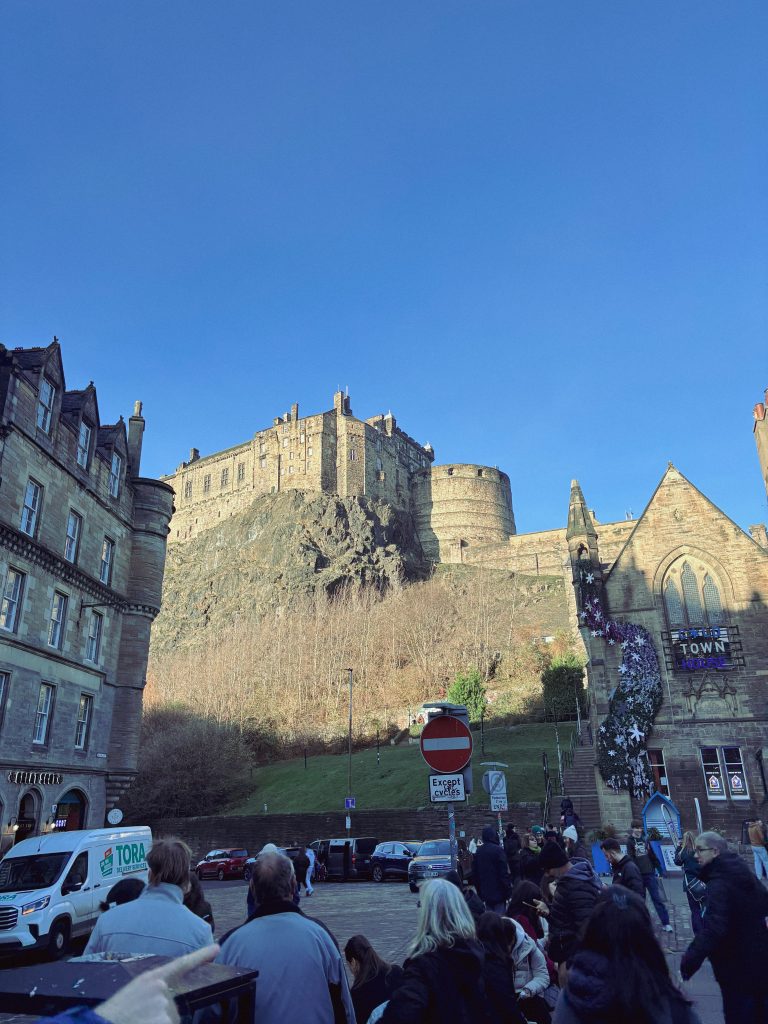
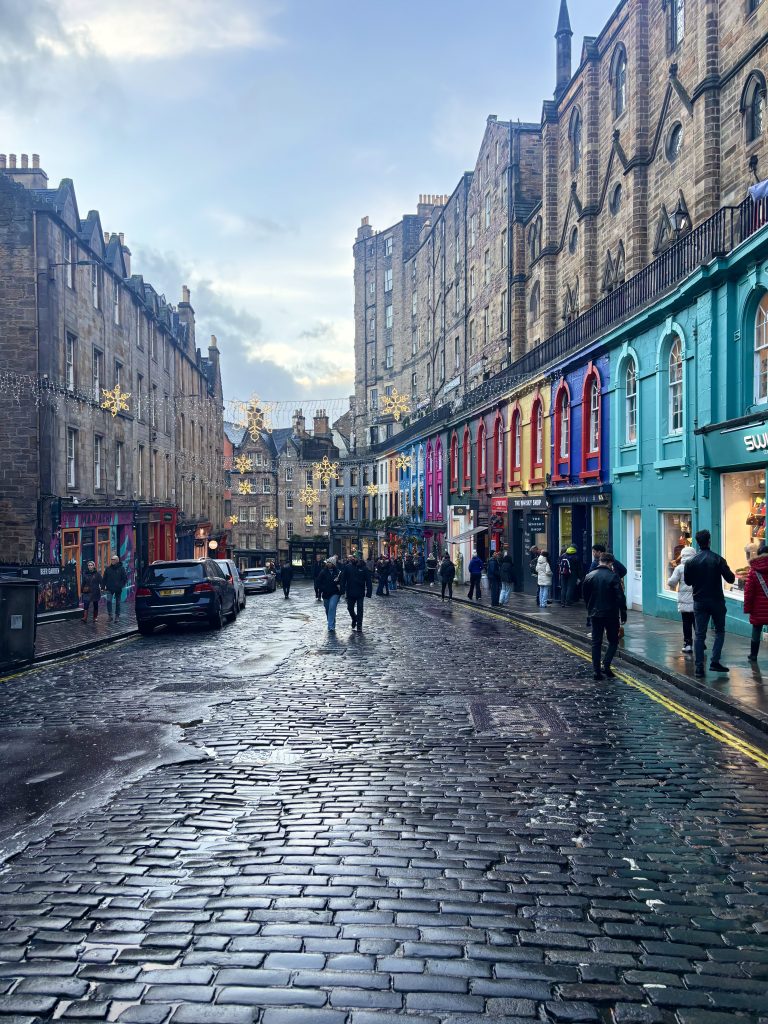
Every morning and evening, we ate breakfast and dinner together in the drawing room. Think eggs; coffee; cheese and hot cross buns – a feast that Hogwarts would be proud of.
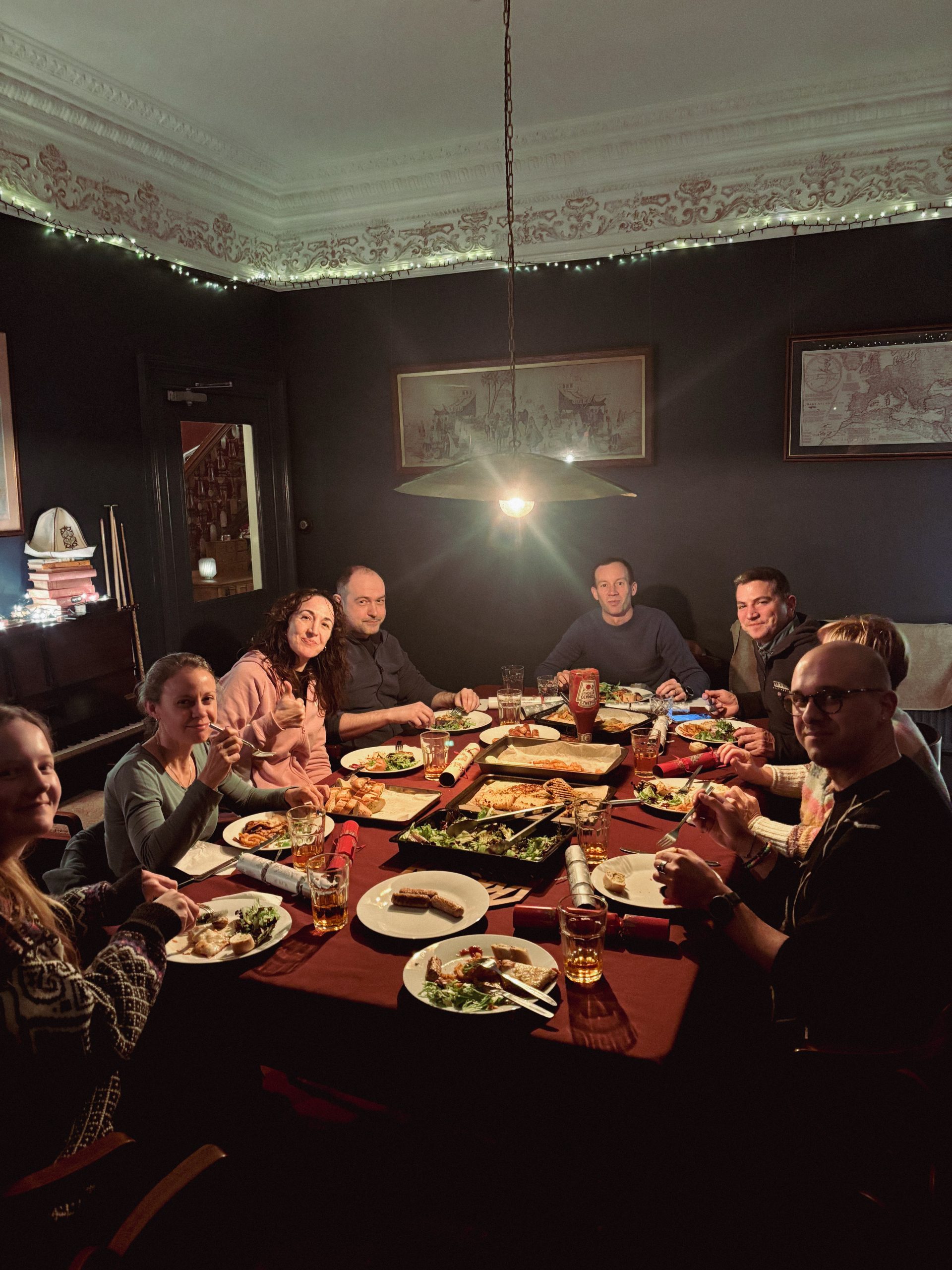
Breaking bread every day became a special ritual that we all looked forward to.
Sunshine spectacular at Grey Mare’s Tail
We also had unusually mild weather, which meant we could explore the stunning scenery around us.
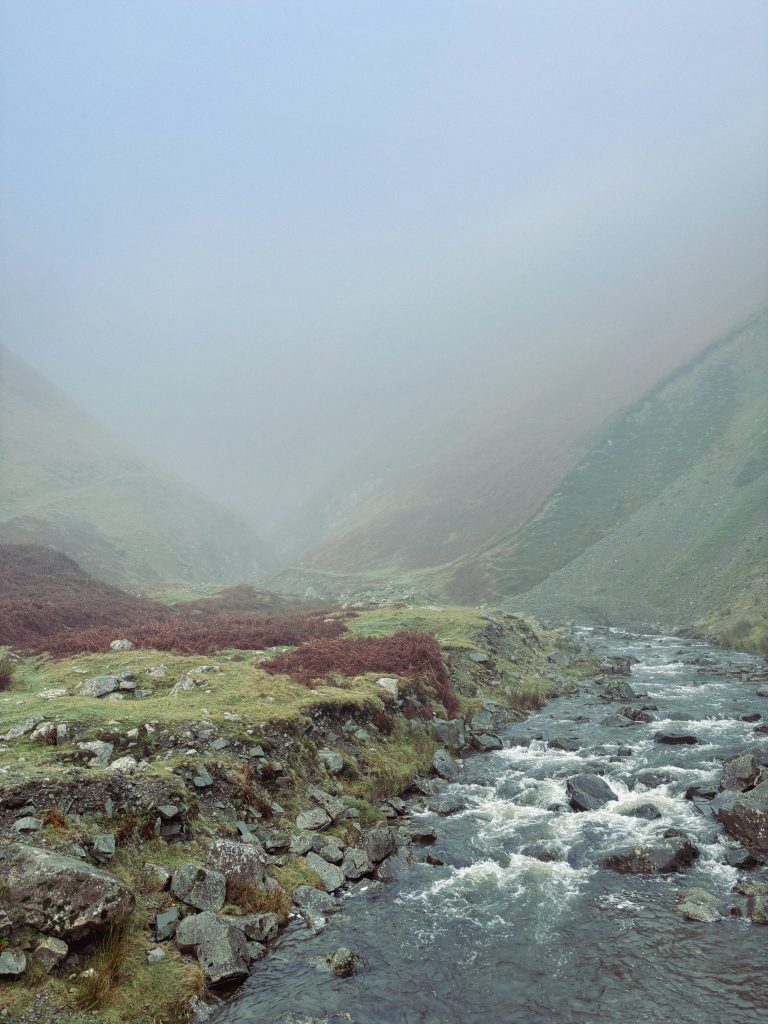
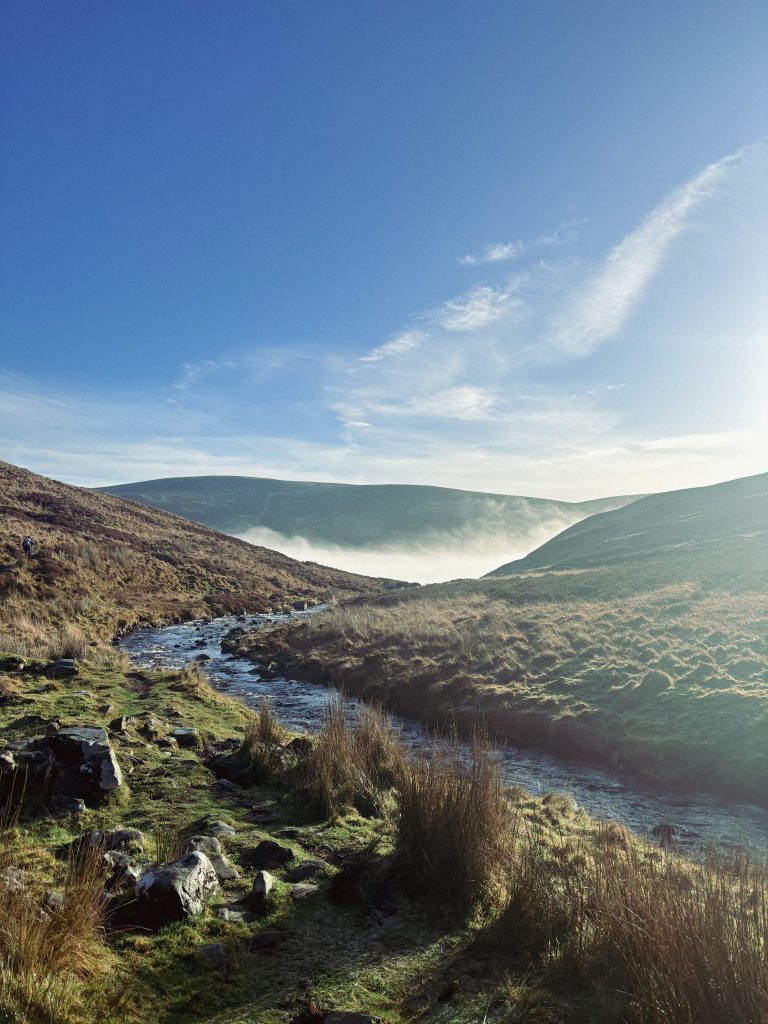
One morning, we took a drive to a nearby spot – Grey Mare’s Tail – for a hike.
It was drizzly, but our host promised that once we got halfway up, we’d find a surprise at the top.
Up we went on a steep incline. Around me, gasps and curses in German, Italian and Spanish mingled with the lowland fog.
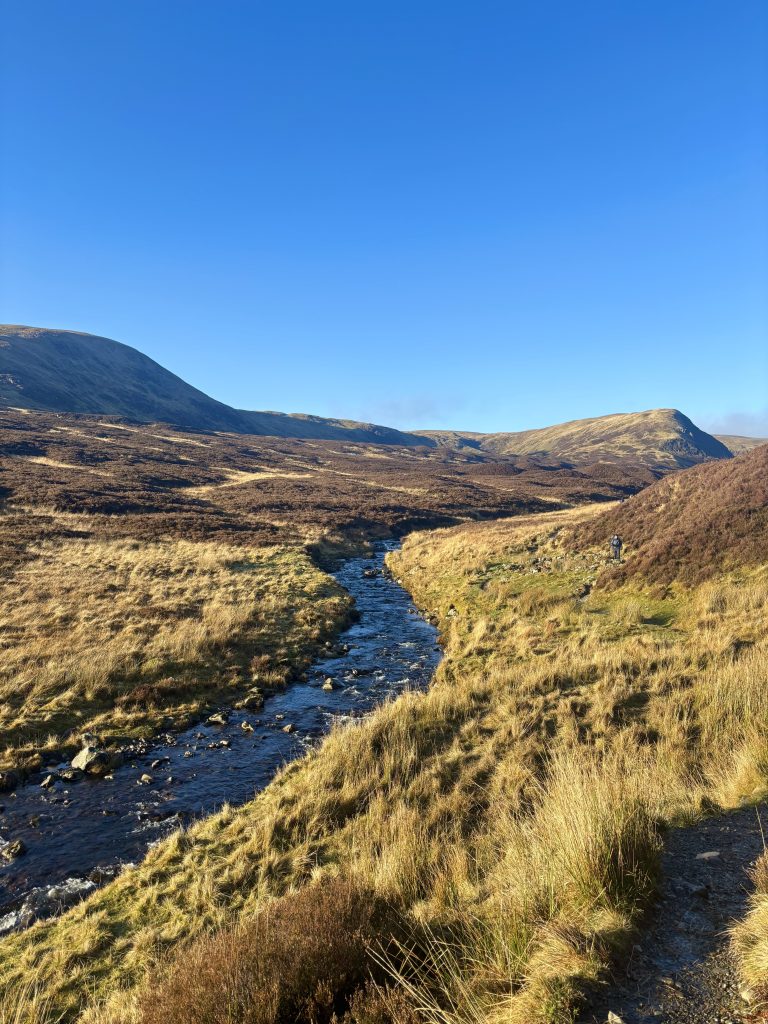
When we eventually reached the top, the trail flattened out. At the same time, the clouds dispersed and the heath was plunged into bright sunshine.
The rest of the walk was a bucolic mix of browns, greens and caramels – like a rugged, tartan carpet, sitting beneath a milky blue sky.
Before arriving at the loch for lunch, we passed a guy in shorts who’d been camping at the top. In December! If you need a reminder of how resilient the Scots are, that is certainly it.
Compèring a major international event
On another evening, we headed down to the local pizza place, Kayantics, where we found a group of lads of similar age circled around the outdoor oven.
Beers were exchanged, and soon they were inviting us to an event taking place in Moffat that week; the international yodelling Olympics, no less.
“People from Sweden are attending.”
It sounded very significant indeed, and a little later, Dutch courage took hold and I found myself agreeing to compère the competition.
Turns out, it wasn’t as serious as it sounded, but the whole town did attend for a big Christmas yod-along – some adorned with lederhosen.
Being welcomed into the community like that was completely unexpected, and made for one of the most memorable evenings of the trip.
Bringing my year to a calm close
I loved walking the silent, dark streets of this kind lowland town in the late afternoon, and looking up at the glimmering sky.
It wasn’t stargazing season, but when I later returned in April to look after the hostel as caretaker, volunteers at the observatory kindly guided me through a three-hour tour of the sky, where I was able to see Jupiter and its moons up close through the telescope.
After each day’s adventure, we took comfort in returning to the sparkling windows, and impenetrable stone walls of Moffat Independent Hostel for a hot chocolate (or something stronger) and a good night’s sleep.
Volunteering with English Al Fresco was exactly the kind of meaningful slow travel experience I wanted, and I came away from it feeling especially grateful, fulfilled and excited to explore more of home.
But before then – a little rest. The year of 2025 had been a wonderful whirlwind, but my mind needed time to reflect, digest and reset, before I took off again.
In fact, I haven’t don’t much travelling at all since then, focusing instead on building my petsitting side hustle. But as I revisit those weeks in this blog, my feet are starting to tingle.
Serendipity at Sanloem – what a week in the Cambodian islands taught me about gratitude
“Trust me, it’s paradise.”
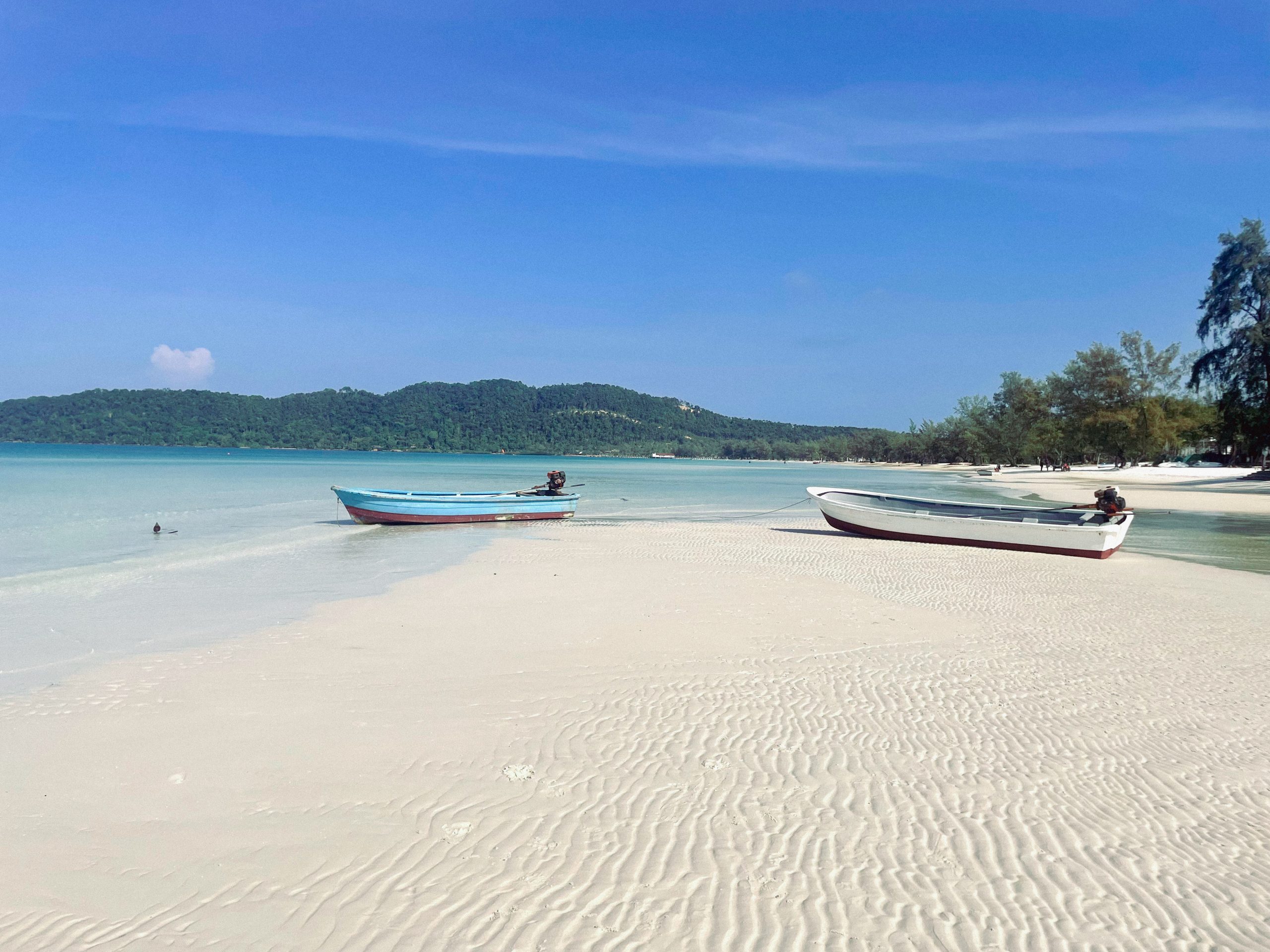
Beach bliss at Koh Rong Samloem
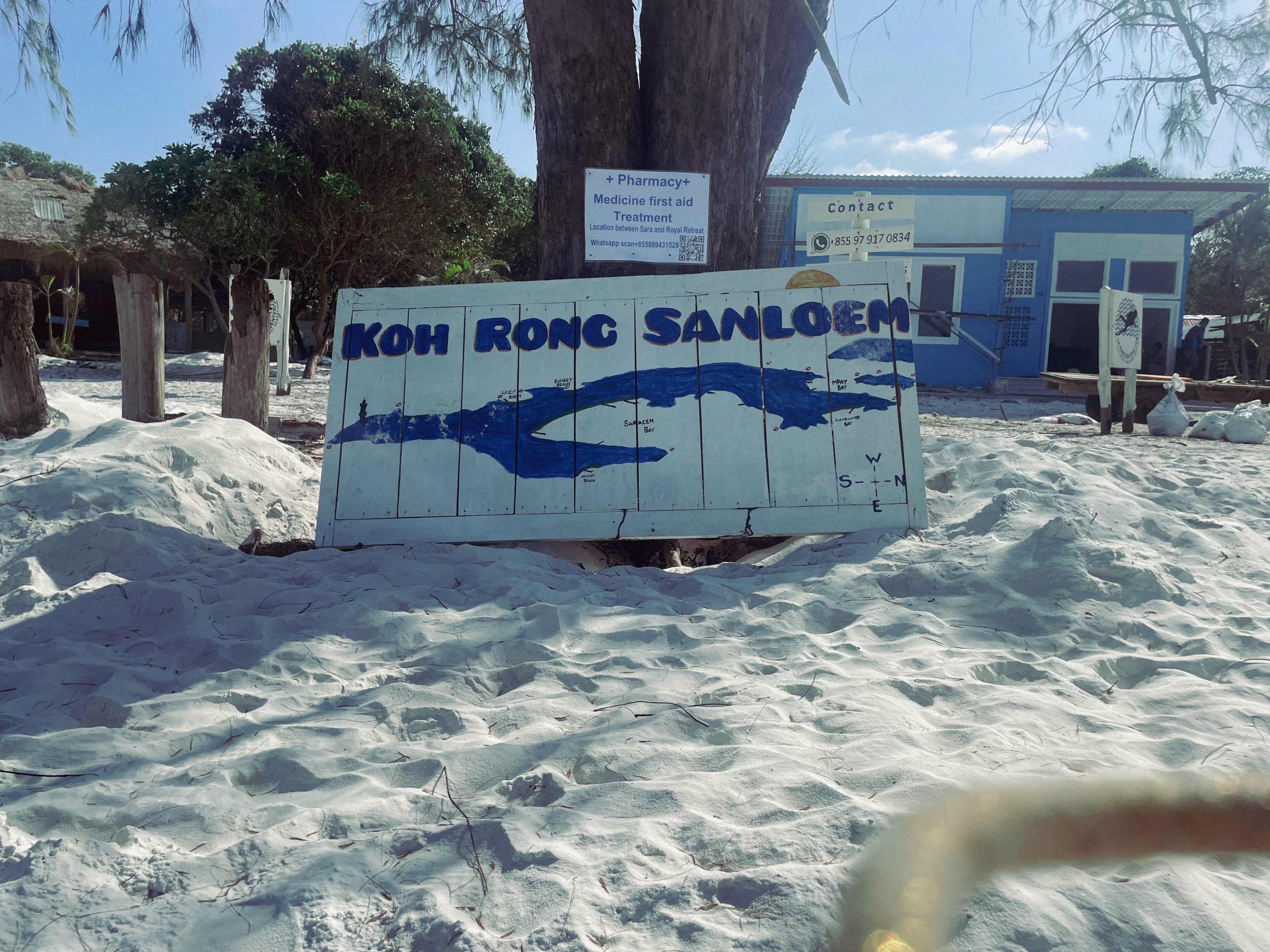
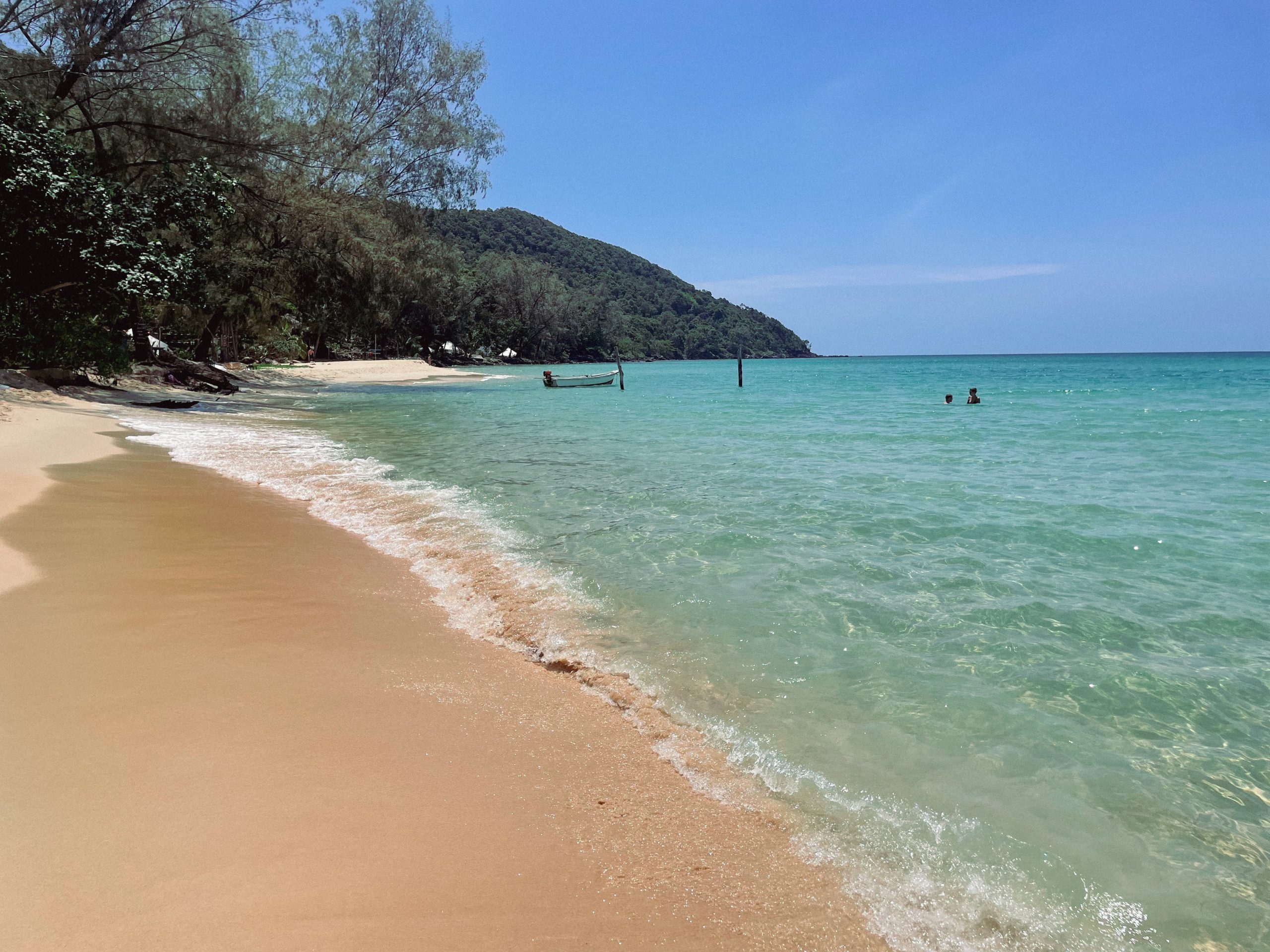
“Why have I done this?” I thought, looking up at the dirt track ahead of me. Some thirty minutes earlier, I’d left the gleaming white sands of Saracen Bay, on the Cambodian island of Koh Rong Sanloem. Now I was headed to the other side of the island for a digital detox. But I hadn’t expected the inner landscape to be so – well – natural.
With no internet connection, I was relying on a screenshot of the map to get me through the brush before dusk. Noticing how late it was, I pulled my backpack higher on my shoulders, and ploughed onward.

Crossing from Saracen Bay to Sunset Beach on the other side
Bingo. A bit further along, someone had painted ‘Sunset Beach’ on a piece of wood, pointing down to the right. I headed into a copse of trees and started clambering back down toward the coastline. Five minutes later, I arrived at a big bamboo structure. Sunboo Beach Bungalows. “This better be worth it.” I thought.
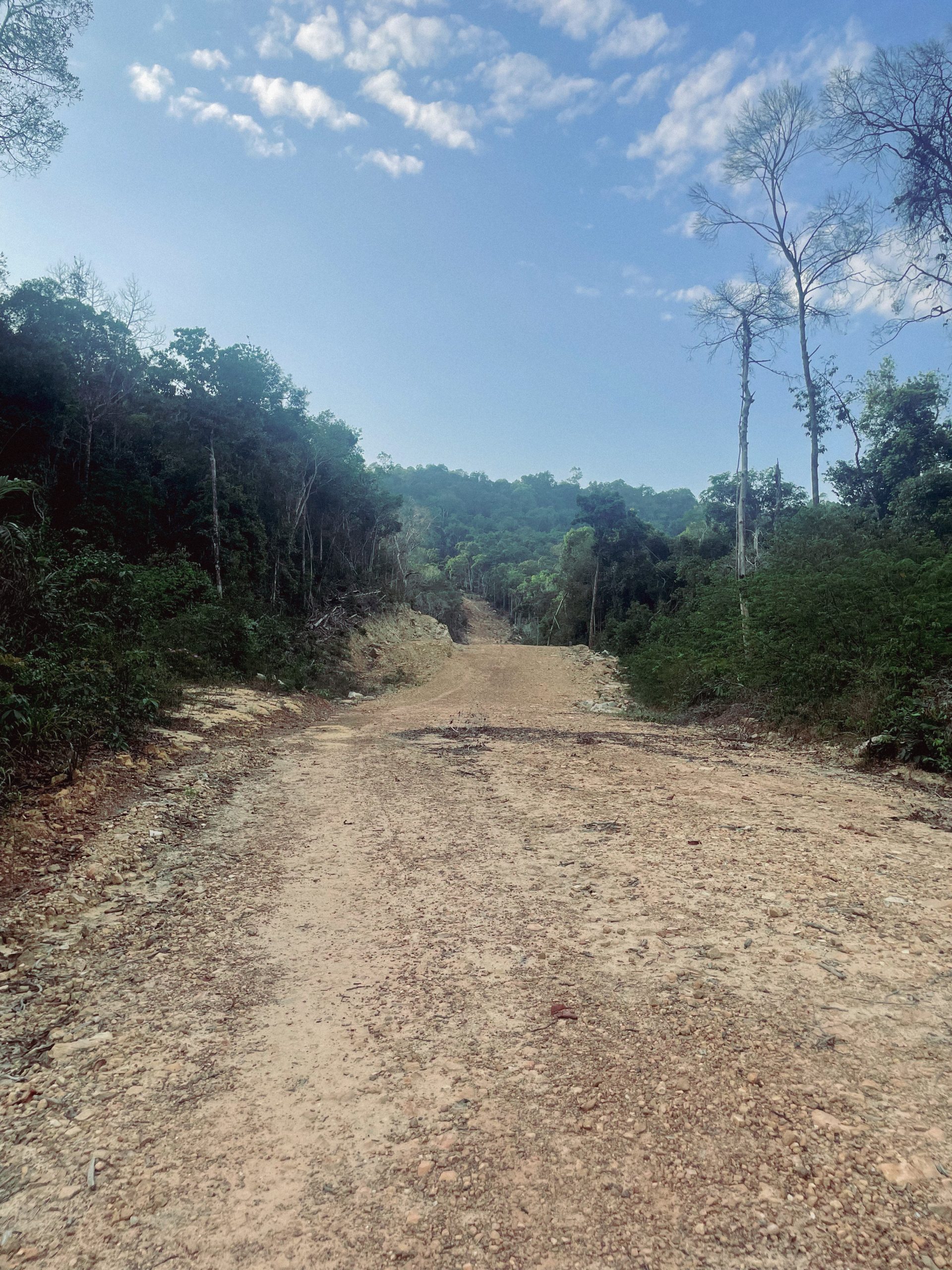
Saved by the board

“Georgina! Welcome!” A voice stopped me in my tracks. It was Paulo, the owner. “I’ve got you a lemonade.” Gasping with gratitude, I gulped down the liquid and thus began an adventure that would leave me reflecting deeply on the power of serendipity.
“A decade ago, nothing was here.” Paulo told me. Portuguese by birth, he came to Sunset Beach around this time to support a friend launching a hotel business. The result was Sunboo, a mix of tipis and bamboo dorms situated right on the beach (thank you, solar power) complete with a restaurant, kitchen, yoga platform, tiki bar and hammocks.
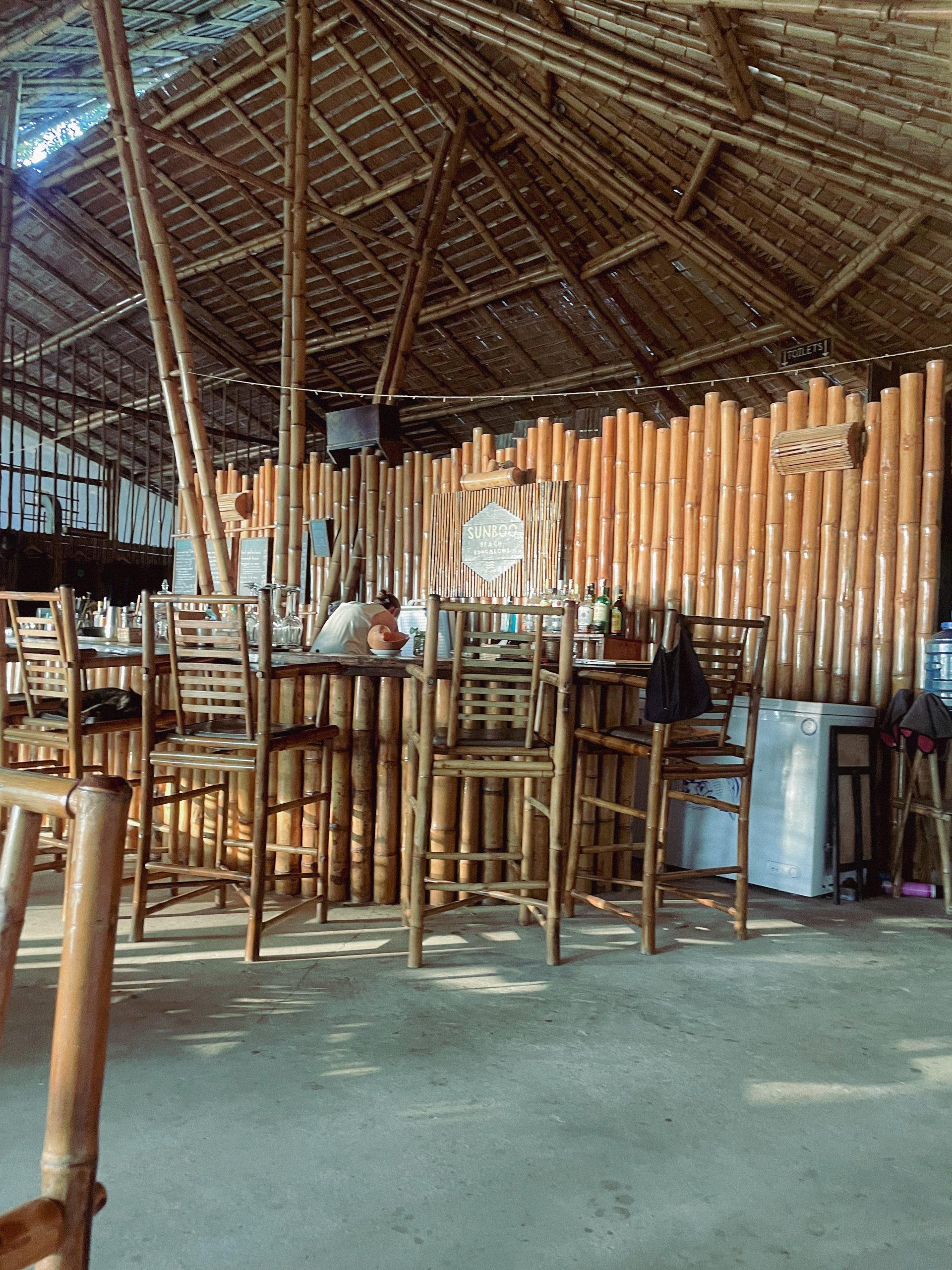
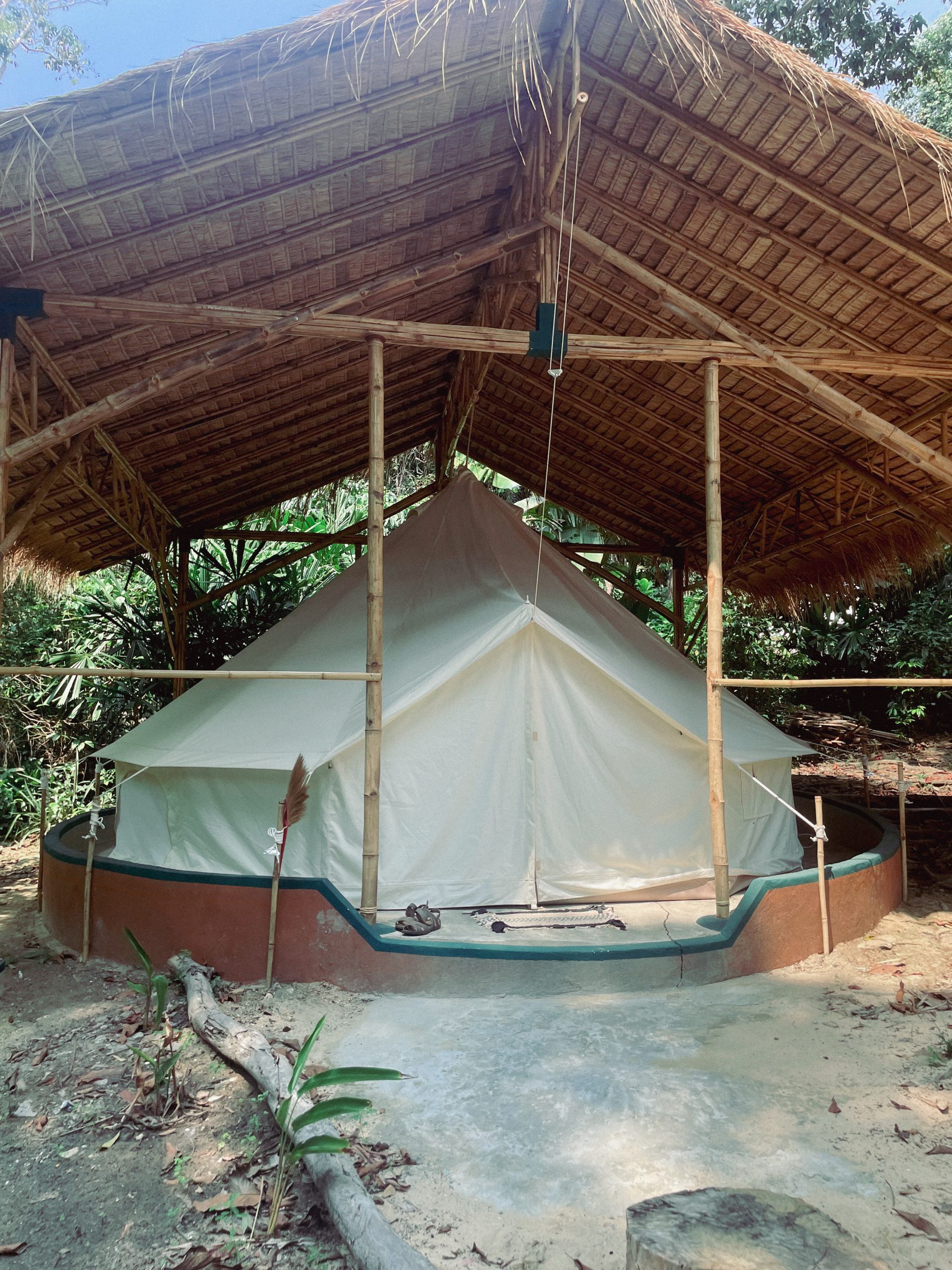
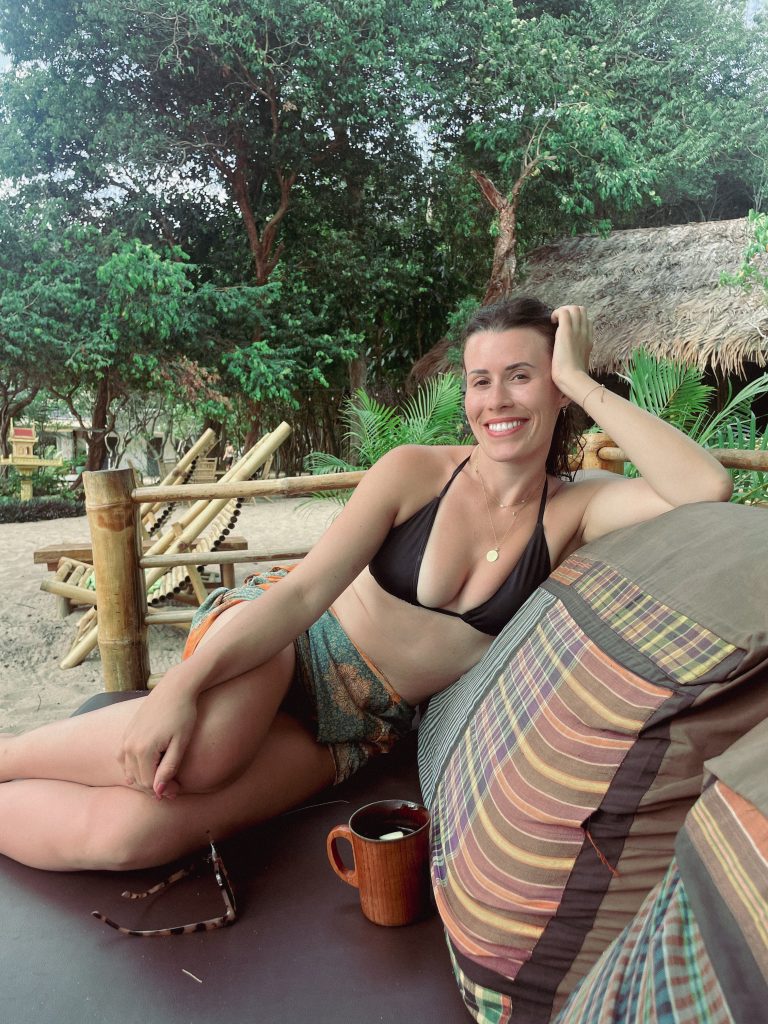
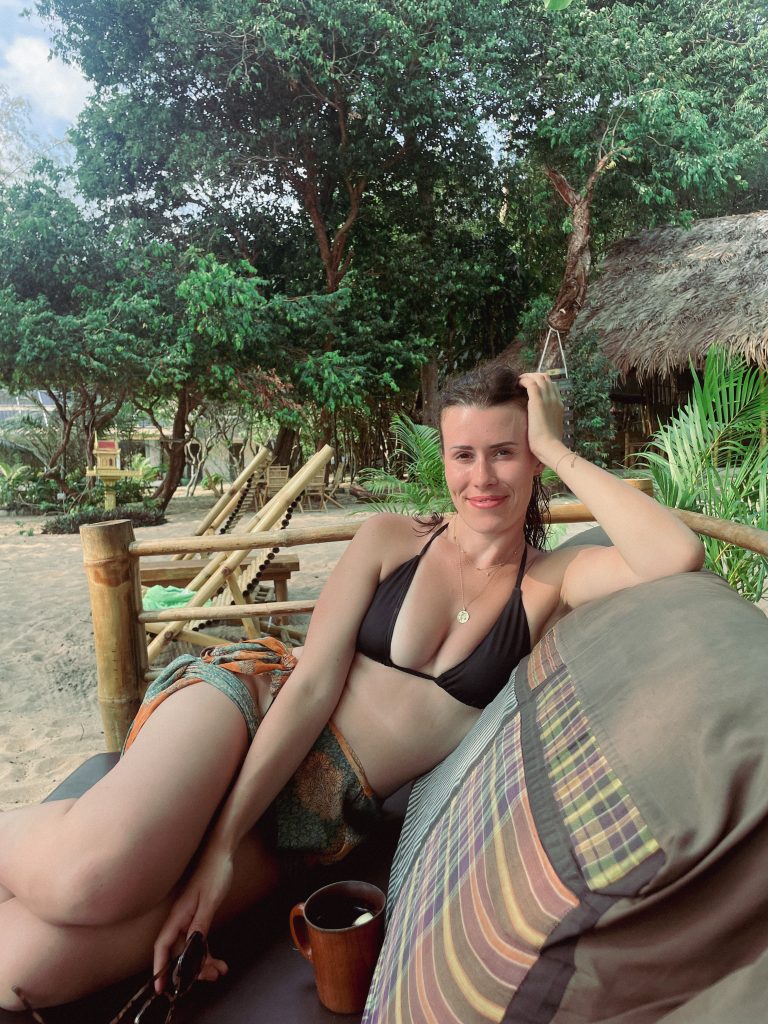
Despite feeling luxurious, there’s nothing posey about Sunboo. It has a cosy, rustic feel, led in part by its small team, who have been there since the start. It’s the kind of place where you’ll find yourself chatting to them all by name (and vice versa) and actively spending time with the staff during the week. You’re not just a faceless guest here, which felt very reassuring to me, after six weeks alone.
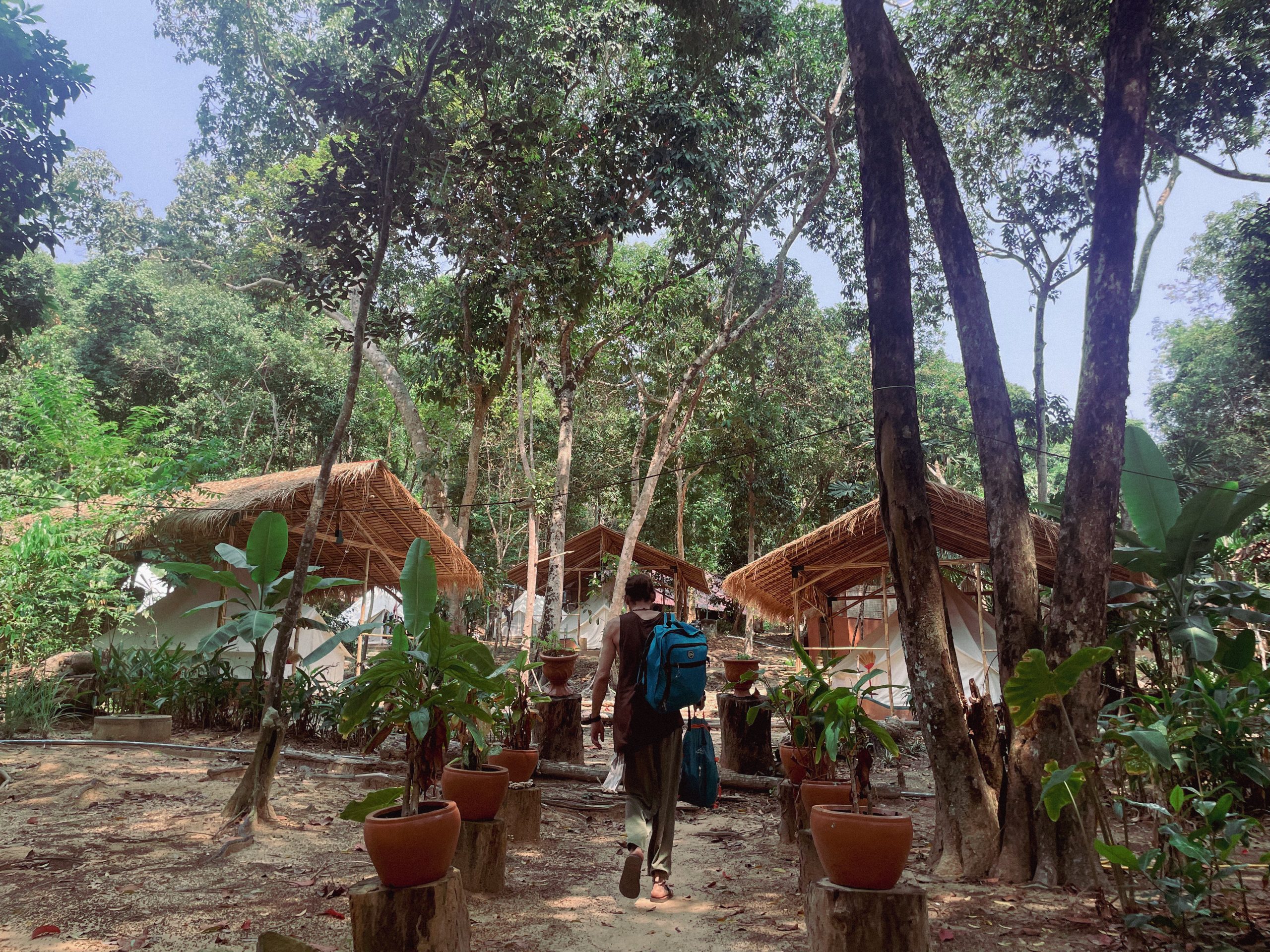
Robinson Crusoe eat your heart out
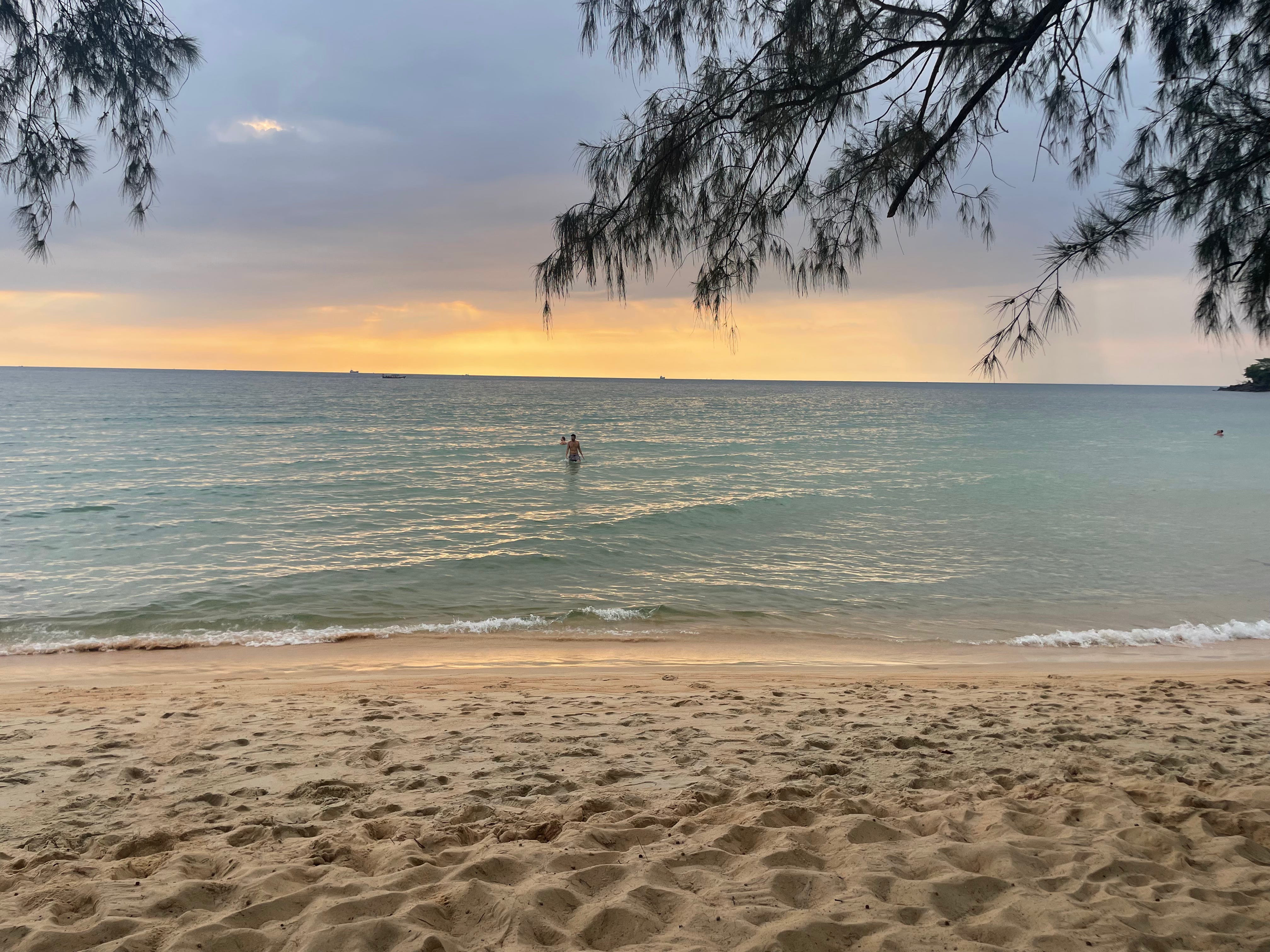
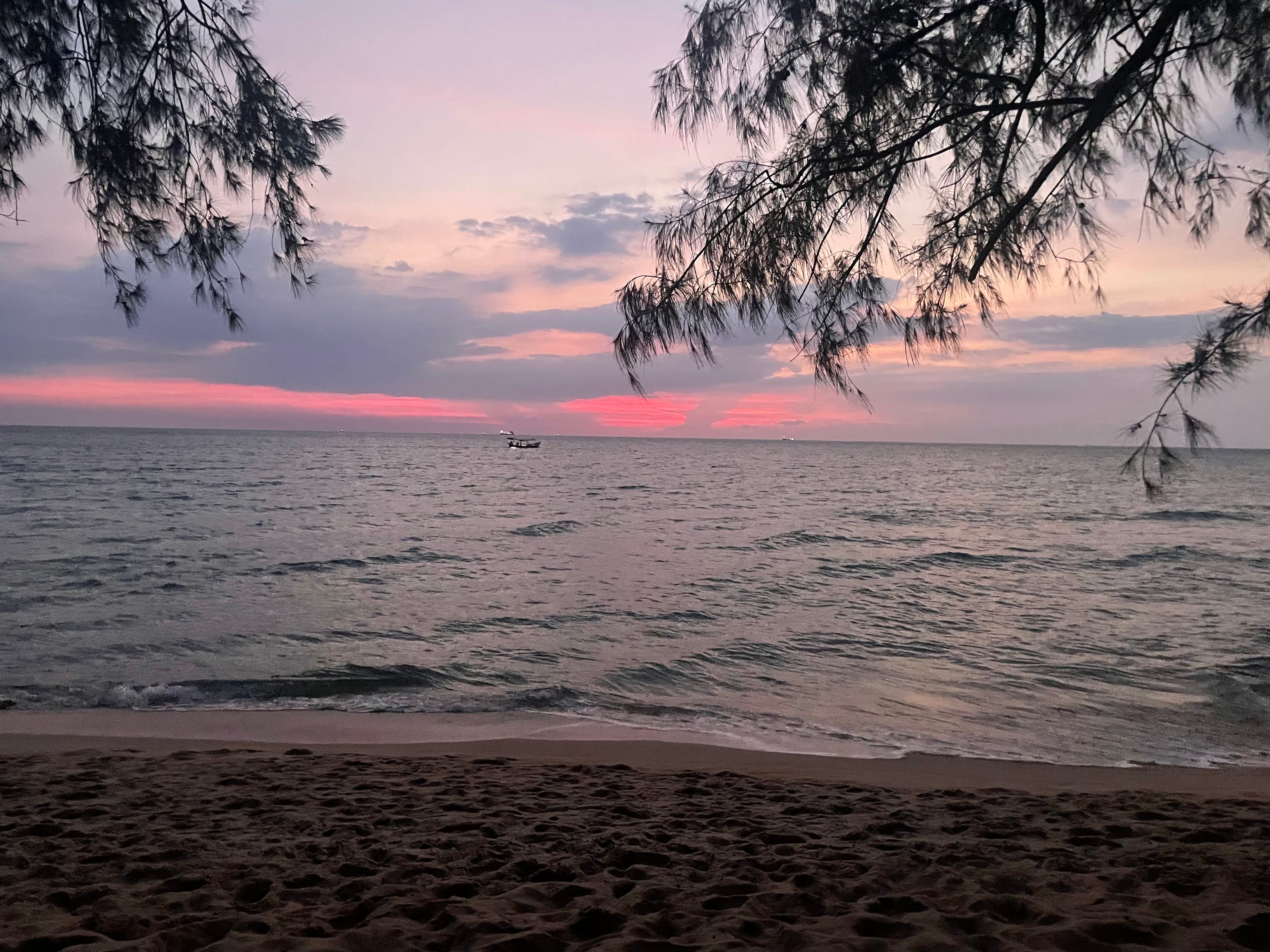
The bay itself, with its pink, green, blue and yellow hues, is otherworldly. At only 500 metres long, it feels like a safe little cocoon. Every evening, people come together on the beach to watch the sunsets, which are the best on the island (expect different colours depending on the weather).
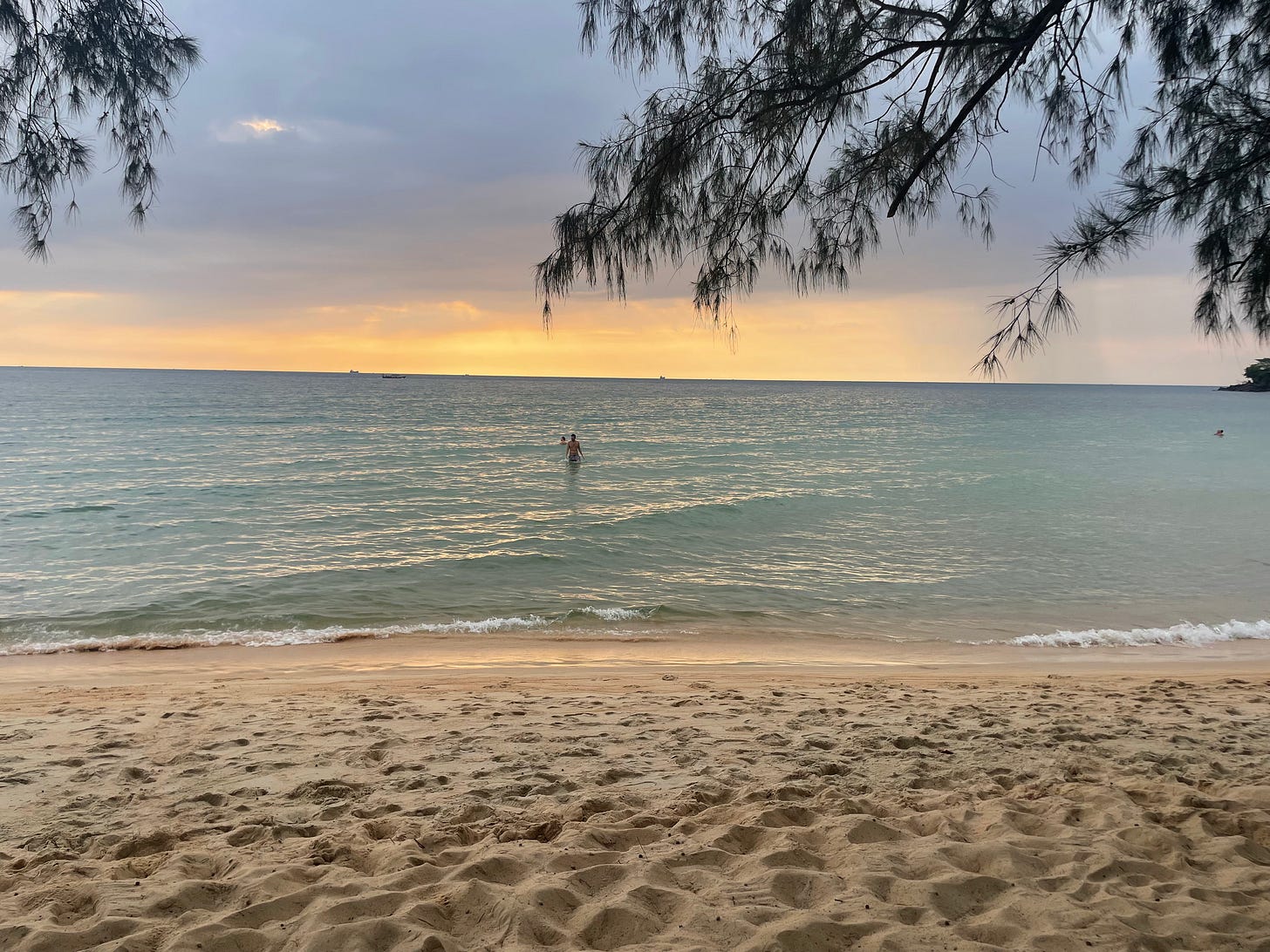
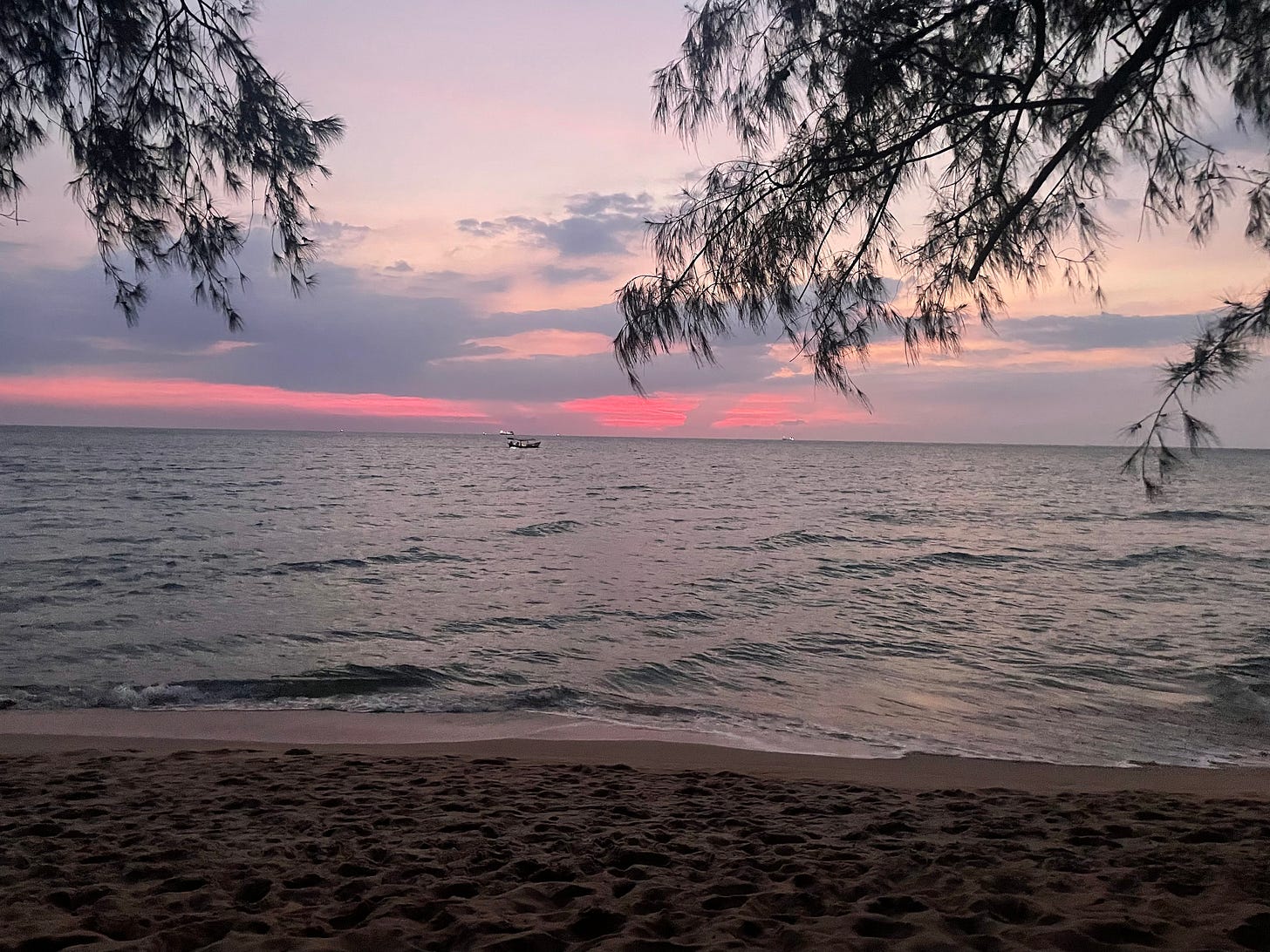
Hues of heaven – the view from Sunboo
Flanked either side of Sunboo, is a handful of other small businesses including a surf and dive shop, some small restaurants, and some other places to stay. Paulo was quick to inform me who they are, and what they do: “we help each other out.” He said.
For instance, Sunboo doesn’t provide WiFi, but we could get a little bit next door as long as we bought a coffee (fair). Later in the week we found ourselves swapping games with another place down the beach: “ah, Kamaku has it!” They said. If they couldn’t fit you into the dorm another night, they’d see who else has a free room. Everyone worked together as opposed to against each other.
I was particularly lucky the week I was there. There were only a handful of guests, and they were mostly solo like me.
One day I was watching the bright white lighting on the beach from a blacked out hut, before seeking refuge at Sunboo’s protective bamboo fortress.
As the hot, heavy rain hit the sand, Paulo, Nadia and Cori (spearheading yoga) sealed the walls with material shutters, and we settled in for a pizza from Sunboo’s incredible kitchen, and a cosy game of Catan.
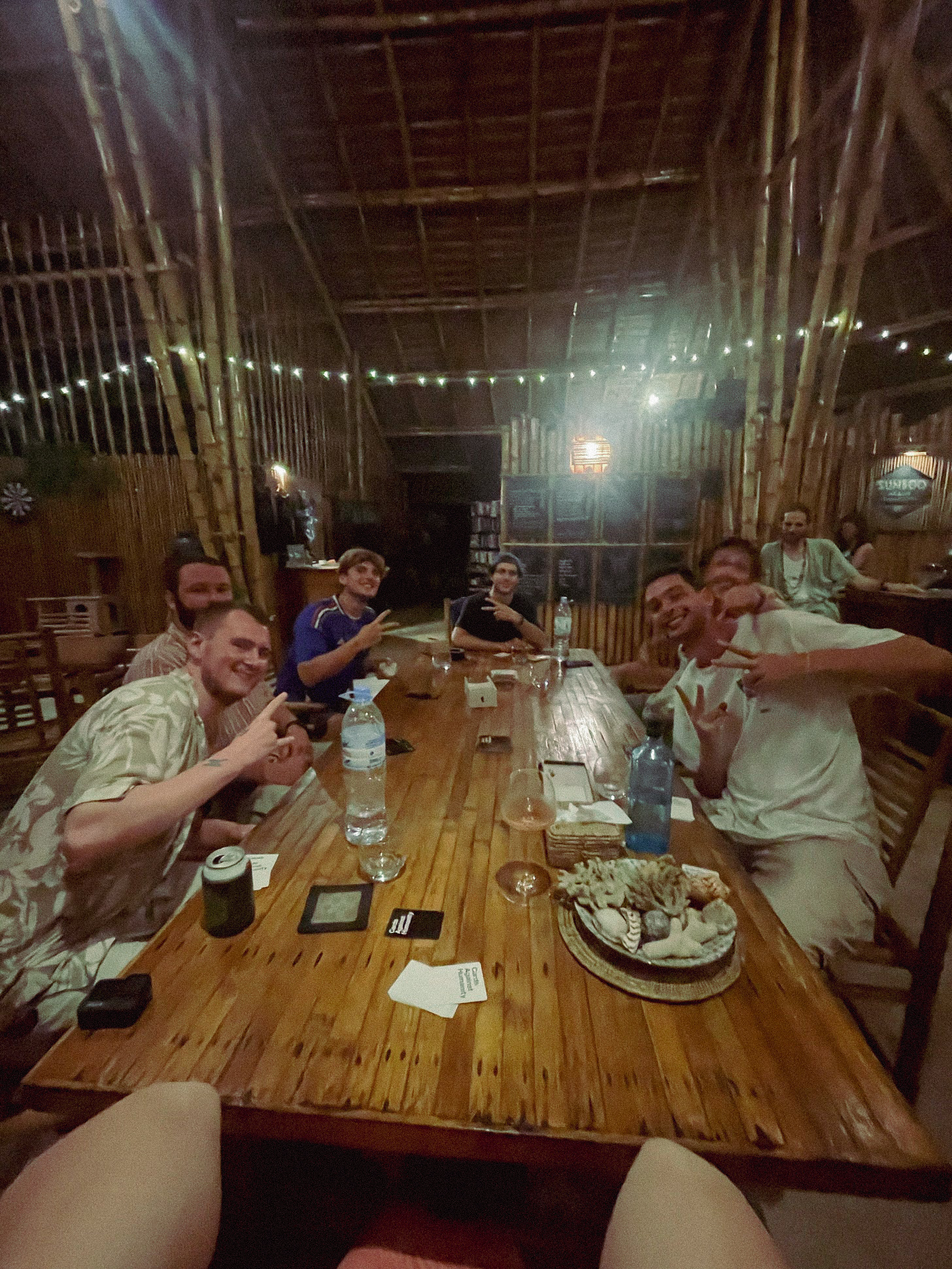
Taking shelter from the storm
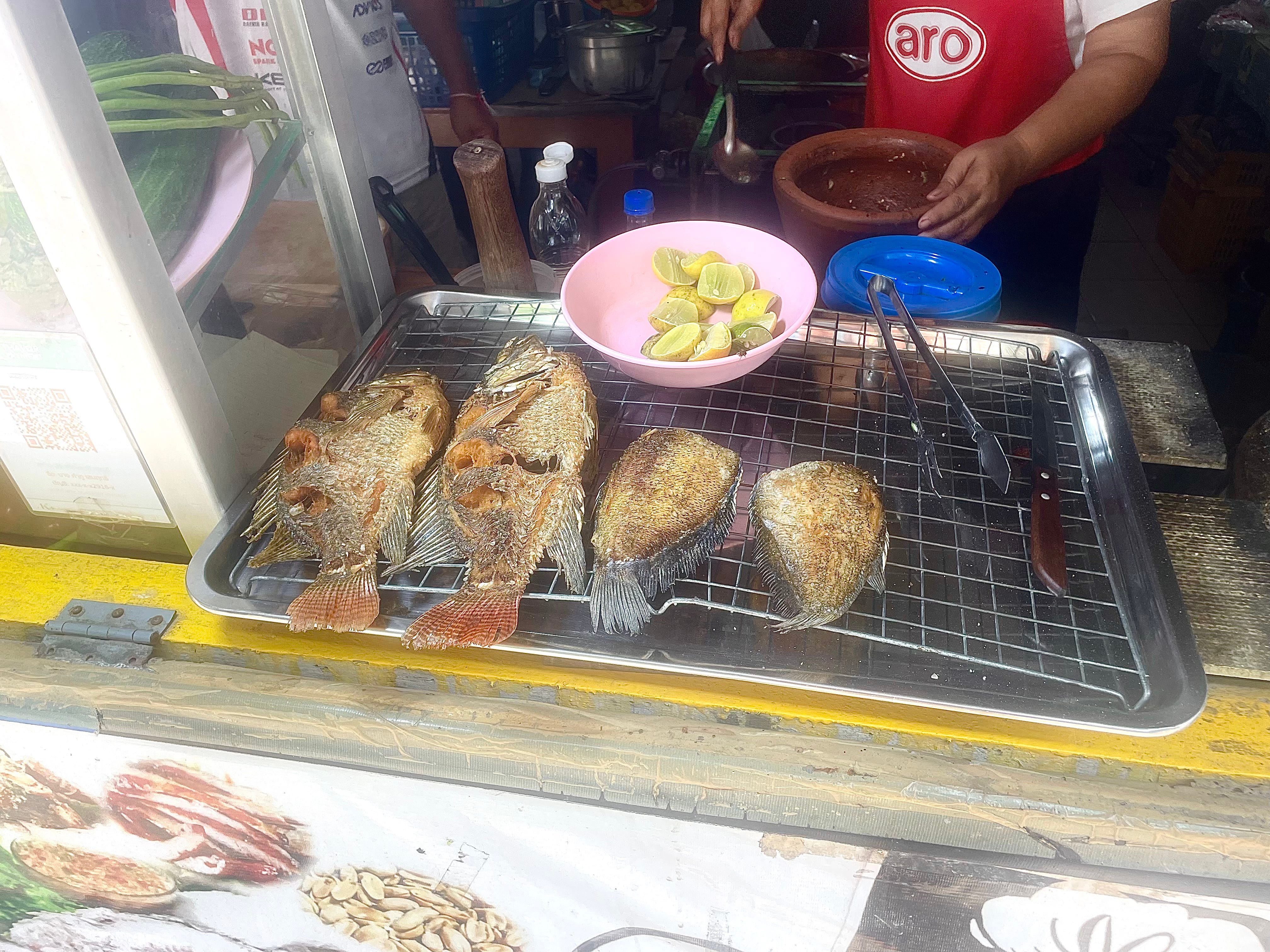
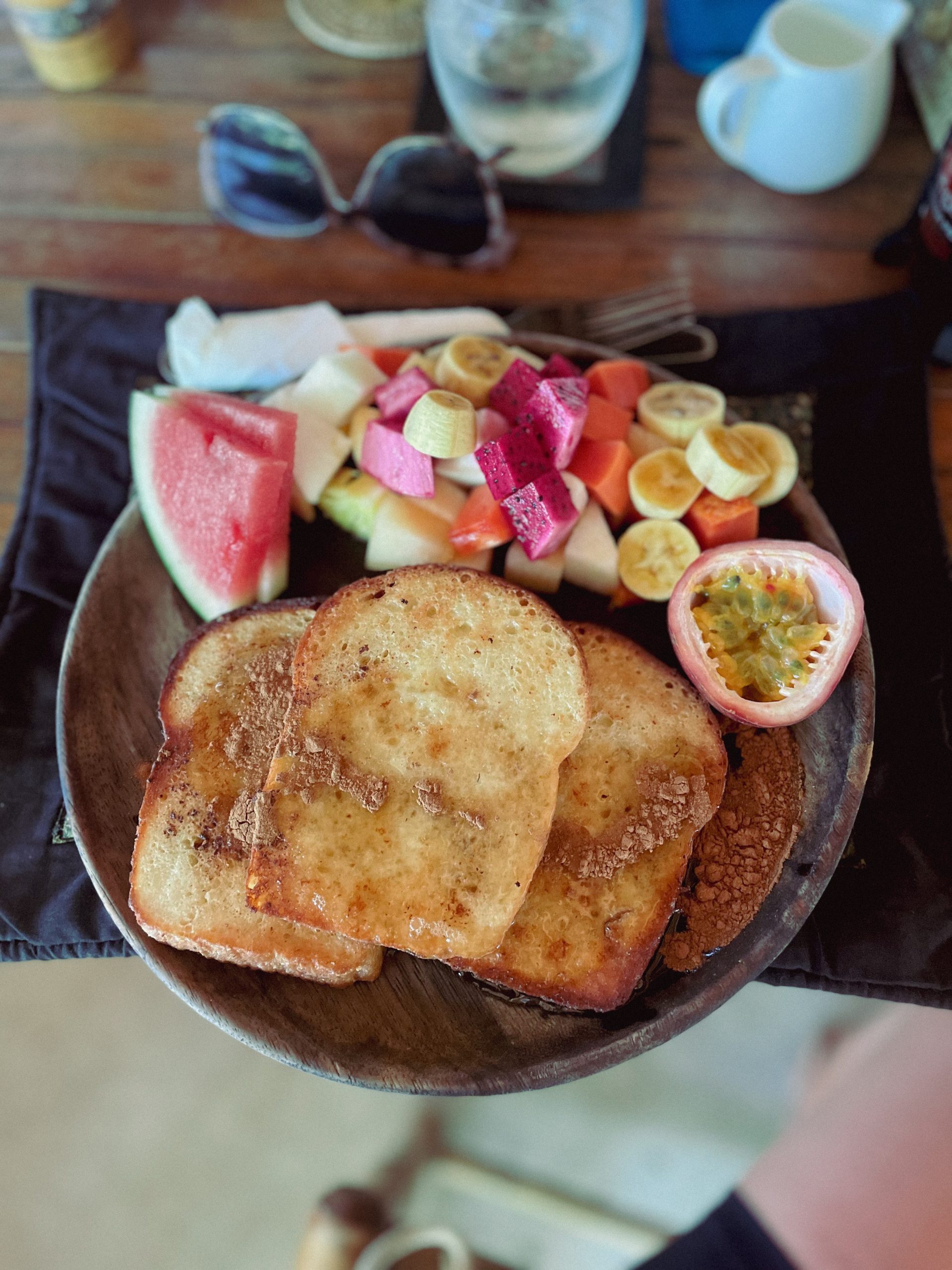
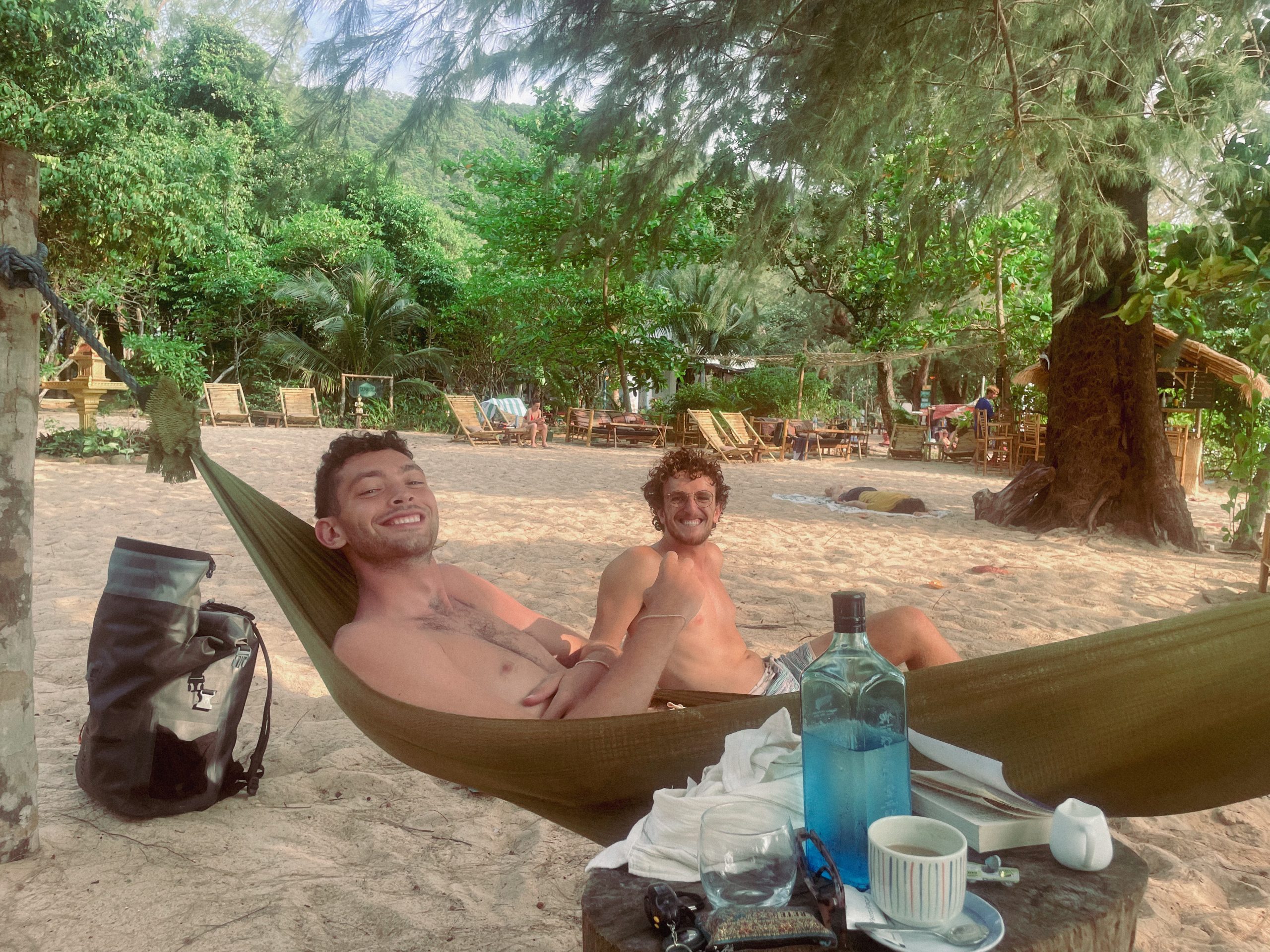
Forming a fast bond after that, we spent eight glorious days doing yoga, playing games, eating fresh fish, snorkelling, kayaking, reading and getting progressively drunk at the Tiki Bar with Hiro.
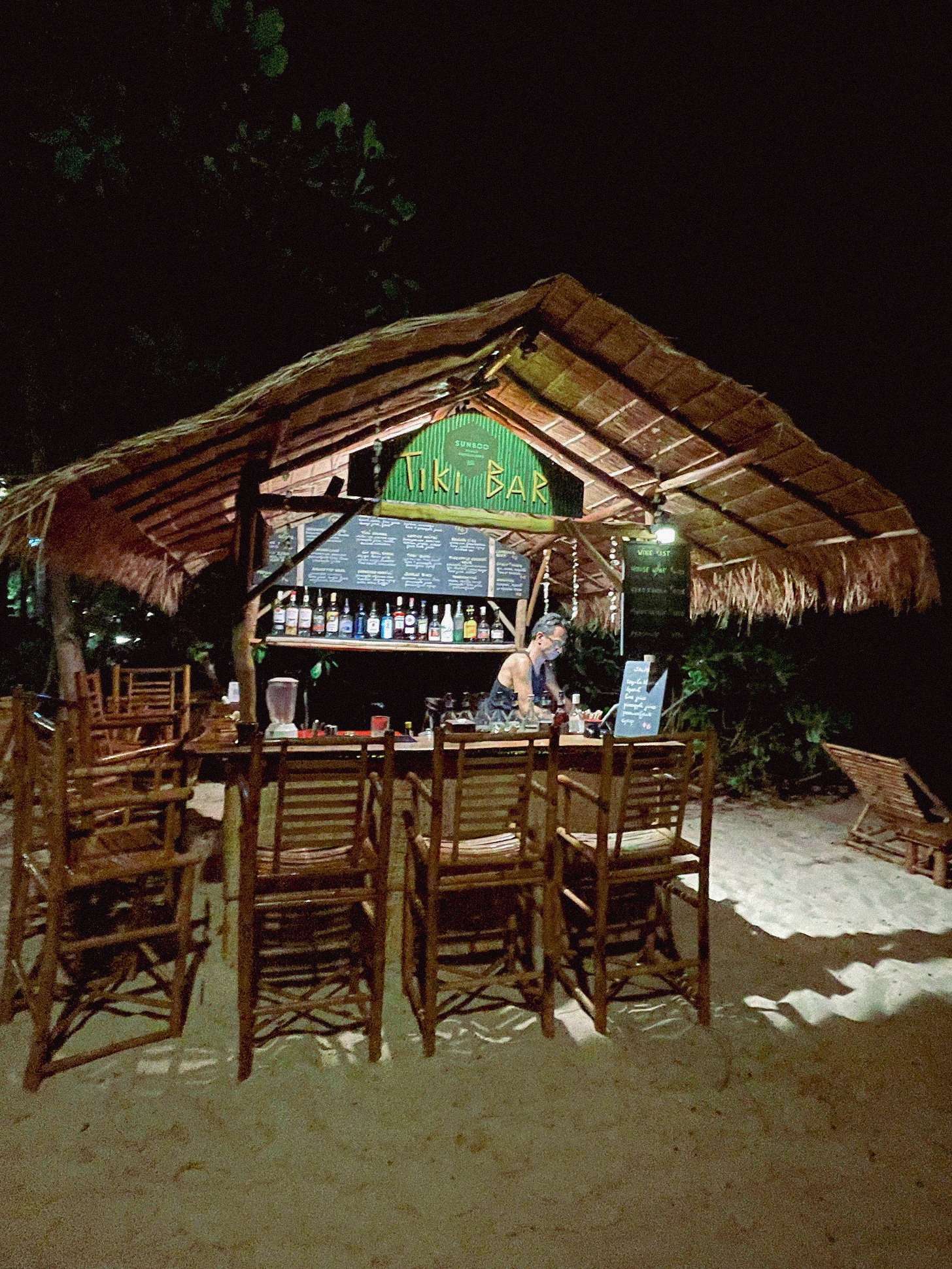
Ready for my nightcap
It was the highlight of my time in South East Asia and it all happened by chance.
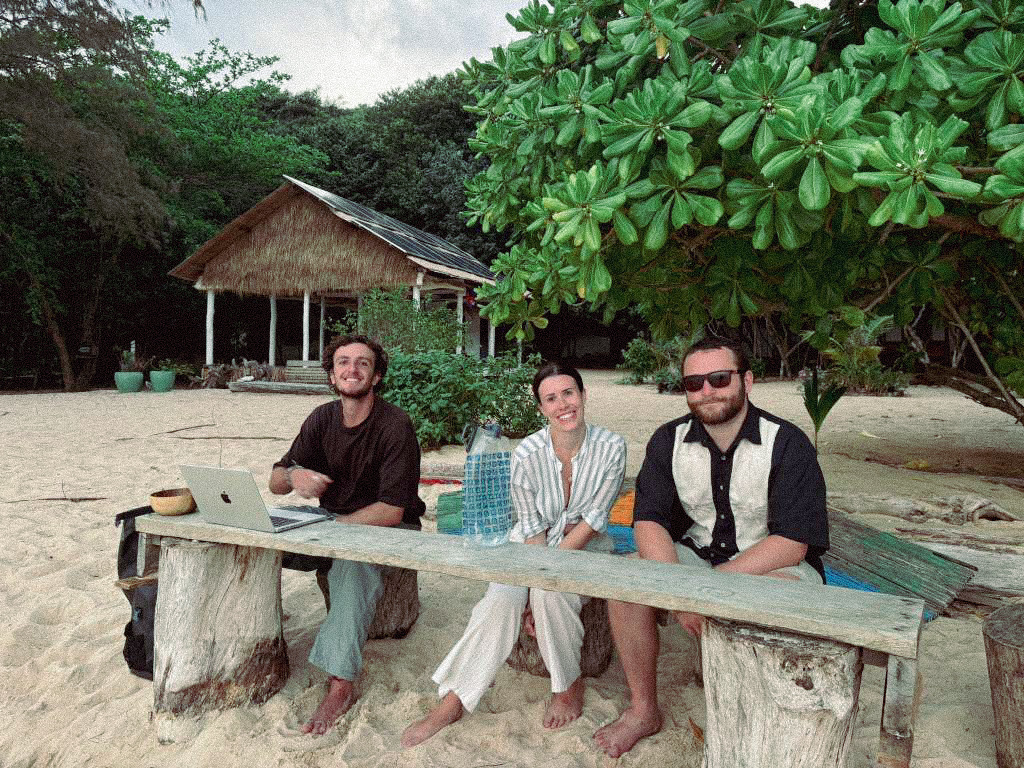
I’d actually made plans to visit the Thai islands instead, but changed my mind after spending a rather depressing day in Phnom Penh seeing the Killing Fields and S21 (essential learning).
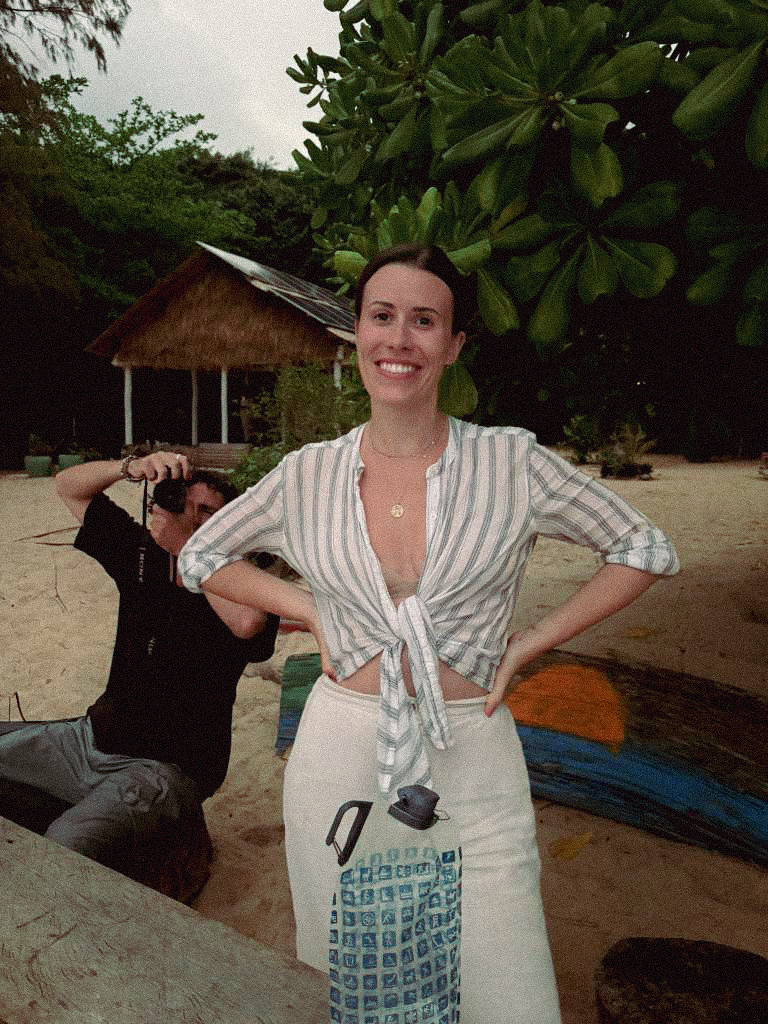
Then it was a choice of Koh Rong or Koh Rong Sanloem. I knew nothing about either of them, but had heard that the latter is smaller, less developed and had just gotten an internet connection a couple of months prior (and that’s only at Saracen Bay.) After a miserable bout of food poisoning in Vang Vieng, Laos, it felt like the right decision.
Whether it was the setting, timing, or company, our special week was the result of many factors working in quiet harmony. And that analogy speaks to Sunset Beach as well.
Yes it’s beautiful. But that’s not the only thing that makes it stand out. It’s the history; the mix of Cambodian and international businesses; the relationships that have been formed over years. The people all come with a unique story and personality, adding colour to the place that is their home. And this blend of ingredients cannot be replaced or taken for granted.
Devastatingly though, it is. Because the businesses here have been asked to pack up and leave within the next four years to make way for developments.
Whilst they’re hopeful for more time, if the landlord decides to sell the land to investors, the bamboo structure, which the founders of Sunboo lovingly and painstakingly assembled into their home and livelihood, will be dismantled.
The hammocks will be taken down, the games packed away, and this magical community divided. All to make way for bigger, glossier, pricier hotels.
We’ve probably all read or watched The Beach by Alex Garland.
As I looked out at the Gulf of Thailand one day, I thought about how that story captured hearts, and its parallels to Sunset Beach. Despite descending into darkness, the concept of a legendary self-contained community fascinates people. As a result, many tourists went searching for it – ultimately destroying the “real” magic Maya Bay in Thailand, where it was filmed.
You cannot recreate the lived experience, the serendipity, or connections that make a place alive.
That’s why the idea of wiping out Sunset Beach in favour of a bunch of soulless hotels feels appalling. Meaningful places, whether for travel or in everyday life, are rarely manufactured. They are nurtured over time, by people, stories, and happenstance – so they need to be appreciated for what they are, in the moment.
Because I stayed longer than anticipated, on my second to last day, I had to return to Saracen Bay to work. After another thirty minute walk across the island to Sunset Beach, I arrived once again at the uphill dirt track. But I wasn’t frustrated this time. I was energised. Because I knew, on the other side I’d be met with a cold lemonade and a slice of paradise.
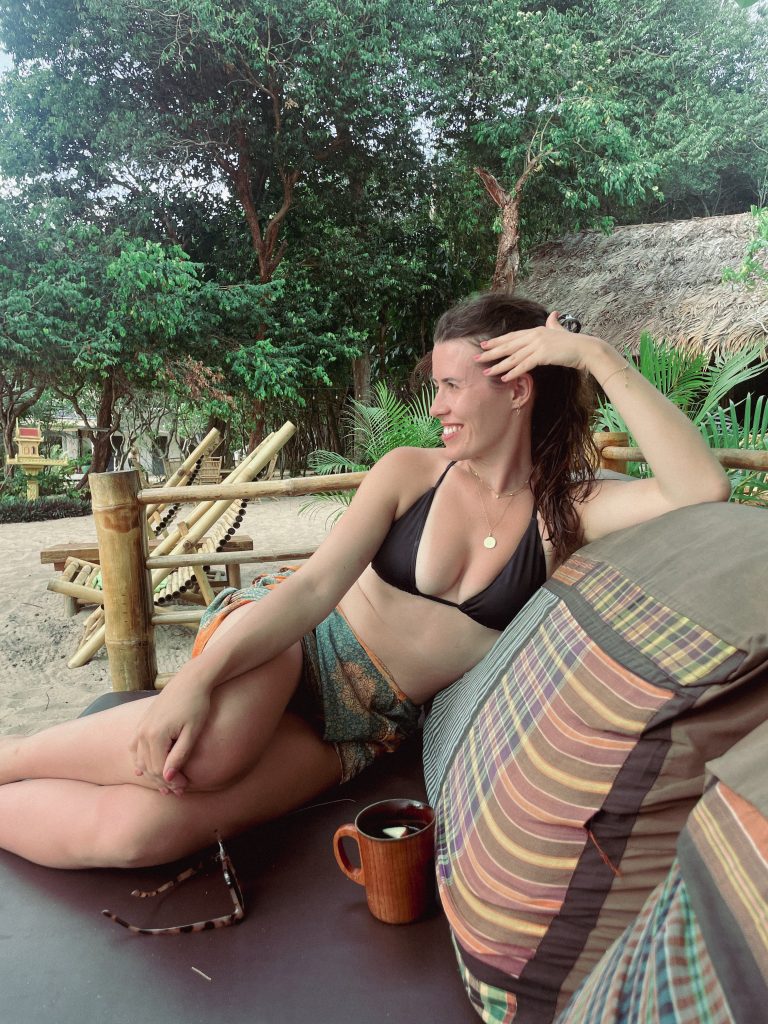
Questioning my depth at Bangkok’s Grand Palace
Had I bitten off more than I could chew?
On the third day of my first-ever trip to Asia – having started a new chapter as a “digital nomad” at 32 – I awoke full of adrenalin and ready to see some other ‘must sees’ on my list.
Equipped with snacks from the 7/11 – a backpackers’ sanctuary – I headed out toward a local market, dodging traffic at every turn.
Suddenly, whilst approaching a railway track, I noticed a curious sight. Tucked along either side were small houses beneath the Expressway, and people were crossing the tracks and disappearing from view. Where are they going? I wondered.
As I ventured further, it became clear that the place was quietly teeming with life. To my left, a family was sitting down for a meal; to my right, a man was gutting fish. It was a tiny community, living in a traffic sandwich.
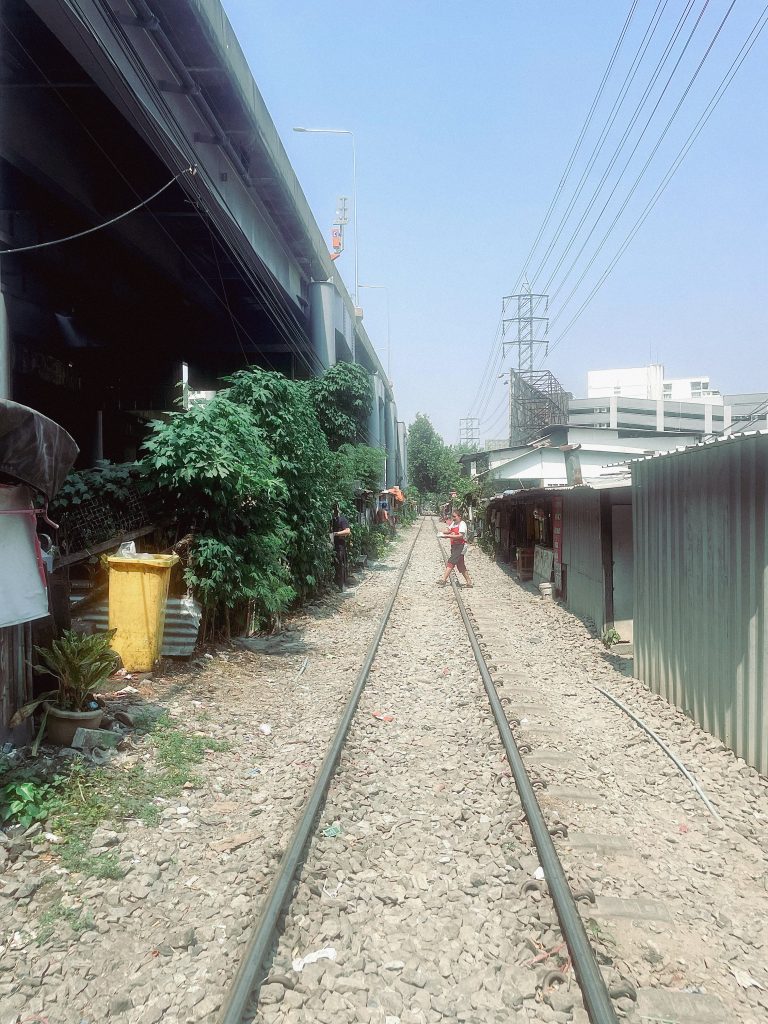
Life must be loud for this community under the expressway
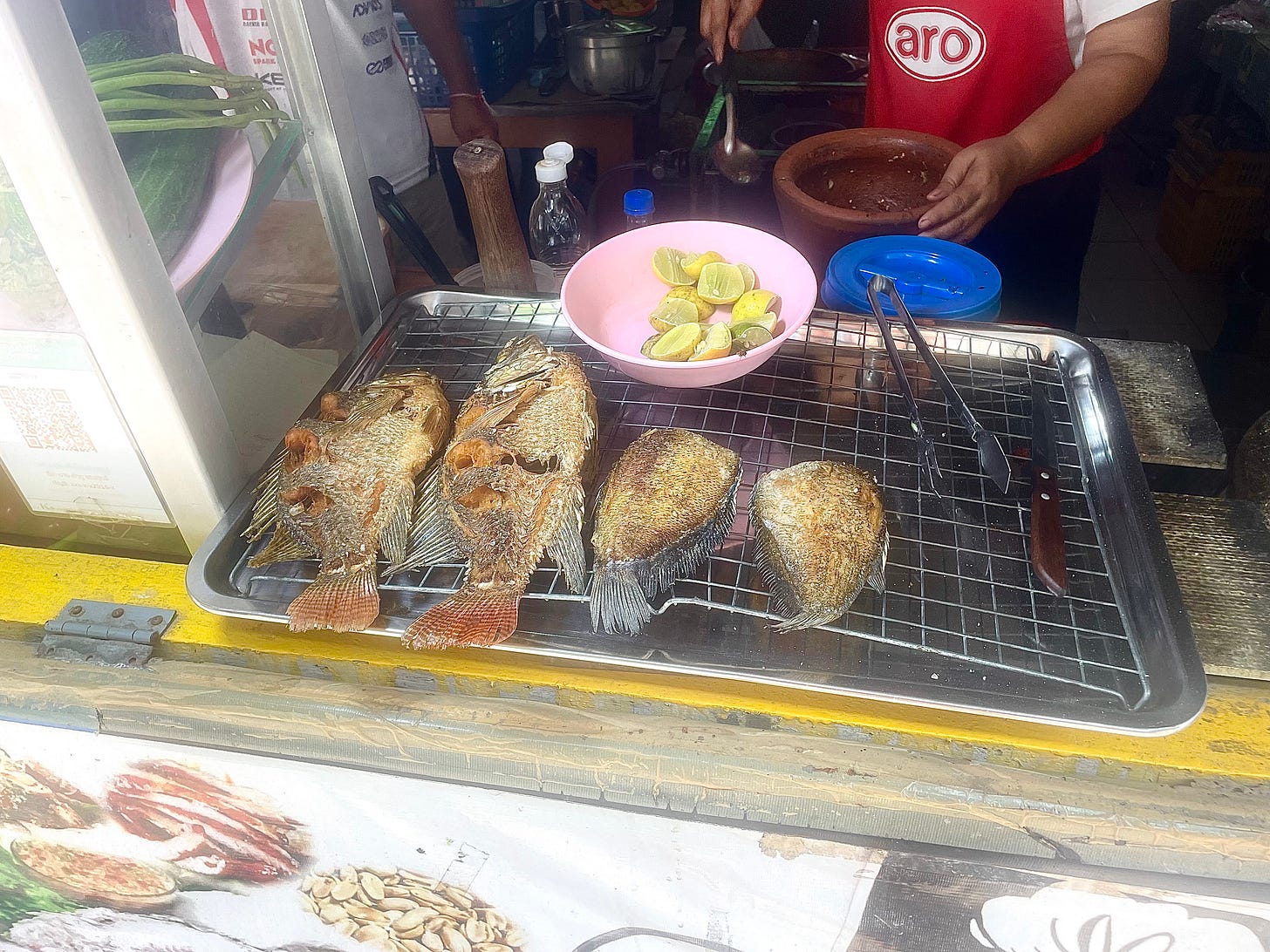
A fish restaurant alongside the railway track
Bangkok – home to 11.4m people – is not a place where wealth is equally distributed. To think they were wedged beneath the underpass like this, with cars and mopeds on all sides and trains cutting through (I presume), demonstrates how crammed with people it is.
Visiting the flower market
Eventually, I found myself at Pak Khlong Talat, the city’s primary flower market, tucked into the Wang Burapha Phirom subdistrict. Unlike the railway community, this one I found in Condé Nast. Because sometimes you need a little guidance!
I went in the late afternoon and watched the vendors setting up while people drifted through. Spotting yellow flowers (marigolds) everywhere, a quick Google revealed that they’re closely associated with Buddhism and the late King.
You’ll find references to the monarchy all over Bangkok, and it appears central to Thai life.
I learned how to say good morning (“sawatdee kha”) and we had a little tête-à-tête in broken English, between lots of smiling and cooing at the dogs and cats – luckily there’s only one language for cute!
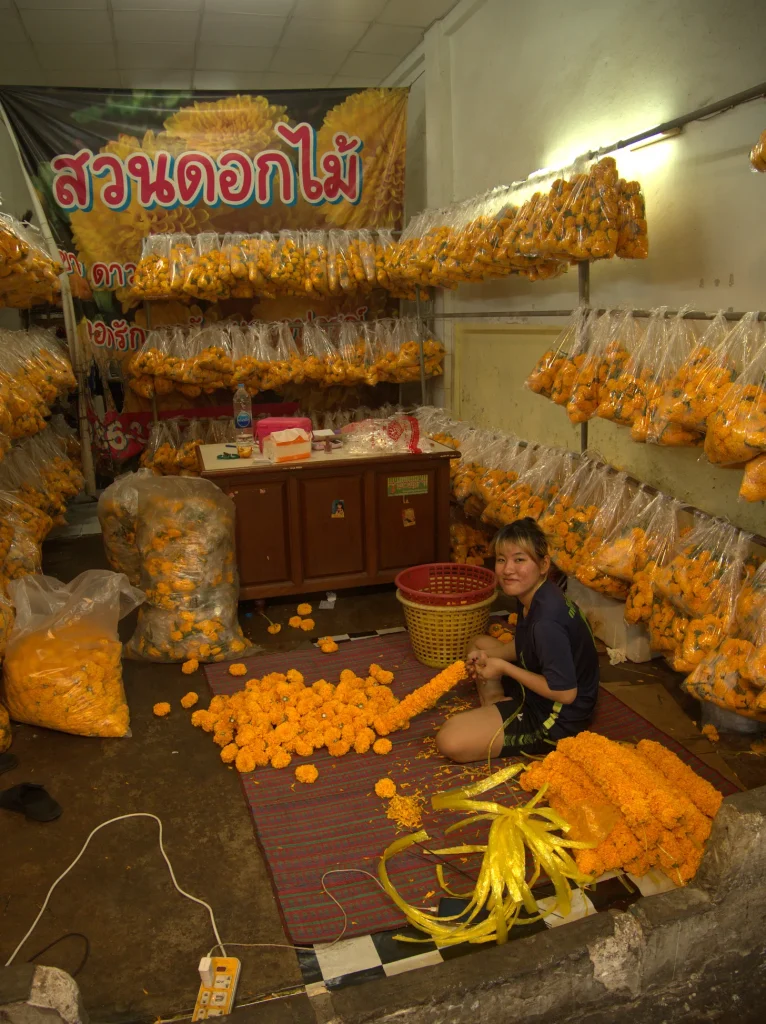
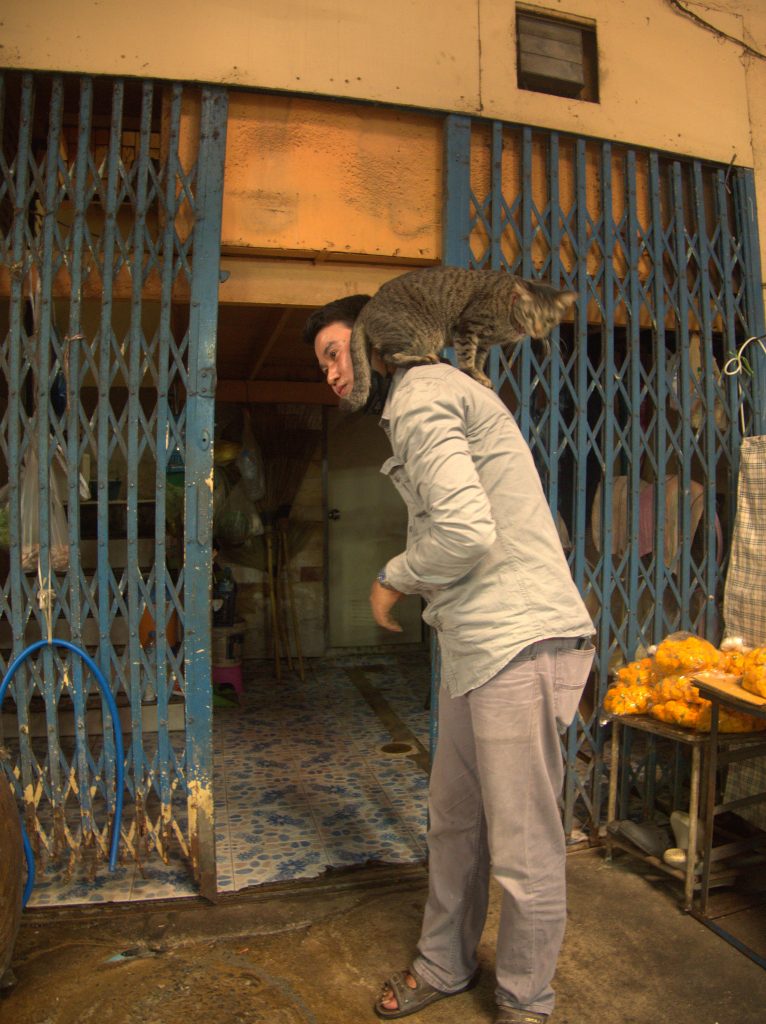
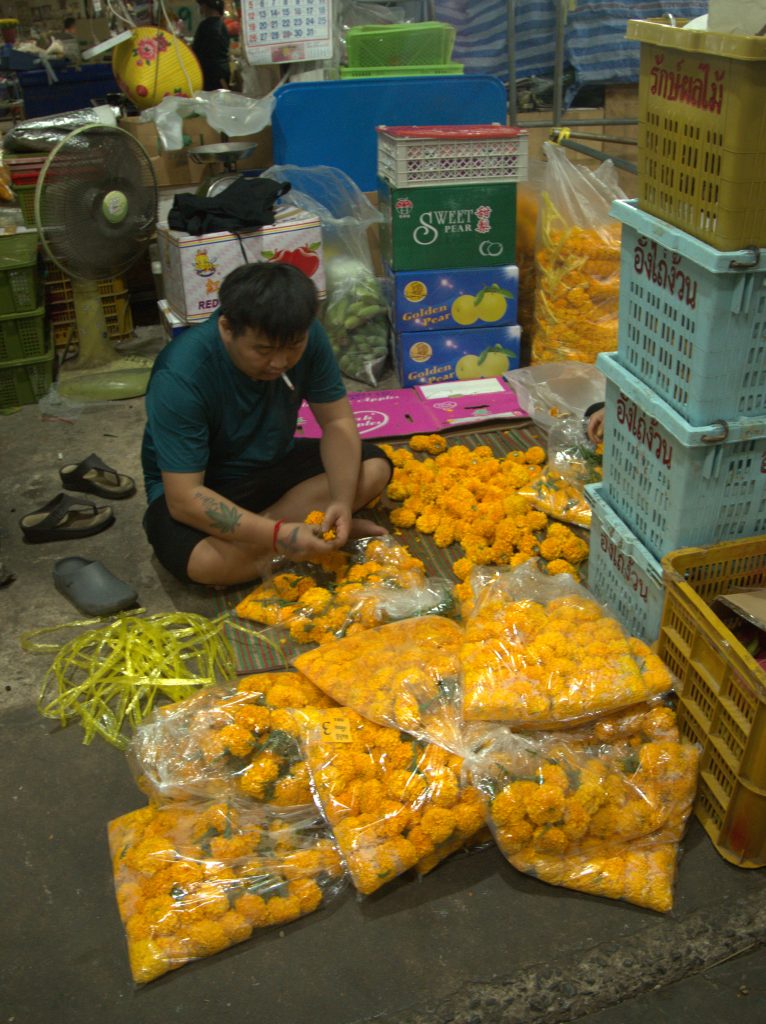
Insiders say to visit the flower market at 3am
Word has it, the best time to come here is in the middle of the night, when the freshest blooms arrive. But it’s a great place to cool off during the day.
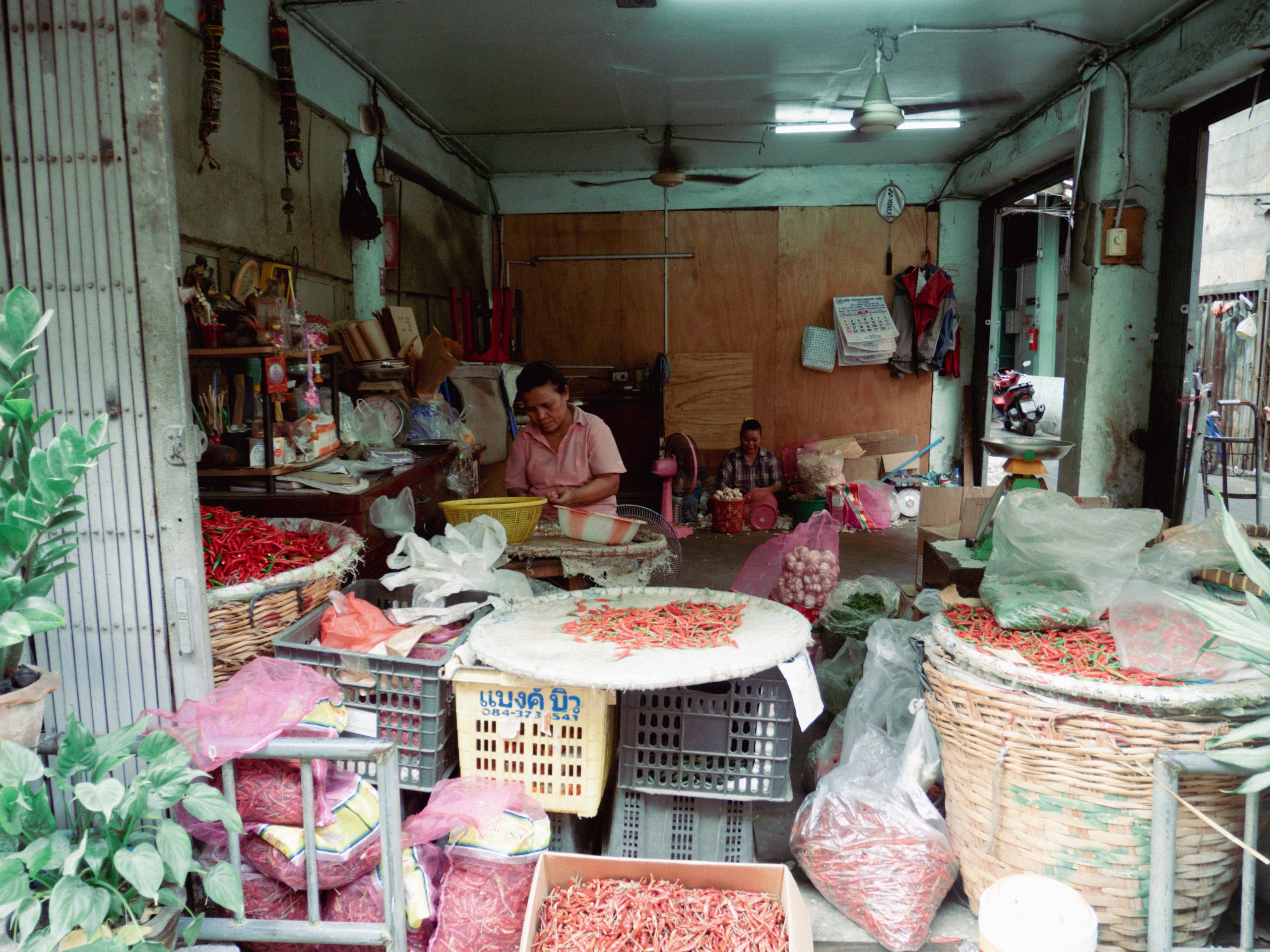
OLYMPUS DIGITAL CAMERA China Town and Khao San Road
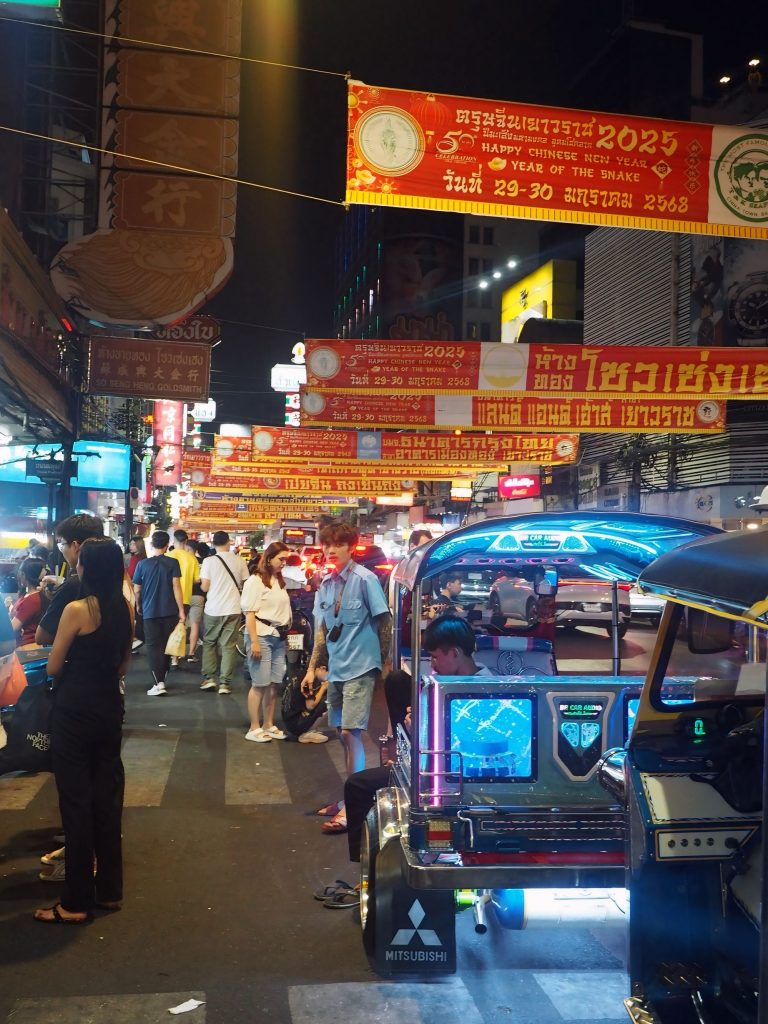
Toward nightfall, I headed to Chinatown for some chow. What did I fancy? I asked myself manoeuvring down the stalls. Scorpions? Crickets? I was (sort of) tempted to try the edible insects but didn’t want to get sick straight away.



Scorpions, anyone?
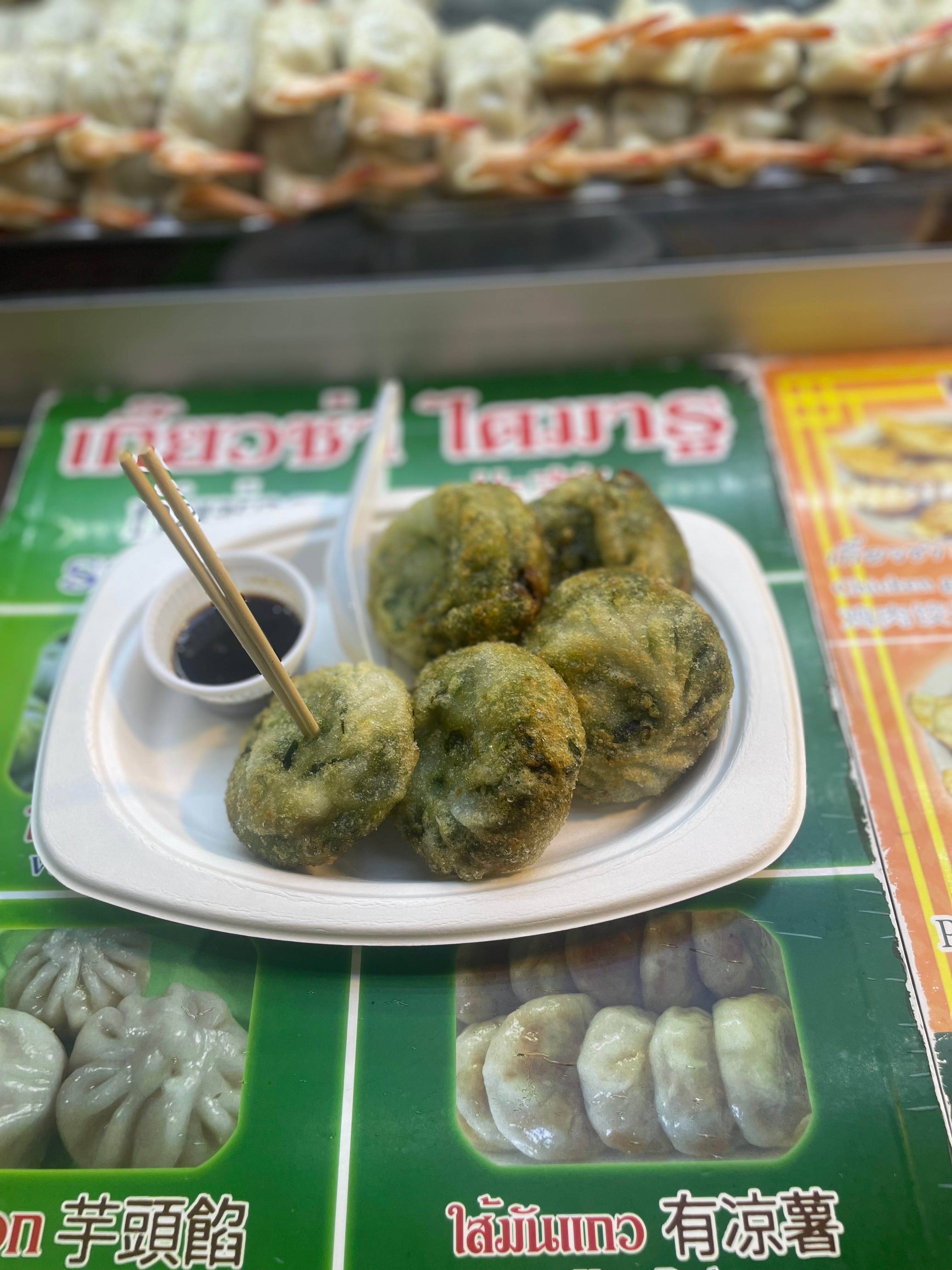
I eventually settled on some Chinese chive cakes followed by some “kanom krok” – little coconut pancakes.
Locusts aside, if you’re vegetarian, you’ll find some decent options here, even though Asia is generally a pretty meat-heavy place.
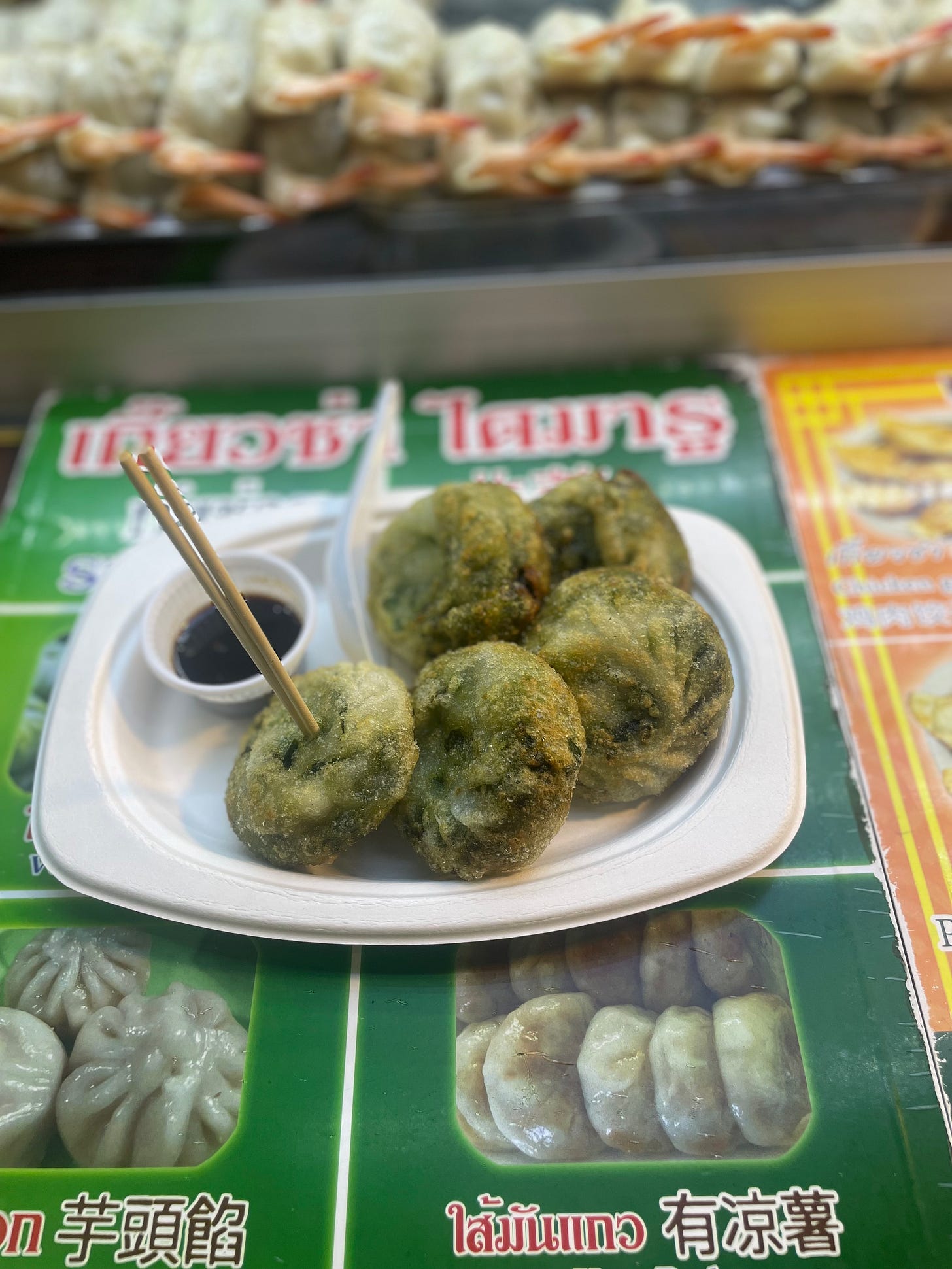
Delicious veggie dumplings in China Town
By this point, it was getting a little late. But Bangkok buzzes at all times. Do I want to go to Khao San Road? I pondered, between mouthfalls. For the uninitiated, this is a famous street in Bangkok, known for its thriving nightlife.
I truly did not, but knew I’d regret not seeing it. It wasn’t far away, so I hopped into my first colourful – and probably overpriced – TukTuk by the market, for around £7.
The ride itself was great fun. But the strip at Khao San – not for me. I’ve always preferred to watch the Inbetweeners from behind a screen, not as a lived experience, so this was a good early lesson in trusting my instincts.
The throng of drunk bodies in the heat was overwhelming, and I took nothing from it, save cooling down in the breeze from the TukTuk.
Ever impressed by the public transport in Bangkok, I spared my lungs the Grab bike this time (although I was getting hooked on them!), and caught a bus all the way home.
Visiting the Grand Palace
By the next day, I needed some greenery.
Bangkok might look and seem like a concrete jungle, but a third of the city is parkland, and I’d vowed to visit Lumpini Park and Bang Kachao, the so-called ‘Green Lung’ of Bangkok, for a bike ride.
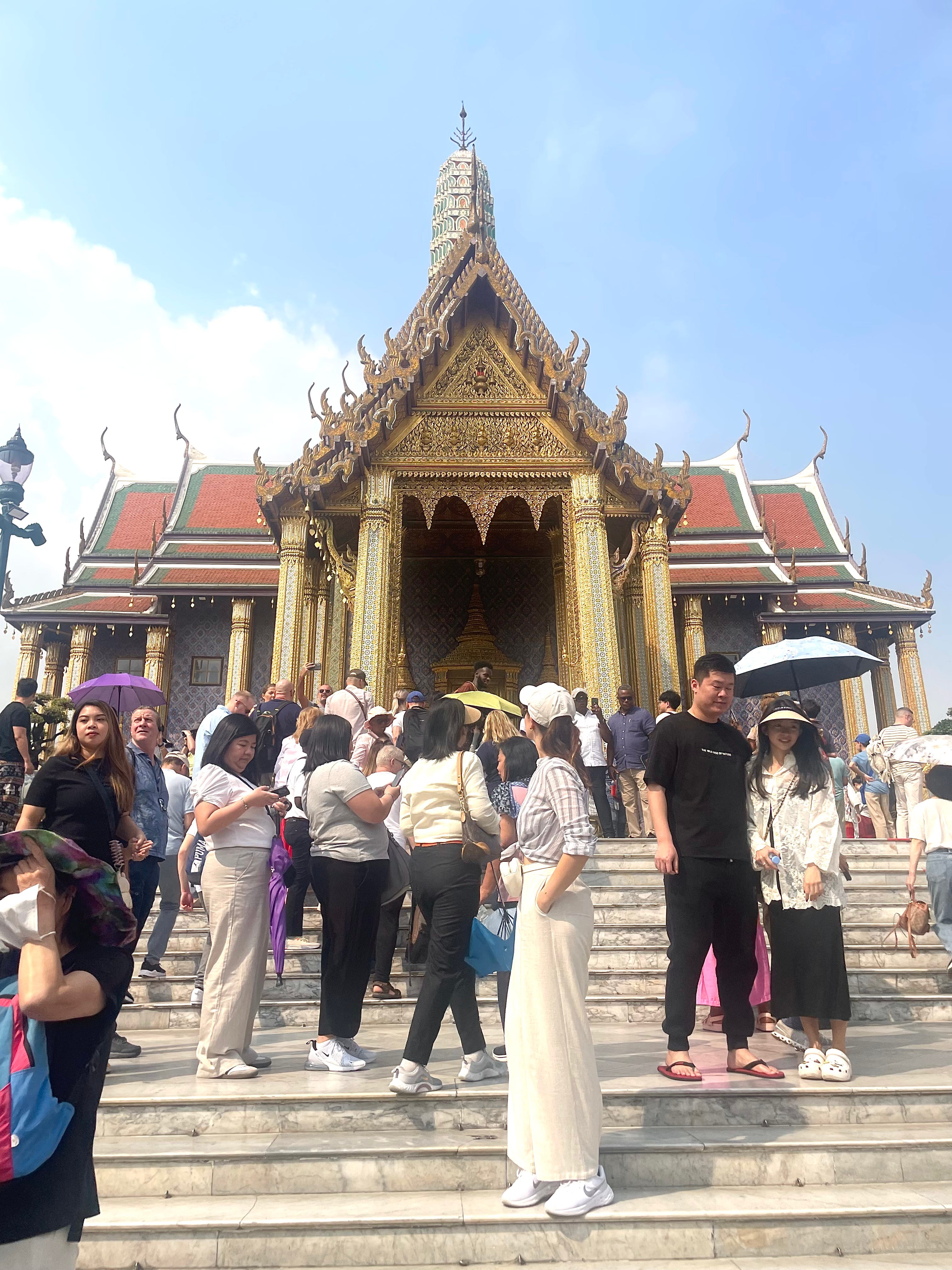
Unable to postpone my ‘flexible’ flight ticket to Chiang Mai, however, I panicked and decided to visit Bangkok’s famous temples instead: Grand Palace, Wat Pho and / or Wat Arun.
I really hate when tourist attractions are rammed down my throat, and I couldn’t shake the feeling that the Grand Palace was a bit over-hyped. But I was in South East Asia, so it felt like an attraction I couldn’t miss.
Wat did I think of them? It’s tricky. Religious Studies was my favourite subject at school, and I resonated strongly with the story and teachings of Buddhism. As a 15 year old, it was the first religion I’d encountered that didn’t seem to be predicated on power.
I respect that they are culturally important and tried my best, in the heat, to take in the majesty of it all. But after a two hours, I was a little bored.
Not just that, but – quite unsurprisingly – the place is hugely overcrowded. They don’t show you that on TikTok or Pinterest do they!
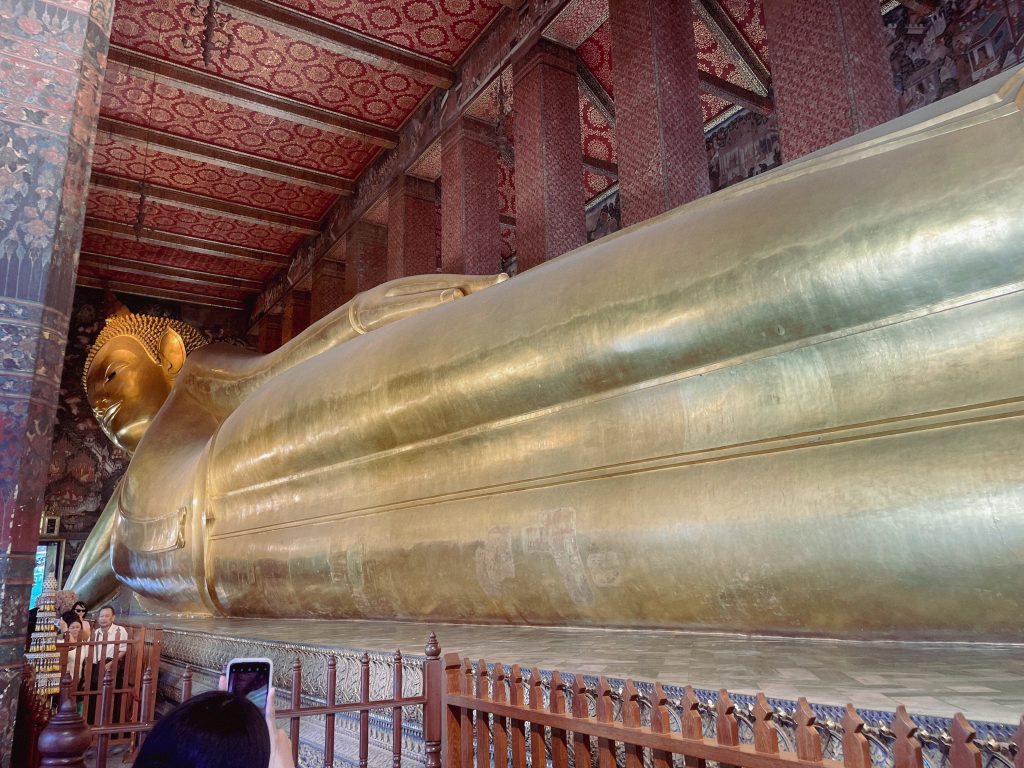
Wat Pho is famous for the immense Reclining Buddha
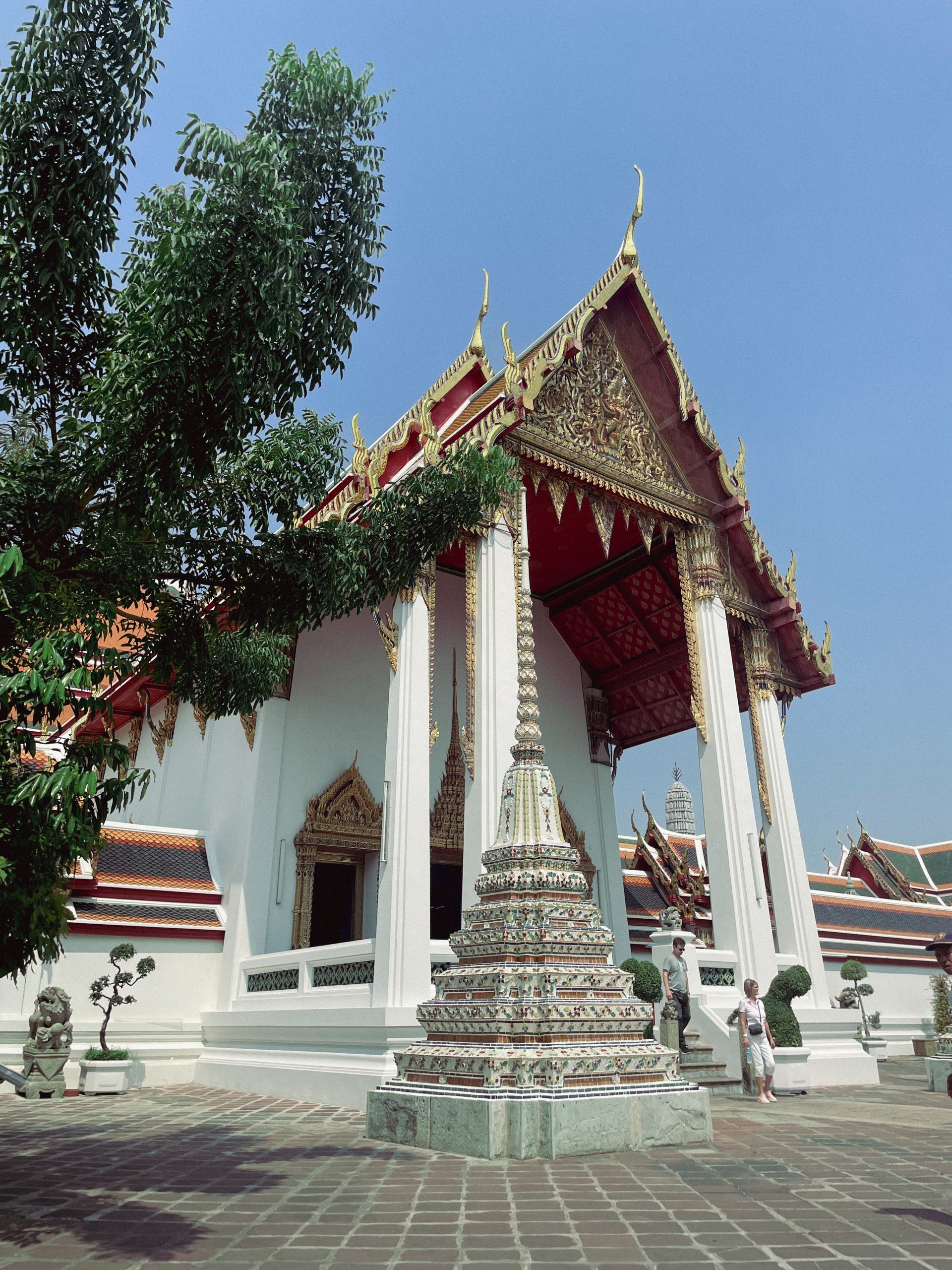
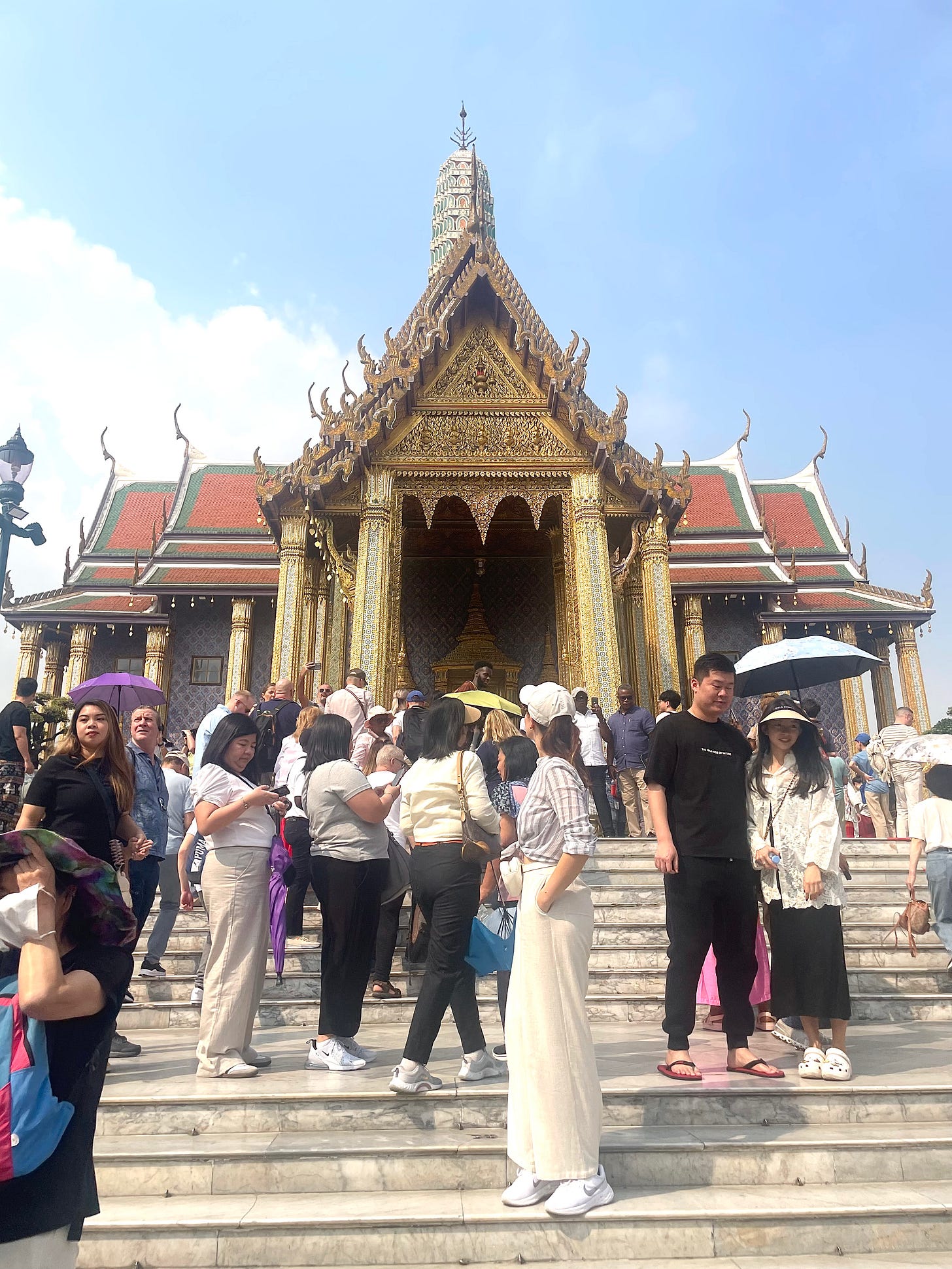
Reality check at the temples – they’re crowded!
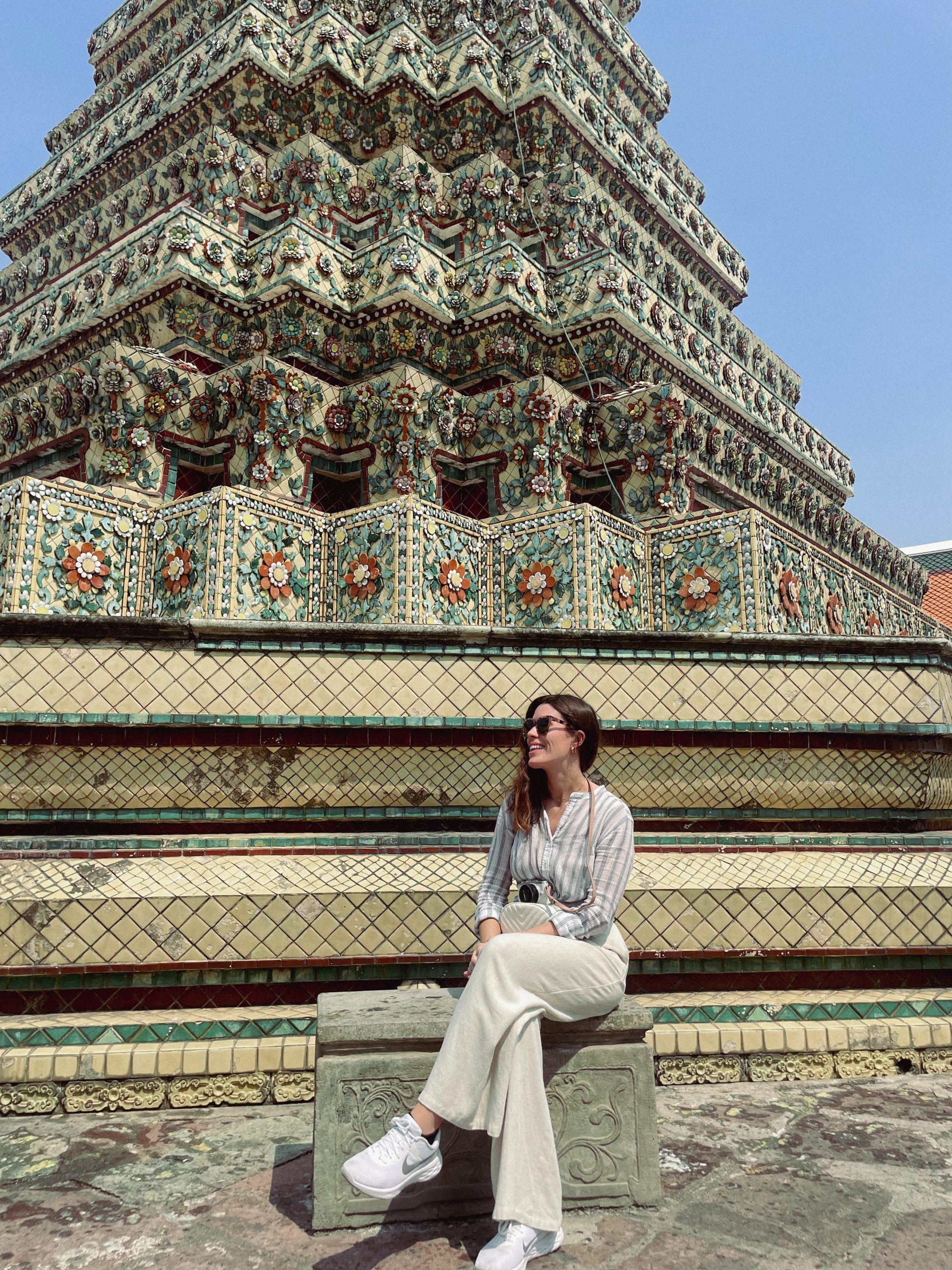
I wish I’d followed through with my first plan. Does this mean I lack depth? I thought with panic. Maybe. But who cares. Life’s short. There’s nothing wrong with chasing lizards in the park. They’re cool as hell!

Monitor lizards roam the park and canal freely
As a headache took hold, I learned my first lesson as a digital nomad: if I wanted to work and travel, I’d have to manage both my time and my energy levels properly. I was alone, in a foreign place, in a much hotter climate – that’s a lot to navigate on top of a job, and I hadn’t even got started yet.
Sitting on the flight to Chiang Mai, clutching my carry on, I wondered – had I bitten off more than I could chew?
Travel fatigue in Ho Chi Minh city: my sixth week as a digital nomad in Asia
Reality bites (me) in the Vietnamese capital
Most people go to Vietnam with intention – whether that’s to enjoy the history, the food or the landscapes. But too much planning can kill the thrill of travel, so when I arrived in April 2025, following a week of pure luxury on the golden sands of Koh Rong Sanloem in Cambodia I didn’t have much of a view as to what to expect.
What I did know is that it would be very busy (or “cognitively demanding” as this article puts it) – and pulling into Saigon after eight days on a paradise island was certainly an assault on the senses.
Real life Mario Kart
In some ways, my biggest takeaway from those first few days was simply the traffic. I’d been quite cavalier about jumping on motorcycles (Grabs) through Thailand, Laos and Cambodia so didn’t change my routine initially. But if you’re going to Ho Chi Minh City, I’d actually advise taking cars wherever you can (see my instagram reel for chaos in 4K).


The density of traffic here is some of the worst in the world, and whilst the idea of playing real-life Mario Kart sounds fun, it’s best enjoyed against friends from the sofa in my book and I wish I’d been more careful (though I clearly survived to tell the tale!). Don’t risk your life to save a couple of pounds on a Grab. I’d also think twice before riding your own bike in Ho Chi Minh (!) unless you truly understand this part of the world.
If you need more convincing, even my Uber driver was visibly scared picking me up during rush hour. And crossing the road? Don’t even try it. Saigon does not stop for you, and I nearly learned that the hard way.
A long overdue history lesson
Anyone that’s spent time in Asian cities will understand how overwhelming they can be. Rather than attempt to get to know Ho Chi Minh in much detail, I preserved my energy with visits to two of the city’s most important historic attractions – the War Remnants Museum and the Cu Chi tunnels.
I’d been having a great time on my trip, soaking up the recent history of Laos and Cambodia. The Vietnam war – or as they’d call it, the “American war” – is something I was never really taught at school, and I felt a pull to understand it better.
If you like to dig into the weeds of things like I do, my biggest tip for the museum would be to go there with some background context. On the 9 hour coach trip from Sihanoukville, I had been listening to The Rest Is History series on the conflict (something I continued with whilst on the Ha Giang Loop) which gave me a helpful grounding in the events leading up to it. Otherwise, it could feel overwhelming – it did go on for twenty years, after all!
In my naivety, I didn’t expect the museum to be so anti American. It’s obviously curated from a communist Vietnamese perspective, and being able to compare the two narratives side by side, was one of the most interesting parts of the experience. Whilst it helped me hold both viewpoints in balance, the long and short of it is that it was a painfully drawn out shit show, especially right at the end.
Keen to deepen my knowledge, I took a tour to the Cu Chi tunnels, where the Viet Cong (communist resistance) lived underground during the war. Crawling through the tunnels, and hearing about how terrible it was for them (and also the soldiers they killed) really provides a reality check of how brutal that conflict must have been. I noticed a lot of Vietnamese people I spoke to still used the name Saigon to describe the city, which speaks to the differing political viewpoints people there still have.
Re-energising myself with a cooked breaky
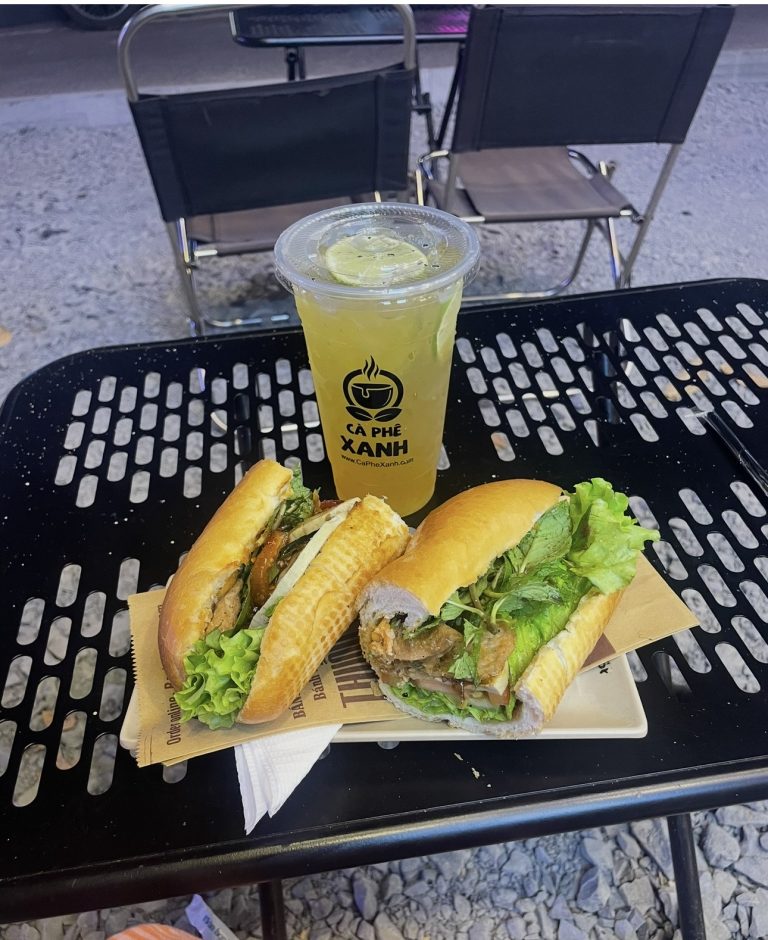
But aside from my history lessons – and some very good vegan bánh mì – I didn’t spend a huge amount of time exploring Ho Chi Minh, so apologies that I can’t give more of a deep dive. Simply put, ‘travel fatigue’ had set in, and it was especially acute given I’d just had a wonderful time in Cambodia.
I’d been travelling around Asia as a digital nomad for about six weeks. I wasn’t working full-time, but moving constantly, leaving people behind, meeting new ones, and planning every next step was a lot to process, both mentally and physically. At just over a month in, it was starting to take its toll, and I simply didn’t have the same energy for new experiences as I had at the beginning.
Rightly or wrongly, this most likely shaped my first impressions of Vietnam. For an insight into my head space – on my second morning, I got in an Uber and asked to be taken to Melbourne Café for a fry-up. My first Western meal of the trip, in Vietnam! Some might find that sacrilege, but you’ve got to have those home comforts some times. I’d never been so happy to see a baked bean, but I assure you that I went straight back to eating local food after that.

Breakfast at the Melbourne Cafe in Ho Chi Minh
It’s good to know your limits, and given that so much ‘nomad’ content is overly positive, I’m happy to share that perspective. After all, I want this blog to be an honest reflection of my experience. So, after two days, I headed north, arriving in the lantern-lit streets of Hoi An – where things immediately brightened up.
Hiding out in Hoi An, Vietnam: two months as a nomad in Asia
I finally take a spin on those coconut boats.
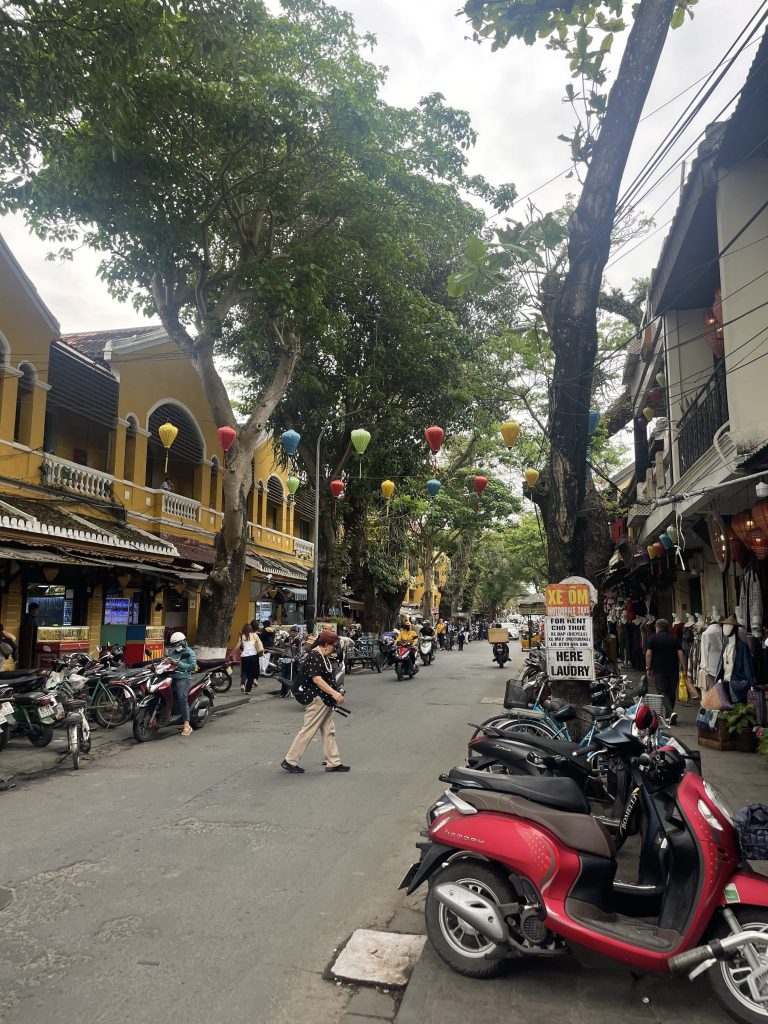
After a whirlwind weekend in Ho Chi Minh City – my sixth week as a digital nomad in Asia – I took a short flight northward to the central coast of Vietnam. Having depleted my energy stocks in the capital, I was looking forward to some downtime in the cutesy, lantern-lit streets of Hội An.
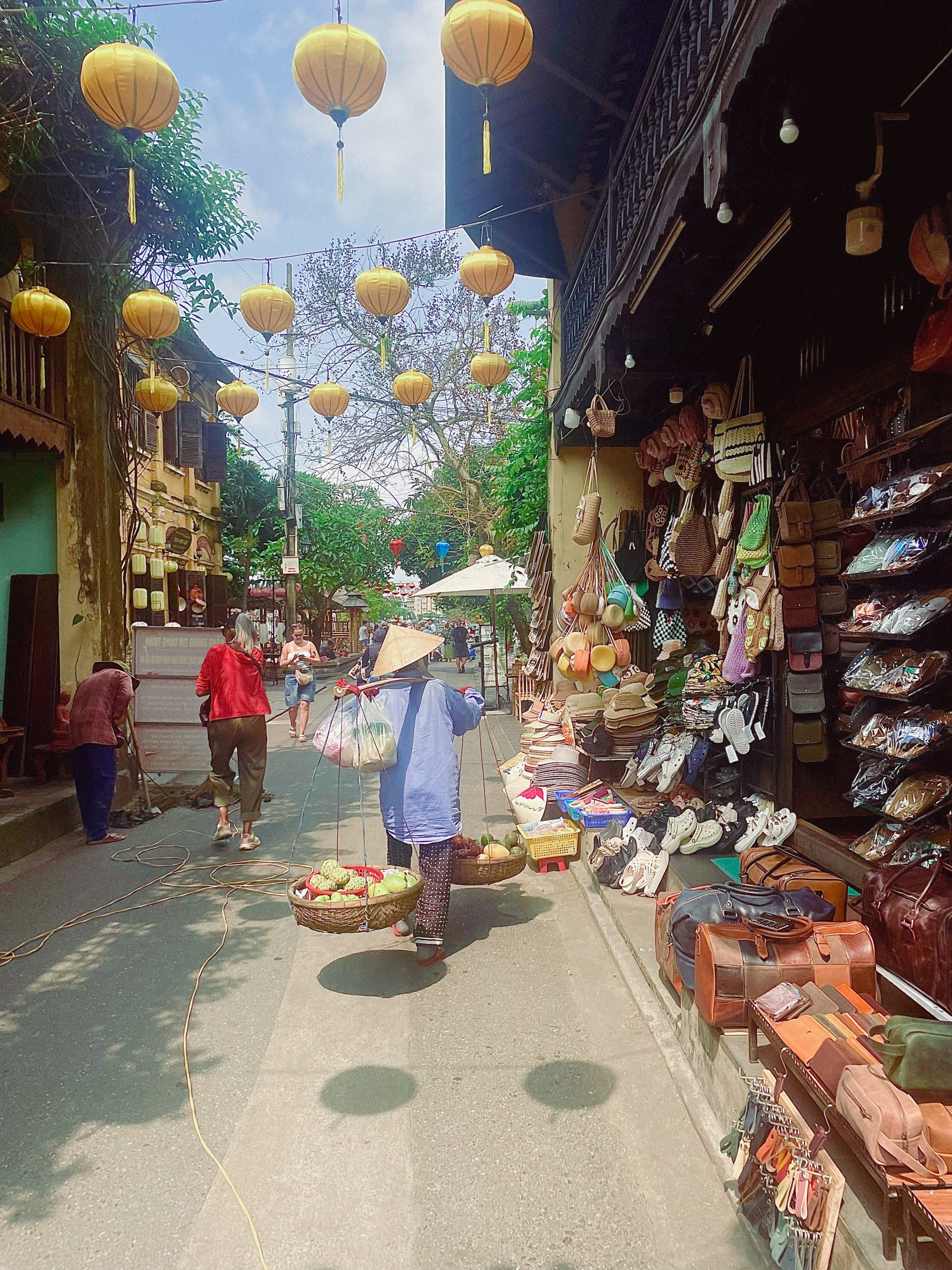
Sitting about halfway up the coast of Vietnam, this ancient coastal town is popular with tourists and, like any popular location, attracts mixed feedback from nomads. From people I spoke to, most tend to go to the nearby city of Da Nang because it’s right on the beach, a little more built up, and, I suspect, offers more to people wanting to build a life out here.
Luckily though, I wasn’t planning on sticking around for long, so I could lean into being a tourist a bit. Everyone has a different goal when travelling, and the whole point of my trip was to take me out of my city comfort zone, dip my toe into nomad life, and take advantage of freelancing by seeing some of the places in the world I’d always wanted to. If that’s something you’re also considering, take a read of this blog where I talk about why I left London in early 2025.
Where I stayed
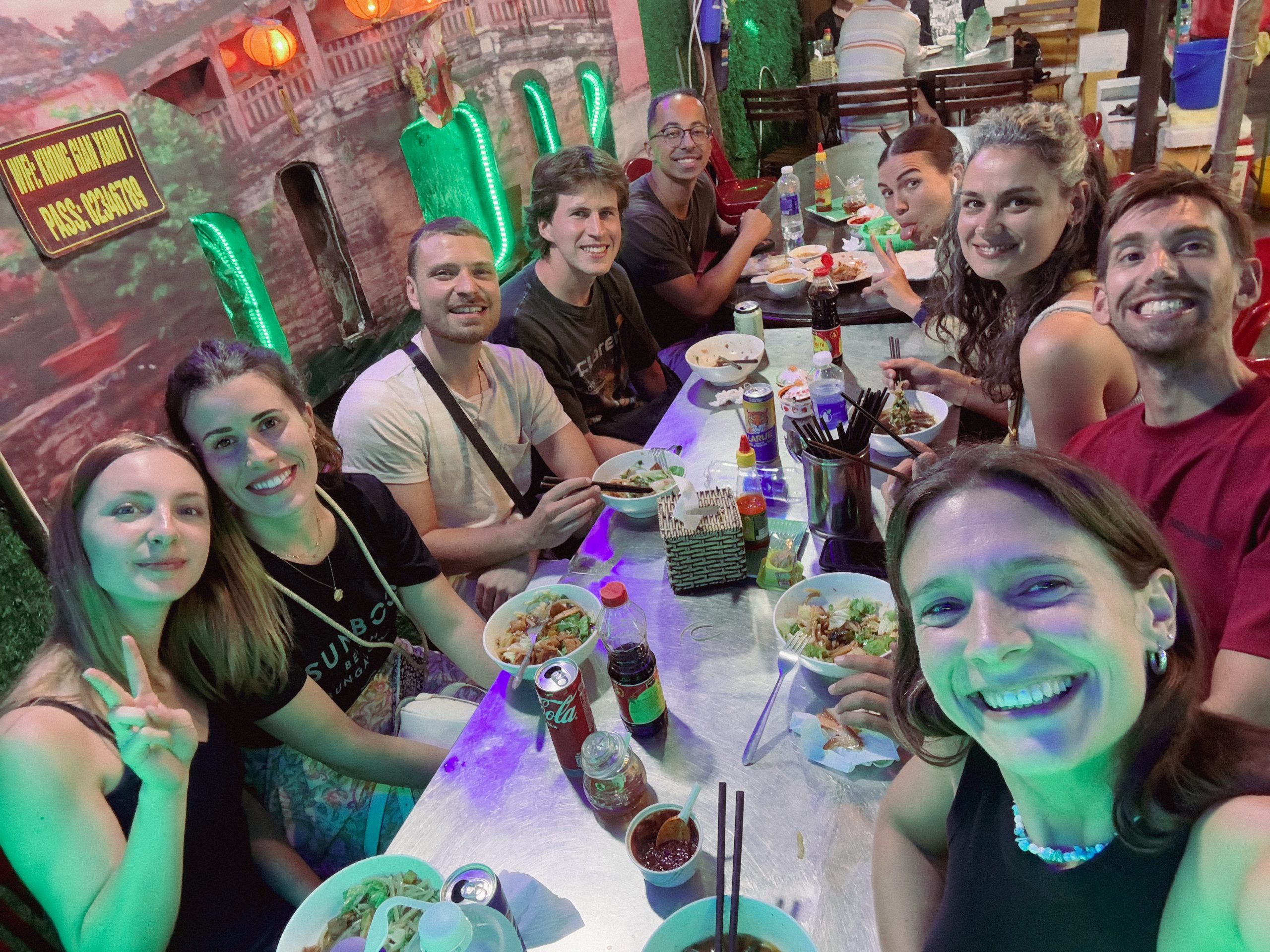
Wanting to be with other travellers, I booked a dorm bed at the adorable Saclo Hostel, where I met the loveliest bunch of people. Like most hostels I stayed at during my trip, it played host to a mix of travellers and nomads in their twenties and thirties.
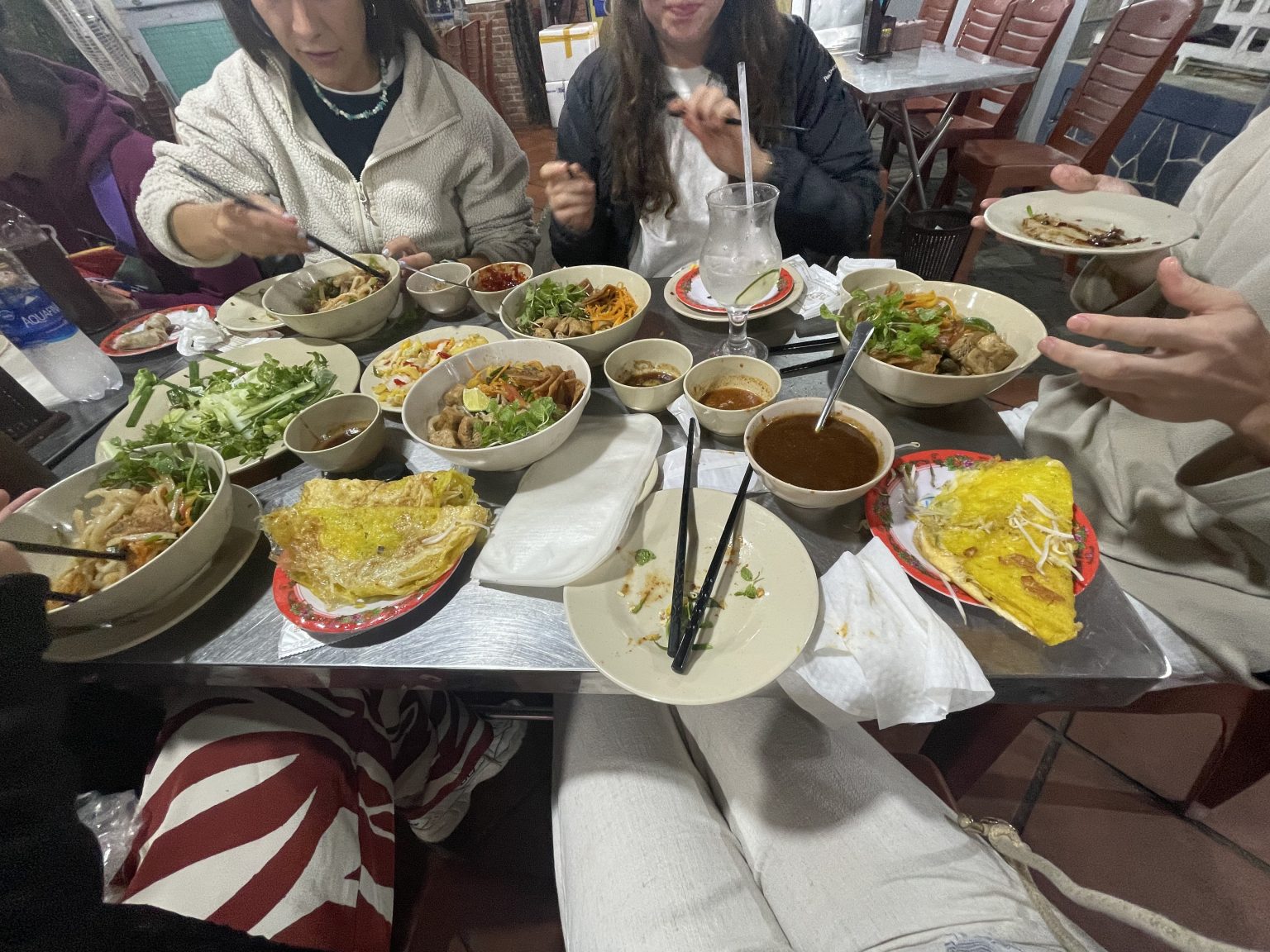
We ended up doing ‘family dinners’, nights out, language lessons, co-working sessions, and simply roaming around the city together, with the help of our excellent host. There was something very restorative about falling into temporary routines with strangers after the intensity of Ho Chi Minh City, especially as I’d had such a brilliant time with the Koh Rong gang.
If you’re travelling alone (and are a bit older), I’d avoid the big-brand hostels and search for smaller ones offering activities, because it often results in a much better experience.
Is there a nomad scene?
As to whether there is a “nomad scene”, it’s hard to say because I wasn’t there long, but like I said – it’s common for remote workers in this part of the world to split their time between Chiang Mai and Da Nang, which is very close to Hoi An, so there will be some crossover.
Luckily I had met some of them in Chiang Mai, which meant I had some connections locally, and I took a day trip to Da Nang waterfalls with a group of people living in a newly opened co-living space.
There’s clearly some long-time nomads in Asia making a special effort behind the scenes to create a sense of community for remotees, which I really admire. It’s difficult moving abroad, so if this is something you plan to do, make an effort to search for those people – whether it’s via flyers, reddit, or chats over coffee – and get networking!
Cafés, co-working and coconut coffees
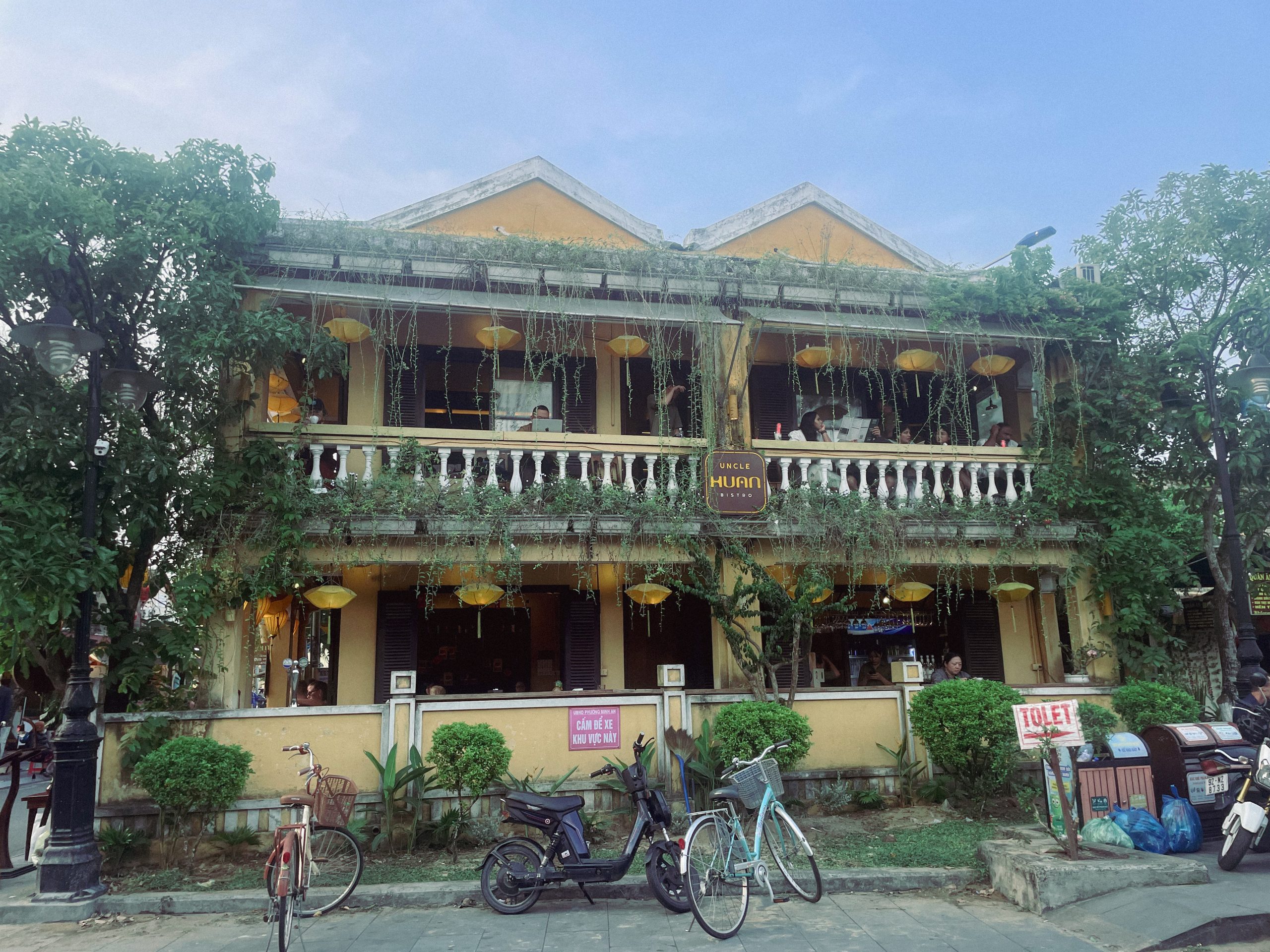
No matter if there’s a big scene or not, behind those lantern-lit fronts are a ton of modern bars, bistros, and cafés, which are perfect for people needing a bit of work downtime. There are loads of veggie and vegan spots too, some even built with yoga and co-working in mind. You really don’t need to pay for spenny yoga retreats when you’re in Asia – just do it yourself!
For the authentic views – try Hub Hoi An
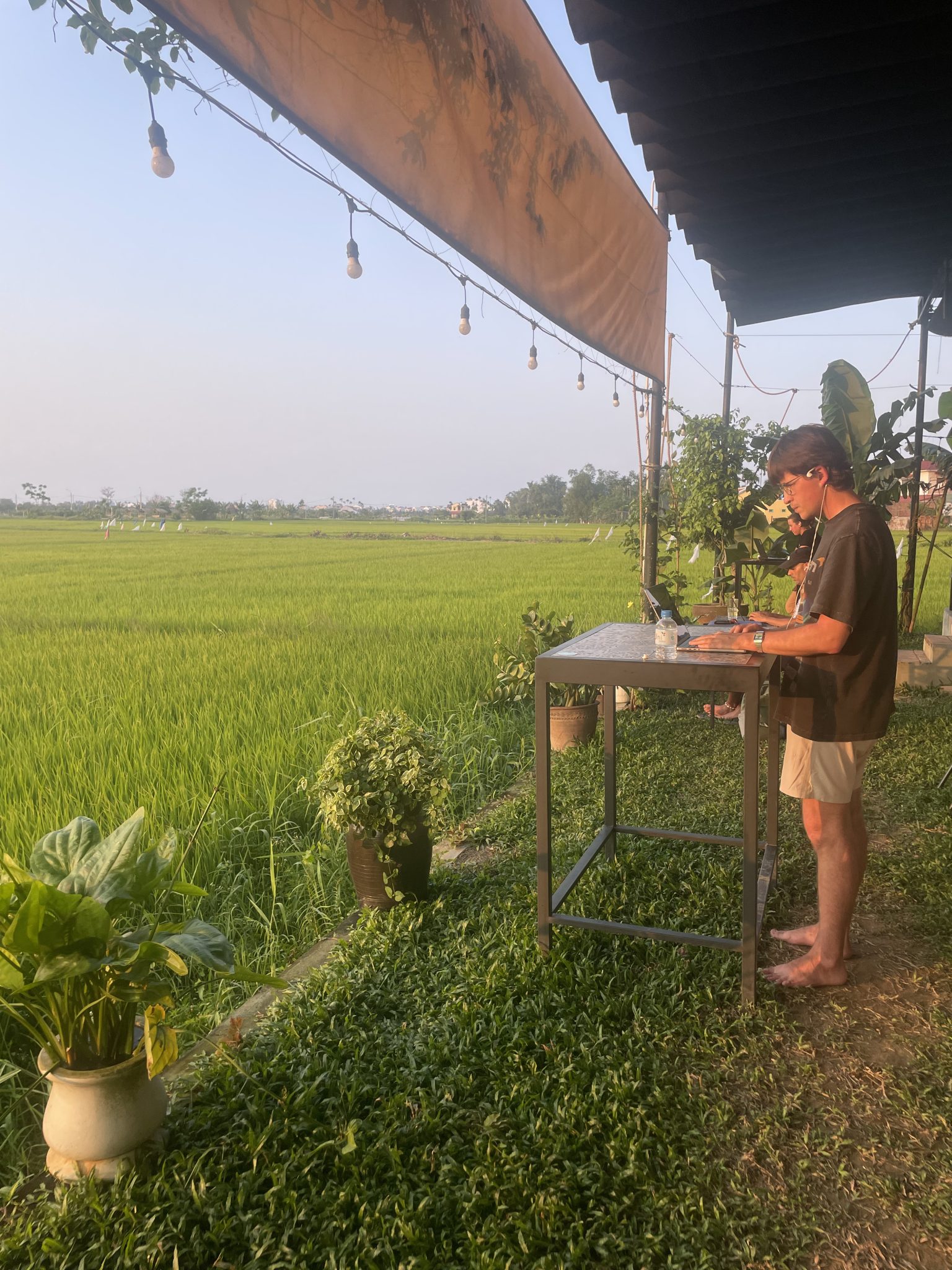
Few things on social media are as wonderful in reality, but that can’t be said for Hub Hoi An. Set right in the middle of electric green rice paddy fields, it fosters an authentic, off-grid feeling whilst running like a proper co-working space, with all the facilities you’d need and community events to boot. I’d highly recommend coming here if you plan to stay for a while and want to make friends. Shout out to Matt for recommending it.
For slow breakfasts and laptop hours – Nourish Eatery
This place is fab for a big breakfast or brunch (think £4-5 for a hug meal). There’s a decent upstairs area for laptops and yoga during the week too (although it’s closed on Mondays).

For escaping the hustle – The Inner Hoian
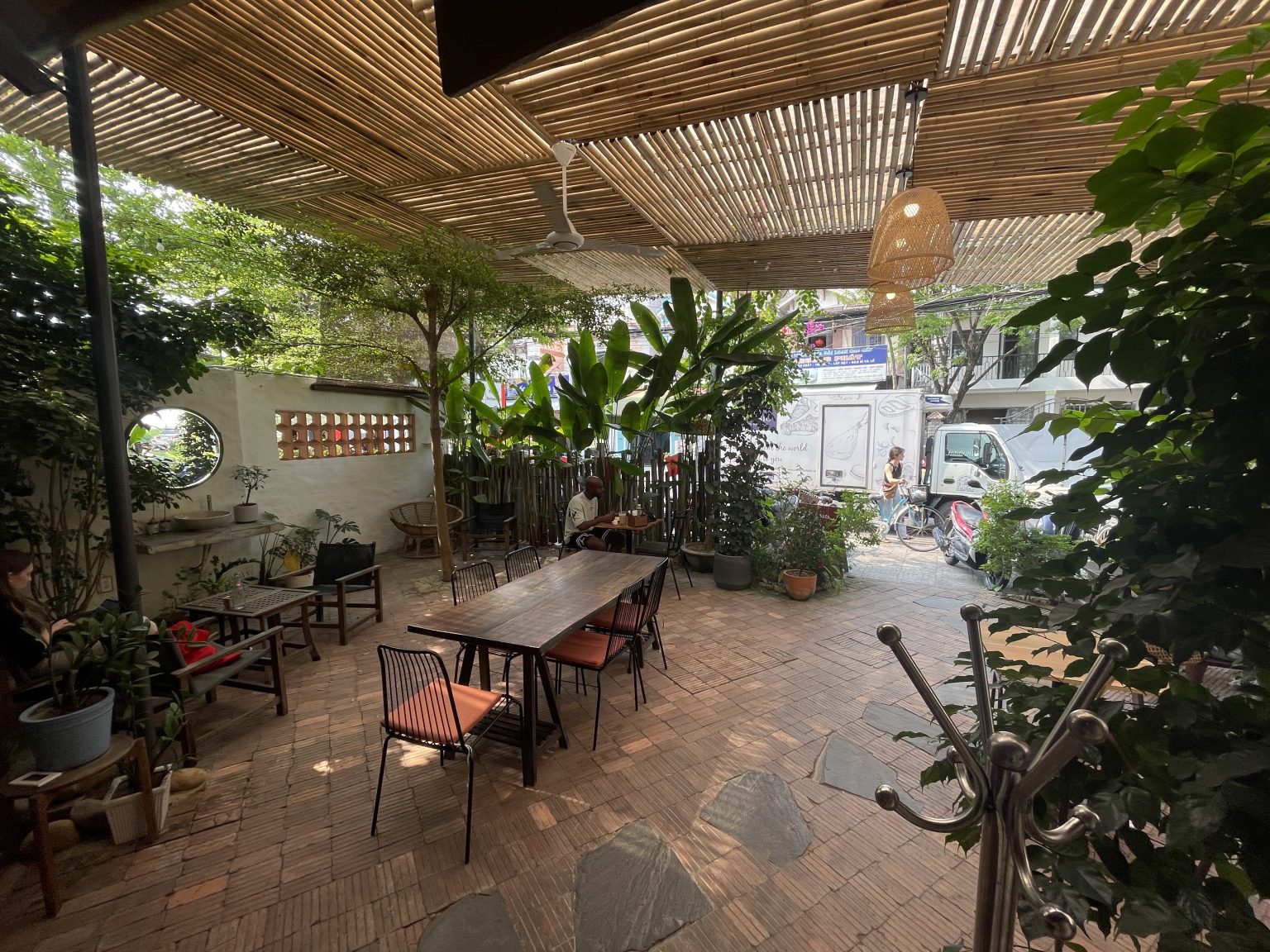
Such a cute café, hidden down a side street and surrounded by lush greenery. It felt like the sort of place you accidentally spend three hours in without realising. Also has a very dangerous little gift shop if you’re a tote bag person. Very calming energy.
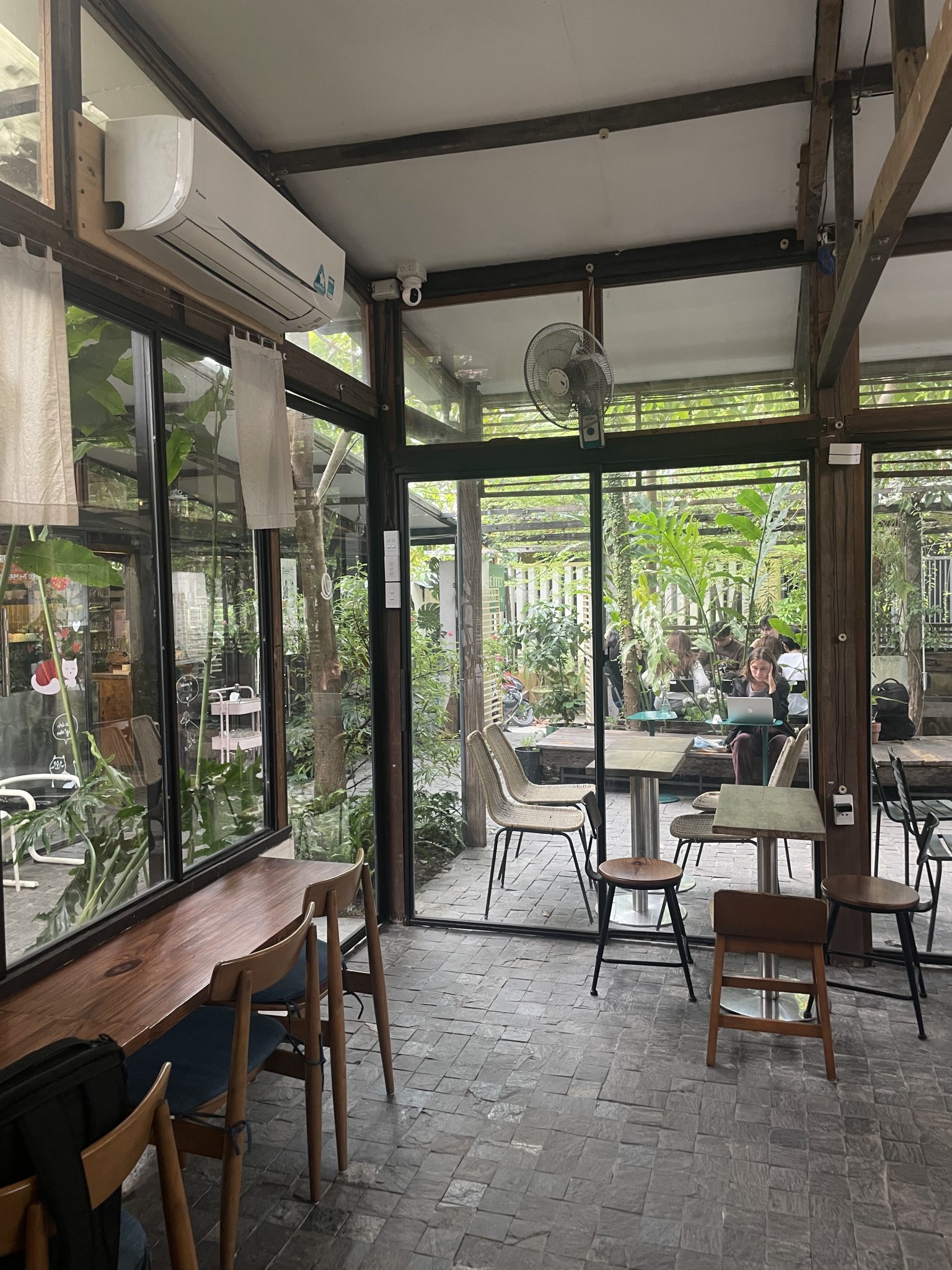
Where everyone settles in for the afternoon – Goodeats Hoi An
This spot is super relaxed and remote-work friendly, but I also noticed lots of families hanging out here too. One of those places where everyone seems to naturally settle in for the afternoon.
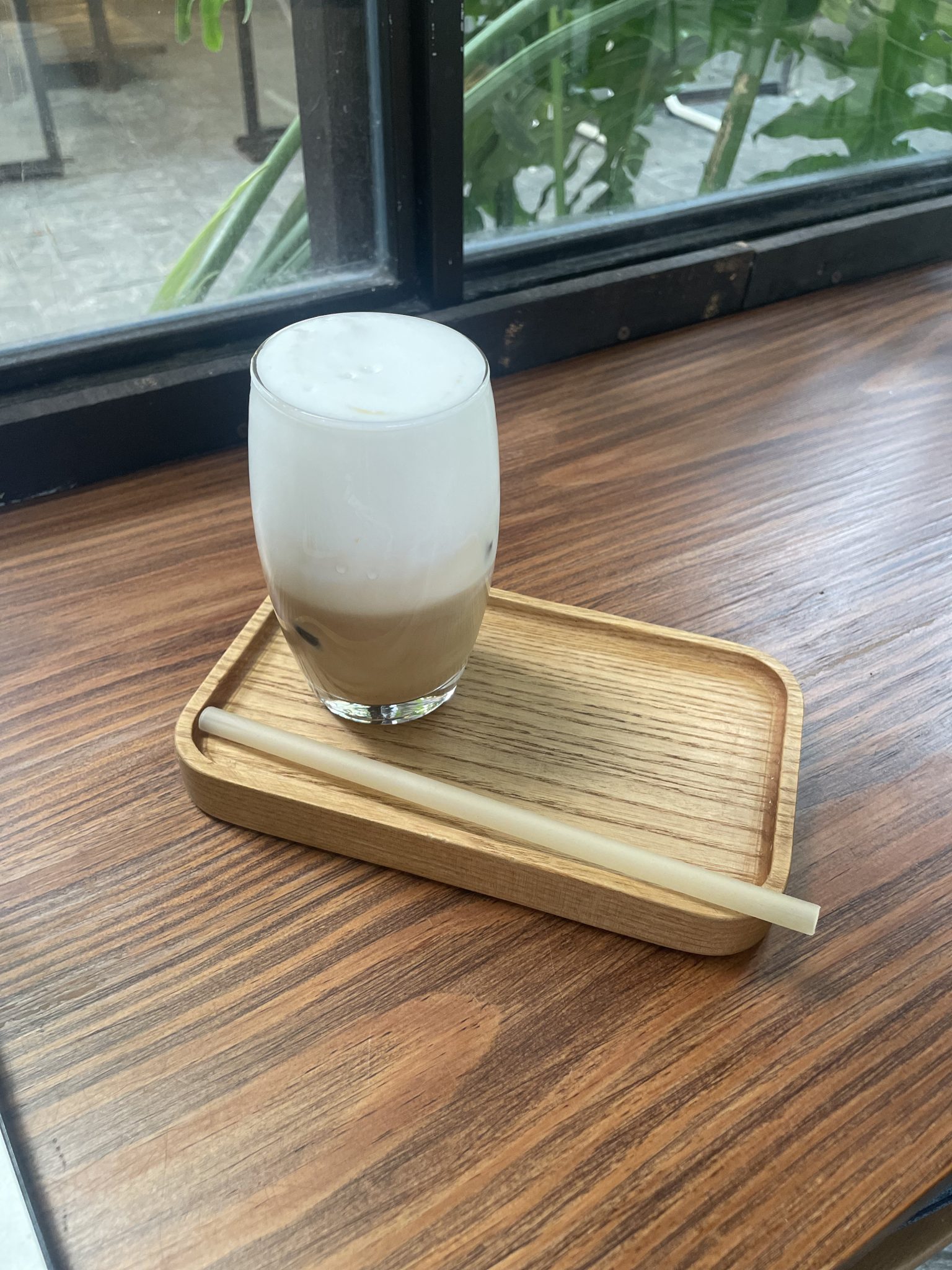
For the best iced coffee – Hoian Roastery
Home to the best iced coconut coffee I had in Vietnam, and the most accommodating manager.
Instagram reality check
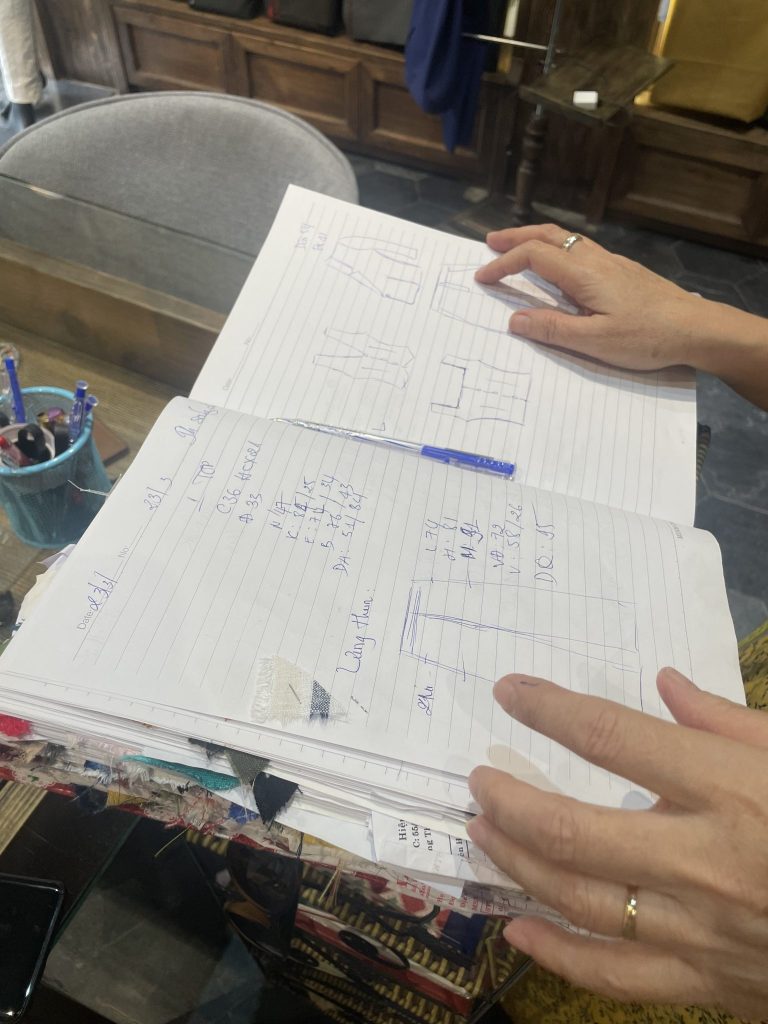
Taking a bike through the paddy fields at sunrise, sampling cafés, and hunting for the best bánh mìs – this is the kind of thing that brings me joy. But like most spots in Asia, the town also offers the option of taking cooking classes, coffee-making workshops, visiting the nearby coast at Da Nang, or getting a dress or suit made (which I did do, although I’m yet to wear her).


That said, like all places in Asia, it would be remiss of me not to do the old “Instagram v reality” wake-up call. Some fun, but slightly overrated, activities for me were:
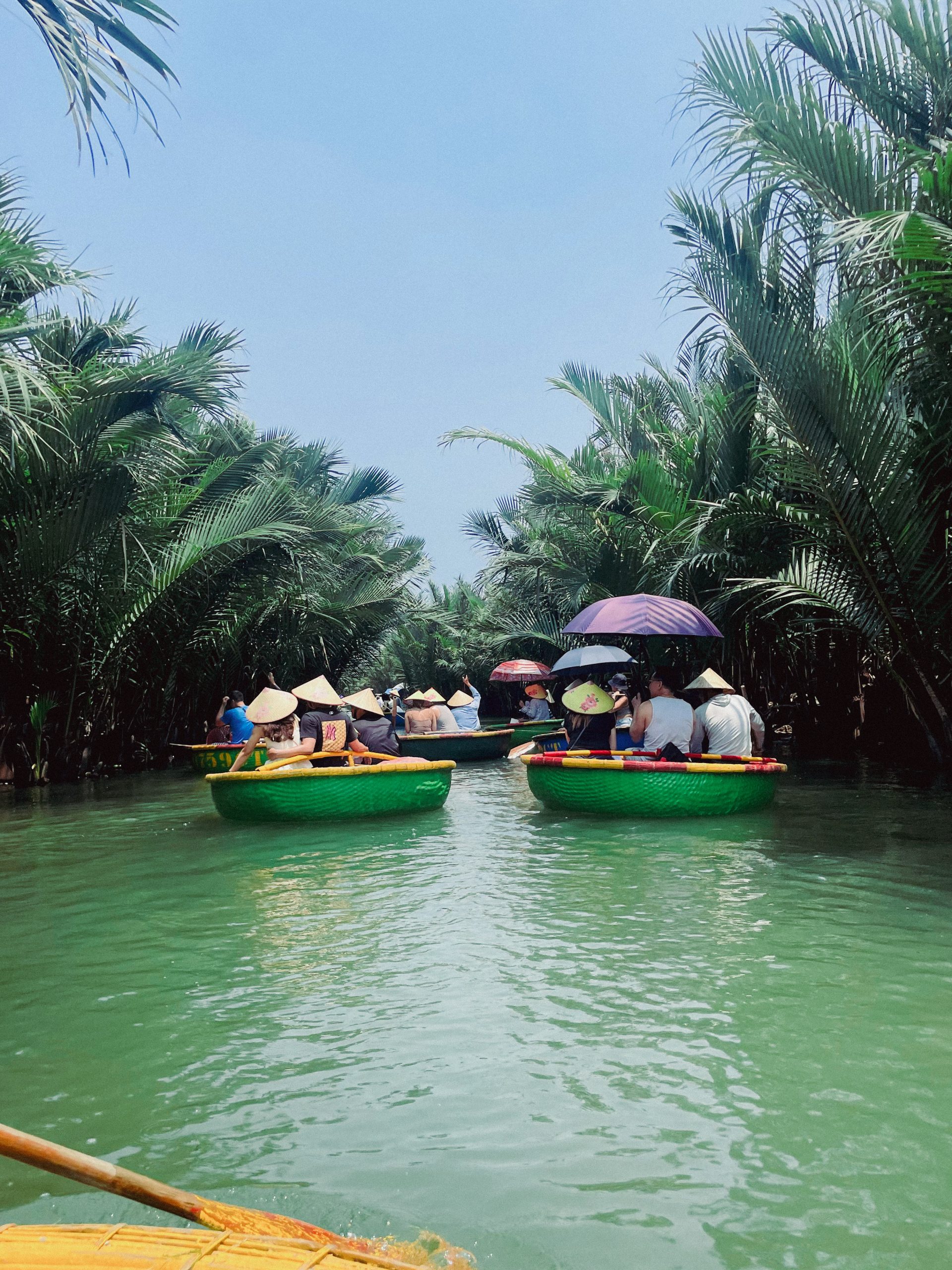
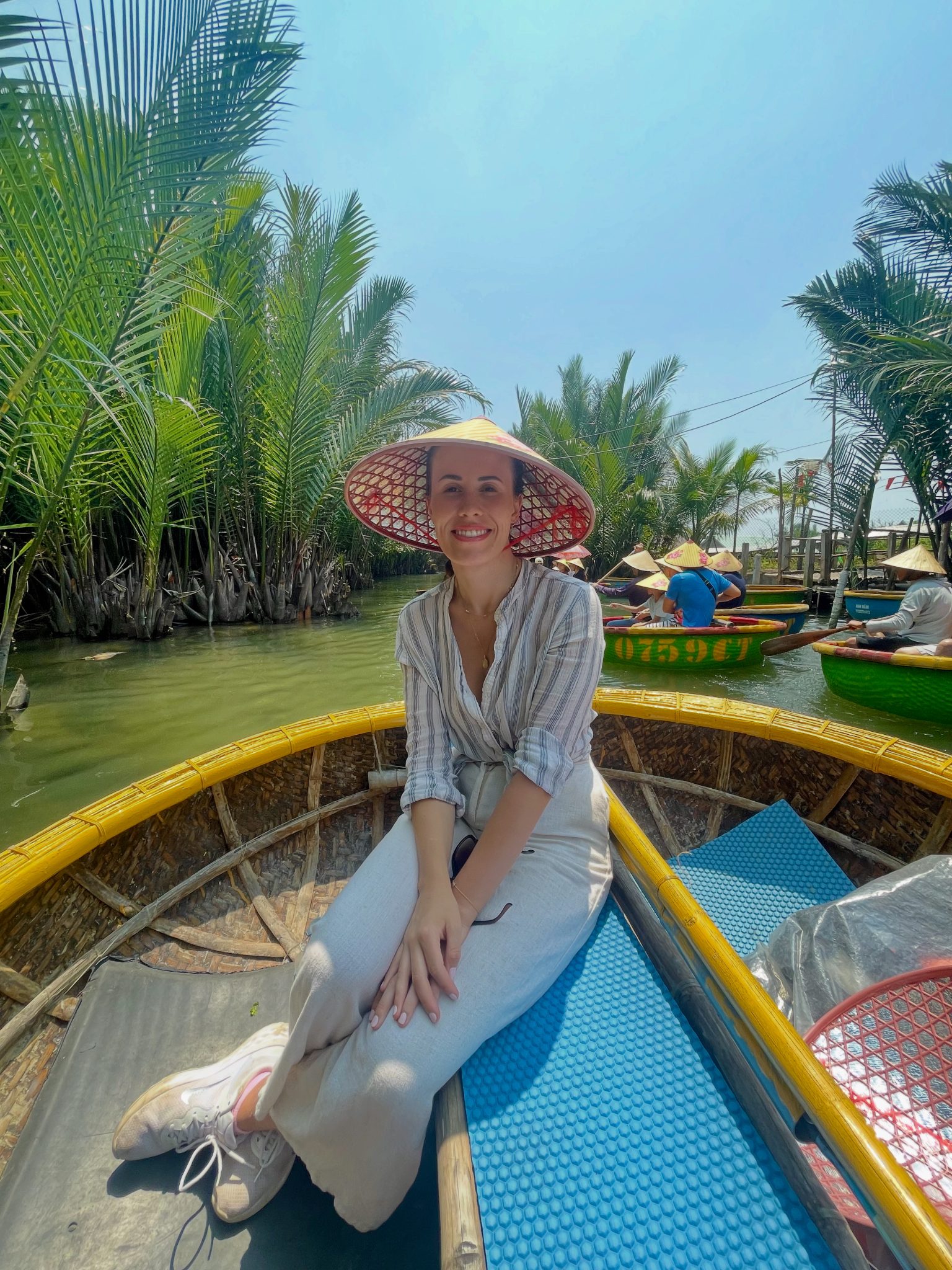
The coconut boats
I had a feeling they wouldn’t really be my thing, but I did them anyway because they’re so iconic. It’s cheap and only takes about an hour, but the whole thing does feel a bit tourist-trappy. You’re basically spun around while people sing and ask for tips. That said, the area itself is beautiful, and it’s nice to spend some time in such an important natural space.
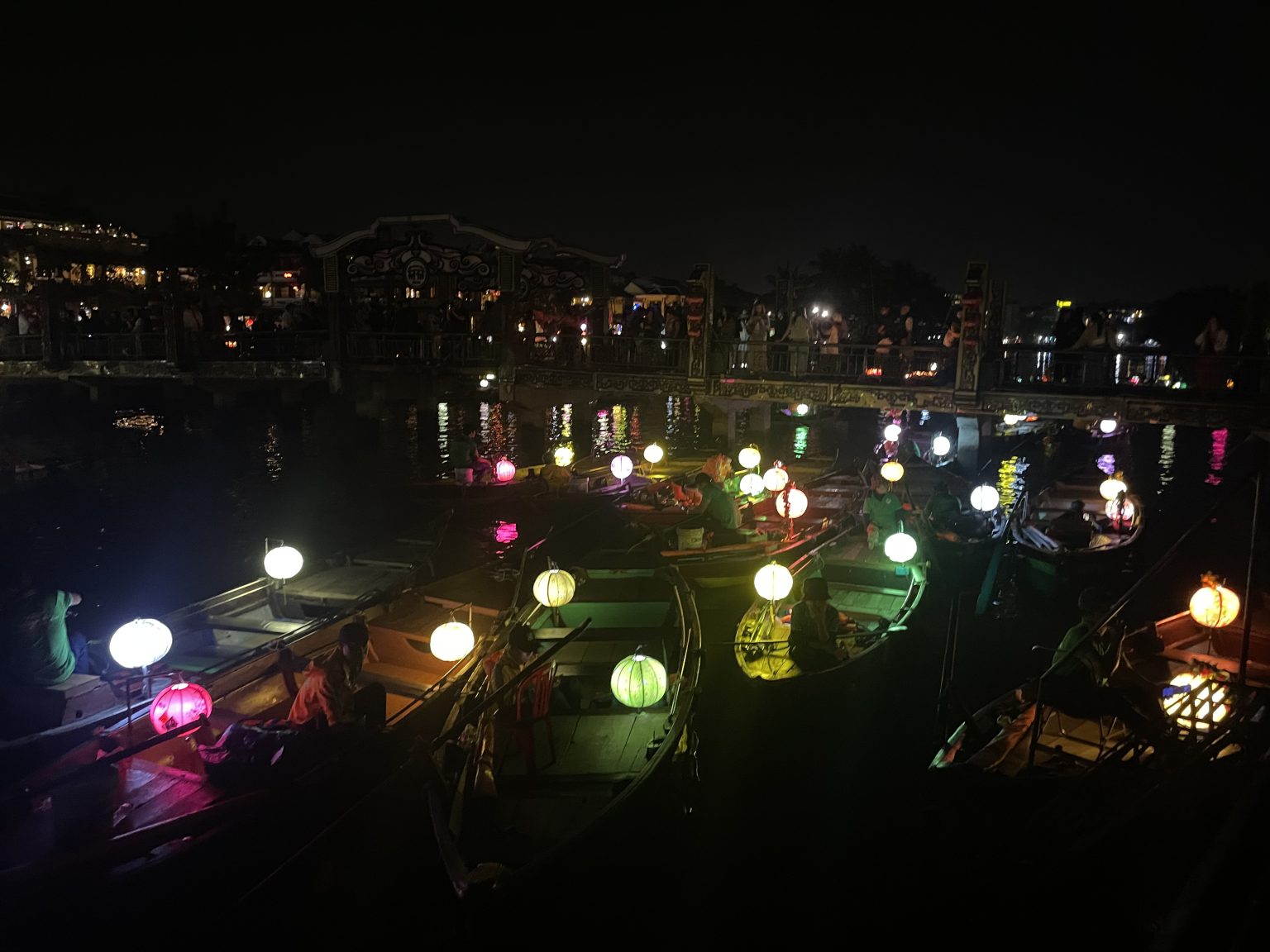
The lantern parade
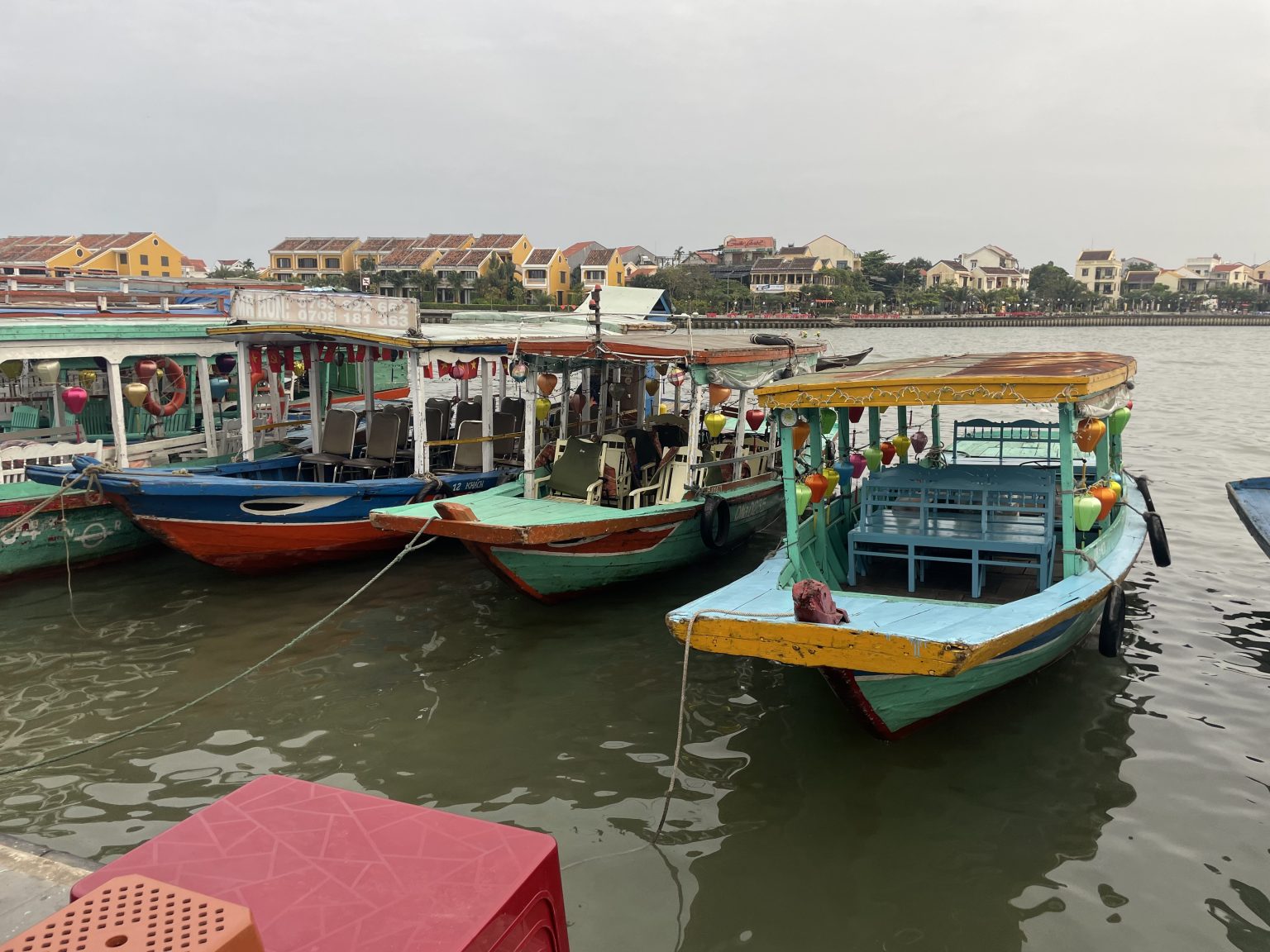
The multicoloured canal boats are pretty enough to look at, that’s for sure. But this isn’t exactly the sweet, idyllic scene you see on TikTok. It was busy, loud, and a bit chaotic, being right by the strip with all the bars and nightlife.
I also can’t help but feel that lighting lanterns is an unsustainable practice, which really put me off. Perhaps in future there can be a way to do this that is kinder for the waterways and surrounding environment, but until then, I’m unsure how I feel about it.
Despite the slightly overrated tourist-grabbing activities – which is true for any location – I found Hoi An overall, to be as cute as a button, and ended up staying for a week (though three days is probably plenty if you’re a tourist or short on time). The chaos of Ho Chi Minh City felt miles away, replaced by the hum of scooters, the cluck of chickens, and the buzz of baristas whipping up coconut coffees.
Heading there in mid-March felt like the perfect time, as we caught a slightly cooler weather window. After March and April, it gets really hot, then really rainy, before cooling down again in January and February. (Central Vietnam can also see flooding in the later months, so check conditions before you travel.) North Vietnam gets properly cold in the early part of the year too, so plan your trip with that in mind – and do not underestimate its weird weather!