
Similar Posts
Cooling off in Copenhagen
Is this the best city break in Europe?
Following three months visiting Asia, Bali and Australia in early 2025, I was craving less stimulation and more structure for my next trip from the UK. After eight years as a Londoner, there comes a point where you want to trade a backpack for a trench coat and boots, and with a friends’ wedding in Sweden approaching in May, it made sense for us to visit Copenhagen first.
I’d been curious about the Danish capital for some time. My parents spent their honeymoon there in the 80s and nearly always have Scandi drama on the go. I also recall having nightmares from a made-for-TV version of The Little Mermaid which, true to Hans Christian Andersen’s style, is far darker than Disney would suggest.
Luckily this trauma was corrected during my visit, and I left thinking Copenhagen might be one of my favourite city breaks so far. Maybe that was because, after the sensory sprawl of the far east, it felt so refreshingly calm and considered, with its wide pavements, seamless cycle lanes, and reliable public transport. Like a lot of Scandinavia, everything seems designed – not in a showy way, but in a cool, collected way.
Keep reading for food highlights, what to do, and the best day trips from the city.
What to eat in Copenhagen
Copenhagen is a bit of a foodie dream – which sort of surprised me – so prepare to go with an empty belly and a ready palate. Here’s a suggestion for you to spend your day eating around the city:
First – bakery breakfast
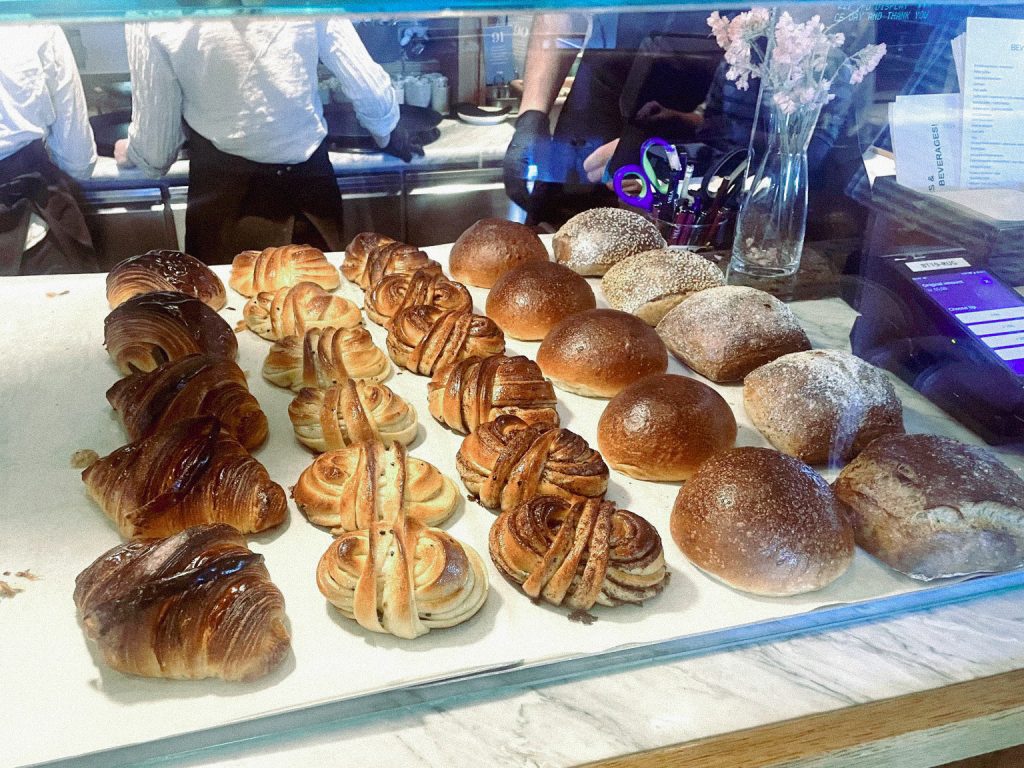
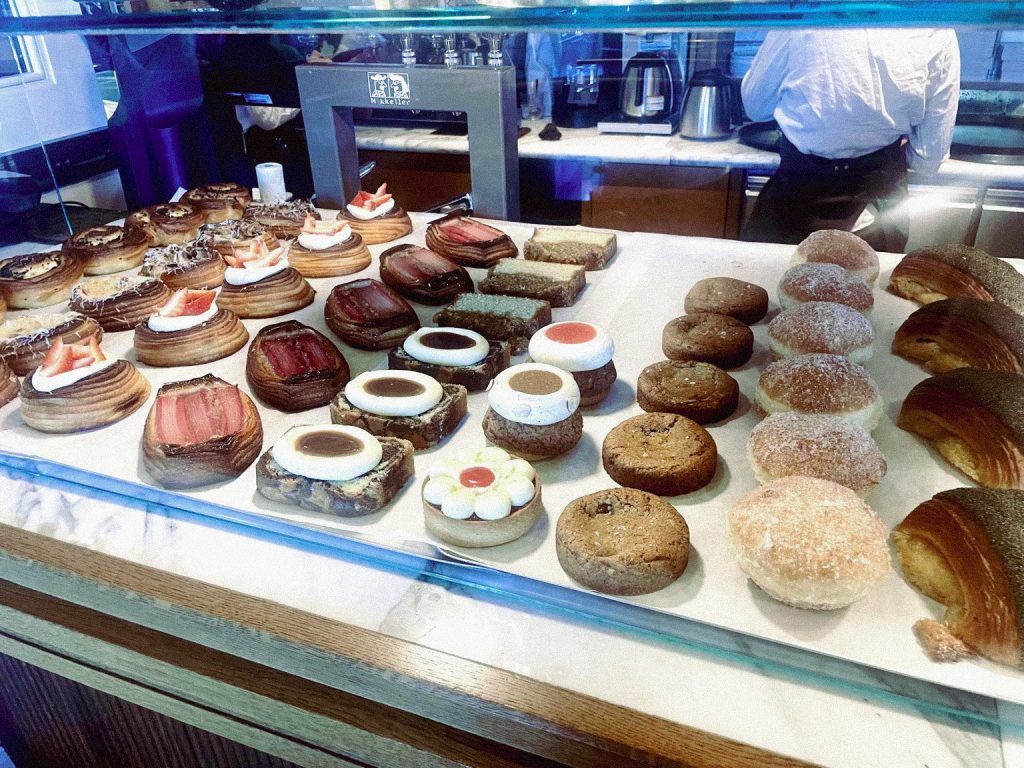
Skip the hotel buffet and head to Rug or Hart Bakery for some beautifully curated baked goods. They’re quite upmarket places with spaces to sit down and enjoy your loot. Bring a friend so you can split a bunch of them between you (or pig out alone!)
Next – Smørrebrød and beers for lunch
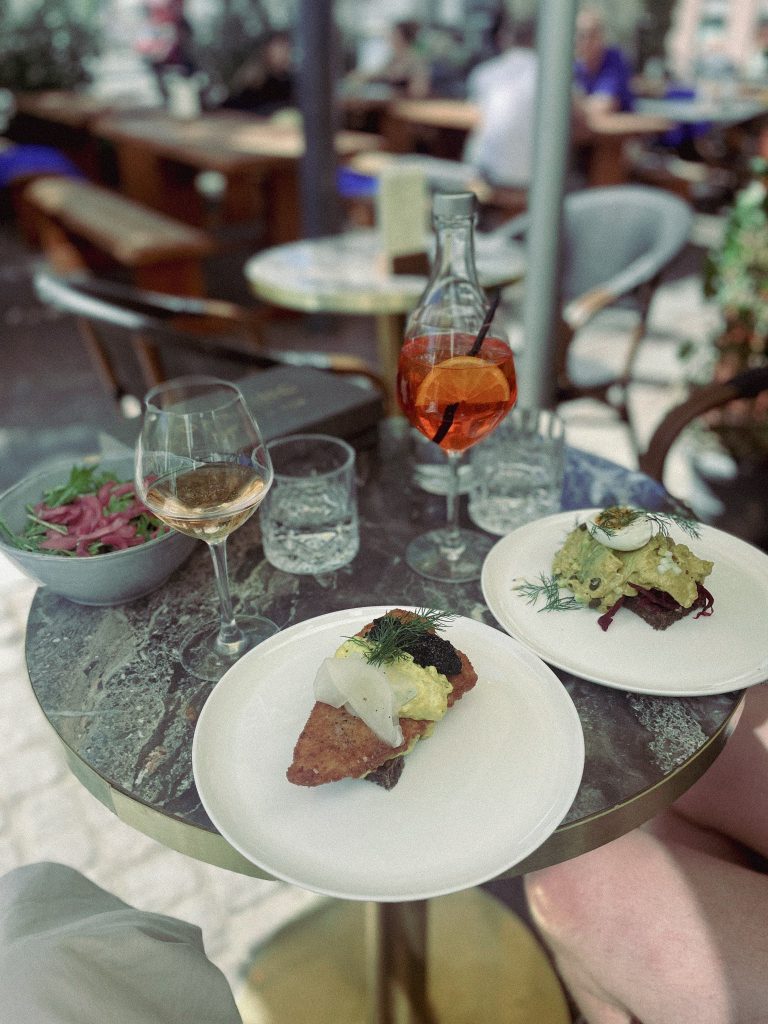
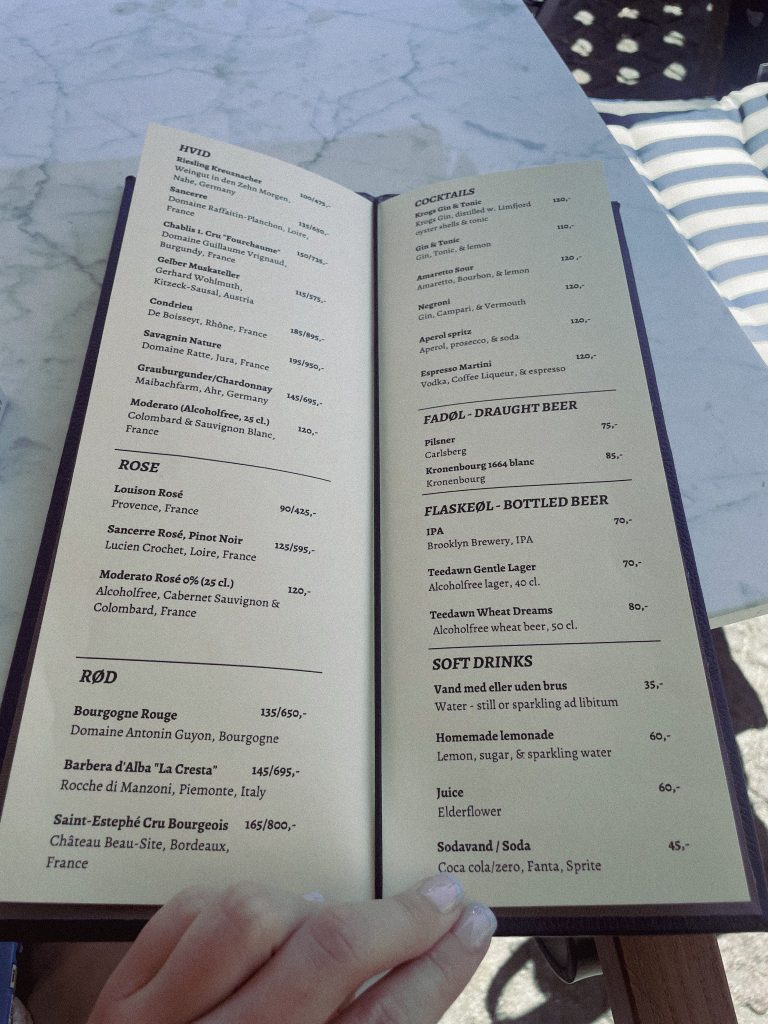
Smørrebrød is a classic Danish open sandwich – sort of like oversized tapas. Imagine a base of tangy rye bread, topped with smoked fish and pickled veg. We stopped on Gammel Strand, but you can find them all over the city. They’re delicious but not cheap, so order a selection and split them between you. Wash down with a beer (Carlsberg or Mikkeller). I can also recommend Bird cocktail bar in the city centre for a classier beverage.

Then – snacks at Broens Street Food
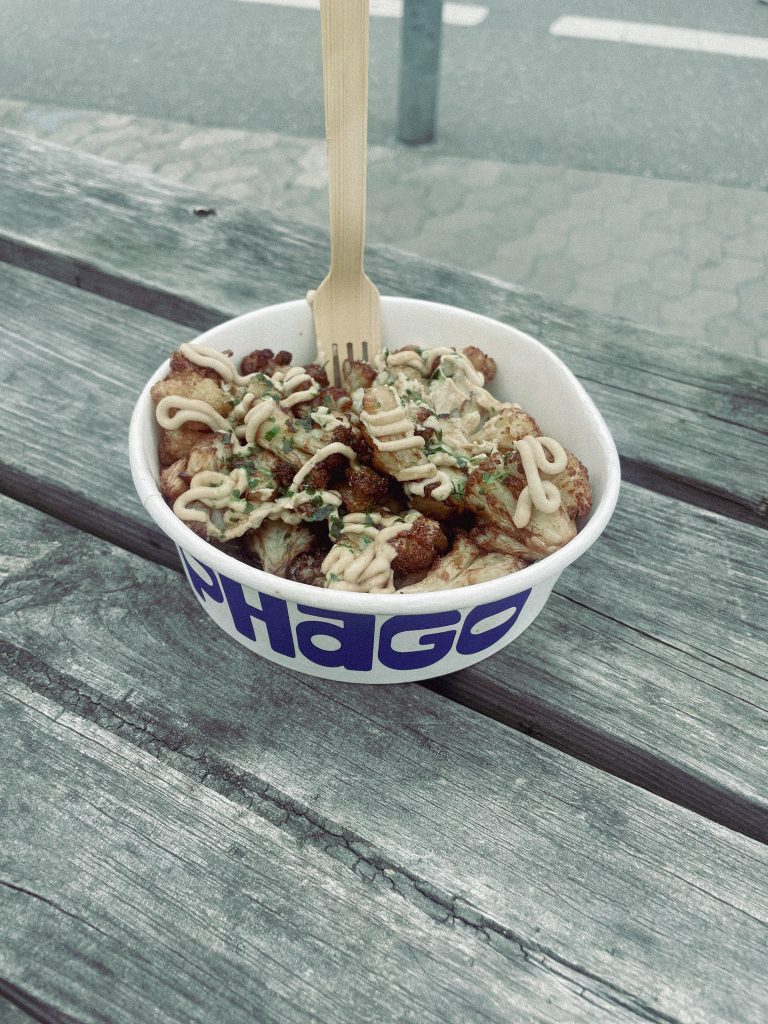
Sitting opposite the Inderhavnsbroen bridge, this is another cool food market from whence to snack, but you could also have lunch or dinner here. It is located on the Greenlandic Trade Square where the traders from Greenland, Iceland, the Faroe Islands and Denmark used to arrive after long journeys across the oceans. It’s a lovely spot from which to look over the water. Opening back up in March, it even offers yoga, social dining and other events to enjoy.
Finally – dinner and drinks at Reffen Street Food Market
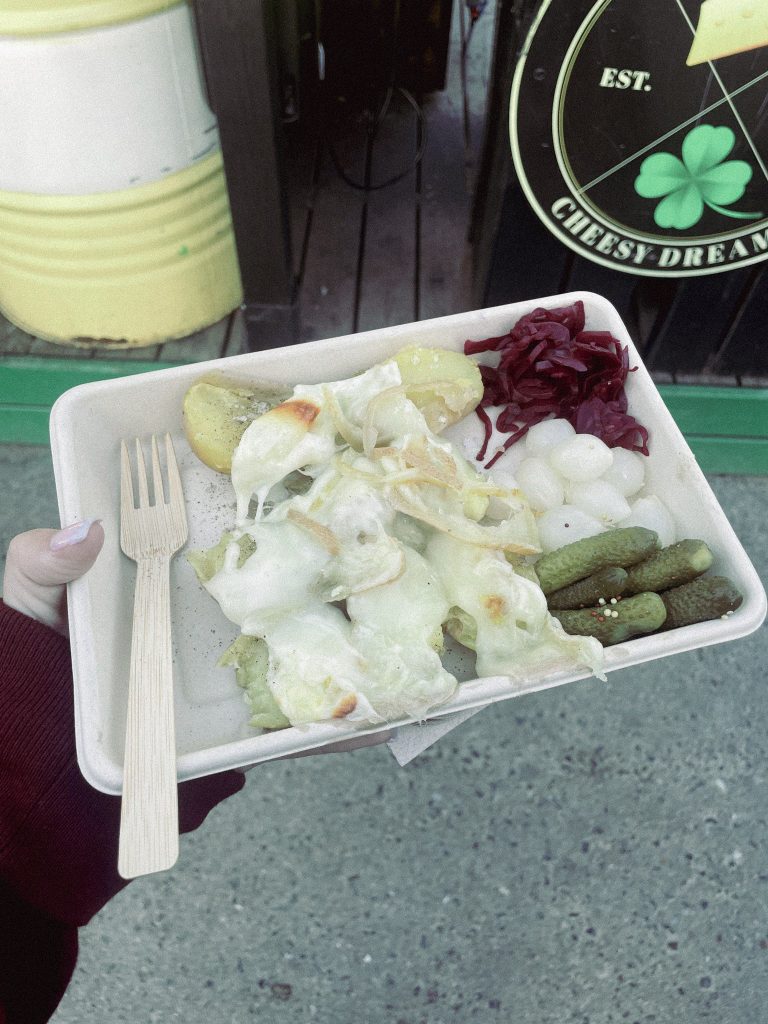
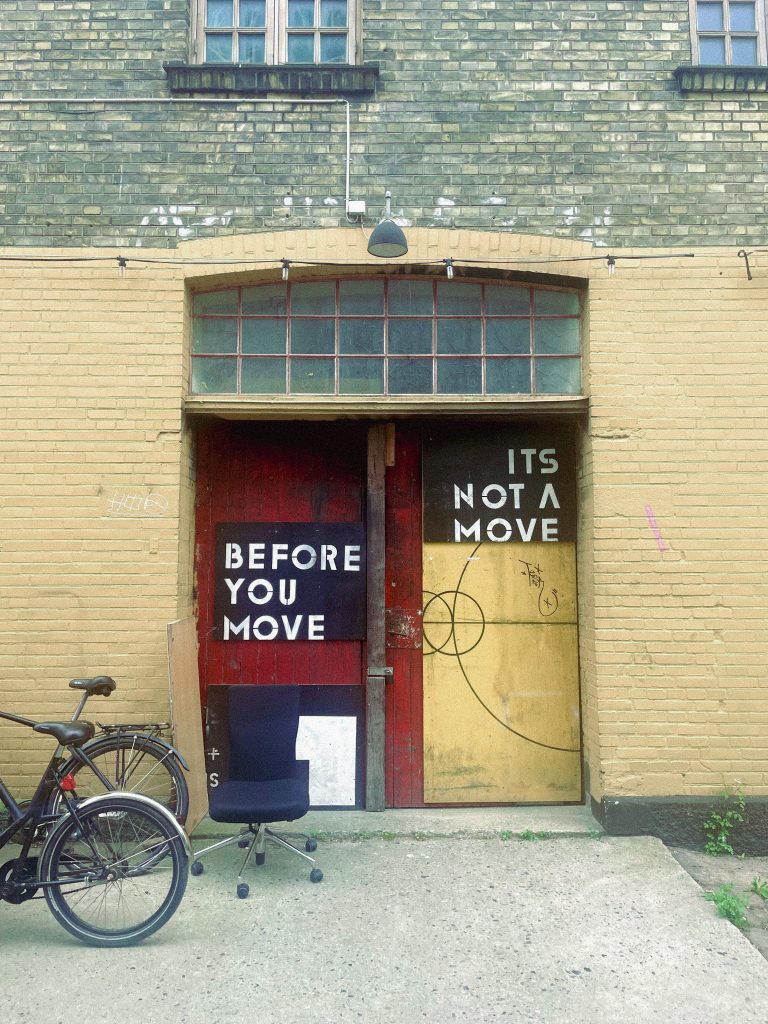
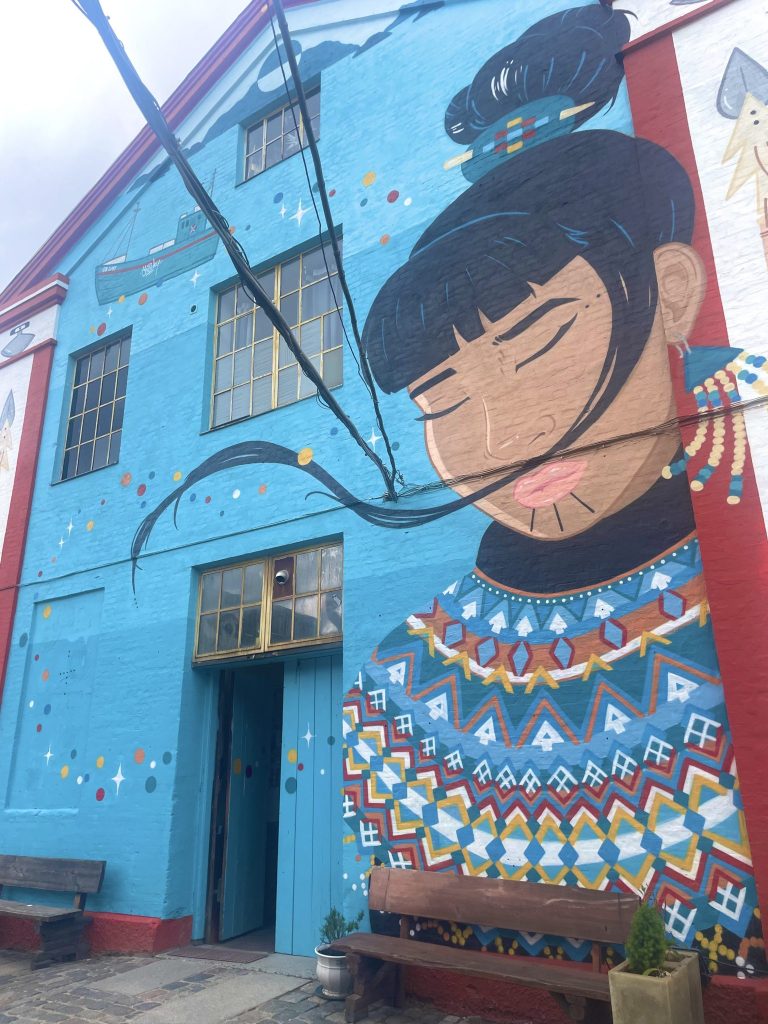
Proclaiming itself as the “largest street food market in Northern Europe”, this is another buzzing food market on the waterfront, hosting food stalls from around the world. For Londoners, it has a bit of a Hackney Wick vibe, complete with beautiful street art. Like Broens, it opens again in March and offers regular events that I’m always ogling on Instagram. A perfect way to see the sunset.

What to Do in Copenhagen
Most guides will suggest visiting Copenhagen for four days, which feels reasonable to me, although I stayed longer and felt there was plenty to see.
Here’s fun activities I’d recommend adding to your trip itinerary.
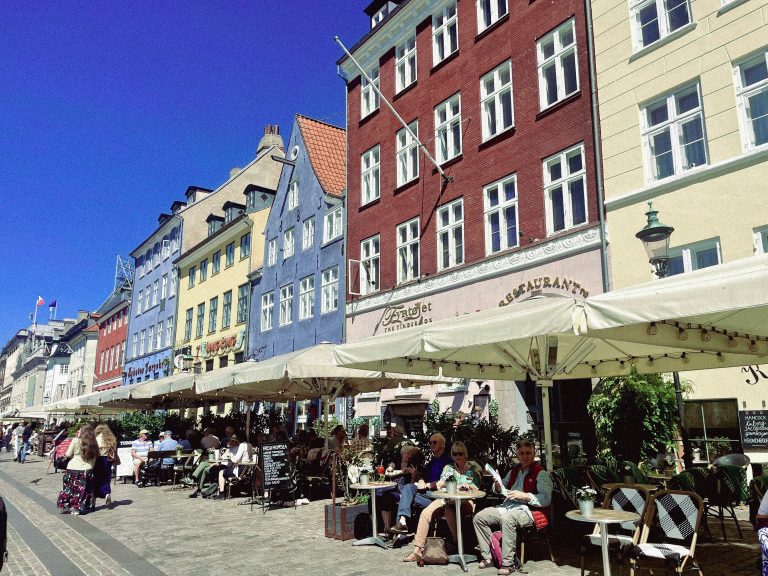
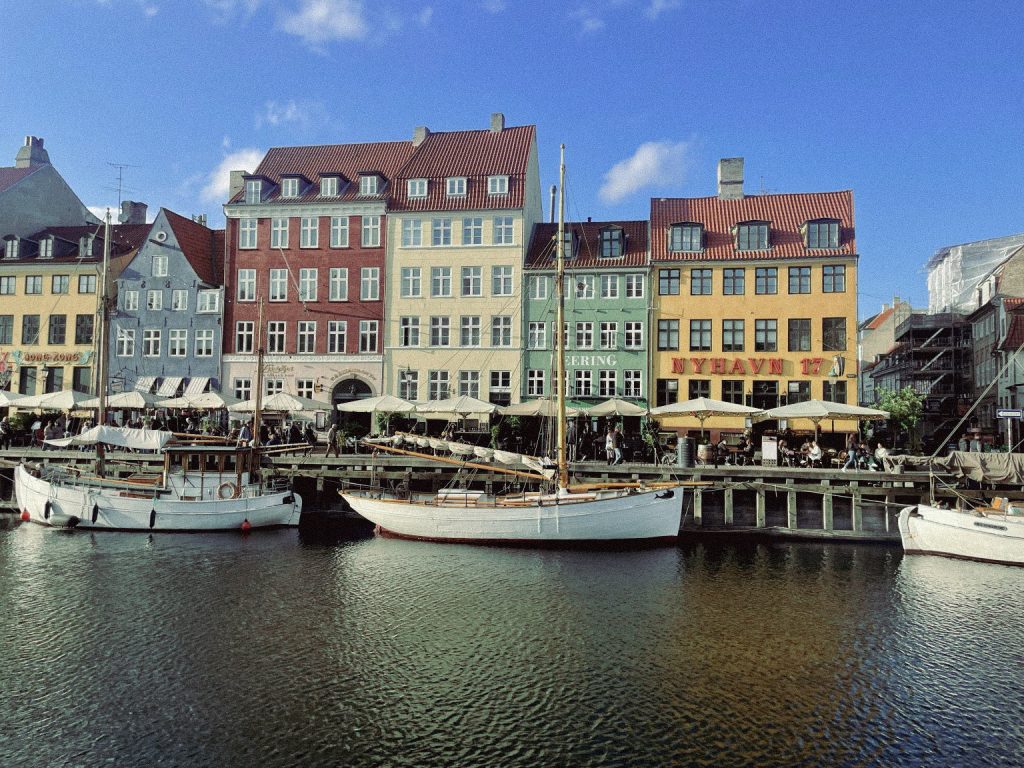
Take photos at Nyhavn
Spend some time walking about the iconic 17th-century waterfront, canal and entertainment district. Despite being a little touristy and expensive, it’s a great spot for photos. Just look at those gorgeous buildings.


Learn about hygge at the Happiness Museum
The Danes are pretty well known for their commitment to hygge – but what does that actually mean? Well you can learn all about it at The Happiness Museum, curated by Denmark’s Happiness Research Institute. Lots of fascinating takeaways from this place about how different cultures measure happiness and I found myself reflecting deeply afterwards. All millennials (or anyone feeling slightly lost in life) should come here!


Marvel at chairs at the Design Museum
I cut my teeth doing design PR, so I couldn’t miss this and it totally delivered. Who knew so much thought went into the development of a chair? If you get satisfaction from efficiency and beautiful problem-solving, you’ll love spending a couple of hours at the Design Museum.

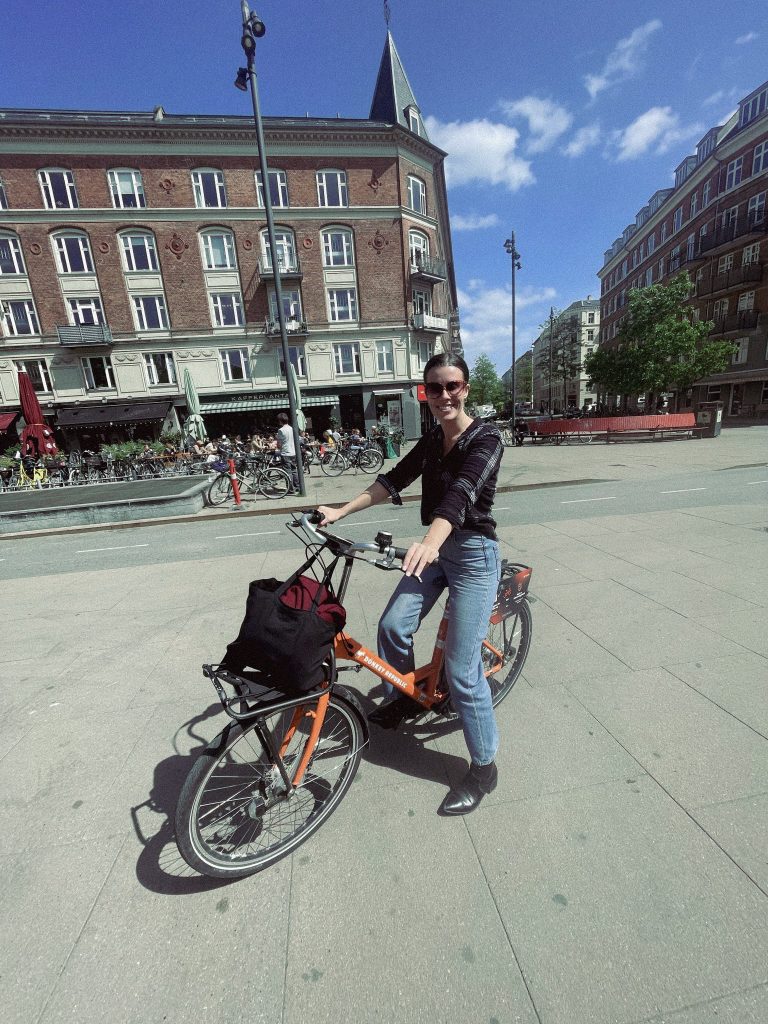
Shake off the chill with a cycle about the city
Probably the best way to see Copenhagen – especially between May and September. Use the app Donkey Republic to hire bikes.


Do a walking Tour
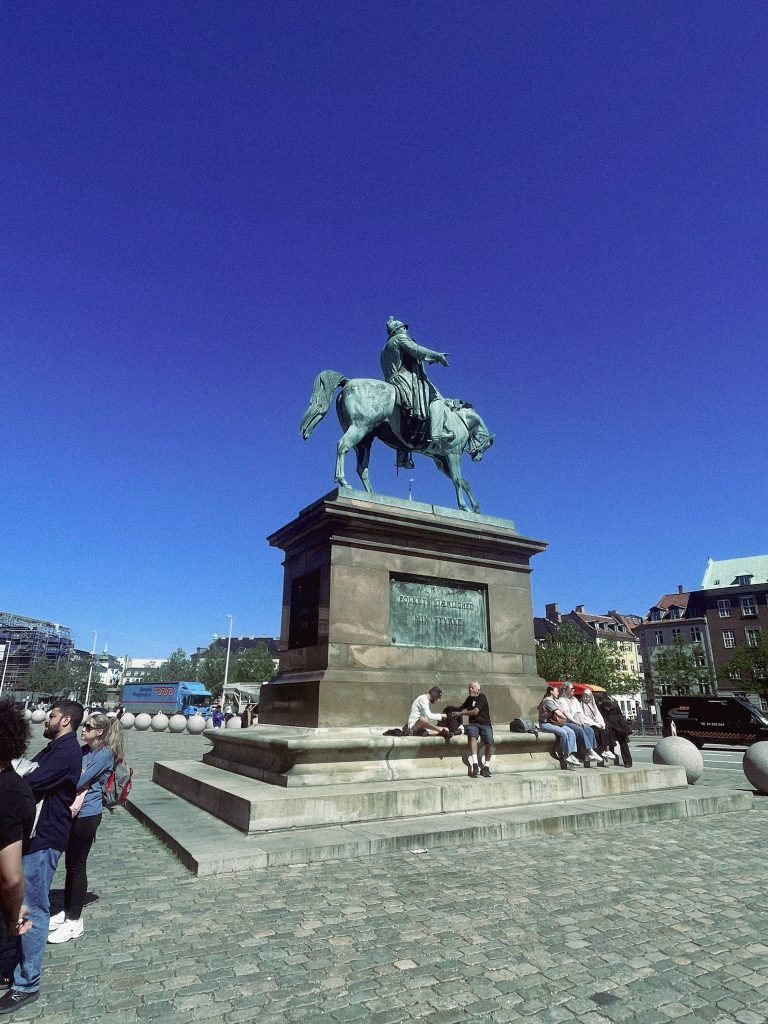
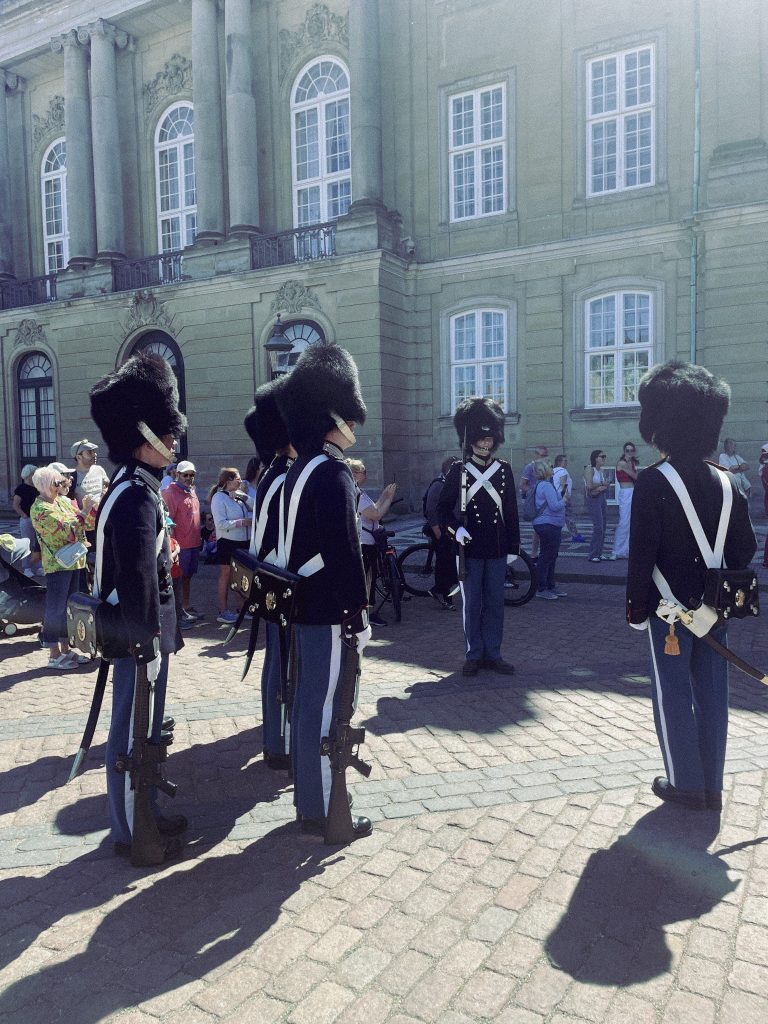
A great way to understand the city’s history. Every tour is different, but ours covered the royal family and Denmark’s WWII experience. If you’re not booking via your hostel or hotel, try Get your Guide or Guru Walks.

Visit the Little Mermaid statue
Emphasis on “little”. She’s teeny but powerful – just look at her Disney empire! The statue is an ode to one of Denmark’s most famous writers, Hans Christian Anderson and sits in edge of the Langelinie promenade, making an excuse for a nice walk.

Ride around Tivoli Gardens
Continuing the Disney link – I recently discovered during this podcast by The Rest is History, that Tivoli gardens amusement park was Walt Disney’s original inspiration for the disney parks. Feels a bit random having a theme park bang in the centre of a city but if you fancy an adrenalin rush, it’s typically open from March.
Art appreciation at Freetown Christiania
Describing itself as an “intentional community”, Freetown Christiania is a separate community in Copenhagen with a history dating back to the 1970s. It has its own laws, flag and way of life. Visitors can enjoy the cafes, art, and market, and it seems there’s often live music and other arty things going on. It’s definitely worth seeing for a different side of the city.

Cross the Bridge to Malmö or Lund
Why not cross the bridge from The Bridge and head into Sweden?
Copenhagen sits right on the border, and it’s just a short train ride across the Øresund Bridge into Malmö in Sweden. From there, Lund is around an hour away.
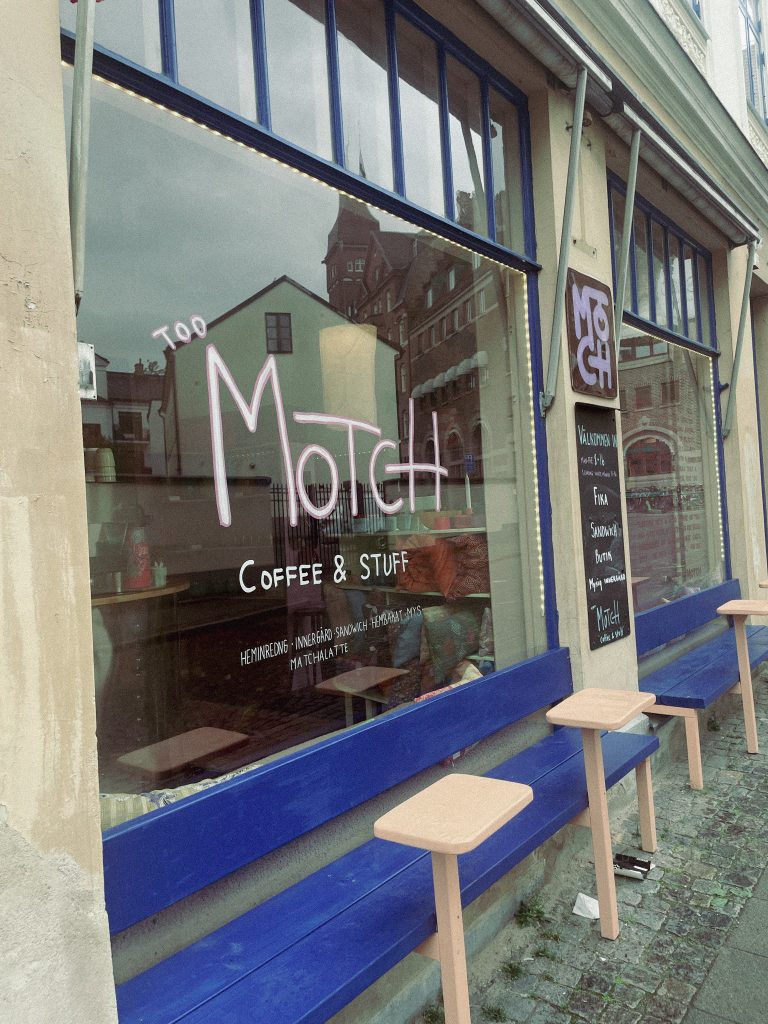
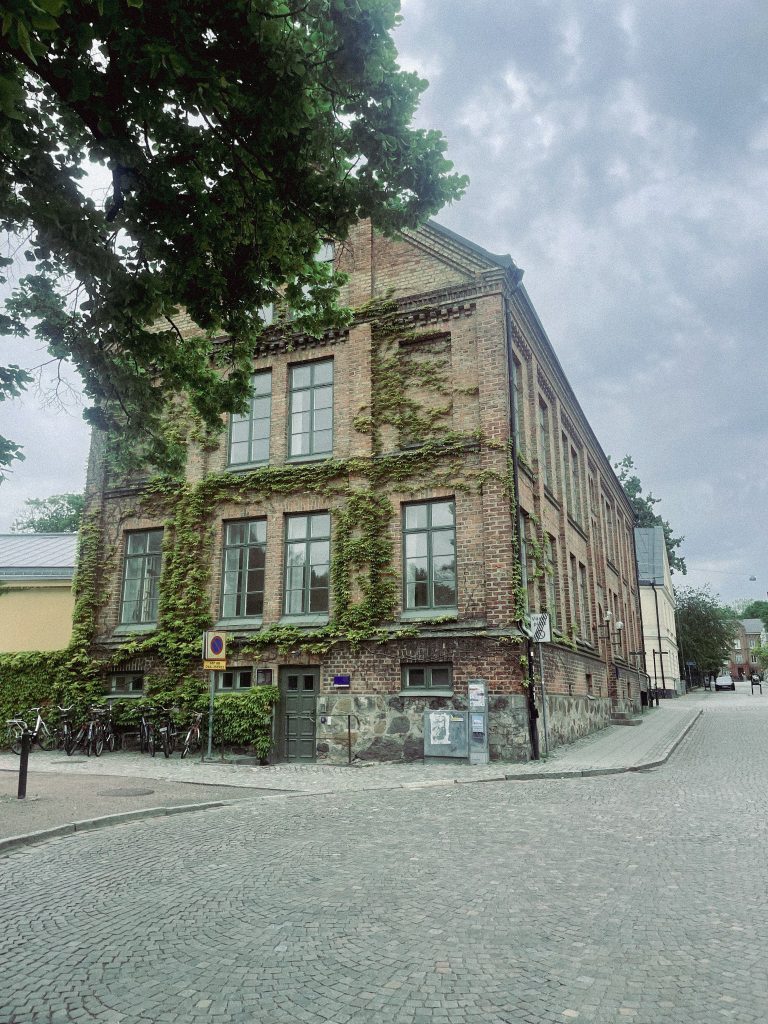
Lund – home of the Oatly factory – is a charming university town and worth stopping in for a night or two to sample the café culture and wander around the historic university buildings. I spent a lovely two days checking out the vintage shops and cafe hopping here. Some favourites included Broder Jakobs and Too Motch.
I didn’t particularly love Malmö, but the Disgusting Food Museum is admittedly a fun (if slightly grim) stop if you’re in the area.

A place of quality not quantity
Copenhagen isn’t the cheapest city break but if you want somewhere that combines good food, thoughtful design and just enough culture to feel smug about it afterwards, the Danish capital is hard to beat. Between the pastries, museums, harbour swims and slightly intimidatingly stylish locals, it’s a city that feels both relaxed and quietly inspiring. I went with friends, but also had some days alone, and found it very well suited to solo travelling (for more solo city break inspo, read my Porto blog). If you’re into looking like you belong on a design mood board, visit between May and September when the city really comes alive. I’d be intrigued to see what it’s like in winter – maybe another time!

Dodging lizards in Thonburi – My first 24 hours as a nomad in Asia
Having swapped life in London to work remotely abroad, what did the Thai capital have in store for me?
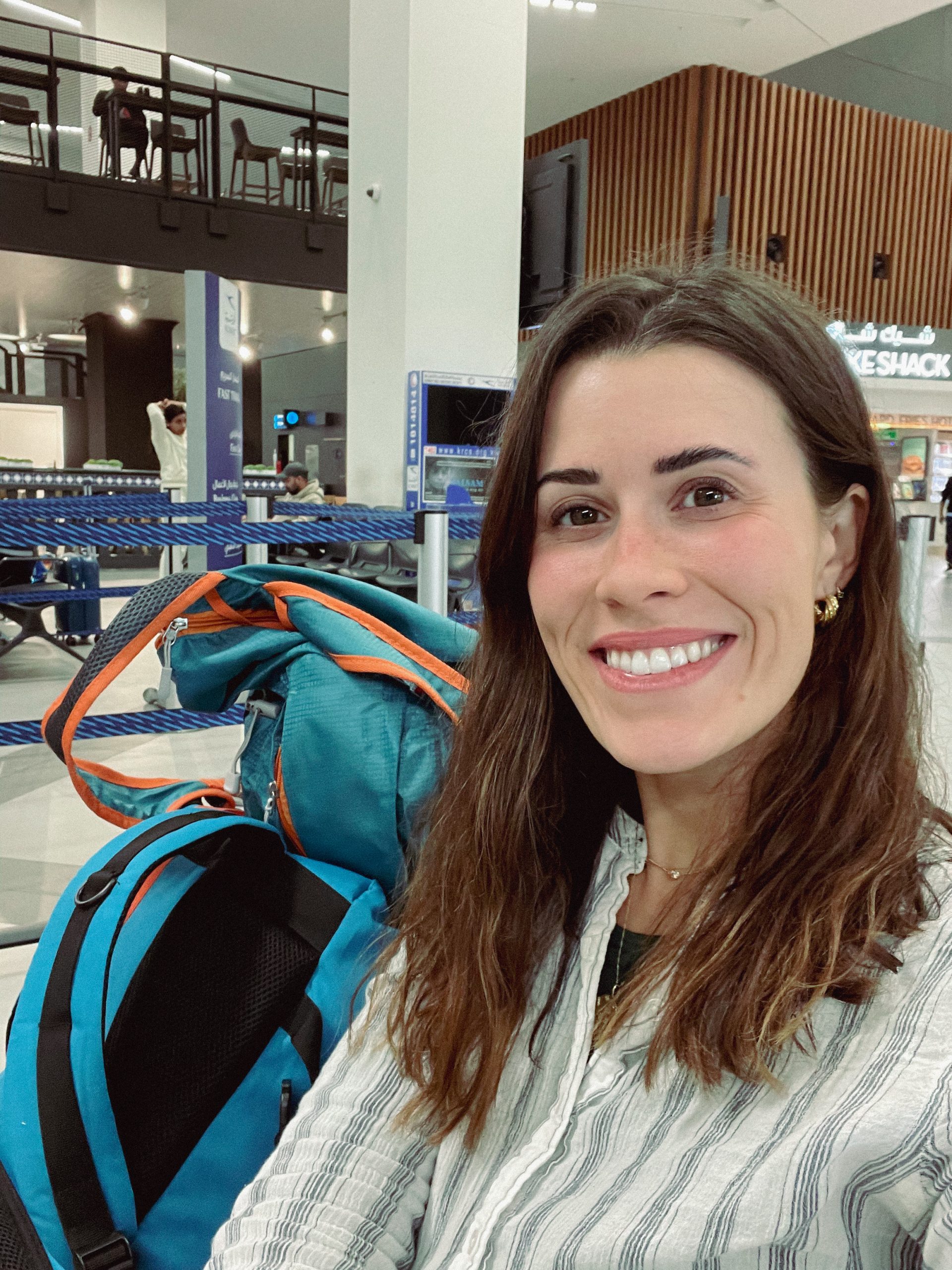
At the end of 2024, I quit my corporate job in London after eight years in the capital, and started life as a digital nomad in Asia.
It was thus that I found myself, two flights and 15 hours later, at Suvarnabhumi airport, Bangkok – freshly spray tanned, and braced for change.
After having successfully withdrawn baht, updated my family, filled my water bottle and downloaded my e-sim, I had a full two to three days to explore the city before moving North to the town Chiang Mai, a well known nomad hot spot.
I was staying in Asoke, right in the centre of the bustling mecca of Bangkok. It’s seriously busy – think wide streets laden with traffic – but a good location from which to see the main sights.
I got lost a few times, but for once there was no tube to catch, no meeting or engagement to get to. Nor was I a backpacker on a shoestring budget or timeline. Why am I rushing to my hotel? I thought with a thrill. I have time to figure it out.
As I traipsed through the streets with my rucsack, the heat started to wear a little, however. I was grateful that I’d limited myself to hand luggage only, packing just a few clothes and my refurbished MacBook Air – about the tiniest laptop ever made.
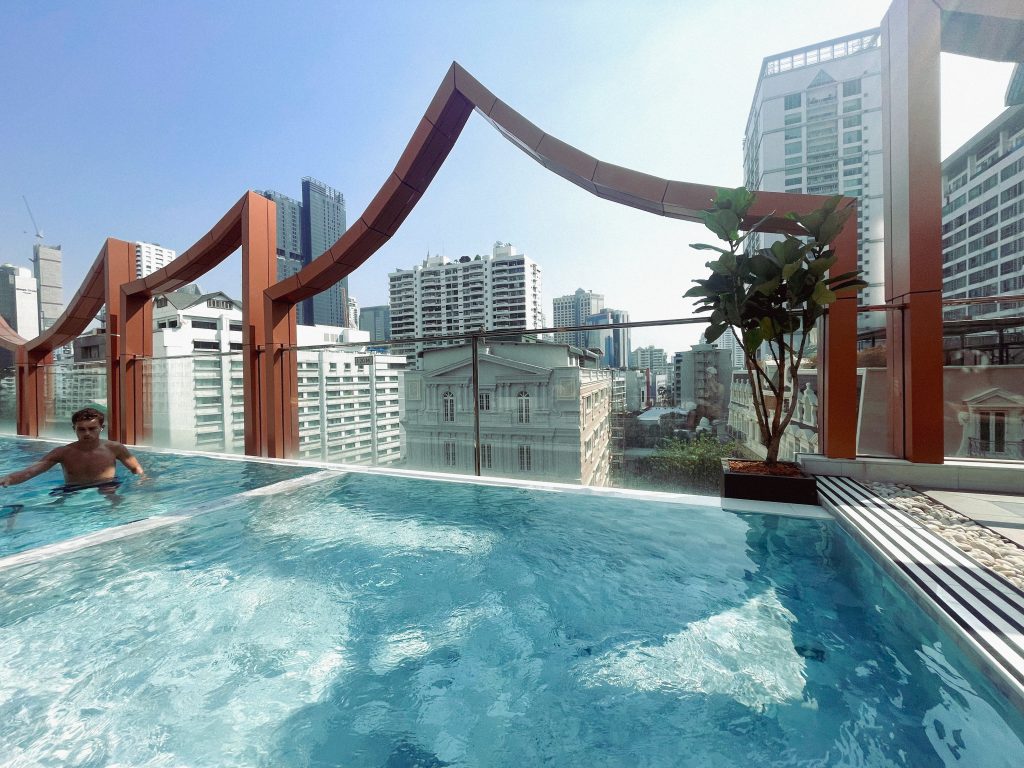
When I arrived at the lovely Samala hotel – which was later damaged in an earthquake – I cooled off with a little visit to the pool, a Singha (Thai Beer), and after a short nap, contemplated what to do next.

Snacks at Ruam Sab market
First up, food of course. The benefit of being in the business district of Bangkok is that you’re never far from a decent market.
I’d spotted Ruam Sab market on my way to the hotel, so journeyed back with my pockets jangling.
Having done a bit of prep for my time abroad (thank you RetiredWorking4U), I knew this food court was where the local office workers came for lunch. As such, it was best to arrive early – especially as I wanted to look about and soak it all in.
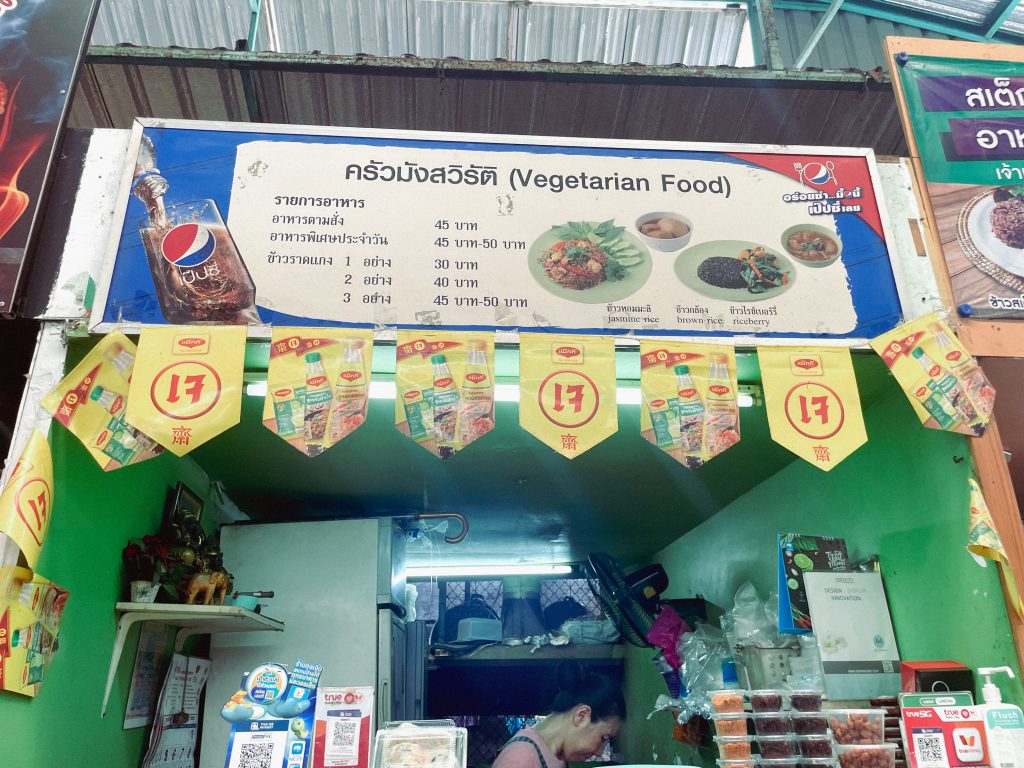


Vegetarians – look out for the yellow Je flag!
Whilst I was seriously tempted by the deep fried bananas, I eventually settled for some Morning Glory (water spinach) with rice, and some kind of broth, lathered with a mix of chillies, soy and fish sauce, which is typical all over Thailand.
Meat is eaten in the country, but veggie stalls sometimes have a yellow Je flag, which was a big help, as I don’t eat meat that often.
Stomach full, I was ready to get out and explore.
Touring Thonburi
Nothing beats a tour for getting your bearings, and I’d already found a business online called Hidden Bangkok Tours led by a local chap born in the area.
He runs boat trips in Thonburi, the quieter, more traditional part of Bangkok on the western side of the Chao Phraya River – the “city behind the Pagoda”, he said in one YouTube video.
There’s no doubt social media can kill your brain, but one of the lovely takeaways is finding unusual activities you might not typically consider, like this one.
Desperate to see some lizards, off I popped to Thonburi. As we journeyed through the khlong (canal) in our brightly coloured tail boat – right in the shadow of the giant golden Buddha, in fact – we had what I felt to me like a more authentic insight into the city.

Before I arrived in Bangkok, all I could picture in my head was roads, wires, and hotels – which is accurate – but I was surprised to learn that it’s also lined with waterways. In fact, it’s at huge risk of climate change due to rising sea levels from the low-lying Chao Phraya delta.
Until the late 19th century, the rivers served as the primary means of transportation for people and goods, earning it the nickname of “the Venice of the East”. Venice – in Thailand! Every day’s a school day.
Our guide explained how the old wooden houses lining the canal were what most local Thais lived in, with many families still working directly on the river (although some were now Airbnbs).
We met a couple of them, including a lady who’d sold fish on the river her whole life and, if I remember correctly, had funded her children’s university education with her earnings. I’m not sure how true this is, but either way, it’s a cool story.
Shots from Thonburi, a riverside community located on the western banks of the Chao Phraya River
Being over a century old, many of the properties – which were built on stilts – were beginning to fall into the river. Rebuilding requires official permission, which makes it difficult for residents to maintain them, although I didn’t get to the bottom of why such permission was difficult to secure, sadly.
We then stopped for coffee at an adorable, centuries old wooden house called Baan Silapin, the “Artists’ Village”. It appeared that this was where the young Thai’s hung out, and I spotted a couple on a date feeding catfish by the water – as you do.
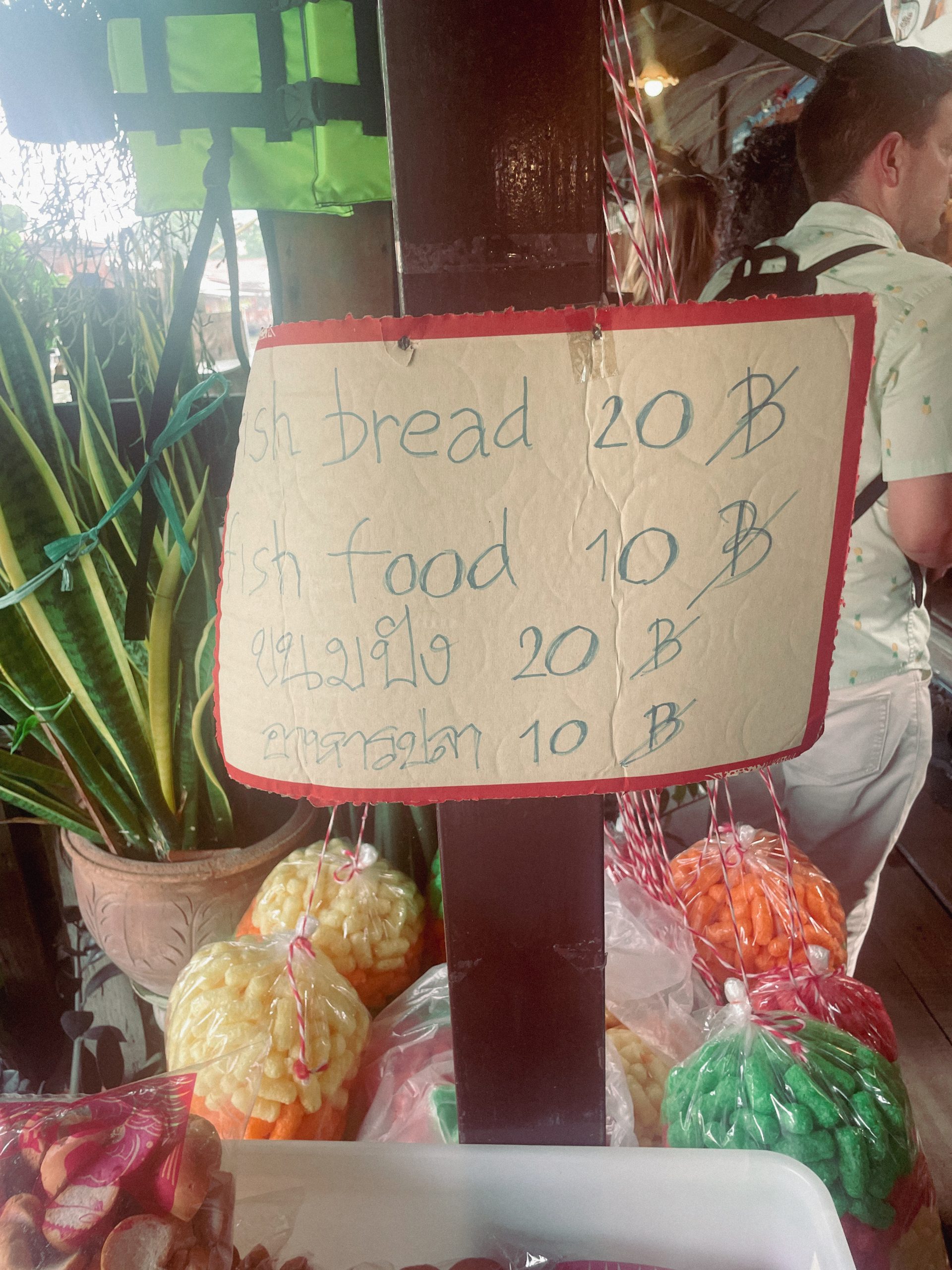
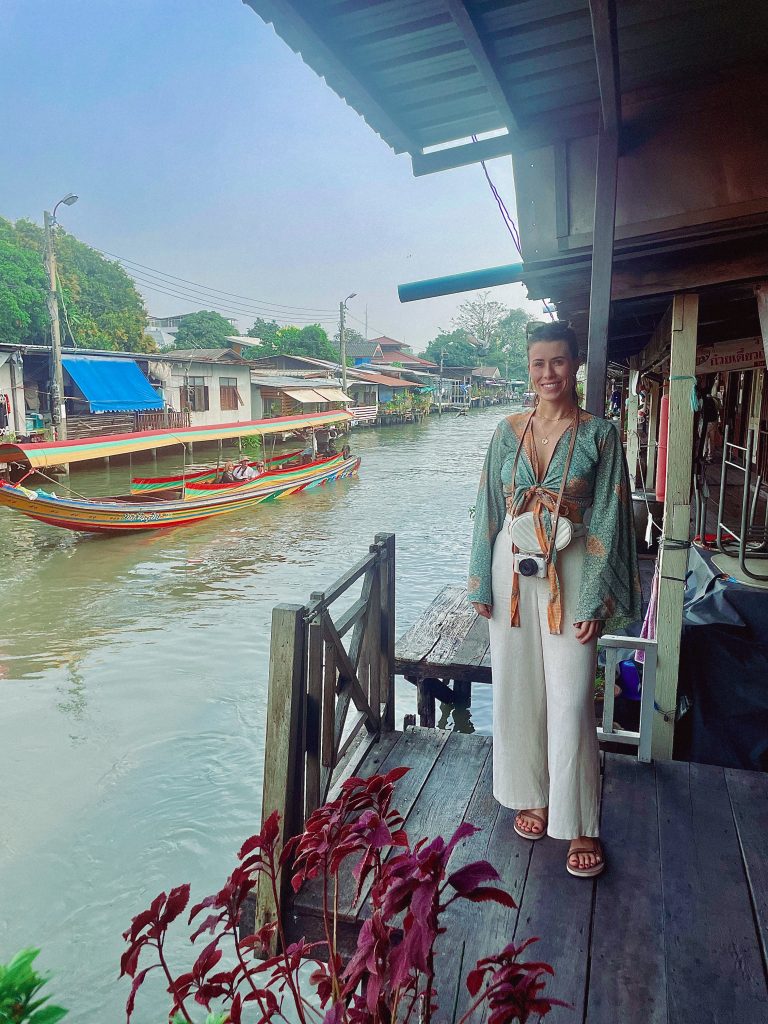

All the colours at Baan Silapin “Artists’ Village”
Others – a mix of locals and tourists – were painting in the cafes, observing the local art, picking up trinkets, and generally slowing down. It wasn’t overcrowded, and felt a bit hipster – like a slower, hotter, Hackney Wick. Without the beanies (thankfully).
After the intensity of Asoke, this was a refreshing change of pace – a chance to see a side of Bangkok that I suspect often gets missed.
Do make time for a visit here if you need to unwind from the city.
There’s no need to get a tour, but it certainly adds context and colour. Importantly, I learned how to say Bangkok in Thai – possibly the longest word ever said – check it out:
Trying my first Khao Soi
After my cultural baptism, what else, but more food? Bloggers advised I try Pad Krapao or Khao Soi, a noodle soup in a curry broth, topped with crispy fried noodles. I was keen to work out if I could find vegetarian versions, so later caught the bus down to the thriving Vadhana District in central Bangkok.
Having been kindly directed to the right stop by a group of local ladies who’d teamed up to ensure I didn’t get lost, I found – by chance – a little place called Zong Peep, serving tofu Khao Soi. I promptly tucked into a huge bowl and a coke for the price of about £3. It was a delicious mix of salt and spice.
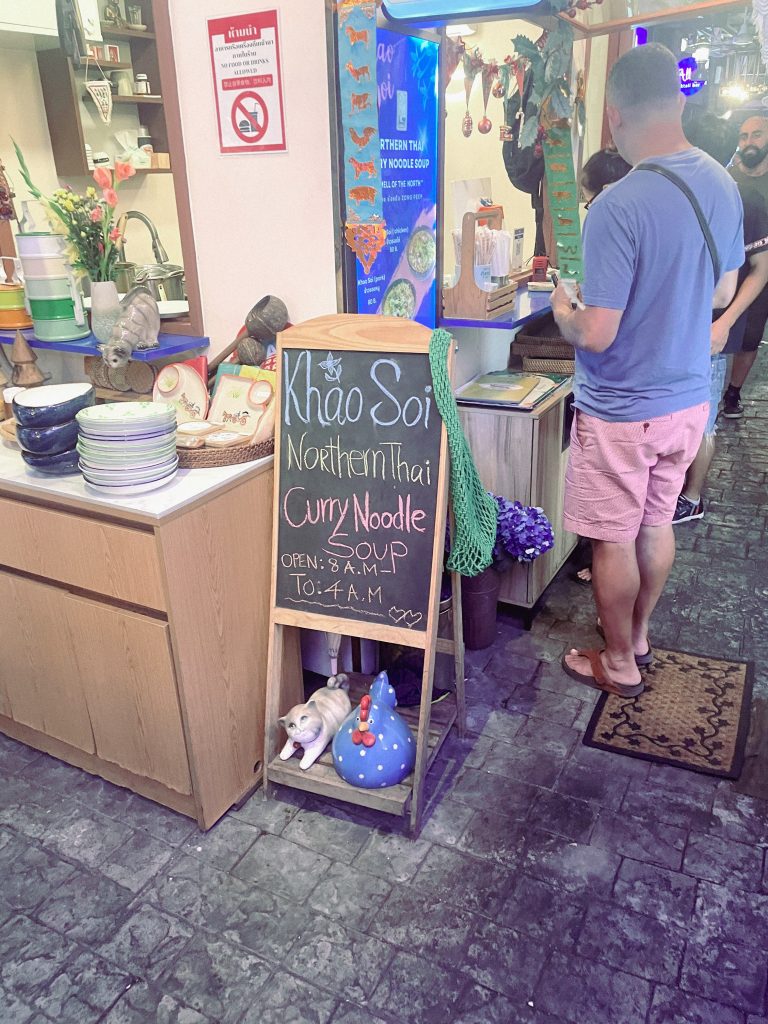
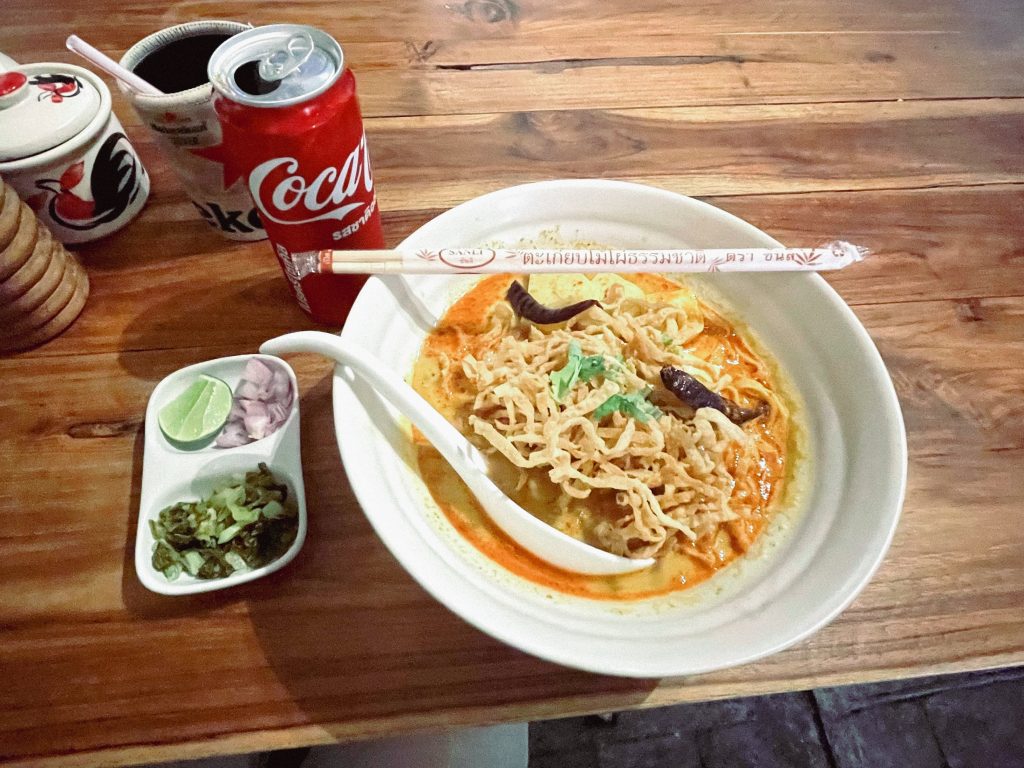
Khao Soi is one of the best loved dishes in Thailand
Belly full once again, I was pretty shattered and ready to hit the sheets. Do you know the way to Samala? I asked a security guard at a nearby hotel. My mate will take you, he said, shouting over to a guy on a moped.
Better not add this to my stories, I thought, knowing my Mum was watching. But no time to dwell. I pulled the helmet on and off we went, slithering down Sukhumvit in a game of real-life Mario Kart.
Back at the hotel I dived under the covers and set my alarm for an early start. Contrary to my parents’ expectations, I hadn’t been killed, kidnapped or poisoned – so all in all, a great first day.

My first moped ride of the trip
Stillness under the stars – my unexpected adventure in Scotland’s dark sky town
By the end of 2025, I’d completed ten months of flexible work and travel, following a stretch of steady living in London.
Between the bustle of Bangkok; the beaches of Cambodia; the quiet jungle of Bali; and the historic streets of Europe – there’d been much to absorb.
But while they were all meaningful experiences in their own way, I craved more purpose for my next adventure.
That’s when I spotted an email from the volunteering platform, Workaway: “Hi Georgina. We saw your profile, and wondered if you would like to help out at our English language school in Scotland this December?”
Rarely in need of a reason to visit the home of the brave, a month later, I found myself in Moffat, a small town in Dumfries & Galloway.
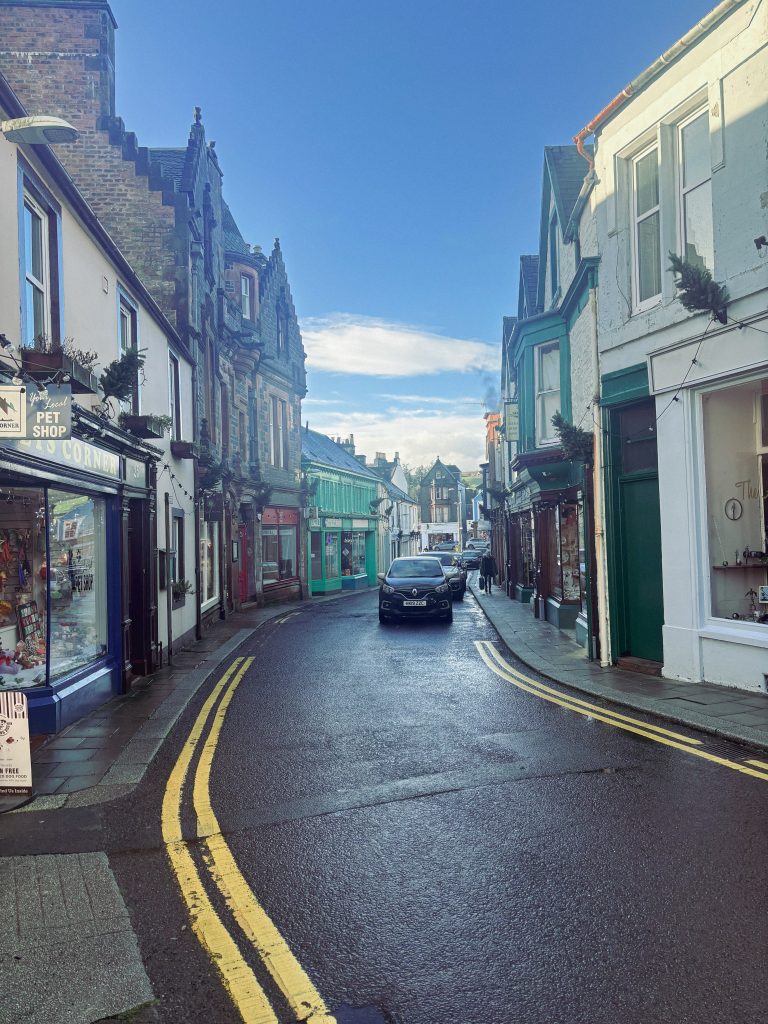
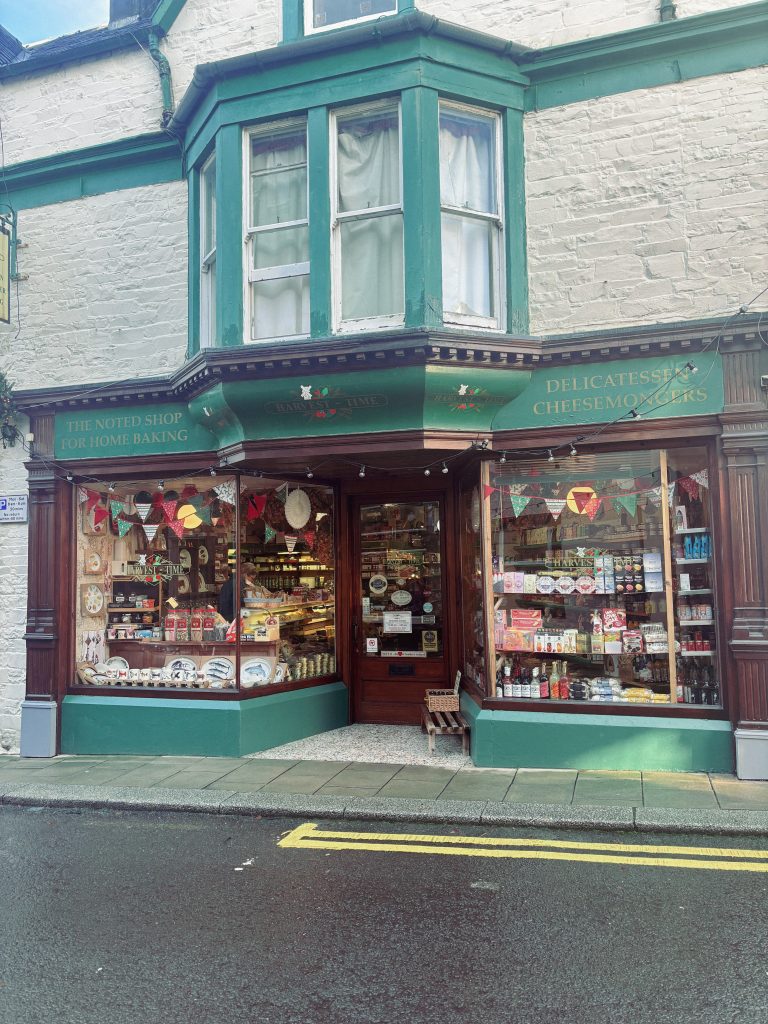
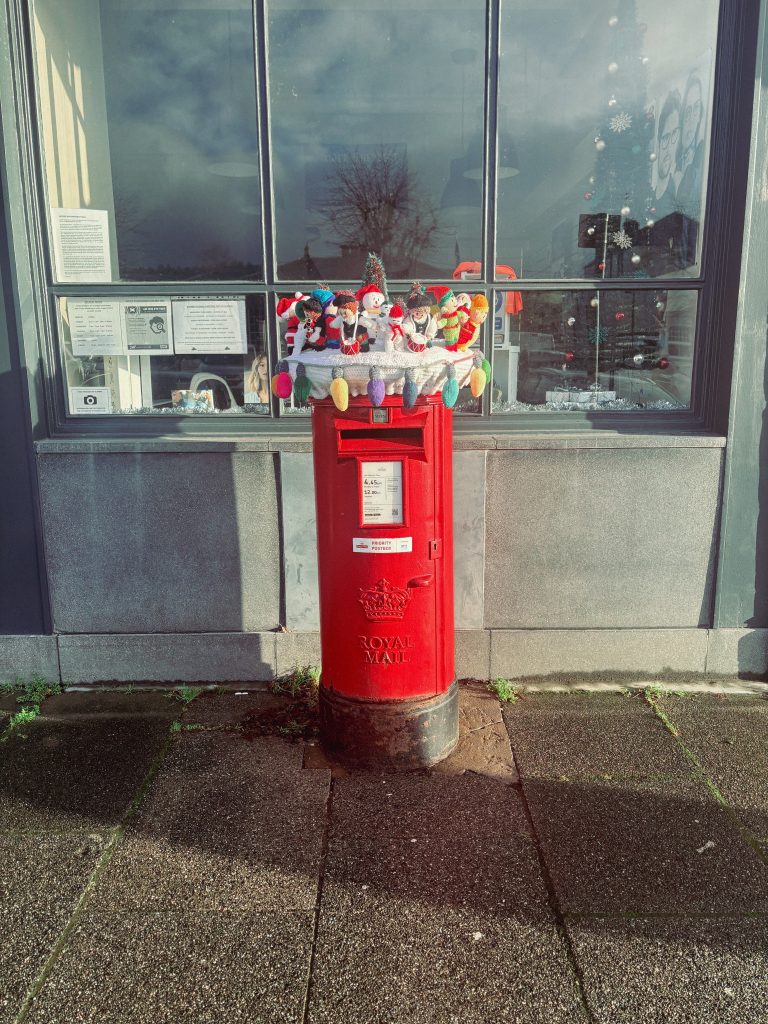
Arriving in Moffat: Europe’s first dark sky town
Whether it’s my genes calling me home; my inner introvert sighing with relief; or long-dead dreams of witches and wizards stirring once again, something about travelling from England to Scotland felt instantly calming on that mild December evening.
The undulating hills that appear like a fortress when you cross the border are – in my mind – the perfect paradox. Comforting and haunting; cosy and spooky: inviting, and at the same time, a little threatening – especially if you’re half English.
Arriving in Moffat around 4pm, I was instantly engulfed by the velvety Scottish night. It’s especially dark here, and there’s a reason for that.
Moffat is one of Europe’s first ‘dark sky’ towns. That means the community was so keen to see the stars, that they asked the council to lower the street lamps to reduce light pollution.
They also built an observatory – which is very impressive, considering some towns can’t even get their potholes filled!
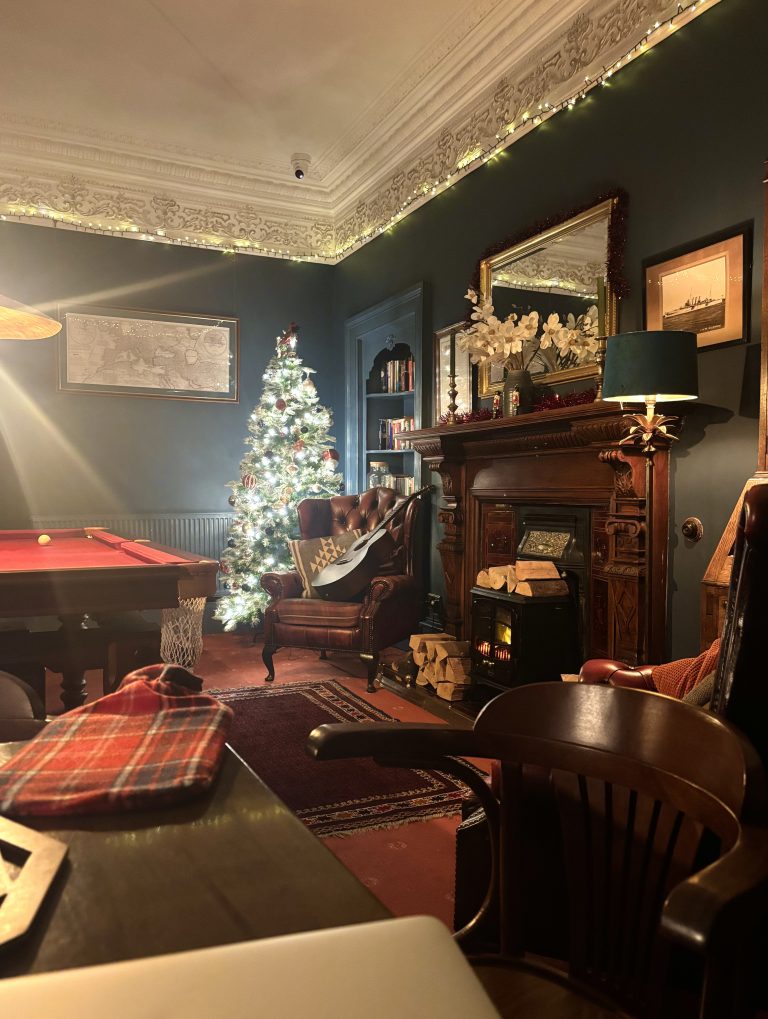
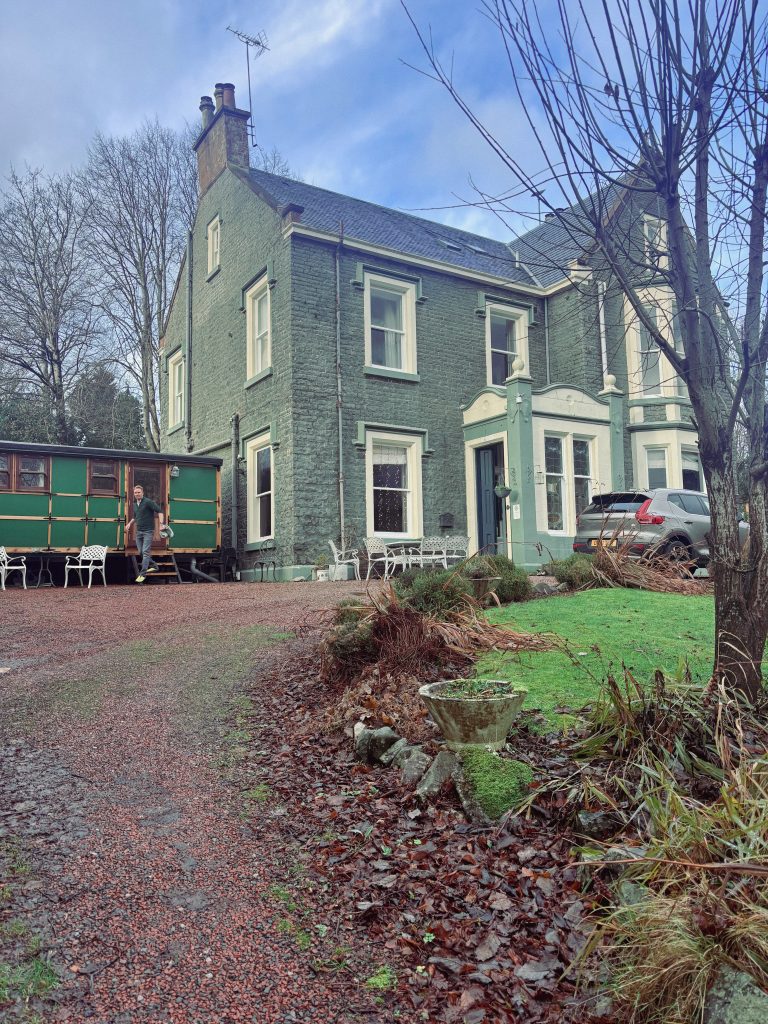
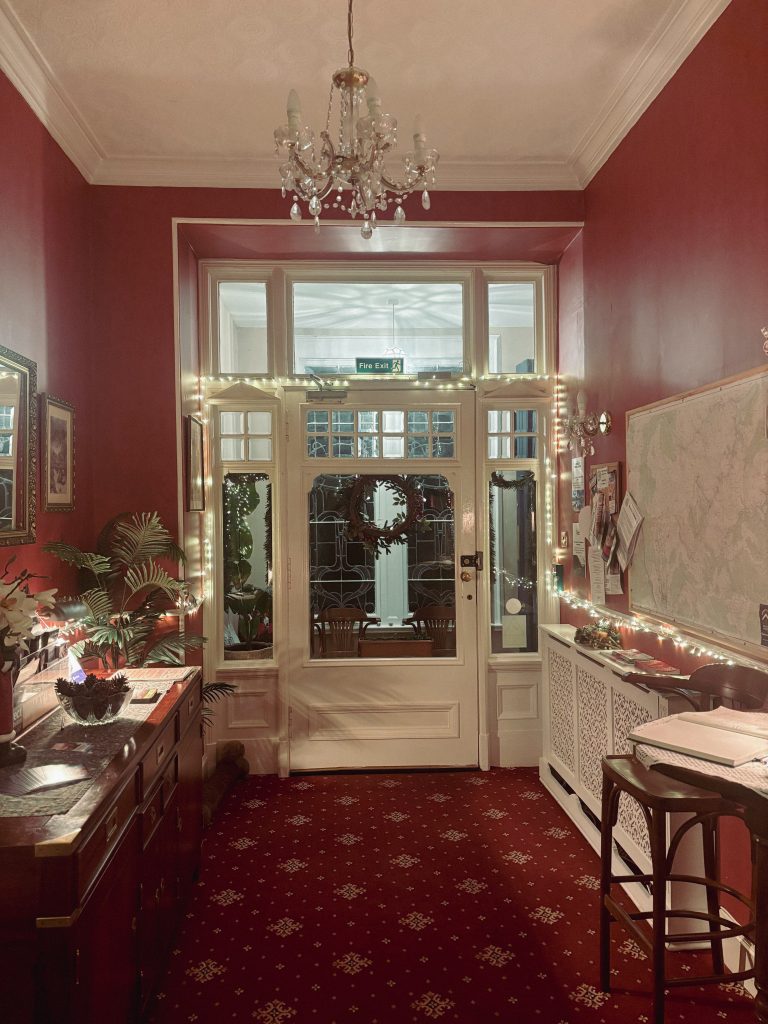
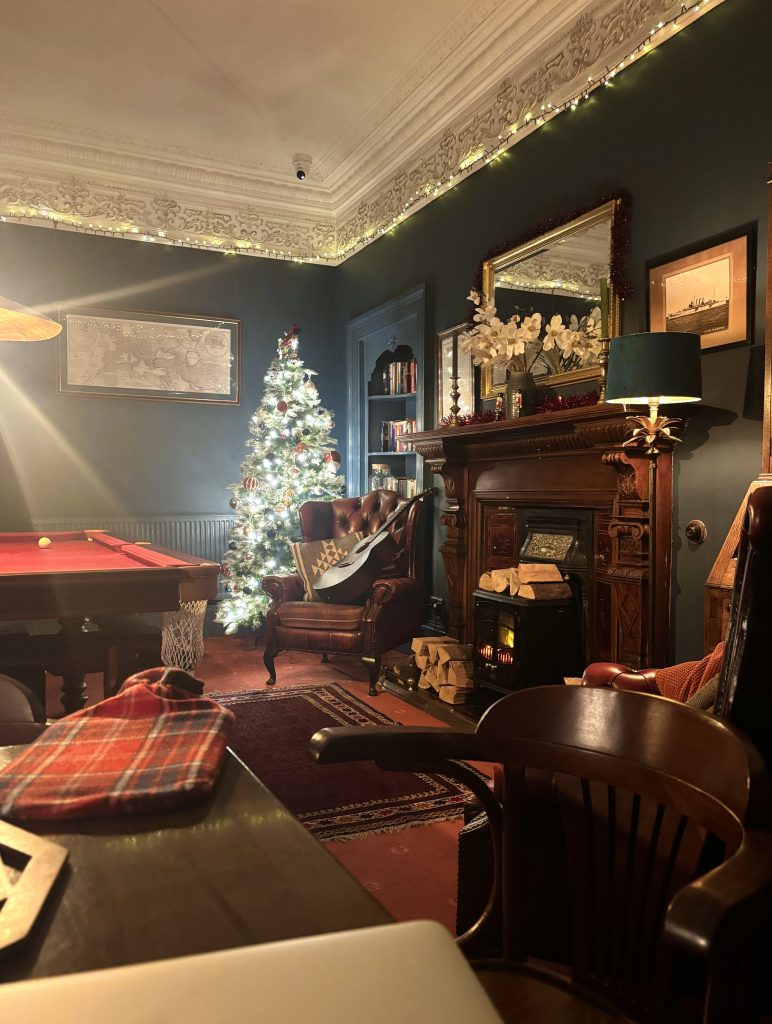
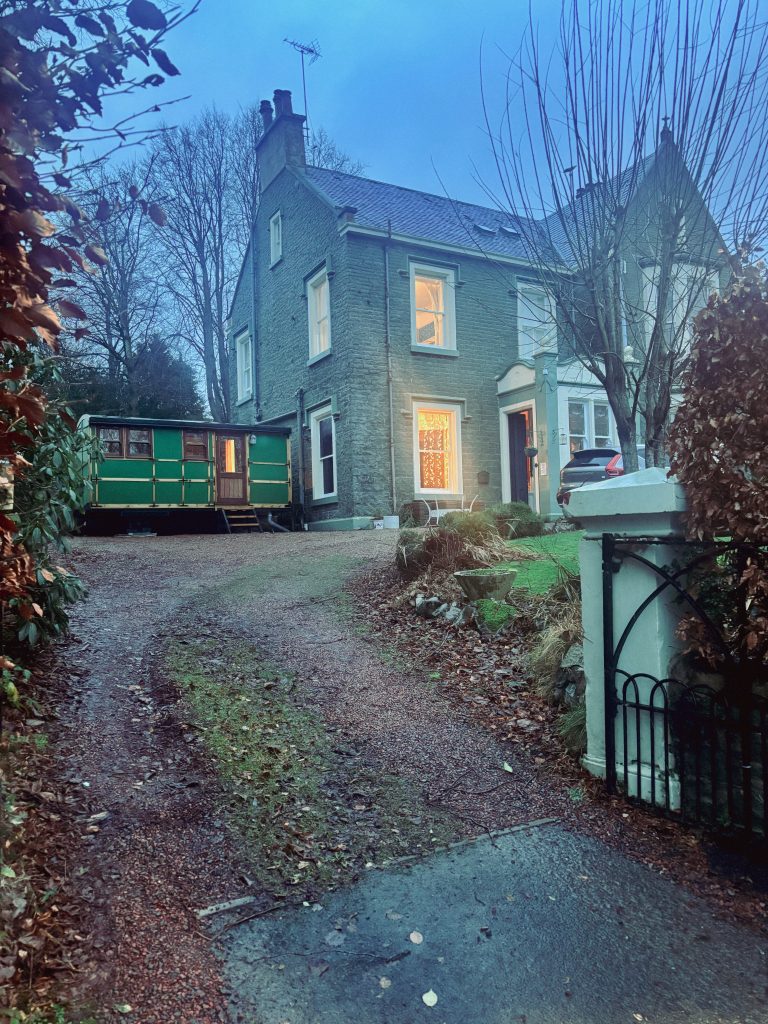
Our home for the period was Moffat Independent Hostel. Pulling up to the grey stone house, with its twinkling lights, oak panels and deep red carpets felt gorgeously festive, and immediately inspired my inner child.
Bonding by breaking bread
The organisation – English Al Fresco – hosted groups of seven to eight people at the hostel for four-day stretches, during which they got to see different parts of the local area.
On arrival, I was introduced to another volunteer, Lora, whom I shared a very comfortable room with for two weeks.
We were there to help ensure the guests had a good time and could practise their English in a safe space. Not a hard job at all really!
We spent a wonderful two weeks with our guests; cooing at Highland cows, clambering around castle ruins, playing pool by the fire and drinking drams at the pub.
Every morning and evening, we ate breakfast and dinner together in the drawing room. Think eggs; coffee; cheese and hot cross buns – a feast that Hogwarts would be proud of.
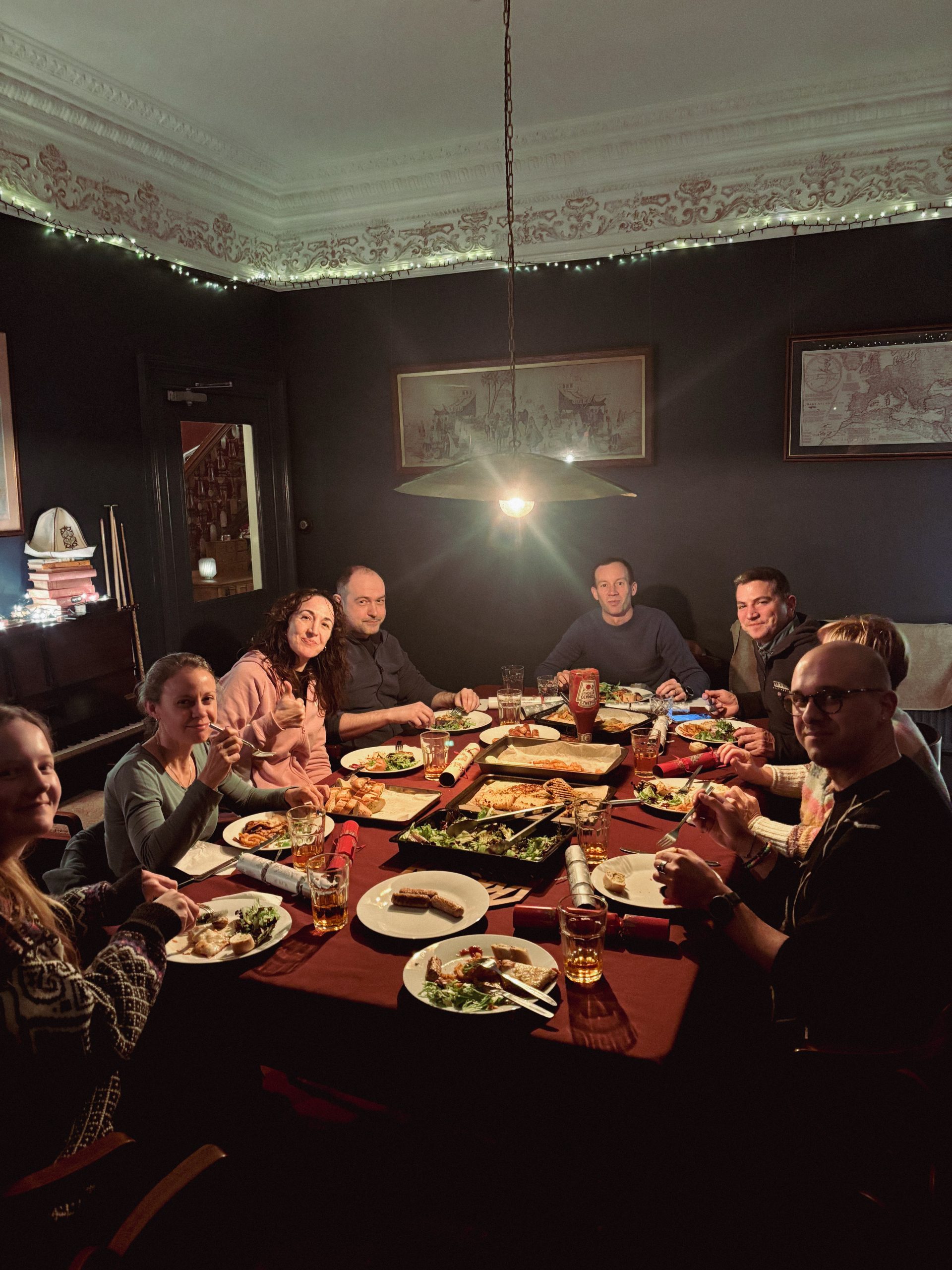
Breaking bread every day became a special ritual that we all looked forward to.
Sunshine spectacular at Grey Mare’s Tail
We also had unusually mild weather, which meant we could explore the stunning scenery around us.
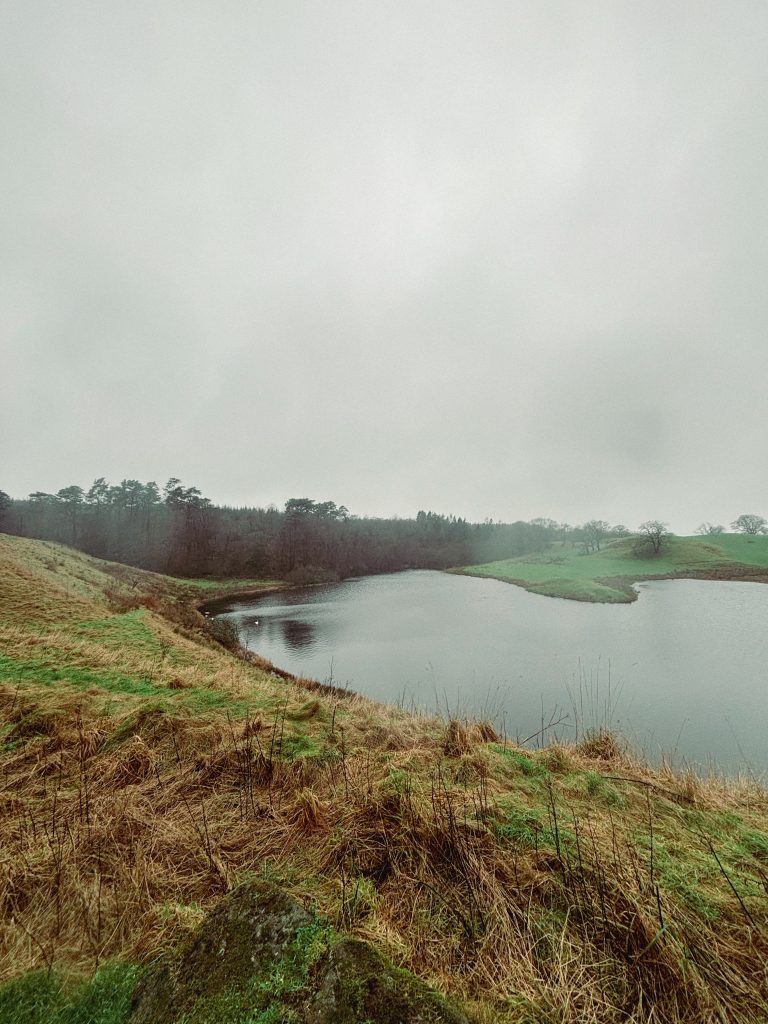
One morning, we took a drive to a nearby spot – Grey Mare’s Tail – for a hike.
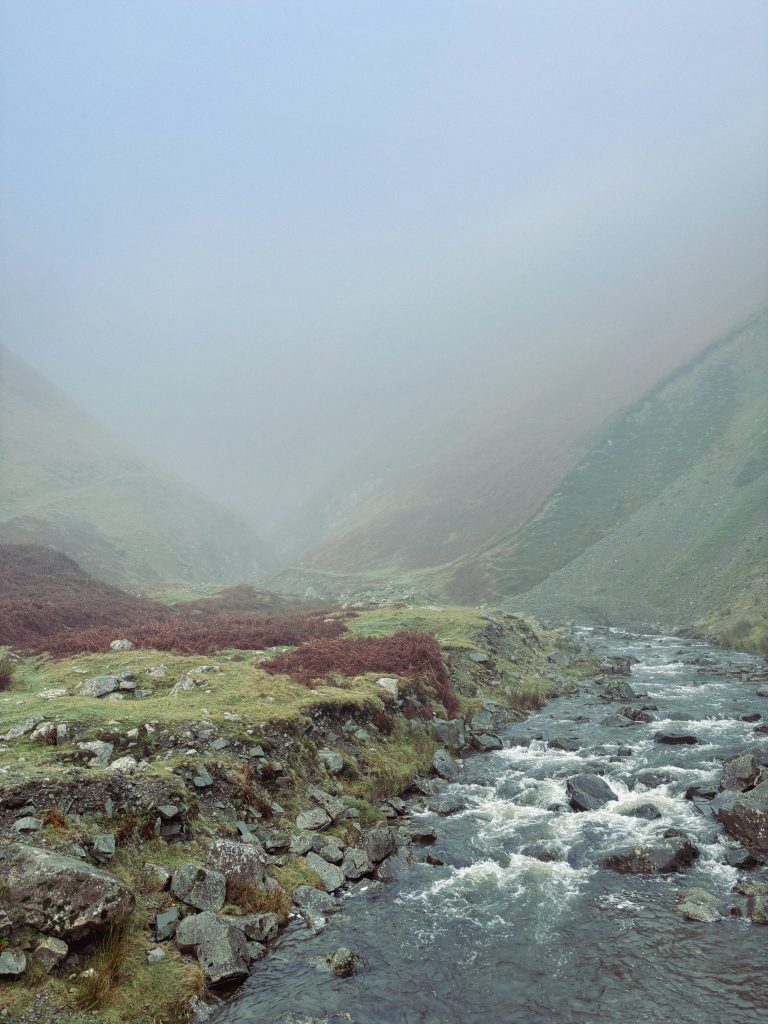
It was drizzly, but our host promised that once we got halfway up, we’d find a surprise at the top.
Up we went on a steep incline. Around me, gasps and curses in German, Italian and Spanish mingled with the lowland fog.
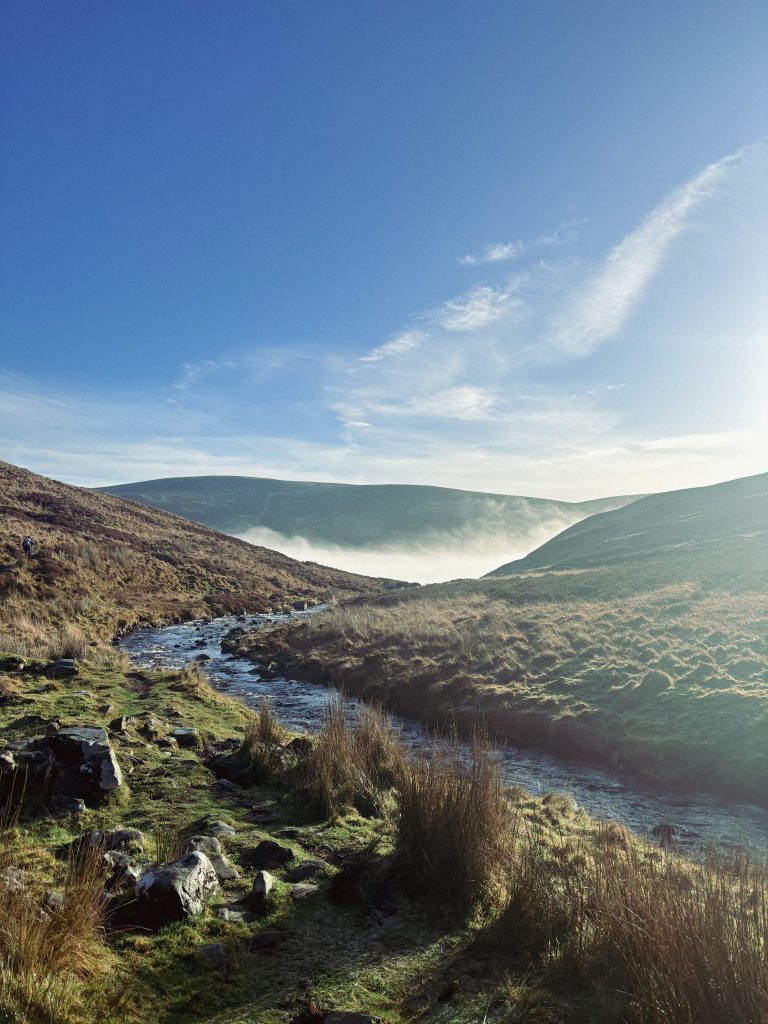
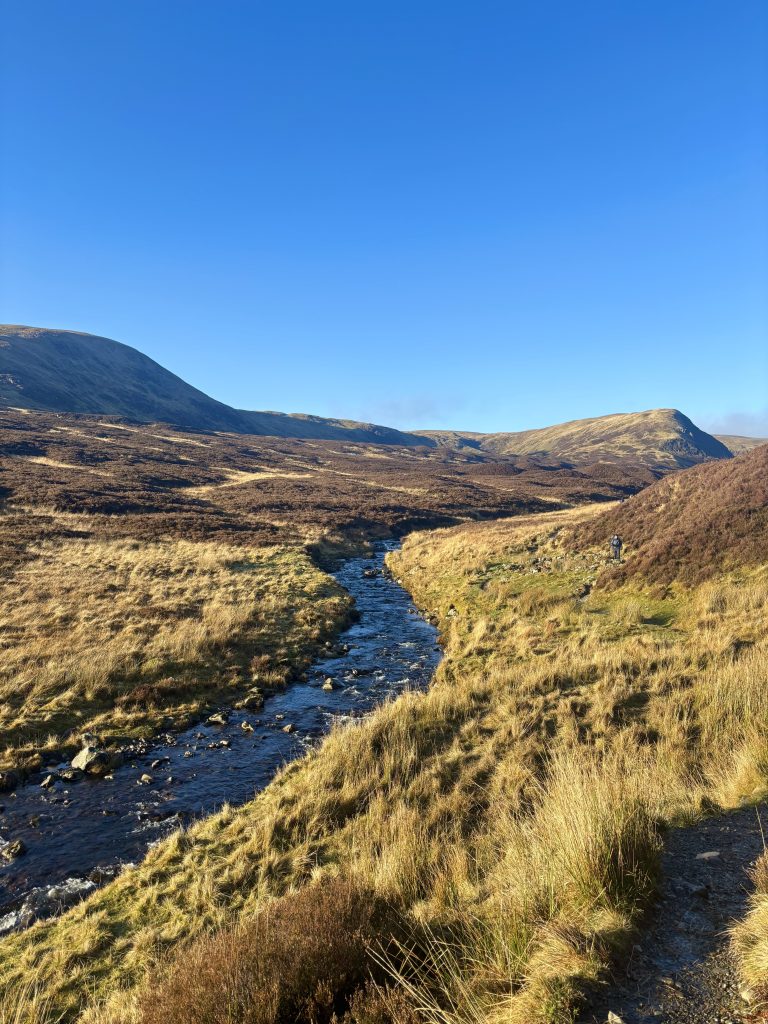
When we eventually reached the top, the trail flattened out. At the same time, the clouds dispersed and the heath was plunged into bright sunshine.
The rest of the walk was a bucolic mix of browns, greens and caramels – like a rugged, tartan carpet, sitting beneath a milky blue sky.
Before arriving at the loch for lunch, we passed a guy in shorts who’d been camping at the top. In December! If you need a reminder of how resilient the Scots are, that is certainly it.
Compèring a major international event
On another evening, we headed down to the local pizza place, Kayantics, where we found a group of lads of similar age circled around the outdoor oven.
Beers were exchanged, and soon they were inviting us to an event taking place in Moffat that week; the international yodelling Olympics, no less.
“People from Sweden are attending.”
It sounded very significant indeed, and a little later, Dutch courage took hold and I found myself agreeing to compère the competition.
Turns out, it wasn’t as serious as it sounded, but the whole town did attend for a big Christmas yod-along – some adorned with lederhosen.
Being welcomed into the community like that was completely unexpected, and made for one of the most memorable evenings of the trip.
Bringing my year to a calm close
I loved walking the silent, dark streets of this kind lowland town in the late afternoon, and looking up at the glimmering sky.
It wasn’t stargazing season, but when I later returned in April to look after the hostel as caretaker, volunteers at the observatory kindly guided me through a three-hour tour of the sky, where I was able to see Jupiter and its moons up close through the telescope.
After each day’s adventure, we took comfort in returning to the sparkling windows, and impenetrable stone walls of Moffat Independent Hostel for a hot chocolate (or something stronger) and a good night’s sleep.
Volunteering with English Al Fresco was exactly the kind of meaningful slow travel experience I wanted, and I came away from it feeling especially grateful, fulfilled and excited to explore more of home.
But before then – a little rest. The year of 2025 had been a wonderful whirlwind, but my mind needed time to reflect, digest and reset, before I took off again.
In fact, I haven’t don’t much travelling at all since then, focusing instead on building my petsitting side hustle. But as I revisit those weeks in this blog, my feet are starting to tingle.
I swapped London for nomad life in Asia. Was it worth it?
In early 2025, I left London and headed to Southeast Asia to see what life was really like as a digital nomad. One year on, was it worth it?
FEBRUARY 24, 2026 WOMEN MEETS WORLD
I recently read a BBC interview with Julie Williams, an IT consultant from Birkdale on Merseyside. She had decided to make a ball pit in her spare room, rather than rent it. Why? For fun. ‘You can never be sad in a ball pit.’
Stories like this are important because they remind you of your free will. Julie’s is especially unique because the ball pit came at the expense of financial gain.
For most people, that’s just not the default position – whether they need the cash or not.
I found myself thinking a lot about free will when I turned 30. I’ve never really clung to traditional milestones (house, baby, marriage, divorce), and count climbing out of credit card debt as the maturest moment in my adult life to date.
But the flood of birthday invites from friends – right before the hen dos – gave me pause to reflect. Was I happy? Had I challenged myself enough? Was I excited about the next decade?
Who am I?
Not to get too Lewis Carroll about it, but this last question was the catalyst for me in late 2024. In a way, I felt that I didn’t know myself anymore, or at least not all the versions of myself – just the city-shaped, university-fied version. And she was restless.
Meanwhile, semi-remote work in London had become my new normal. The days of spilling out to the pub every week with colleagues had gone. I had a lovely team in my PR job, but rotating schedules meant it took too long to get past the pleasantries.
People generally – and I include myself in this – seem to have become more protective of their time since I moved to London in 2017 (and perhaps all over the country).
I don’t think this is a bad thing. Hell, if you’re going to replace me with AI, at least give me another 30 minutes in bed / to read to my kids / paint / write / support a charity / or stare into the abyss.
Having one foot in, one foot out, however, began to wear on me amidst the rising cost of living in the capital. I still considered myself a creative and curious person, but did I really want my days to be defined by the price of flat whites and whether a Soho House membership was cost effective?
I take comfort from water cooler culture as much as everyone else, so I’m not bashing these things – they’re part of the fun.
But when I found myself googling ‘Martin Lewis wife’, something had to give.
Was it burnout? I’m not sure. But in need of a change of scene and some inspiration, I decided to give this digital nomad lark a go, beginning with three months in South East Asia in early 2025.
Who knew what would happen after that. But I’d work less, and live more, often with strangers – which would at least break me out of my comfort zone.
I’m not alone in seeing the attraction of nomadism, especially if your job allows it. According to a report by CV builder website LiveCareer UK, an estimated 165,000 UK professionals have relocated abroad to work remotely in recent years, seduced by better weather and (they hope) greater work-life balance.
Some roam around, as I did, making the most of the opportunity to see the world. Others seek stability in well-established hotspots that offer structured visa policies, tax incentives and ready-made communities.
To cut a long story short, I didn’t end up moving permanently abroad. But I did see a lot of cool things, regain a sense of direction, and create a stable freelance set up that now allows me to travel whenever and wherever I want, whilst keeping roots in the UK (which is how I like it).
Giving up a normal routine has not been without its challenges – anyone that’s become a nomad, travelled alone, or even that’s relocated will agree with that, I’m sure. But between the relentlessly positive portrayals of nomadism on social media and the often sceptical narratives found in the UK press, there is a lot of middle ground.
As a thirty-something experiencing this lifestyle for the first time, I hope this blog provides a balanced account of what it’s really like as work and life become increasingly flexible and multihyphenated.
Happy reading.
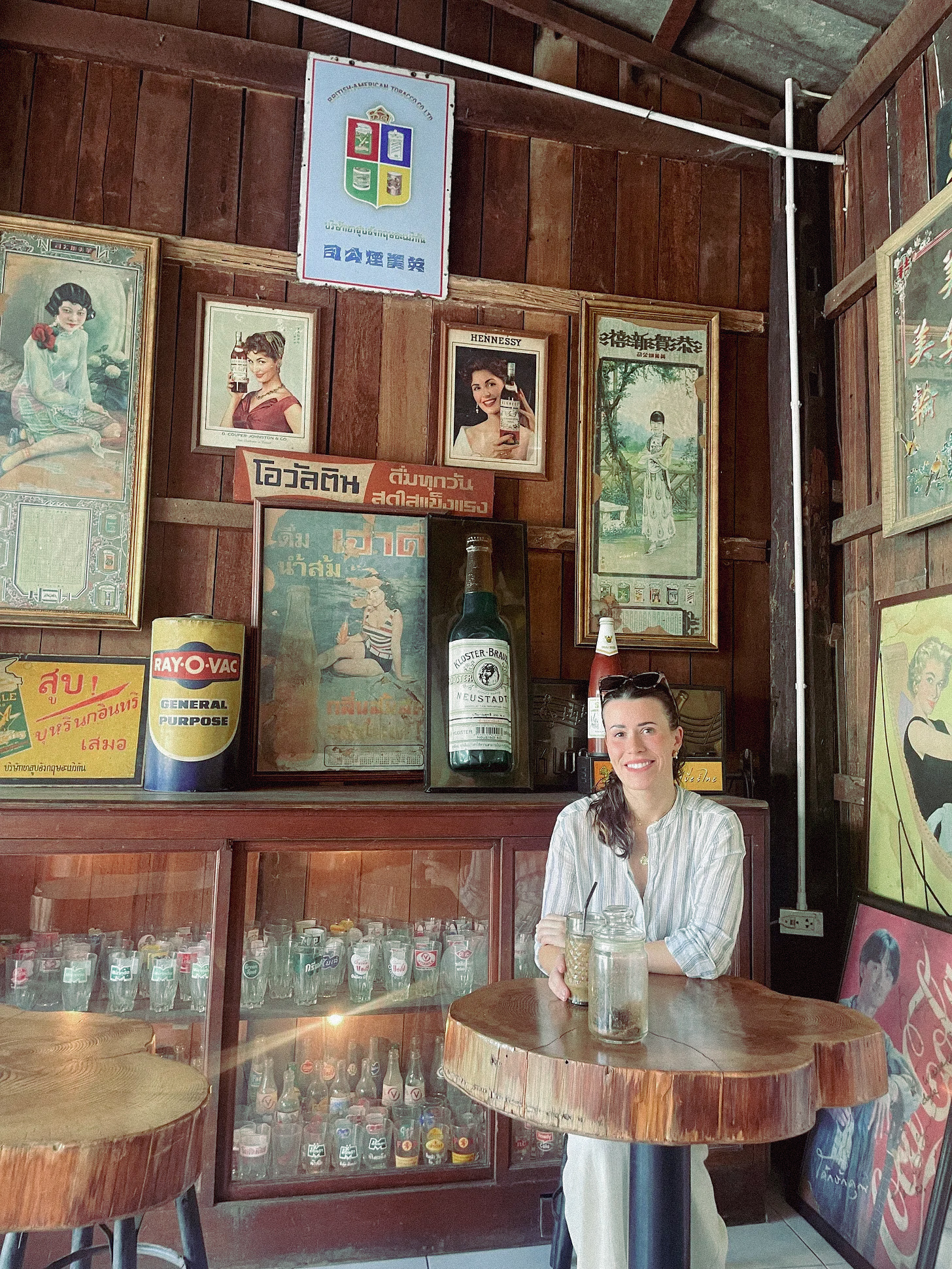
Chiang Mai, Thailand (February 2025)
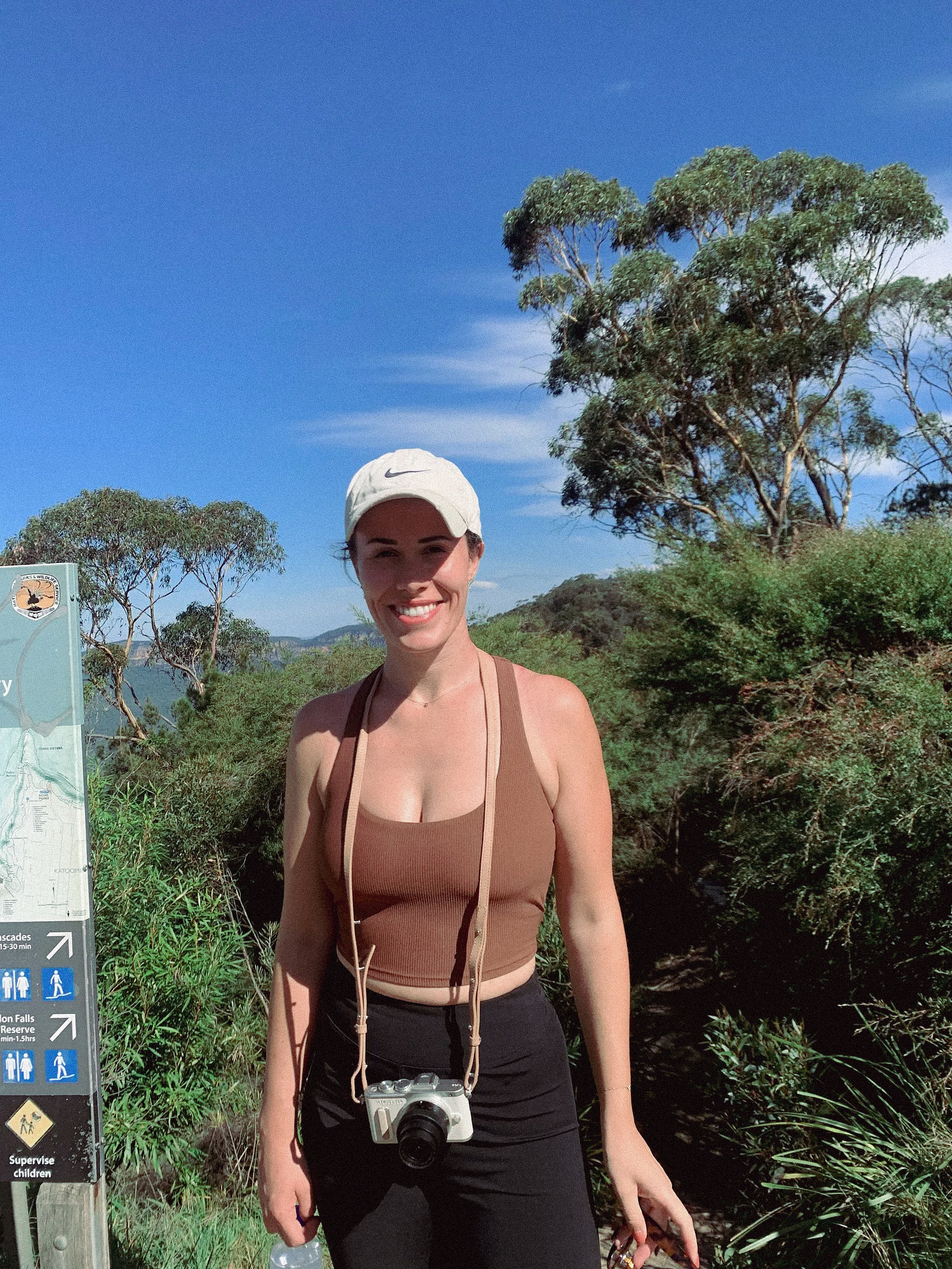
Blue Mountains, Sydney, Australia (April 2025)
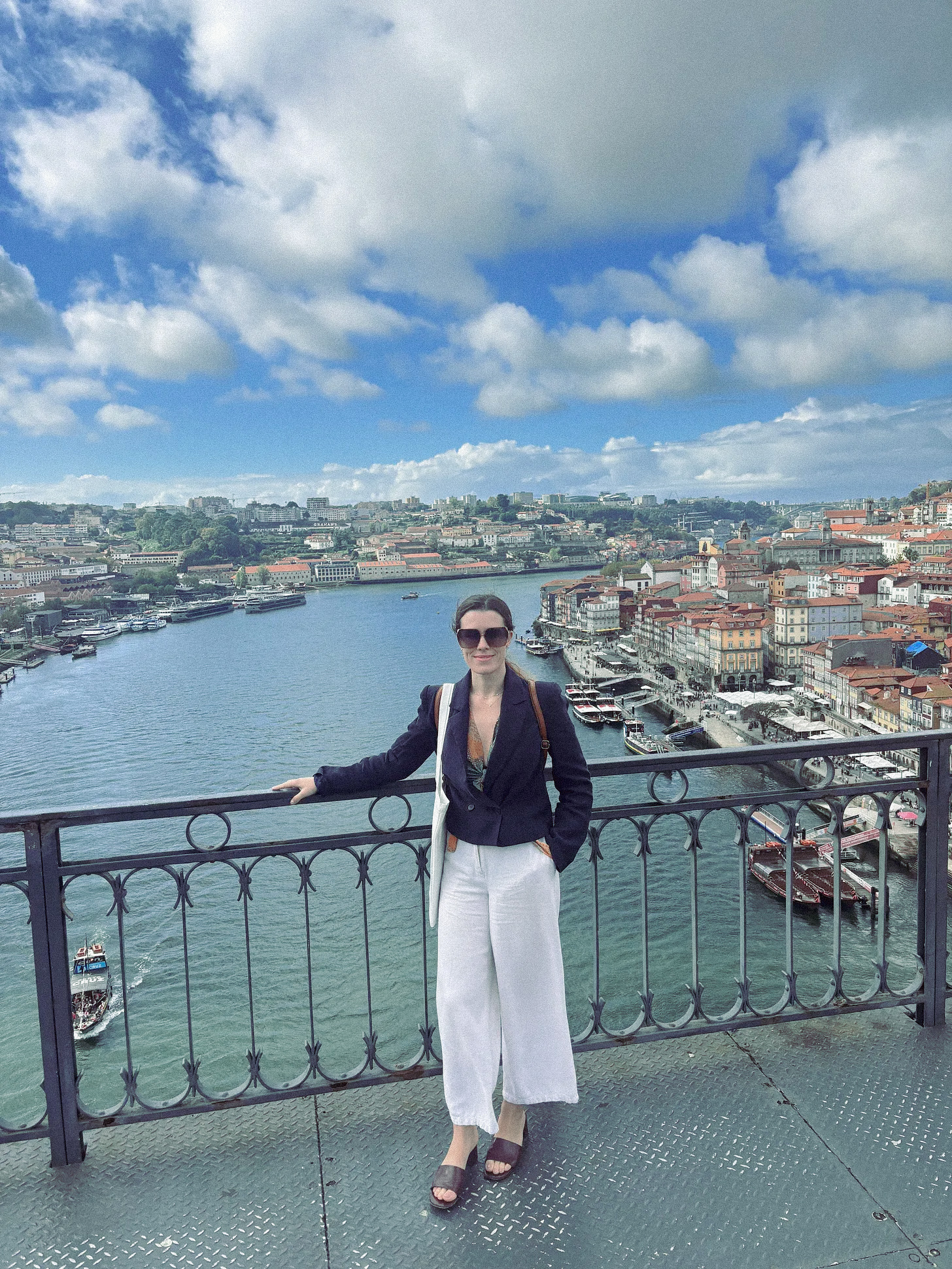
Porto, Portugal (September 2025)
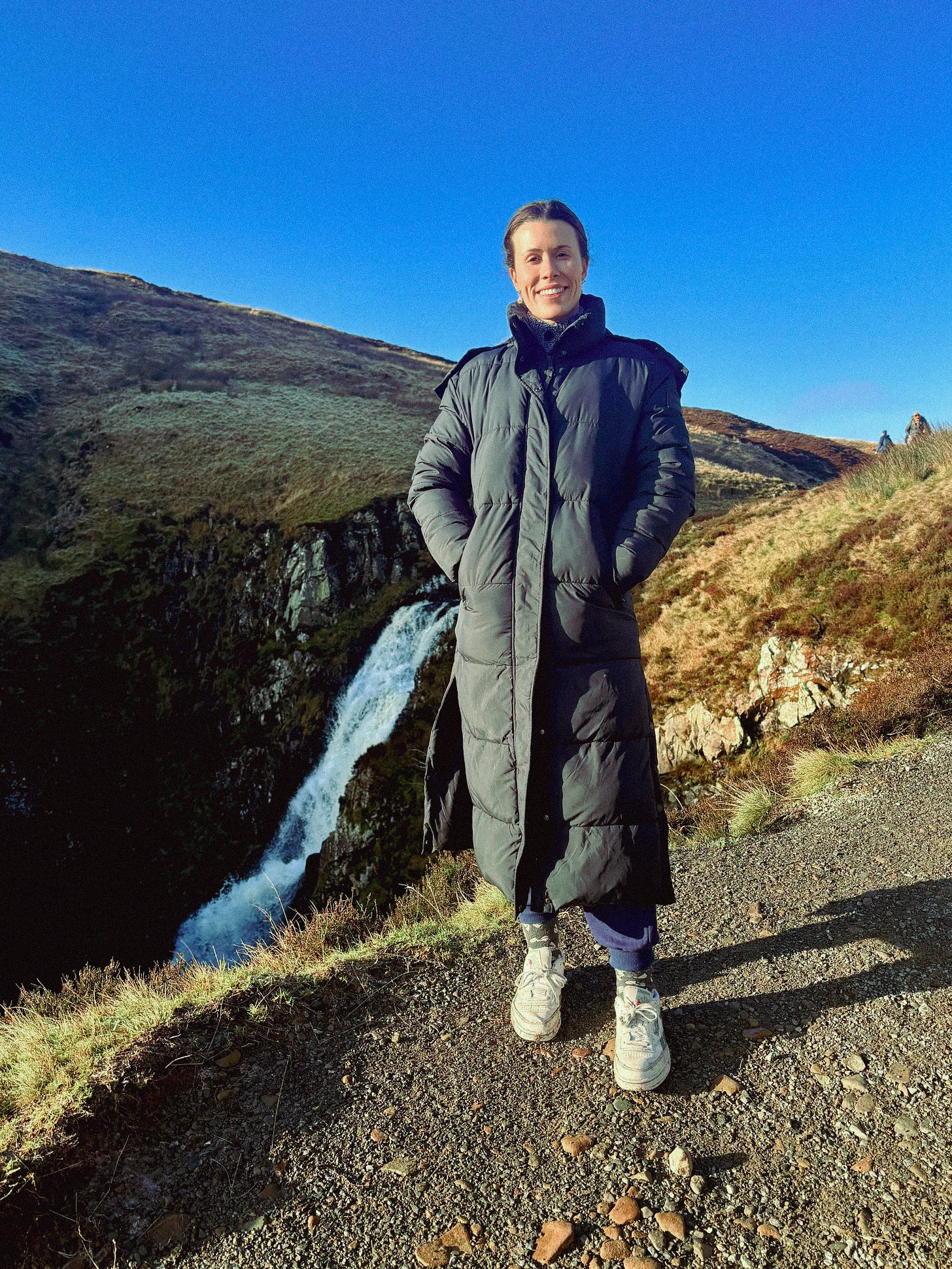
Moffat, Scotland (December 2025)
How a day with Australia’s wildlife reminded me what it means to belong
As my trip draws to a close, my thoughts turn towards home.
“Oh my God. I want one!”
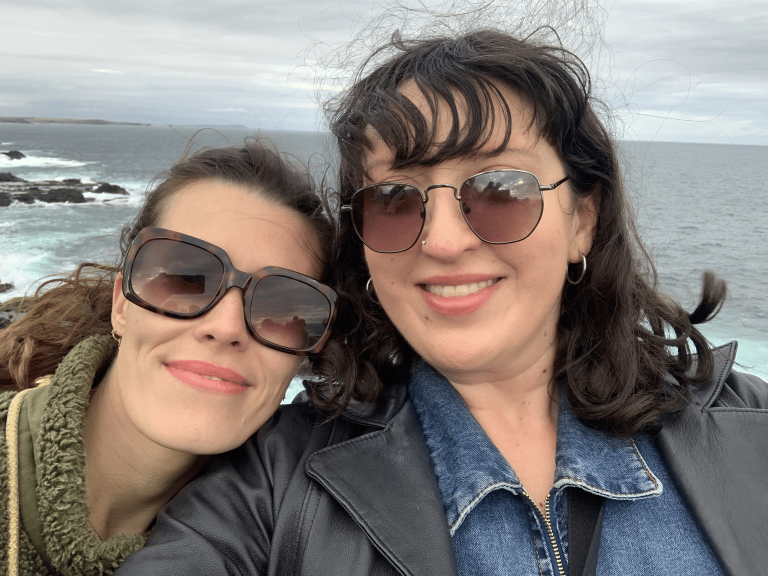
I was in Australia, arm in arm with my friend (and now expat) Becca.
Becca, like a lot of Londoners, committed the ultimate friend betrayal by moving to Australia in 2023.
Having finally forgiven her, we now found ourselves cooing over koalas at Moonlit Sanctuary, an award-winning wildlife park located 50 minutes southeast of Melbourne’s CB, following a fun filled weekend in Sydney’s Blue Mountains.
A long awaited trip
I’d always wanted to visit Australia. Every single member of my family had either lived or travelled here, and as an 18-year-old I’d mentally planned an entire gap year on the other side of the world, that I was too scared and too broke to execute it.
Just as the desperate migrants romanticised California in The Grapes of Wrath, Australia seems to have a kind of “heaven on earth” appeal for us intrepid Europeans. And more than a decade later, it felt thrilling to be standing on Ozzy soil, ready to wrap up a three-month stint as a digital nomad in Asia.
But where were the crocs?
Perhaps I’d gone a bit feral from all those weird nights in hostels, but Sydney itself hadn’t thrilled me – and when we reunited in Melbourne after a short hiatus, I was itching to get back into nature.
Half expecting to see crocs, snakes and spiders the minute I stepped off the plane, it was a little disenchanting to be surrounded by buses and McDonald’s; so, we decided to book a day trip South to see some of the country’s most dangerous animals – koala bears, wallabies and penguins.
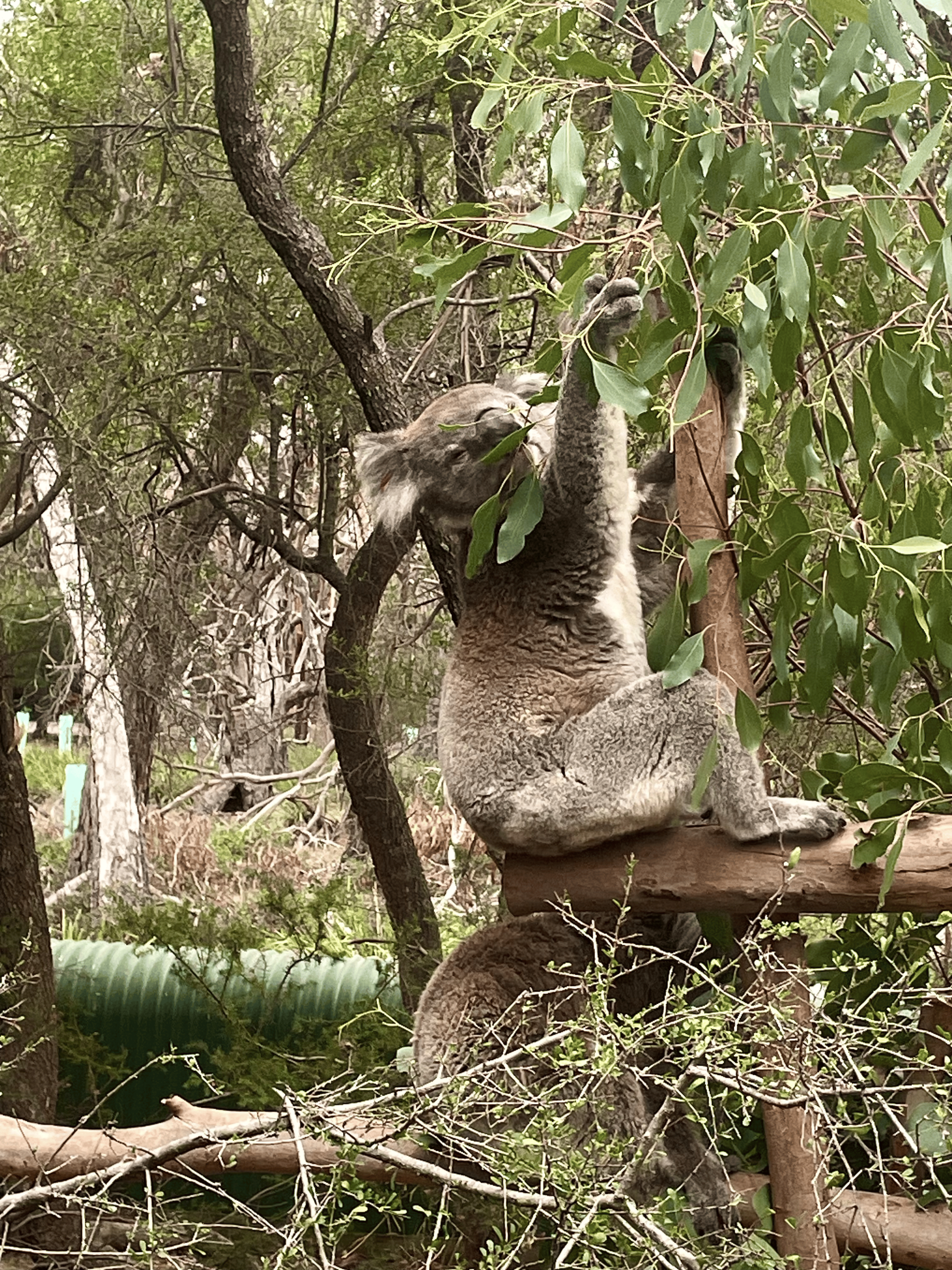
Moonlit Sanctuary is an award-winning wildlife park in Melbourne
After several fun, but somewhat exhausting, months on the road as a digital nomad, I was ready for a cuddle; and luckily our first stop was Moonlit Sanctuary, a wildlife conservation park in Victoria focused on endangered native species breeding, education, and immersive visitor experiences.
Sadly, these adorable teddy-like creatures are not for handling, but looking up at the canopies of the sanctuary, it felt incredibly special to see koala bears in the flesh, even if they were simply napping.
After much pst psttting, and a short interaction with a wallaby (sort of like a tiny kangaroo), we then drove further South toward “The Nobbies”.
I wasn’t sure what to expect at the other end, and was surprised to learn that this is in fact a dramatic, and very beautiful clifftop area on Phillip Island – not dissimilar to Cornwall, I might add.
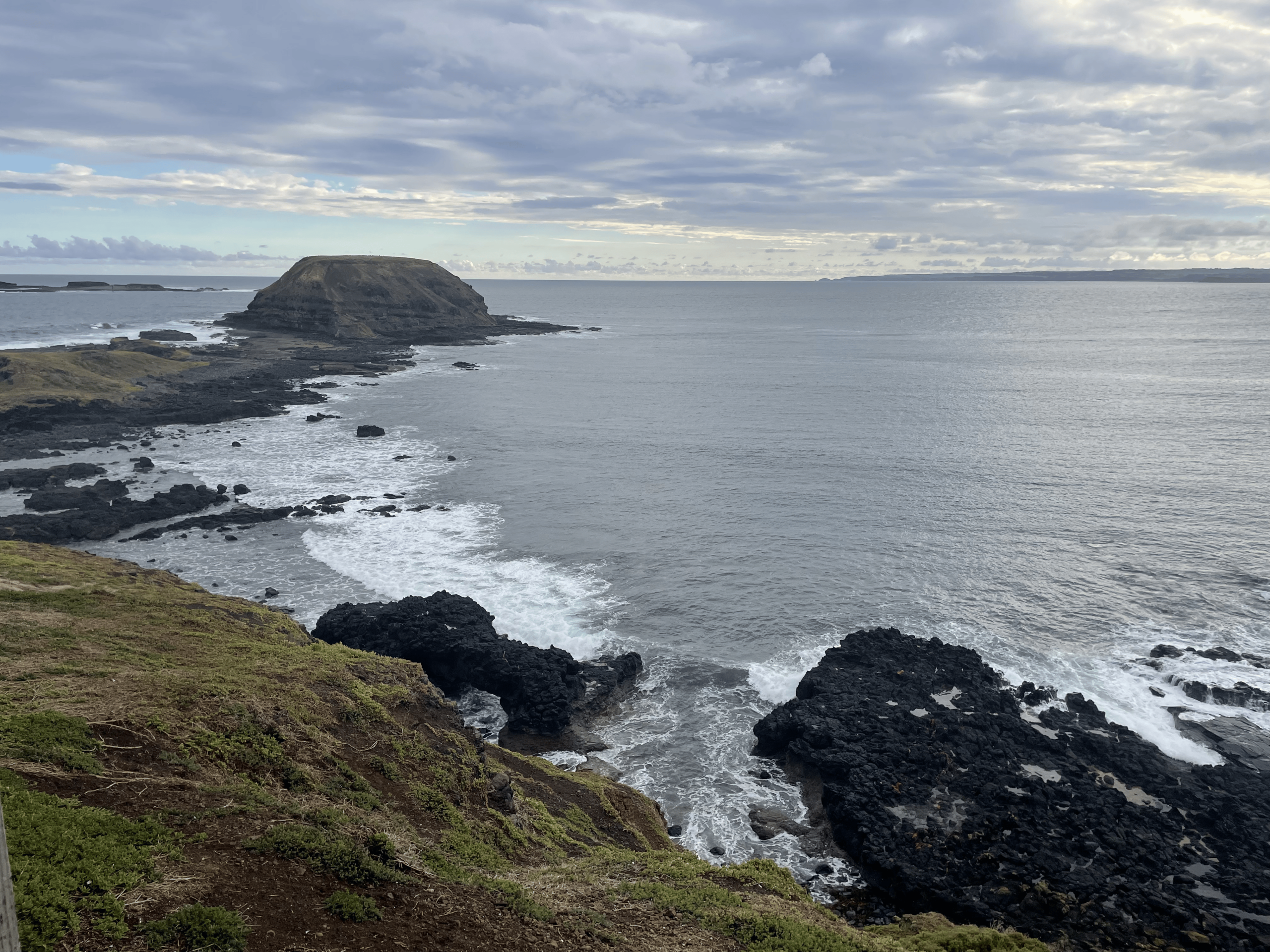
Leave it to the Aussies to call an area of outstanding natural beauty “the Nobbies”
It’s a great place to catch sea life apparently, and whilst we didn’t spoke any whales or seals, we had something special waiting for us down at the beach at dusk – the Penguin Parade.
Settling down for the Penguin Parade
This is a precious natural phenomenon where hundreds of tiny little penguins spend the day feeding at sea before returning to shore at sunset – all at the same time.
We passed an hour or two on the beach with our hot chocolates, watching the waves and wondering when the first penguins would appear.
It was a bitter evening, and as our steaming drinks began to cool, I wondered if the penguins had lost their way back.
But lo! Just as the light faded – a couple of tiny heads popped up over the water. Then a dozen, then a hundred. The birds, it turned out, were more organised than Becca and I had ever been in our lives. They had been waiting for darkness so that they could travel in safety.
Once on shore, the tiny creatures waited for their friends to arrive – preferring to travel in big groups – before panic-waddling up the beach to their burrows. Above their head, birds of prey circulated, observing the scene and braced to pounce on stragglers.
Luckily for us, there were no fatalities and all the penguins successfully scurried over the sand, before disappearing into the dunes, safe at home for another night.
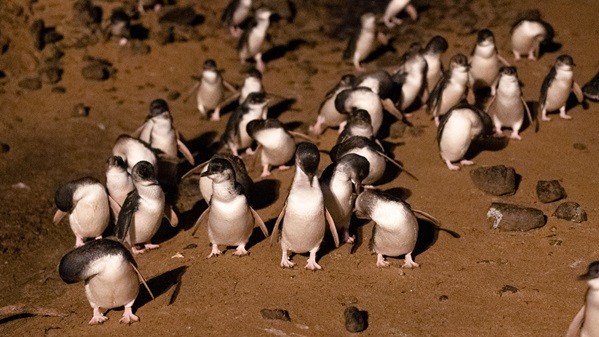
Wherever you go, there you are
It was an adorable scene – somewhat similar to seeing the lollipop lady gather the children before crossing the road. And after three months of travel, watching the little birds shuffle back to a place of safety and familiarity felt particularly moving.
I didn’t know how this nomad experiment would go, or for how long I’d be able to sustain life on the road, having never backpacked this long alone before. But I had noticed by this point that I was struggling to stay present, due to anxieties about the future.
I knew by now that I wanted to remain “nomadic” – but what that looked like in practice, I wasn’t sure. Thoughts were turning toward commitments at home; decisions about where I wanted to be and what I wanted to do could no longer be put off; and after weeks of hostels, airports and constantly being on the move, even daily decision making was difficult.
I believe this is a scenario that many people on the road find themselves in. On my route, I met lots of people who seemed to be avoiding problems they were having at home, processing something, or just generally lost and dissatisfied with life.
I don’t know if travelling is the right way to deal with those things or not. But as they say “wherever you go, there you are”. At some point you’ll have to confront internal or external challenges, or at least seek support from someone you know – whether that’s a local support network, or someone from home.
Having Becca there to take some of the weight off my shoulders reminded me that even the most independent travellers need help sometimes.
And, like the penguins making their way back to shore at dusk, I felt ready to call time on my adventure and head home too – but not before seeing Singapore.
*If you want to visit Philip Island, can either drive over yourself or take a full-day trip, which cost us around £70 including return travel from Melbourne. We also had a lovely guide who was funny, knowledgeable and genuinely passionate about the animals, which made the experience even better.*
What impact are nomad communities having in places like Chiang Mai?
After my week of work in Chiang Mai, I wonder – is a Bali-esque boom and bust on the horizon?

It’s no secret that Thailand is popular with digital nomads. Interest in the Destination Thailand Visa (DTV) underscores this appeal – offering a five-year, multiple-entry visa, it surpassed 35,000 applicants when it launched last year (2025). Aimed at remote workers and location-independent professionals, the DTV offers an affordable and flexible long-term stay, making it a central pillar of Thailand’s strategy to boost tourism and strengthen its economy.
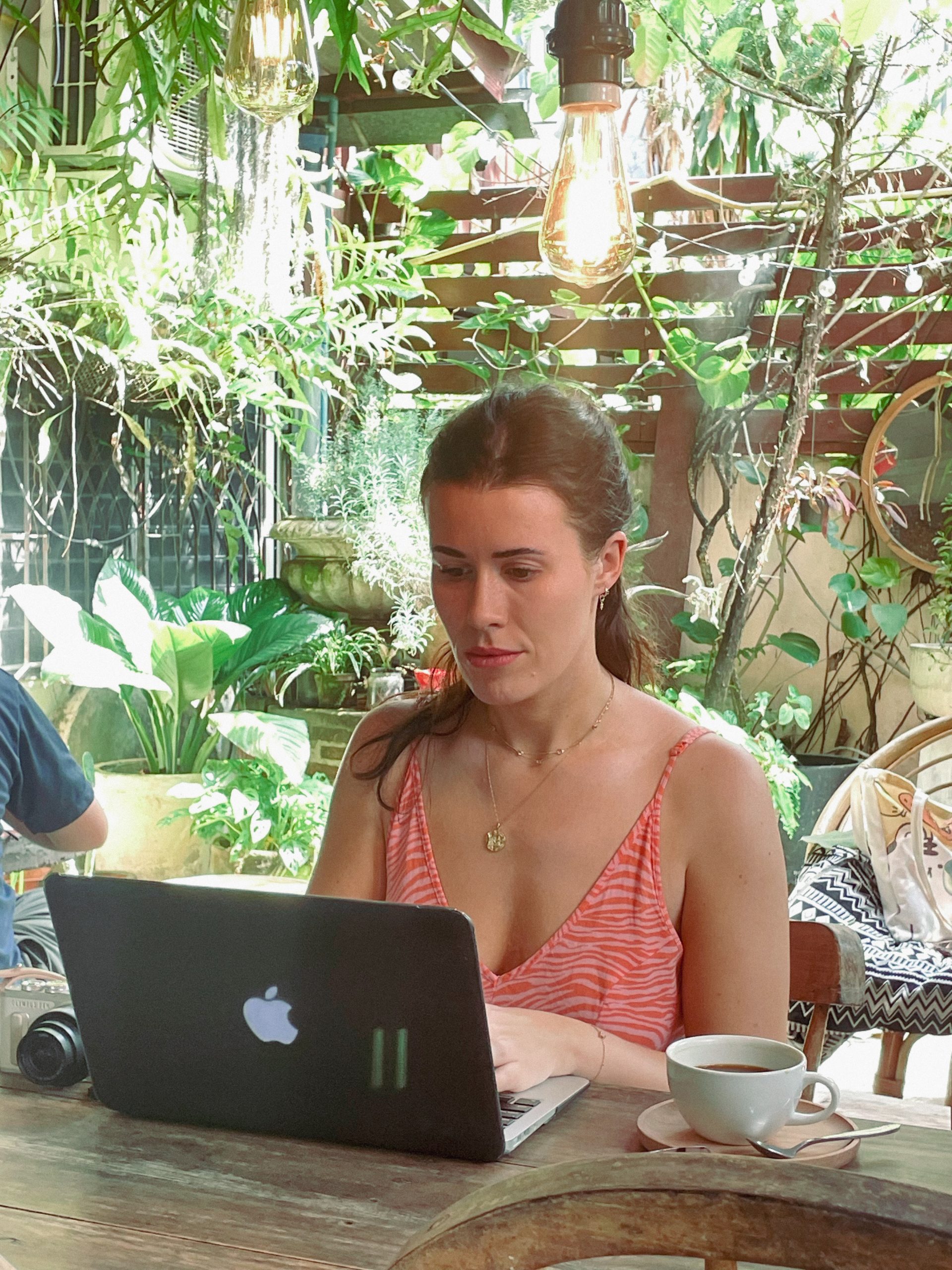
With great prices, food, weather, and landscape, Thailand does appear to have it all. But having worked from several international “nomad” hotspots in the last year, I have found myself becoming less interested in what I can get out of the places I visit, and more concerned with the impact I’m having there.
Definitions of digital nomads have changed, after all. The 2010 “stereotype” was that of a “joyful millennial working from a laptop on a beach” (Hart, 2015; Spinks, 2015). A handful of people were doing it, many of whom were bloggers, making it pretty harmless.
Now, an era of flexible working, long-term visas, and steep rents in places like Sydney and London mean people are choosing to work remotely abroad for the long haul, (coined as “slowmadism”).
Western incomes stretch further abroad, and that money benefits local economies. But academics worry there could be broader ramifications for destinations in the Global South already experiencing forms of transnational gentrification, as a result of remote workers.
Chiang Mai’s appeal might also be its downfall
Chiang Mai, a city in the northern mountains of Thailand, has attracted thousands of digital nomads in recent years. The effects of this migration are already being felt, with this case study suggesting the long-term nomad presence is reshaping neighbourhoods, increasing demand for foreign-facing businesses, and driving up rents – factors which affect both visitors and locals.
I observed some of this myself when I visited in February 2025. There’s still a ton of local food spots, of course, but it seemed that many of the cafés, services, juice bars, and co-working spaces had been created for foreigners (or those with laptops).
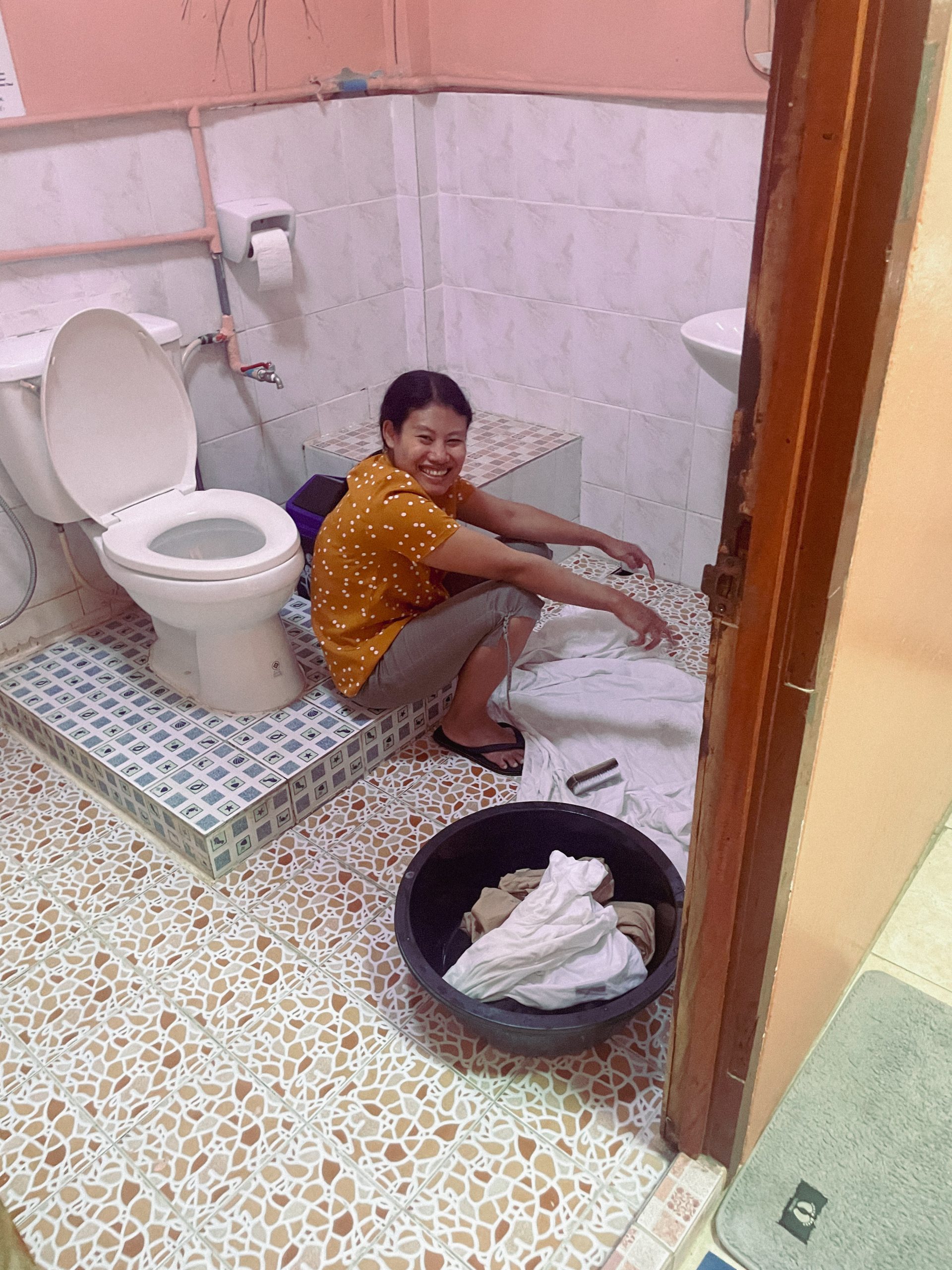
My lovely host in Chiang Mai
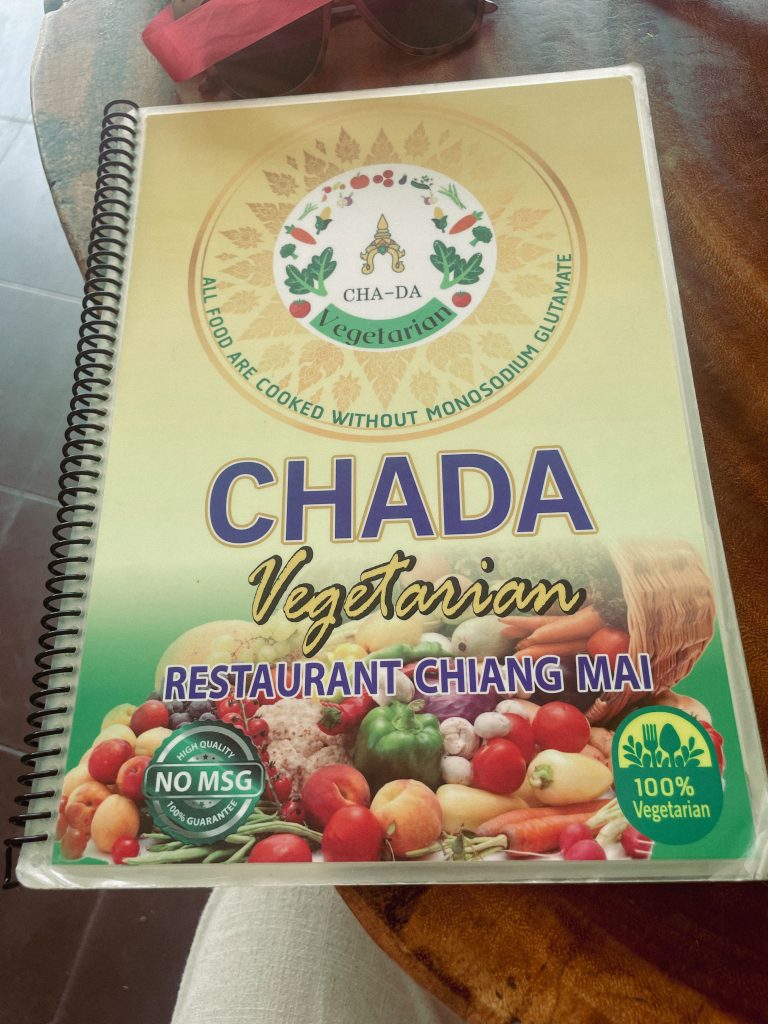
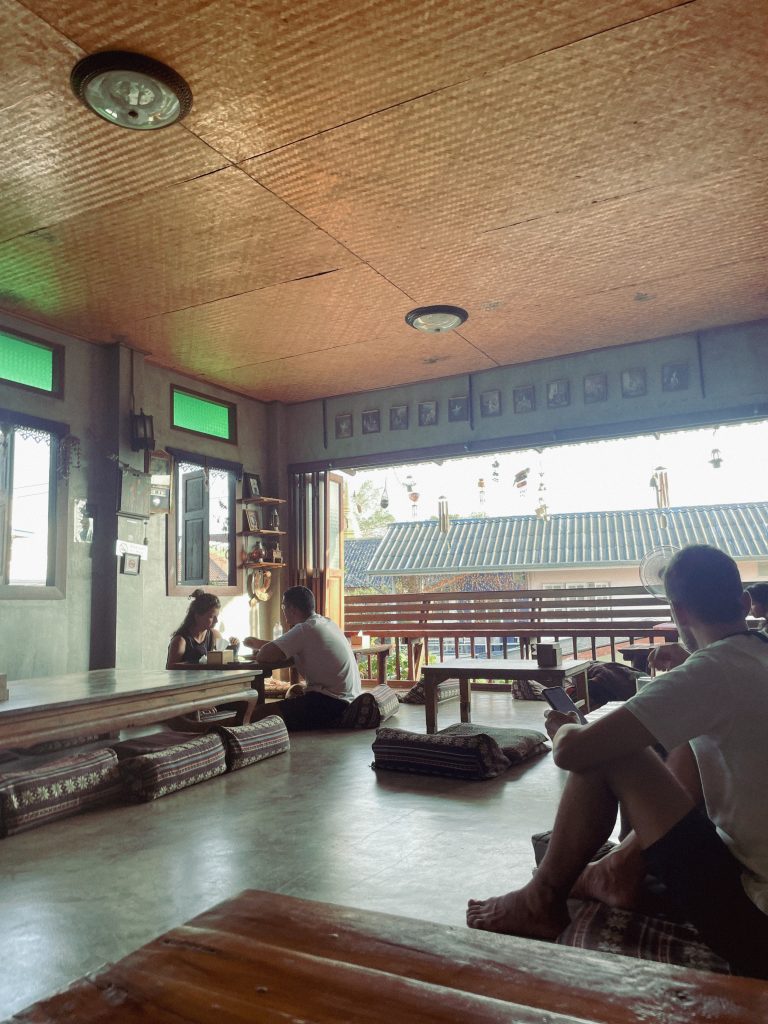
Fon, a restaurant owner, confirmed that even local food stops have “increased their prices by 5–10 Baht” since the 2020 pandemic. Whilst the minimum wage has increased slightly too, it is unclear whether it’s enough, or what the future repercussions could be over time.
What about integration? Of the nomads I met in Chiang Mai, some worked in tourism or as teachers, and others were learning Thai. Billy, an American who moved to Chiang Mai two years ago, loves his life here as a teacher. He said that despite the number of expats from Myanmar, China, and Western countries, local people still strongly embrace their mai pen rai – a “no worries” attitude – and hold tightly to their Lanna cultural identity. On the trips he’s been on, there’s just as many Thai locals as there are nomads and expats, he says.
Whilst that is reassuring, having spoken to a lot of nomads working from businesses based outside Thailand, most treated the city as a satellite office, and were there to enjoy the comfort and low costs rather than integrate into the fabric of the place. I can’t help but wonder how sustainable that is – especially given that most nomads leave in the early part of each year during “burning season” – which must affect rental competition, business, and the vibe.
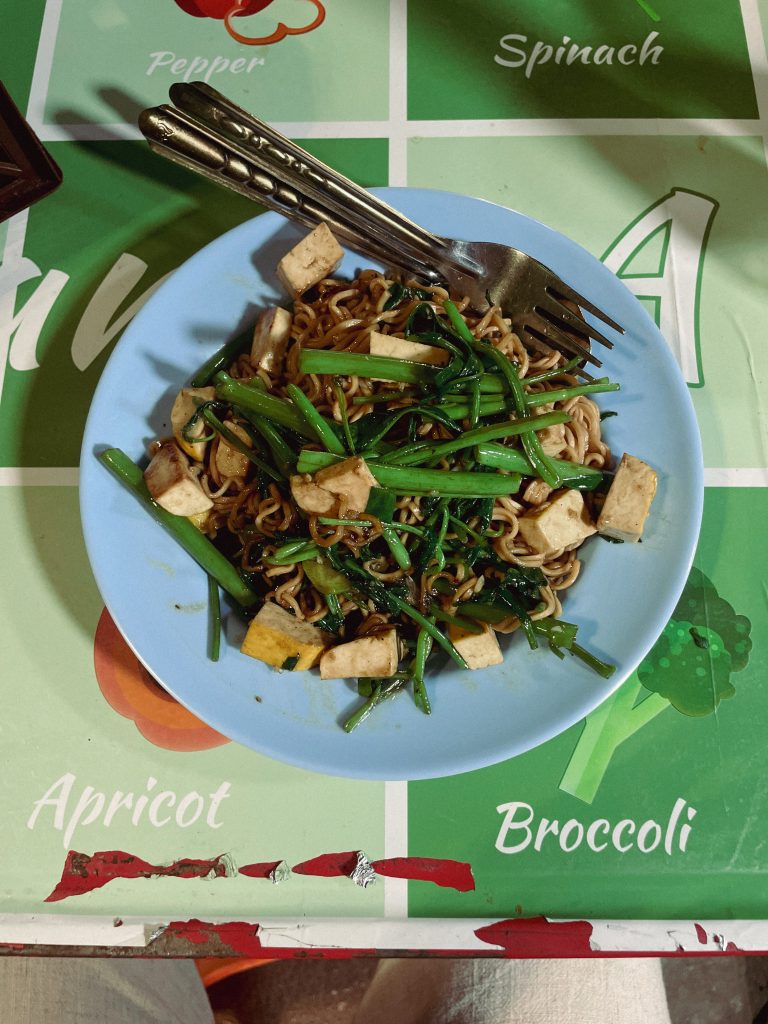
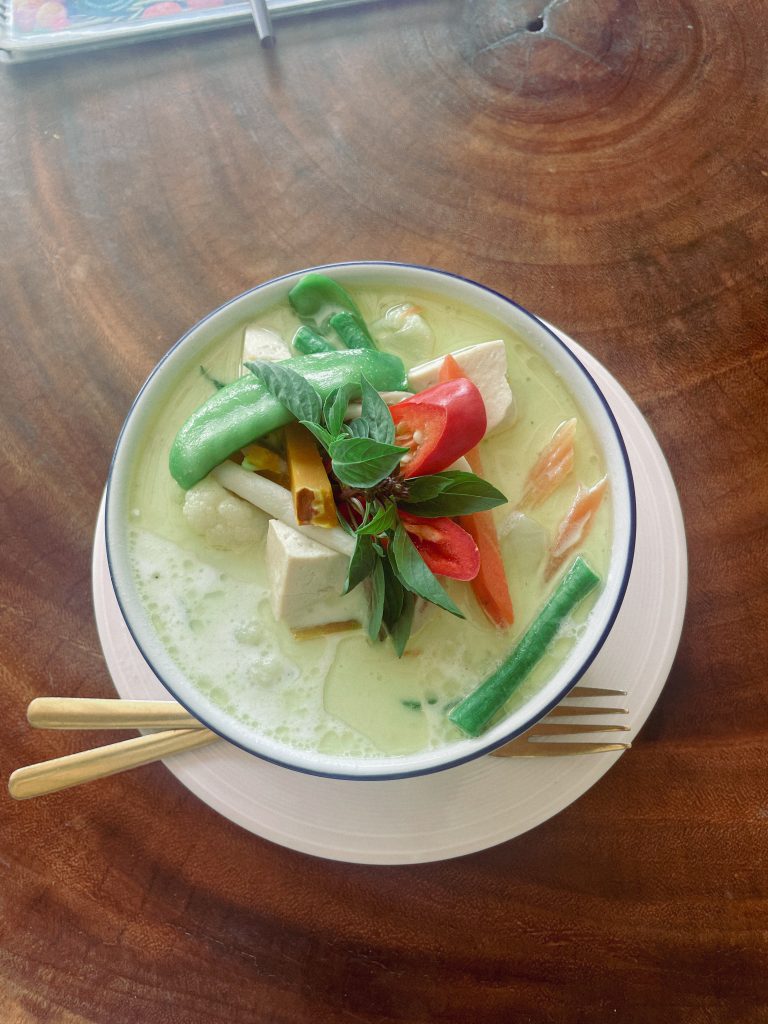
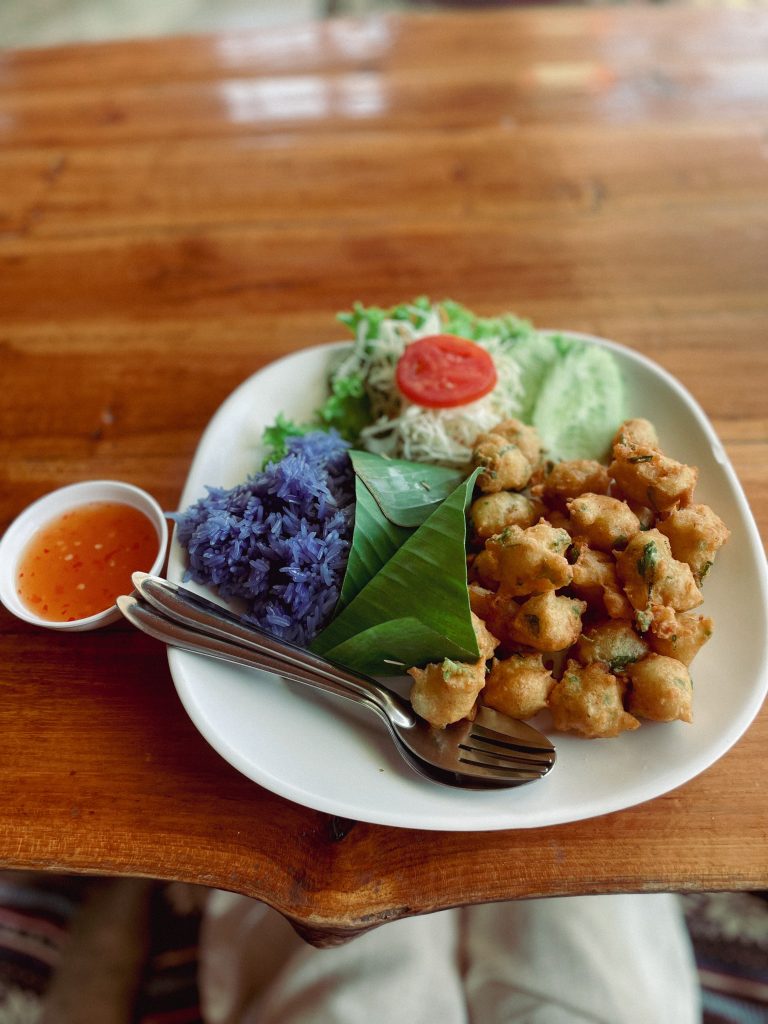
Meals cost £1-3
Based on my chats with people there, part of Chiang Mai’s appeal – compared to say, the Thai islands – is that it feels more “authentic,” or at least less mediated by mass tourism. Fon is from Prachinburi, and moved here five years ago. “People from here have a strong sense of culture, pride, and local traditions,” she said. This is in part due to the highly esteemed university and active student culture.
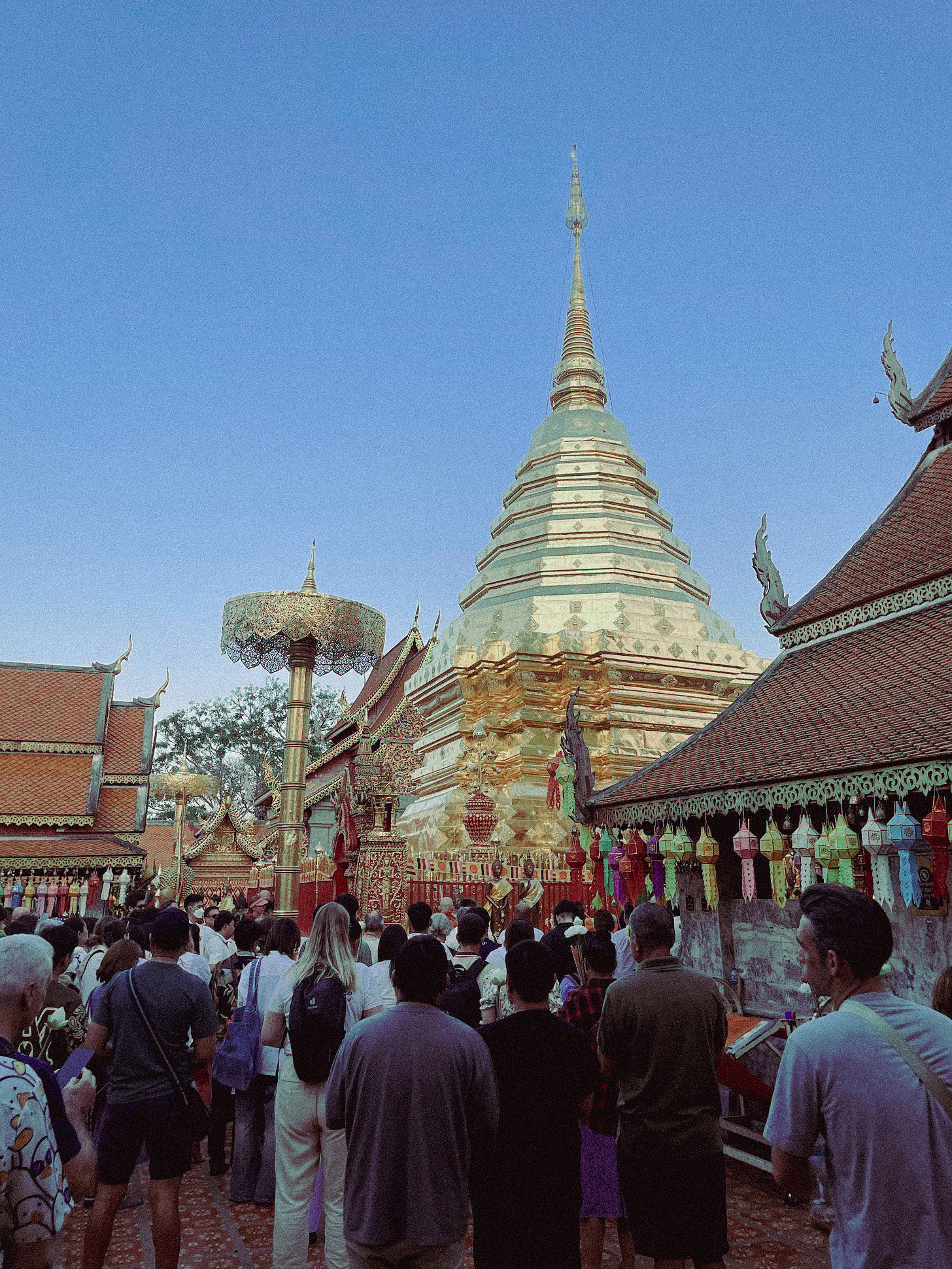
Evening chants at Doi Suthep are popular
As more people move here to work, however – which is likely, in the wake of this visa – I suspect local businesses and authorities will keep shaping things to meet foreign interests, expectations and spending habits.
After all, nomads are not tourists in the traditional sense. They need a more fixed base, comfort, friends, places to live, reliable internet access, and familiar home comforts. I went for dinner with people from a newly launched co-living residence, for example – something that’s becoming more common, and speaks to the desire for permanence.
Another challenge that comes with growing numbers of long-term visitors, is waste management. Chiang Mai already feels stretched in terms of infrastructure, and more people inevitably means more rubbish. Bali, for example, is grappling with a well-documented waste crisis, and while I wasn’t able to investigate in depth here, this blog provides some interesting context about recycling and waste handling in Thailand.
I tried hard to minimise my footprint by carrying a Grayl water filter bottle and a foldable dog bowl for takeaway food, but the broader issue is harder to tackle. How the city will cope with more residents and their impact on waste, water, and energy systems remains to be seen. “Waste and water management have not kept up with growth,” said Fon.
Is it overcrowded already?
In terms of capacity – like I said, it already feels quite busy, and judging by comments on Reddit forums from long-term nomads, that seems to be the case. I found myself standing at traffic lights for around ten minutes in Nimman, trying to cross the road, for instance.
All the Grab drivers wore masks to protect themselves from the terrible air quality, which will surely worsen as traffic increases. Electricity wires hung about precariously, which had me wondering how much additional strain the desire for faster internet was putting on infrastructure.
According to Fon, my observations were valid. “The cost of utilities has risen dramatically,” she said. “The condition of the roads is abysmal, and there’s no real public transportation despite the demand. There are more vehicles on the roads each year as a result.”
A lot Chiang Mai is undeniably charming, and you can tell why people like it here. The Old Town is beautiful, a square of ancient walls, temples, lanterns, and slow, warm evenings. I really enjoyed my first few days staying just south of it, near Wua Lai Walking Street Market, a quieter part of town that still felt full of character.
There are some beautiful hikes nearby, and lots of stunning wats to explore – I even spent one day speaking to monks when I visited (you can read my blog about this here).
Overall though, I seemed to leave Chiang Mai with more questions than answers. It will be interesting to see how it changes over the next decade, and how the Thai government will manage the steady influx of people (or indeed, decline, if that happens). Is another Bali boom and bust on the horizon?
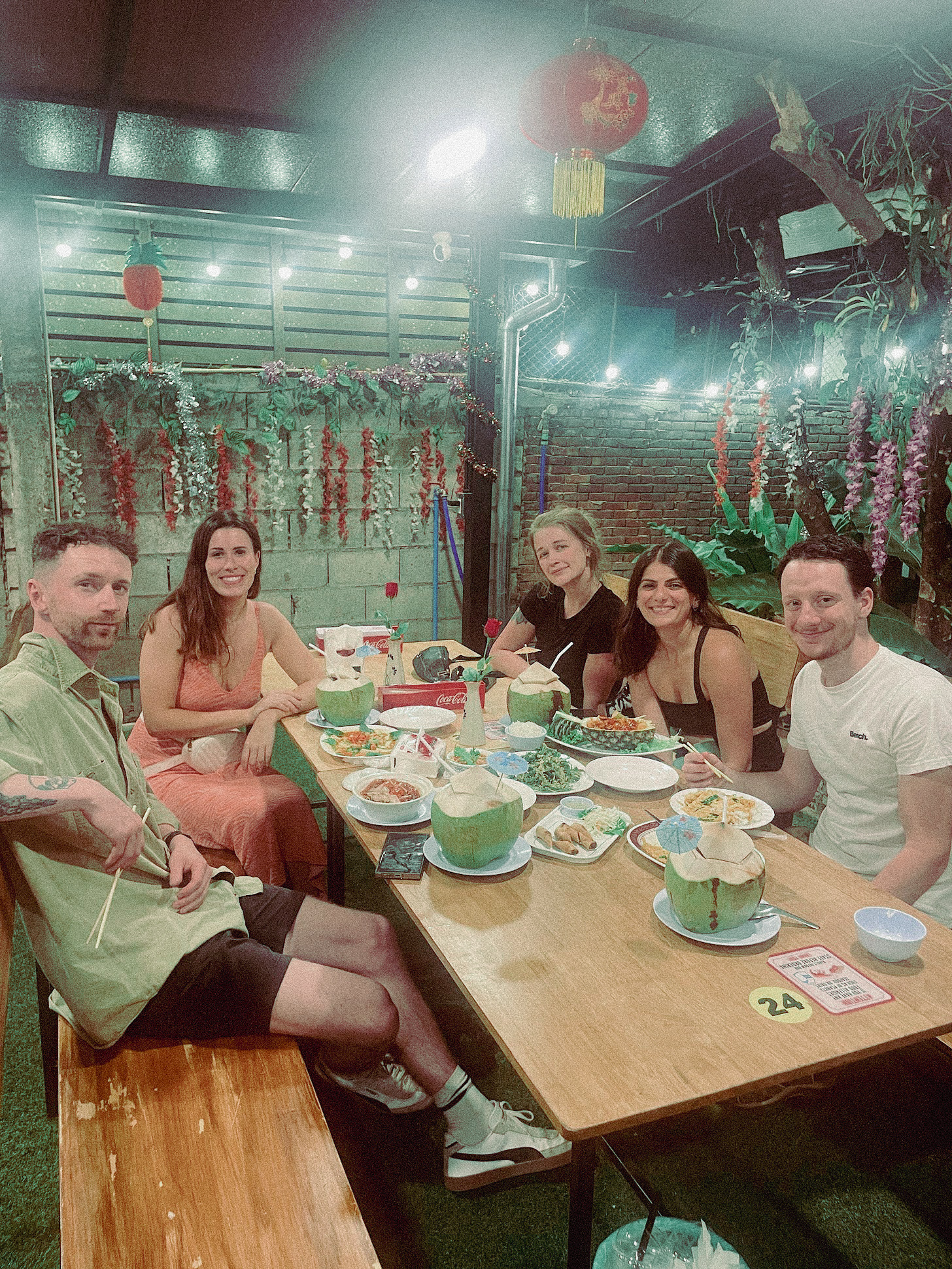
Dinner with a gang of travellers I befriended
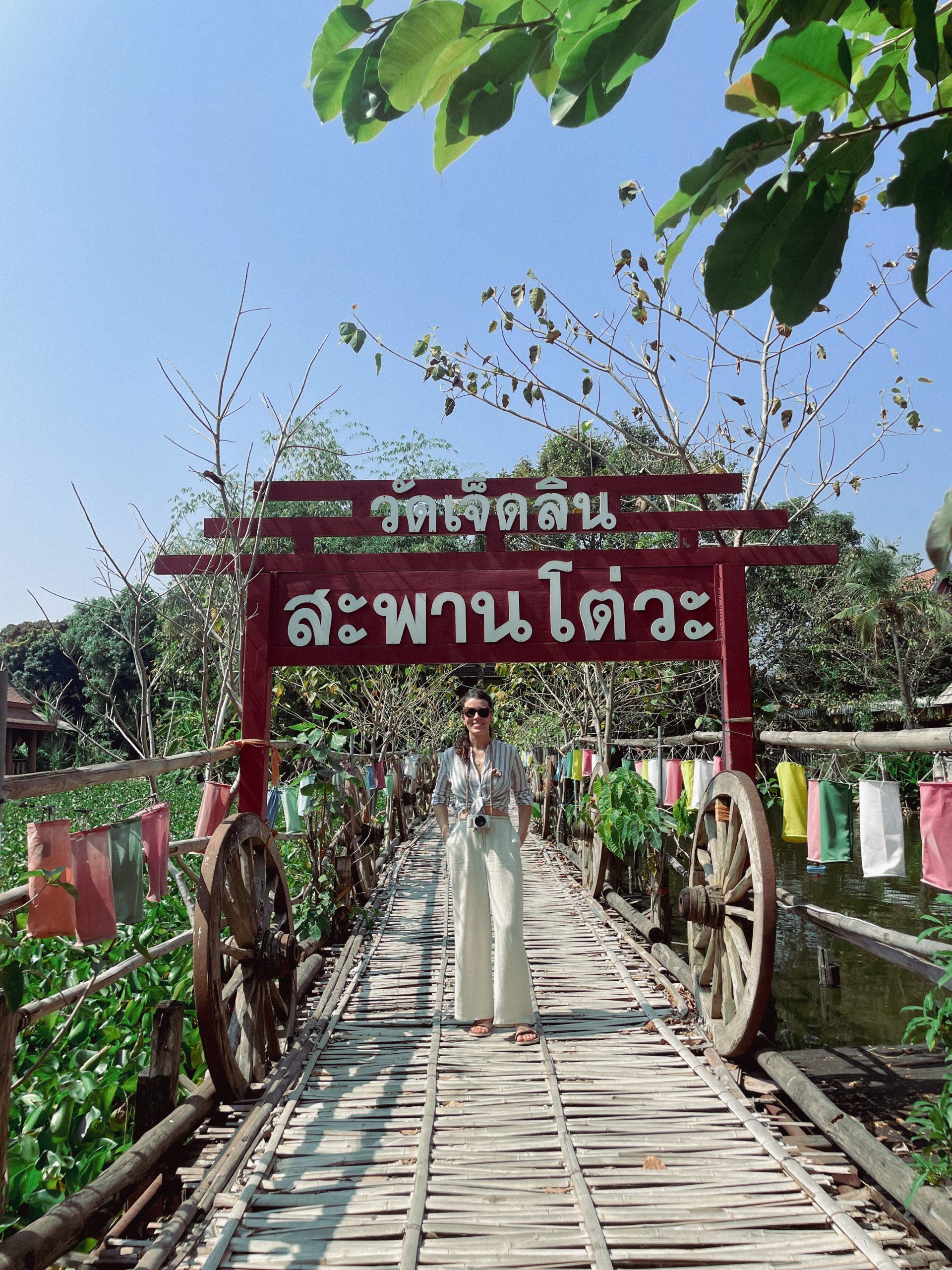
Exploring the local temples