Touching down in Sydney – my beautiful bank holiday in Sydney’s Blue Mountains

And a “work from home” day at the State library.

I arrived in Australia at the end of April, when the temperature was in the low 20s. I’d always wanted to visit, but with over seven million square kilometres to choose from, planning a trip to this vast country requires a fair bit of thought.

I only had ten days to spare this time, with a couple reserved for a new freelance project that had come my way. So I kept things simple, splitting my time between Sydney (New South Wales) and Melbourne (Victoria), close to where my friend – who I was visiting – now lives.

Flying into Sydney from the lush jungles of Bali, I wasn’t particularly interested in spending time in the CBD (the city centre, basically). With a bank holiday approaching, my friend suggested we visit the Blue Mountains National Park instead.

This is a dramatic sandstone landscape around 60km outside the city. Imagine a vast basin, ringed by cliffs, with deep valleys and rock formations throughout – a bit like an alien crop circle.
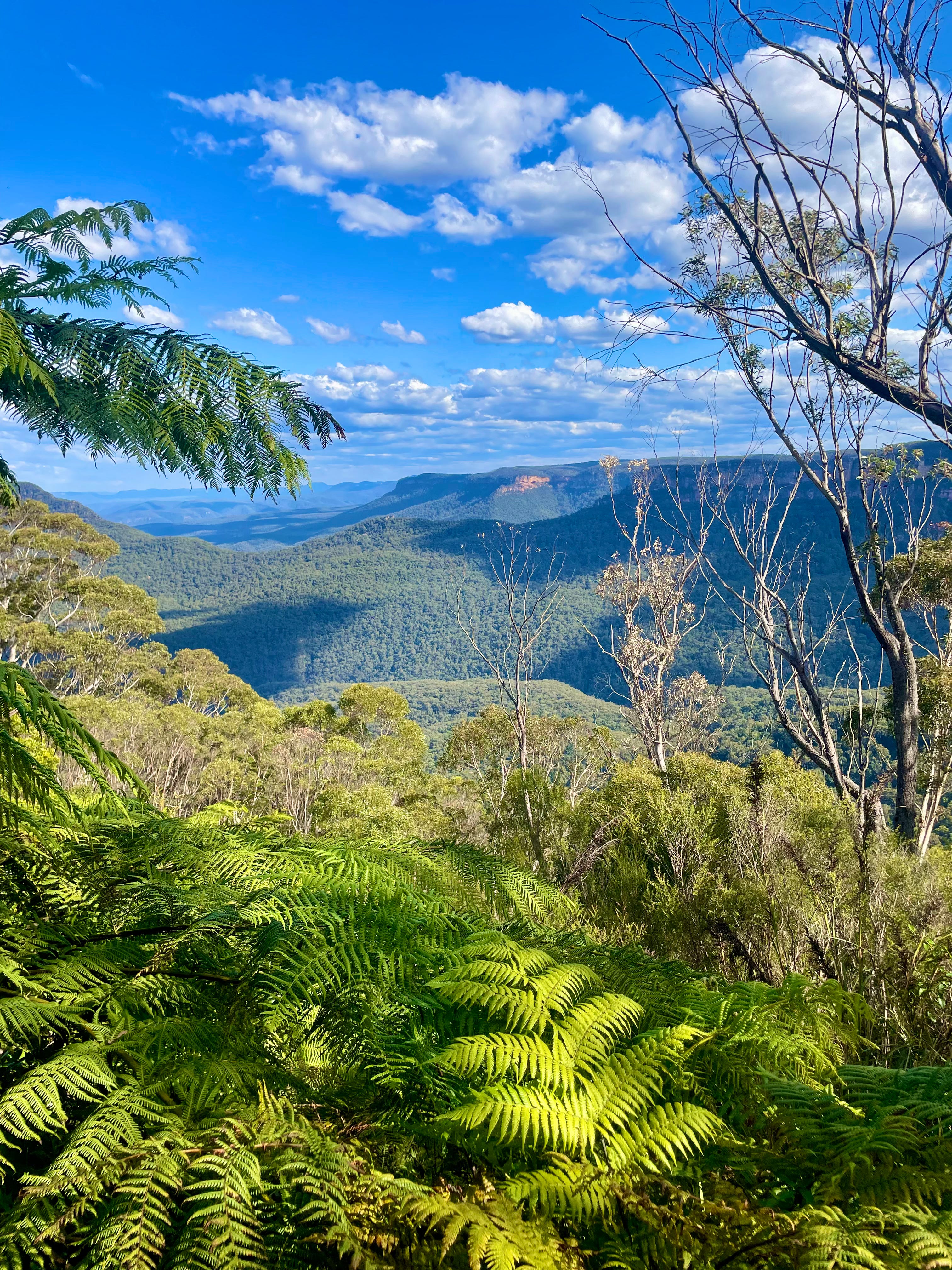
The Blue Mountains is a rugged, World Heritage-listed region in New South Wales, Australia, located about 50 km west of Sydney

Why is it blue, you ask? If you look closely at the distant trees, you can make out a faint blue haze caused by the eucalyptus leaves releasing oil into the air. It’s a beautiful place, and a fantastic location for hiking. Cue a 90-minute train ride from Sydney’s Central Station, and we found ourselves back in nature once again.

There are a number of towns dotted around the park, including Katoomba (what a name!). This is the main town and administrative centre of the Blue Mountains. It doesn’t feel big, but there are plenty of cafés and restaurants – we even went to the cinema – and most importantly, the national park is easily accessible by public transport.

We made this our base for two days, booking a four-bed room at the YHA Blue Mountains Katoomba.

I must have stayed in around 50 hostels since my first solo trip in 2023, and I’m a huge advocate for them.

YHA has a long heritage, and this one in particular housed a lot of families, which gave it a safe, cosy feel. There’s a large kitchen and movie room, books and games to borrow – and like most good hostels, the staff had encyclopaedic knowledge of the area.

Becca doesn’t “hostel” much, and even she enjoyed it, especially given it cost us around £130 each in total for four nights.

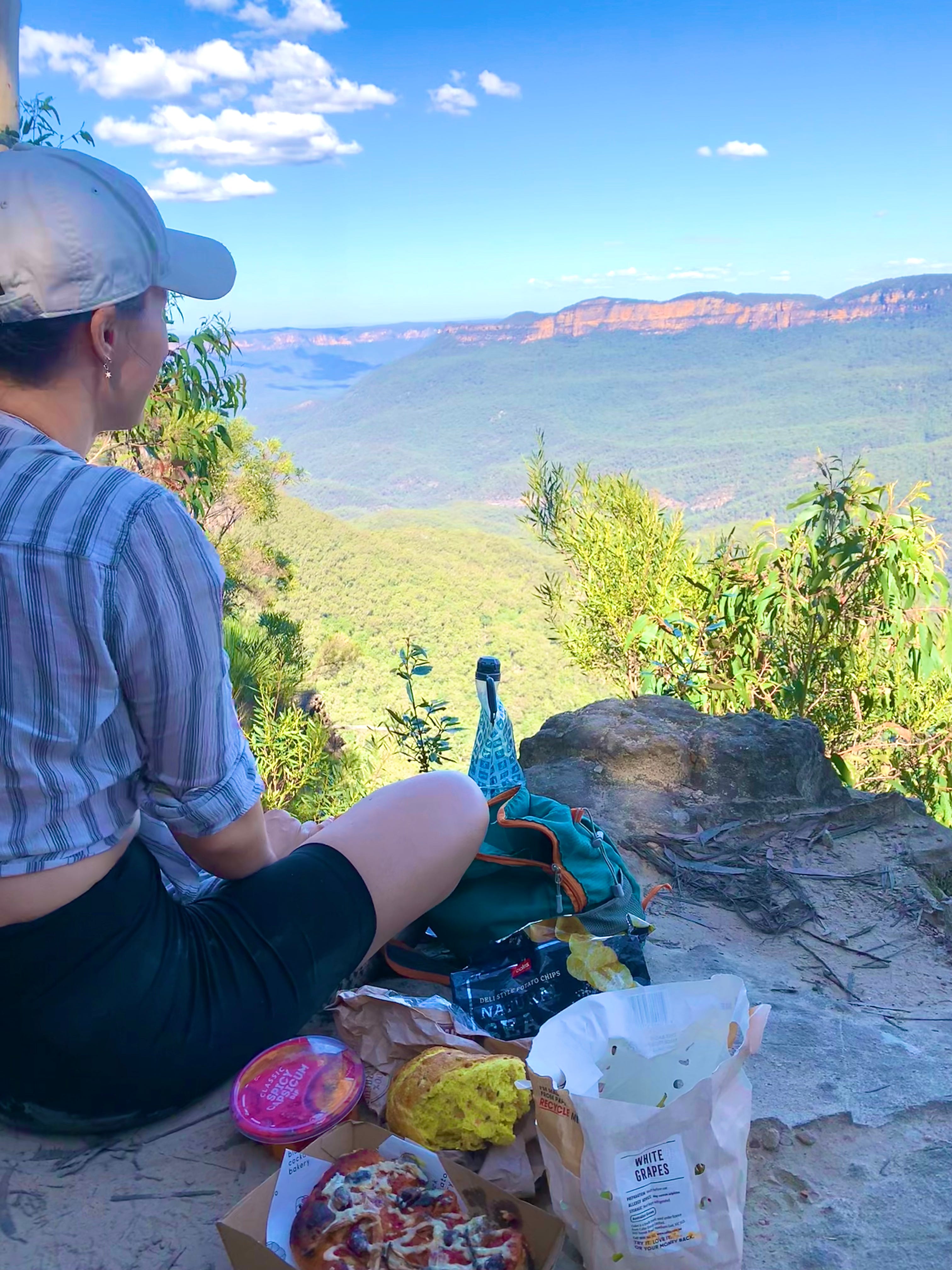
As for the mountains themselves, there’s a reason Tourism NSW uses them so heavily in its imagery. They’re unlike any mountain range I’ve seen before, with plenty of easily accessible walking routes, many of them fairly flat, offering sweeping views in all directions. More challenging hikes are available too, so pack plenty of food. Nothing beats eating your sandwiches perched on a cliff edge!
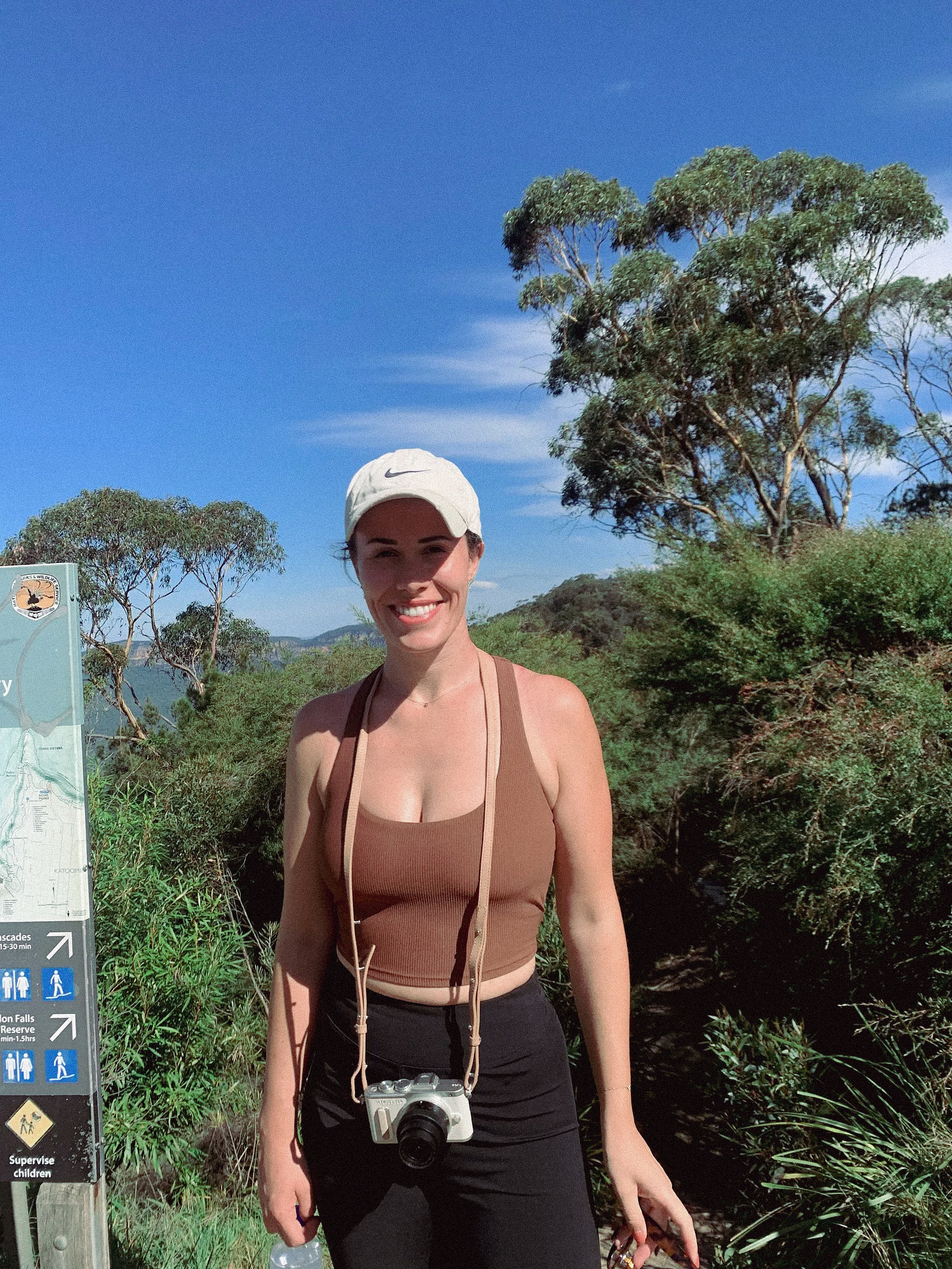
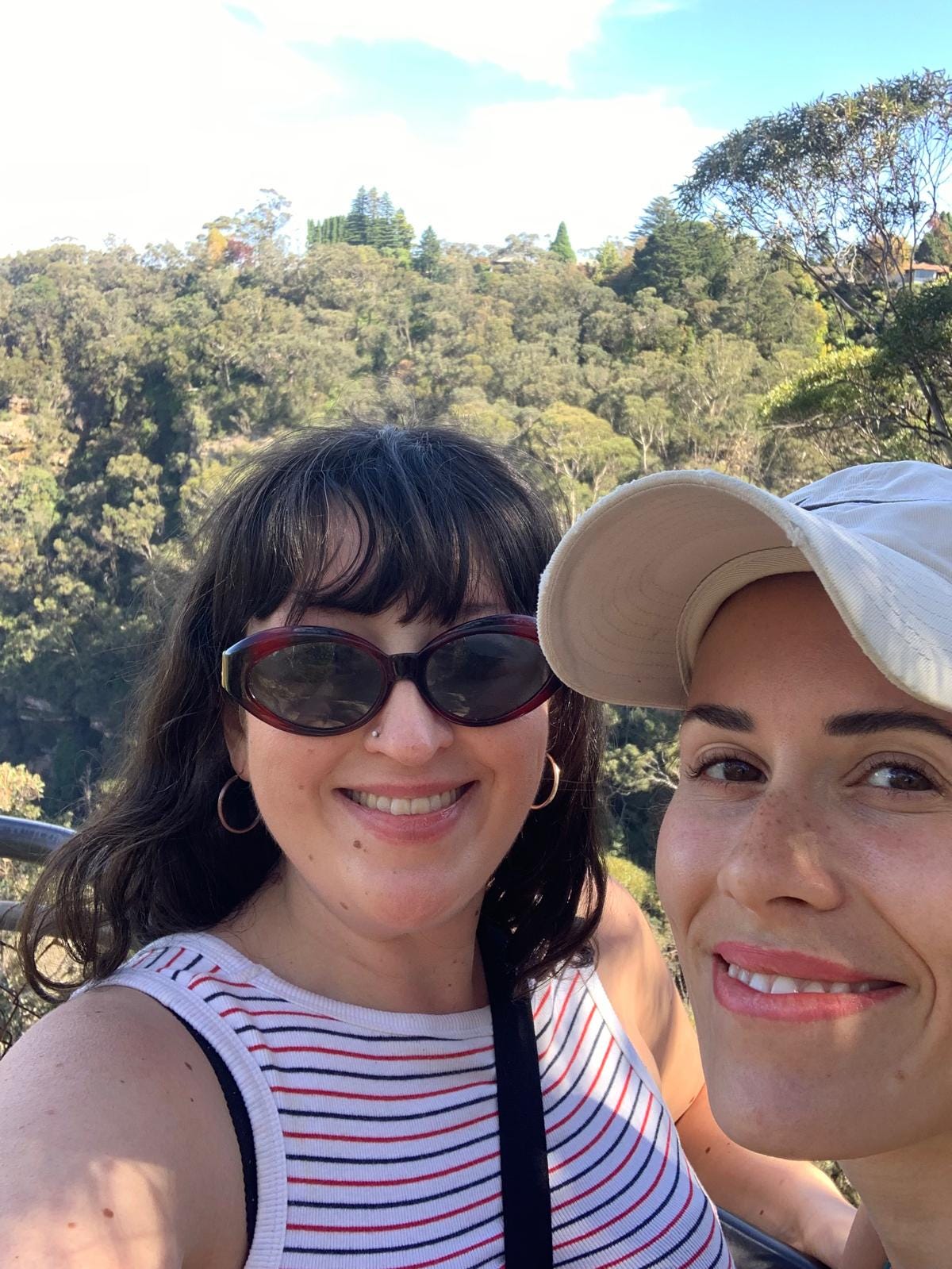
We spent a couple of days navigating different trails, and on Becca’s recommendation, saved one morning to visit Scenic World. This cable-car attraction takes you down to the forest floor and across the famous Three Sisters rock formation, with views out towards Wentworth Falls.

It’s a fun way to access parts of the landscape you don’t see from the clifftops alone. That said, locals flock here on bank holidays, so my main tip would be to book accommodation and attractions in advance, as everything was fully booked when we tried our luck on the first day.
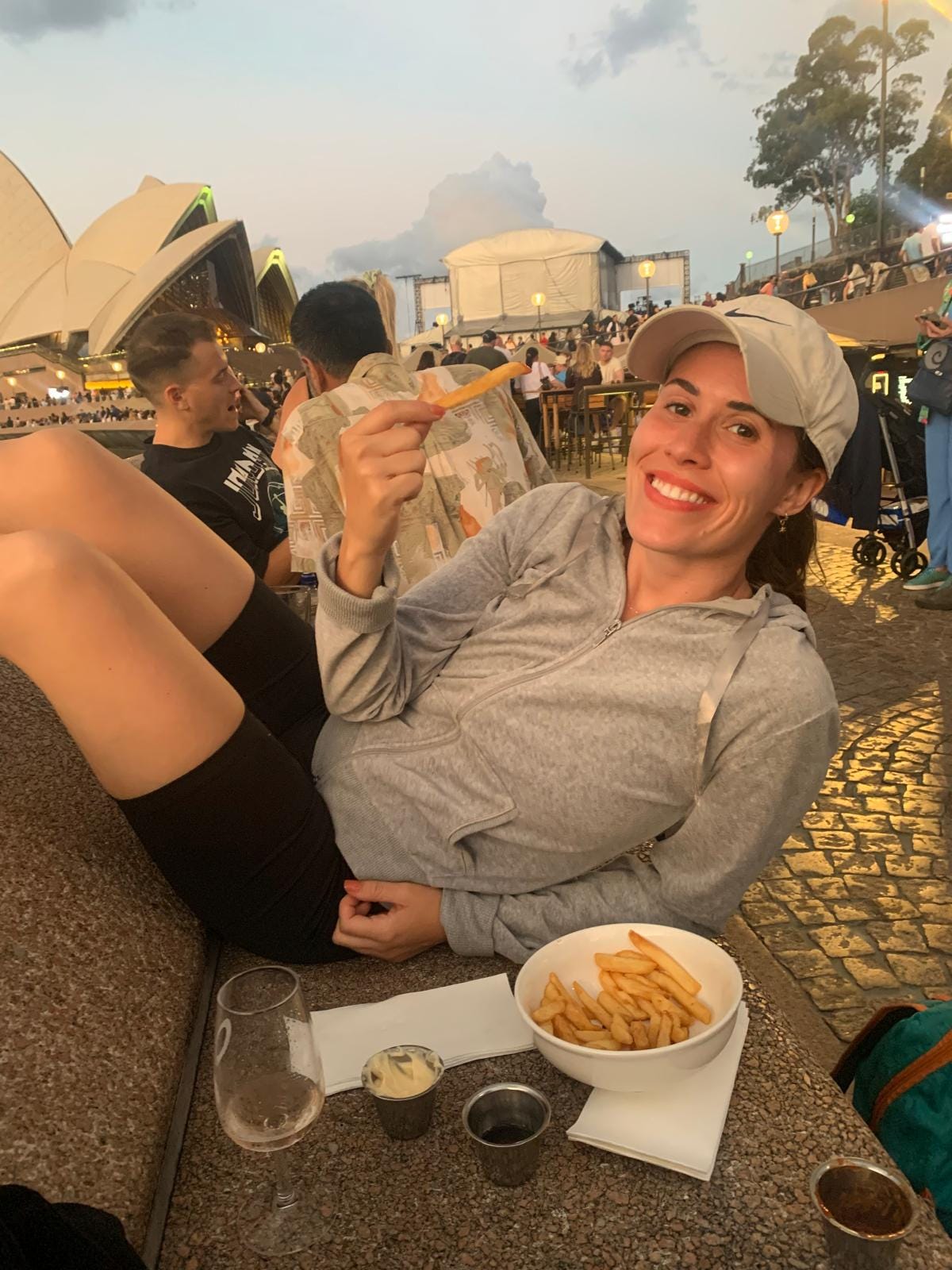
The good weather held for another day once we returned to Sydney, and after plenty of walking, we spent a glorious evening scoffing chips and watching the sun set behind the Sydney Opera House. I also made time to watch the wild waves rolling in at Bondi Beach.
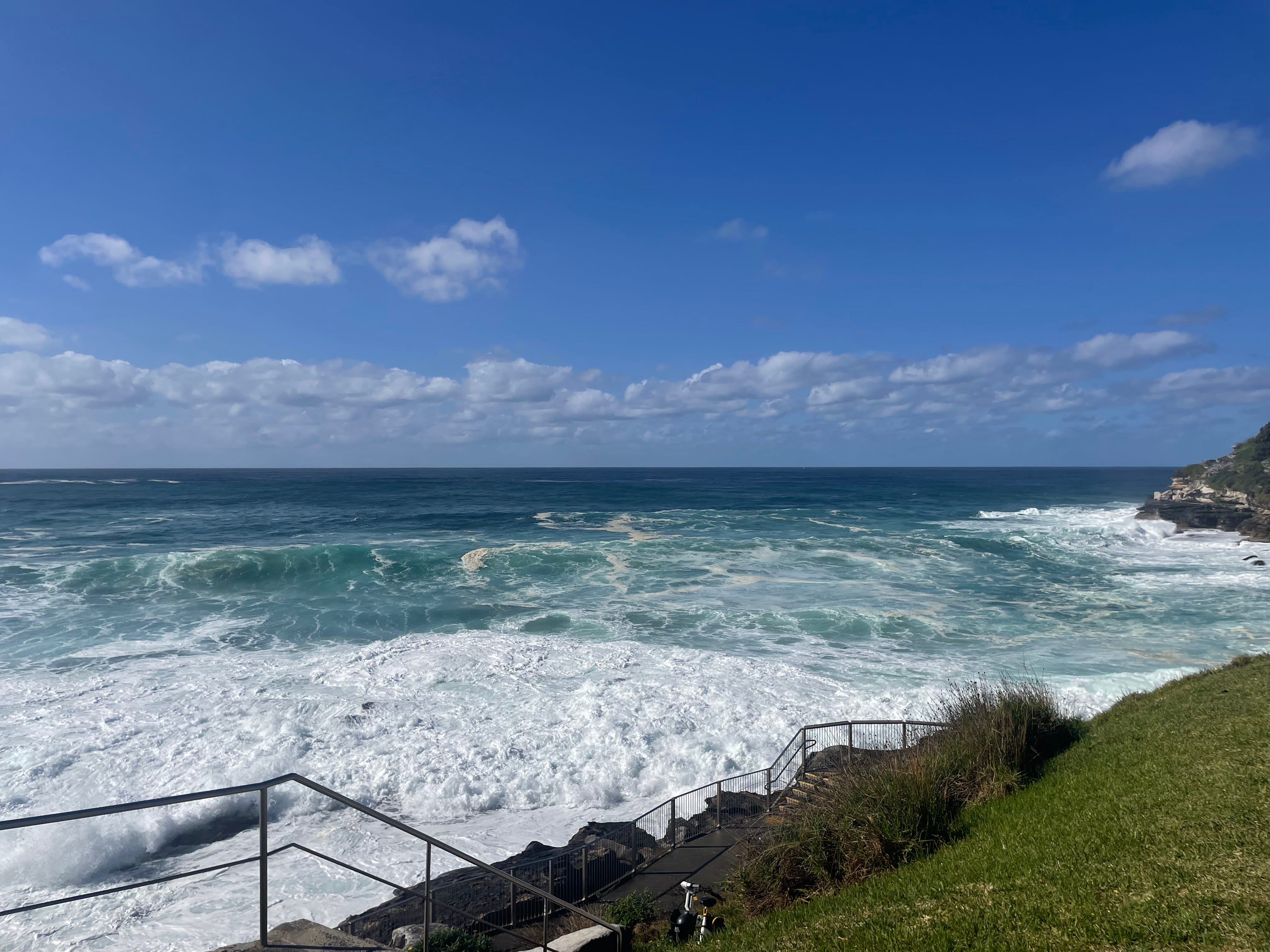
Wacky waves at Bondi Beach

A day later, the heavens opened. I sought shelter in the State Library of New South Wales, tucked beside the Botanic Gardens (also worth a gander!) and got a solid chunk of work done for the week.

After two months in Asia, this felt like a real change of pace – and having access to a desktop computer was a small luxury I didn’t take for granted. Sydney has some beautiful libraries (check out this blog post by The Rachellist if you happen to be in need of one). If you’re a remote worker like me, I’ll always advocate for libraries, and this one is particularly lovely.
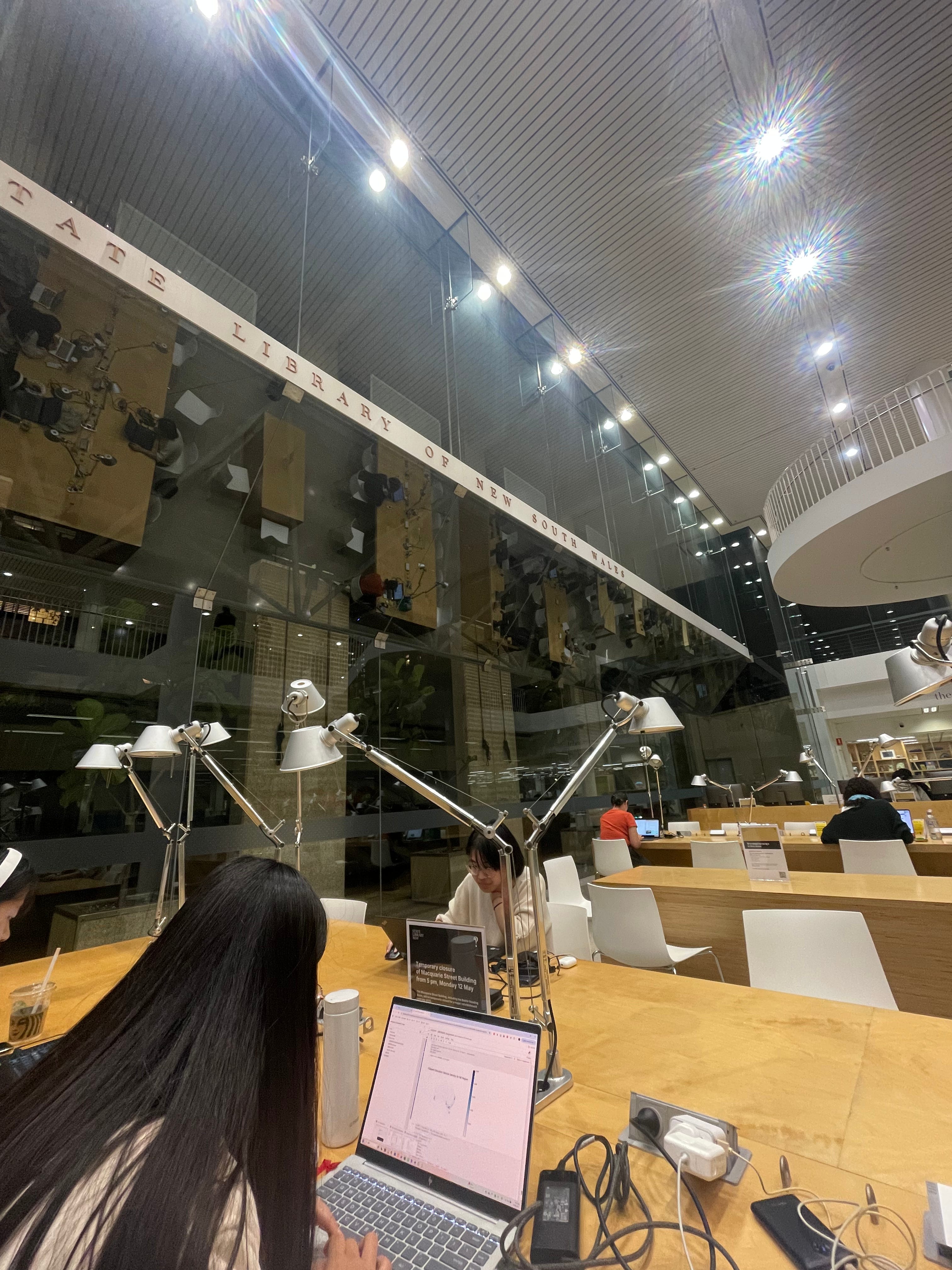
Seeking refuge from the rain at the State library of New South Wales

Working while travelling might sound dull to some, but for me, visiting Australia was a reminder of how grateful I am to work remotely. Better still, freelancing means I’m not working every day.

We’re lucky in the UK to have a decent annual leave allowance compared to some countries, but a ten-day trip to Australia would still have eaten up a third of it – and probably delayed my decision to come at all. Knowing I can (hopefully) return made the whole experience feel lighter, calmer, and far less rushed.
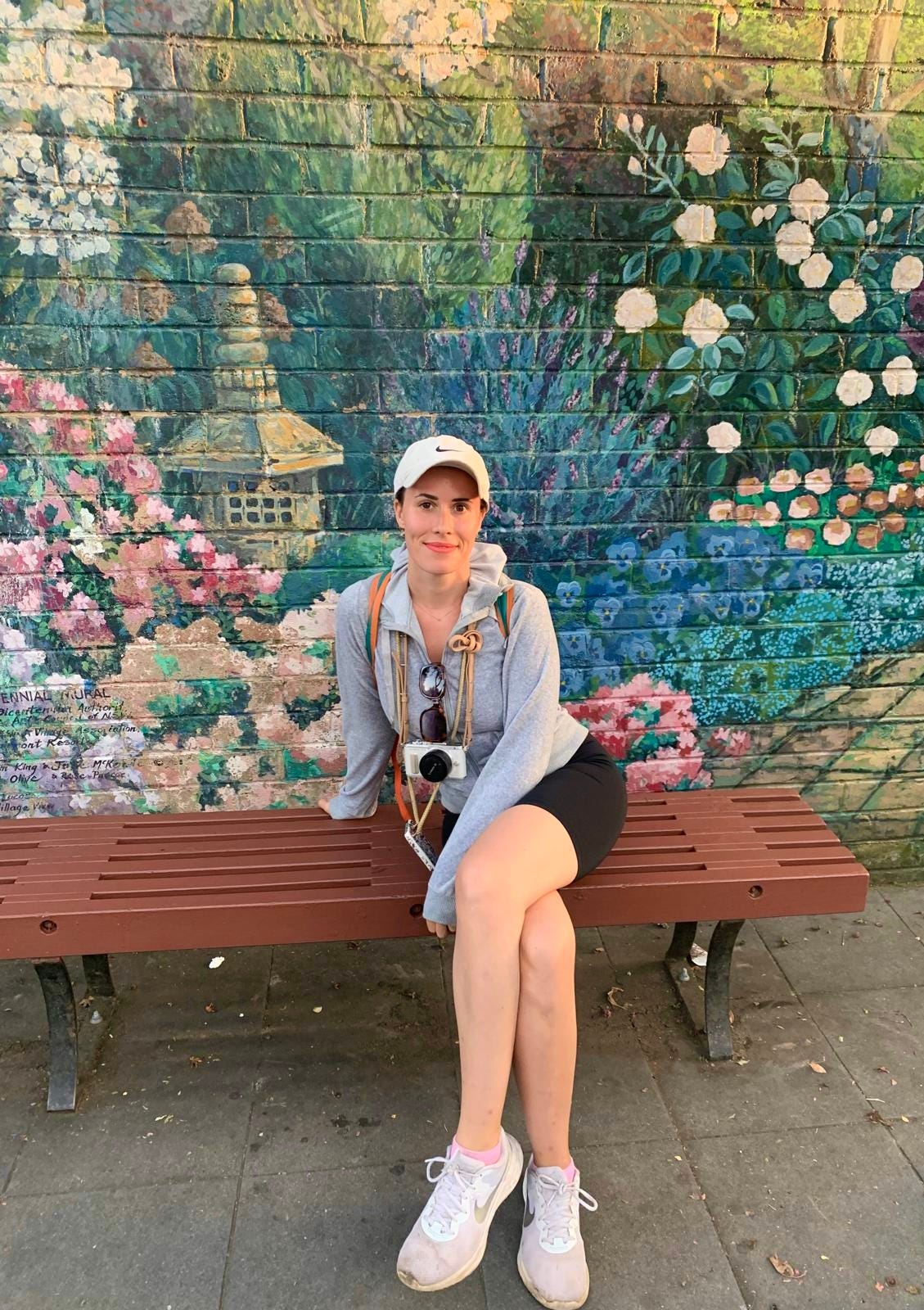
Cooling off in Katoomba, the main town of the Blue Mountains
Similar Posts

  • Cooling off in Copenhagen

    Is this the best city break in Europe?

    Following three months visiting Asia, Bali and Australia in early 2025, I was craving less stimulation and more structure for my next trip from the UK. After eight years as a Londoner, there comes a point where you want to trade a backpack for a trench coat and boots, and with a friends’ wedding in Sweden approaching in May, it made sense for us to visit Copenhagen first.

    I’d been curious about the Danish capital for some time. My parents spent their honeymoon there in the 80s and nearly always have Scandi drama on the go. I also recall having nightmares from a made-for-TV version of The Little Mermaid which, true to Hans Christian Andersen’s style, is far darker than Disney would suggest. 

    Luckily this trauma was corrected during my visit, and I left thinking Copenhagen might be one of my favourite city breaks so far. Maybe that was because, after the sensory sprawl of the far east, it felt so refreshingly calm and considered, with its wide pavements, seamless cycle lanes, and reliable public transport. Like a lot of Scandinavia, everything seems designed – not in a showy way, but in a cool, collected way.

    Keep reading for food highlights, what to do, and the best day trips from the city.

    What to eat in Copenhagen

    Copenhagen is a bit of a foodie dream – which sort of surprised me – so prepare to go with an empty belly and a ready palate. Here’s a suggestion for you to spend your day eating around the city: 

    First – bakery breakfast 

    Skip the hotel buffet and head to Rug or Hart Bakery for some beautifully curated baked goods. They’re quite upmarket places with spaces to sit down and enjoy your loot. Bring a friend so you can split a bunch of them between you (or pig out alone!) 

    Next – Smørrebrød and beers for lunch

    Smørrebrød is a classic Danish open sandwich – sort of like oversized tapas. Imagine a base of tangy rye bread, topped with smoked fish and pickled veg. We stopped on Gammel Strand, but you can find them all over the city. They’re delicious but not cheap, so order a selection and split them between you. Wash down with a beer (Carlsberg or Mikkeller). I can also recommend Bird cocktail bar in the city centre for a classier beverage.

    Then – snacks at Broens Street Food

    Sitting opposite the Inderhavnsbroen bridge, this is another cool food market from whence to snack, but you could also have lunch or dinner here. It is located on the Greenlandic Trade Square where the traders from Greenland, Iceland, the Faroe Islands and Denmark used to arrive after long journeys across the oceans. It’s a lovely spot from which to look over the water. Opening back up in March, it even offers yoga, social dining and other events to enjoy.

    Finally – dinner and drinks at Reffen Street Food Market

    Proclaiming itself as the “largest street food market in Northern Europe”, this is another buzzing food market on the waterfront, hosting food stalls from around the world. For Londoners, it has a bit of a Hackney Wick vibe, complete with beautiful street art. Like Broens, it opens again in March and offers regular events that I’m always ogling on Instagram. A perfect way to see the sunset.

    What to Do in Copenhagen

    Most guides will suggest visiting Copenhagen for four days, which feels reasonable to me, although I stayed longer and felt there was plenty to see.

    Here’s fun activities I’d recommend adding to your trip itinerary.

    Take photos at Nyhavn

    Spend some time walking about the iconic 17th-century waterfront, canal and entertainment district. Despite being a little touristy and expensive, it’s a great spot for photos. Just look at those gorgeous buildings.

    Learn about hygge at the Happiness Museum

    The Danes are pretty well known for their commitment to hygge – but what does that actually mean? Well you can learn all about it at The Happiness Museum, curated by Denmark’s Happiness Research Institute. Lots of fascinating takeaways from this place about how different cultures measure happiness and I found myself reflecting deeply afterwards. All millennials (or anyone feeling slightly lost in life) should come here!

    Marvel at chairs at the Design Museum

    I cut my teeth doing design PR, so I couldn’t miss this and it totally delivered. Who knew so much thought went into the development of a chair? If you get satisfaction from efficiency and beautiful problem-solving, you’ll love spending a couple of hours at the Design Museum. 

    Shake off the chill with a cycle about the city

    Probably the best way to see Copenhagen – especially between May and September. Use the app Donkey Republic to hire bikes.

    Do a walking Tour

    A great way to understand the city’s history. Every tour is different, but ours covered the royal family and Denmark’s WWII experience. If you’re not booking via your hostel or hotel, try Get your Guide or Guru Walks.

    Visit the Little Mermaid statue

    Emphasis on “little”. She’s teeny but powerful – just look at her Disney empire! The statue is an ode to one of Denmark’s most famous writers, Hans Christian Anderson and sits in edge of the Langelinie promenade, making an excuse for a nice walk.

    Ride around Tivoli Gardens

    Continuing the Disney link – I recently discovered during this podcast by The Rest is History, that Tivoli gardens amusement park was Walt Disney’s original inspiration for the disney parks. Feels a bit random having a theme park bang in the centre of a city but if you fancy an adrenalin rush, it’s typically open from March.

    Art appreciation at Freetown Christiania

    Describing itself as an “intentional community”, Freetown Christiania is a separate community in Copenhagen with a history dating back to the 1970s. It has its own laws, flag and way of life. Visitors can enjoy the cafes, art, and market, and it seems there’s often live music and other arty things going on. It’s definitely worth seeing for a different side of the city.

    Cross the Bridge to Malmö or Lund

    Why not cross the bridge from The Bridge and head into Sweden?

    Copenhagen sits right on the border, and it’s just a short train ride across the Øresund Bridge into Malmö in Sweden. From there, Lund is around an hour away.

    Lund – home of the Oatly factory – is a charming university town and worth stopping in for a night or two to sample the café culture and wander around the historic university buildings. I spent a lovely two days checking out the vintage shops and cafe hopping here. Some favourites included Broder Jakobs and Too Motch.

    I didn’t particularly love Malmö, but the Disgusting Food Museum is admittedly a fun (if slightly grim) stop if you’re in the area.

    A place of quality not quantity  

    Copenhagen isn’t the cheapest city break but if you want somewhere that combines good food, thoughtful design and just enough culture to feel smug about it afterwards, the Danish capital is hard to beat. Between the pastries, museums, harbour swims and slightly intimidatingly stylish locals, it’s a city that feels both relaxed and quietly inspiring. I went with friends, but also had some days alone, and found it very well suited to solo travelling (for more solo city break inspo, read my Porto blog). If you’re into looking like you belong on a design mood board, visit between May and September when the city really comes alive. I’d be intrigued to see what it’s like in winter – maybe another time! 

  • Hiding out in Hoi An, Vietnam: two months as a nomad in Asia 

    I finally take a spin on those coconut boats.

    After a whirlwind weekend in Ho Chi Minh City – my sixth week as a digital nomad in Asia – I took a short flight northward to the central coast of Vietnam. Having depleted my energy stocks in the capital, I was looking forward to some downtime in the cutesy, lantern-lit streets of Hội An.

    Sitting about halfway up the coast of Vietnam, this ancient coastal town is popular with tourists and, like any popular location, attracts mixed feedback from nomads. From people I spoke to, most tend to go to the nearby city of Da Nang because it’s right on the beach, a little more built up, and, I suspect, offers more to people wanting to build a life out here.

    Luckily though, I wasn’t planning on sticking around for long, so I could lean into being a tourist a bit. Everyone has a different goal when travelling, and the whole point of my trip was to take me out of my city comfort zone, dip my toe into nomad life, and take advantage of freelancing by seeing some of the places in the world I’d always wanted to. If that’s something you’re also considering, take a read of this blog where I talk about why I left London in early 2025.

    Where I stayed

    Wanting to be with other travellers, I booked a dorm bed at the adorable Saclo Hostel, where I met the loveliest bunch of people. Like most hostels I stayed at during my trip, it played host to a mix of travellers and nomads in their twenties and thirties.

    We ended up doing ‘family dinners’, nights out, language lessons, co-working sessions, and simply roaming around the city together, with the help of our excellent host. There was something very restorative about falling into temporary routines with strangers after the intensity of Ho Chi Minh City, especially as I’d had such a brilliant time with the Koh Rong gang.

    If you’re travelling alone (and are a bit older), I’d avoid the big-brand hostels and search for smaller ones offering activities, because it often results in a much better experience.

    Is there a nomad scene?

    As to whether there is a “nomad scene”, it’s hard to say because I wasn’t there long, but like I said – it’s common for remote workers in this part of the world to split their time between Chiang Mai and Da Nang, which is very close to Hoi An, so there will be some crossover.

    Luckily I had met some of them in Chiang Mai, which meant I had some connections locally, and I took a day trip to Da Nang waterfalls with a group of people living in a newly opened co-living space.

    There’s clearly some long-time nomads in Asia making a special effort behind the scenes to create a sense of community for remotees, which I really admire. It’s difficult moving abroad, so if this is something you plan to do, make an effort to search for those people – whether it’s via flyers, reddit, or chats over coffee – and get networking!

    Cafés, co-working and coconut coffees

    No matter if there’s a big scene or not, behind those lantern-lit fronts are a ton of modern bars, bistros, and cafés, which are perfect for people needing a bit of work downtime. There are loads of veggie and vegan spots too, some even built with yoga and co-working in mind. You really don’t need to pay for spenny yoga retreats when you’re in Asia – just do it yourself!

    For the authentic views – try Hub Hoi An

    Few things on social media are as wonderful in reality, but that can’t be said for Hub Hoi An. Set right in the middle of electric green rice paddy fields, it fosters an authentic, off-grid feeling whilst running like a proper co-working space, with all the facilities you’d need and community events to boot. I’d highly recommend coming here if you plan to stay for a while and want to make friends. Shout out to Matt for recommending it.

    For slow breakfasts and laptop hours – Nourish Eatery

    This place is fab for a big breakfast or brunch (think £4-5 for a hug meal). There’s a decent upstairs area for laptops and yoga during the week too (although it’s closed on Mondays).

    For escaping the hustle – The Inner Hoian

    Such a cute café, hidden down a side street and surrounded by lush greenery. It felt like the sort of place you accidentally spend three hours in without realising. Also has a very dangerous little gift shop if you’re a tote bag person. Very calming energy.

    Where everyone settles in for the afternoon – Goodeats Hoi An

    This spot is super relaxed and remote-work friendly, but I also noticed lots of families hanging out here too. One of those places where everyone seems to naturally settle in for the afternoon.

    For the best iced coffee – Hoian Roastery

    Home to the best iced coconut coffee I had in Vietnam, and the most accommodating manager.

    Instagram reality check

    Taking a bike through the paddy fields at sunrise, sampling cafés, and hunting for the best bánh mìs – this is the kind of thing that brings me joy. But like most spots in Asia, the town also offers the option of taking cooking classes, coffee-making workshops, visiting the nearby coast at Da Nang, or getting a dress or suit made (which I did do, although I’m yet to wear her).

    That said, like all places in Asia, it would be remiss of me not to do the old “Instagram v reality” wake-up call. Some fun, but slightly overrated, activities for me were:

    The coconut boats

    I had a feeling they wouldn’t really be my thing, but I did them anyway because they’re so iconic. It’s cheap and only takes about an hour, but the whole thing does feel a bit tourist-trappy. You’re basically spun around while people sing and ask for tips. That said, the area itself is beautiful, and it’s nice to spend some time in such an important natural space.

    The lantern parade

    The multicoloured canal boats are pretty enough to look at, that’s for sure. But this isn’t exactly the sweet, idyllic scene you see on TikTok. It was busy, loud, and a bit chaotic, being right by the strip with all the bars and nightlife.

    I also can’t help but feel that lighting lanterns is an unsustainable practice, which really put me off. Perhaps in future there can be a way to do this that is kinder for the waterways and surrounding environment, but until then, I’m unsure how I feel about it.

    Despite the slightly overrated tourist-grabbing activities – which is true for any location – I found Hoi An overall, to be as cute as a button, and ended up staying for a week (though three days is probably plenty if you’re a tourist or short on time). The chaos of Ho Chi Minh City felt miles away, replaced by the hum of scooters, the cluck of chickens, and the buzz of baristas whipping up coconut coffees.

    Heading there in mid-March felt like the perfect time, as we caught a slightly cooler weather window. After March and April, it gets really hot, then really rainy, before cooling down again in January and February. (Central Vietnam can also see flooding in the later months, so check conditions before you travel.) North Vietnam gets properly cold in the early part of the year too, so plan your trip with that in mind – and do not underestimate its weird weather!

  • Why nomads shouldn’t sleep on Siem Reap

    History meets modernity in this vibrant Cambodian city.

    I didn’t really know what to expect from Siem Reap when I booked a flight there in early March. Obviously I’d heard of Angkor Wat, but the city itself didn’t seem to be talked about much in digital nomad circles online.

    At this point, I had been travelling around Southeast Asia as a freelance remote worker for four weeks. Having just wasted five days throwing up in Vang Vieng in Laos (don’t go there), I was keen to find somewhere I could properly base myself for a bit, get some work done, and have at least one significant cultural experience.

    I ended up spending a week in Siem Reap, working lightly from abroad, pampering myself, sampling the nightlife and visiting the historic sites. I have to say I was really pleasantly surprised by it and could have stayed longer – here’s why.

    A vibrant urban jungle

    First of all, it feels nothing like Bangkok or Hanoi, both of which I found a little overstimulating.

    Unlike Bangkok (where I started), the city is not full of high-rise buildings, and there seems to be a lot more space to roam around than there is in Hanoi – at least in the old French Quarter (in the centre). That’s partly due to a heritage rule that limits building heights, giving the city a less imposing, more town-like feel. In fact, it reminded me of a larger Luang Prabang (Laos).

    It’s also incredibly colourful. The first thing I did after leaving the airport was take an electric tuk-tuk into the city centre, about half an hour away. As we got closer, it seemed I was shaded by trees much of the time.

    The buildings are a mix of colonial-era French and traditional Khmer styles, as opposed to the more brutalist vibe of Phnom Penh, which is a constant reminder of Cambodia’s dark past. Many exteriors are covered in plants and foliage, giving the city a calm, verdant feel – something like an urban jungle, which I found quite soothing.

    Is there a nomad “scene”?

    There is definitely a remote-working community here, but it’s not massive. I overheard young English and European speakers chatting about their lives in cafes, and know people who are based there permanently as teachers.

    As a communications consultant, my work mostly consists of sending emails, writing articles, and taking video calls, so I cannot speak to wifi speeds in much depth – I defer to reddit forums for that kind of information.

    But a lot of the cafes were well set up for laptops, with decent WiFi, air conditioning, and private rooms to take calls, which is another giveaway.

    Some of my favourite spots to “plug in” in Siem Reap included:

    Footprint Cafe – feels like sitting in a small library. It has links to the University of Cambridge in the UK, and seemed like a good place to meet people.

    New Leaf Eatery – excellent vegan food, with noticeboards full of flyers for local events and clubs. The restaurant supports youth development in Siem Reap.

    Common Grounds – situated on one of the prettiest streets in the city, I came here twice for breakfast and the air conditioning. All profits support humanitarian and development work in Cambodia.

    Biolab Coffee – designed with nomads in mind, it also functions as a coworking space and is well set up for meetings.

    A conscious community

    Cambodia has a very painful recent past, which was one of the reasons I was keen to visit. During the late 20th century, the country suffered years of civil war, partly shaped by the wider conflict in neighbouring Vietnam.

    This was followed by the tyranny of Pol Pot and the Khmer Rouge, a brutally cruel regime that resulted in the deaths of around a third of Cambodia’s population. Because Pot targeted people he considered to be “intellectual”, after its collapse in 1979, the country faced a massive shortage of teachers and professionals. Illiteracy rates climbed to nearly 40%, and the education system had to be rebuilt from scratch.

    That history still feels present, and one noticeable outcome is how many businesses focus on reinvesting money and support back into the local community, as you’ll see from my descriptions about the cafes above.

    I talked a little in my Chiang Mai blog about the ethics of being a nomad, and the experience of being somewhere, whilst not totally immersed. The people of Siem Reap call you to do the opposite, and I really liked that about it.

    Which Wat is Wat?

    Another point of appeal for Siem Reap is that is is soaked in modern and ancient history – being home to the city of Angkor – so there’s quite a bit to get your teeth into on your days off.

    Built in the twelfth century, Angkor was the centre of the Khmer Empire, a powerful kingdom that once dominated much of Southeast Asia. At its peak, it was home to around a million people, making it the largest pre-industrial city known to exist.

    As the Khmer empire dissolved, Angkor became a ruin. Whilst it was known to the local community, it wasn’t until around 200 years ago that archeologists got their hands on it, and made it a major tourist attraction. It remains the largest religious (Hindu/Buddhist) monument in the world, at three times the size of the Vatican City, and a lot of it is still in tact.

    One or two days in Angkor?

    Because there’s so much to see, visitors can buy either a one-day ticket ($37), a three-day ticket ($62) or a seven-day ticket ($72).

    I’d heard sunrise or sunset were the best times to go, so on my first day, I set an alarm for 3am and joined a Get Your Guide tour. The tour cost around £10, including transport – which felt like a bargain.

    By 5am, I was standing in front of the iconic towers of Angkor Wat with about 20 thousand other tourists trying to get a photo of the sun rising over the “pine cones”. As it turns out, these are actually lotus buds, and represent purity, divinity, and fertility. Lovely!

    As someone with no background on the place, I was really amazed by the scale of Ankor, and the level of preservation, which is why so many people advise getting the three day pass (which I opted for). But I will go out on a limb and say that one day was enough for me.

    This is the very ancient past we’re talking about, and there’s only so much your brain can take in when you’re tired and hot. Our guide wasn’t brilliant at bringing it to life either – much unlike our guide in Phom Pehn (which I visited after Siem Reap), who did an incredible job at illustrating the horror of the killing fields and S21.

    I had learned by this point in my trip to just take in what I could manage, and then read or listen to something later in order to get the full picture. When I went back at sunset a couple of days later, I booked a tuk-tuk to take me around the key buildings I hadn’t yet seen (costing around £15 for the day) and it was far less busy. more relaxing and I was able to google things on the way.

    If you’re taking a tour, bring plenty of water. It gets hot very quickly!

    Visiting Kampong Phluk village on Tonlé Sap lake

    Another cool thing to do is go to Tonlé Sap lake, just outside of Siem Reap, to see a “floating” villages.

    What’s fascinating about Tonlé Sap is that its river system reverses twice a year. In the dry season it drains into the Mekong, but during the wet season, silt from the Mekong Delta causes the river to back up, flooding much of the country and expanding the lake. So a lot of the villages here are built on tall stilts to avoid the rising water.
    We visited one called Kampong Phluk. It was dry when we arrived, so we could walk about the village easily enough. It was very lively, with a wedding underway, a school in full swing, and music blaring. The houses are beautifully colourful, which apparently helps keep flies and mosquitoes away at night.

    The highlight was when we were taken by boat to a “floating restaurant” on the lake, where we spent a few hours chatting over beers and watching the sunset. You cannot see land for miles, so it’s quite surreal to be sitting on a raft in the middle of the water drinking beers. I believe there are crocodiles in the water though, so do not advise swimming in it!

    A day tour felt like plenty, but I know someone who stayed there for a month, so there’s clearly more to it for those who want to dig deeper.

    Lots to offer and well connected

    It might not be a headline digital nomad hub, but if you’re a remote worker looking for somewhere cheap, lively, and historically intriguing to linger, Siem Reap has a lot to offer.

    Not only is it a great mix of culture, calm, and coffee, Koh Rong, Koh Rong Sanloem and Phnom Penh are all reachable within the day, and it has its own airport in case you needed to hop out of the country quickly.

    Yes, price are a little higher than Thailand and Laos – roughly £3 to £5 for a meal, for instance – but still very affordable. I could have certainly stayed longer, but the islands were calling me, so I spent the following week decompressing on the beach. It’s a hard life being a nomad!

  • Petsitting from Porto – my side hustle expands internationally

    Plus, how does Lisbon’s cool sister fair for remote workers?

    Following an inaugural three-month stint as a digital nomad in Asia in early 2025, I returned home invigorated – but a little exhausted – by my new freelance lifestyle. Curious to understand what the European scene looked like, I started exploring options closer to the UK.
    Europe is, unsurprisingly, not as cheap as Asia or South America for nomads; but some countries are waking up to the advantages of hosting foreign remote workers. Portugal is one of them.

    Home to the first so-called “digital nomad village” on Madeira island, the country has made a concerted effort to attract location-independent workers. In 2026, it even introduced a dedicated D8 visa to make living and working there easier. With around 16,000 foreign remote workers, Lisbon has become so popular that the influx is now proving controversial, with concerns around gentrification and a siloed economy growing (see my blog about Chiang Mai in Thailand, where I touch on this).

    Outside of these hotspots, though, I hadn’t heard much about Portugal’s second favourite city, Porto. Porto sits on the west coast, in the north of Portugal; around three hours away from Lisbon by train. In olden times, Portugal was one of England’s more important allies, according to my favourite podcast, The Rest Is History. Nowadays, it’s best known for its Douro wines (including Port), pastries and (love her or hate her) J.K. Rowling, who lived there in the nineties.

    Curious, and having already had some success with pet sitting in the UK, I managed to secure a sit in Porto during October (full blog on how to get into this coming soon); making for a far more affordable trip. So, off I trotted for a week of exploration in the country’s wine capital.

    Is there a nomad scene?

    Unlike Lisbon, which has flourished as a long-term base for remote workers, Porto tends to attract fewer digital nomads setting up here permanently, it seems.

    Based on my time there, my sense is that this is partly cultural; many cafés don’t encourage laptops for long stretches, and the nomad community isn’t yet large enough to sustain the same density of coworking spaces and regular meetups. Some nomads will no doubt disagree – but for now, Porto feels less geared towards full-time remote work. Of course, that may well change if Lisbon continues to feel over-saturated.

    Coming at this from the perspective of someone who isn’t working full time, I found Porto to be a pleasant and peaceful location to work from, however. There’s reliable Wi-Fi, comfortable places to dip in and out of work (that allow for at least a few hours of focused work), and I felt like I was merging with local life. For freelancers, creatives, or anyone balancing work with travel (perhaps for shorter periods like me) – rather than clocking a strict nine-to-five – it was a good setup.

    How I spent my time in Porto

    There’s plenty to do in Porto, and it felt like a truly liveable city to me. Visiting in October meant it was mild (but a little rainy!) and wasn’t overrun with tourists. Locals were incredibly friendly and keen to make conversation, which really struck me. Here are some fun activities to add to your list if you’re visiting:

    Admire the terracotta rooftops from the Dom Luis Bridge

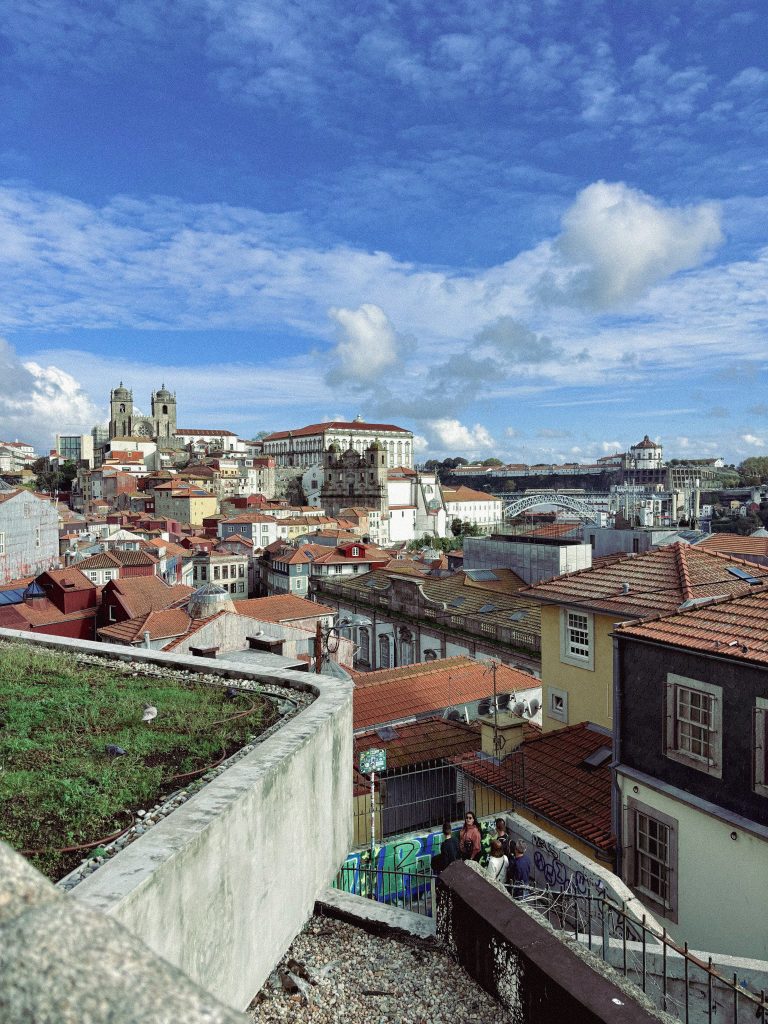
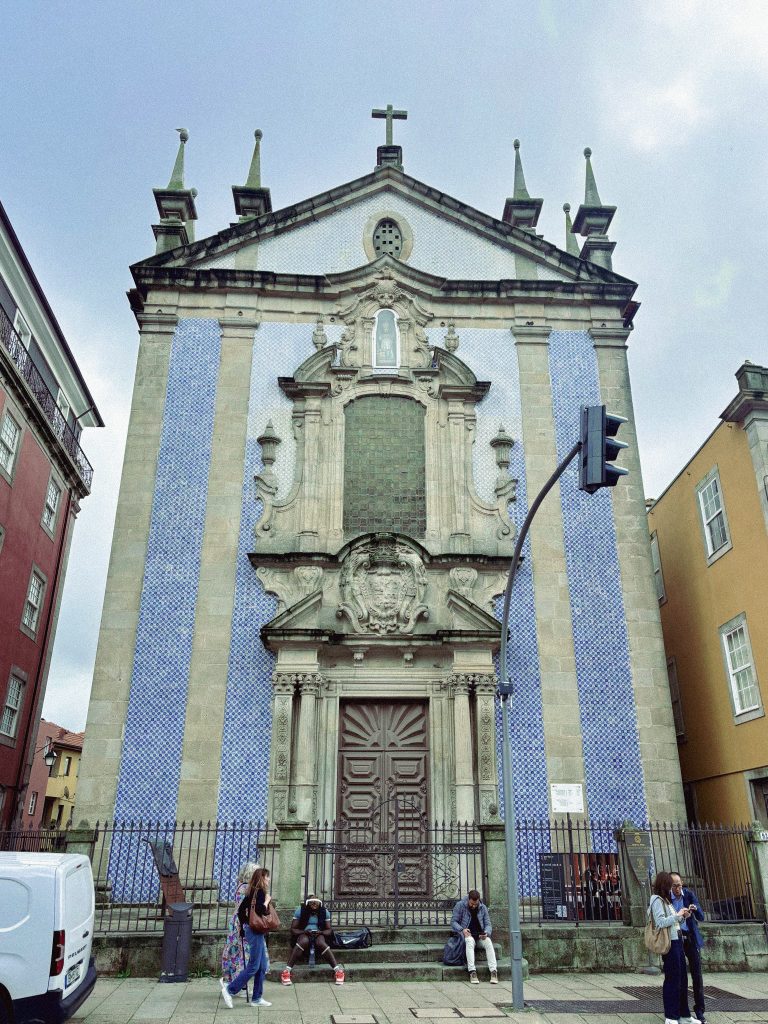
    Personally, the first thing I look for on a city break or solo trip is a walking tour. I booked one via my hostel, which took us around the local sites, including the fanciest McDonald’s in the world (which is nothing to write home about, but fun to see) and some beautiful viewing spots, including Sé (Porto’s cathedral) and the Dom Luís bridge, which crossed the Douro River.

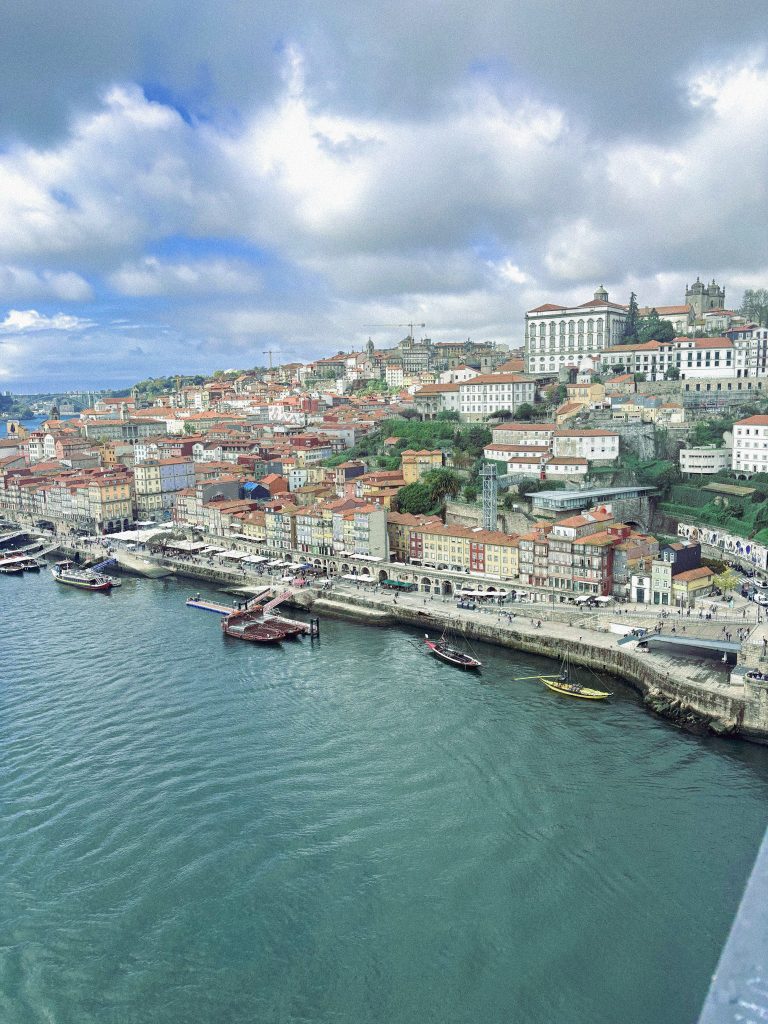
    The mix of ageing white and amber buildings lining the riverbank in the Ribeira district makes for a gorgeous sight and you’ll even find that the famous amber roofs sparkling in the sunlight, thanks to the sharp seagull deterrents. Magic!

    Worth noting that Porto sits on a steep slope beside the river; its narrow roads and staircases don’t make it easy to manoeuvre around – even with Ubers – so bear this in mind if you have health or mobility issues.

    Try a Francesinha

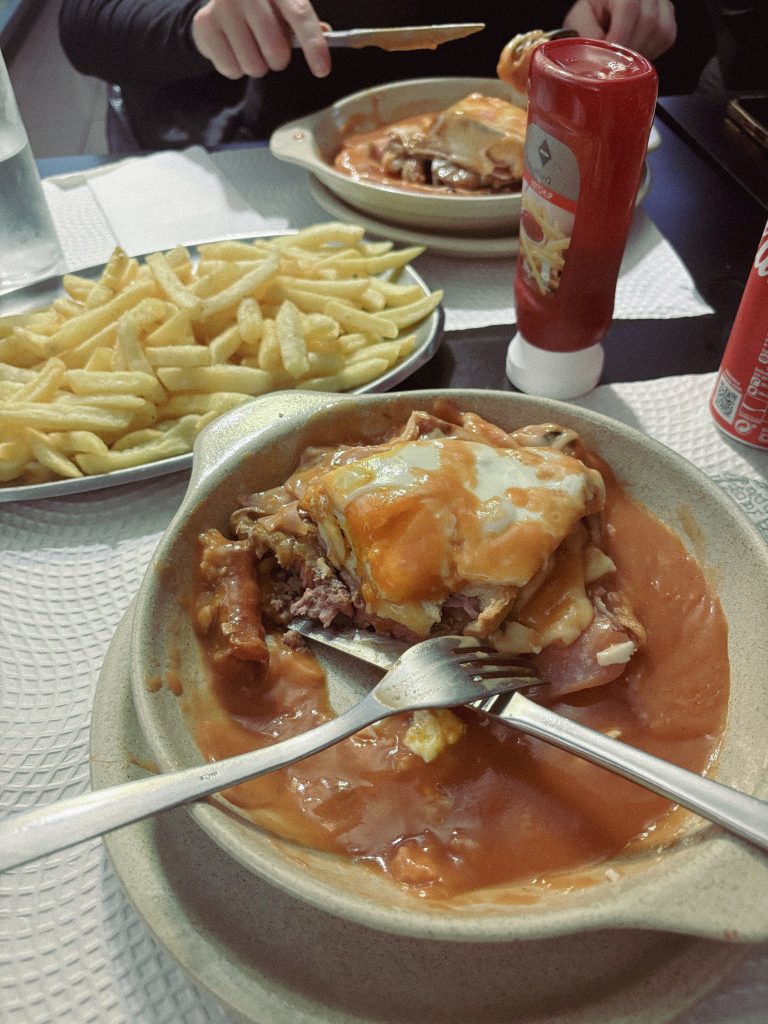
    I hadn’t put much planning at all into this trip, but luckily a pal of mine was in Porto at the same time visiting a local pal. After sharing a couple of bottles of rosé at a bar called Bosco (recommended for its views of the city!), she advised that we head out for something called a Francesinha.

    This is an indulgent Portuguese sandwich originating from Porto, featuring layers of bread, steak, ham, linguiça (sausage) and chipolata, smothered in melted cheese and a thick, savoury beer-and-tomato sauce. It tastes like eating a ham sandwich covered in spaghetti hoops. Bit weird, but sort of a must-try whilst in Porto.

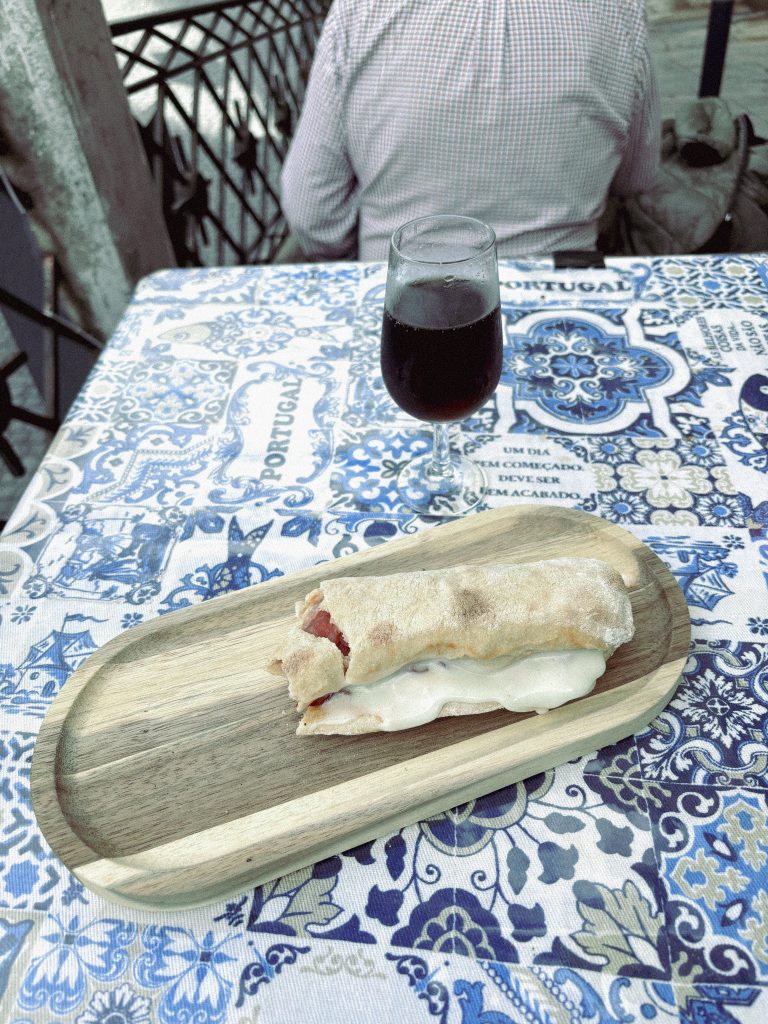
    Aside from the Francesinha, I can recommend the warm pork and cheese sandwich from Bó Tá Quente on R. do Souto – another good spot for traditional cuisine.

    Sample the pastries

    People like to celebrate French pastries, but wow do the Portuguese know a thing or two about sweet, flaky snacks.

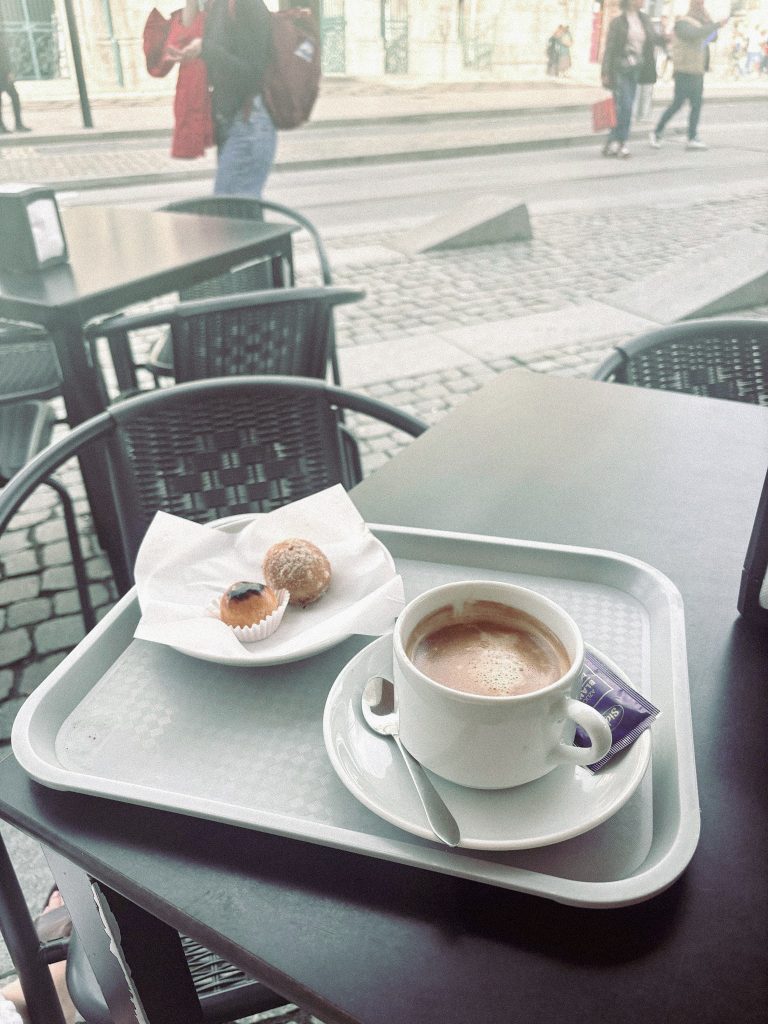
    One of the joyful things about Porto is that you don’t need to look far for a good pastry selection; although Confeitaria de Bolhão was busy, and had a big spread of goodies to choose from. Highlights have to be the pastel de nata (custard tarts with blistered pastry) and the ovos moles (a soft, sweet egg-yolk filling, traditionally wrapped in rice paper).

    Visit the Mercado de Balhao

    Described as a “recovered gem” following its restoration in 2023, this is a bustling indoor food market open every day other than Sunday. It’s a great place to grab a coffee and sample local treats, as well as do a bit of gift shopping.

    On my list for next time

    Walking the Camino

    Ah, the famous walking pilgrimage. This is on my wish list this year, although I’m still undecided on my route. The Camino Portugués from Porto offers three main, well-marked routes to Santiago de Compostela – Coastal, Central and Litoral – all starting at the Sé Cathedral. The Coastal and Litoral routes feature ocean views, while the Central goes inland through historic towns. All routes typically converge in Redondela, Spain, before reaching Santiago.

    Visit the Douro wine region

    It’s not just fortified wine made in Porto. Northern Portugal is famous for its Douro Valley, a UNESCO World Heritage site that’s easily accessible from the city. If you’re a wine fan, it’s easy to take day trips to the vineyards (which sit alongside the river) from the city.

    Pastel de nata cooking class

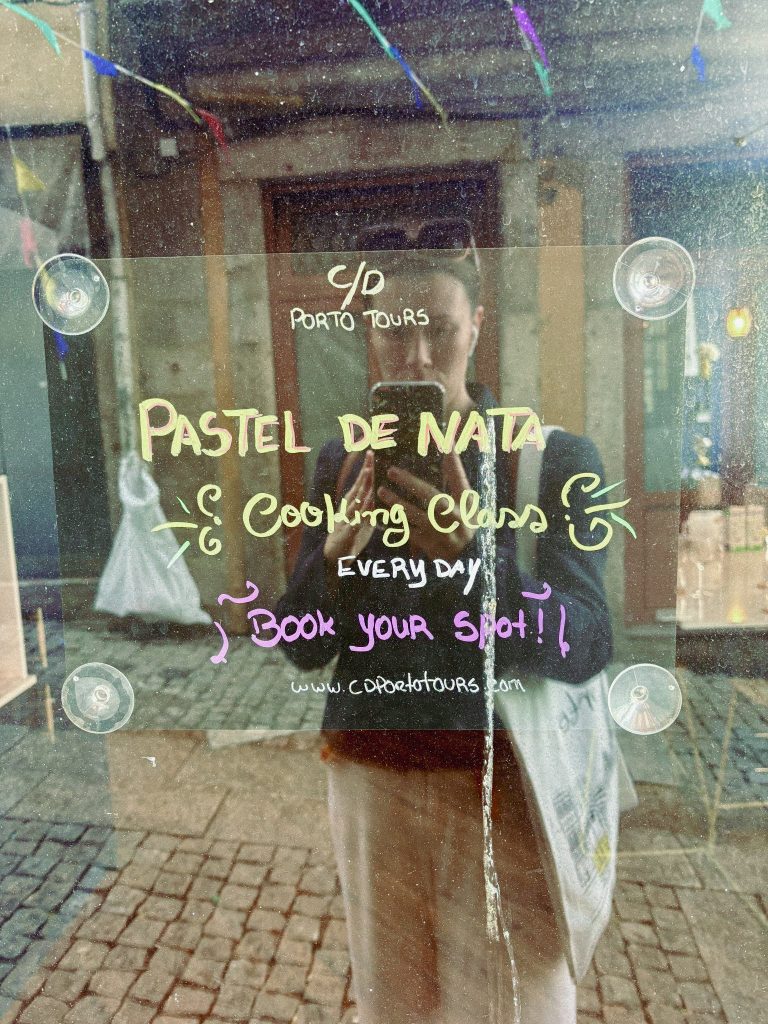
    Why not find out how to make the wee eggy tarts yourself? I spotted an advertisement for this in the city and it struck me as a fun thing to do. I’d be genuinely fascinated to know how they’re made but sadly ran out of time for this, myself.

  • Gilda girl tea: a fun-filled guide to Madrid

    Why the Spanish capital is perfect for a spring time soiree.

    This will sound conceited, but as a child, I found myself slightly bored by Spain.

    I was born in the 90s, which means I’m very much a product of parents seduced by programmes like A Place in the Sun. TV at the time was obsessed with our hot neighbour, and – like a lot of people – Mum and Dad bought into the dream of becoming expats by investing in a small villa on the Costa Brava.

    In reality, this meant we spent a few weeks a year visiting what was essentially a building site near Alicante. And while it was obviously a huge privilege – and I do have really fond memories of those times with my family – the trips were hardly cultural experiences. You’re not exactly getting under the skin of Spain in those expat villages, especially as every second person is English.

    Fast forward a few years and I chose to study Spanish at A-level. Since then I’ve travelled a little more widely across the country and it turns out there’s a lot to love. Whilst Seville and Barcelona rank highly in my list of Spanish city breaks, in this guide, I’m making the case for its often-overlooked rival: Madrid.

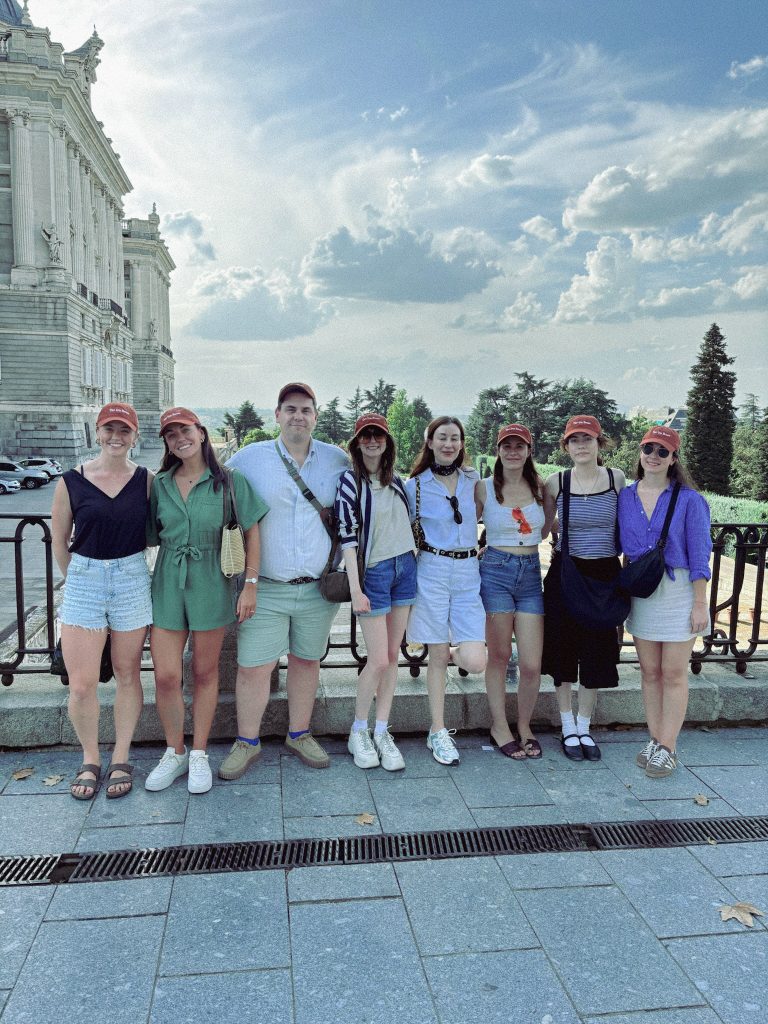
    My memories of Madrid as a child mostly involve avoiding the excruciating mid-summer heat. But revisiting in September last year for my friend’s hen do made realise just how great a spot it is for a shoulder-month visit.

    So as April approaches, here’s my guide on how to spend the perfect short spring break in the Spanish capital.

    Day 1: Tapas and tortillas with a hint of history

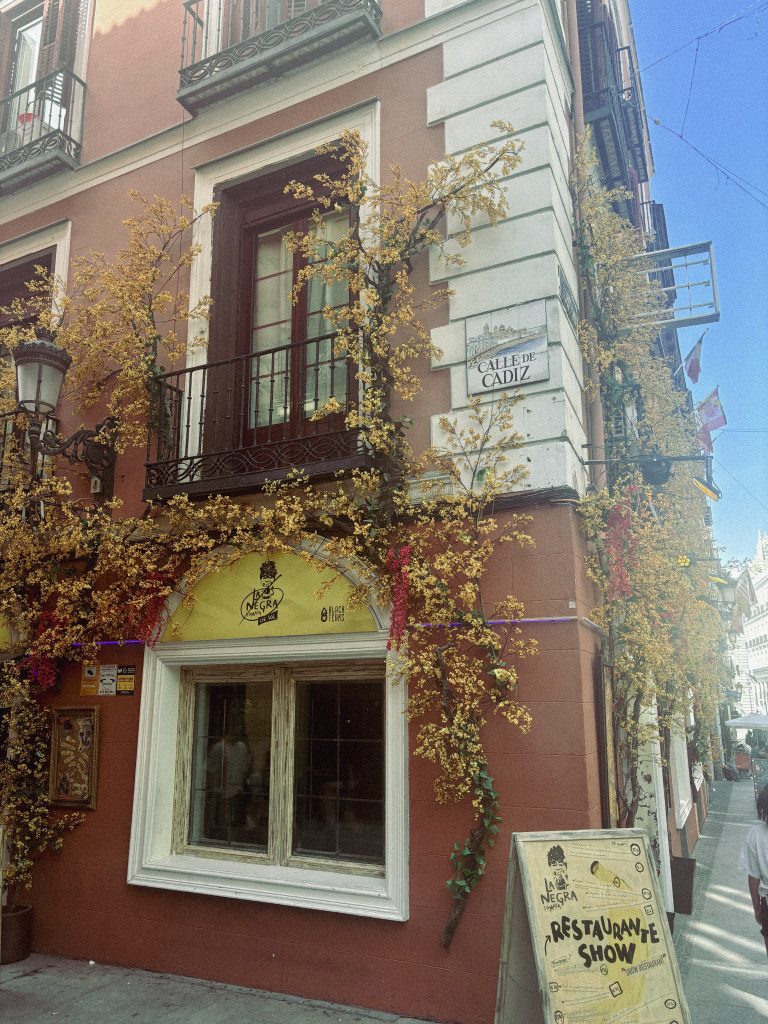
    First of all, where should you stay? Well, consider that Madrid is Spain’s biggest city, and comes in at double the size of Barcelona. It’s a busy, urban spot, but if you want a neighbourhood feel, I can advocate for an area called Lavapiés.

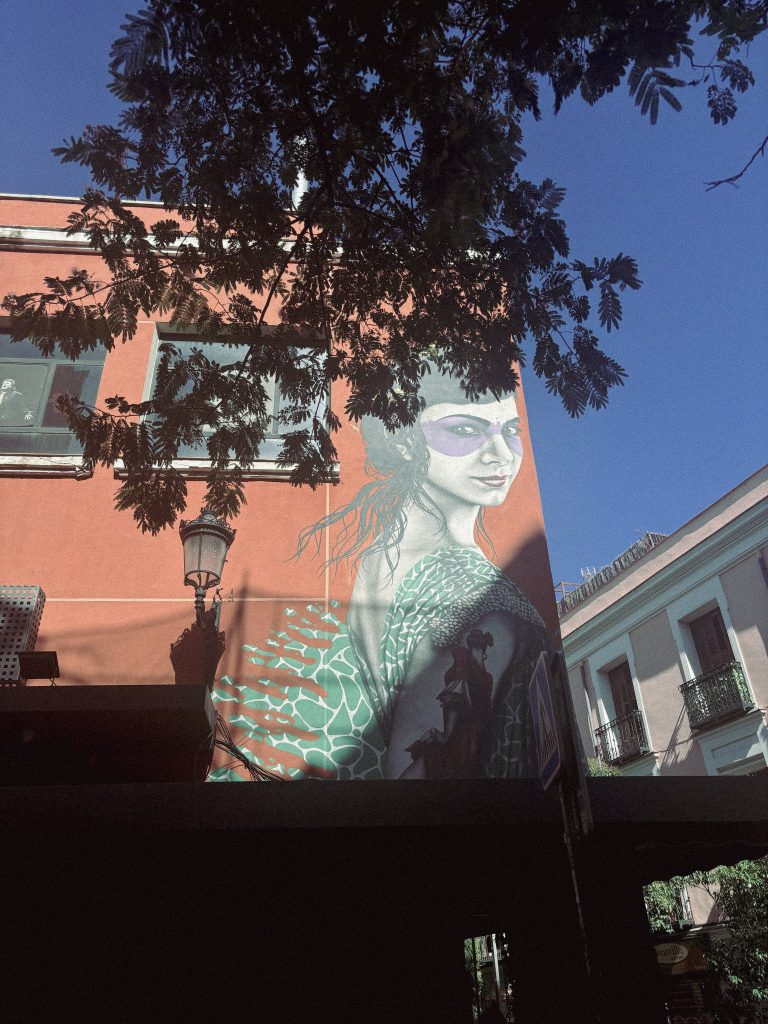
    This is one of the city’s most characterful neighbourhoods; full of street art, independent cafés and, importantly, pockets of shade. I felt relatively safe there, although I would advise being vigilant at night (I usually check reddit for information about local safety!).

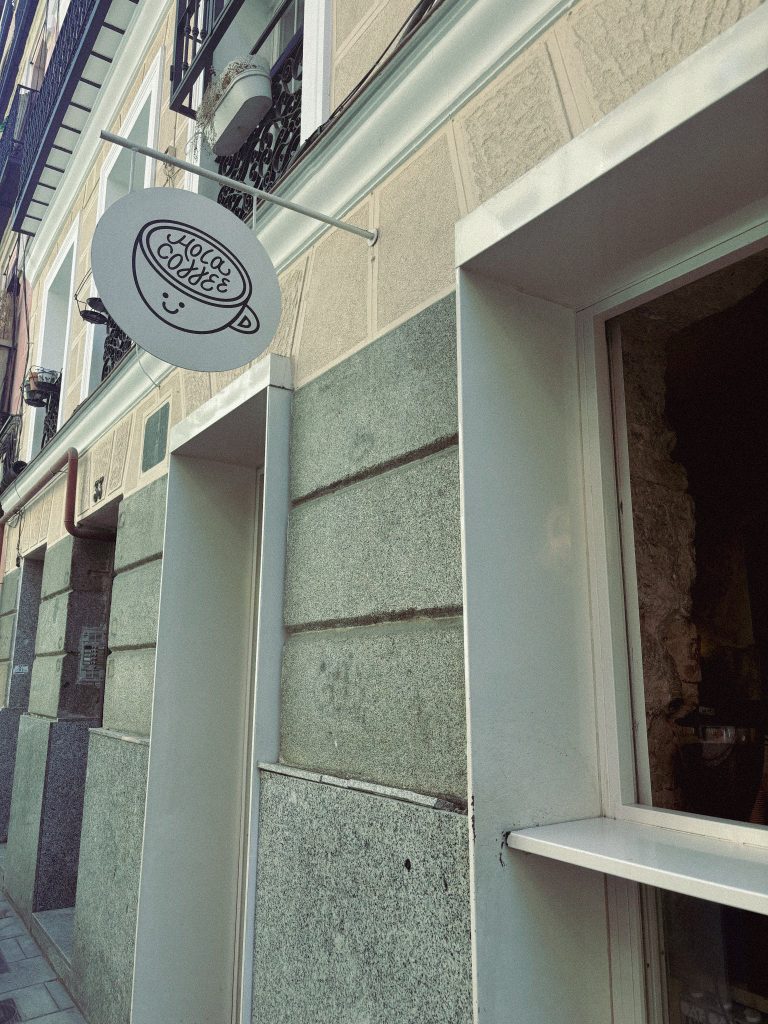
    Start your trip early by grabbing coffee and pastries from one of the local favourites such as Nomade Café or Hola Coffee, and enjoy the gorgeous murals.

    Then, from Lavapiés, take a 20–25 minute walk (or a short bus ride) into the historic centre.

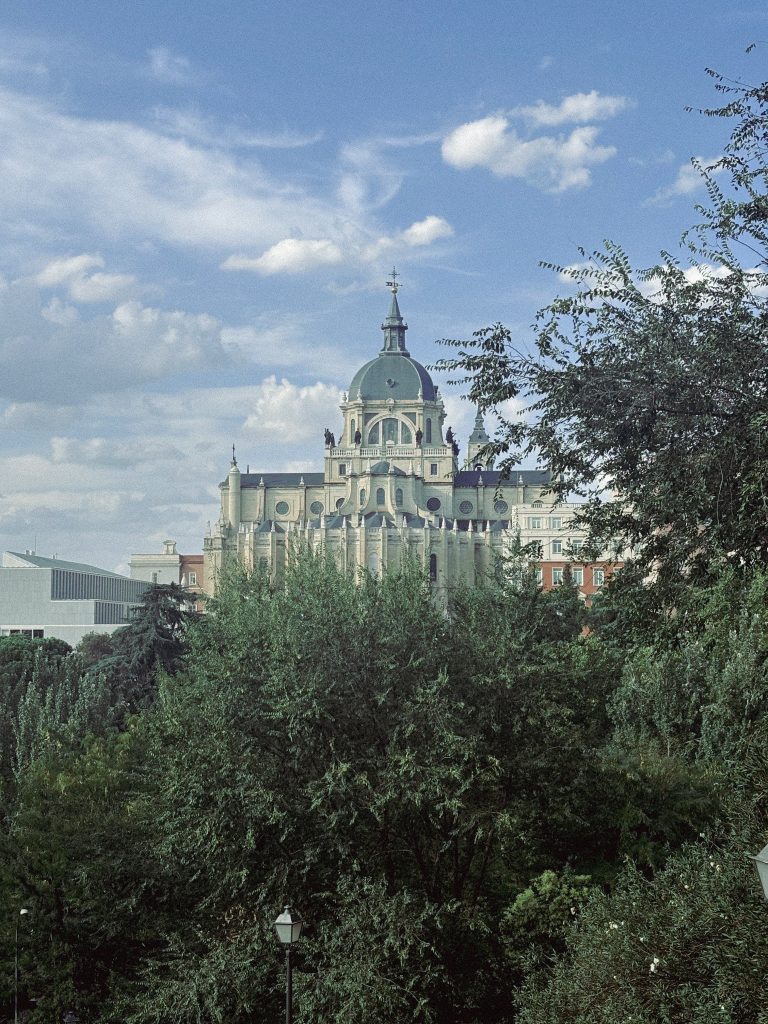
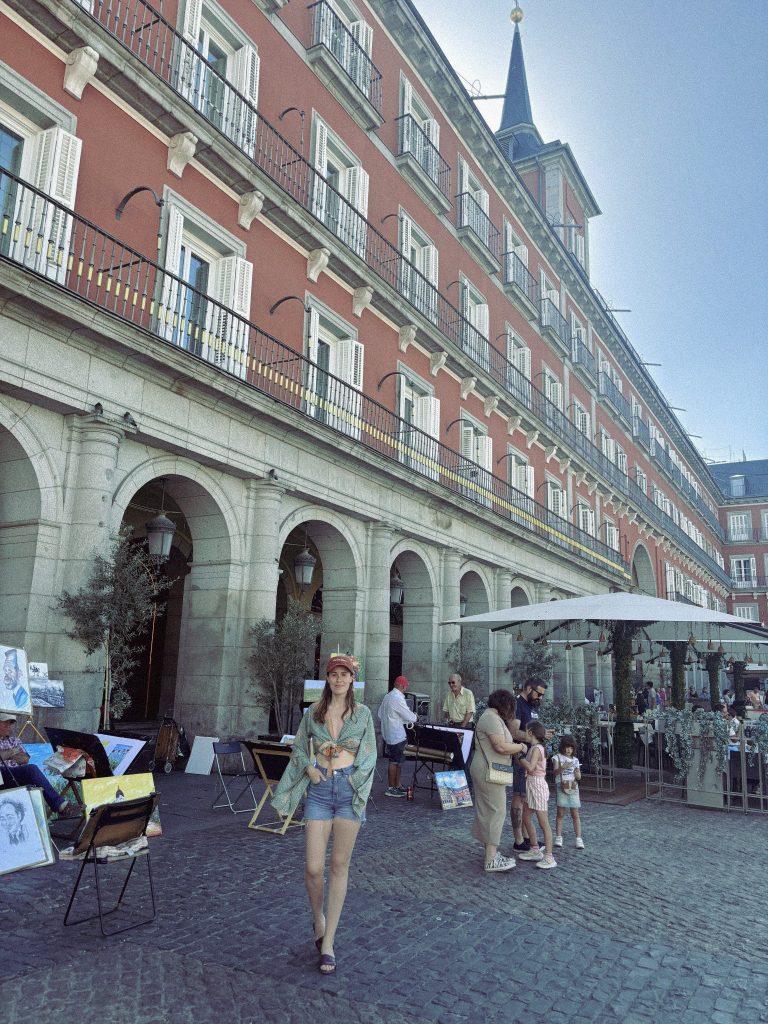
    Head towards the Royal Palace of Madrid, passing through Plaza de Oriente on the way. This area feels like the “classic” Madrid you see in photos, and is nice for a little walk and photo snapping before the heat of the day sets in; I didn’t go inside the museum, but you can do so if you want (if you later join a walking tour, they’ll likely cover the history).

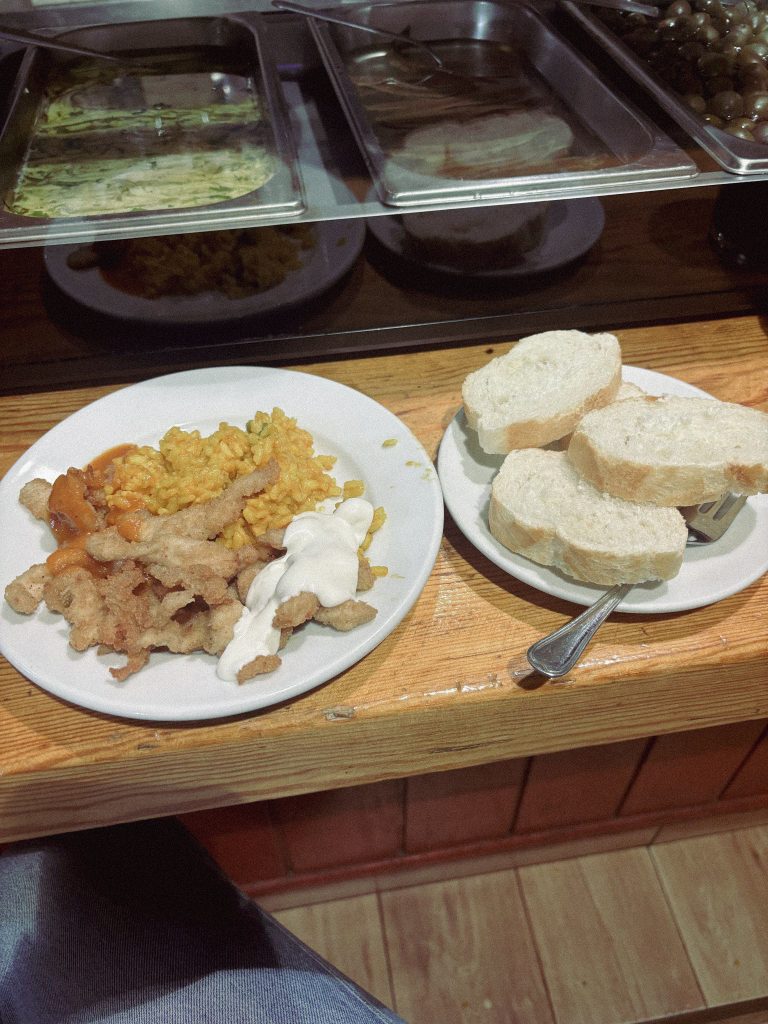
    For lunch, escape the heat and go in search of tortillas. Not the Mexican flatbread version, but the Spanish kind: thick, eggy, and often slightly gooey in the middle. I liked La Martinuca for its different variations (best enjoyed sitting inside), or Pez Tortilla on Calle de Espoz y Mina for somewhere more chaotic and buzzy; lots of locals crowded around standing tables.

    In the afternoon, ease into some culture at Museo Reina Sofía. If you time it right (after 4pm), entry is free, so head over at 3 to join the queue (perhaps with a beer in hand); this is an easy way to add something “cultural” without overcommitting your day.

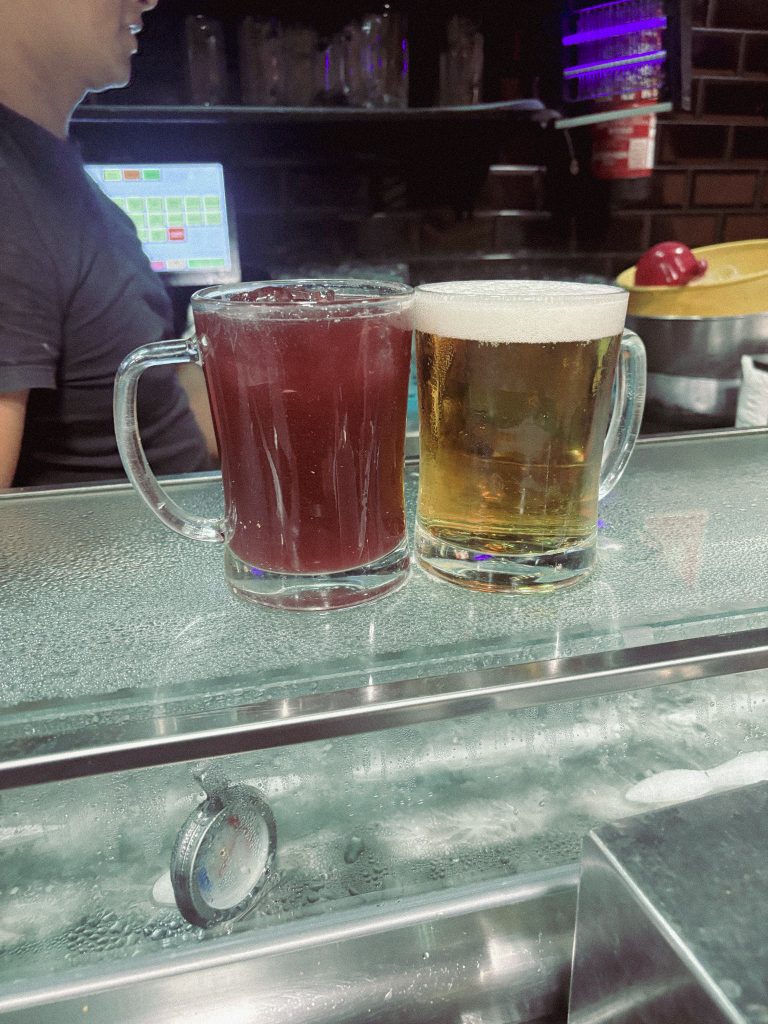
    As evening sets in, lean into Madrid’s slightly chaotic energy by stopping for sangria and tapas at El Tigre or La Torre del Oro. These are traditional pubs known for generous – and borderline excessive – free food with drinks. You’ll be able to stuff your face and get a bit drunk as the heat cools.

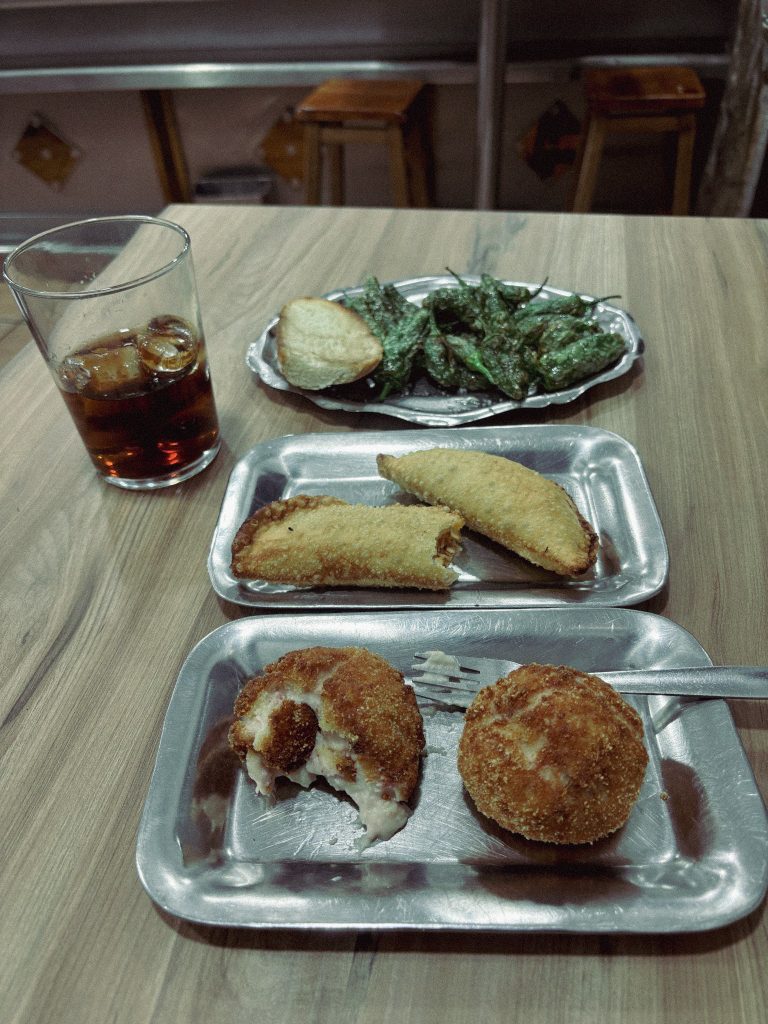
    Teeter back towards Lavapiés, and reload on those calories with some more local snacks. If you’re alone or in a couple, grab a table at Bar Melos and try the croquetas.

    Day 2: All the art & a gilda girl tea

    Start your second day in the heart of historic Madrid. Book yourself a walking tour from Plaza Mayor, and build in thirty minutes to enjoy the traditional square earlier in the day before it gets too crowded.

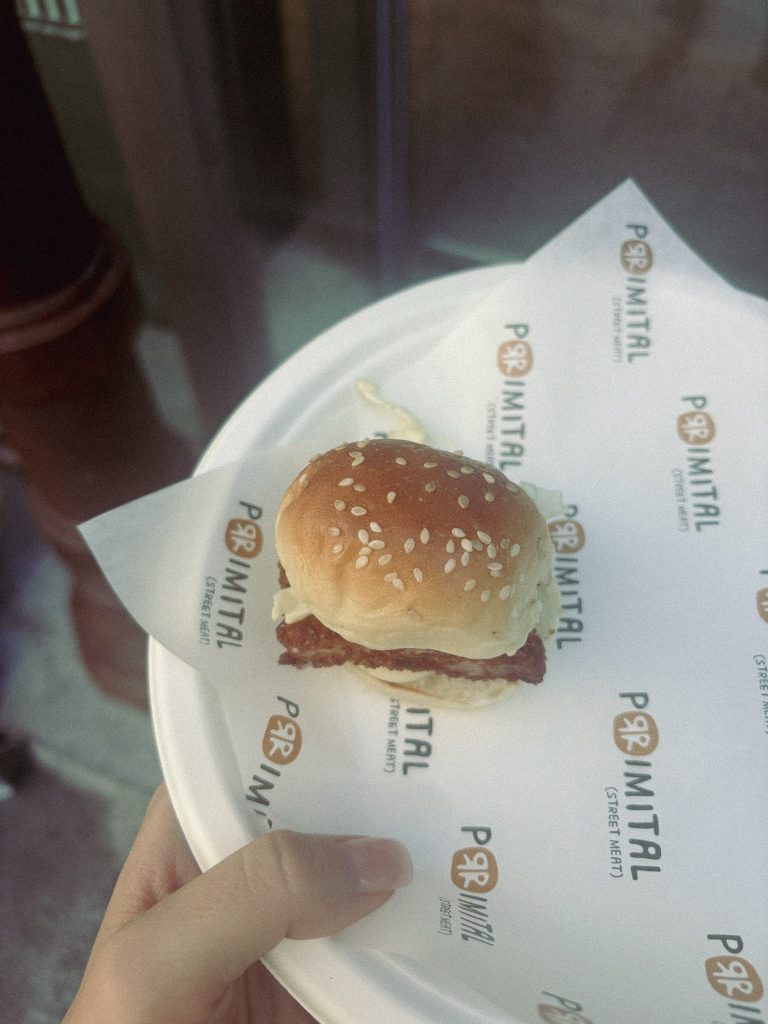
    From here, take a 5-minute walk to the covered food market, Mercado de San Miguel. While this is not the cheapest spot in the city, it’s perfect for a grazing-style lunch; think gildas, croquetas, mini burgers, and a glass of something cold. My friend and I had great fun perusing the different stalls and oggling the giant fish.

    Then, stop at Chocolatería San Ginés just outside for churros and thick hot chocolate.

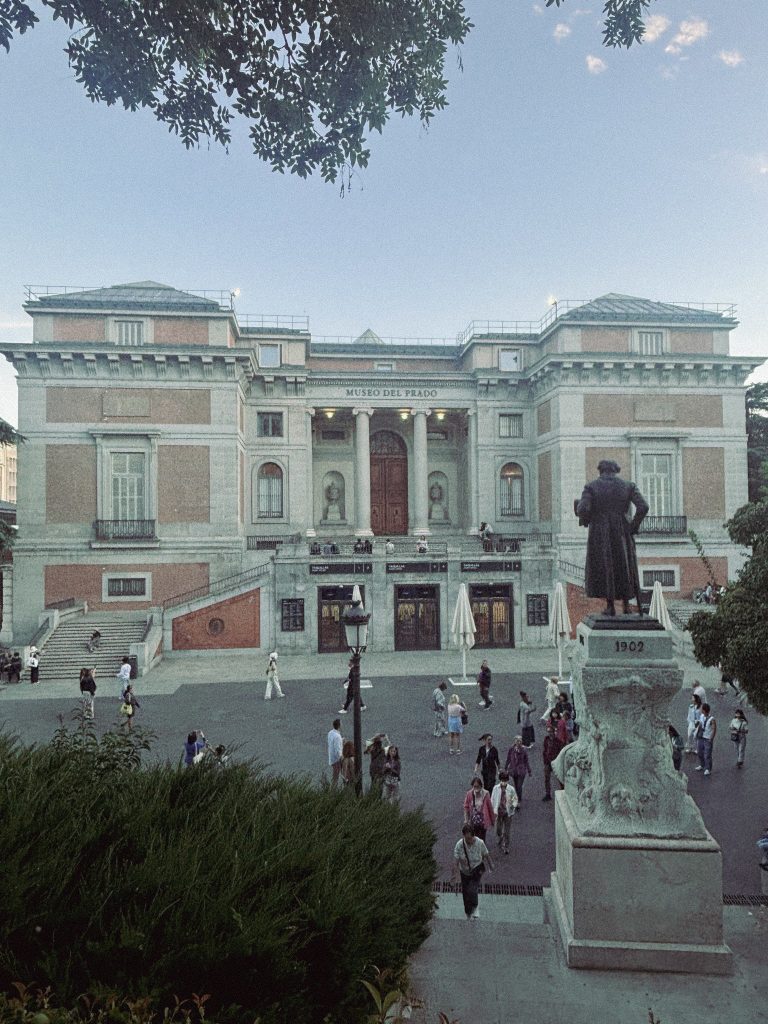
    In the afternoon, head to either Museo del Prado or Reina Sofía, whichever you missed yesterday. They’re about a 20-minute walk from Plaza Mayor, or a quick metro ride if it’s hot.

    Trying to do both in one day is ambitious and, honestly, unnecessary. I personally loved the Museo del Prado for its classical and religious works, from Velázquez to Goya; they really give you a sense of Spain’s artistic heritage. Reina Sofía, on the other hand, was a joy because of its surrealist highlights; Dali, Miró, and Picasso really get the mind going!

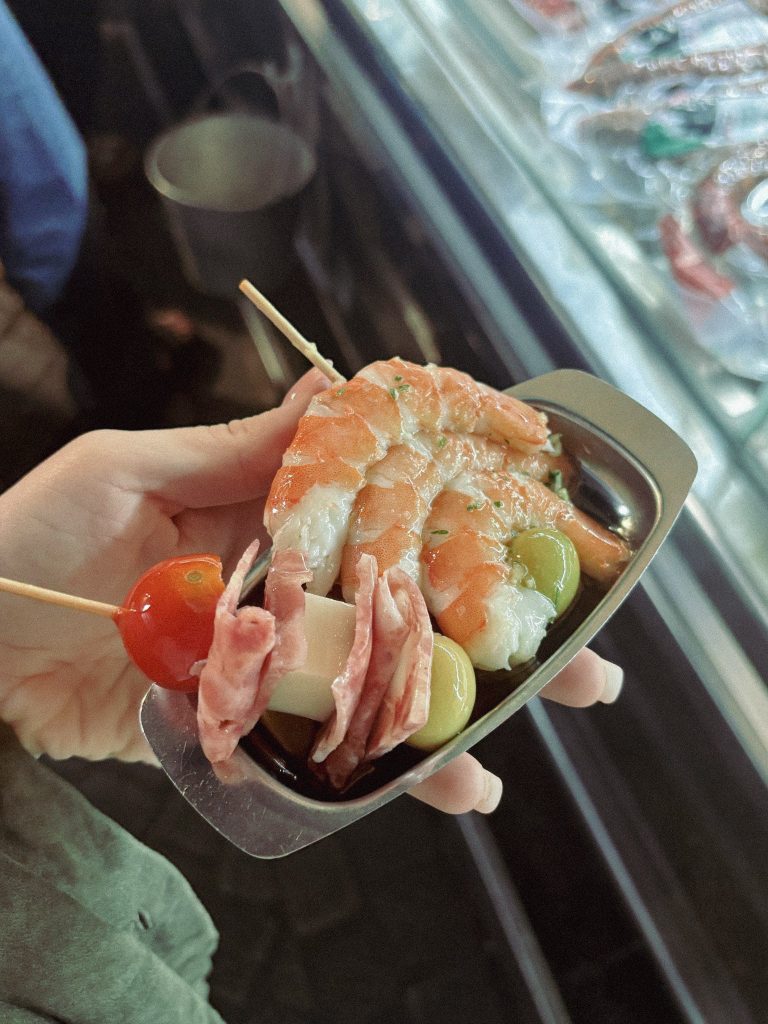
    Afterwards, what else – but more booze and food! Near the museum, there’s a cute side street with food stalls, including a place called La Consentida, where I enjoyed a happy hour washing an eclectic mix of gildas down with some rosé. This is a wonderful classic tapa, composed of a pickled Guindilla pepper, a salty anchovy fillet, and a green Manzanilla olive on a stick.

    On the way back, detour to La Pizzateca for a pizza slice; once in Lavapiés, finish with ice cream from Gelato Artesanal.

    Practical tips: Museums are free after 4pm (Reina Sofía) and 6pm (Prado Wed-Sat), so plan accordingly; weekdays are less crowded than weekends.

    Day 3: Pastries and park walks

    By day three, you might feel a little full and want to slow down, especially if you have a flight to catch.

    Begin, again, with coffee in Lavapiés. I advocate for pastries from Acid Café, but there’s a lot of cute places to sit down, too. If you want to stay in the area, I’d recommend reading this article for a full list of things to do.

    Eventually, make your way towards El Retiro Park near the Ibiza neighbourhood. Depending on where you’re starting, it’s roughly a 20–30 minute walk from the centre and worth doing on foot if you can.

    Ibiza is a busy spot, but good for more local eateries. I stumbled upon Parador del Jamón, known for traditional sandwiches (less useful if you’re vegetarian, but very “Madrid”), and there are plenty of other casual spots around.

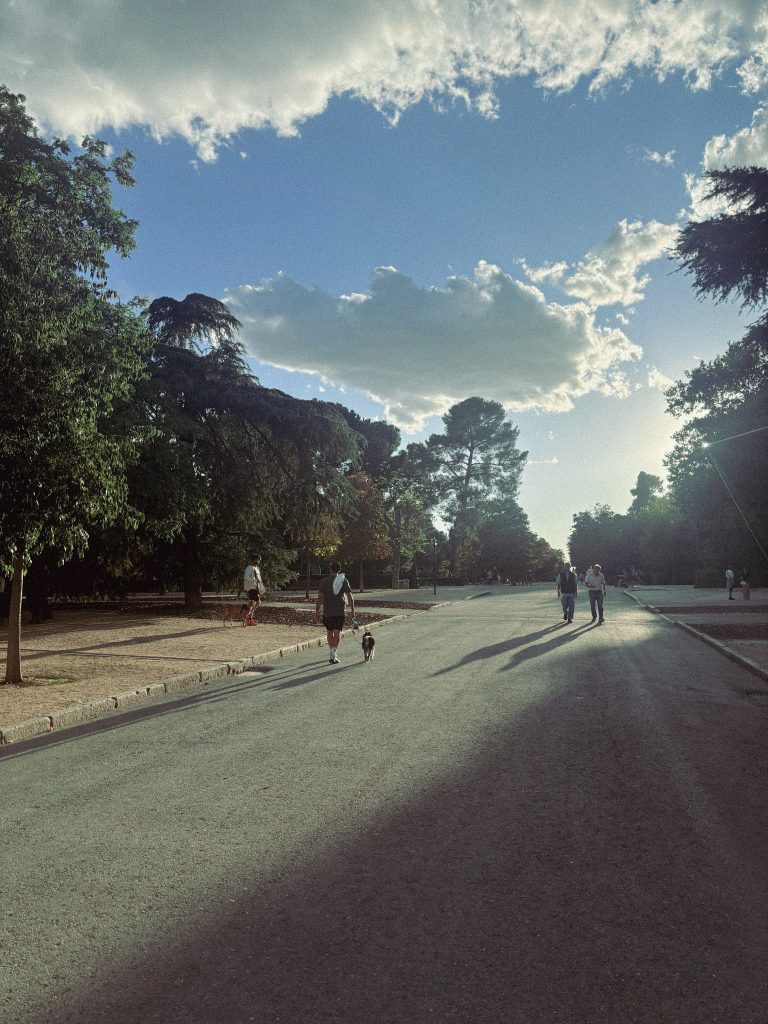
    Retiro is where Madrid softens; tree-lined paths, rowboats, people reading in the shade – it’s less about sightseeing and more about just being there. Bring snacks, something to drink, and take your time. I was alone for this part of my trip, so put a podcast in, but it’s also lovely for a read in the sunshine. It’s a nice place to visit at golden hour.

    Following your park walk, settle down somewhere nearby for more tapas and Sangria. If you’re back in Lavapies, grab a table outside La Inquilina for wine and some delicious gildas.

    If you’re working remotely…

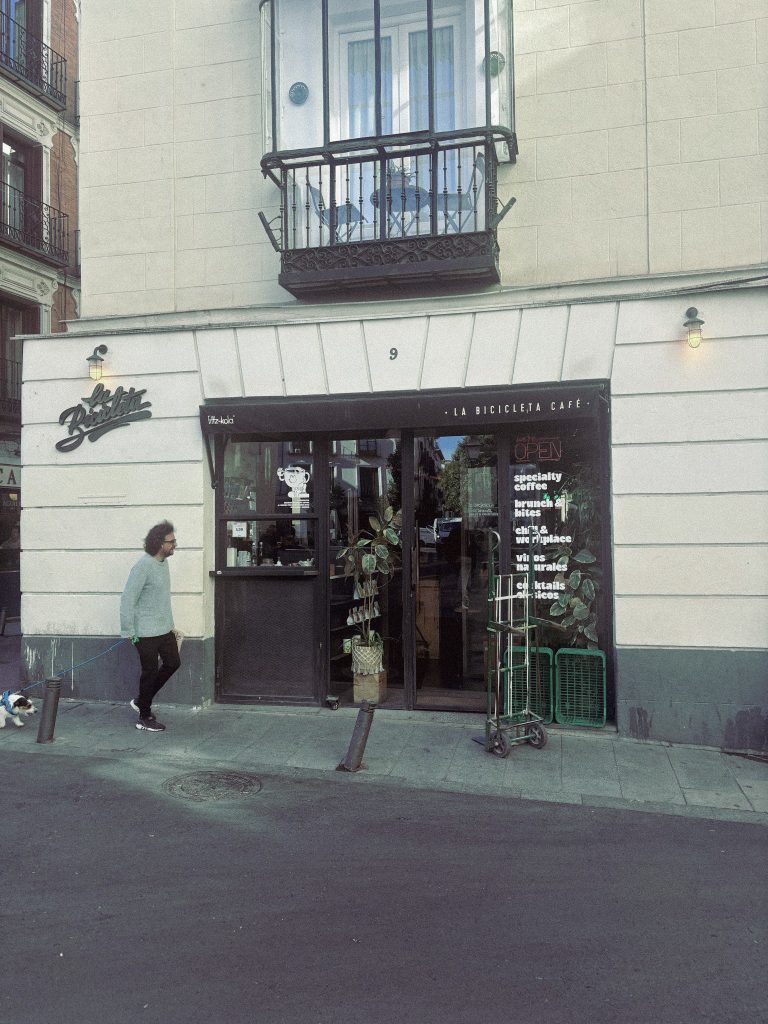
    If you’re mixing travel with work (like I am), Madrid makes it easy. I liked La Bicicleta Café and Federal Café as relaxed spots to spend a few hours; good coffee, good atmosphere, and no pressure to rush. Be aware though, that lots of cafes in Lavapiés do not allow laptops.

    Overall – Madrid is a feast for the mind and stomach

    Madrid can even feel a little overwhelming due to its pace and scale, especially compared to smaller Spanish cities. But don’t write it off for a mini break. Give it a couple of days – wander a bit, eat well, sit in the sun – and it starts to click. And once it does, it’s very easy to see why people keep coming back.

    If you’re looking for more Spring time city break ideas, why not read my piece about Copenhagen.

Leave a Reply

Your email address will not be published. Required fields are marked *