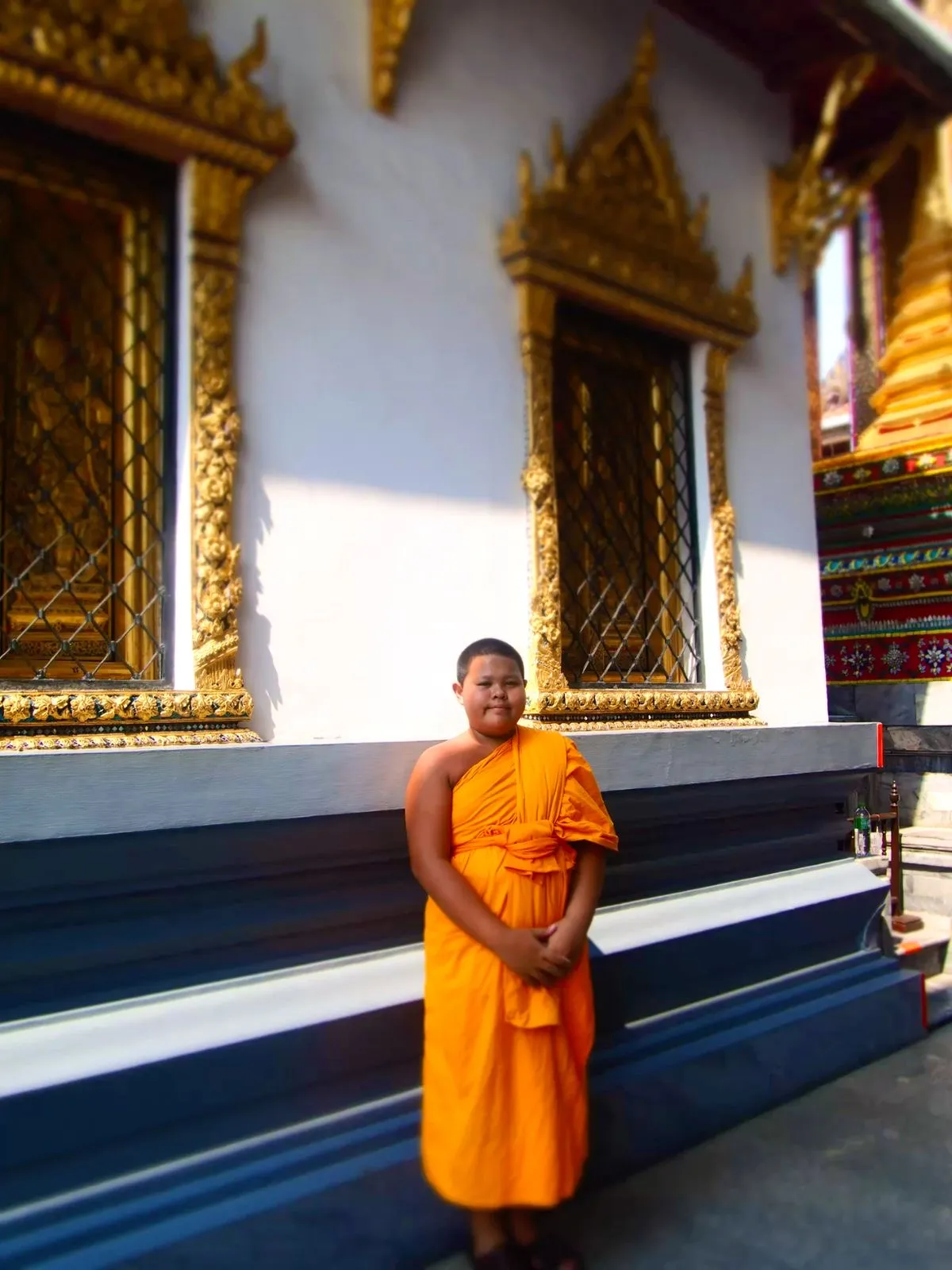
Can you watch Netflix? Lessons from my Chiang Mai “Monk Chat” experience
It’s what the people want to know, right?
Whether it was a war, invasion, or act of terror, ideological conflicts dominated the news agenda when I was in school. Keen to understand more, I took Religious Studies to A level, studying the world’s major faiths in relative depth.
At their core, they share similar moral frameworks. But between the lack of wars, focus on selflessness and preservation of animal life, Buddhism was the easiest one to actively “lean into” (and – critically – didn’t involve worshipping some bloke).
So when I visited Thailand earlier this year to experience life as a digital nomad, I was excited to hear that you can book time to speak to monks there, as part of a nationwide scheme called “Monk Chat“.
How prevalent is Buddhism in Thailand?
With a temple around every corner, it’s not hard to see that Buddhism is still the dominant religion in Thailand. The country is home to around 200,000 monks and 85,000 novices at most times of the year, according to Buddhanet.
Strikingly for me, is the fact that most Thai men ordain at least once in their lives. They’ll typically join a wat (monastery) before starting work or university – sometimes even returning mid way through life – and can leave, or rejoin, whenever they want. Like spiritual rehab.
If you’re interested in why (and perhaps what the effect of this is) take a look at this article.
The “Monk Chat” scheme specifically, allows people to learn how monastic life shapes Thai society, in exchange for a bit of English language practice. Chiang Mai – in the North – is considered the centre of the movement, so I booked a half-day meditation retreat at Wat Suan Dok, in the centre of the old town, when I visited last February.
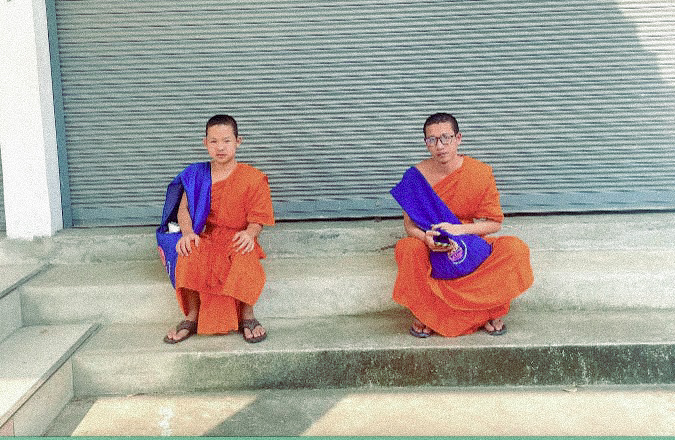
Introduction to Buddhism
After a quick cup of tea, our teacher, the head monk, began by outlining the basic history and core principles of Buddhism.
A lot of people assume Buddhists worship Buddha, but that is not true. They do not worship a creator God or idol – not even the Buddha himself, although his journey toward enlightenment, and teaching of Nirvana, is central to the philosophy.
Instead, Buddhism is better understood as a practice rather than a belief-based religion. “Train against doing bad; train to do good; and train to purify the mind,” he wrote on the whiteboard, summarising its ethical framework. Simple, right?
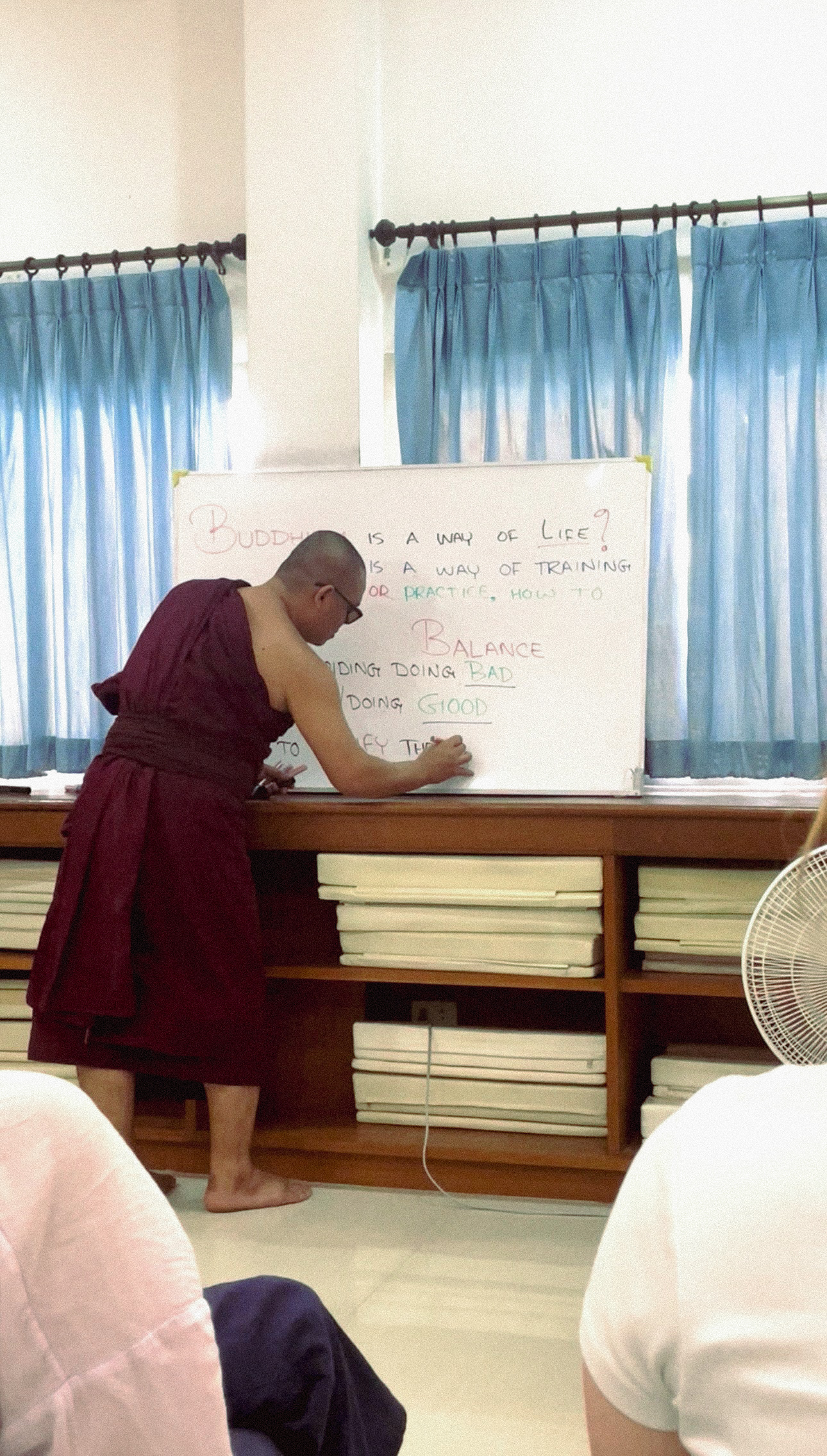
It’s all about balance
As to how much of this the average Thai person follows, I’m not sure. But it’s widely understood that 90% of the population define themselves as Buddhist, and pay close attention to the main principles.
Meditation specifically, our teacher explained, is a tool for observing and regulating emotional responses, helping practitioners return to these principles rather than act against them in moments of difficulty.
We then had a go at this ourselves – sitting for no less than 40 minutes – as he guided us through a seated meditation. I’ve always found meditation easier in a group, and after an emotionally charged first ten days of travel, the enforced stillness provided a rare opportunity to switch off.
Question time
Following this introduction, there was a group Q&A where you’re allowed to speak to the junior monks. I’ve been looking forward to this the most because I was genuinely interested in their way of life.
Can you watch Netflix? Can you discuss the news? Play video games in your spare time? We found ourselves asking.
I really wanted to understand what their habitual lives are like – especially at a novice level – as well as the role that monks play in the community. If I compare to the UK, for example, the Church is very active, and runs sort of like a charity / business. And who could forget the Benedictine’s at Buckfast Abbey? They’re making booze!
We didn’t get far with these questions. Our hosts were happy to talk about the importance of meditation but overall, I felt there was a slightly missed opportunity to understand the social contribution that monks make in the modern age.
But I guess it’s not their job to explain some of this, and we wanted to be respectful. There was also a language barrier, which is fair and understandable.
What about the women?
We did make headway on the topic of female monks (nuns), which felt significant, because they are not officially recognised by the state.
According to a 2019 article I read in Reuters, though, more Thai Buddhist women are seeking to become full-fledged “bhikkunis”, or female monks, by getting ordained overseas, usually in Sri Lanka or India.
Our companion clearly viewed these women as legitimate, but explained that nuns are required to follow 311 rules, compared with 227 for their male counterparts. This distinction comes from the Vinaya Pitaka – specifically the Pāṭimokkha – which sets out the monastic code of conduct. Like the men, women shave their heads and eyebrows upon ordination.
This interview on the topic expands on why this is, and how this landscape is shifting. I’ve also added some videos from the sessions on my instagram (@womanmeetsw0rld).
Is it worth attending?
If you’re curious to understand Buddhism and meditation at a surface level, I’d absolutely recommend trying Monk Chat whilst in Chiang Mai.
I’m interested in religious teachings and philosophies without any real intention to practise, so this half-day experience suited me well – though more in-depth meditation retreats are available for those looking to go deeper.
It’s a donation-based scheme offered at numerous temples across Thailand, and I imagine each one feels slightly different: some more open and modern, others more structured and traditional.
It was a genuinely enjoyable thing to do in Chiang Mai, and even if the session felt a little too focused on meditation for me personally, I found myself reflecting deeply on the topics covered afterwards.
It’s not a bad way to spend a day off from work, is it?
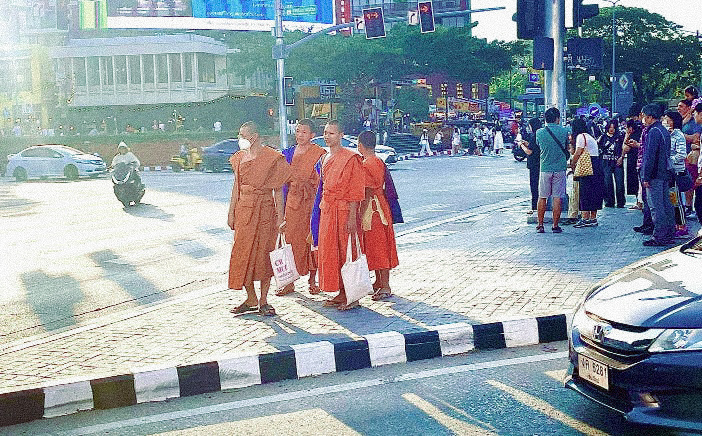
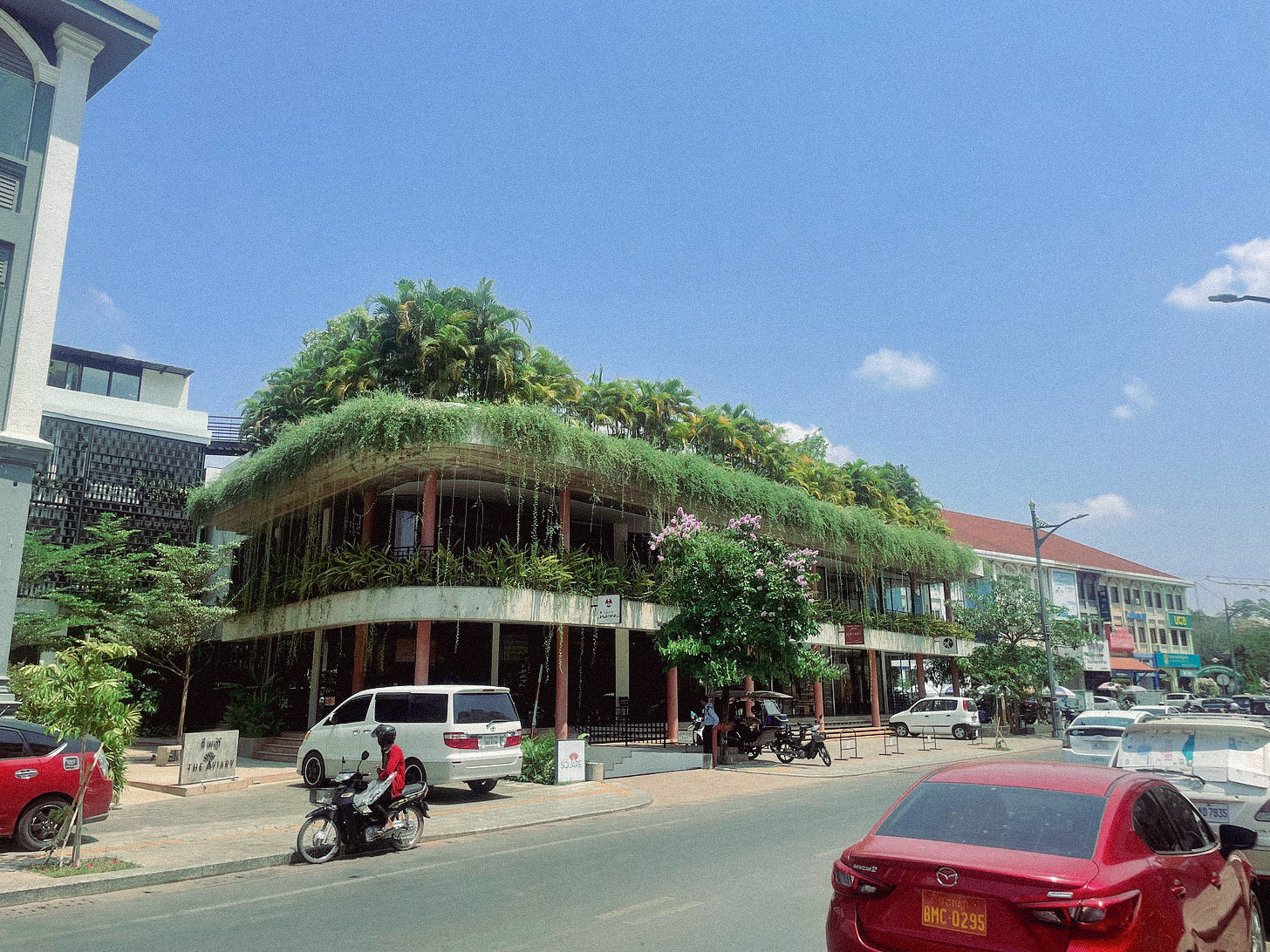
Trapped by traffic in Nimman, Chiang Mai